Roo Fillet from the Barbie

So far during our travels through Australia we had seen plenty of live kangaroos and especially wallabies, but were confronted with an unexpected lack of kangaroo meat at the butcher shops and supermarkets that we visited. Luckily I found some kangaroo fillet steaks at a butcher shop in Alice Springs, so we could finally eat something very Australian: barbecued (grilled) kangaroo. Continue reading “Roo Fillet from the Barbie”

Grilled Octopus with Octopus Sponge, Bell Pepper Coulis and Romanesco

This is another dish that came out of the collaboration with Teun and Albert. I wanted Teun to try octopus sous-vide, and I remember how much I liked the char-grilled octopus at La Madia in Sicily. Although we ended up doing something different, our original idea was to do something along the lines of the octopus dish from La Madia. That dish featured a rock. Due to timing constraints (and also because the rock at La Madia wasn’t very tasty even though it looked great), we decided to go for a soft octopus sponge cake instead.

Recently, Paul of That Other Cooking Blog wrote about a microwave brioche. This is a trick that was originally devised by Ferran Adrià of El Bulli. A batter with a lot of eggs is siphoned into paper cups with nitrous oxide and then cooked for 30 seconds in a microwave oven to get a sponge cake. As octopus leaks a lot of juices when cooked, we thought it would be nice to reduce those juices to a thick octopus syrup and use that to flavor a sponge. We thought it would pair well with a bell pepper coulis, and when we realised our menu needed more vegetables we also included some oven-roasted romanesco (green cauliflower). Continue reading “Grilled Octopus with Octopus Sponge, Bell Pepper Coulis and Romanesco”

Apricot Tart (Limburgse Abrikozenvlaai)

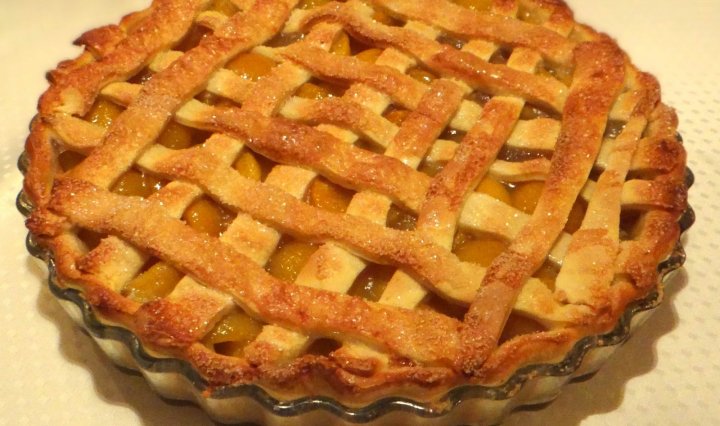
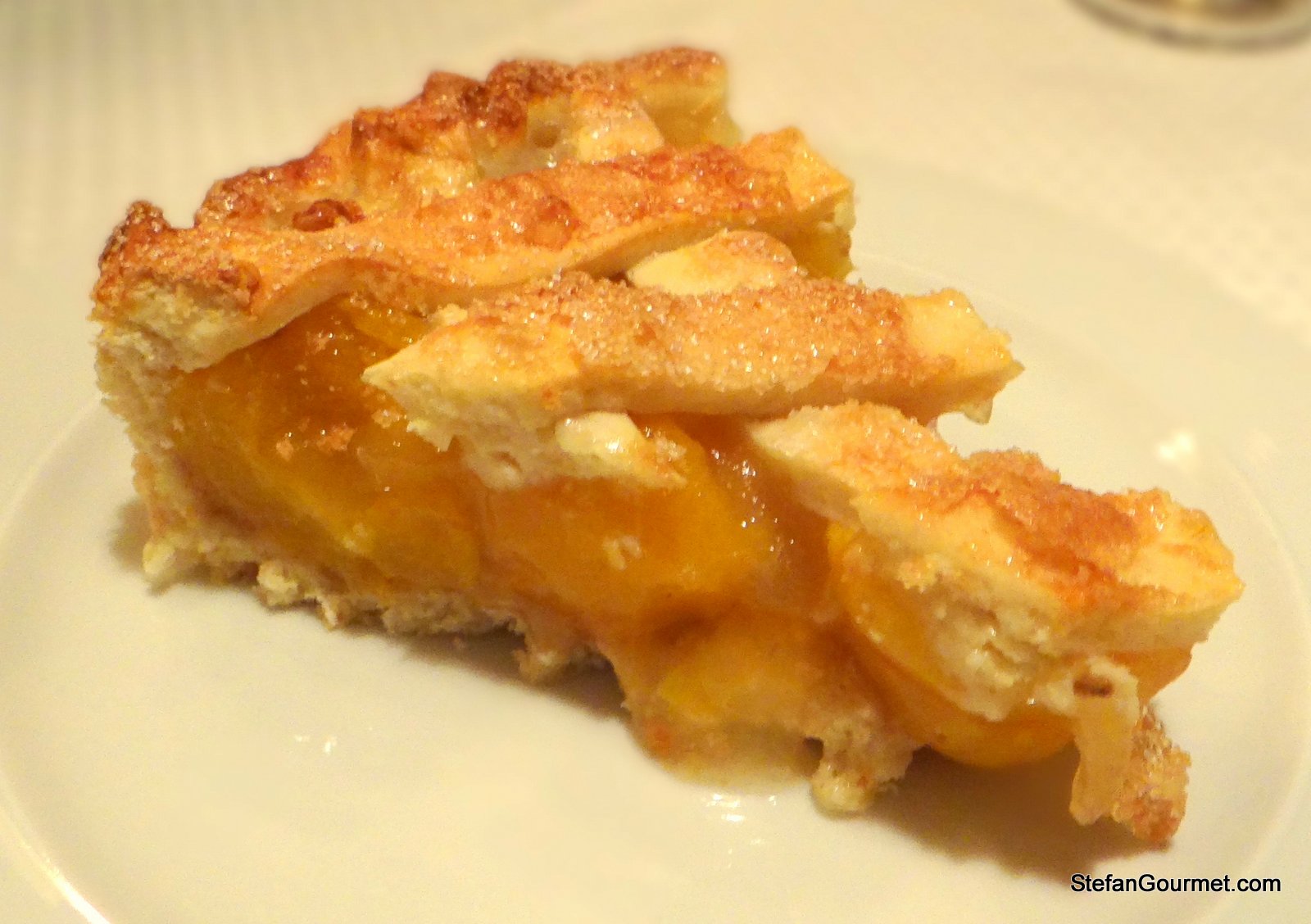
The dinner I cooked for Clayton when he visited had to contain something Dutch. After some thinking, I came up with Limburgse abrikozenvlaai, a tart from the province of Limburg that is made with a yeasted dough. I already wrote about kersenvlaai (with cherries) a while ago. Since it’s summer, fresh apricots are available. The apricots are cooked before they are used in the vlaai.

DSC08710 Continue reading “Apricot Tart (Limburgse Abrikozenvlaai)”

Sarde a Beccafico (Stuffed Sardines)

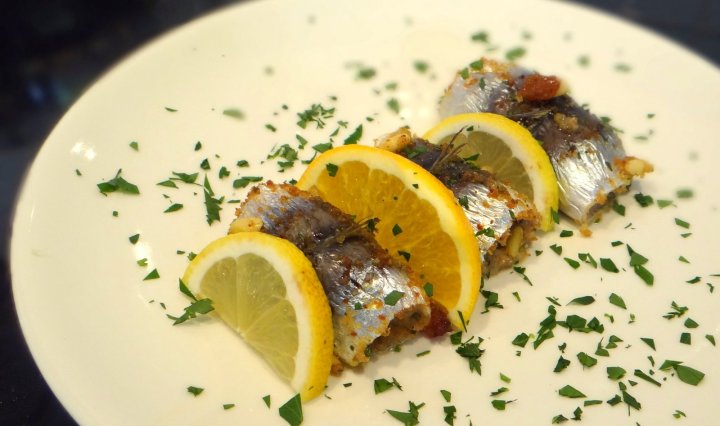
Apart from the fennel balls, I prepared another antipasto for my Sicilian dinner: Sarde a Beccafico. We really liked this dish when we had it at Tischi Toschi, and I copied the presentation from there. Sarde a Beccafico can be served either as antipasto or as secondo (main course). Sardines are stuffed with bread crumbs, raisins, anchovies, parsley, pine nuts, sugar, and baked in the oven with some orange juice. This dish is very tasty and easy to prepare if you ask the fishmonger to turn the sardines into fillets for you.

Continue reading “Sarde a Beccafico (Stuffed Sardines)”

Smoked Halibut ‘Pizza’

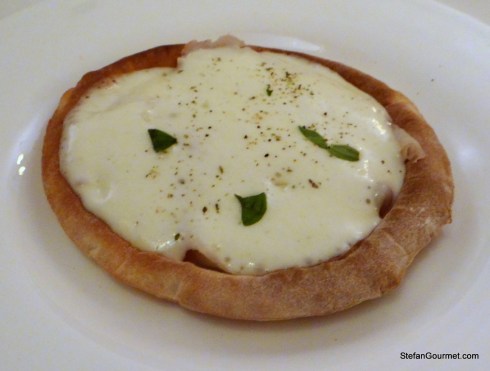
The following I dish I prepared for the Sicilian dinner was very loosely based upon one of the appetizers at La Madia, the best restaurant in Sicily with two Michelin stars.

DSC05646
The ‘pizza’ at La Madia

This is what I wrote about this dish in my review of our dinner at La Madia: “We were thoroughly fooled by this pizza, because we were wondering how we were going to survive 8 courses if they were all going to be this big. It turned out to be very light actually. What looks like melted mozzarella is actually potato mousse. The crust was only a very crispy very thin round of dough, and underneath the ‘cheese’ there was lovely cod smoked on pine wood and some semi-dried tomato. Great flavors and wonderful presentation. 10/10”

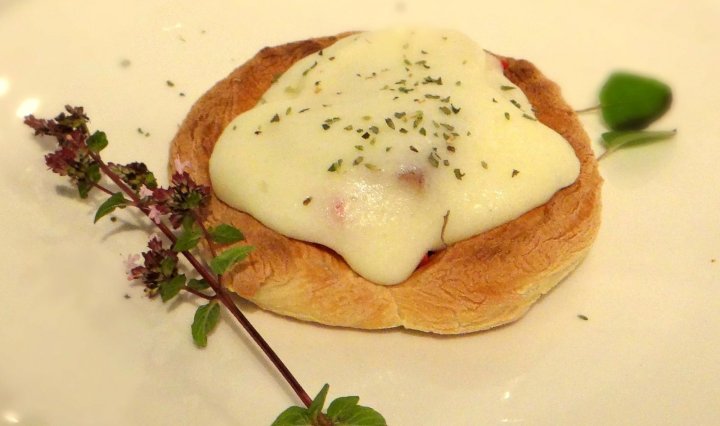
The dish I prepared is by no means an attempt at recreating chef Pino Cuttaia’s dish, but it has been heavily inspired by it. My ‘pizza’ was made with hot-smoked halibut, potato mousse, and semi-dried tomatoes. It was more substantial than at La Madia and I served it as a main course. Continue reading “Smoked Halibut ‘Pizza’”

Cassata Siciliana

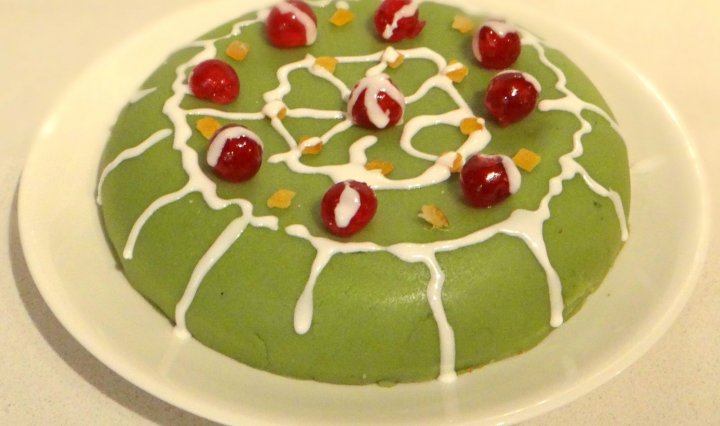
In April we travelled through Sicily and I came back with a lot of ideas for Sicilian dishes to cook. Last night my parents came over for dinner, and for the first time since I can’t remember I prepared five all new dishes in a single day. All of them inspired by meals we had in the best restaurants of Sicily. My parents don’t mind being guinea pigs, and although I have thought of some improvements for the next time I make these dishes, all of them came out very tasty if I do say so myself. Since it’s been so long that I’ve blogged about dessert, I’m starting at the end.

DSC05563-001
Cassatina in a trattoria in Erice

Cassata is a traditional cake from Italy made with sweetened ricotta, marzipan, candied fruit, and sponge cake (pan di spagna). Cassata can be decorated very elaborately with different kinds of candied fruit and icing, but when we had it for dessert in restaurants in Sicily, we got a single-portion cassatina that was decorated quite simply with a few pieces of candied fruit and icing. Since I had five different dishes to prepare in a single day, I decided to go for the simple option. Perhaps I’ll do a more baroque version in winter with homemade candied fruit and homemade marzipan. Continue reading “Cassata Siciliana”

Spaghetti alla Chitarra con Ragù di Agnello e Peperoni (Fresh Pasta with Lamb and Bell Pepper Sauce)

Next time I’ll be visiting the Italian region of Abruzzo I’ll have to watch out, because I’m cheating in this post. Every region of Italy has its own pasta shapes, and for Abruzzo this is the Spaghetti alla Chitarra, also called Maccheroni alla Chitarra. In other regions this type of pasta is called tonnarelli or troccoli.

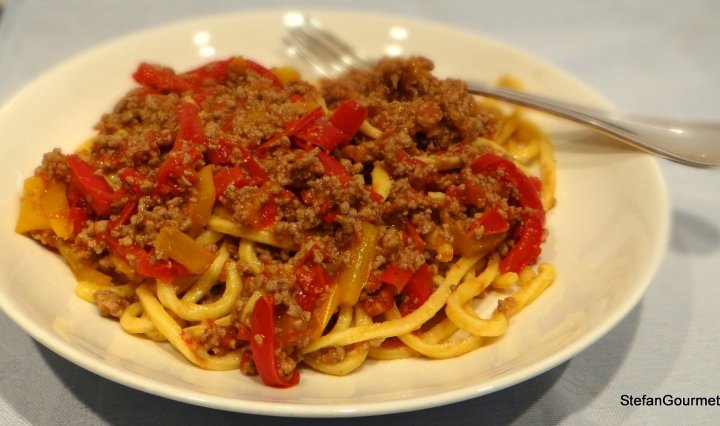
Spaghetti alla Chitarra are thick square fresh egg noodles, made from semolina flour and with a thickness and width of 2 to 3 mm (1/12 to 1/8 inch). They are called “alla chitarra” because they are traditionally made with a guitar-like device, which has a wooden frame strung with metal wires. The pasta dough is first rolled out with a rolling pin, then arranged on top of the metal wires, and then a rolling pin is used to press the pasta through the wires and thus cut it. You guessed it: chitarra is the Italian word for guitar. The device helps to give the pasta a rough surface, ideal for sauce to cling to.

I don’t own such a device, but since I do own a tagliolini attachment for my pasta roller with a width of 2-3 mm, I figured I can cheat and prepare something very close to spaghetti alla guitarra using the attachment for tagliolini. To get square pasta, the thickness of the dough should also be 2-3 mm. Spaghetti alla chitarra should be served very much al dente, with a lot of bite to them, so it is important not to overcook them.

One of the traditional ways to serve spaghetti alla chitarra in Abruzzo is with a ragù of lamb and bell peppers, flavored with garlic and bay leaf, and that is what I dressed the spaghetti alla chitarra with. It turned out wonderfully and I will definitely make this again. The ragù is made with fresh tomatoes and has a very elegant taste. Continue reading “Spaghetti alla Chitarra con Ragù di Agnello e Peperoni (Fresh Pasta with Lamb and Bell Pepper Sauce)”

Lamb Chops ‘Scottadito’

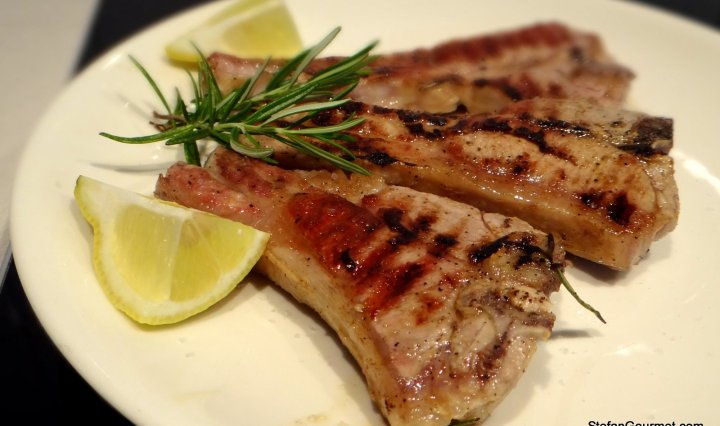
I already blogged about lamb chops ‘scottadito’ (“burn your fingers”) in March. Back then I prepared them in the oven, but thought they would be better on a griddle or on a charcoal grill. I now tried the griddle and it turns out I was right: because of the higher heat they get a nicer crust on the outside while staying succulent on the inside. Lamb chops scottadito are so simple and so good and this time around my photos turned out better so I’m giving you the recipe again 🙂 Continue reading “Lamb Chops ‘Scottadito’”

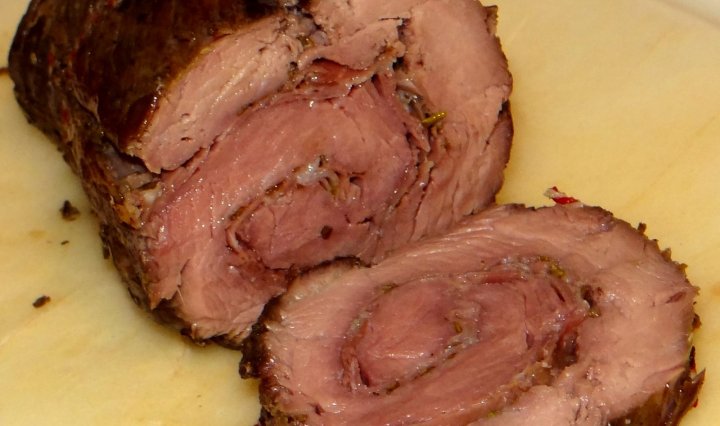
Lamb and Goat Cheese Roulade

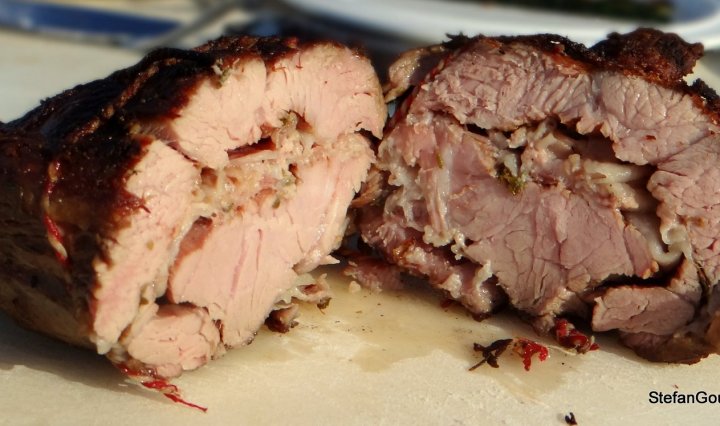
Summer has finally arrived and that means it time for grilling, or BBQ as we call it. For me grilling is strictly a charcoal thing, as a charcoal fire is hotter and imparts more flavor than a gas grill. Most grilling done in the Netherlands is very ‘low brow’, with cheap meat from the supermarket, with the lack of flavor masked by a reddish marinade. That is clearly not my kind of grilling. I like to use proper meat and pre-cook it sous-vide so it’s always cooked through, juicy and tender on the inside, and nicely browned on the outside. Since the meat is already cooked, visual inspection (i.e. using your eyes) is all that’s needed to decide when to remove the meat from the grill. Since I discovered last year that lamb and goat cheese go well together, I decided to make a roulade of lamb shoulder with goat cheese, pancetta, thyme, and balsamic vinegar. It turned out great! Continue reading “Lamb and Goat Cheese Roulade”

Trenette alla Genovese

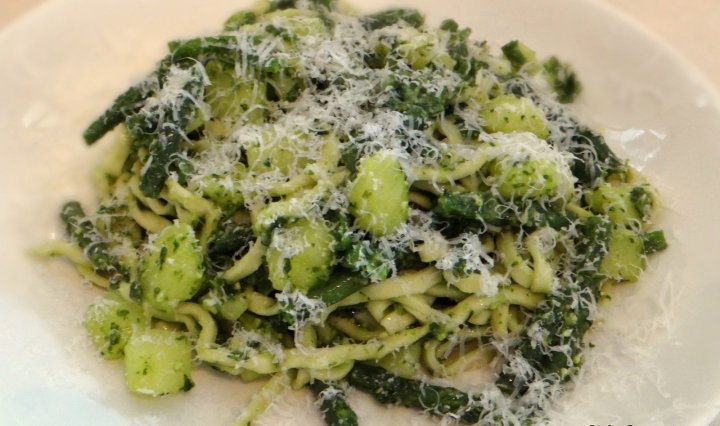
Each region of Italy has its own pasta dishes. The most famous foodstuff from Liguria is pesto, and the two typical pasta dishes from Liguria with pesto are Lasagne alla Genovese and Trenette alla Genovese. Both are best with pesto made from scratch using pestle and mortar. Trenette alla Genovese are trenette cooked with haricots verts and potatoes, and served with pesto alla genovese. Continue reading “Trenette alla Genovese”

Eel in Tomato Sauce (Anguilla in Umido)

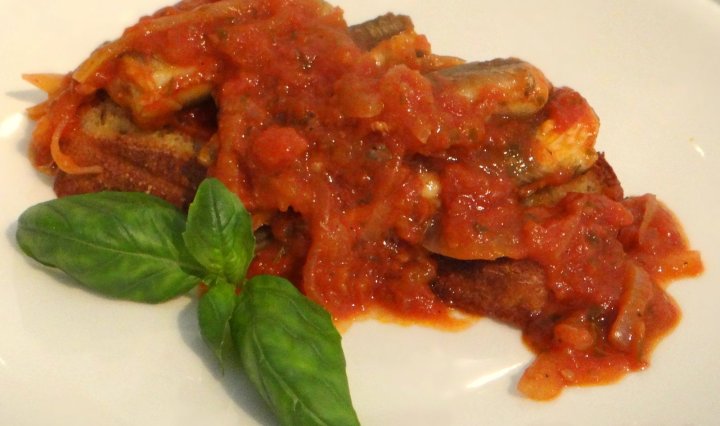
Eel is caught locally in the area where we live and we love smoked eel. Eel is also available fresh to be used for stewing, but I don’t care much for the Dutch/Flemish preparations. My curiosity was piqued though when I saw a post by ChgoJohn on eel stewed in tomato sauce Italian style (or to be more precise, in the style of Le Marche). I did some research and it turned out that this dish is known as Anguilla in Umido in most of Italy, and that it originated in Campania, the region of Naples. Anguilla in Umido is traditionally eaten between Christmas and New Year’s as a symbol to drive out the evil for the New Year. Eel looks like a serpent, and by eating it you conquer it. How simple was life back then.

So why am I preparing this dish in summer? Because fresh eel is available around here between May and October only, that’s why. And this year because of the cold, I only noticed eel at my fishmonger for the first time last week. It was very expensive (because eel is starting to become scarce), but I’m glad I bought it anyway because prepared this way it was absolutely delicious! The eel gives off a very nice flavor to the tomato sauce, the eel is tender and juicy without tasting too greasy, and the flavor of the eel is not at all overpowered by the tomato sauce. Continue reading “Eel in Tomato Sauce (Anguilla in Umido)”

Penne all’Arrabbiata

When I did a riff on a combination of Sugo alla Napoletana and Penne all’Arrabbiata to meet Richard’s Chilehead Challenge, I realised that I had not blogged about Penne all’Arrabbiata before. This is a classic dish from Lazio, the region around Rome, of pasta with a spicy tomato sauce. “Arrabbiata” means angry, referring to the spiciness of the sauce. Like all Italian classics, it is a simple dish with a limited number of ingredients, but a lot of flavor. It doesn’t take more time to prepare this than it takes to boil the pasta. Continue reading “Penne all’Arrabbiata”

Spicy Sweet & Sour Pork Belly and Cauliflower

Whoa! The more experience I have with cooking, the more I dare to experiment and try new things without using recipes. In this case I made up a recipe from scratch, and I am truly amazed how delicious it turned out to be. From Paul’s That Other Cooking Blog I got the inspiration to deep fry pork belly in cubes rather than as a roulade. And from blogging about Dutch nasi with atjar I got to think about Indonesian cooking. Now this recipe is not Indonesian and not authentic, but it is certainly inspired by Indonesian cooking and uses Indonesian ingredients. Don’t worry though if you can’t get Indonesian ingredients, as I’m sure that it will be just as delicious with substitute ingredients that I will provide.

This dish is bursting with flavor. It starts with pork belly cubes cooked sous-vide for 36 hours at 60C/140F with 5-spice. (You can also prepare this without a sous-vide cooker, though.) (I have since then discovered that pork belly is even better when cooked sous-vide for 36-48 hours at 57C/135F instead.) The pork is then deep fried briefly to crisp it up. The juices from the pork belly are used to create a darkly flavored sweet & sour sauce that is bursting with flavor from sambal oelek, fresh ginger, and caramelized onions. This sauce pairs well with the juicy tender pork belly. As a contrast to the deep dark flavors of the sauce, I prepared atjar-inspired spicy sweet & sour cauliflower that is equally bursting with flavor, but in a different fresher way. Served with some rice, this was one great meal! I will definitely make this again, and I won’t change a thing. Continue reading “Spicy Sweet & Sour Pork Belly and Cauliflower”

My Entry for the International “Shanghai Chicken” Project

A week ago we launched the international “Shanghai Chicken” blogging project together with Clayton and John. The rules we set for this project were very simple:

  • Prepare a dish inspired by Bamboo Restaurant’s Shanghai Chicken.
  • It has to include chicken, chiles of some sort, vegetable greens, and nuts.
  • It could be a known recipe or one of your own — traditional or newly invented.
  • Blog about your dish or send me photos and a description of what you did and I will post about it here.

So far not only Clayton and John/Sybaritica, but also Genie/Bunny Eats Design and Paul/That Other Cooking Blog have posted their takes on Shanghai Chicken. It is very interesting to notice how all of their entries are very different. Some more bloggers have announced that they will participate. I plan to do a wrap up of all the entries received so far next week. You can participate whenever you like, but if you want to be listed in my initial wrap up you should post something by Saturday, June 22, at the latest.

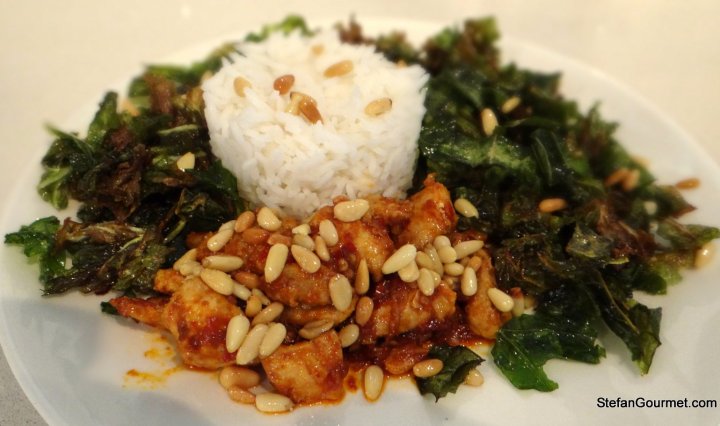
Here’s my own take on Shanghai Chicken. Continue reading “My Entry for the International “Shanghai Chicken” Project”

The Chilehead Challenge

Blogging has many rewards. It is a nice way of keeping track of my own recipes, it is great to receive feedback from all over the world, and it is wonderful to learn so much and get so many new ideas from other bloggers. Blogging has also turned out to be a great way to meet wonderful people. Some of the highlights so far have been Conor’s visit and a surprise invitation to dinner by Teun and Albert. And I won’t even begin to mention all the great people I’ve so far only interacted with online.

Richard McGary of REMCooks is a mutual blogging buddy of Conor and myself. After Conor’s visit, Kees knows him as ‘the pouring shot guy’. Richard always has great recipes and I’ve already prepared quite a lot of them to great success. Richard and his wife the Baby Lady are very fond of bold flavors, which is clear from the high number of recipes with chile peppers on REMCooks.com.  I have no qualms in calling them chileheads, because they are proud to refer to themselves that way.

I never used to eat a lot of spicy food, but over the years I’ve grown more used to it and now I am cooking pretty spicy dishes on a regular basis. Still, I tease Richard now and then when he posts yet another chile recipe. Also because he uses all kinds of chile peppers that I am not familiar with. Richard probably thought it was time both Conor and myself would get more familiar with chile peppers, because as a gift from him we both received a box from Texas in the mail that was filled with all kinds of chile peppers! The box contained enough capsaicin to eradicate a small village 😉 Continue reading “The Chilehead Challenge”

Swordfish Sicilian Style (Pesce Spada alla Siciliana)

Even though I didn’t actually have this dish while I was in Sicily recently, I did see it on menus everywhere and I thought it would be appropriate to include it in the series of Sicilian recipes I’m doing. The swordfish is cooked in a tomato sauce bursting with flavor of onions, garlic, anchovies, capers, olives, and cayenne pepper. This is an easy dish to make, as long as you lower the heat (or even turn it off) when you finish cooking the fish to avoid overcooking it. Continue reading “Swordfish Sicilian Style (Pesce Spada alla Siciliana)”

Busiate alla Trapanese

Each region in Italy has its own pasta shape, and in western Sicily around Trapani this is busiate. Like other fresh pasta from the south of Italy it is made from durum wheat flour (semola di grano duro rimacinato) and water only, no eggs. Although it is also available dried, busiate are best when freshly made. Homemade busiate are thin hollow tubes of pasta, about 7 cm (3″) in length and with a diameter of about 4 mm (1/6″). Fancier types have the same dimensions, but resemble telephone cord.

IMG_0787
Busiate alla Trapanese as served at U Sfizziusu

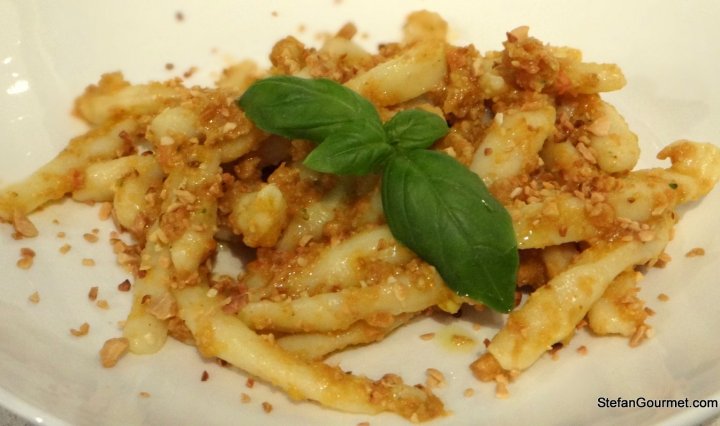
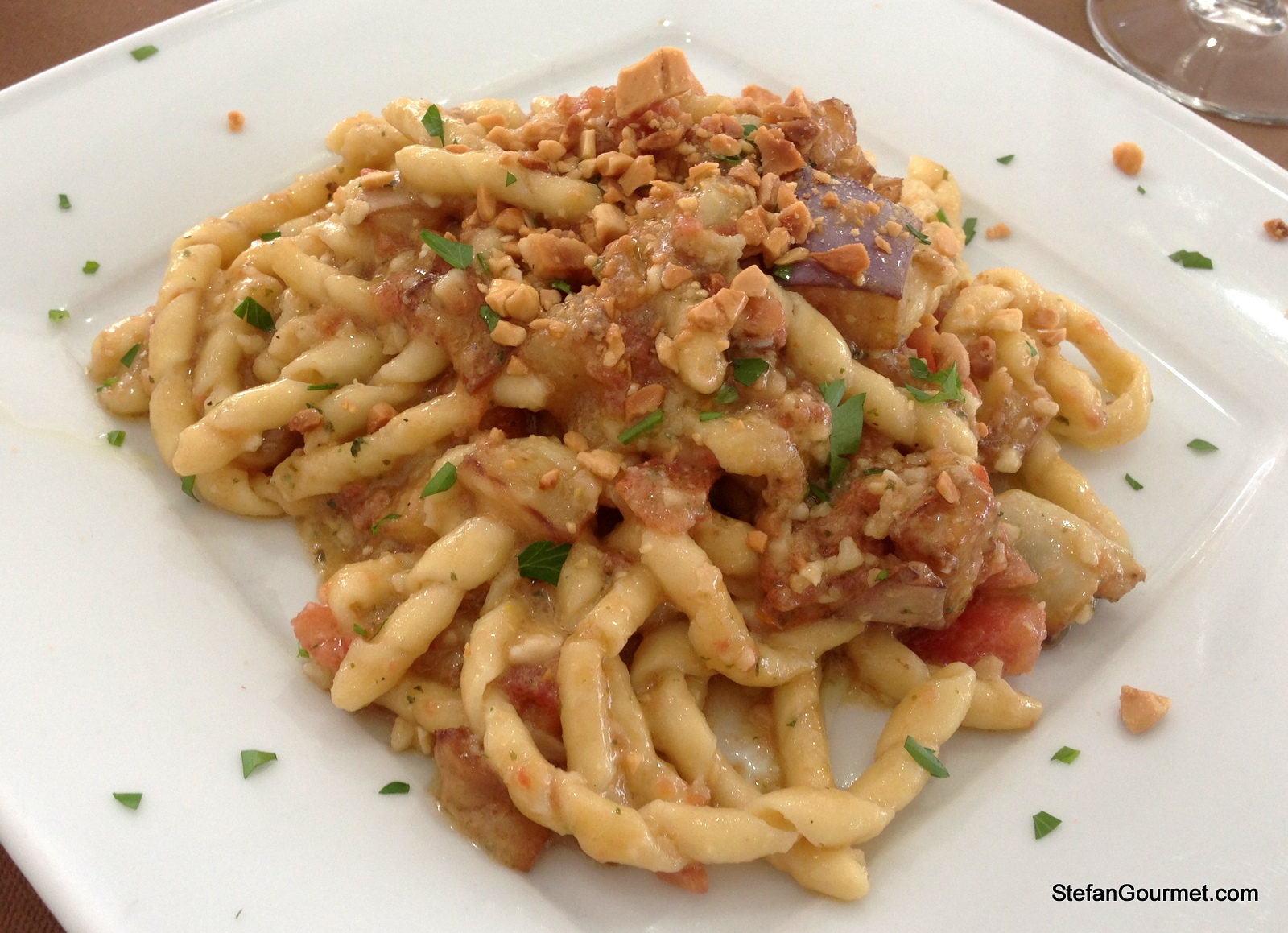
The first time I’ve ever tried busiate was at a great trattoria called U Sfizziusu in San Vito Lo Capo, a beach town close to Trapani. There I had Busiate alla Trapanese, busiate with Pesto alla Trapanese. Trapani and Genova are both port towns, and interaction between the two has introduced the concept of pesto from Genova to Trapani. Pesto alla Genovese is made with basil and pine nuts, whereas the principal ingredients of pesto alla trapanese are tomatoes and almonds. Whereas there exists an official recipe for Pesto alla Genovese, this is clearly not the case for pesto alla trapanese. Tomatoes, almonds, and garlic are in all of them. I’ve encountered version with our without (Sicilian) pecorino cheese, whereas thanks to a post by Chef Mimi I found out that Nigella Lawson even adds capers, raisins, anchovies, and chile pepper. I decided to make it as I remember it from U Sfizziusu: with minimal ingredients but great flavor nonetheless. I only left out the eggplant, because I was already serving caponata as part of the same dinner. Continue reading “Busiate alla Trapanese”

Jambon Persillé (Ham Hock Terrine)

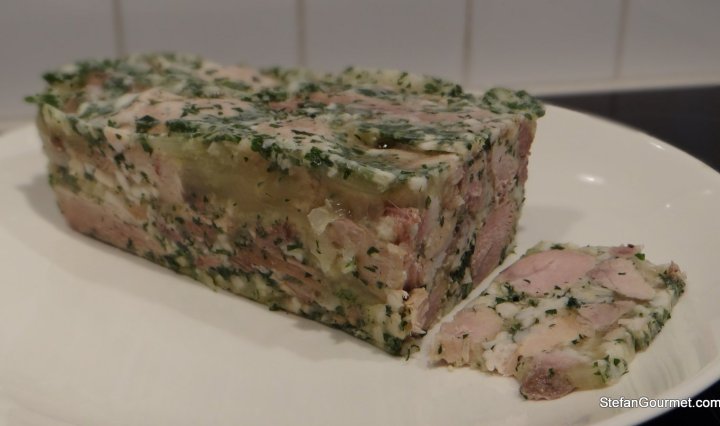
Burgundy (Bourgogne) is a region in France that is famous for its wine and its food. Three years ago we went there for a few days to discover the wine region and purchased some nice wines. When tasting white wines, often a appetizer called jambon persillé was served with it and I remember it was a good pairing. And so it was not hard to decide what kind of appetizer from Burgundy I was going to make for the Burgundian evenings I organised. Continue reading “Jambon Persillé (Ham Hock Terrine)”
Duck Leg a l’Orange Sous-Vide

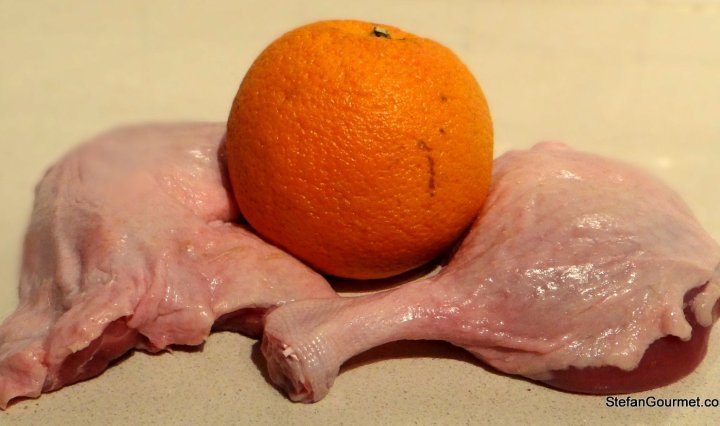
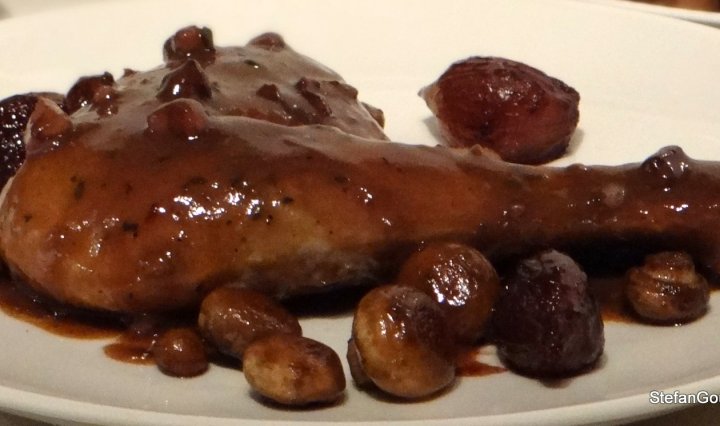
Sous-vide confit of duck leg is great, but I thought it should also be possible to do a more juicy less flaky texture. Some experimenting with times and temperatures showed me right: 24 hours at 64.5C/148F yielded tender juicy duck legs. Duck with orange is a classic combination from French cuisine, known as Canard à l’Orange. And so a very simple but very stylish and tasty dish was born. Ingredients? Duck legs, an orange, salt and pepper, and a teaspoon of honey. That’s it! The duck is cooked in its own fat. Perfect simplicity or simple perfection? Continue reading “Duck Leg a l’Orange Sous-Vide”

Pressure-Cooked Boeuf Bourguignon

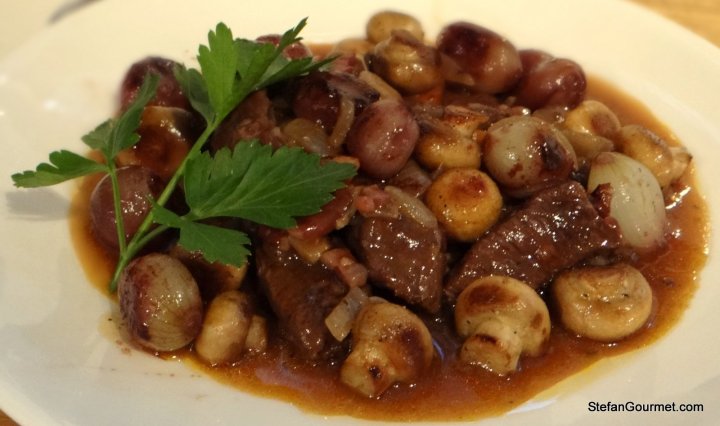
Although I purchased my pressure cooker for making stocks, I thought it would be nice to try making a pressure-cooked stew as well. Pressure cookers are known as “fast cookers” (or actually “fast cooking pan”, “snelkookpan”) in Dutch, and in this case it is true because stewing beef in a pressure cooker only takes 20 minutes instead of 3 hours. Stating it like that is cheating a bit, because after those 20 minutes you need to wait for about half an hour for the pressure to go down. But still, it still means that you only have to start cooking 75 minutes or so before you’re having boeuf bourguignon and that is kind of nice. Continue reading “Pressure-Cooked Boeuf Bourguignon”

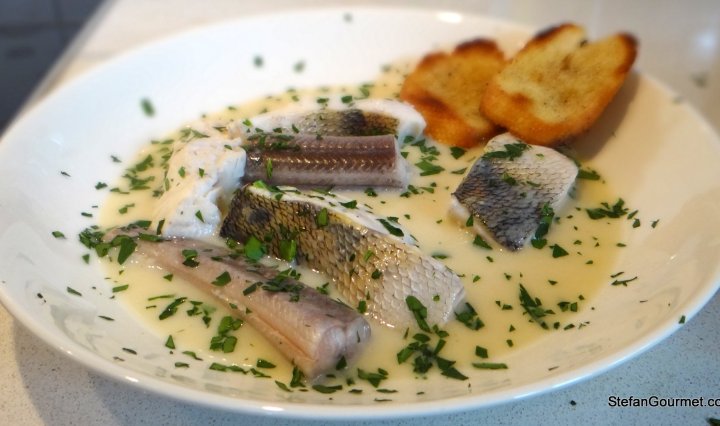
Burgundian Fish Stew (Pôchouse Bourguignonne)

Burgundy (Bourgogne) is a region in France that is famous for its wine and its food. Three years ago we went there for a few days to discover the wine region and purchased some nice wines. Most Burgundian wines are at their best between 5 and 10 years from the harvest, and since the wines we purchased were mostly from 2007 and 2008 it is time to start drinking them. And so it’s a good occasion to organize some Burgundian evenings to share the wines with our friends and enjoy them with some good Burgundian food.

White burgundy is often paired with lobster, but since Burgundy is far from the sea there are no traditional Burgundian dishes with lobster. To cook a nice dish to be paired with Burgundian whites, I had to come up with something using freshwater fish. Pôchouse is a traditional freshwater fish stew that is prepared with eel, bass, pike, and tench. The fish is poached in aligoté (white wine from Burgundy) and served with a cream sauce. Continue reading “Burgundian Fish Stew (Pôchouse Bourguignonne)”

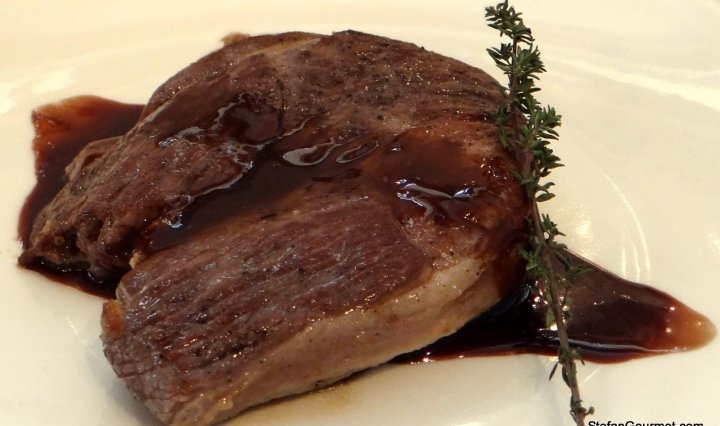
Leg of Lamb Steak Sous-vide

Good food can be surprisingly easy to prepare, especially if you have sous-vide equipment at your disposal. You could also make this with a regular oven though, but you’ll have to pay more attention to getting the meat cooked just right. Lamb is one of my favorite meats, with rack of lamb one of my favorite cuts. Leg of lamb can be cooked whole, but you can also cook a slice of leg of lamb as a steak. Here I am serving it with a red wine demi-glace sauce. Assuming that you already have the lamb demi-glace, there isn’t a whole lot to it. Just cook the meat sous-vide, sear it, and deglaze the pan to make the sauce. Here’s what I did. Continue reading “Leg of Lamb Steak Sous-vide”
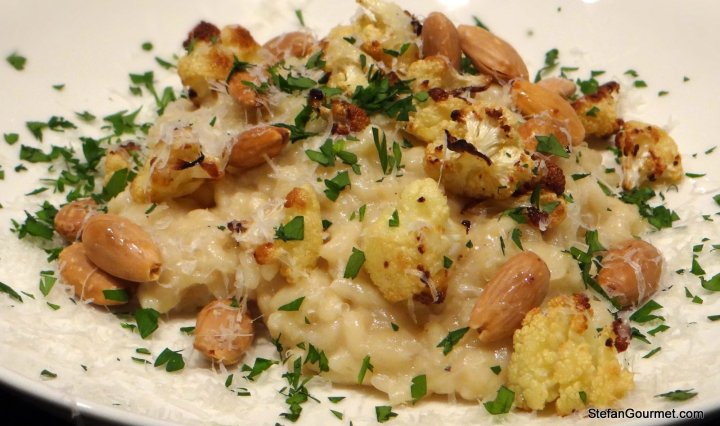
Cauliflower Risotto (Risotto al Cavolfiore)

A few weeks ago I dined at my favorite Italian restaurant in Amsterdam: Bussia. The risotto I was served there was a cauliflower risotto and it was the inspiration for the risotto I created. This risotto is very creamy with most of the cauliflower used to make a cauliflower puree and the remainder roasted in the oven for some additional flavor and crunch. As a finishing touch I added some roasted almonds. I was happy with the result and will definitely make this again. If made with vegetable stock, this is an outstanding vegetarian dish. Continue reading “Cauliflower Risotto (Risotto al Cavolfiore)”

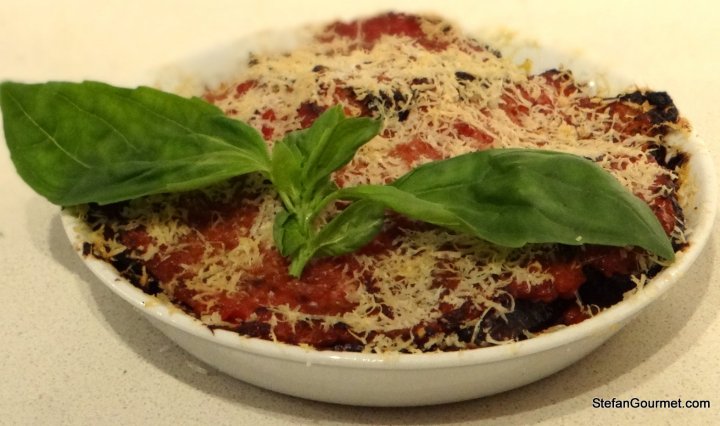
Eggplant Parmigiana ‘Light’ (Parmigiana di Melanzane)

Eggplant Parmigiana is a very tasty oven dish, consisting of eggplant, tomato sauce, and cheese. Using fresh tomatoes for the sauce (rather than from a can) takes it over the top. Eggplant, tomatoes, mozzarella, and basil go very well together. This is a classic Italian dish that is clear evidence of how good simple Italian food can be. The main drawback of the classic preparation is that the eggplant is pan-fried with lots of oil, as the eggplant slices are like sponges. I’ve found a way around that: I roast the eggplant in the oven after only lightly brushing it with oil. Salting the eggplant slices helps to cook them. In this case I forgot to buy the mozzarella that I usually put on top, and made an even ‘ligther’ version. The parmigiano does not melt as nicely, but it still makes for a nice dish. It’s your choice whether you want to put mozzarella on top or not. Continue reading “Eggplant Parmigiana ‘Light’ (Parmigiana di Melanzane)”

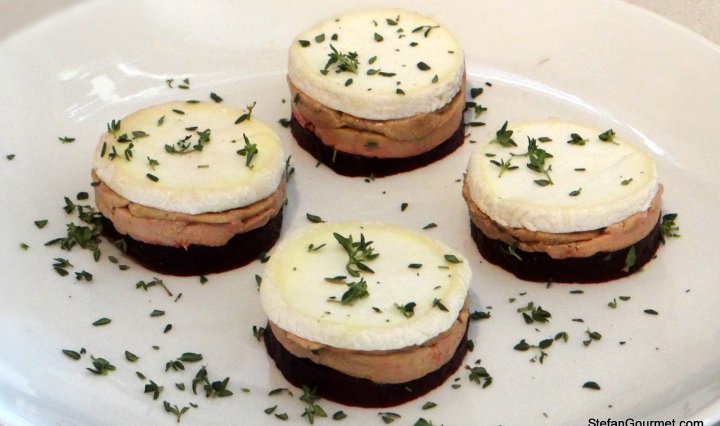
Foie Gras with Goat Cheese and Beetroot

After the wonderful dinner my new friends Teun and Auldo cooked for me, it was time to return the favor. I decided to serve to them a collection of my favorite classic Italian recipes and some of my own creations. After an aperitif of a Bernard Pertois champagne, the first appetizer I served was something I’d created a few years ago before I started blogging, inspired by a dish we had at Librije: foie gras with crottin de chavignol and beetroot. Continue reading “Foie Gras with Goat Cheese and Beetroot”

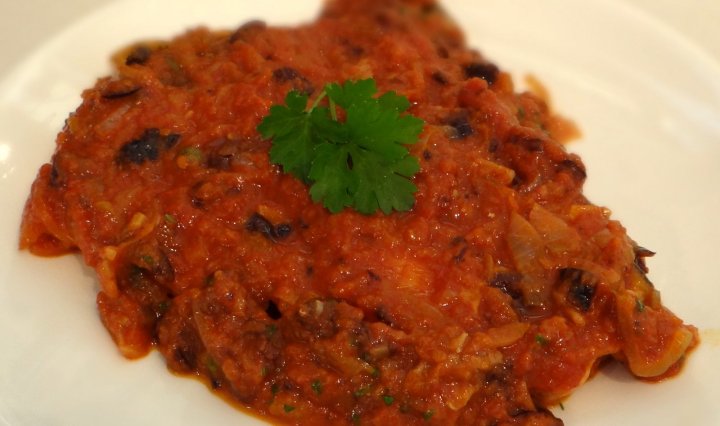
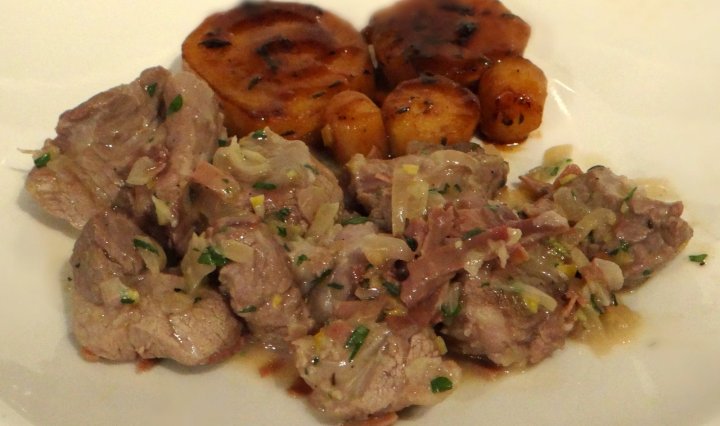
Lamb with Lemon-Egg Sauce (Abbacchio Brodettato)

As I mentioned in my earlier posts this week, Easter is celebrated in Italy by eating egg and lamb. So it was a given that the main course for our Easter dinner would be lamb. To make it even more appropriate for Easter, the sauce of this lamb dish is made with an egg yolk. Abbacchio Brodettato is a lamb dish from Lazio, the region around Rome. Abbacchio is suckling lamb, but any young lamb will do to make this dish. This dish has a very original taste, as lamb is not often combined with prosciutto, lemon, and egg yolk. It works very well and the lamb is very tender. It is almost like eating white meat, and therefore it can be no surprise that a full-bodied oaked white wine is a better pairing for this than red wine. Continue reading “Lamb with Lemon-Egg Sauce (Abbacchio Brodettato)”

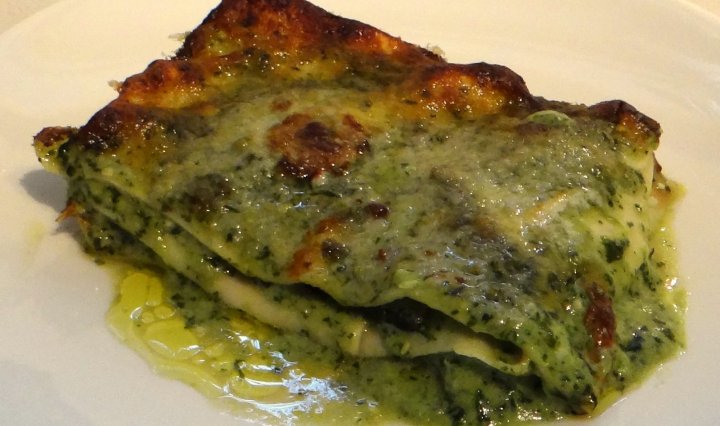
Lasagne alla Genovese

When you think of lasagne, you probably think of the famous Lasagne alla Bolognese with bolognese ragù and bechamel sauce. There are however more types of lasagne, such as Lasagna alla Napoletana with ragù alla napoletana, meatballs, sausage, and ricotta, or this Lasagne alla Genovese with pesto. I had never made it before but I will definitely make it again as it was delicious and surprisingly light. Lasagne alla Genovese is made with a mixture of pesto alla genovese and bechamel sauce, to which vegetables can be added. In this case I added roasted zucchini, an idea I got from the Italian blog Il Marito Perfetto (the perfect husband). Continue reading “Lasagne alla Genovese”

Broiled Cod alla Romagnola (Grigliata di Pesce alla Romagnola)

On the Adriatic seacoast of Romagna, all kinds of seafood are marinated with parsley, garlic, olive oil, and lemon juice, and then coated with breadcrumbs and grilled or broiled. The marinade gives the seafood a nice flavor, whereas the breadcrumbs help to keep the seafood tender and moist. This recipe is quite similar to ChgoJohn’s recipe for Bacala alla Griglia, which is not surprising since the Marche region where is family comes from is just south of Romagna. Continue reading “Broiled Cod alla Romagnola (Grigliata di Pesce alla Romagnola)”

Coq au Vin Sous-Vide

Coq au Vin was ‘invented’ to turn a tough old rooster into a feast. Nowadays it is hard to find such tough old roosters, and most Coq au Vin is made with chickens that have only lived to be about six weeks old. They do not really require to be simmered for a long time in red wine to become edible, and have a lot less flavor. Coq au Vin is still good anyway. If you are looking for a good Coq au Vin recipe for regular chicken, click here.

After I had discovered a type of free range chicken that is allowed to grow more slowly and thus develop more flavor, which reminded me of my grandmother’s chicken, I was curious how it would work when served as Coq au Vin. My parents were coming over for dinner and they had dropped some hints that they were curious about the “kip van tante Ali” I had found. And so I decided to kill two birds with one stone and prepare that type of chicken sous-vide, served as Coq au Vin. Continue reading “Coq au Vin Sous-Vide”