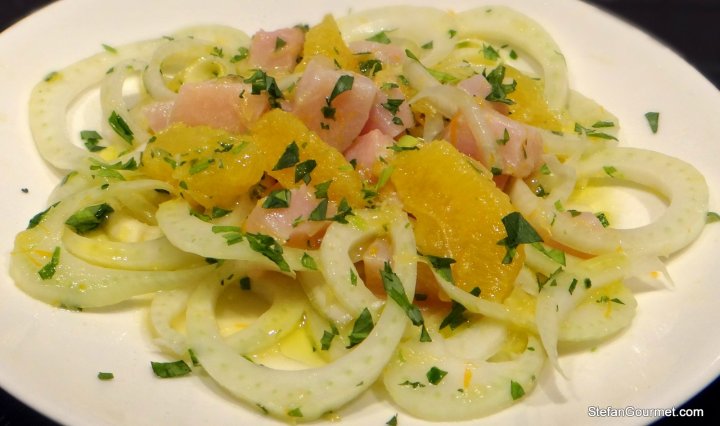
Swordish, Fennel and Orange Salad

It is great to live on a latitude of 52 degrees in summer, because we get so much sunlight in the evenings. Now it’s payback time however, as the sun sets very early. When I saw fresh swordfish at the fishmonger (rather than frozen, which is usual), I decided to make this salad to bring a bit of the brightness of summer into the dark winter. The swordfish is served raw in this salad. If you don’t like that, you could briefly sear it in olive oil over very high heat and still serve it with a fennel and orange salad. Continue reading “Swordish, Fennel and Orange Salad”

Stuffed Veal Bundles (Involtini di Vitello)

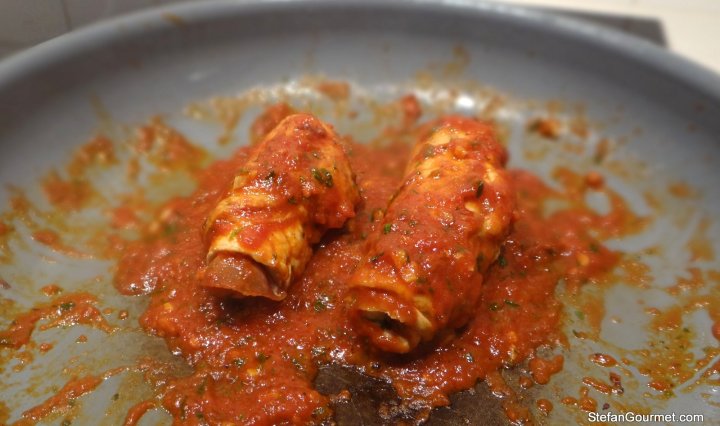
I don’t have many cookery books (at least not compared to many of you), and I do not use the ones that I do have very often. There is one exception, and that is my collection of Biba Caggiano books. By now I’ve probably cooked the majority of recipes in there, but there are still some that I haven’t tried. This recipe for fast stuffed veal bundles from “Modern Italian Cooking”, the first of her books that I owned and the one that got me started on Italian cooking, is one that I only recently tried for the first time. Perhaps because I thought it was too similar to Saltimbocca alla Romana, which is on the next page and one of my favorites. The main differences are that saltimbocca are never rolled up but always served flat, and that these stuffed veal bundles are cooked in a tomato sauce.  They also take a bit longer to cook than saltimbocca. Continue reading “Stuffed Veal Bundles (Involtini di Vitello)”

Pansoti con Salsa di Noci

In Piemonte ravioli are called agnolotti and should contain meat, whereas in Liguria ravioli are called pansoti (or pansotti) and do not contain meat. Instead they are stuffed with a mixture of cheese and greens. The traditional mixture of greens is called “preboggion”, which refers to greens found growing in the wild on the Ligurian coast. Pansoti are often served with a walnut sauce, the same as I used for gnocchi a few weeks ago. The traditional cheese is called prescinsêua and is a fresh cheese that is a cross between ricotta and yogurt. The word pansoti is derived from the Ligurian word “pansa” (pancia in Italian), which means belly or paunch. Pansoti can have different shapes, but they should be ‘paunchy’. Continue reading “Pansoti con Salsa di Noci”

Walnut Chocolate Cake

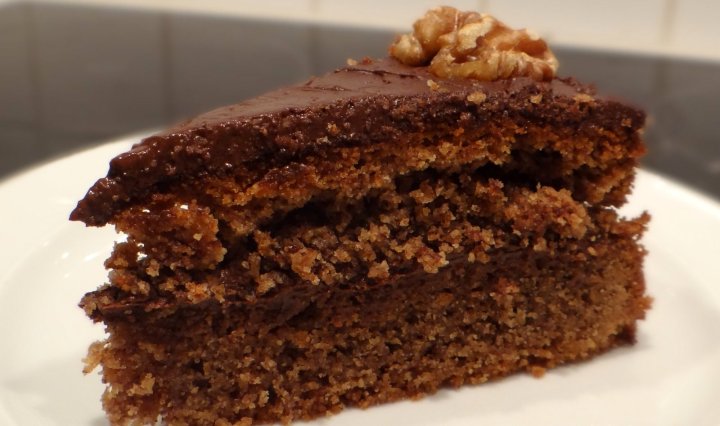
I wanted to end my Piemonte-themed wine and food evenings with a nice dessert. The first thing I thought of was bounet, but I had already made that before for a similar evening so I asked my friend Resi (who is from Piemonte and helps me with my blog in Italian) for suggestions. She suggested a walnut cake with chocolate pastry cream as typical dessert from Piemonte. That sounded great and like a good combination for the barolo chinato I had made.

DSC02644
The resulting cake was absolutely delicious. It has a very full walnut flavor and it’s not surprise that the chocolate pastry cream was nice as well. If you like dark chocolate, you can add cocoa powder to the chocolate cream to give it a more hefty chocolate flavor. The resulting cake will pair better with the barolo chinato.  Continue reading “Walnut Chocolate Cake”

Bagna Càuda

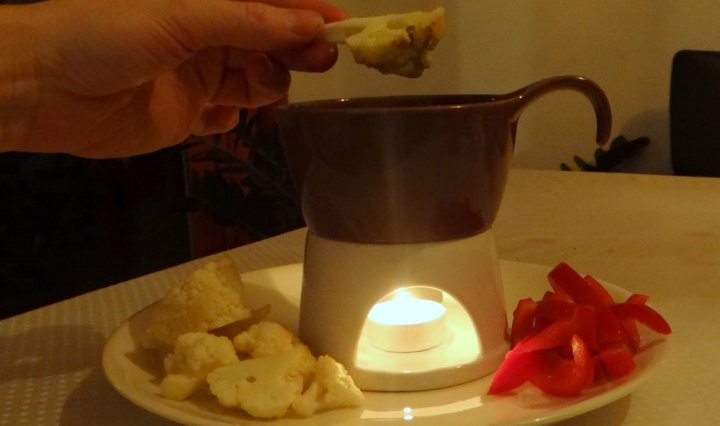
As an appetizer for my Piemonte-themed evening I decided to make bagna càuda. This is a hot dip sauce made with olive oil, anchovies, and garlic and served with raw or cooked vegetables to dip. There are many varieties, with a lot of them including butter besides olive oil or even milk or cream. Also the vegetables used are endless. Continue reading “Bagna Càuda”

Risotto al Barolo con Salsiccia

Today it is exactly two years ago that I started this blog. This is the 486th post, there have been almost 150,000 views, and more than 5,000 comments. It has been a great ride so far and I never could have imagined I would have learned so much from it. The fun and learning is thanks to the interaction with my readers and the blogs I follow myself — so keep it coming please!

This is an appropriate moment to try something new: at the bottom of each post I will feature a ‘flashback’ to a post from two years ago, as there are some very nice recipes there that you may have missed because I didn’t have many readers in the beginning.

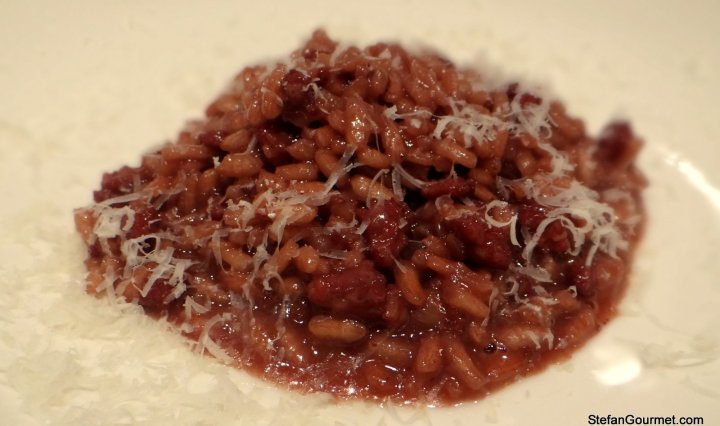
And now for today’s recipe. Yesterday evening was the first serata piemontese, and it was a great success. Tonight is the next installment, with the same food but mostly different wines. I will do a full report in a later post. I included two primi piatti in my Piemontese menu: agnolotti and risotto al barolo con salsiccia. Risotto is usually made with just a bit of white wine, but Piemonte has the speciality of using red wine and quite a lot of it so the main flavor of the risotto is that of the wine. The end result will thus depend on the quality of the wine used, and though it may seem like a waste of a good barolo, I strongly urge you not to use a cheap red wine for this as that would ruin the dish. Last night everyone agreed that this risotto was different, but delicious. Continue reading “Risotto al Barolo con Salsiccia”

Agnolotti

Stuffed pasta such as ravioli can probably be classified as my signature dish. I love to prepare them and I love to eat them. Twice a year I organize a wine & food extravaganza for my friends — two evenings with a multi-course dinner with two different paired wines with each course to compare them and find out which one is the best match. After the Burgundy theme earlier this year, it is now time for the Italian region of Piemonte. Piemonte is the home of great wines such as Barolo and the home of great Italian food. After the Barolo Chinato (which I will serve with the dessert) I wrote about yesterday, today’s post is about the one of the primi piatti (pasta dishes) I will serve during my serata piemontese: Agnolotti.

Continue reading “Agnolotti”

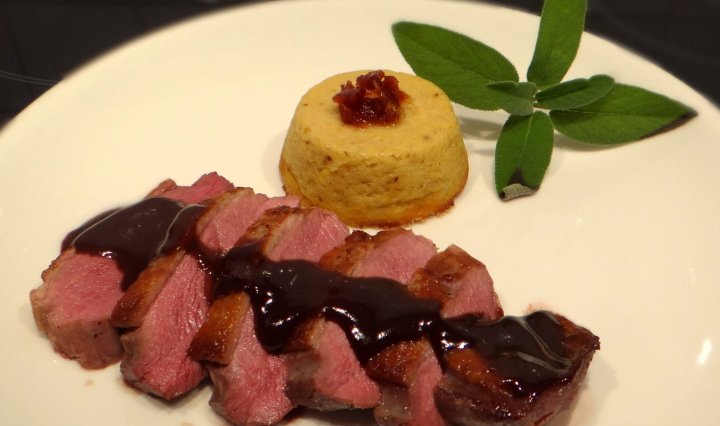
Duck Breast Sous-Vide with Duck Red Wine Demi-Glace

After yesterday’s post about duck stock, it won’t come as a surprise that today’s post features duck. I love duck meat and this duck breast with a demi-glace sauce made from duck stock and red wine was particularly nice. It also won’t be a surprise what my next post will be about, as the side dish (a butternut squash tartlet) will have a post of its own.

Now there is more to this dish than just the use of duck stock to make a demi glace (which in the modern form is just duck stock reduced until it is thick and syrupy and loaded with duck flavor). You see, I took a bit of a risk when I cooked the duck breast and duck skin separately and glued them together with Activa, and then called this ‘Perfect’ duck breast. Grant from An American Baker in London left a comment saying that he had seen something similar on Masterchef, but with the duck skin cooked sous-vide rather than in the oven to render the fat out of it before gluing it to the duck breast. The advantage of cooking the duck skin sous-vide would be avoiding shrinkage. Cooking the skin sous-vide sounded like music to my ears, and I quickly forgot that my previous version was perhaps not as perfect as I had thought it was. Continue reading “Duck Breast Sous-Vide with Duck Red Wine Demi-Glace”

Irish Mussels with Irish Blue Cheese and Irish Parsnips

Recently we took a plane to Dublin for a return visit to Conor and ‘the wife’ (a.k.a. Sharon). They showed us a really great time.

DSC02353
We stayed in a wonderful house with a huge kitchen by Lough Derg (a beautiful lake in the county of Tipperary). Continue reading “Irish Mussels with Irish Blue Cheese and Irish Parsnips”

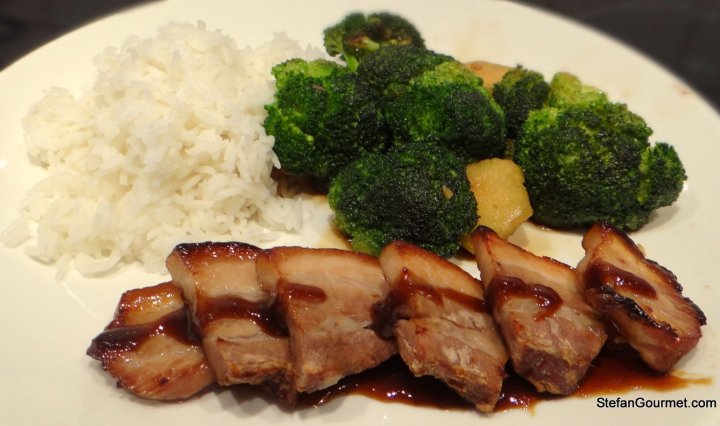
Sous-Vide Pork Belly Asian Style with Garlicky Broccoli

One of the things you can only do sous-vide is making tough meats tender while keeping them juicy and without cooking them ‘well done’. As I am a great fan of medium rare meat rather than well done, this is one of the reasons why so far, I’ve almost exclusively cooked sous-vide meats that way. The only exceptions have been duck leg confit sous-vide and pulled pork sous-vide. This means cooking meat sous-vide at temperatures between 55ºC/131ºF and 65ºC/149ºF, sometimes as long as 72 hours to allow the meat to become tender at such a relatively low cooking temperature.

Lately I’ve started to wonder about cooking meat sous-vide at higher temperatures. The meat will surely become well done and flaky, but I’m curious whether it is still better than a traditional braise on the stove top and in the oven. There is only one way to find out, and that is to try. The first experiment in this series is pork belly. Usually I cook pork belly sous-vide for 36 to 72 hours at 60ºC/140ºF, but in this case I tried it for 10 hours at 77ºC/170ºF. After that it was briefly crisped under the broiler. The inspiration for the recipe came from a post on Serious Eats. I thought it would be nice with broccoli stir-fried with garlic (inspired by REMCooks.com) and some rice, and that did indeed work well. Continue reading “Sous-Vide Pork Belly Asian Style with Garlicky Broccoli”

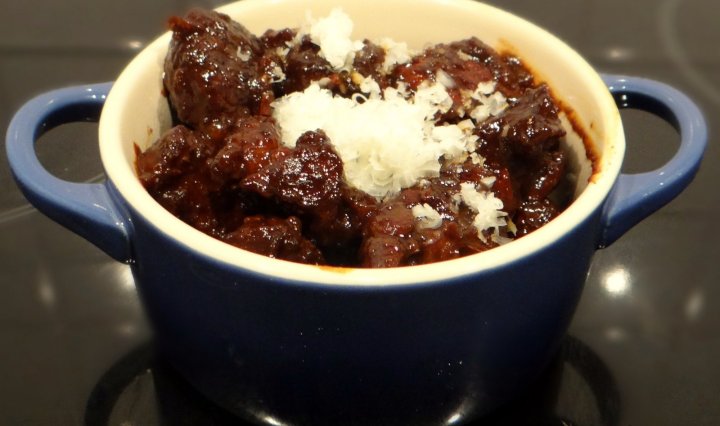
My First Chili con Carne

When I wanted to try and make chili con carne from scratch for the first time, the natural place to go for a reliable recipe was REMCooks.com. Richard’s recipe for what he calls Super Bowl Chili, Texas-Style has been the basis. According to Richard (and I consider him a reliable source), true Texas-style chili includes only meat, chile peppers, and spices. This means that the chile peppers used for it are very important, as they are the determining factor in how the chili will taste. This is why I made my own chile powder rather than using store-bought. By using different types of chiles you can achieve great depth of flavor. Continue reading “My First Chili con Carne”

Homemade Gravlax

Stéphane Gabart has beautiful photograph on his blog My French Heaven, and the recipes he shares with us are both simple and delicious. His post on gravlax inspired me to try this for myself. Gravlax or gravad laks is salmon cured with salt and sugar. This used to be a method to preserve salmon, and nowadays it is still prepared for its nice flavor. The name actually means “buried salmon” in Scandiavian languages, as the salmon used to be buried on the beach to preserve it.

Gravad lax tastes similar to smoked salmon, except that it’s not smoked. It is very easy to make your own, which will certainly impress your friends. All you need is sushi grade salmon and some patience. Continue reading “Homemade Gravlax”

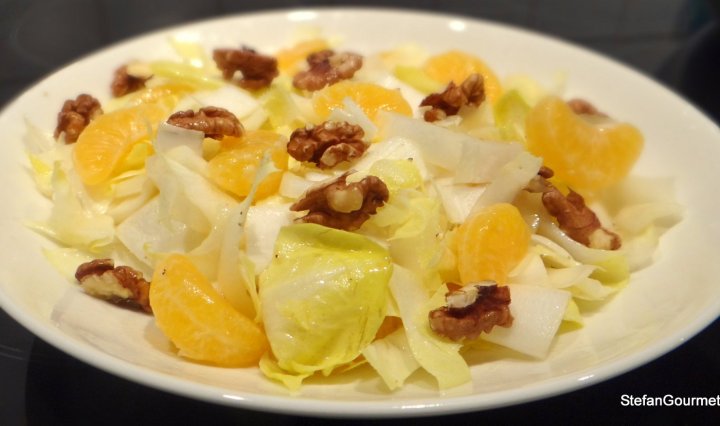
Belgian Endive/Witlof/Chicory Salad with Mandarins and Walnuts

There are few vegetables that have different names in the UK, the US, and Australia, but witlof is one of them. Witlof is what it’s called in Australia and the Netherlands, but it is called Belgian Endive in the US and Chicory in the UK. In this post I’m going to stick to witlof, as this is a Dutch salad.

A witlof salad with mandarins and walnuts is a very homey Dutch dish, that is often made with canned mandarins and store-bought dressing. As such it is okay but nothing special. With a few touches I’ve transformed it into something a lot better: using fresh mandarins rather than from a can, toasting the walnuts, and making my own dressing with fresh mandarin juice and zest, honey and walnut oil. Continue reading “Belgian Endive/Witlof/Chicory Salad with Mandarins and Walnuts”

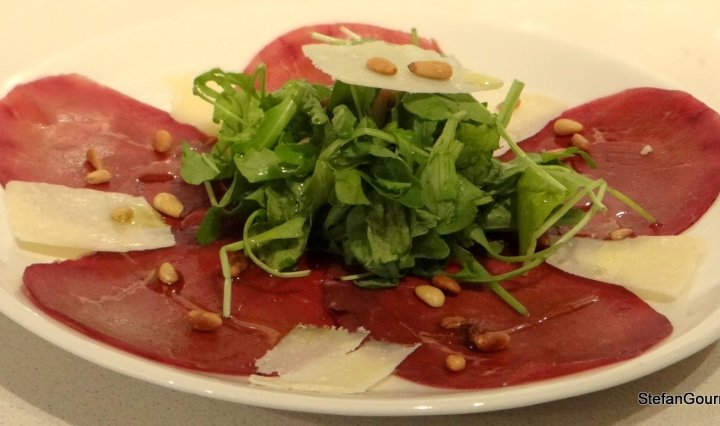
Bresaola

If you don’t want to cook but like to impress at a dinner party, bresaola is what you should look for in an antipasto. Bresaola is Italian air-dried, salted beef that has been aged two or three months. Like carpaccio (raw beef) it is often served with shaved parmesan, roasted pine nuts and arugula, but it has much more flavor. Bresaola has a very rich pleasant flavor. I like to brush the bresaola with a bit of aged balsamic vinegar. The good stuff is called aceto balsamico tradizionale, is aged for at least 12 years, and very expensive. But you only need half a teaspoon or so per serving.  Continue reading “Bresaola”

Rabbit Legs Sous-Vide with Fresh Fig Sauce

A few weeks ago I was envious of the fresh figs Richard McGary used for his wonderful Chicken Quarters with Fig Chutney, as good quality fresh figs are very hard to get in this country. I remember eating fresh figs in southern Italy and being impressed how great they were compared to the watery imported stuff I’m used to. But lo and behold, quite soon afterwards I picked up some very decent fresh figs from the market and they were even a bargain. As I picked up a rabbit from the same market, I pretty soon came up with the idea to prepare the rabbit with a fresh fig sauce. Continue reading “Rabbit Legs Sous-Vide with Fresh Fig Sauce”

Rabbit Loin Saltimbocca (Saltimbocca di Coniglio)

Cuts of meat that come from different muscle groups in an animal require different cooking to make them shine. For instance, a ribeye steak is best served medium rare after a quick sear and some resting, whereas a brisket needs to be cooked low and slow to become tender and delicious to eat. Smaller animals like chickens and rabbits are often cooked whole, disregarding the wisdom gained from preparing beef in separate parts. Part of the reason for this may be that a chicken fits easier into most pans and ovens than a whole cow does 😉 A more economical reason is that if you judge by effort per pound of meat, a relatively big effort is needed to separate the different muscle groups of a small animal. Even so, it is worth doing so to get the best results. This is also true for rabbit. Rabbit loins are the ‘rib eye’ of the rabbit, they are very tender and require very little cooking. The legs and other parts however need to be braised or stewed. Even so, rabbit is often cooked whole with the loin dried out.

I thought this to be a waste of a very nice piece of meat, and so when I bought a whole rabbit I decided to do my own butchering and divide the rabbit into loins, legs, flap meat, and carcass. (Of course you can also ask your butcher to do this for you.) The latter three parts will be used for tomorrow’s recipe. The tenderloins are so small in a 1.1 kg (2.5 lbs) rabbit that they are hardly worth getting out. The loins themselves were about 160 grams together or about 14% of the weight of the rabbit.

On the same day I had bought the rabbit, I had also bought some very nice prosciutto. As I still have fresh sage growing in my garden, I decided to turn those rabbit loins into rabbit saltimboccaSaltimbocca is a famous dish from Rome consisting of veal scaloppine with prosciutto and sage. It is so delicious that it is called “jump into mouth” (salt = jump, bocca = mouth). I prefer to have a rabbit jumping in the direction of my mouth rather than a calf 😉 But seriously, this rabbit saltimbocca was absolutely delicious. The meat is super tender and succulent, and pairs very well with the prosciutto and sage. Compared to the veal version, it is a bit lighter and softer in style.

Continue reading “Rabbit Loin Saltimbocca (Saltimbocca di Coniglio)”
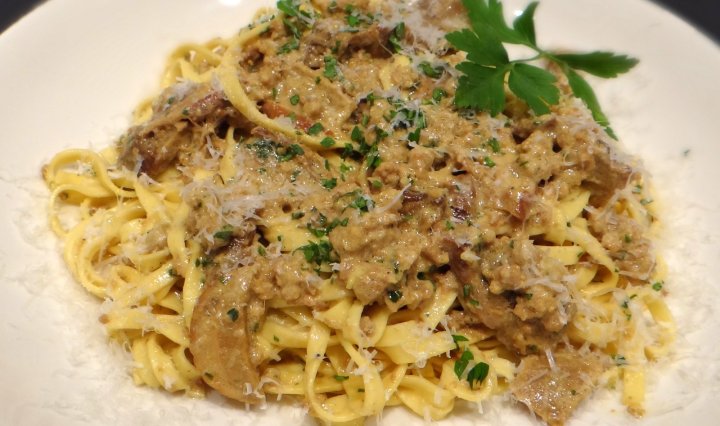
Fettuccine with Porcini, Sausage, and Cream

Did you know October 25 is World Pasta Day? I didn’t until today. For us, almost every day is pasta day. There are countless varieties and even more sauces, and we like them all. I’ve written before on this blog that my love for Italian cooking initiated from the books of Biba Caggiano. I have almost all of her books, and I have cooked many of the recipes in them. But not all, and today’s pasta is a dish that I had never tried yet, even though it’s in the first of Biba’s books I have owned for 15 years now. I wish now I had tried it sooner, because it is really good!

Gramigna is a special kind of homemade local pasta from Bologna. Gramigna are often served wit sausage and cream, and Biba was inspired by that for the sauce in this recipe. As you need a special tool to make gramigna, we prepared fresh fettuccine instead. Continue reading “Fettuccine with Porcini, Sausage, and Cream”

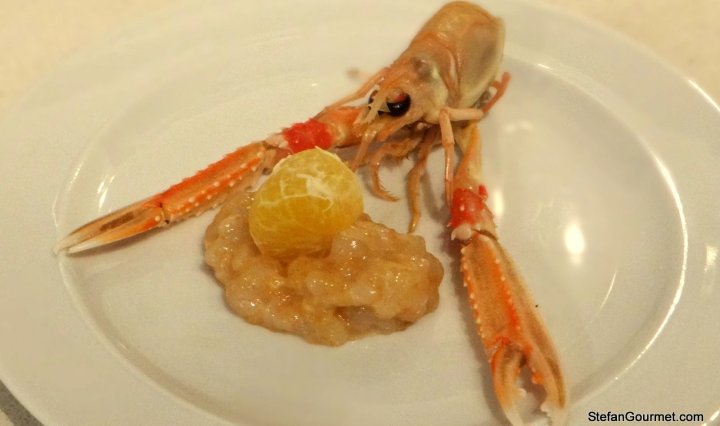
Langoustine Tartare with Mandarin and Bottarga

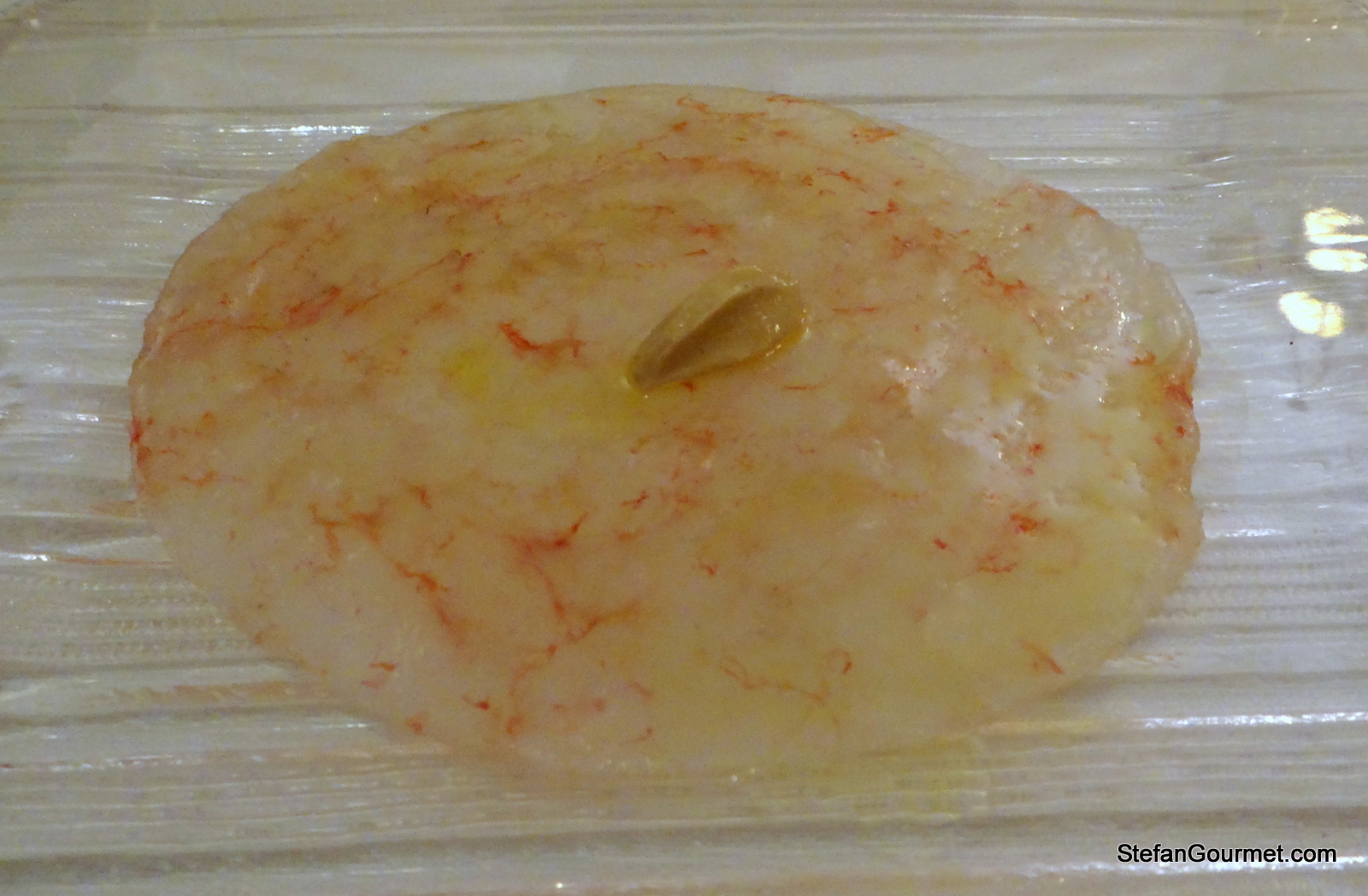
One of the best dinners we’ve had so far this year was at La Madia in Sicily. One of the dishes there was Battutino di gambero rosso, maionese di bottarga di tonno e olio al mandarino.

DSC05651
The dish at La Madia

This is what I wrote in my review: “Carpaccio of prawns, flattened into a perfect disc, served with a bottarga mayonnaise and mandarin olive oil. It was suggested to spread out the ‘mayo’, which we did, and it was a great combination with the prawns and didn’t overpower them. Great balance of flavors, although I may have liked a slightly ‘fresher’  taste.”

The type of prawns used in this dish is not available fresh in the Netherlands, but I love raw langoustines (scampi) that are locally caught. When I saw fresh langoustines at the market, I decided to create a dish that was inspired by the combination of flavors at La Madia. The result was an appetizer of langoustine tartare with mandarin zest infused olive oil, mandarin juice, bottarga, and mandarin. It was very nice as a small appetizer (amuse bouche). The flavors worked very well together, and I liked that it was ‘fresher’ than the dish at La Madia. The dried bottarga was not as smooth as the bottarga mayo at La Madia, but it was nice all the same. Continue reading “Langoustine Tartare with Mandarin and Bottarga”

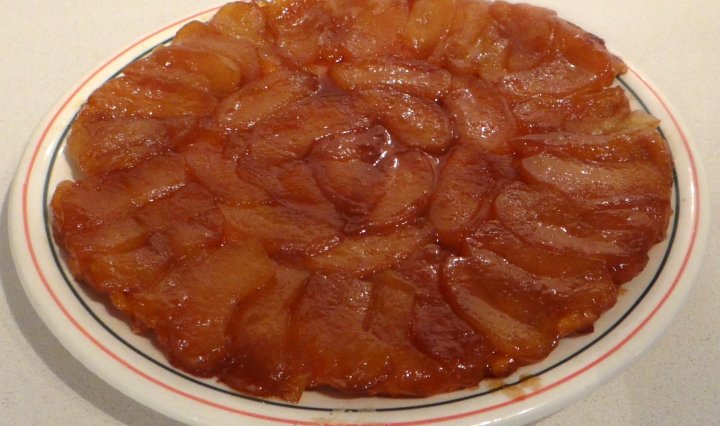
Tarte Tatin

One of the most famous French tarts is the upside-down apple tart that according to legend was created by mistake by the Tatin sisters in the 1880s. Baking the cake upside-down helps to keep the crust crispy. The other success factor is the combination of apples with caramel. It sure is delicious and not that hard to make — the tricky part is turning it at the end.

DSC01441
A few weeks ago I made a very simple Tatin cheat using store-bought puff pastry but without turning the tart. Many recipes for Tarte Tatin use store-bought puff pastry, but I’m quite sure that the Tatin sisters used more simple pastry so instead I made pastry dough from scratch. Here’s my version. You will need an oven-proof flat pan with a diameter of 28 cm (11″). Continue reading “Tarte Tatin”

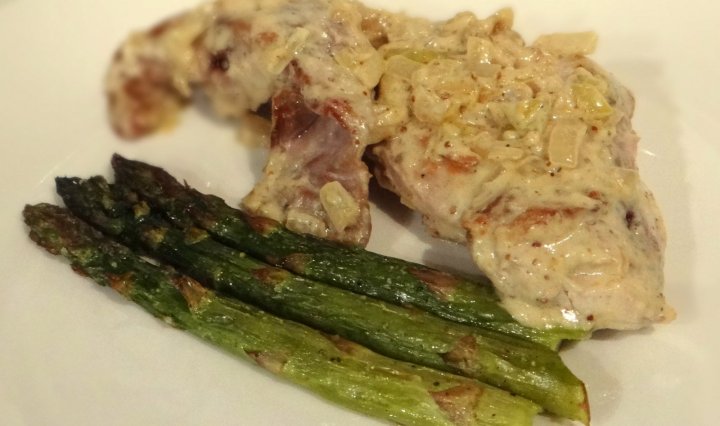
Rabbit Sous-Vide with Mustard Sauce (Lapin à la Dijonnaise)

Stéphane from My French Heaven always has wonderful photos on his blog and recipes that are as simple as they are tasty. His recent post about his version of the French classic rabbit in mustard sauce was all the inspiration I needed to make my own sous-vide version.

Continue reading “Rabbit Sous-Vide with Mustard Sauce (Lapin à la Dijonnaise)”
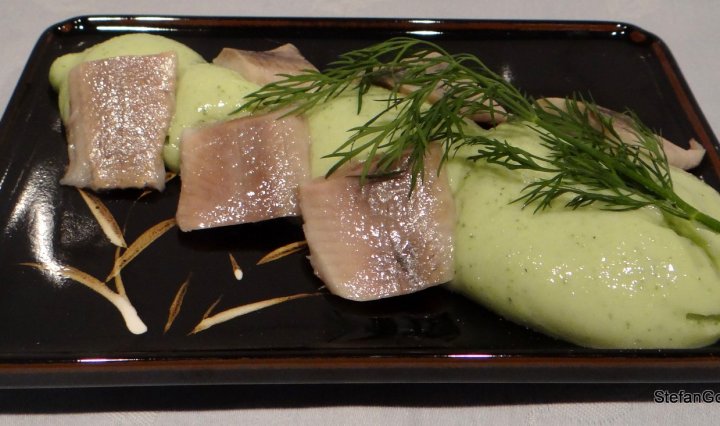
Herring Ceviche with Cucumber Foam

The inspiration for serving herring marinated in lime juice with cucumber comes from an amuse bouche served by Albert when he cooked dinner for us.

Brined herring is a Dutch delicacy, prepared by ripening the herrings for a couple of days in oak barrels in a brine. The pancreatic enzymes which support the ripening make this version of salt herring especially mild and soft. Marinating it in lime juice (ceviche style) makes it even milder and softer.  As brined herring is served with pickled cucumber and raw chopped onion in the Netherlands, I prepared the foam with cucumber, yogurt, and raw shallot (a variation of a recipe that came with the iSi gourmet whip). The combination with the herring worked out great and I will definitely make this again.

Continue reading “Herring Ceviche with Cucumber Foam”
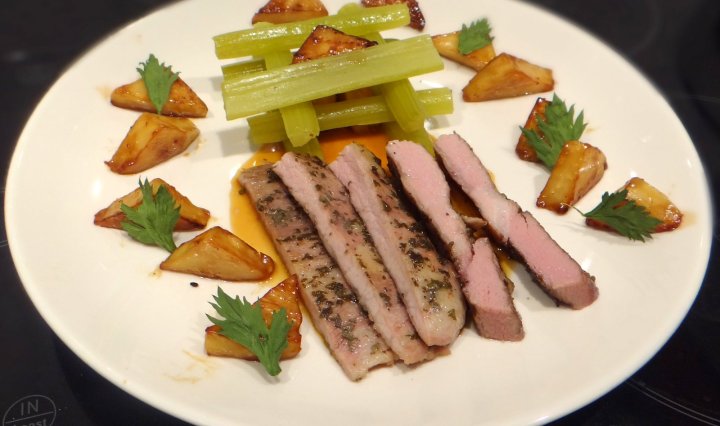
Iberico Secreto Sous-Vide with Celeriac Fondant Sous-Vide

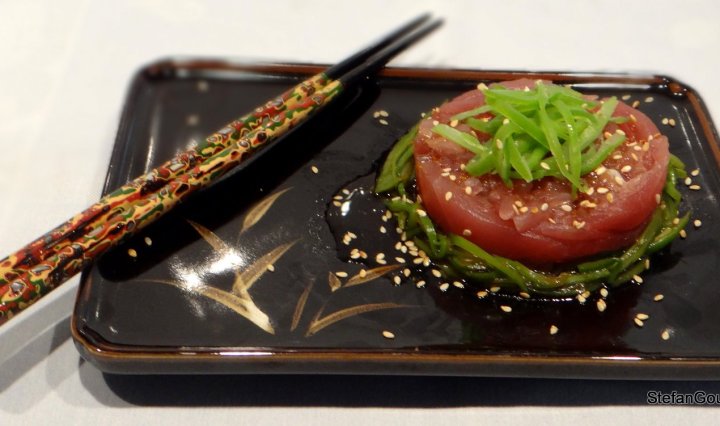
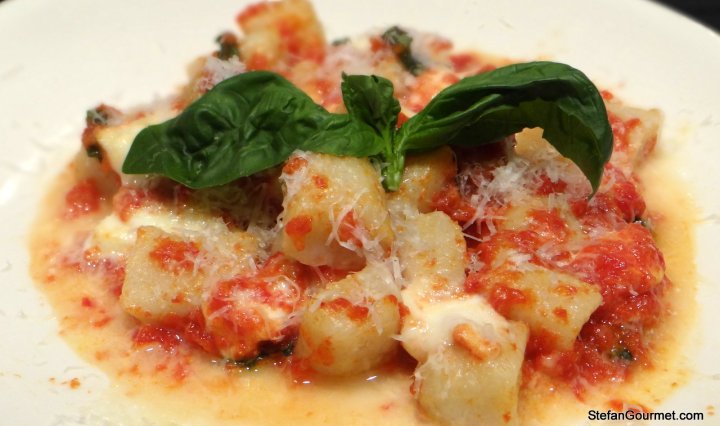
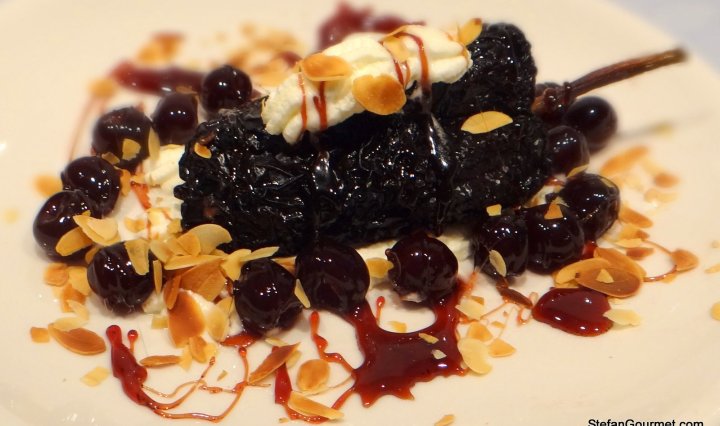
The dinner we cooked when Teun came over consisted of tuna with runner beans as antipasto, gnocchi alla sorrentina as primo, iberico pork sous-vide as secondo, and finally chocolate stuffed ancho chile with amarena cherries as dolce. The pigs that are grown for the famous jamón ibérico from Spain do not just yield the hams, but also other fine cuts of meat. The finest is called the secreto (literally secret) and is a very nicely marbled piece of pork with lots of flavor. Teun and Albert introduced me to this cut, and I absolutely love it. Cooking it sous-vide is of course a great way to enjoy it to its fullest. I thought it would be nice to combine it with celeriac fondant, and the dish did turn out great. Continue reading “Iberico Secreto Sous-Vide with Celeriac Fondant Sous-Vide”

Tuna Tartare with Runner Bean ‘Seaweed’

Teun came over to cook together for the first time again after my trip to Australia, and we created this appetizer together.  This use of runner beans was inspired by snow peas that looked like seaweed at Vermeer. The combination of the raw tuna with the crispy runner beans and the spicy dressing works really well. Continue reading “Tuna Tartare with Runner Bean ‘Seaweed’”

Gnocchi alla Sorrentina

Home made potato gnocchi made from scratch are the best! They are so much better than chewy store-bought ones. I’ve only posted about potato gnocchi once before: gnocchi with gorgonzola was the first recipe I ever posted on this blog. The city of Sorrento is near the island of Capri, the island that gave its name to the famous Insalata Caprese with tomato, mozzarella, and basil. You can think fo Gnocchi alla Sorrentina as the gnocchi version of this salad, because the gnocchi are dressed with fresh tomato sauce, mozzarella, basil, and parmigiano reggiano. This combination is always a winner, and it is even more so with feathery light homemade potato gnocchi.
Continue reading “Gnocchi alla Sorrentina”

Ancho Chile with Chocolate Mousse and Amarena Cherries

Guess whose idea it was to use chile peppers for dessert? Who else but Richard McGary! I found his recipe for Cinnamon Candied Chile Relleno with Red Wine Chocolate Sauce very intriguing, and knew I had to try something similar. I thought it was very appropriate to use the ancho chiles that Richard had sent me to prepare this very unusual but very tasty dessert. The base of the dessert is a chile pepper stuffed with chocolate mousse. Richard soaks the chiles in cinnamon syrup and serves them with pecans and red wine chocolate sauce. I made my own version with an Italian twist by pairing the chocolate stuffed chile with tart amarena cherries and almonds. It was really good, and definitely something I’ll make again. Thanks Richard! Continue reading “Ancho Chile with Chocolate Mousse and Amarena Cherries”

Chocolate Mousse (Mousse au Chocolat)

Mousse au Chocolat is one of the standard desserts of France, along with the perhaps even more common Crème caramel. My first attempt to find a simple recipe failed miserably, as the mousse turned out way too dense. I found the solution in a recipe by Delia Smith, which is to use water. This makes for a nice light mousse. To make things a little more interesting I decided to substitute half of the water with amaretto liqueur, but that is not at all necessary for a great result. If you have a stand mixer or another way of whipping egg whites, this is relatively easy to prepare and oh so good if you like chocolate. And who doesn’t?! Here’s my version.
Continue reading “Chocolate Mousse (Mousse au Chocolat)”

Apple Tatin Cheat

We’re back home from our trip to Australia. After cooking for 4 weeks in a very small primitive kitchen inside a camper van I was really looking forward to cooking in my own kitchen again. During our absence, the wooden floor in our living room and ground floor has been sanded and varnished to make it look as good as new again. It was convenient to have this done during our absence, as all the furniture needed to be removed and the varnish needs to harden for a few days before you can walk on it again.

Unfortunately, when we came home we saw that they had not done a good job and so now an additional layer of varnish will be applied. This means that I won’t be able to use my kitchen for another week 😦 But luckily I have friends who don’t mind having me come over to use their kitchen 🙂

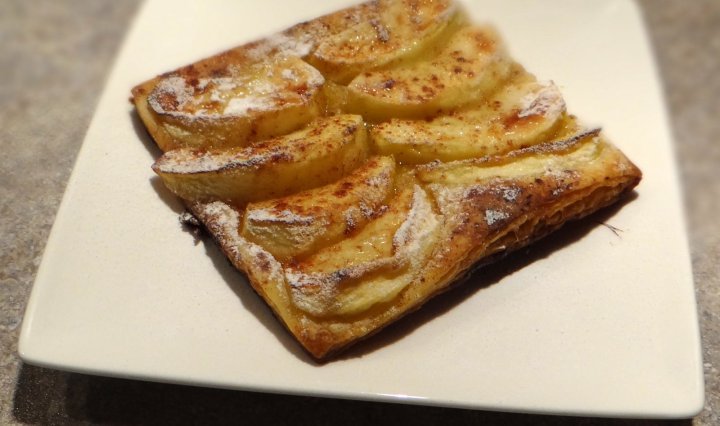
Since a lot of my supplies and equipment are stored in the garage and cannot be reached easily and it’s always difficult to cook in a strange kitchen, for dessert I resorted to this ‘cheat’ to make something that is like tarte tatin, but a lot simpler to make.

Continue reading “Apple Tatin Cheat”

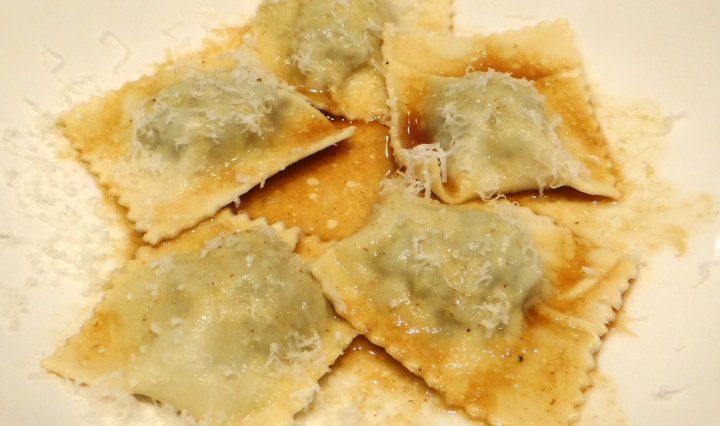
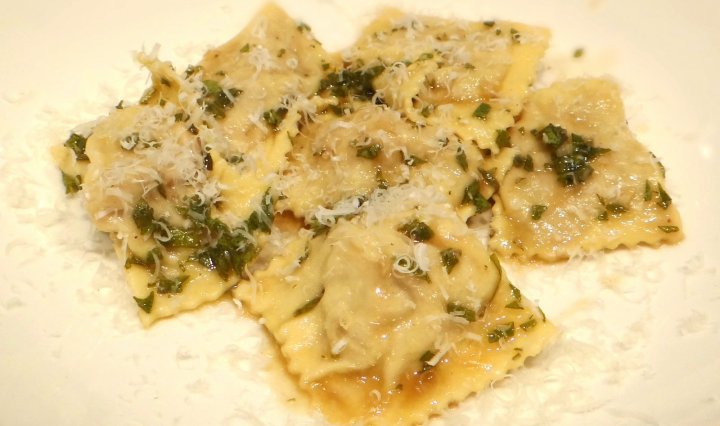
Chicken Ravioli with Sage

I’ve never seen ravioli with a chicken filling before, but I couldn’t think of any reason why it wouldn’t be nice so I decided to give it a try. I used a good quality free-range chicken with a lot of flavor, cooked the legs sous-vide for the filling and used the rest to make a chicken demi-glace (reduced stock) for the sauce. You could also just braise the chicken legs instead, so it is not needed to own a sous-vide cooker to be able to give this a try. The chicken ravioli turned out just like the name suggests, with a good chicken flavor. The concentrated flavor of the sauce helped to get this effect. If you like chicken, you’ll love these ravioli. Here’s what I did… Continue reading “Chicken Ravioli with Sage”