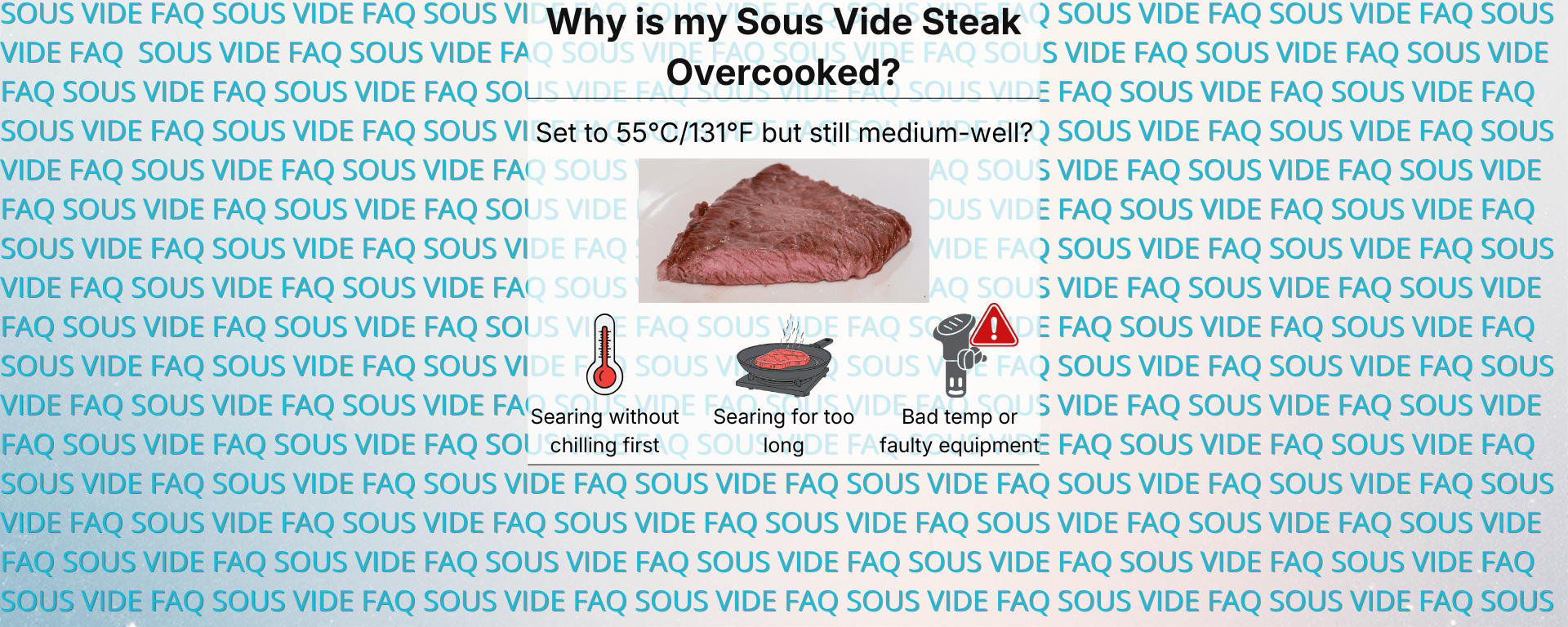
Sous vide is the perfect technique for achieving consistent results and controlling the doneness of your steak to the degree. Despite this, a frequently asked question is why a steak cooked at a medium-rare temperature, such as 55 °C (131 °F), can still end up medium-well or worse.
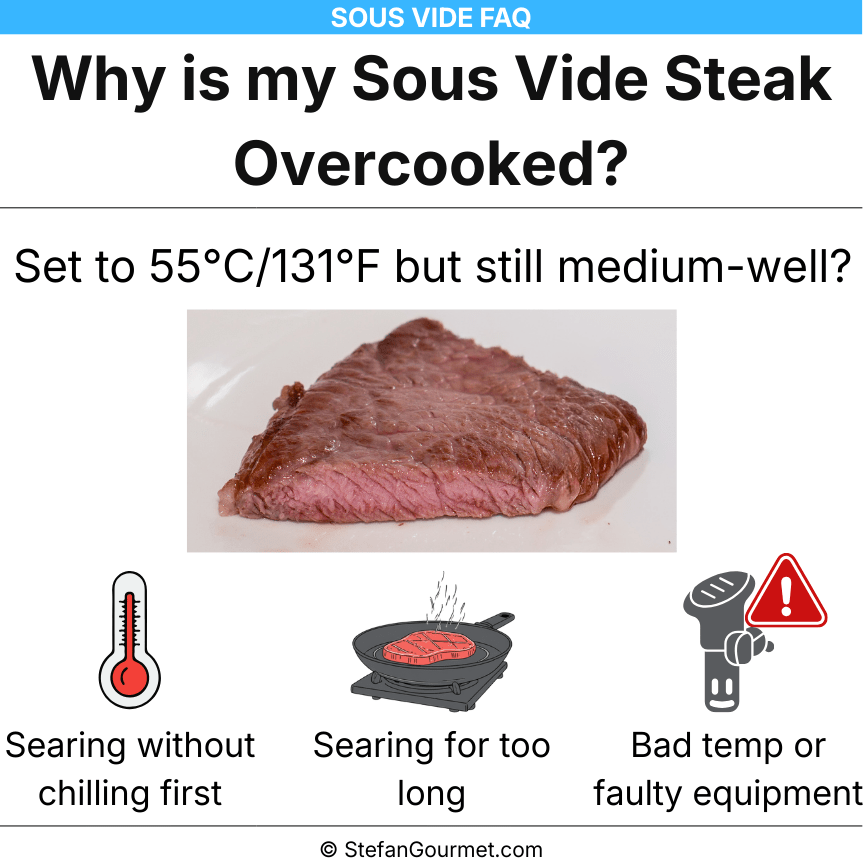
The most common culprit is overcooking during the searing process used to create a crispy, flavorful crust. This typically happens for two reasons: searing for too long or searing without chilling the meat first. Because the steak already reached its perfect core temperature in the water bath, the additional heat from the searing can easily overcook the interior. With thinner steaks, this can happen even if your sous vide temperature was lower than the target for medium-rare.
Especially for thinner cuts, it is fundamental to chill the steak first. By lowering the exterior temperature, the heat from the sear is spent creating the Maillard reaction on the surface rather than penetrating the core. The easiest way to do this is to submerge the bagged steak in cold water for 5 to 10 minutes; ice cubes are not necessary. Be careful not to over-chill thick steaks, or the center may remain cold after searing. You can read more about this technique in my dedicated article on chilling after sous vide.
Unlike traditional cooking, sous vide steaks do not require resting after the sear because they have already rested during the water bath and the subsequent chilling. In fact, resting a hot sous vide steak can lead to carry-over cooking, pushing the meat toward medium-well by the time it reaches the plate.
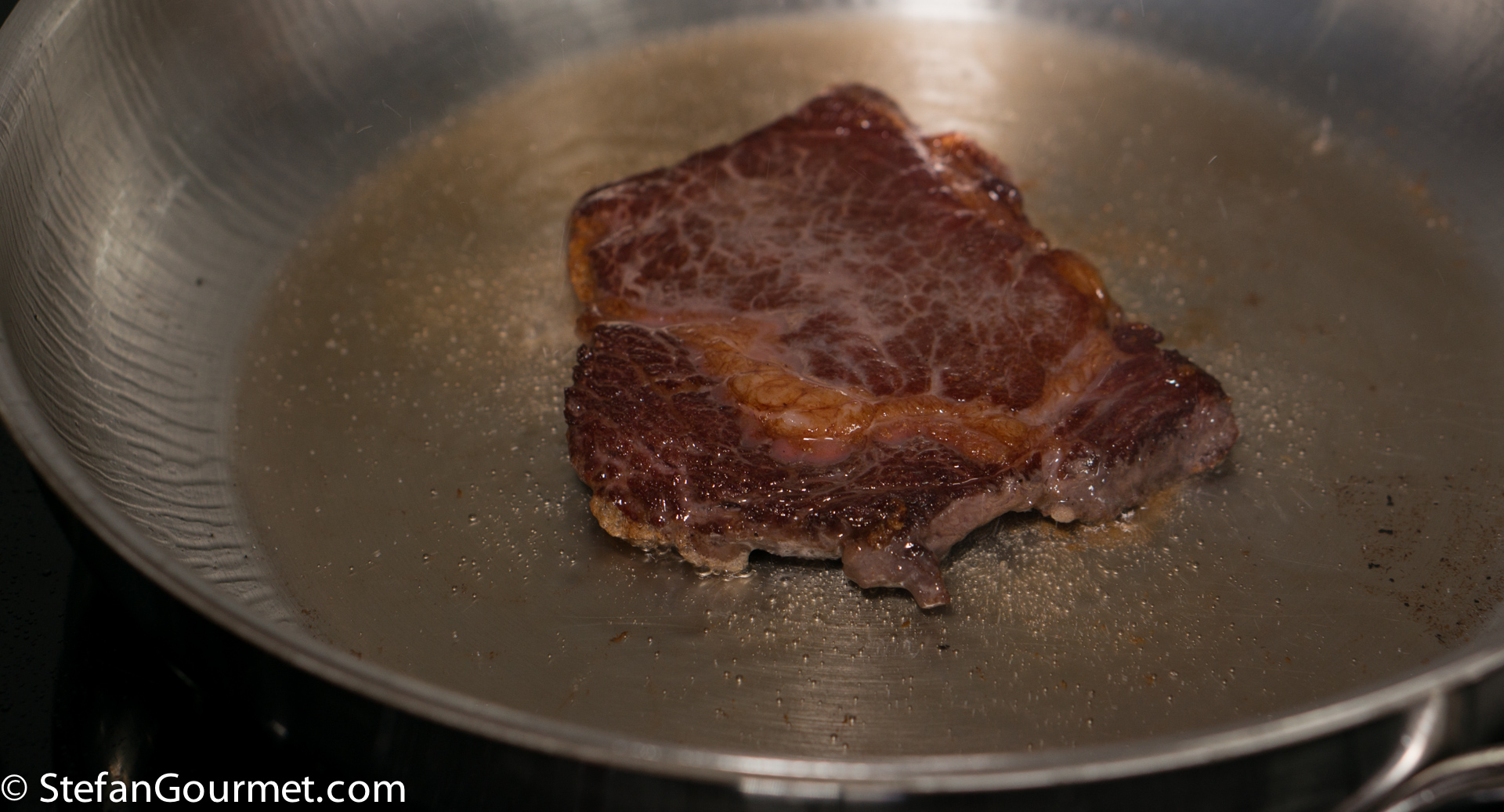
To achieve a good sear without overcooking, you should spend one minute or less per side. This prevents an overcooked center and avoids the “grey band”—that overcooked layer just beneath the crust that sous vide is specifically designed to eliminate. A perfect crust is best achieved by drying the steak thoroughly with paper towels, as surface moisture prevents the Maillard reaction. You also need sufficient heat, which is most easily provided by a heavy, scalding hot pan. I prefer carbon steel pans because they are affordable, durable, and develop natural non-stick properties once seasoned.
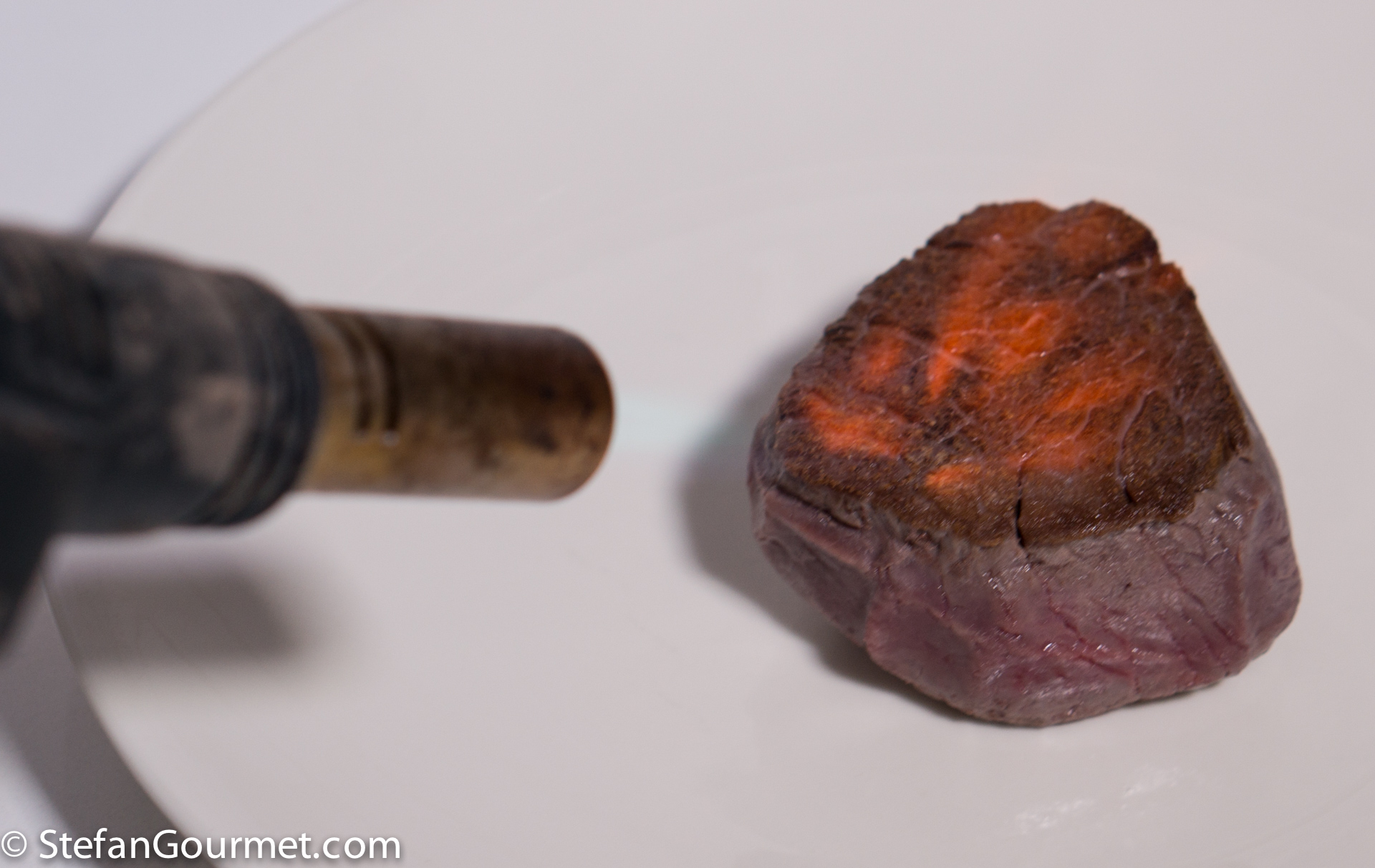
Alternatively, you can sear over the direct heat of a charcoal grill, which burns hotter than gas or briquettes, or use a blowtorch. While a torch is excellent for searing without cooking the interior, it can be time-consuming for multiple steaks and requires practice to avoid an uneven or burnt finish. Both grilling and torching also carry a higher risk of a bitter, burnt flavor compared to pan-searing.
Another plausible explanation for overcooking is using a temperature that was too high or a faulty immersion circulator that is not heating the water to the set temperature. Preferred temperatures for medium-rare vary between 52 °C (125 °F) and 57 °C (135 °F). You can check your equipment’s accuracy with a digital thermometer, but don’t worry about a discrepancy of 1 or 2 degrees, as most non-laboratory thermometers have their own margins of error. Some suggest using a fever thermometer to calibrate at 37 °C (98.6 °F), but it is uncertain how accurate that remains at much higher cooking temperatures, and many sous vide devices cannot be set that low anyway.
Click here to return to the full list of Sous Vide FAQs.

