
We eat a lot of nice food, so it is always a challenge to come up with something out of the ordinary for Christmas dinner. When I was at Hanos (the premium Dutch catering wholesaler), I picked up a hare fillet, parsley root, and chard—all ingredients that we hardly ever eat. I wanted to make something Italian, but I did not know any Italian recipes with hare fillet, only more rustic stews (lepre in umido). I decided to use Gemini as an AI sparring partner to come up with a dish and asked Gemini for classic Italian recipes with hare. He came up with a Piedmontese dish (Lepre alla Cugnà with grapes and hazelnuts), an Umbria/Lazio dish (Lepre all’Etrusca with juniper berries and black pepper), and a Tuscan dish (Lepre in Dolceforte with chocolate, pine nuts, raisins, candied fruit, vinegar, and sugar). The Lepre in Dolceforte sounded like it would be the most tasty, and it would work very well with a nice Masi Amarone Costasera I had.
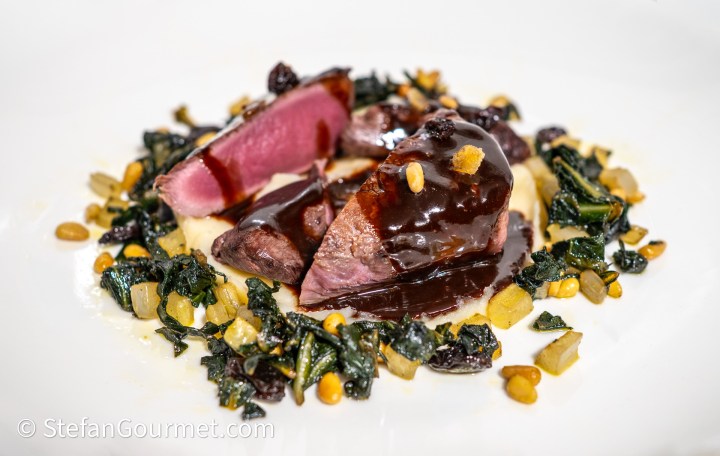
Lepre in Dolceforte is a medieval recipe that is traditionally a stew that also contains the blood of the hare, similar to a French “Royale” sauce as served at De Librije. As always in recipes for wild game, the meat is marinated and married with strong flavors to mask the gamey flavor. I wanted to turn this into a refined version by serving the hare fillets rare, but with a jus that has all the ingredients (except for the blood) of the classic Dolceforte. The only change I made was that I substituted vinegar and sugar with vincotto for a more complex and elegant flavor. Gemini advised to keep the jus velvety and smooth without any bits in it, and I agreed. I decided to infuse the wine with the raisins and candied orange, but serve the raisins with the chard and use only a very small amount of candied orange as a garnish because of the strong flavor.
A typical Tuscan vegetable to use would be Tuscan kale (cavolo nero), but we had just eaten that the day before and I thought the earthy flavor of the chard would be a more elegant combination with the hare than the kale. To keep things Tuscan, I did stir-fry the chard leaves in olive oil with garlic, just like the cavolo nero would have been prepared. For crunch, I added the chard stalks in brunoise for the last couple of minutes only. I also included the pine nuts and the raisins from the Dolceforte recipe with the chard instead of the jus.
A typical Tuscan puree to use would be one of beans (Cannellini), but I had the parsley root in my fridge and it is very Italian to use what is in your fridge and avoid waste. Besides, I also thought the parsley root would be lighter and more elegant and would work better. If you can’t find parsley root, celery root (celeriac) has a similar flavor and texture.
The final piece of the puzzle was how to cook the hare. Hare is red meat that gets an unpleasant flavor of iron and a mealy texture when cooked to only a few degrees too high. To avoid this risk, I decided to sear the hare first (very briefly over very high heat), allow it to cool completely, and then cook it sous-vide at 48°C (118°F) to serve. To avoid the hare cooling off too quickly, I used preheated plates (as I always do), served the hare on top of the hot parsley root puree, and intended to cover it with the hot Dolceforte jus. It is impossible to develop a crispy outside on the hare without overcooking it anyway, so searing before the sous-vide was the best strategy here.
I often cook more from instinct and make it up as I go. It is rare that I spend as much time designing a dish beforehand as for this one. It did help that I had Gemini to talk to, to keep track of what I had decided, and to make suggestions. When working with generative AI it is important to stay alert yourself, because there were quite a few slips as well. You may notice there are no herbs (rosemary, sage, bay leaf) in the ingredient photo. This is because Gemini did not mention them as ingredients in the classic Dolceforte recipe I had asked him to provide. I only realized while I was already cooking that there were no herbs at all, which didn’t seem right. So I asked Gemini about the herbs and he confessed that the classic recipe does indeed include rosemary, sage, and bay leaf. So I added them just in time when I was already sautéing the aromatics for the jus (luckily I have all of them in my herb garden).
The effort certainly paid off. This was one of the most delicious dishes I’ve ever created. Kees, my father, and his girlfriend were also impressed with how delicious this was. The flavor and texture of the hare were perfect. The sauce had a wonderfully deep and complex flavor that complemented the hare very well. The combination with the velvety parsley root puree and the texturally diverse chard with pine nuts and raisins was wonderful. If I were to open a restaurant, this would certainly be on the menu and I’ll definitely make this again.
The only thing that I will do differently next time is to reduce the jus a bit less. I am used to thickening a jus by whisking in pieces of cold butter to create an emulsion. Letting only 10 grams of minced chocolate melt in the jus made the sauce thicken much more than I had anticipated, and as it cooled slightly it became thicker still. The thickness made it impossible to cover the meat completely with the jus, as I had planned, because it didn’t flow out as much — it was even hard to get out of the saucepan. I did not dare to add more liquid and reheat the sauce, for fear it would split. So I just served it like that, accepting that it would cool off more quickly than I had wanted. But it was still delicious. The photo of the plated shot doesn’t do it justice, as I wanted to start eating rather than spending time on the photo.
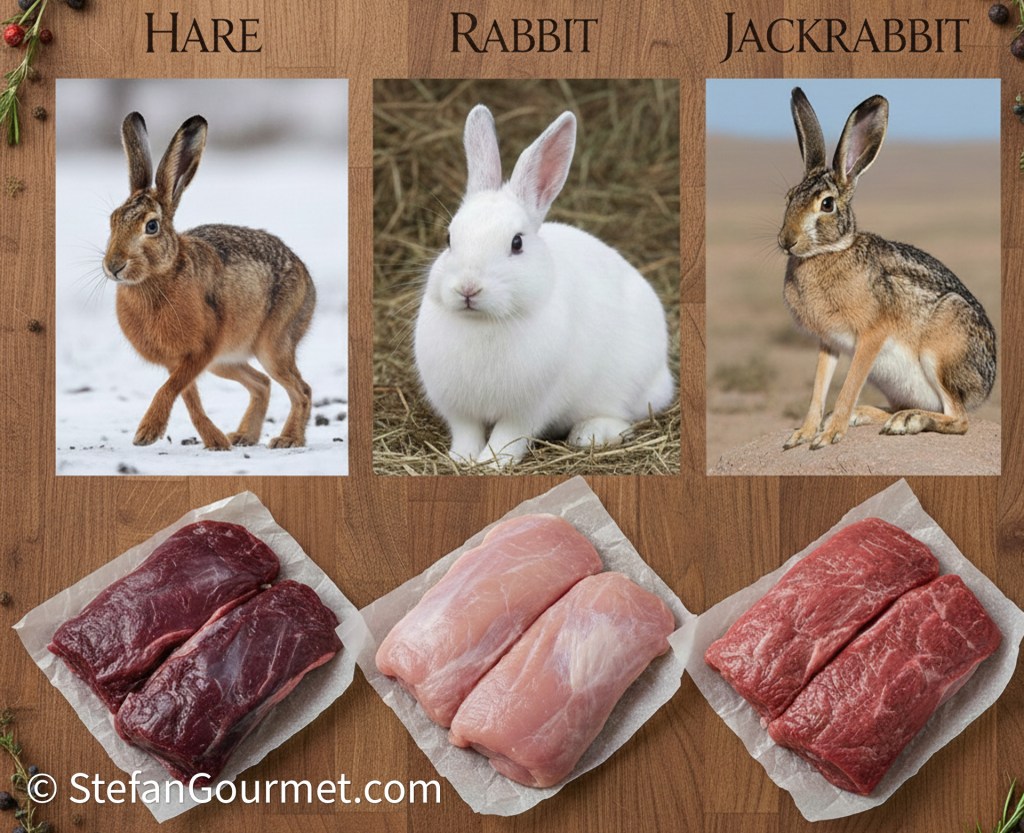
Wild hare (Lepus europaeus) may be difficult to find in the US, and it definitely cannot be substituted with rabbit (Oryctolagus cuniculus). While the animals may look alike—fluffy, hopping, and with big ears—the meat is completely different. Rabbit is a white meat with a very delicate flavor, whereas hare is a red meat with a robust flavor. Jackrabbit (such as Lepus californicus) is the closest equivalent in the US, but it may be hard to find if you are not a hunter. You could make the dish with venison and it would be nice, but the connection with the Tuscan original would be lost completely.
Ingredients
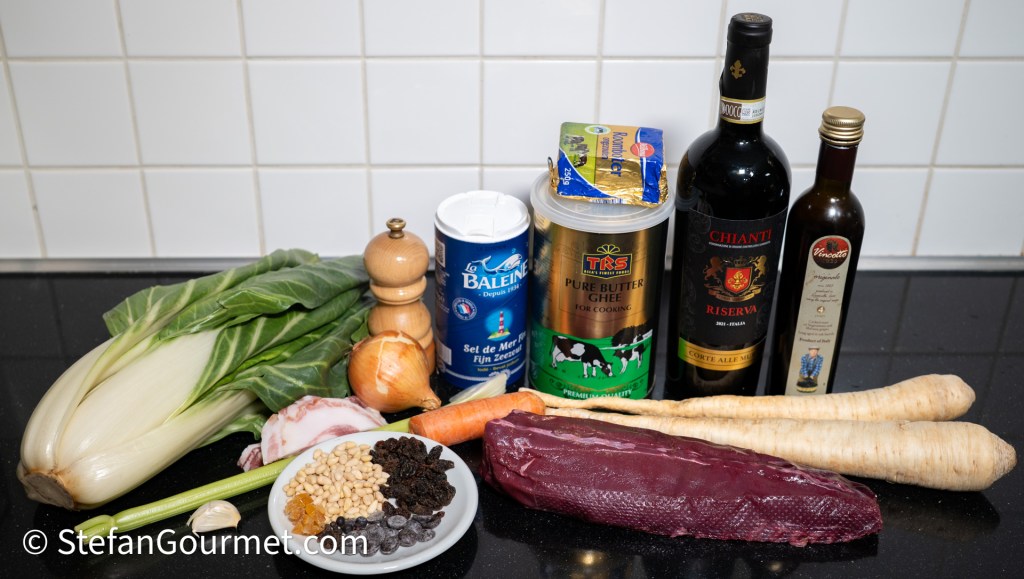
For 2 large or 4 small servings as secondo piatto
- 1 bone-in hare saddle, approximately 600 grams (1.3 lbs), with fillets and tenderloins removed and bones reserved
- 1/4 tsp black peppercorns
- 5 juniper berries
- 1 clove
- 50 grams lardo or pancetta, finely chopped
- 10 grams dark chocolate (85%), minced
- 150 grams chard leaves, chopped
- 75 grams chard stalks, diced into brunoise
- 1 garlic clove, peeled and thickly sliced
- 50 grams (1/3 cup) diced onion
- 50 grams (1/3 cup) diced celery
- 50 grams (1/3 cup) diced carrot
- 250 ml (1 cup) Sangiovese (Chianti) or other dry red wine
- clarified butter or extra virgin olive oil
- extra virgin olive oil
- 1/2 tsp vincotto
- 300 grams (0.66 lb) peeled and diced parsley root (substitute with celeriac)
- 1 Tbsp butter
- Salt and freshly ground black pepper
- 5 grams (1 tsp) finely diced candied orange, plus extra for garnish
- 20 grams (2 Tbsp) raisins
- 20 grams (2 Tbsp) pine nuts
- 1 Tbsp rosemary needles
- 5 sage leaves
- 2 bay leaves
Instructions
Preheat the oven to 190°C (375°F), fan forced.
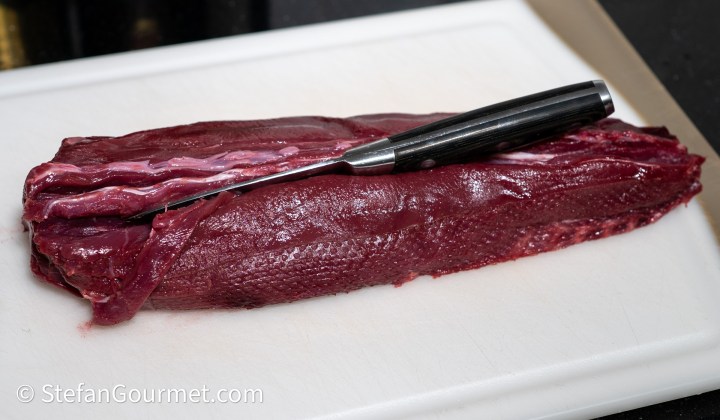
Start by carefully cutting the fillets and the tenderloins off the bone, or ask your butcher to do this for you. It is not too difficult to do yourself; just slice closely along the bone with a small but very sharp knife (such as a paring knife or a boning knife). In my case, the silverskin had already been removed. If you are not as lucky, it is easier to remove it while the fillets are still on the bone.
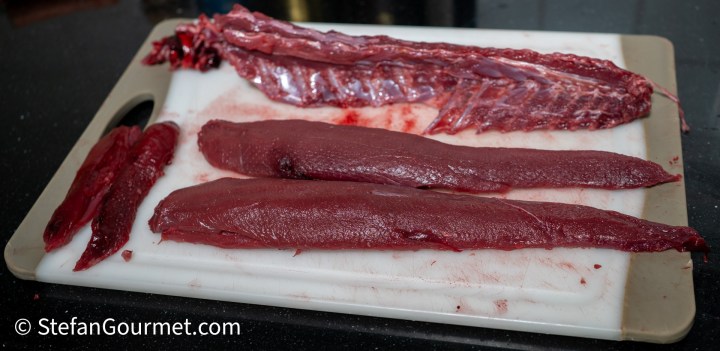
Reserve the bones and any trimmings for the sauce.
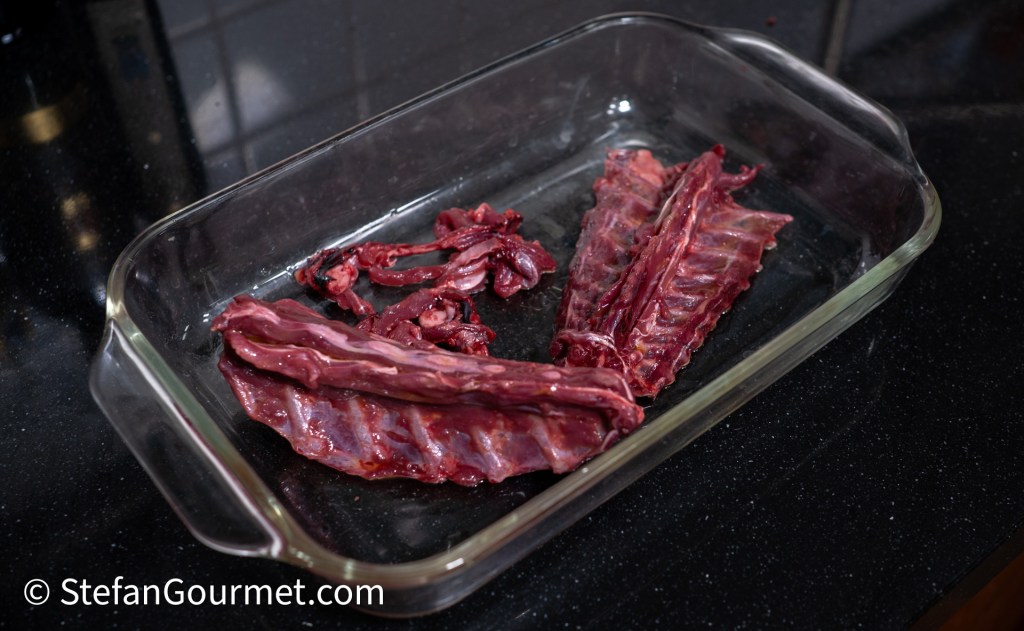
Rub the bones and scraps with olive oil, then place them in an oven dish and roast them for 30 minutes at 190°C (375°F), fan forced.
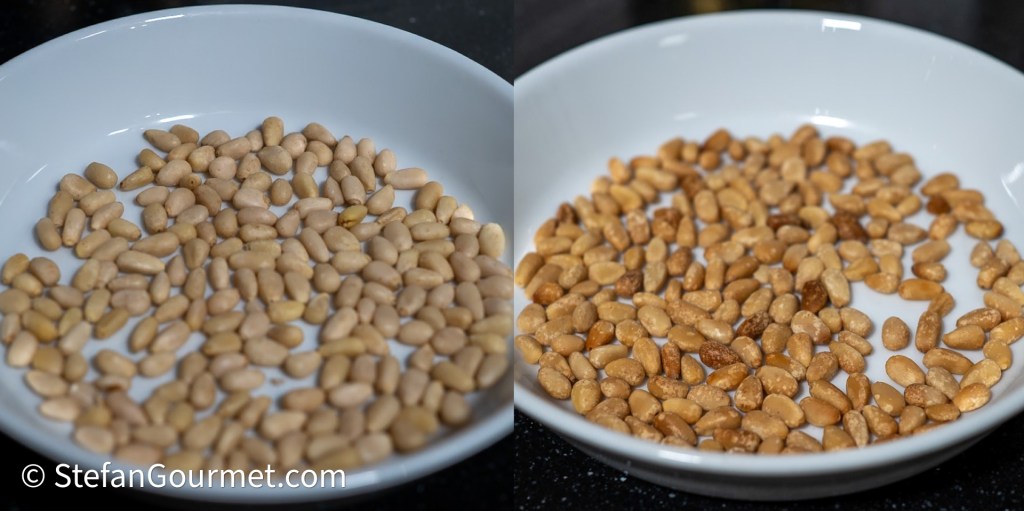
Place 20 grams of pine nuts on an ovenproof dish and toast them in the same oven until lightly golden, about 8 minutes.
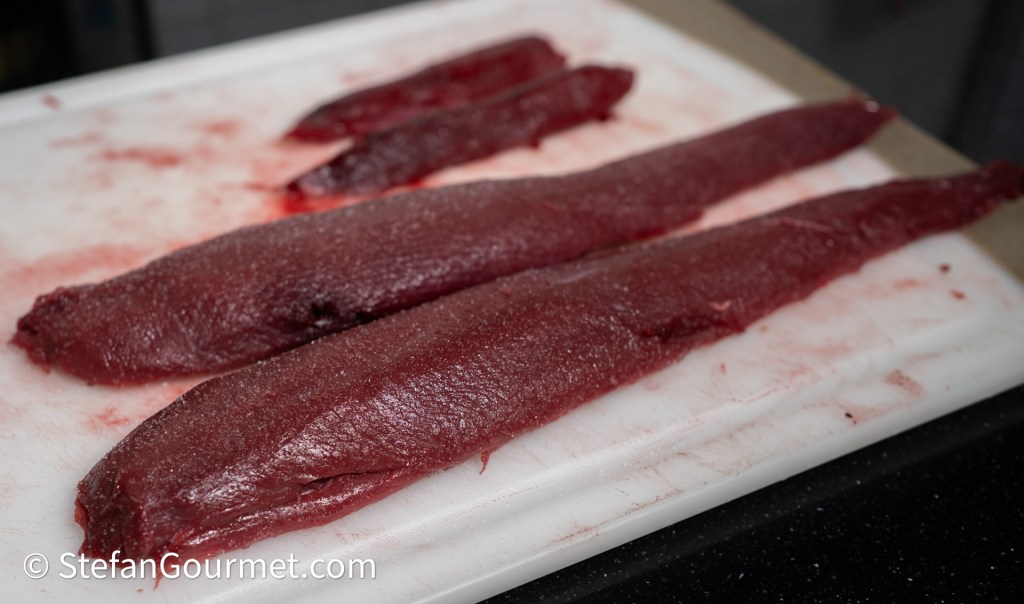
Season the hare meat with salt on both sides, applying more salt where the meat is thicker. The salt will initially draw out some juices, but after about 45 minutes, most of the salty juices will be reabsorbed into the meat (both are the result of osmosis). Salting the meat and letting it rest before searing not only seasons the meat but also helps it retain its juices. Cut the meat into portions.

The thin ends of the fillets have almost the same shape and thickness as the tenderloins, so you can cut the meat into four equal thick pieces and four equal thin pieces, as shown in the photo.
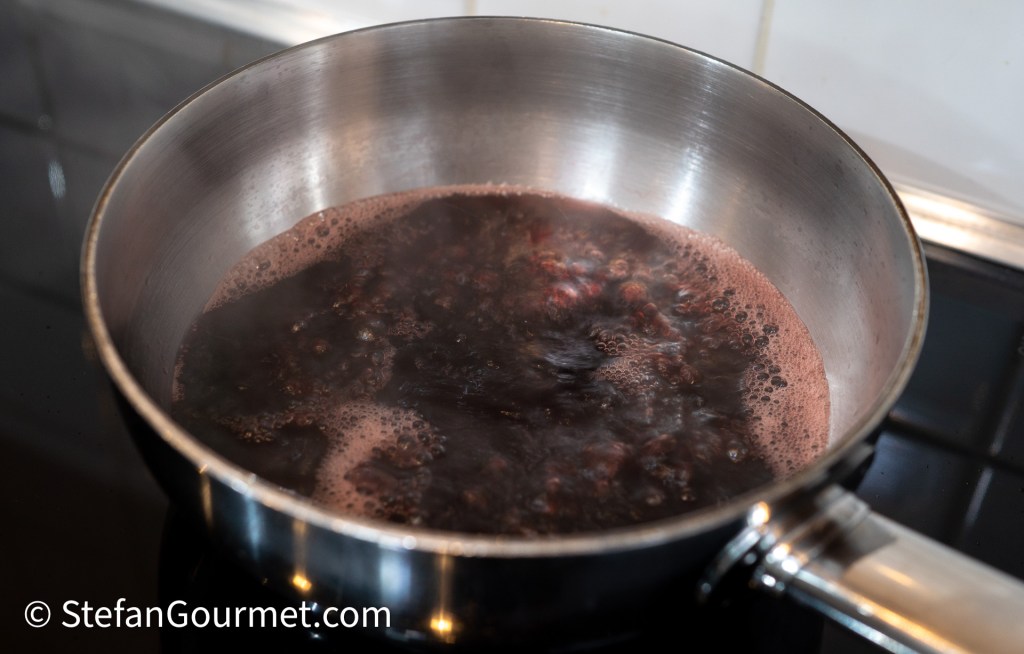
Pour 250 ml of Sangiovese into a saucepan and bring it to a boil. Simmer the wine until you can no longer smell the alcohol, which should take about two minutes.
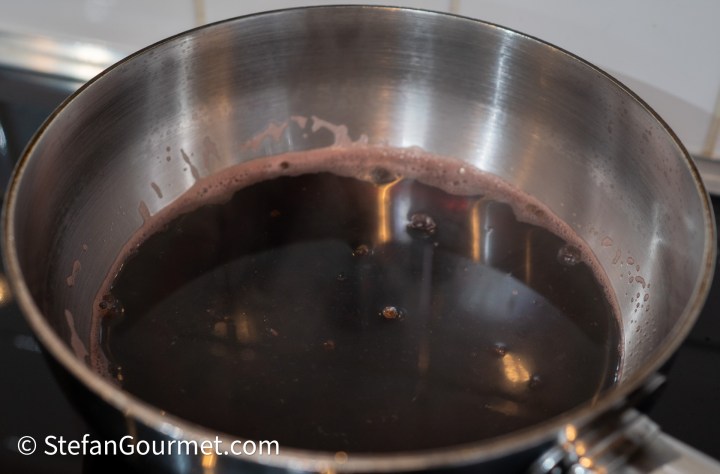
Then, turn off the heat and add 20 grams of raisins.
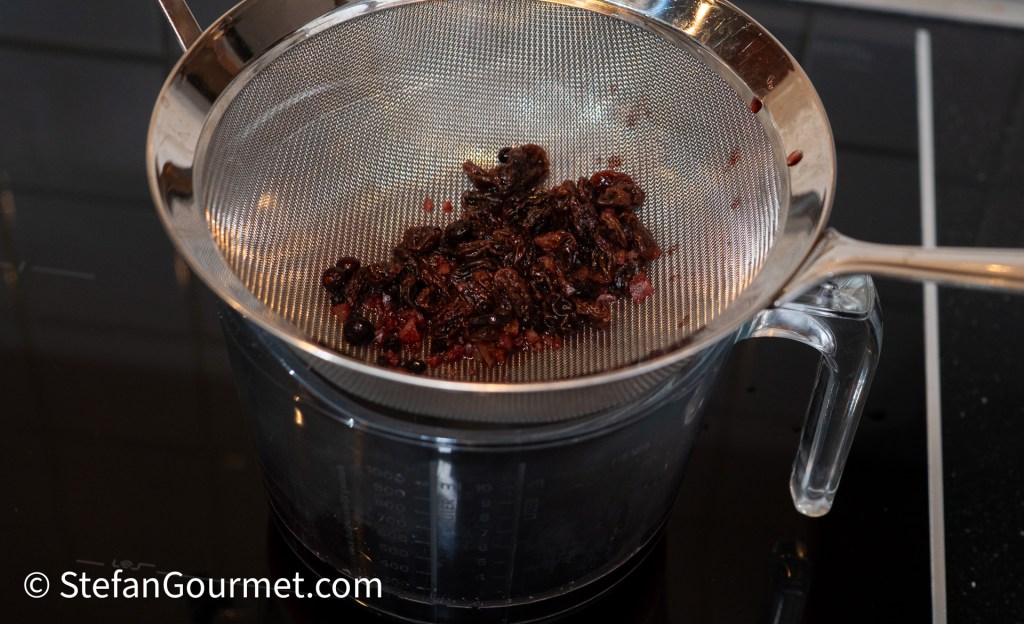
Let them soak for 10 to 15 minutes, then strain the raisins out and reserve them. (If you look closely at the photo, you can see that I also included the candied orange, juniper berries, clove, and peppercorns in this step. That was a mistake, as I had to pick out the raisins and return the other ingredients to the stock. It is easier to add them later and won’t make a difference flavor-wise.)
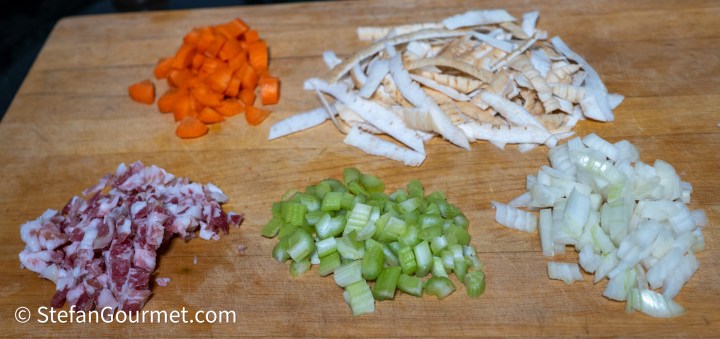
Chop 50 grams each of carrot, celery, onion, and pancetta or lardo. I also used the peelings from the parsley root for the sauce, to avoid throwing away their flavor.
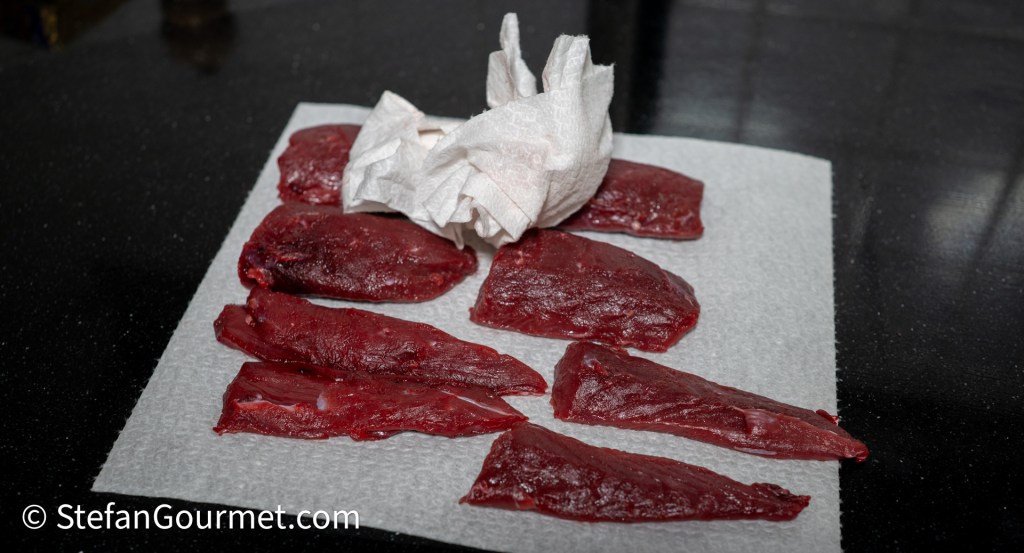
After the salted meat has rested for at least 45 minutes, dry it well with paper towels. You should notice that the meat doesn’t require much drying, as most of the juices have been reabsorbed.
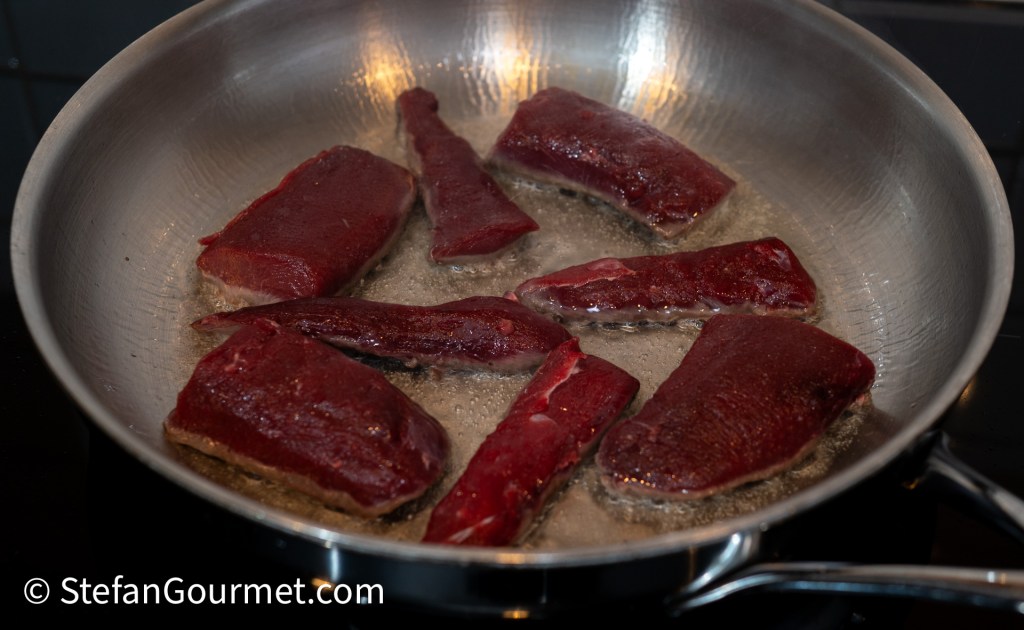
Heat 2 tablespoons of clarified butter (or olive oil) in a frying pan with a thick bottom that has good heat distribution and retention. Make sure the pan is very well preheated, then add the meat, starting with the thick pieces and finishing with the thin pieces. Turn the thin pieces after only 15 seconds, and the thick pieces after 30–45 seconds.
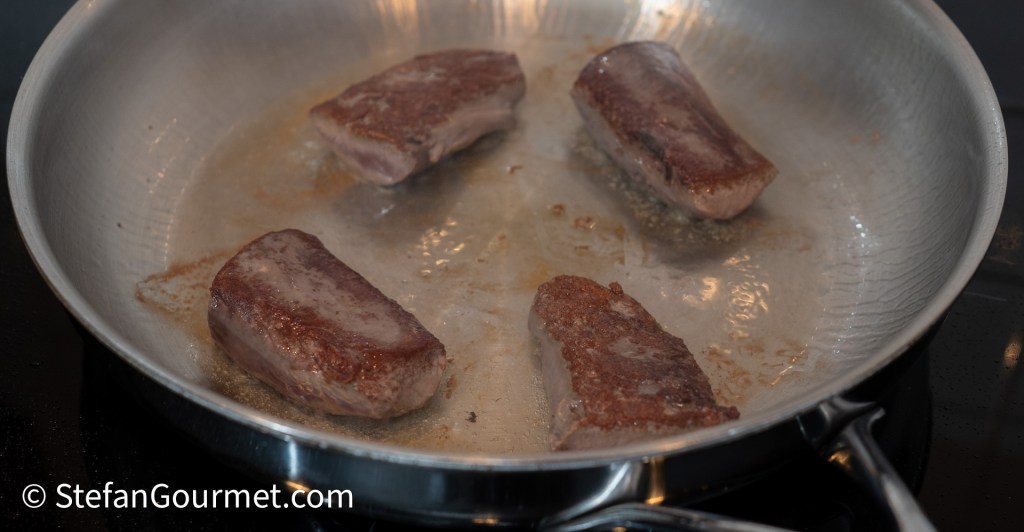
Remove the thin pieces after the second side has also browned for 15 seconds. They should have browned sufficiently if your pan was hot enough; in any case, insufficient browning is better than overcooking the meat.
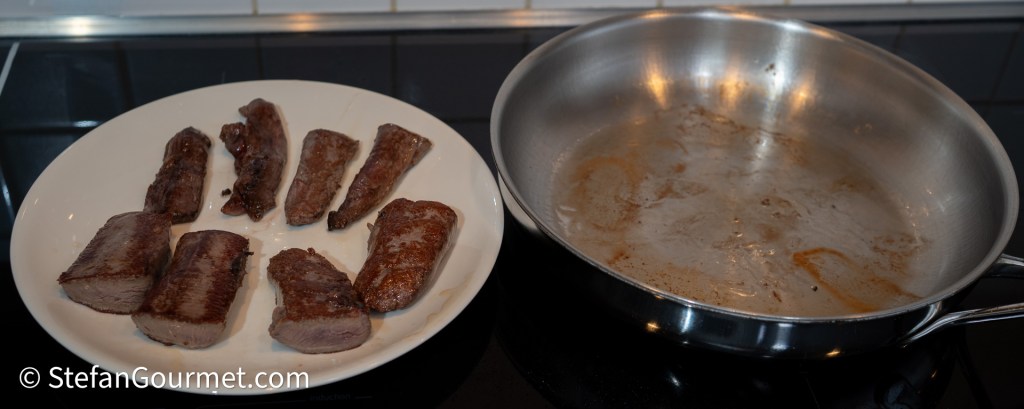
Let the meat cool on a plate, uncovered and in a single layer without the pieces touching, so they can cool off quickly. Allow to cool to room temperature first, then cover with plastic wrap and chill in the refrigerator until completely cold.
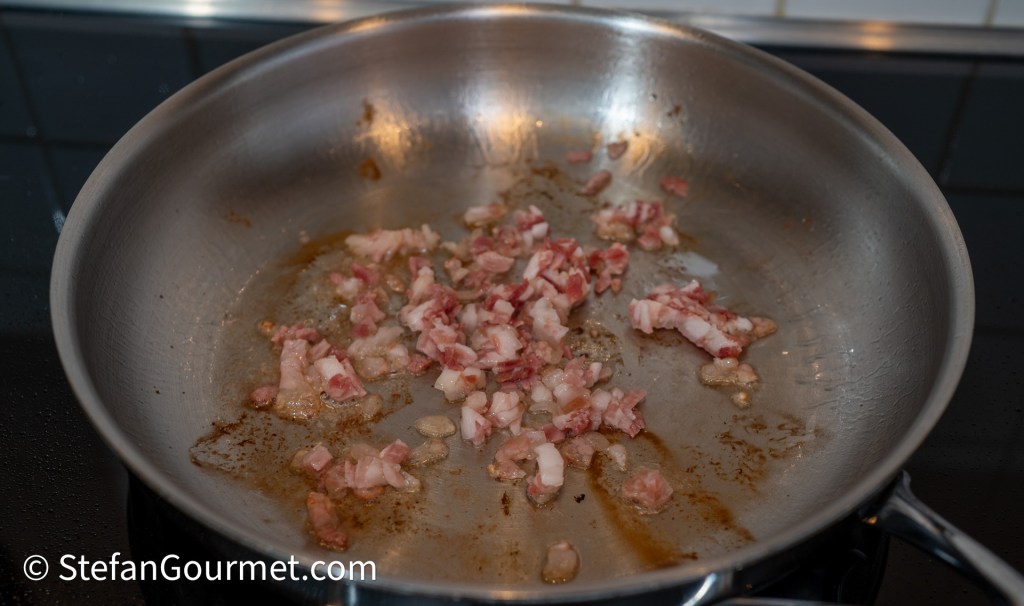
In the same pan, without cleaning it, add the chopped pancetta or lardo.
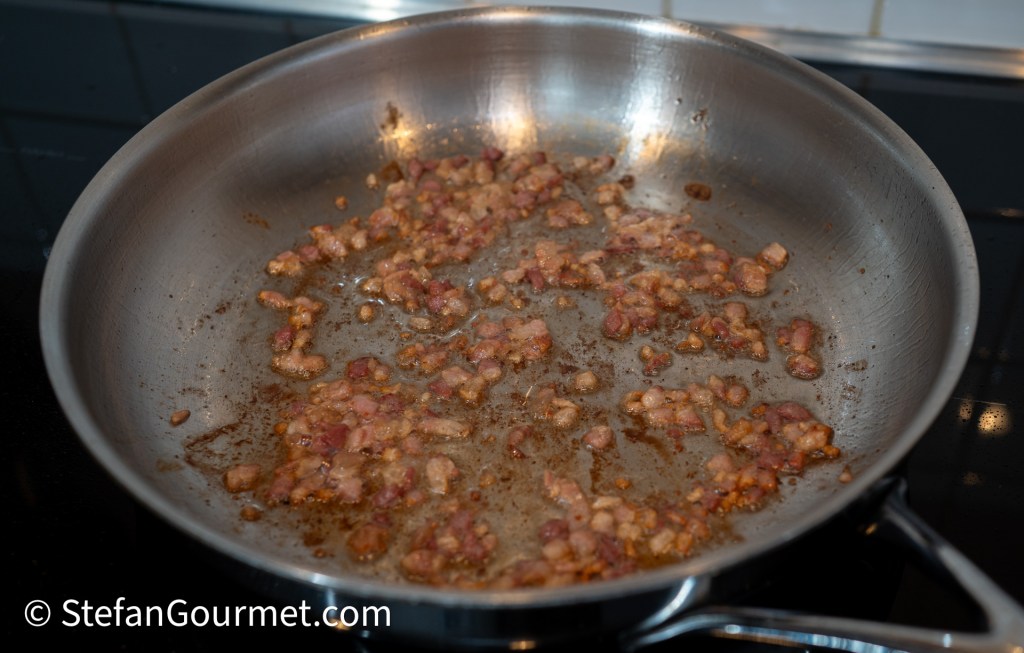
Cook over medium heat until the pancetta or lardo is golden and the fat has rendered.
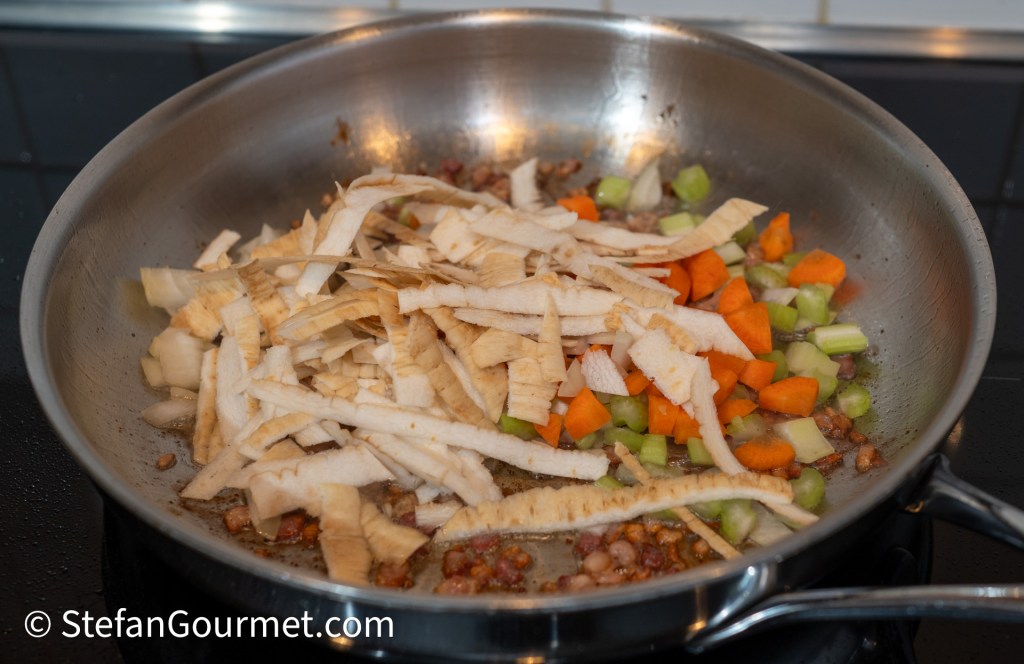
Then add the carrot, onion, celery, and parsley root peelings…
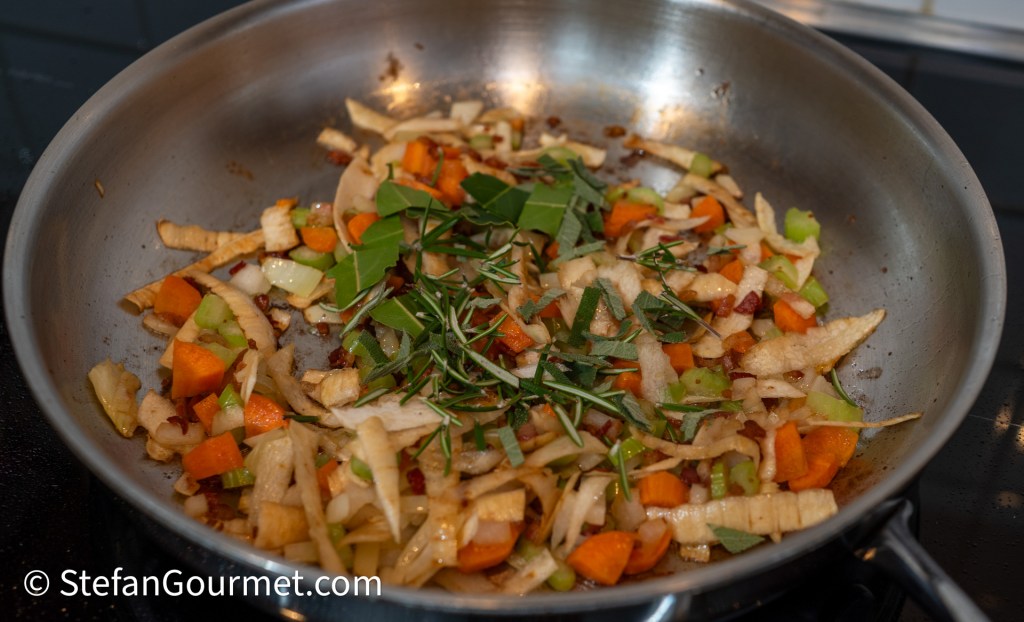
…as well as a tablespoon of rosemary needles, 5 sage leaves, and 2 bay leaves.
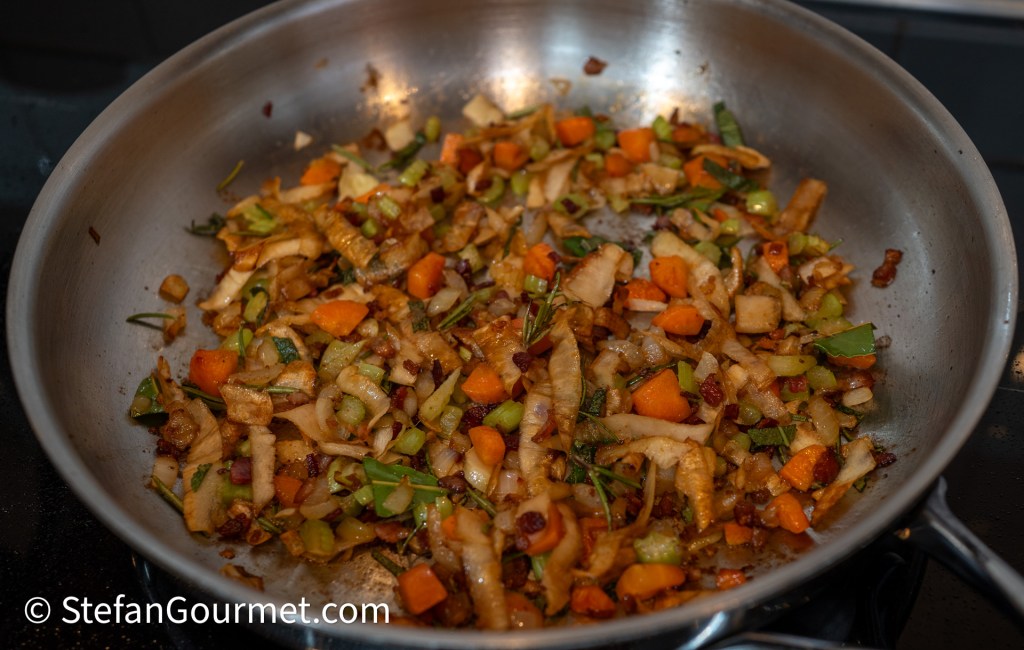
Sauté over medium heat until the vegetables are golden…
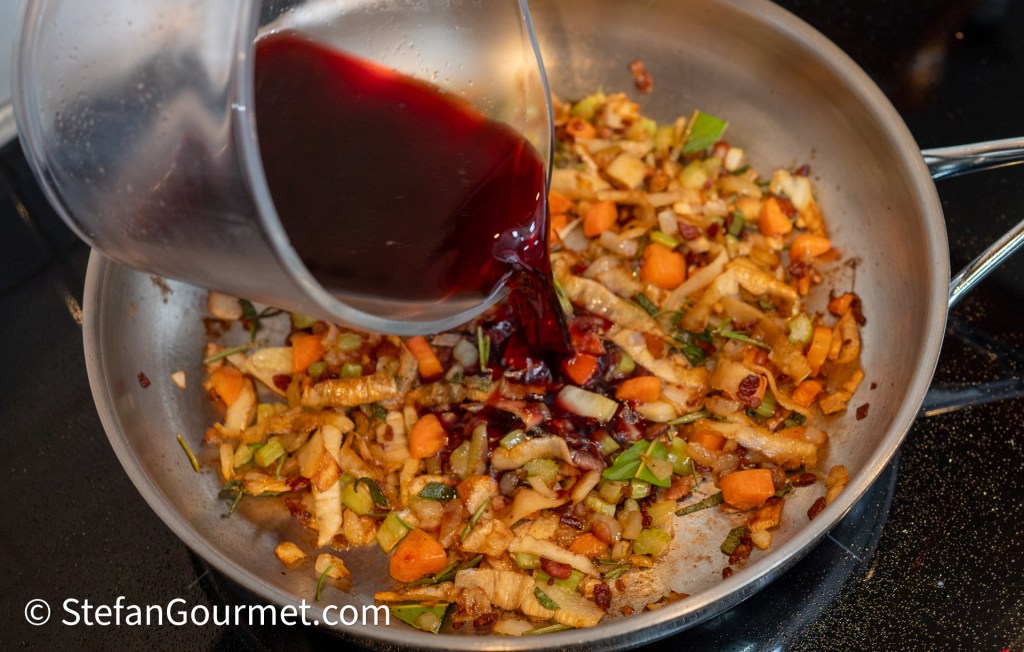
…then deglaze with the reserved raisin-infused red wine. Add 1 clove, 1 teaspoon of candied orange, 1/4 teaspoon of black peppercorns, and 5 juniper berries.
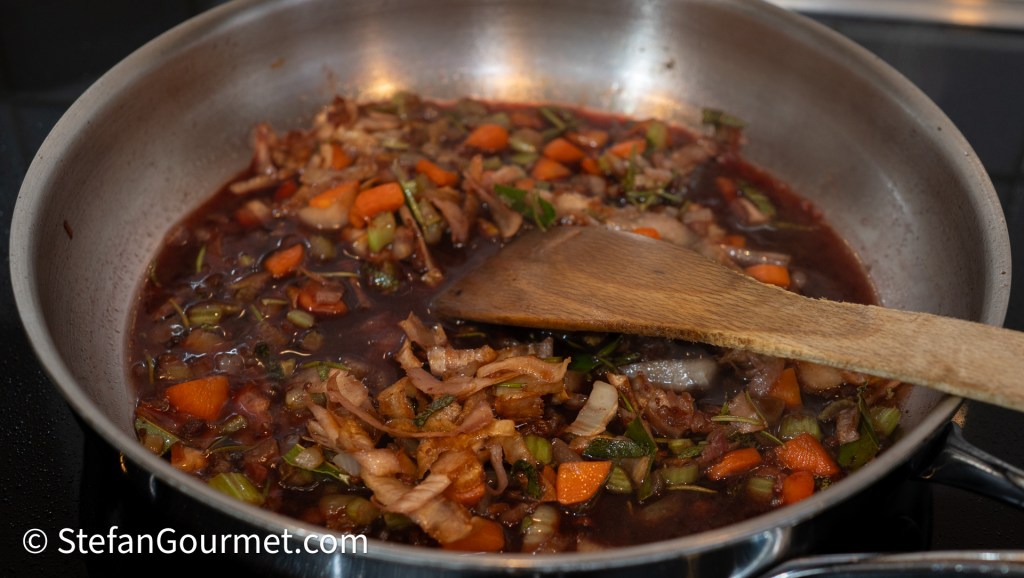
Scrape with a wooden spatula to release all the flavor from the bottom of the pan, then turn off the heat.

Add all of the contents of the pan to a stockpot or pressure cooker, using a silicone spatula to get everything.
This photo of the empty pan is just to reinforce that no flavor should be thrown away.
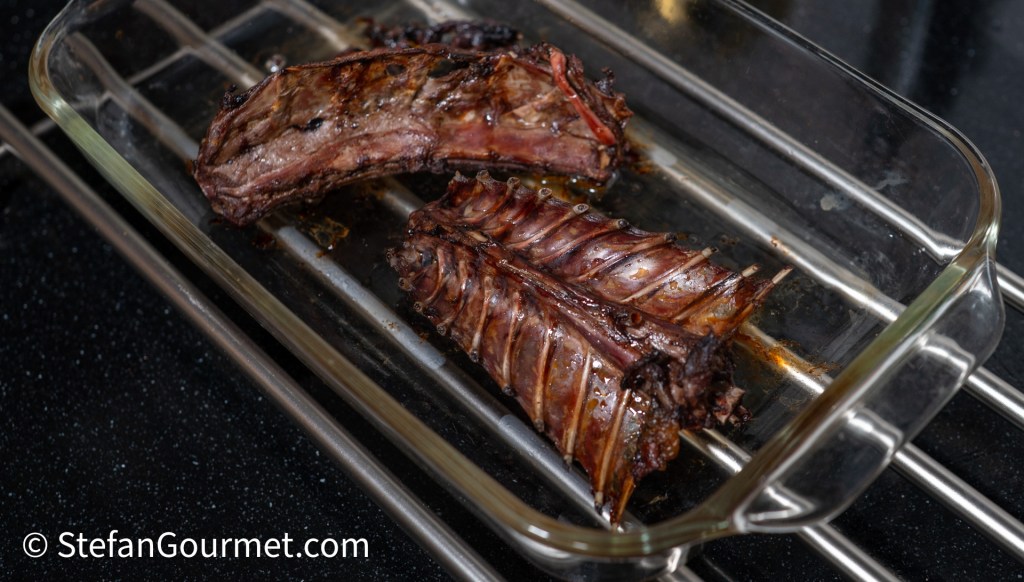
When the hare bones are done roasting, break them into a few pieces and add them to the pot.

Deglaze the roasting tray with hot water and scrape with a wooden spatula to get all of the flavor, then add that liquid to the pot.

Add just enough water to barely cover the contents, then cover and bring to a boil; simmer for 3 hours, or bring to pressure and pressure cook for 90 minutes.
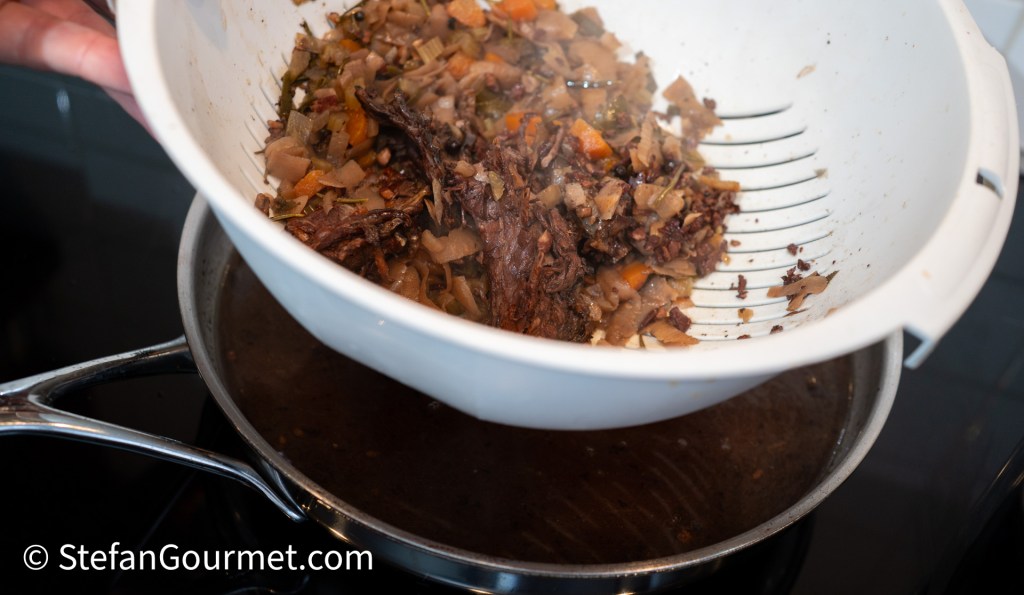
After that, strain the stock through a fine sieve and discard the solids.
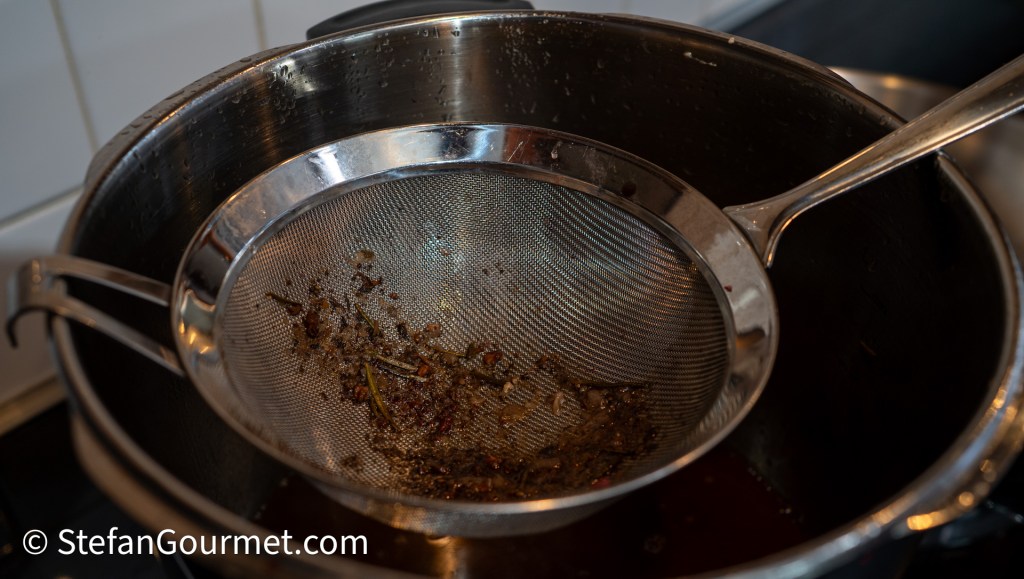
As my sieve isn’t large enough, I use a colander first to remove the large pieces and then a fine sieve for the rest.

Pour the filtered stock into a wide, low pan (the same frying pan you used for sautéing the aromatics will do). Bring it to a boil, then reduce the heat to a simmer.
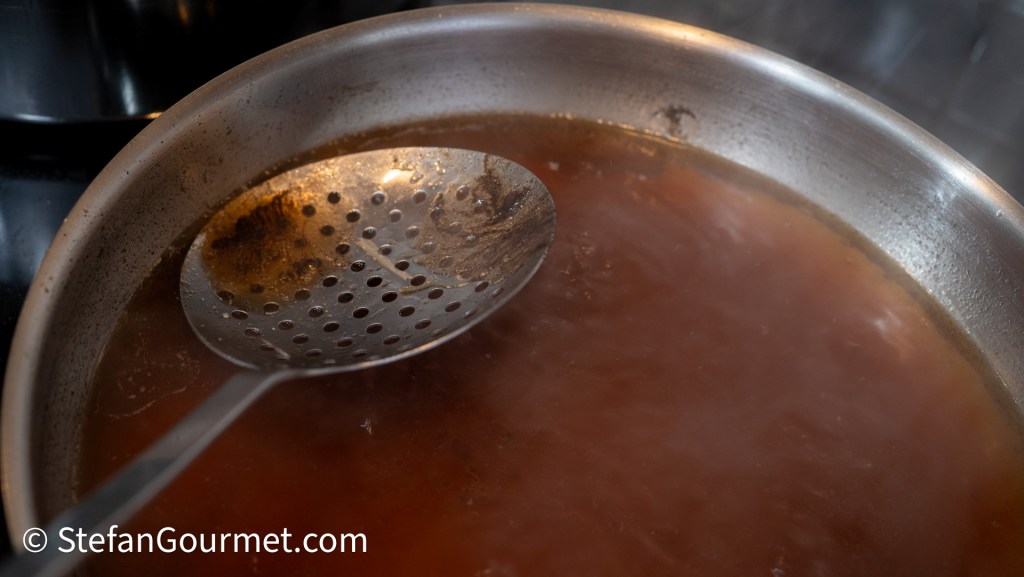
Removing the scum that rises to the surface with a skimmer.

Simmer the jus until you have about 250 ml (1 cup) of liquid left, then turn off the heat.
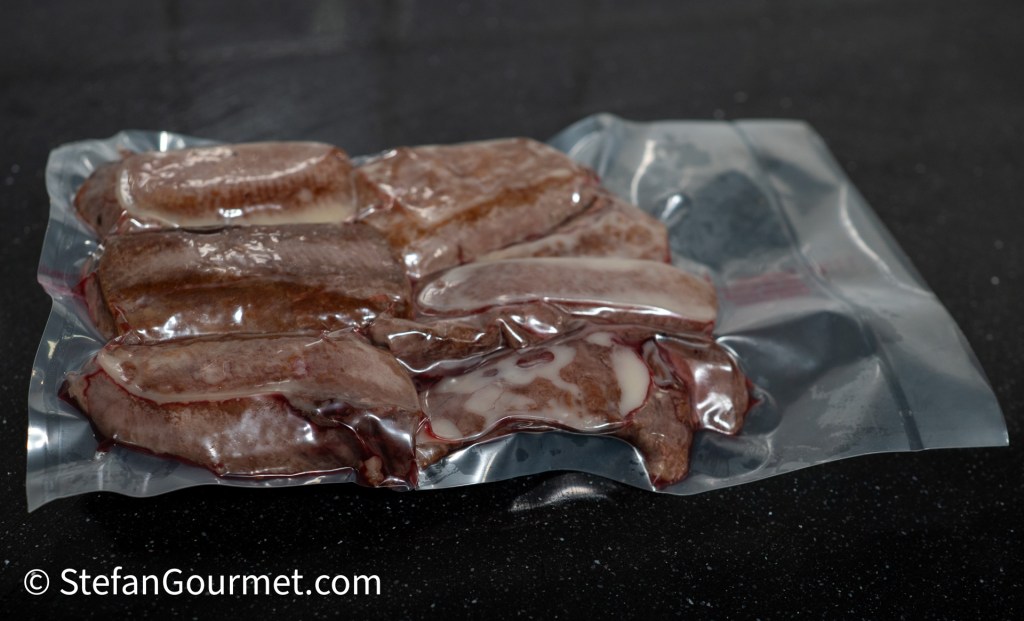
When the hare meat is completely cold, vacuum seal it in a single layer and refrigerate.
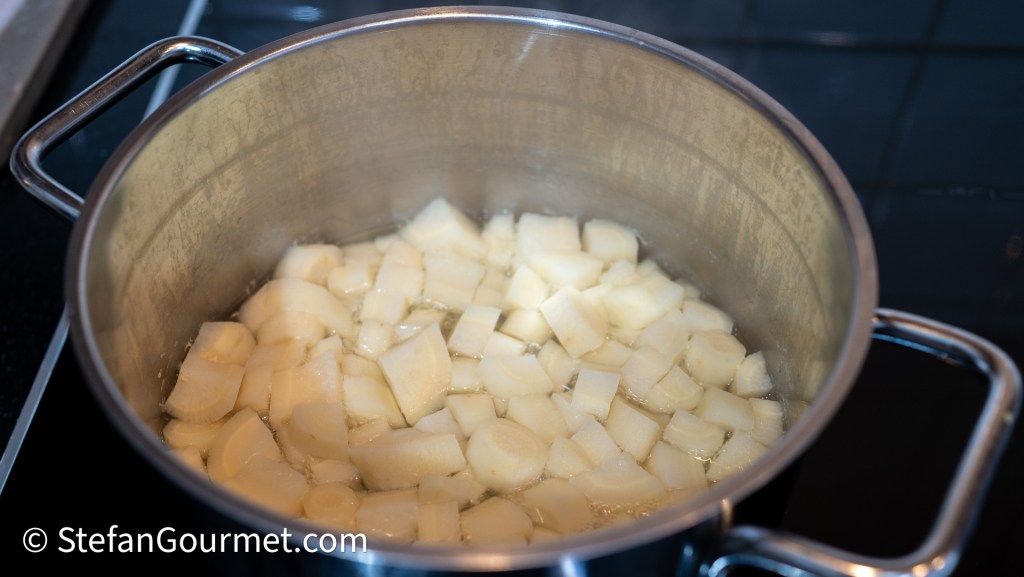
To make the parsley root puree, dice the peeled parsley root and put it in a saucepan. Add enough water to cover the vegetables about halfway, cover, bring to a boil, and cook until the parsley root is tender, about 10 minutes.

Transfer the cooked parsley root and the liquid to a blender and blend until completely smooth. You may need to add a bit more water to reach the desired consistency.
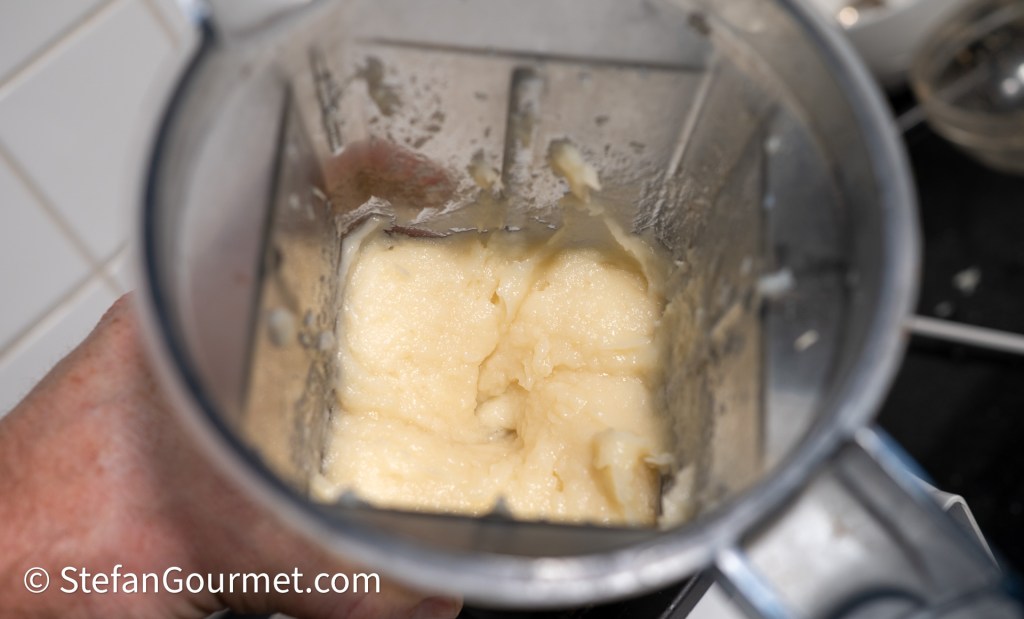
A Vitamix will make the puree perfectly smooth; however, if your blender is not strong enough, pass the puree through a food mill or a fine sieve using a spoon.
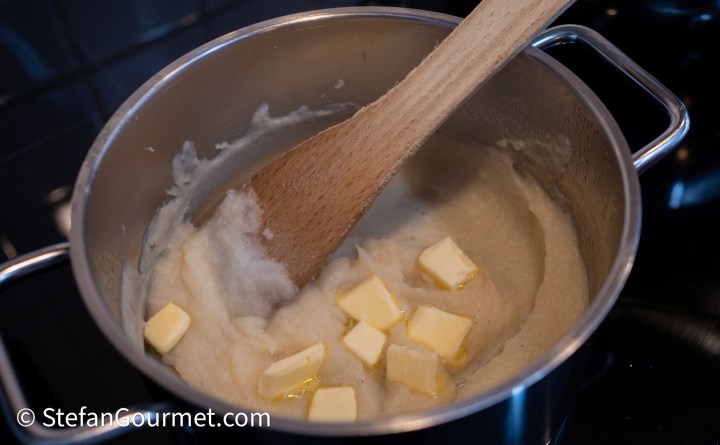
Return the puree to the pan and add 1 tablespoon of butter.
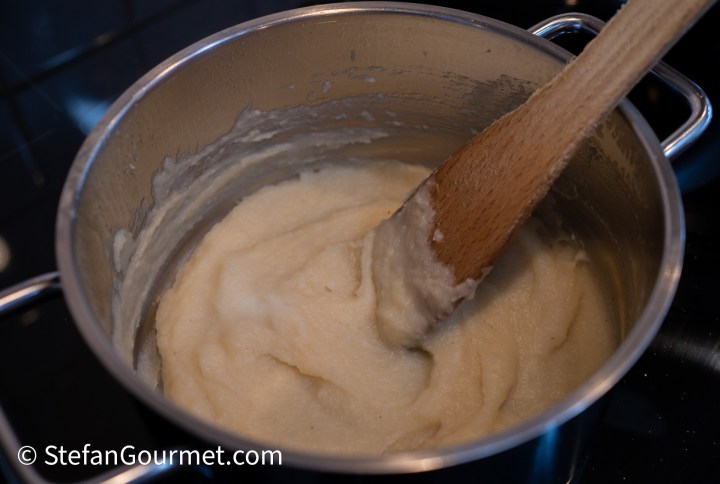
Stir until the butter has melted. Taste and adjust the seasoning with salt and freshly ground pepper.

To prepare the chard, roughly chop 150 grams of chard leaves and slice 75 grams of chard stems into a fine brunoise. The initial amount of leaves must be larger because they will shrink significantly as they wilt.

Heat 2 tablespoons of extra virgin olive oil in a wok, casserole, or frying pan, and add a peeled garlic clove cut into three thick slices.
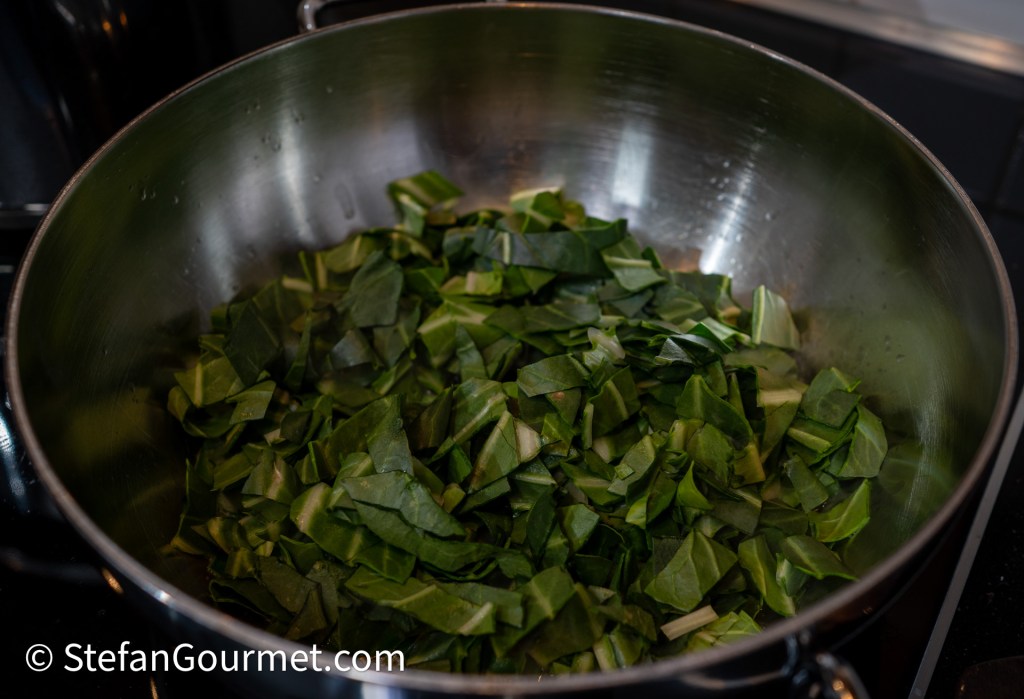
Add the chard leaves as soon as the garlic starts to sizzle.
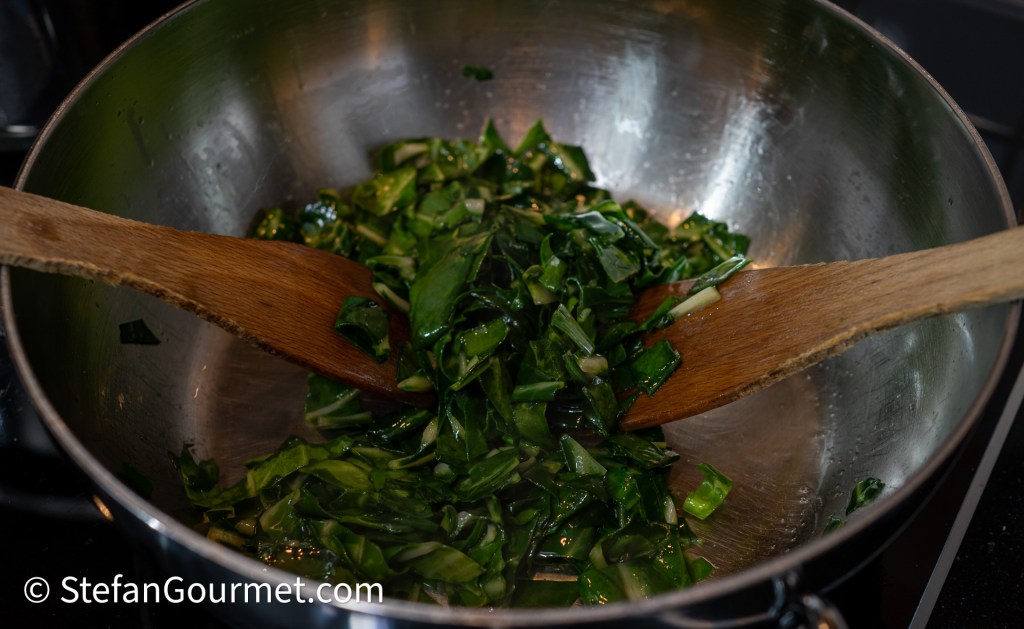
Season with salt and stir-fry until the leaves have wilted…
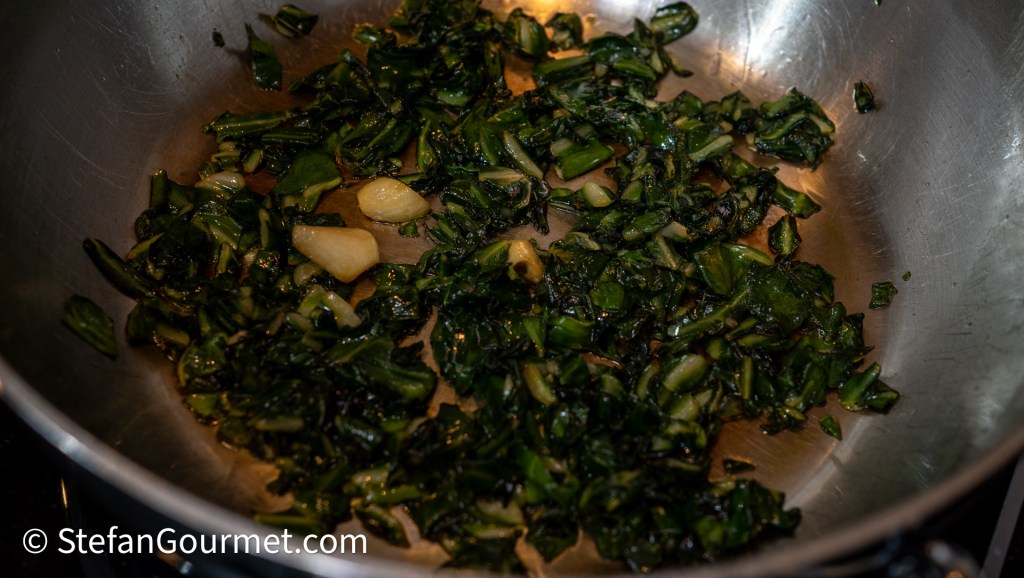
…then turn off the heat and remove the garlic. Taste and adjust the seasoning with salt and freshly ground black pepper.
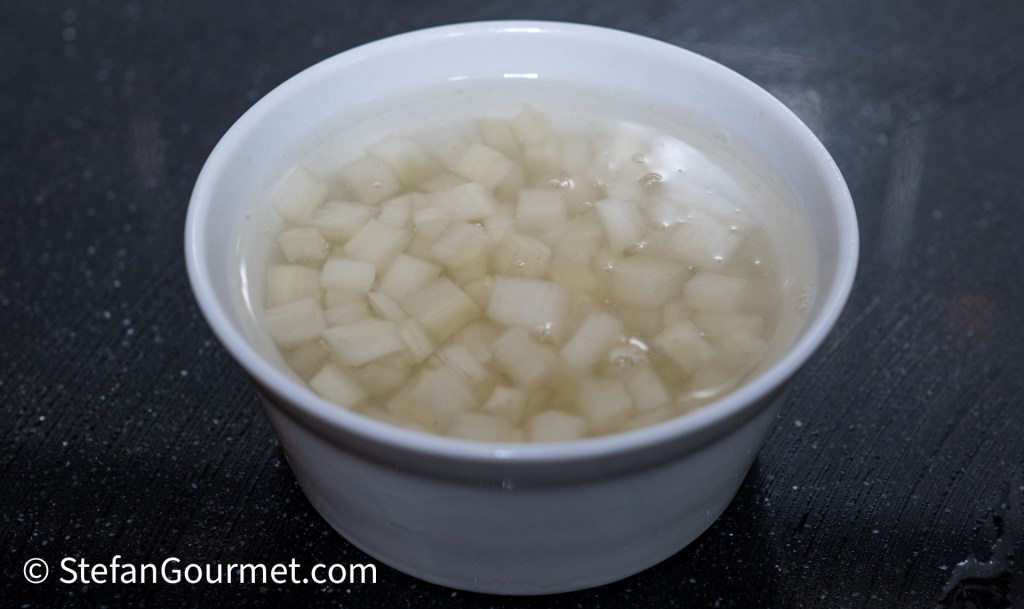
Place the chard stem brunoise in a bowl, cover with cold water, and refrigerate; this will keep the stems crunchy or make them even crispier.
Everything up to this point can be prepared in advance.
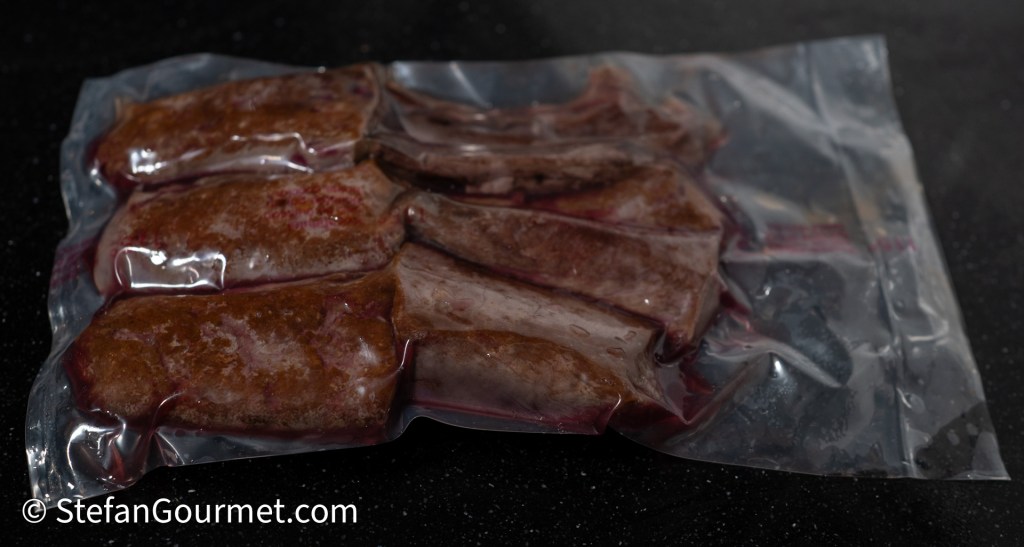
Preheat the sous-vide water bath to 48°C (118°F) and place the vacuum-sealed meat in the bath 25–30 minutes before you want to serve. Make sure your plates are preheated as well. Finish the dish 5 to 10 minutes before the meat is ready in the sous-vide (about 20 minutes after you put it in). You will need to do a lot in a short time, so it may be a good idea to solicit some assistance. Gently reheat the jus, the parsley root puree, and the chard, stirring as you do so.

To finish the chard, drain the reserved stem brunoise, add it to the chard leaves, season lightly with salt, and stir-fry for 1 minute.
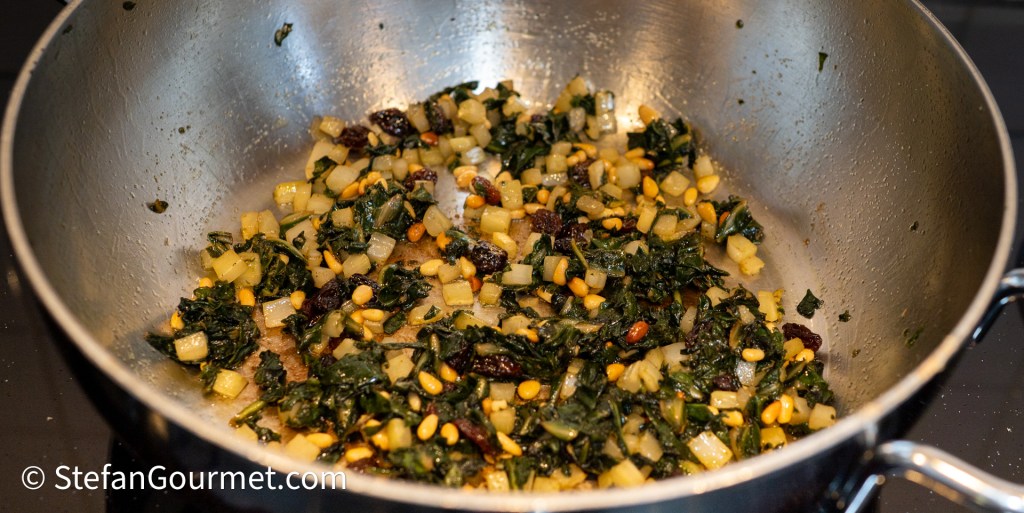
Then add most of the raisins and pine nuts and stir-fry for another minute. Reserve some raisins and pine nuts for garnish.
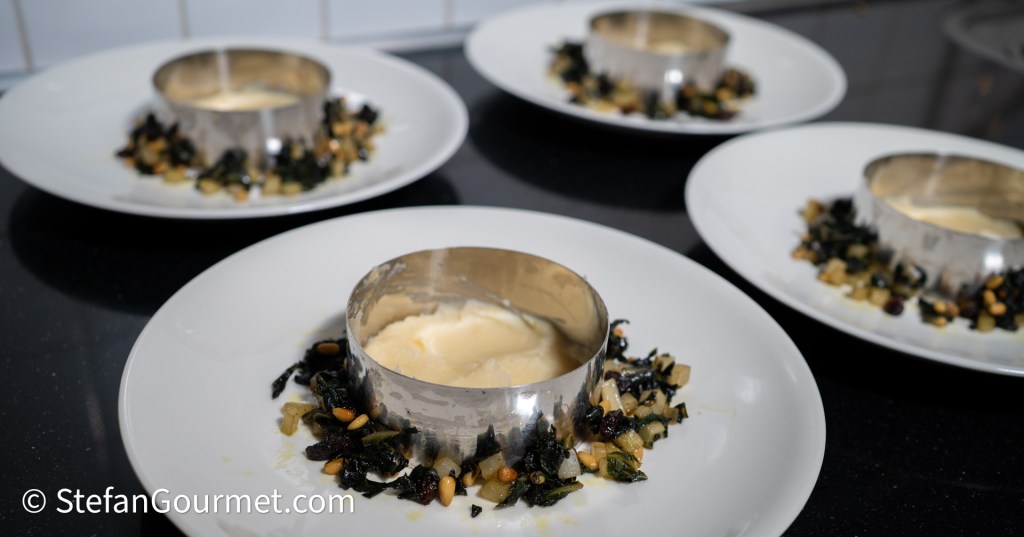
Make sure the parsley puree is piping hot. To plate, place a circle of parsley root puree in the center of each plate and arrange the chard around it (I used 10 cm / 4″ food rings to help with this).
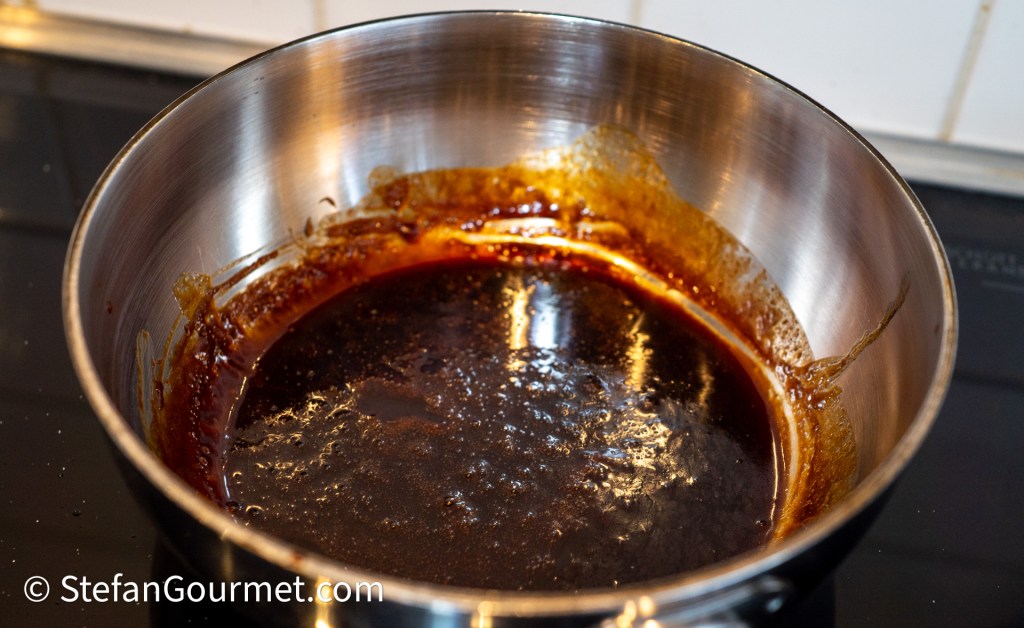
To finish the jus, add 1/2 teaspoon of vincotto (or 1/4 teaspoon of sugar and 1/4 teaspoon of red wine vinegar if you don’t have vincotto). Taste and adjust the seasoning with salt and freshly ground black pepper.
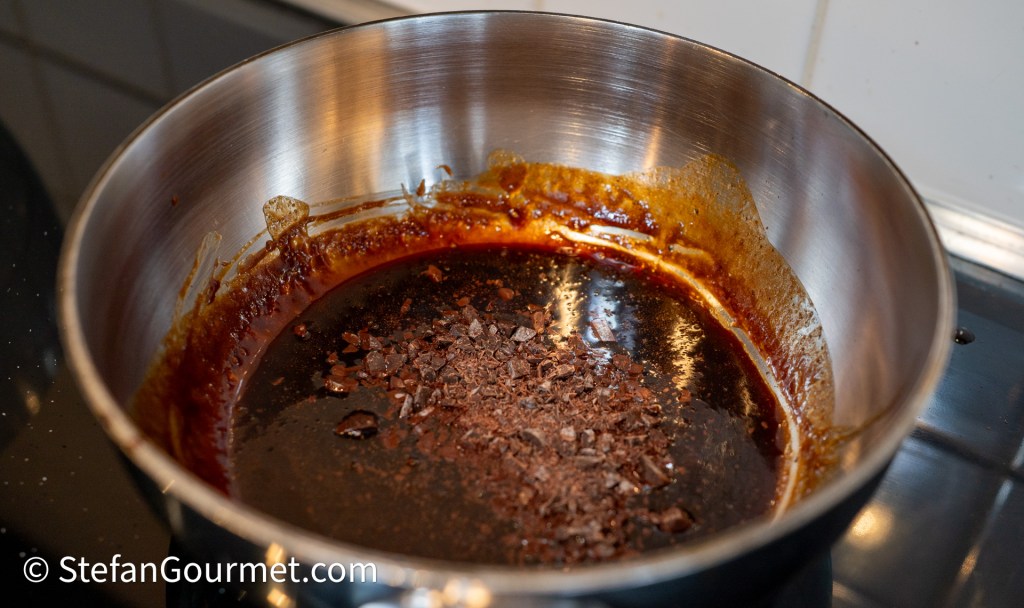
Bring the jus to a boil, then immediately turn off the heat and add 10 grams of minced 85% dark chocolate.
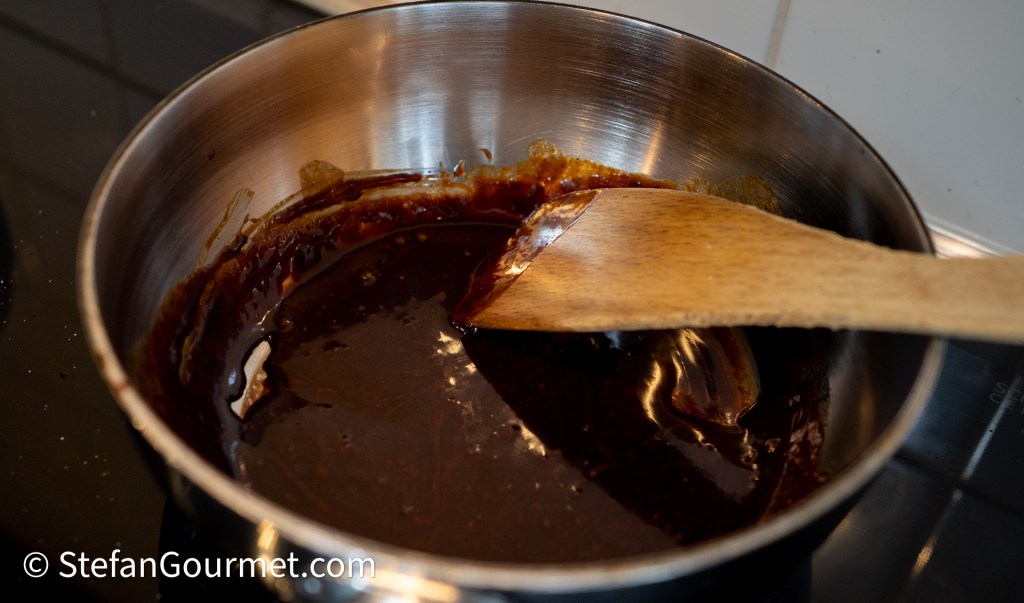
Stir until the chocolate has melted. The jus should be thick enough to coat the meat rather than sliding off, but thin enough to be pourable. The sauce should be as hot as possible, as it will serve as a blanket to prevent the meat from cooling off too quickly. This is important, as the meat will be only 48°C (118°F) when it comes out of the sous-vide.
When everything else is ready, take the meat out of the sous-vide, cut the bag open, and place the pieces of hare on top of the parsley root puree as soon as possible. Pour the hot jus over the meat, making sure to cover it completely. Garnish with the reserved raisins, pine nuts, and tiny pieces of candied orange. Serve immediately.
Wine pairing
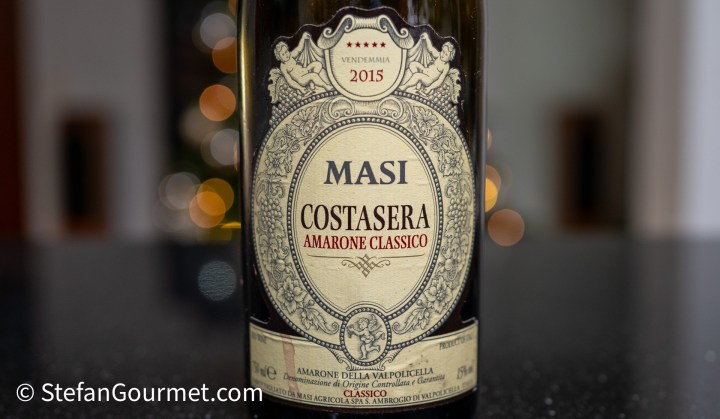
As mentioned in the introduction, this dish was outstanding with the Masi Amarone Costasera 2015. Amarone is perhaps the best possible pairing for this recipe due to its unique structural profile, but this specific bottle takes the pairing a step further. Amarone works so well because the dolceforte sauce has a specific flavor profile, with high acidity and sweetness from the wine reduction, raisins, vincotto, and candied orange. A standard dry red would often feel thin or “sour” against these flavors. Amarone works because it is a powerhouse: its high alcohol and extract provide the “weight” needed to match the gamey hare, while its slight residual sugar is essential to balance the sweet-and-savory elements of the sauce. Furthermore, the dried-fruit character inherent to the appassimento process used to produce Amarone mirrors the raisins in the garnish, pulling the entire plate together into a single, cohesive experience. Among Amarone, the Costasera is known for its distinct notes of cocoa and coffee, which create a direct link to the dark chocolate whisked into the jus. Alternatives for Amarone are a ripe-style Barossa Shiraz (bringing a bold, peppery spice that complements the juniper and cloves in the stock), Primitivo or Zinfandel (specifically those made using the appassimento technique, mimicking the structural balance of an Amarone), or an Aged Sagrantino di Montefalco (a powerhouse that develops notes of earth and cocoa as it matures, making it a tailor-made companion for the iron-like richness of the hare).


Am reading this totally fascinated! As I have lived most of my life totally without the help of AI it is fascinating to read how you have made use of it and how helpful and imaginative it has been! I do not think we can get hare in Australia – even rabbit is not for sale at the bigger stores . .. or it is in the pet food section (!) but, but . . . Your description is that of a perfect and very different dish the preparation of which I’ll read again letting my imagination bring forth a taste in my mouth 🙂 ! Be well and have a fun end to the year . . .
LikeLiked by 1 person
I’ve actually checked the availability of hare in Aussie and AI said: “Wild hare is available in Australia, but it is somewhat of a specialty item. Because hares are considered an introduced pest species in many states, there are commercial harvesting programs. You can often find wild-caught Australian hare through high-end game butchers or online wholesalers. It is lean, dark, and has the intense gamey flavor required for a Dolceforte sauce.” The recipe would also work with roo fillet, although I haven’t seen any bone-in roo in Aussie.
LikeLiked by 1 person
A huge thank-you for a very prompt reply having already done some of my homework for me . . . am interested, shall take this further . . . smiling . . . I SO like the learning as well as the ‘doing’ !
LikeLiked by 1 person
Regrettably (I suppose) I do not eat bunny or horse meat but I love the whole idea of your recipe and the dedication to details – the sauce sounds amaaaazing and I would love to replicate it in some form for venison or beef. Thank you Stefan!
LikeLiked by 1 person