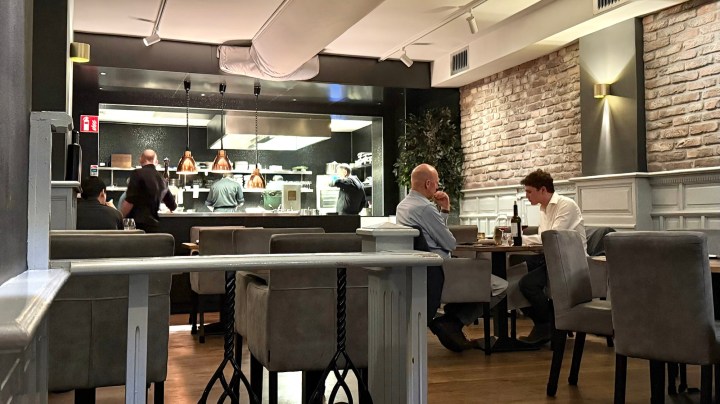
Restaurant Sinne in the Pijp neighborhood of Amsterdam has held a Michelin star since 2015. Since my last visit was ten years ago, a return was long overdue. The restaurant offers a compact menu of only eight dishes, including one cheese option, from which you can compose a four, five, or six-course meal for 85, 105, or 125 euros. We opted for five courses and let the chef decide, accompanied by a wine pairing at 13 euros per glass.
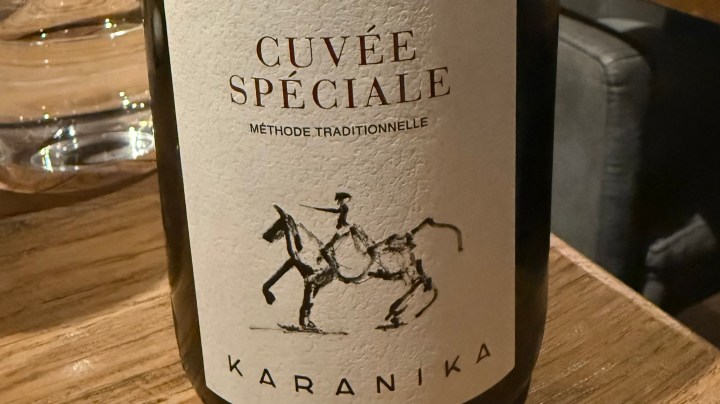
We started with a glass of Greek traditional-method sparkling wine, a blend of Xinomavro and Assyrtiko. These grapes are grown at an altitude of 700 meters in northern Greece, and the wine was aged for 30 months on the lees.
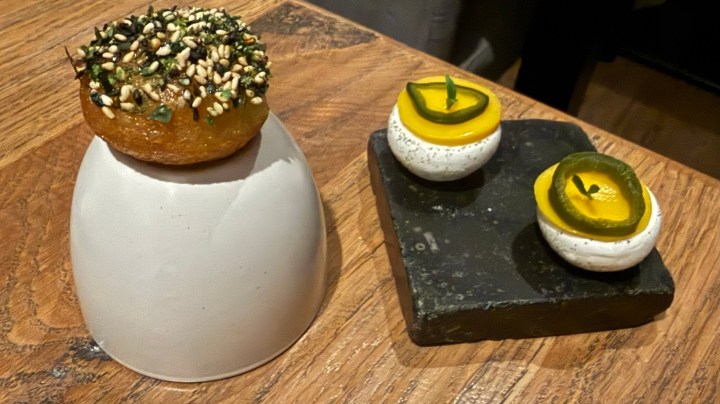
Two amuse-bouches were served: one featuring a cream of dill and the other a sweet macaron with jalapeño and smoked mackerel, although the flavor of the mackerel was barely perceptible.
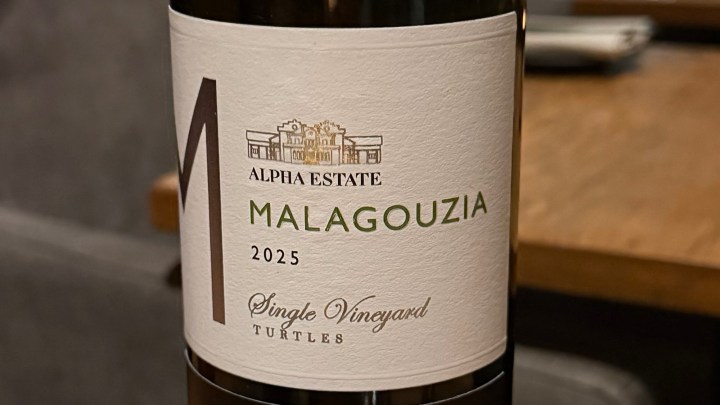
The first wine of the pairing was a Malagouzia, also sourced from a relatively cool region in northern Greece. It featured fruity aromas and a structure defined more by its bitter notes than by acidity.
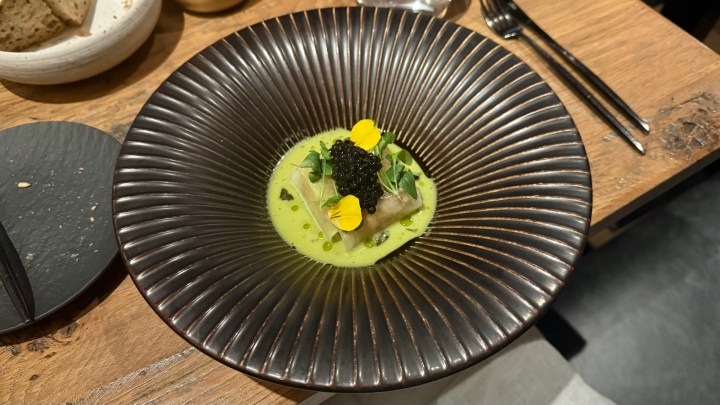
This was paired with branzino tartare, daikon, green curry, and ponzu ‘caviar’—tapioca pearls marinated in ponzu. The dish provided a pleasant contrast between the creamy fish and the crunchy daikon. While the ponzu pearls were somewhat underwhelming for a component presented as caviar, the dish was otherwise very tasty. It was a challenging pairing, and although the Malagouzia stood up to the bold flavors, it did accentuate the heat of the chili in the curry.
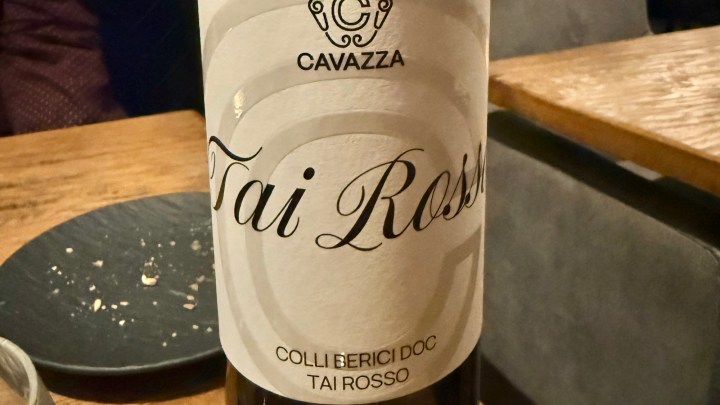
The next wine was a Tai Rosso from the Colli Berici DOC in northern Italy. This is the local name for Grenache, originally called Tokaj Rosso but shortened to Tai Rosso to avoid confusion with Hungarian Tokaji. Although it is unusual to switch to red for the second wine of a pairing, this was a very light, fruity style made in stainless steel with characteristic notes of almond.
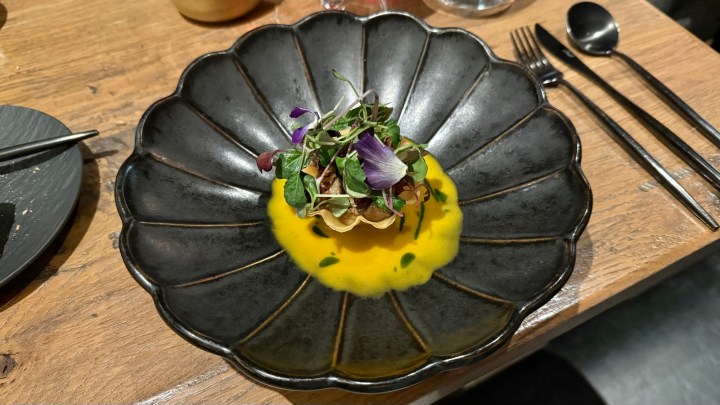
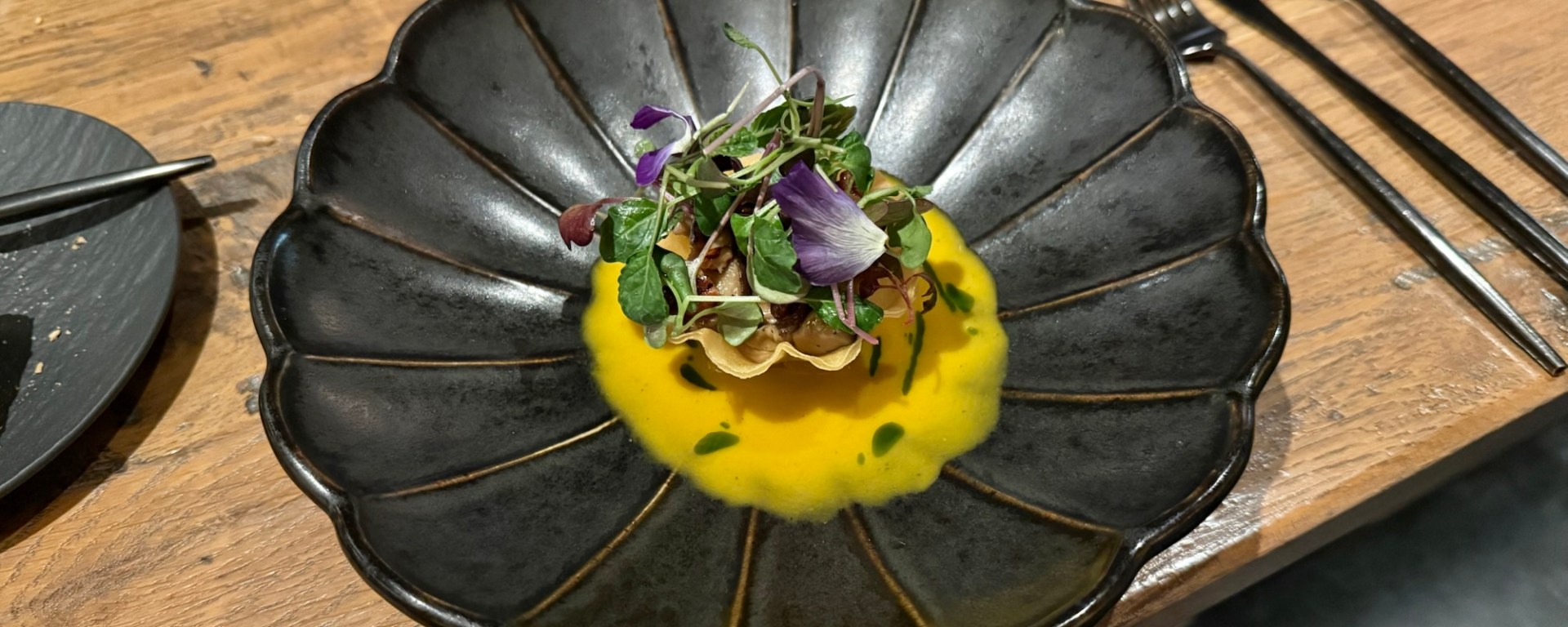
It was paired with a vegan dish: a chestnut tartlet with shiitake mushrooms, pecans, and pumpkin soup. While the wine and the dish did not clash, they did not particularly complement each other either. A white wine like a Viognier may have been a more effective pairing.

The following wine was a Pinot Noir from chalky soils in Rheinhessen, Germany.
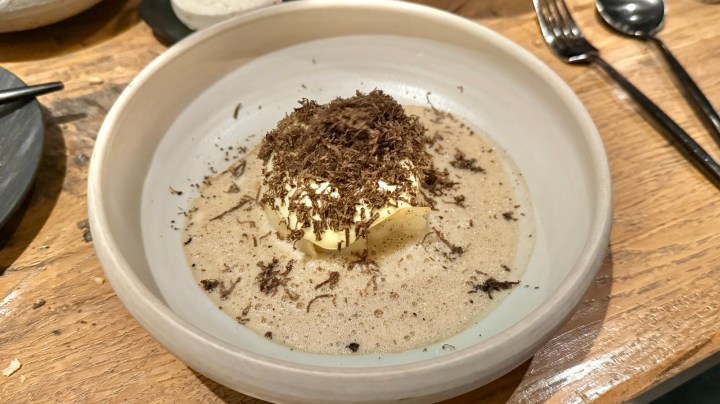
The idea was that the earthiness of the Pinot Noir would complement the truffle in the next dish; however, an oaked white wine might have been a better choice to match the creaminess of the hollandaise. The dish consisted of grilled celeriac with a 63°C egg yolk, hollandaise sauce, toasted hazelnuts, and freshly grated truffle. While the standard price included only a small amount of truffle—with a more generous portion available for a surcharge—the dish was tasty, though a better wine pairing could have elevated it further.
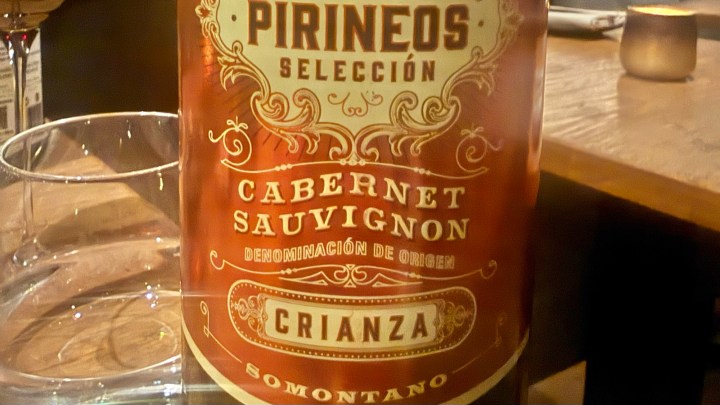
The wine for the main course was a Cabernet Sauvignon from Somontano, in the Pyrenees of northern Spain. The wine possessed velvety tannins but lacked a bit of fruit.
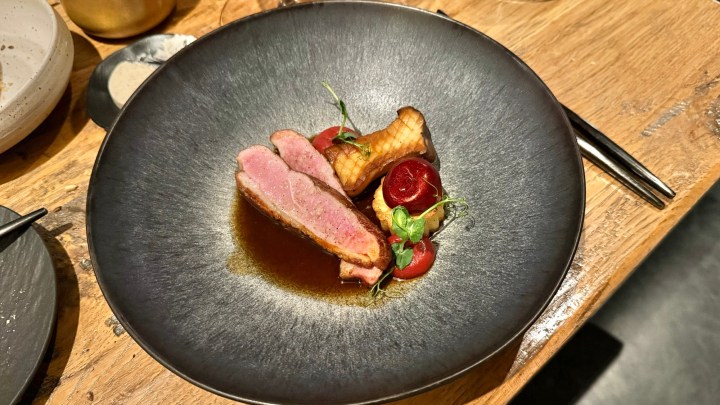
A more fruity wine would have worked better with the sweet and spicy beetroot served alongside the main course of duck breast. Otherwise, this was a very nice dish featuring tender, juicy duck cooked to a perfect medium-rare, a well-grilled king oyster mushroom, potato, and a flavorful duck jus.
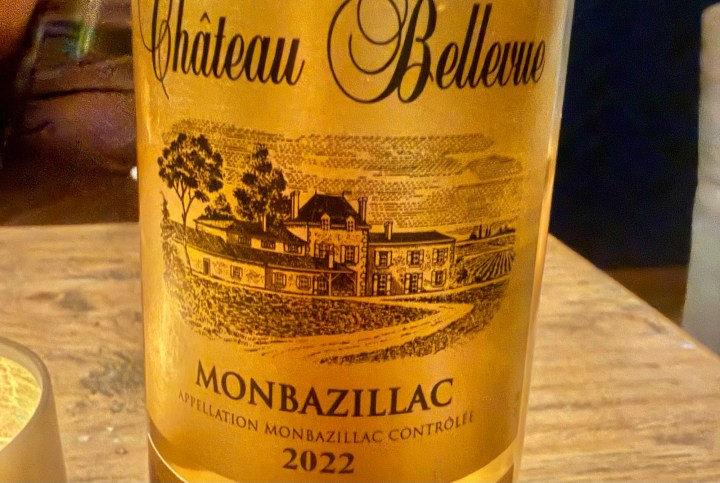
The dessert wine was a Monbazillac, the more fruity and less complex ‘little brother’ of Sauternes.
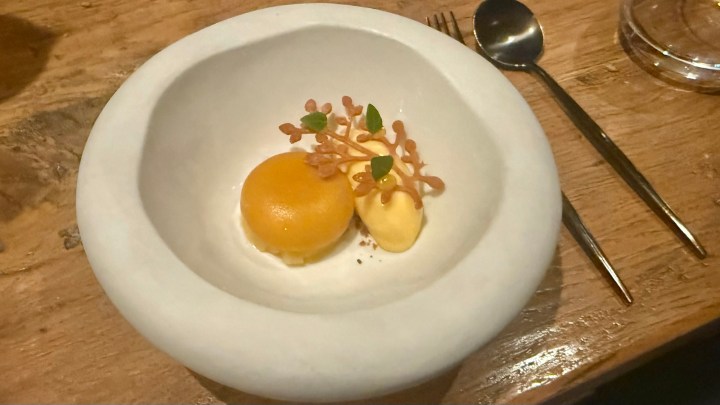
This was a good pairing for the nice dessert of mango cream with apricot, basil, and passion fruit sorbet.
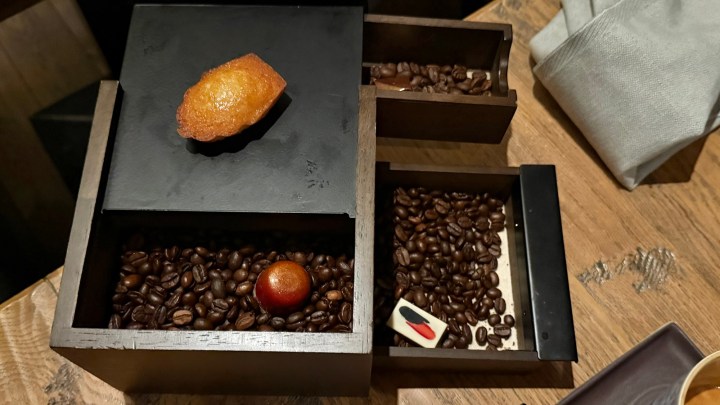
We concluded our meal with some pleasant petit fours accompanied by coffee and tea.
Reading my concluding remarks from ten years ago, it is remarkable—though perhaps not surprising—how well they still apply today. The food is tasty, beautifully presented, and technically perfect. I found that there were perhaps too many dishes featuring a sweet and spicy element, which appeared in three of the four savory courses. This specific profile makes dishes harder to pair with wine. While the selections did not clash, the pairings felt as though they were made on paper rather than through the process of tasting various options until finding one where the wine and dish truly elevate each other. As was the case a decade ago, the service was excellent: both attentive and friendly. It was clear, however, that the sommelier was not present (even though she owns the restaurant together with the chef). One notable change from ten years ago was that the restaurant was not fully booked on a Friday night. This may be because the restaurant now offers standard value for money, whereas it provided exceptional value in the past.


Well that’s too bad. Maybe they should hire you for their wine pairings!!!
LikeLiked by 1 person
An interesting read of your experience perchance lacking the usual excitement factor. Altho’ I always look at the presentation, here in a few cases there seems to be a dominance of the look of the serving dish rather than the food presented. You used the word ‘pleasant’ – that seems appropriate from the post . . .
LikeLiked by 1 person