Restaurant De Bokkedoorns is situated in the dunes half an hour west of Amsterdam, nestled between Overveen and Bloemendaal. Opened in 1961, the restaurant earned its first Michelin star in 1978 and has maintained a two-star rating continuously since 1991. While the kitchen has seen several leaders over the decades, current chef Roy Eijkelkamp has been at the helm since 2018.
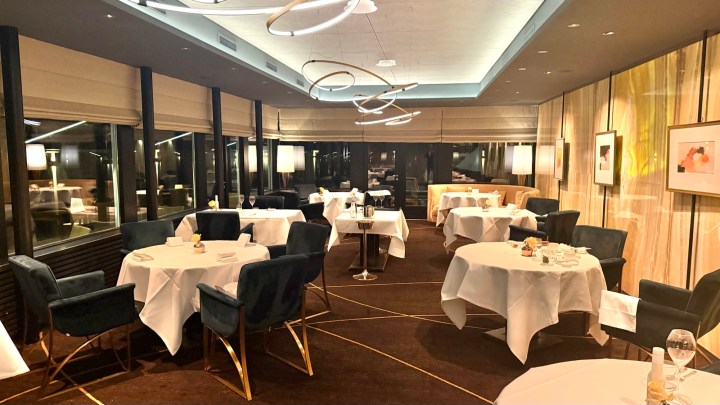
My last visit was more than two decades ago—June 15, 2004—to celebrate our second wedding anniversary. The dining room was nearly empty that night, as most of the country was preoccupied with the Germany-Netherlands match during the European Championship. At that time, the menu focused on very classic French cuisine, but the style has since evolved into something far more contemporary and creative.
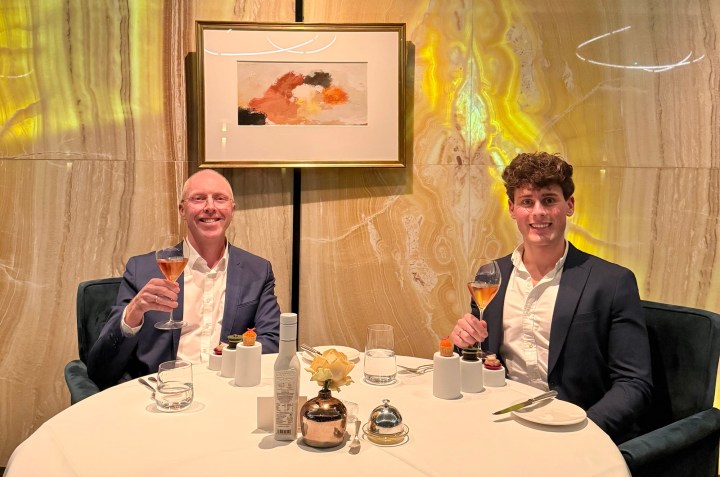
The setting remains exceptional, especially in summer, offering a beautiful view of a dune lake and the option for al fresco dining when the weather permits. I hadn’t returned in years primarily due to the logistics; it is too close to justify a hotel stay, yet too far from the train station for my usual travel preference when dining near Amsterdam. However, for my friend Sebastian’s birthday celebration, his fiancé kindly offered to act as our chauffeur for the evening, making a return visit finally possible.
The restaurant offers both an à la carte menu and a flexible tasting menu, where you can choose between four and seven courses from a selection of seven dishes. This is priced at 135 euros for four courses, with an additional 25 euros for each extra dish, totaling 210 euros for the full seven. Unlike many other restaurants, De Bokkedoorns allows you to choose exactly which courses to omit if you opt for fewer than seven. We initially ordered the first five courses with the intention of deciding on cheese and dessert later, but we eventually enjoyed all seven.
There is no wine pairing; instead, the restaurant provides an extensive bottle list alongside a very limited selection by the glass. The sommelier noted that he occasionally opens additional bottles for glass service, which he did for our first course. However, guests are largely steered toward ordering by the bottle. This can be a challenge given the creative nature of the dishes and their varying flavor profiles, which would typically benefit from a specific pairing for each course. Furthermore, the wine list provides no descriptions of the selections. Even with extensive wine knowledge, it is difficult to make an informed choice without relying on the sommelier’s advice.
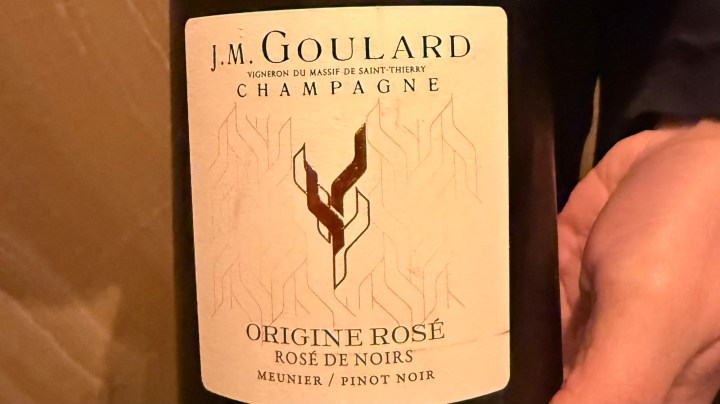
Since I have a preference for white Burgundy and the sommelier confirmed it would complement the second, third, and fourth courses, I selected a bottle of Meursault. To begin the evening, however, we started with a rosé Champagne. The blend consisted of 62% Meunier, 35% Pinot Noir, and 3% red wine made from Meunier. This combination of white wine from black grapes, turned into a rosé by the addition of a small portion of red wine, resulted in a profile where the fruity notes of the Meunier were clearly recognizable.
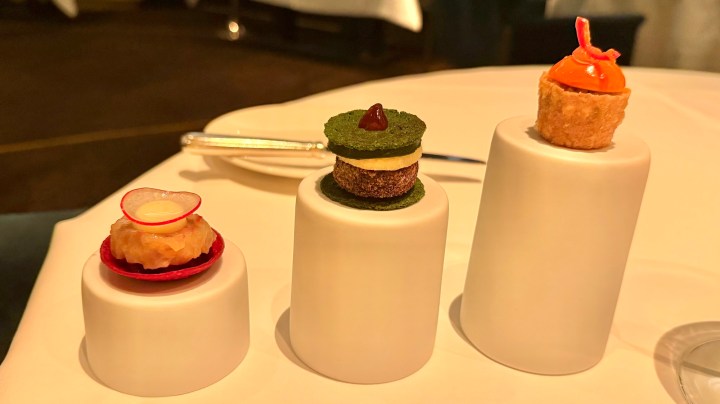
The Champagne worked well to clean the palate between the different amuse-bouche. The first included beetroot and hamachi, followed by a very nice one featuring black pudding, kale, and quince. A third bite offered Thai flavors with only a hint of spice, though it did not particularly remind me of Massaman despite being introduced as such.
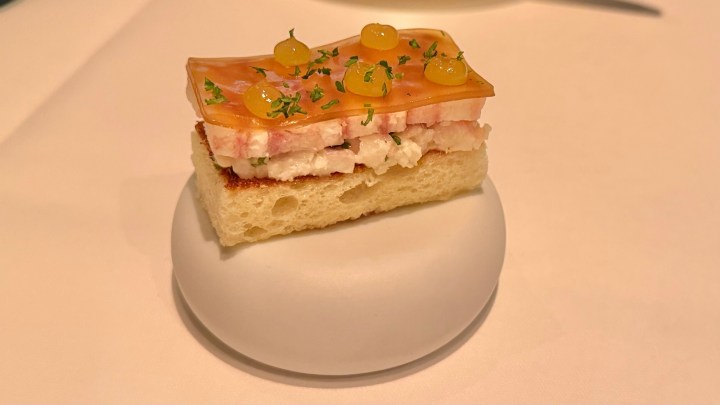
The final amuse-bouche was served separately and was excellent: toasted brioche with smoked eel, a fruity element, and drops of Lapsang Souchong jelly. Although the combination of smoked tea and smoked eel may sound like an excess of smokiness, it was perfectly balanced.
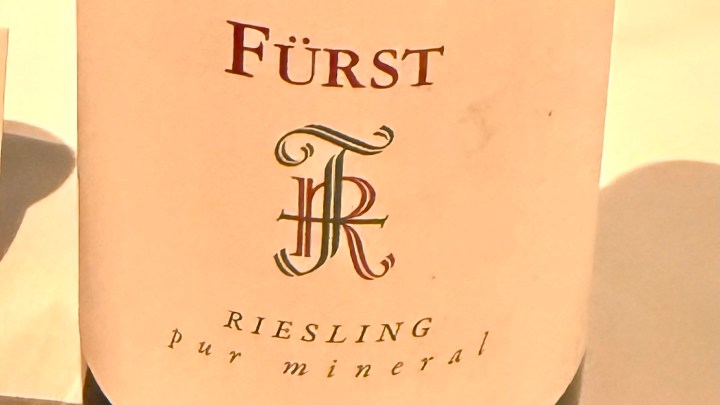
The wine offered by the glass for the first course was a Riesling from Franken, a region more commonly associated with Silvaner. The wine was true to its name, “pur mineral,” with a very crisp profile and predominantly reductive aromas.
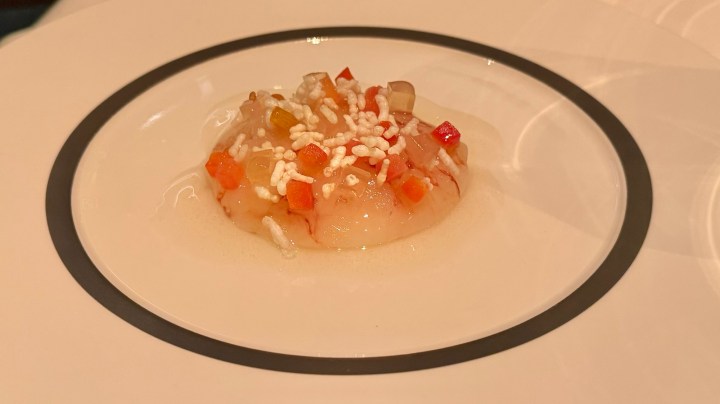
The dish consisted of a carpaccio and salad of Argentinian prawn with chorizo, romesco, corn, and tomato stock. After the first bite and sip, I initially felt the pairing didn’t quite work; the creamy texture of the prawn seemed to make the wine appear even more racy and steely than it already was. However, in a rare turn of events, the pairing seemed to improve with every taste. By the end, the wine began to draw out pleasant notes of oyster in the dish. Despite this, I still believe a less steely wine would have been a better match for the raw prawn, while a fruitier selection would have better complemented the romesco and tomato elements.
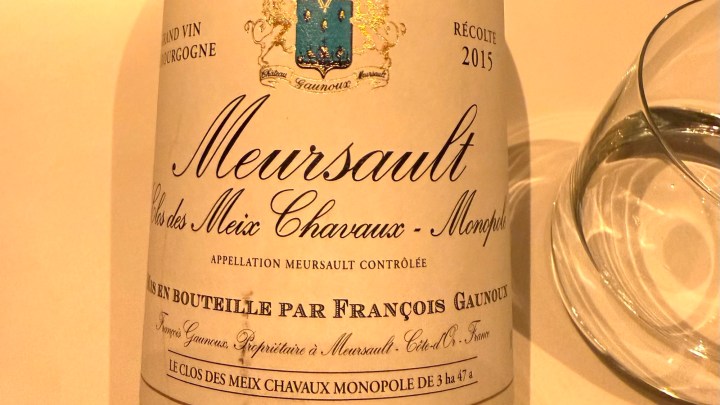
We then moved on to the Meursault, a 2015 vintage that had been decanted to open up its aromas. The sommelier suggested it; even for a wine enthusiast, it is impossible to be familiar with every producer and lieu-dit in Burgundy. Despite its age, the wine remained surprisingly youthful, and even with decanting, the bouquet was somewhat restrained.
The sommelier explained that the wine had been held at the domaine for several years and recorked before its eventual release. It proved more neutral than I would typically expect from a Meursault at this price point, though for a wine tasked with pairing across three different courses, that neutrality may have been an asset. It did indeed work with all three dishes—no clashes, but no matches made in heaven either.
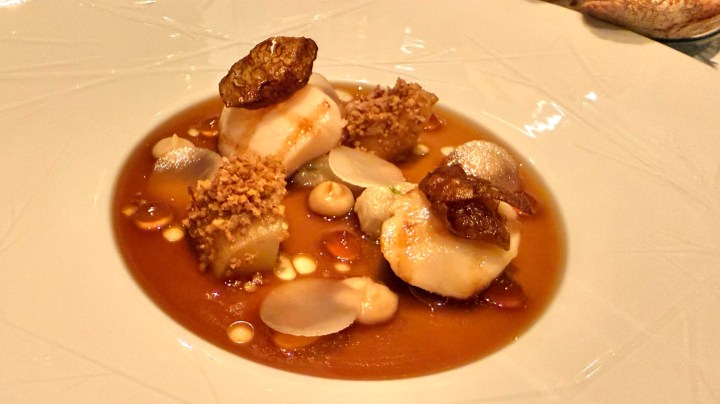
The second course of the menu featured grilled scallops with various preparations of sunchoke, coffee oil, walnut cream, and an onion broth. The proportion of scallop felt a bit limited compared to the amount of sunchoke on the plate. While the grilled flavor was very faint, the texture of the scallops was perfect; a trade-off I prefer over more char at the expense of overcooking. The coffee oil was a clever addition, well-balanced by the sweet and fresh elements of the onion broth. Sebas enjoyed this dish more than I did, likely because I lack a strong affinity for bitter notes.
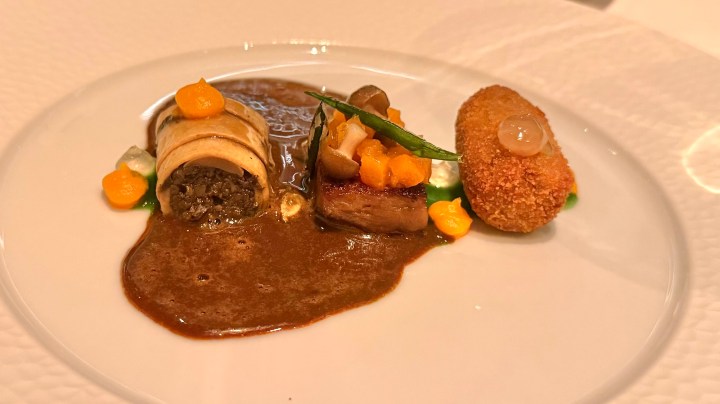
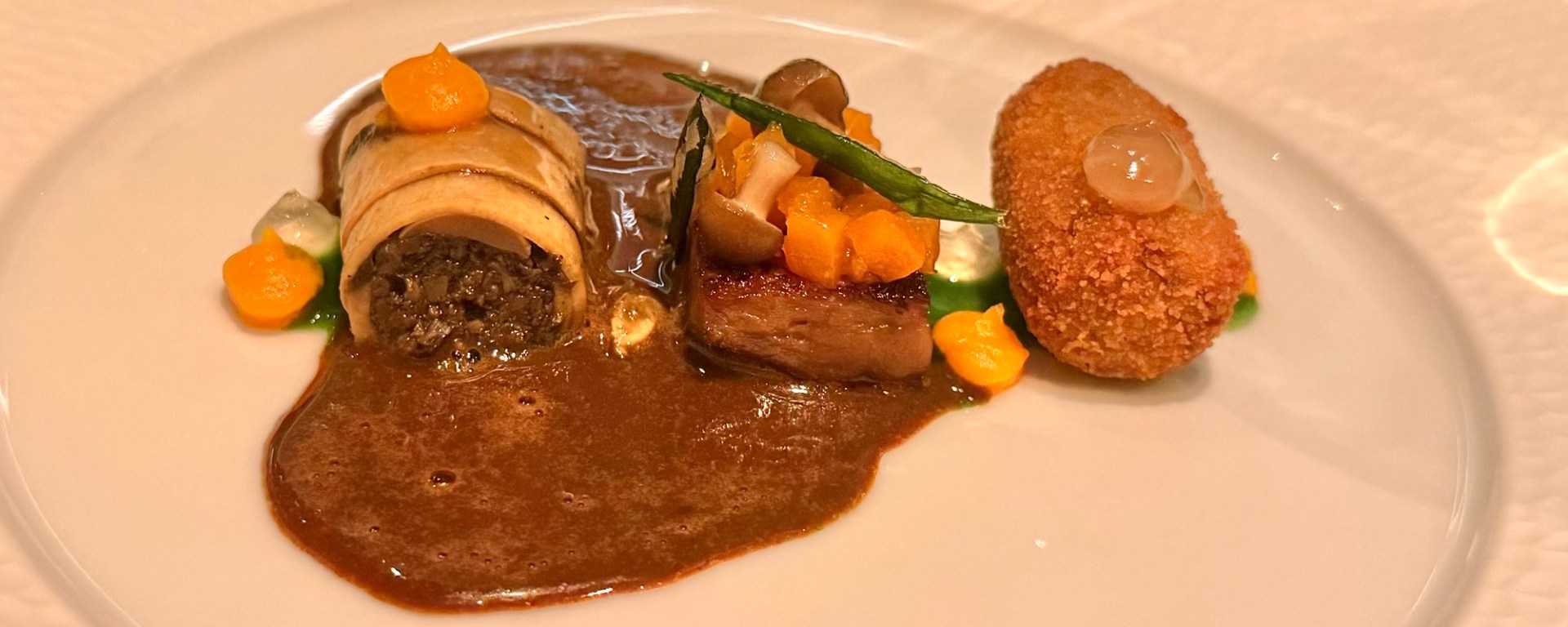
We continued with a vegan dish featuring several types of mushrooms in various preparations, including lion’s mane, accented by a touch of pumpkin. It was an exceptionally flavorful dish, anchored by a deep and savory mushroom jus.
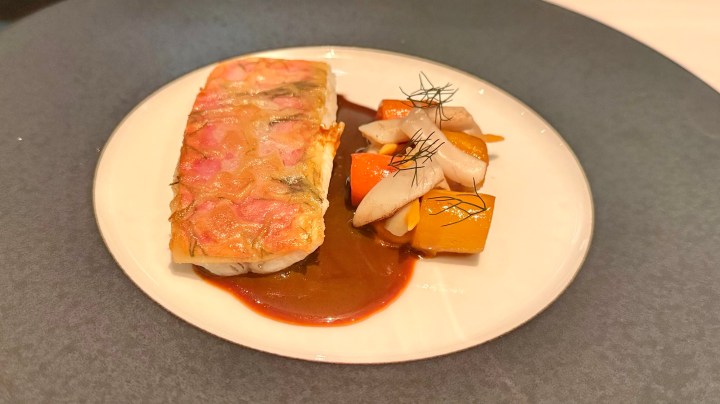
The final dish we had with the Meursault was red mullet, its skin rendered crispy with a layer of filo dough. It was accompanied by carrots, razor clams, cockles, and a jus of carrot and pastis. Red mullet is notoriously difficult to cook perfectly; this rendition was adequate, though not quite as tender or juicy as the version I recently enjoyed at Tsunarié. Salt was provided at the table, and I found that a light sprinkling significantly improved the flavor of the fish.
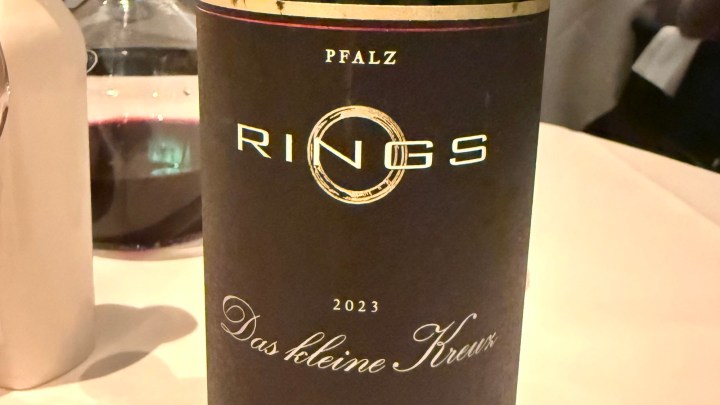
We asked the sommelier to suggest a wine for the main course, noting that something like a Pomerol would be appealing. He proposed a blend of St. Laurent, Merlot, Cabernet Sauvignon, Cabernet Franc, and Syrah—the second wine from Weingut Rings in the Pfalz region of Germany. This was one of only three red wines regularly available by the glass. Although the blend does include Merlot, the primary grape of Pomerol, the style was notably more fresh and mineral than its French counterpart, with some distinct reductive notes. It is a striking example of how climate change is shifting viticulture; grape varieties traditionally associated with the much more southerly Bordeaux region can now produce good results in Germany.
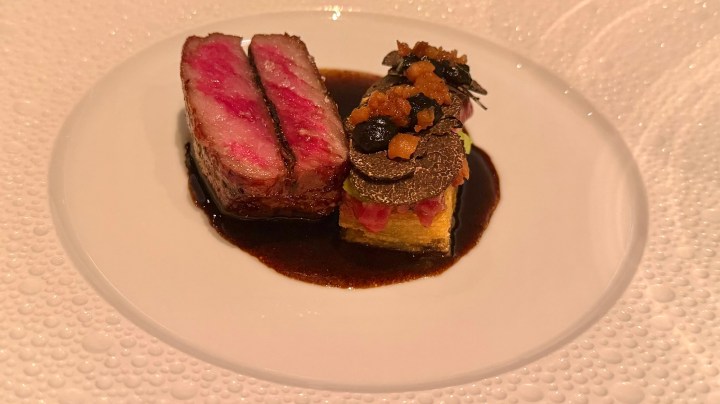
The main course of Wagyu A5 with truffle was phenomenal and the clear highlight of the evening. The contrast between the crispy exterior and the tender, creamy, juicy interior of the beef was remarkable—easily among the best I have ever encountered.
It was an interesting reversal of expectations: the Wagyu here at De Bokkedoorns surpassed the version I recently had at the Japanese restaurant Tsunarié, yet the red mullet at Tsunarié had been superior. One might expect the opposite, given that De Bokkedoorns is situated so close to the sea and Wagyu is a quintessential Japanese ingredient, while red mullet is a local Dutch catch.
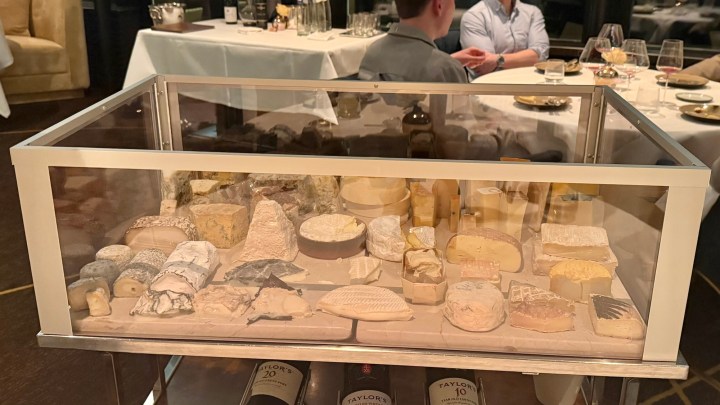
The cheese cart offered an ample selection, so we decided to order a glass of Sauternes and select various blue cheeses.
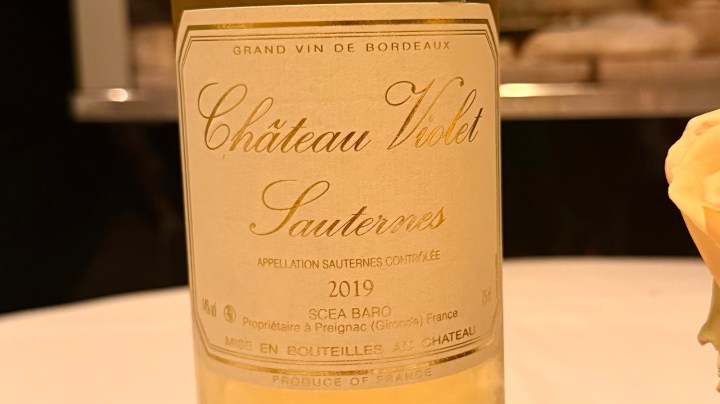
The Sauternes was a lighter style but quite pleasant.
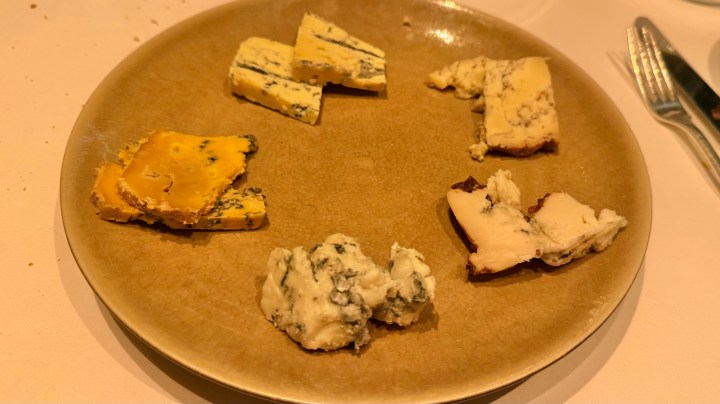
We were able to choose five different cheeses, and there were even several more blue varieties available beyond those we selected. The portion of each cheese was generous. The waitress was unable to serve the cheeses in increasing order of strength.
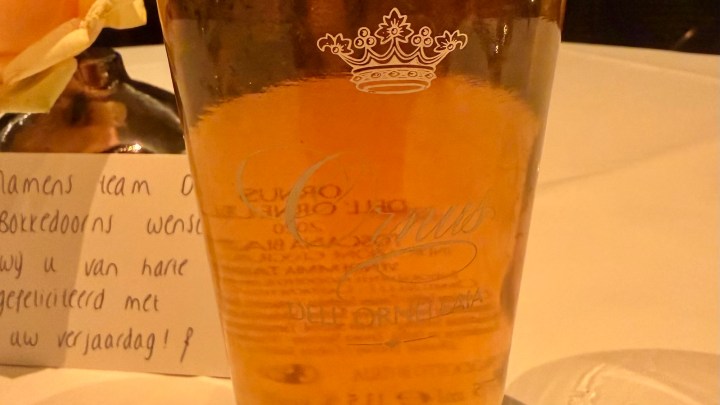
The dessert wine was Ornus dell’Ornellaia from Bolgheri in Italy, a late-harvest wine made from 100% Petit Manseng, a variety more commonly associated with the Jurançon region in southwest France. While Bolgheri is primarily known for producing wines from typical Bordeaux varieties, this selection utilizes Petit Manseng rather than the Sémillon and Sauvignon Blanc typically used for the noble rot wines of Bordeaux, such as Sauternes. The wine shared some similarities with the Sauternes we enjoyed with the cheese, yet it was less fruity and more linear, thanks to the high natural acidity of the Petit Manseng.
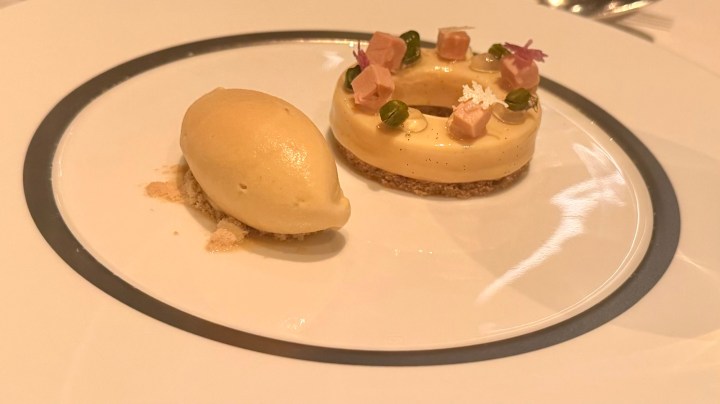
The dessert was unusual, featuring foie gras in three distinct renditions (mousse, terrine, and ‘snow’) combined with banana cake, toasted pistachios, and white chocolate. It was delicious.
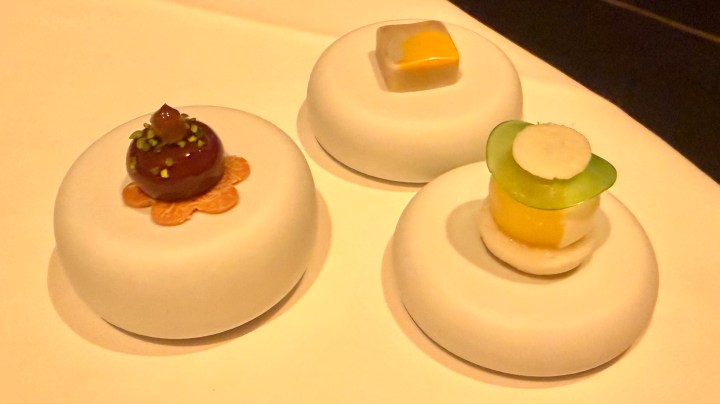
We concluded the meal with a nice set of petit fours.
The food at De Bokkedoorns was excellent. Chef Roy Eijkelkamp clearly knows his craft, though his absence from the dining room suggests he is either particularly modest or was not present that evening. Regardless, the two Michelin stars are very well deserved. What I particularly appreciated was the exceptional variation in flavor profiles. Some chefs adhere so strictly to a specific signature that it dominates the entire menu, resulting for example in a repetitive sequence of overly acidic dishes or a constant theme of sweet-and-spicy elements. This can become monotonous and increases the risk that if one dish doesn’t suit your palate, the rest of the meal won’t either.
At De Bokkedoorns, however, each dish offers a distinct identity. The menu successfully transitioned from the fresh and slightly spicy notes of the prawn course to the earthy complexity of mushrooms, culminating in the rich, savory indulgence of the Wagyu and truffle.
If you have read my previous reviews, you know that for me, the wine is as essential to the experience as the food. When dining as a party of two, the absence of a structured wine pairing or a broader selection of wines by the glass significantly limits the variety of wines one can enjoy, as well as the opportunity for truly exceptional pairings. Although sharing a single great bottle across several courses can be pleasant, it is rarely an ideal match for every dish; furthermore, if the bottle doesn’t resonate with your palate, you are committed to it for the duration of the meal. In contrast, having a different wine for each course increases the probability of a stellar pairing and keeps the experience dynamic and educational. Even for a larger party of four or more, where one might order a different bottle for each course, it is difficult to achieve the precision of a pairing specifically curated by a sommelier who has trialed multiple options against each dish. Ultimately, I find the lack of a dedicated wine pairing and the limited availability of wines by the glass to be a weak point at De Bokkedoorns, particularly for smaller parties.
There were a few glitches in the service that, while not ruining a very pleasant evening, were certainly noticeable for an establishment of this caliber. As I mentioned, the waitress was unable to arrange the cheeses in increasing order of strength. Furthermore, after the Meursault was decanted, the carafe was not left at our table, yet our glasses were not promptly topped up. Most surprisingly, we were asked if we would like our Sauternes “topped up”—a phrasing that implies a courtesy gesture rather than a formal inquiry for another round—only to find two additional glasses charged to our bill. With three staff members attending to only five occupied tables, this lack of precision is not the level of service one expects at a two-star Michelin restaurant.
In conclusion, based on the food alone, I would certainly return much sooner than waiting another two decades. However, the shortcomings in the wine selection and service give me pause. Perhaps a return visit with a larger group in the summer—when the stunning views could tip the scales—would be the ideal way to experience De Bokkedoorns again.


In spite of the shortcomings you have listed this dinner appeals to me hugely – the dishes served and how they were presented. Love the look of the amuse-bouche, that brilliant-looking wagyu and one of the most fabulous cheese selections I have seen! Am jealous of your blue cheese selections . . . and, with my primary school knowledge but high school love of wine have always liked the white burgundies, specially Meursault 🙂 ! Would so have loved to taste the scallop and mushroom dishes . . . hmm, am writing this during Sunday breakfast which suddenly does not seem very appealing . . . 🙂 ! best . . .
LikeLiked by 1 person