
As the winner of the 2025 Lafite Laureate wine tasting competition, I was invited to Château Lafite for a tour, lunch, and tasting. Domaines Barons de Rothschild (DBR) Lafite, the competition’s main sponsor, arranged for Tiphaine de Rességuier, Commercial Director Europe, to drive us from our hotel in Bordeaux to the estate in Pauillac. Because the château is currently undergoing renovations, we bypassed the famous circular cellar—which I previously visited in 2016—to focus on the vineyards and the cooperage.
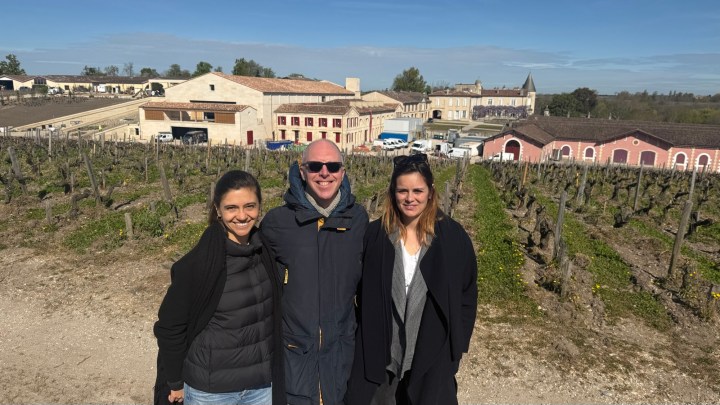
We toured the grounds with Manuela Brando, head of R&D for DBR Lafite. Holding a PhD in biodynamic oenology, Manuela oversees scientific vineyard management, sustainability projects, and experiments in soil health and biodiversity across all DBR properties.
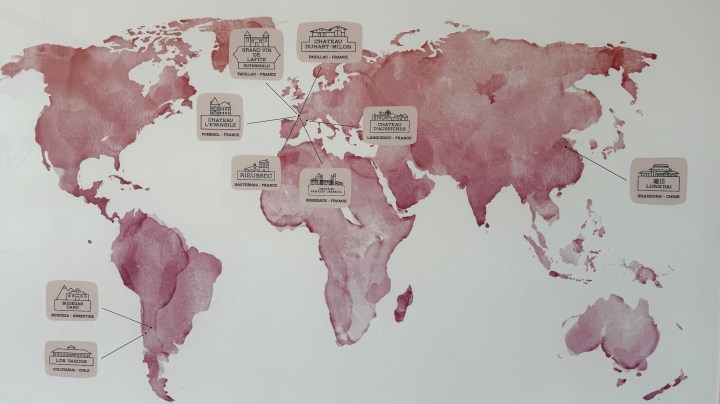
Her remit extends beyond Lafite and its neighbor Duhart-Milon to include Château l’Evangile in Pomerol, Château Rieussec in Sauternes, and estates in Chablis, Corbières, Argentina, Chile, and China.
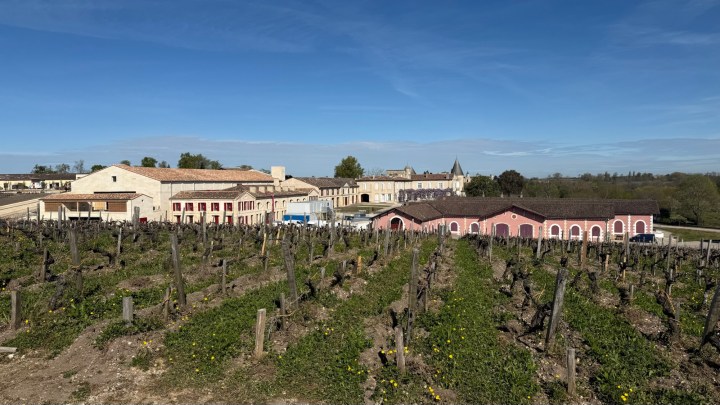
In Bordeaux alone, the group manages 180 hectares of vines. Manuela explained that converting to biodynamic agriculture in Bordeaux’s humid climate requires relying solely on sulphur and copper. This necessitates treating the vineyards rapidly and frequently, supported by a fleet of 15 tractors. While most of Pauillac maintains a high density of 8,600 vines per hectare, Manuela is considering lowering this to make room for more cover crops. Her vision includes creating a more natural, biodiverse landscape by integrating trees, hedges, and ponds.
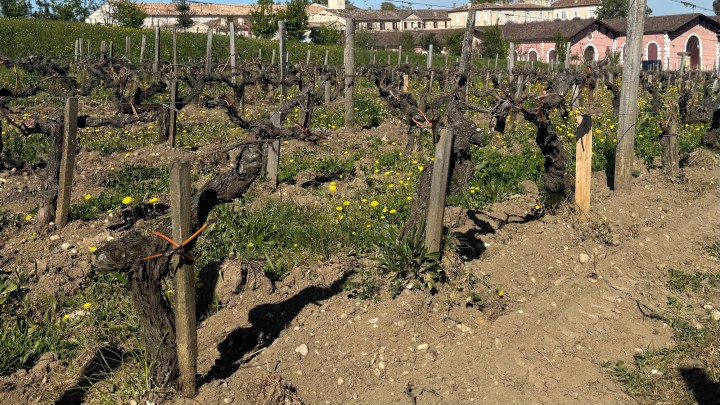
Lafite’s prestige stems not just from its exceptional terroir, but from the scale of it, spanning 30 hectares. Like much of Pauillac, the soil is gravelly, yet Lafite’s specific composition contains more clay, which improves water retention. While vines are often thought to have incredibly deep roots, a recent soil erosion incident revealed that the roots here only extend to about two meters.
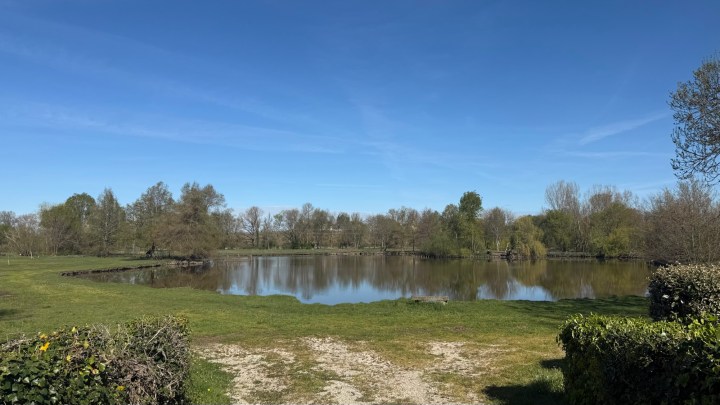
The estate also maintains a herd of roughly 30 “Vaches Marines,” a rare, historically endangered cattle breed native to the Aquitaine coast. These cows roam the Lafite marshes year-round, and their manure is used to naturally enhance soil health. Manuela noted that soil microorganisms are as vital to the vines as the microbiome is to human health.
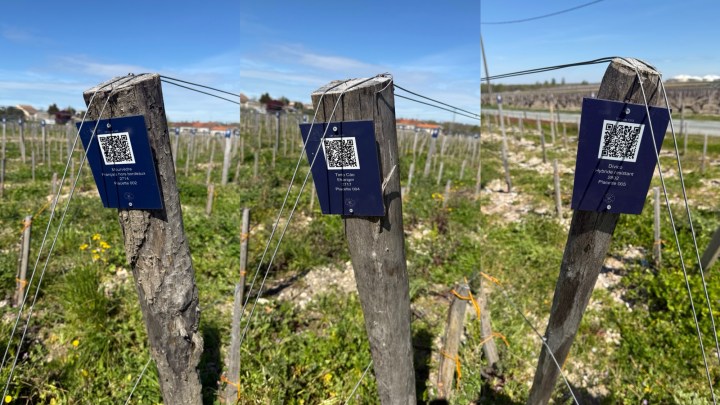
To prepare for climate change, an experimental plot was established in 2023 utilizing mass selection and diverse grape varieties. Each row is marked with a QR code to track and catalogue results. Alongside traditional Cabernet Sauvignon and Merlot, they have planted varieties from hotter climates, including Portugal, Southern France, Greece, and Georgia. Since the project only began in 2023, it is still too early to draw conclusions, but it represents a significant step toward future-proofing the estate.
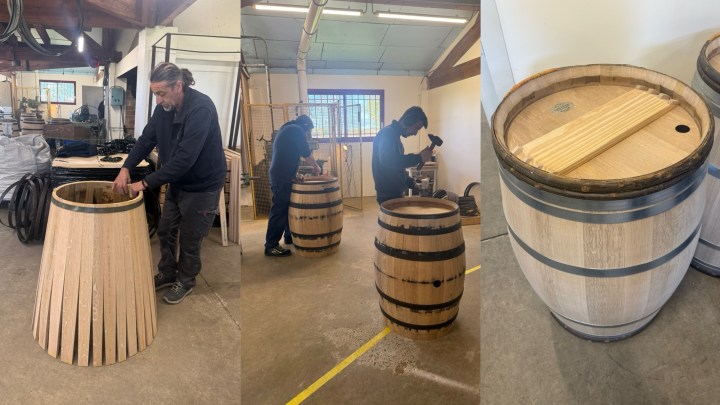
Our next stop was the cooperage, where barrels for all of DBR’s global estates are crafted by hand. Each cooper produces only one or two barrels per day, and it was fascinating to watch them select and arrange oak staves before shaping them into finished casks.
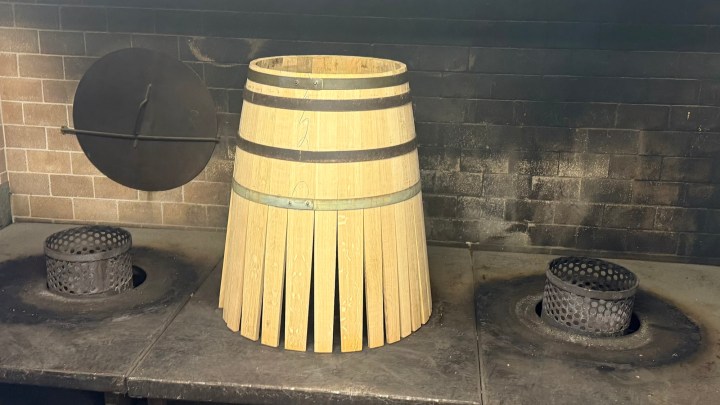
Toasting profiles are tailored specifically to each estate by adjusting temperatures and durations. For example, barrels destined for the Sauternes of Rieussec undergo a longer toast at a lower temperature to develop more pronounced coconut aromas.
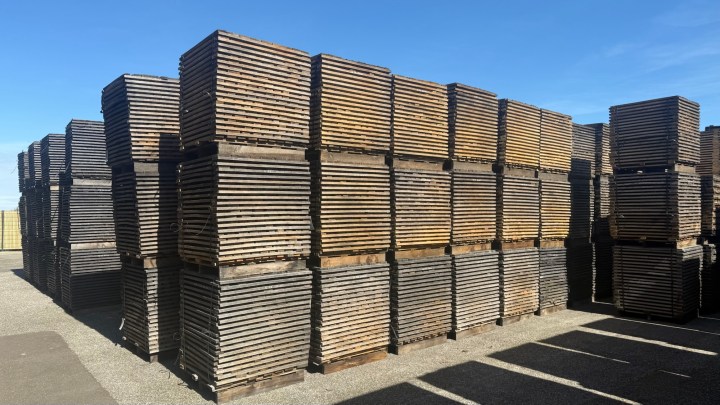
The process begins with oak selected from the famous Tronçais Forest, which is sawn into staves and seasoned for two years—one year exposed to the elements and one year under shelter. Because this seasoning takes place at Château Lafite, the local environment directly influences the character of the wood.
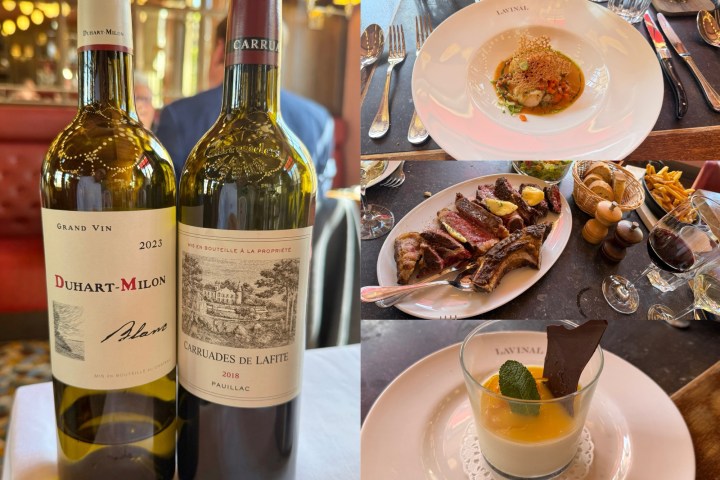
At Café Lavinal, we enjoyed lunch with the 2023 Duhart-Milon Blanc—the white “grand vin” of Lafite’s neighbor, which is a blend of Sauvignon Blanc and Sémillon aged in oak barriques—and the 2018 Carruades de Lafite, the second wine of Lafite. To pair with these wines, we chose “snacked” scallops, seared and served with a chorizo sauce and crispy vegetables, followed by a côte de boeuf (prime rib). To stay awake after this feast, we finished with coffee and a mandarin panna cotta.
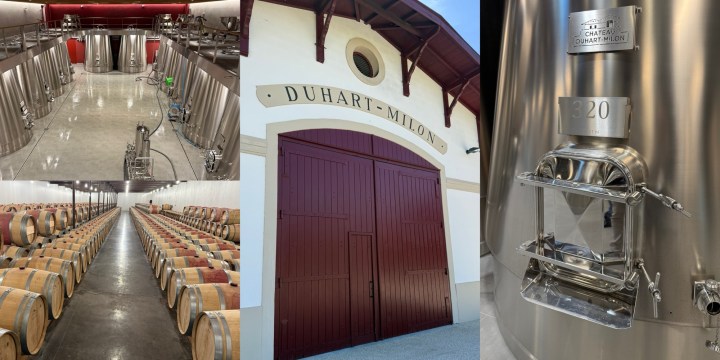
Since we couldn’t visit Lafite’s cellar, we toured the cellar at Duhart-Milon and held the tasting there instead. The estate produces three wines: the red and white “grand vin” (the latter of which we enjoyed at lunch) and a second wine called Moulin de Duhart. The cellar appeared very new, modern, and absolutely spotless.
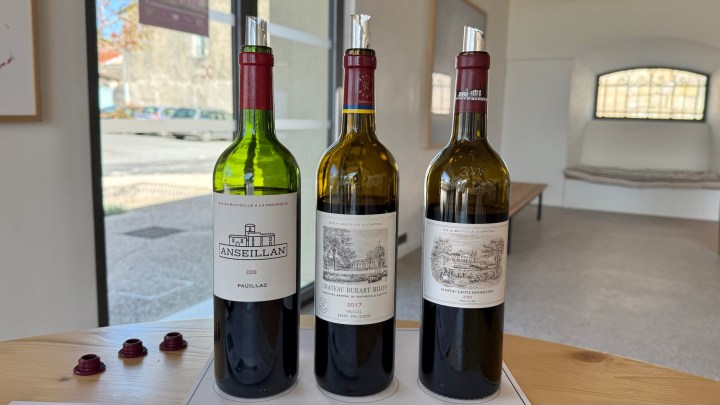
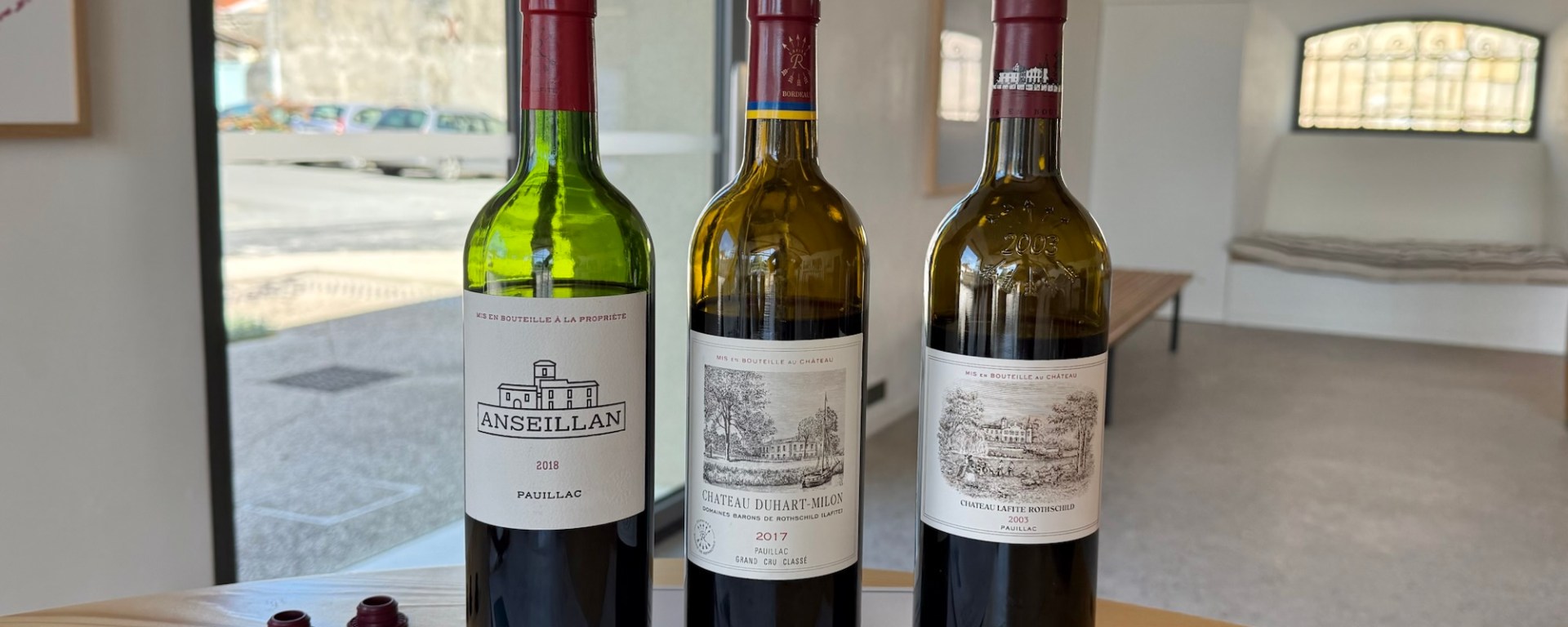
We tasted three wines:
- Anseillan 2018, the inaugural vintage of a new Pauillac created by Lafite to bring an affordable wine to the market. A blend of 48% Merlot, 39% Cabernet Sauvignon, and 13% Petit Verdot, it was aged in French oak barriques for 16 months. It featured velvety tannins, balance, and freshness, with aromas of ripe plums.
- Château Duhart-Milon 2017, from a cooler vintage, is a blend of 76% Cabernet Sauvignon and 24% Merlot, aged for 12 to 15 months in French oak (50% new and 50% second-fill). It showed notes of green bell pepper and cherries, with a fresh character.
- Château Lafite 2003, from a very hot vintage, is a blend of 86% Cabernet Sauvignon, 9% Merlot, 3% Cabernet Franc, and 2% Petit Verdot, aged for 15 months in oak barrels (primarily new). Despite the heat of that year, the wine reached only 12.7% alcohol. This wine demonstrates why Lafite is among the most famous estates in the world; it was full-bodied yet elegant and complex, possessing great finesse. Though clearly aged, with secondary and tertiary aromas more powerful than the primary ones, it was by no means past its prime. It displayed a deep garnet color and aromas of lead pencil, mocha, and dark fruit. After about 15 minutes, the aromas closed off slightly, leaving the lead pencil note dominant. As we only had a taste rather than the full bottle, I would have liked to observe its further development in the glass. It was a worthy conclusion to a very special visit.


All I can say is a big ‘thank you’ for taking the time to tell and show us the current situation so comprehensively. Have had the opportunity to enjoy the wines perchance a few dozen times myself but have never been to the Bordeaux wine region. The current story of progression to go with the times is illuminating. Actually, found the story of the cooperage fascinating – had not exactly thought of this aspect of wine making and found it most interesting. *smiling* Am not used to seeing grapes growing with ‘pretty’ flowers around the base . . .
LikeLiked by 1 person
We saw the winery and drove up the driveway when I was with Stephane, but that’s as far as I got!! What an honor for you!
LikeLiked by 1 person