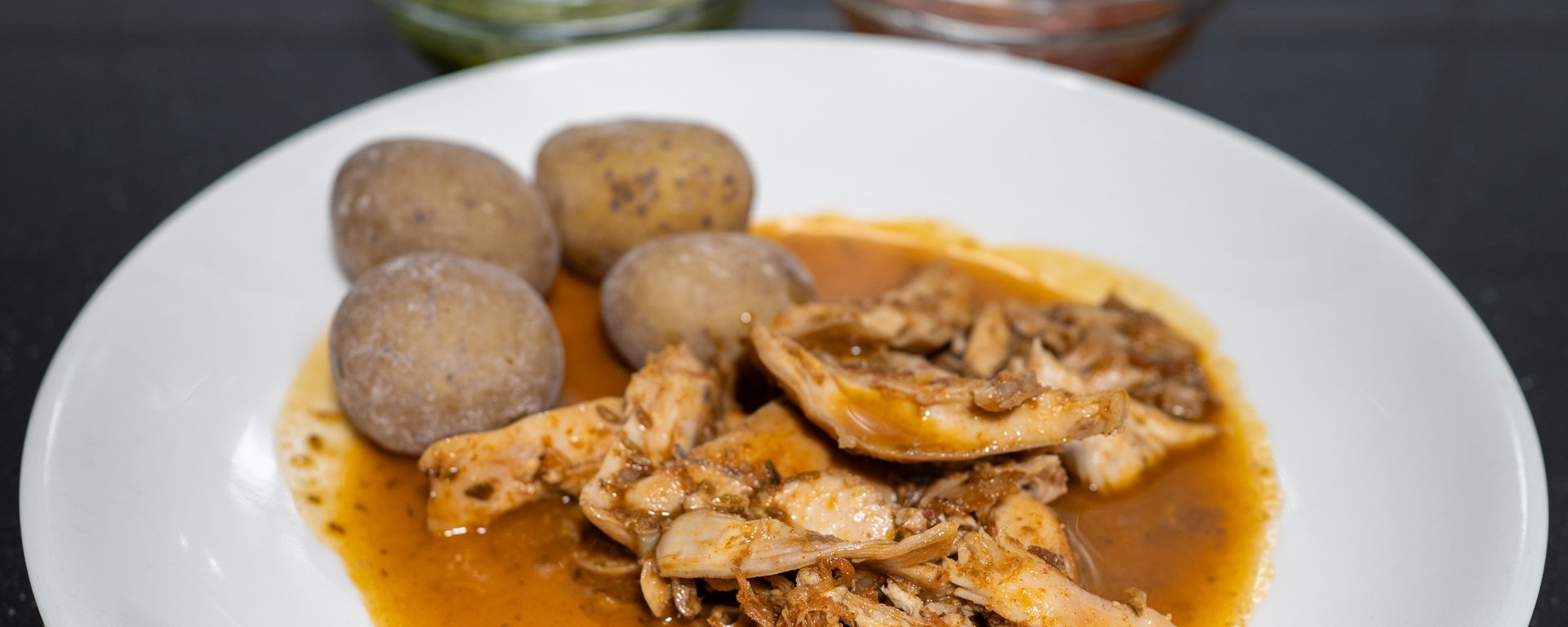
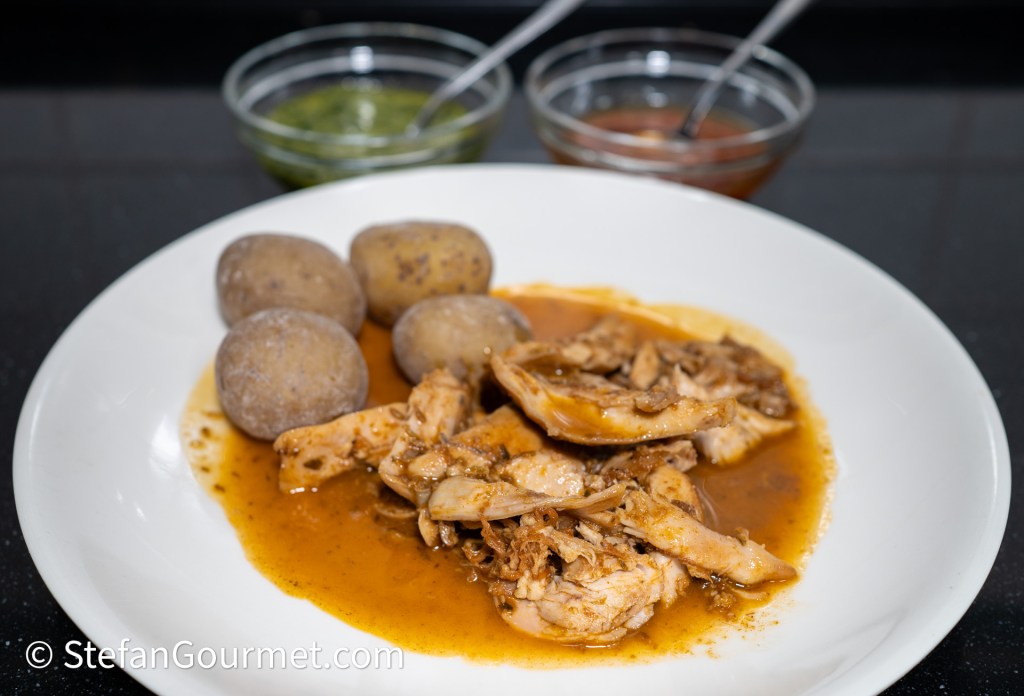
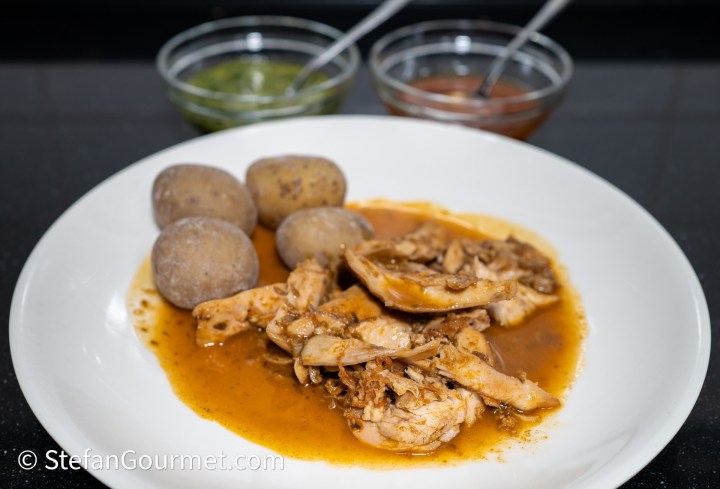
Conejo en Salmorejo is the first dish I have prepared following my trip to Tenerife. Rabbits were introduced to the island by Spanish settlers and thrived in the volcanic landscape, providing an affordable source of protein. The recipe likely evolved from the 15th-century French salmis preparation, utilizing wine and vinegar to preserve the meat and mellow the strong flavor of wild rabbit. Despite the name, it bears no relation to Andalusian salmorejo, the cold tomato soup similar to gazpacho. The inclusion of pimentón, or smoked paprika, is what gives this dish its distinct Spanish character.
To ensure the meat remained tender and juicy, I opted to cook the rabbit sous vide. Rabbit behaves differently than other meats in a water bath; due to enzymatic activity, the texture can become unpleasantly mushy if cooked for only a few hours at 60C/140F. After experimentation, I discovered that 8 hours at 74C/165F yields the best results, mimicking a perfectly executed traditional braise.
In Tenerife, this dish is typically served as rustic, bone-in pieces of rabbit. Rather than following that traditional presentation, I prefer to debone the meat after cooking. I then use the bones to create a stock, which I reduce and incorporate back into the sauce. This approach offers two distinct advantages: it ensures a more refined dining experience and captures the full depth of flavor from the bones. Removing the meat is straightforward once it has been cooked, and while it requires a bit more effort from the chef, it significantly enhances the pleasure for your guests.
Traditionally, the rabbit’s liver is used to provide an earthy richness and to naturally thicken the sauce. I did not include it here, as rabbit is typically sold as legs only, and the liver is often missing even when buying a whole rabbit. Furthermore, I find the resulting gamey flavor a bit overpowering, and I am fairly certain it was omitted from the versions I sampled in Tenerife.
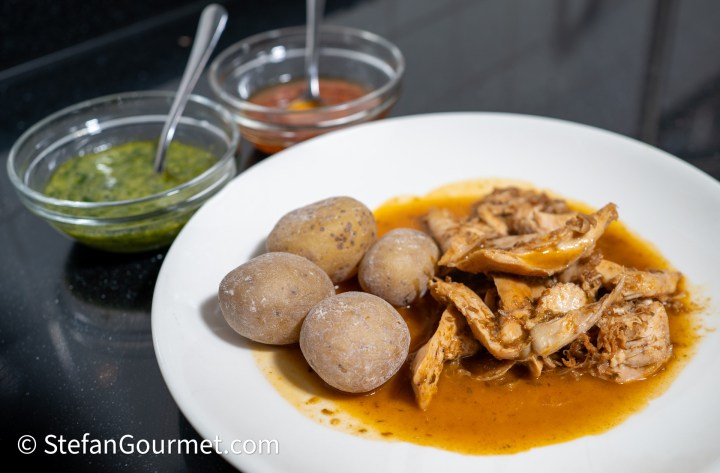
Because acidity in a sous vide bag can also compromise the texture, I added the vinegar and white wine only after the sous vide process was complete. This approach captures the traditional flavor of the sauce while eliminating the risk of mushiness. For those without a chamber vacuum sealer, this method also simplifies the bagging process as the marinade contains very little liquid. I served the rabbit with Canarian potatoes and mojos, which will be the subject of my next post.
Ingredients
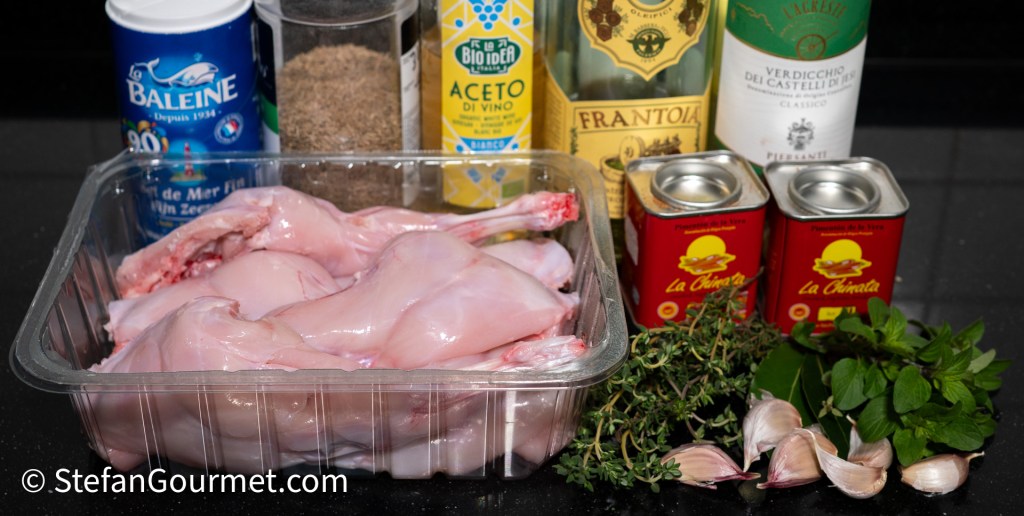
For 4-6 servings
- 6 rabbit legs, about 1.3 kilos (4 lbs)
- 6 garlic gloves
- 3 fresh bay leaves
- 1 Tbsp sweet smoked paprika
- 1 tsp hot smoked paprika
- 1 Tbsp cumin seeds
- 1 Tbsp fresh thyme leaves
- 1 Tbsp fresh oregano leaves
- 1 tsp coarse salt
- 4 Tbsp extra virgin olive oil, divided
- 250 ml (1 cup) dry white wine
- 60 ml (1/4 cup) red wine vinegar
Instructions
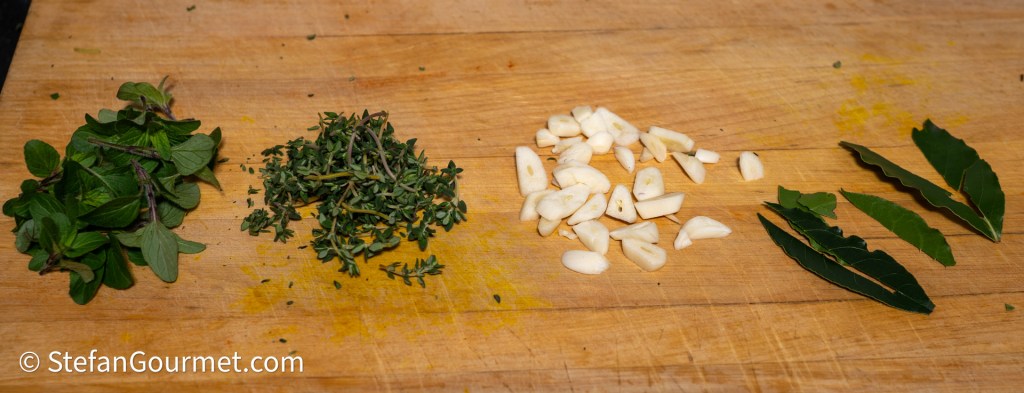
Remove the tough central vein from 3 fresh bay leaves and chop them. Finely chop 6 garlic cloves and prepare 1 tablespoon each of fresh oregano and fresh thyme leaves.
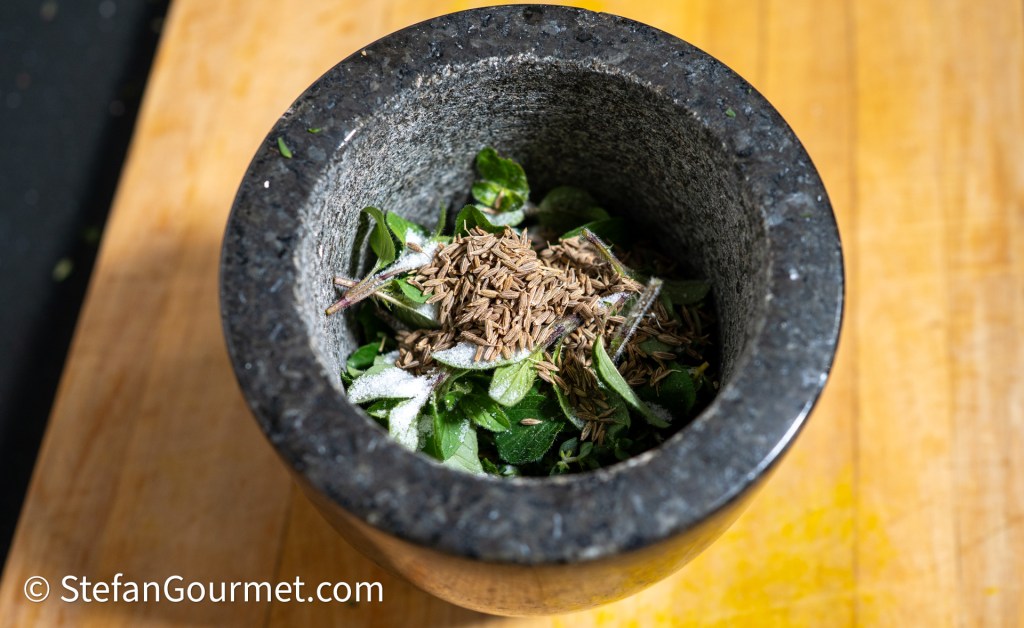
Place these ingredients in a mortar with 1 teaspoon of coarse salt and 1 tablespoon of cumin seeds, then pound until a smooth paste forms.
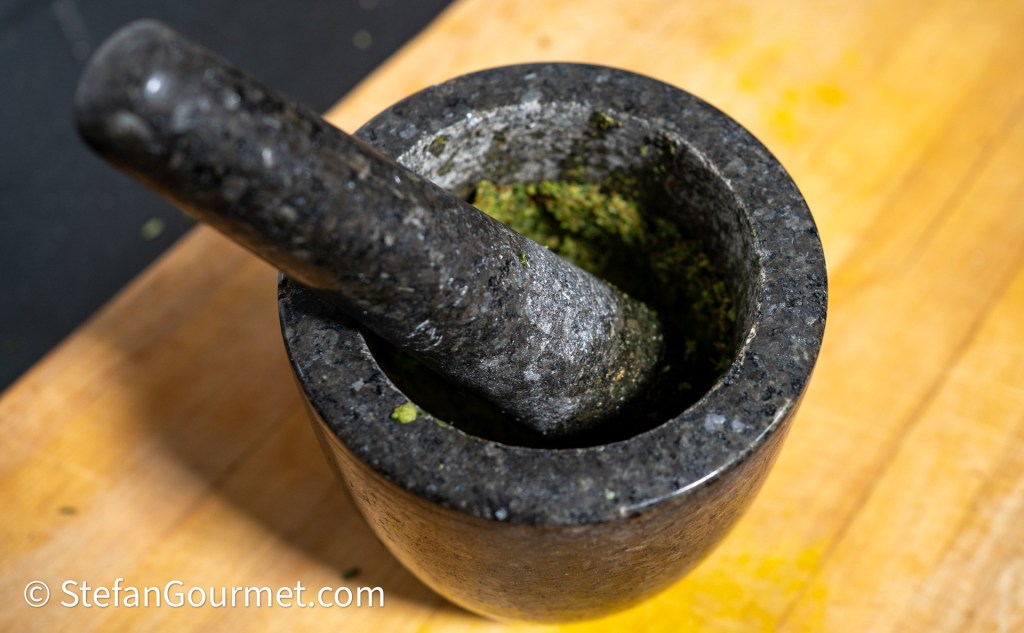
Stir in 2 tablespoons of extra virgin olive oil, 1 tablespoon of sweet smoked paprika, and 1 teaspoon of hot smoked paprika.
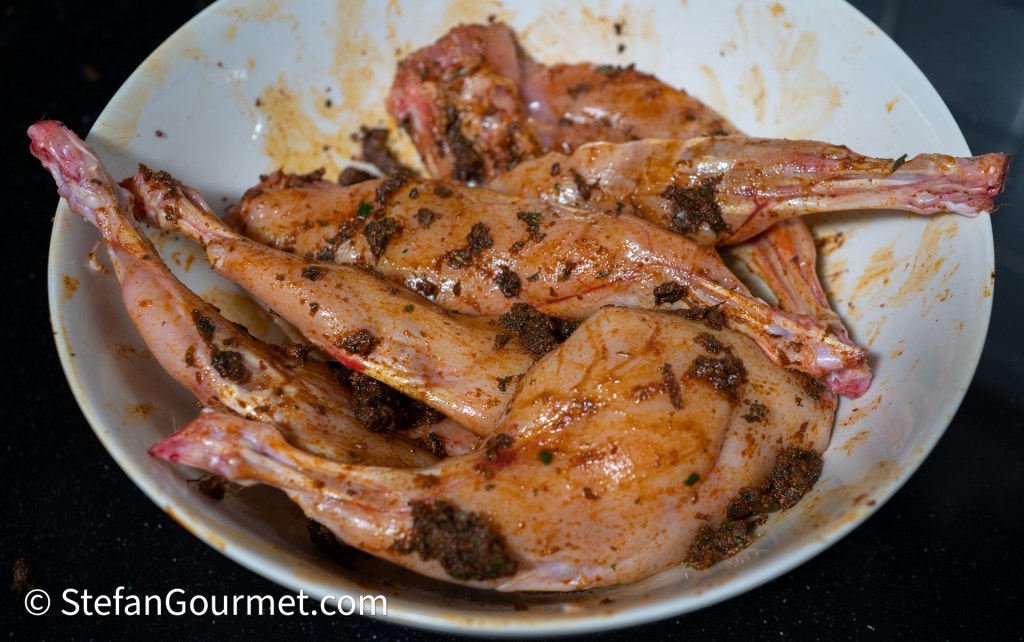
Place 6 rabbit legs in a large bowl and add the seasoning mixture. Rub the marinade thoroughly into the meat on all sides.
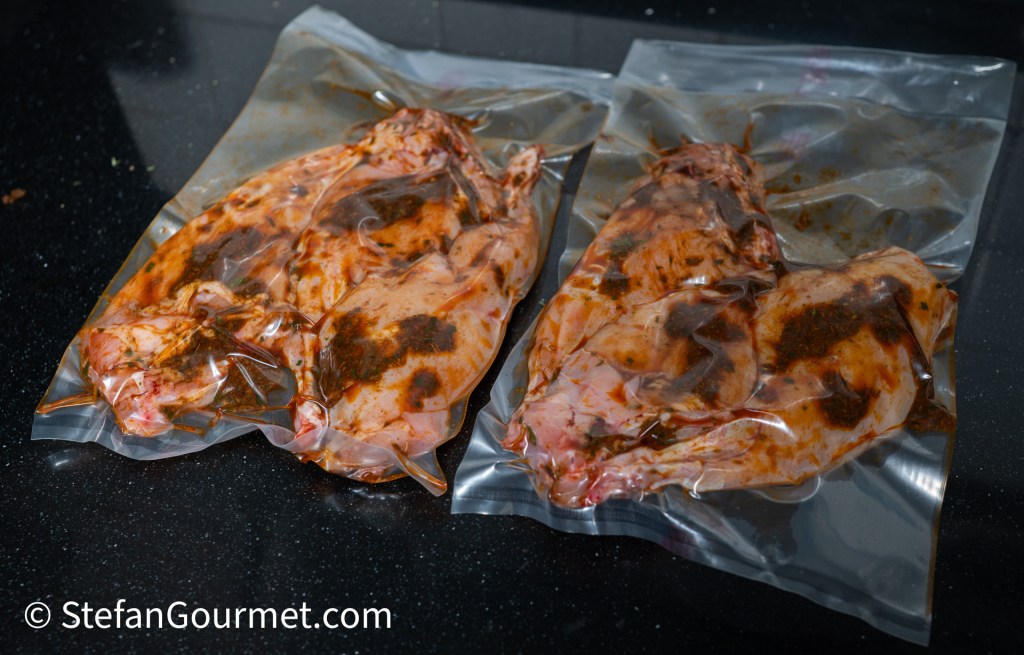
Vacuum seal the rabbit legs, using a rubber spatula to ensure all the seasoning from the bowl is included in the bags. If time permits, allow the rabbit to marinate in the refrigerator for at least one hour or preferably overnight. While the salt acts as a dry brine during the 8-hour cook regardless, my experiments with chicken have shown that dry brining the meat before the cooking process helps it retain slightly more juices.
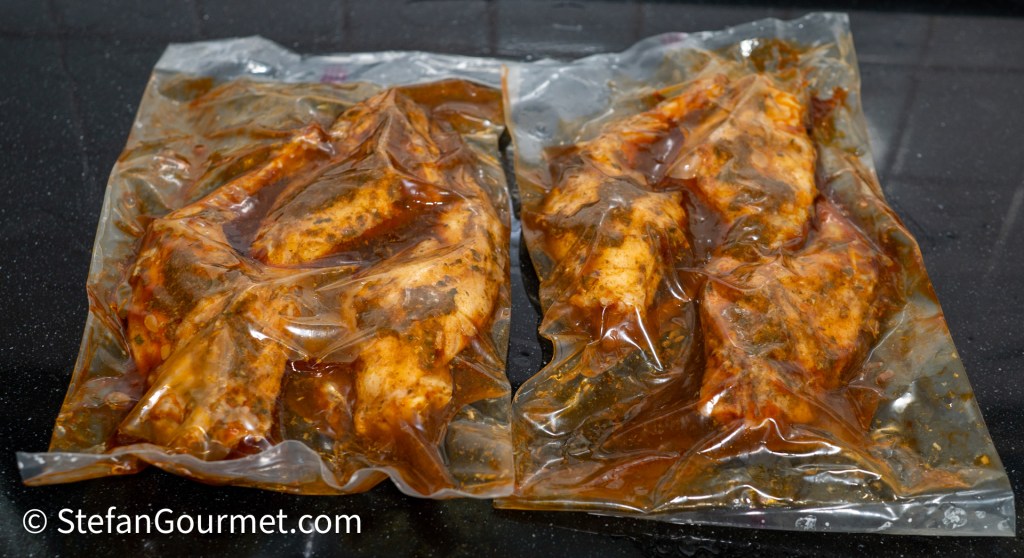
Cook the rabbit sous vide for 8 hours at 74C/165F. Once finished, remove the rabbit from the bags and reserve the juices.
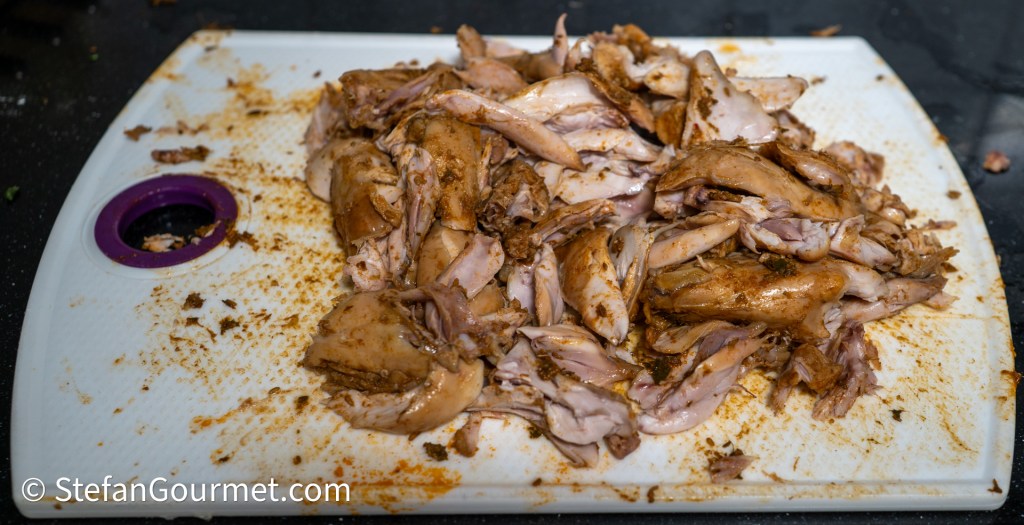
Allow the meat to cool until it can be handled, then remove it from the bones.
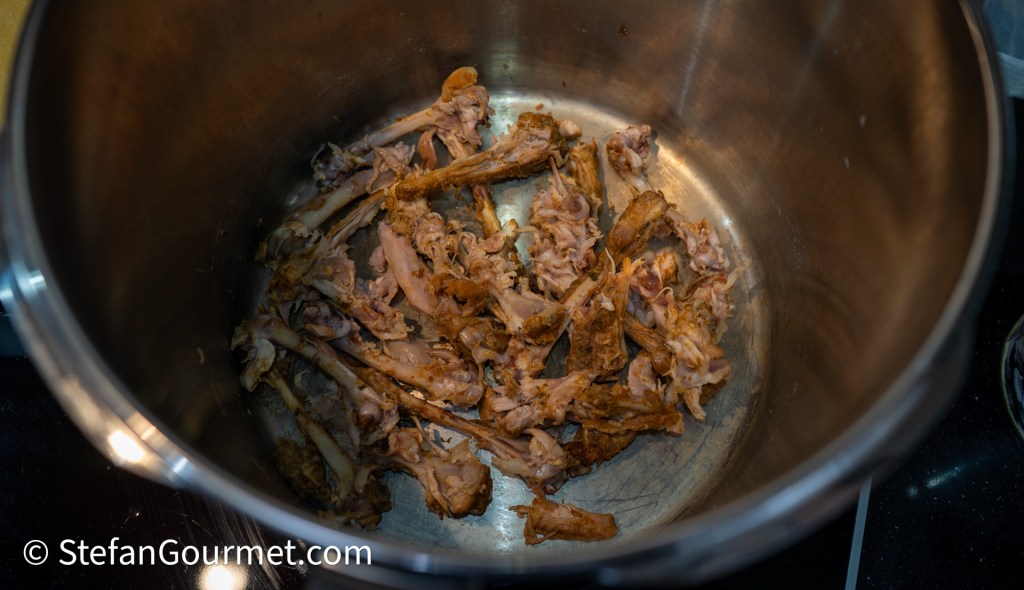
Chop the bones in half with a cleaver to expose the marrow, which will enrich the stock. Place them in a pressure cooker or stockpot, covering them sparingly with water.
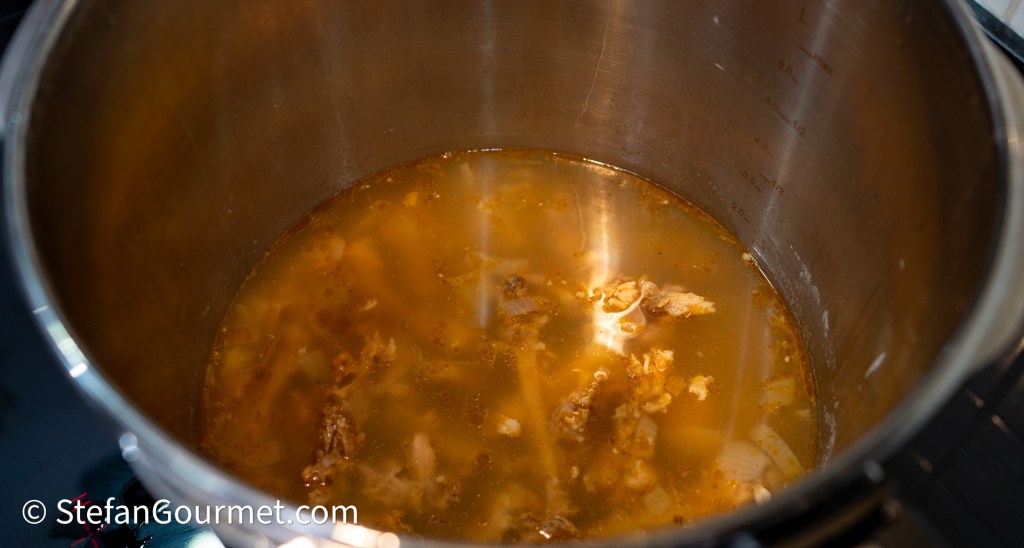
Pressure cook for 1.5 hours, or simmer in a covered pot for 3 hours.
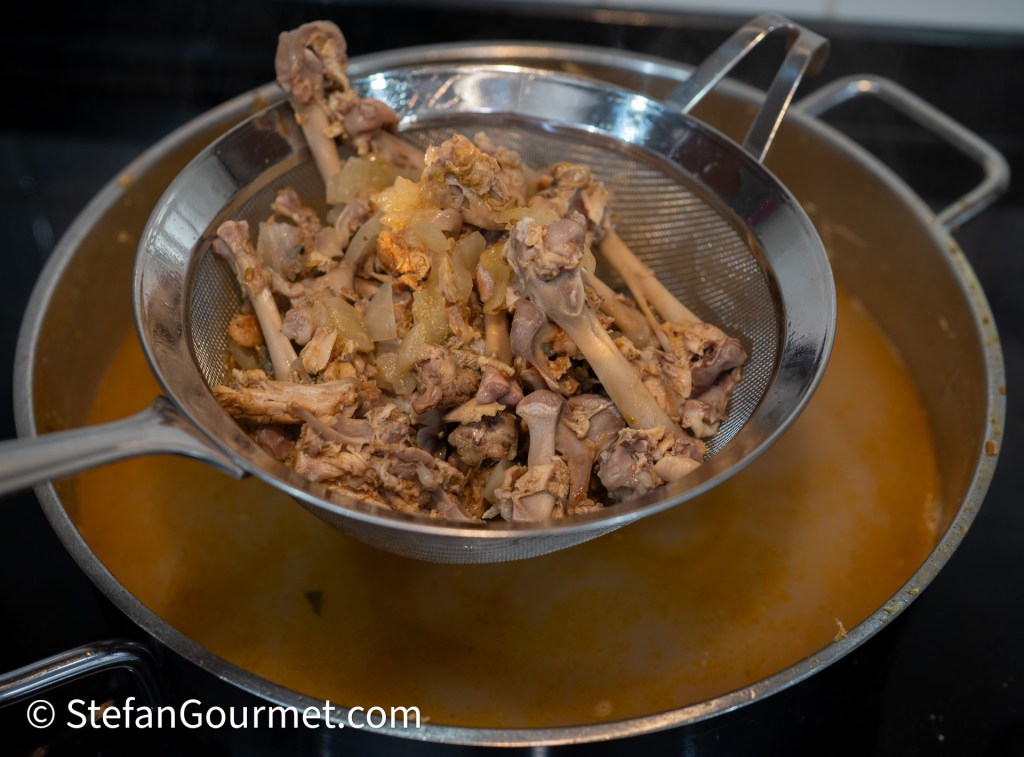
Strain the resulting stock through a sieve.
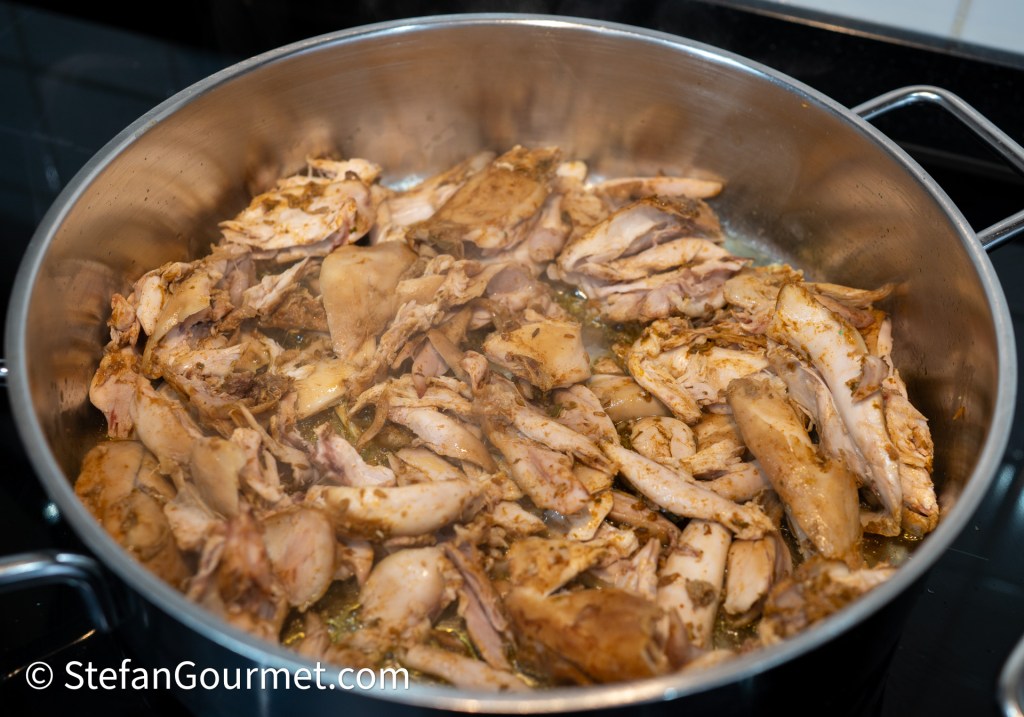
Heat 2 tablespoons of olive oil in a frying pan over high heat. Add the rabbit pieces and sauté quickly until lightly browned to develop flavor without drying out the meat. Remove the rabbit and set aside. You could also opt to sauté the whole legs before deboning; this reduces the risk of overcooking the meat, but the browning will be less uniform due to the shape of the legs.
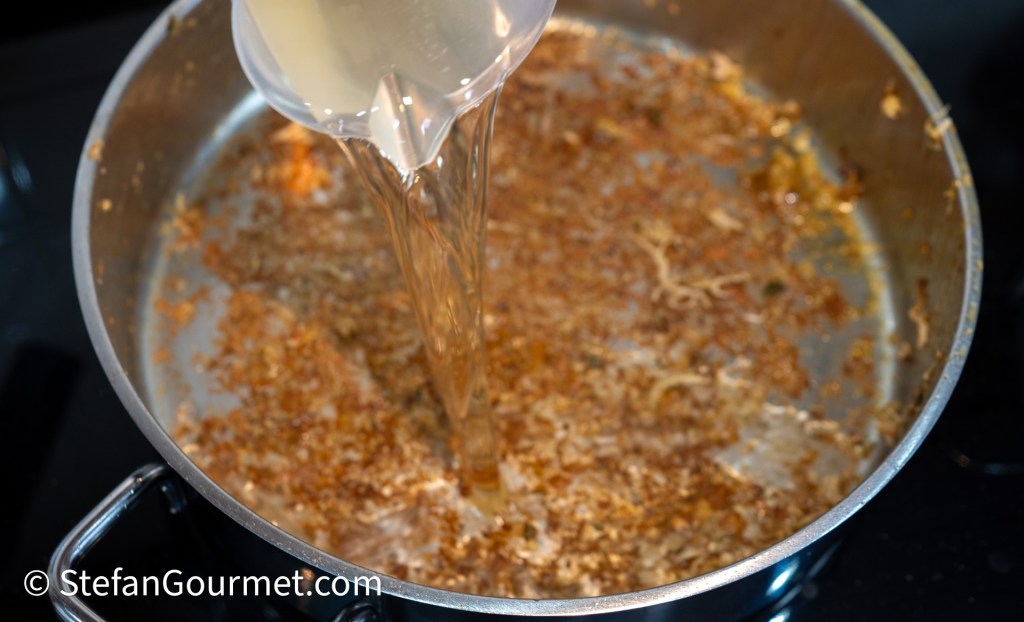
Deglaze the pan with 250 ml of dry white wine…
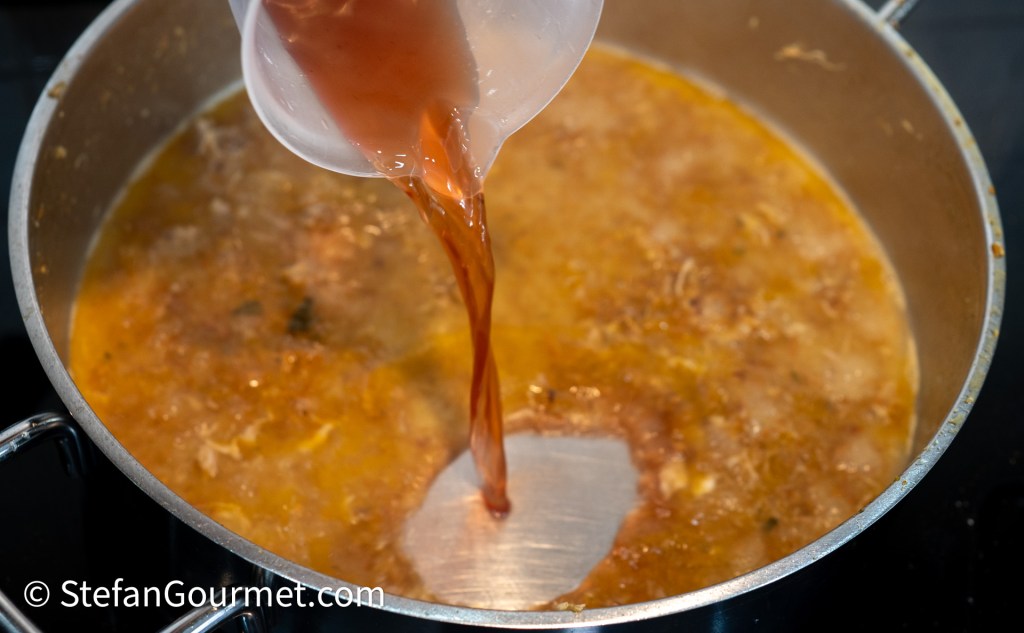
…and 60 ml of red wine vinegar.
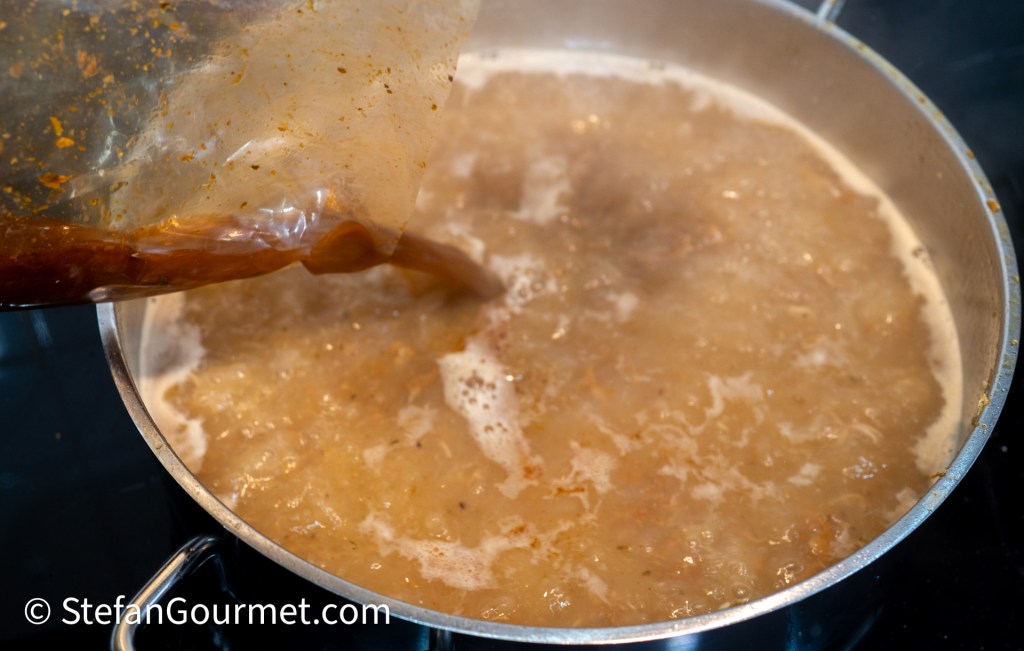
Reduce the liquid by half to allow the alcohol to evaporate, then add the reserved juices from the sous vide bags and the rabbit stock.
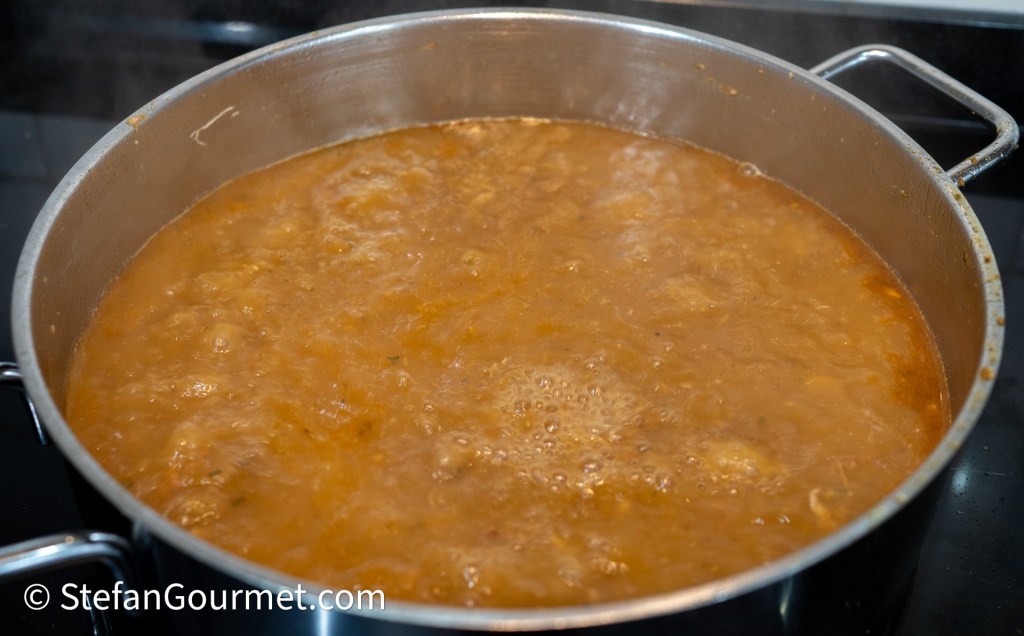
Simmer until the sauce reaches a rich consistency and flavor.
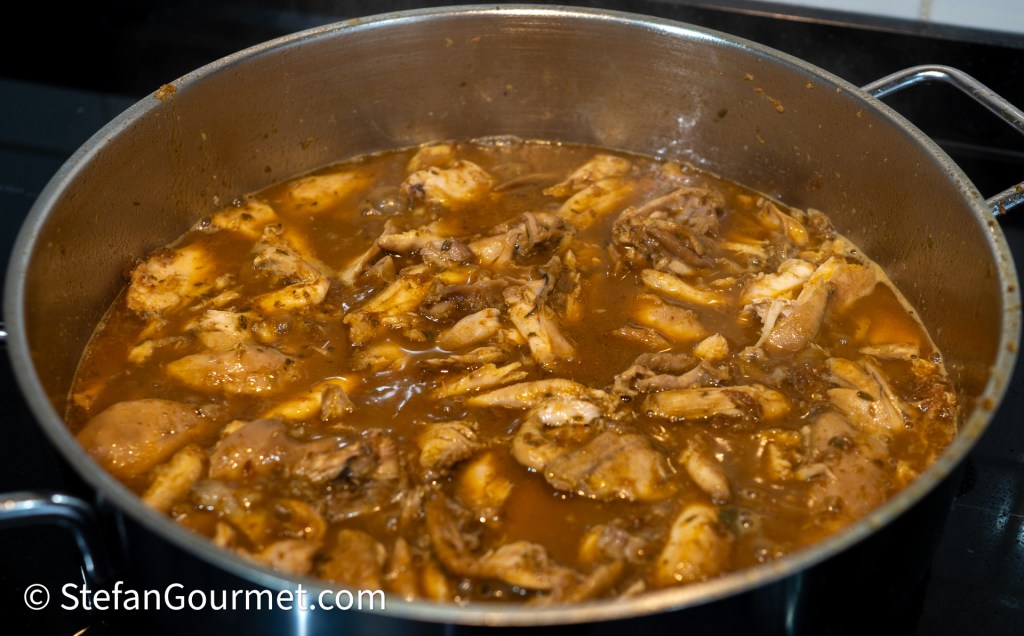
Return the rabbit pieces to the pan and let them heat through over very low heat for a few minutes. Taste and adjust the salt as needed before serving on preheated plates or bowls.
Wine pairing
While pairing this with a wine from Tenerife would be most appropriate, such bottles can be difficult to find. A full-bodied white, a medium-bodied red, or even a structured rosé would work well. If you can source a white from Tenerife, an oaked Albillo Criollo is the ideal choice; for a red, a Listán Negro is perfect as these are usually not full-bodied. We enjoyed the dish with a full-bodied, oaked white Rioja, which proved to be an excellent match.

