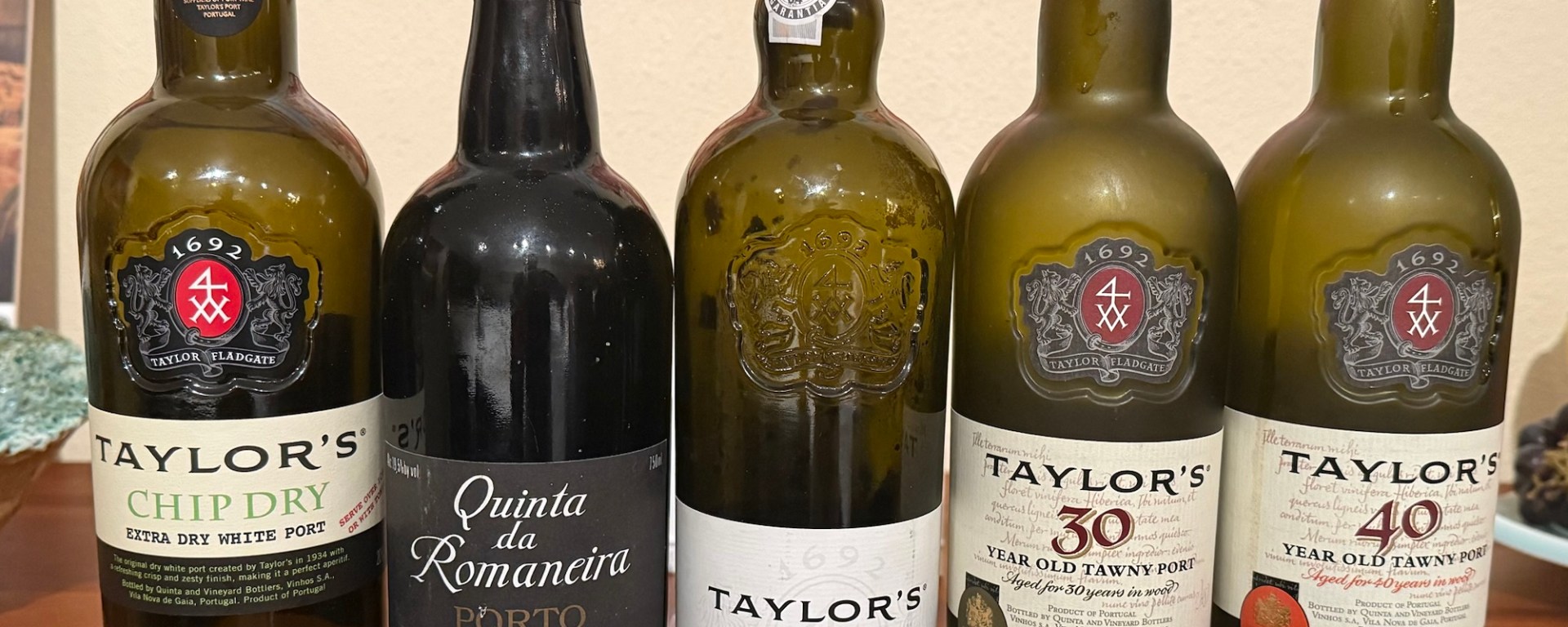

Port is a challenging wine to pair with food because of its high sugar and alcohol content. Consequently, it is often enjoyed in small sipping quantities alongside strong cheeses, dark chocolate, dried figs, nuts, or caramel-based desserts. The idea for this Port dinner originated when a few friends—frequent guests at my pairing dinners and Port aficionados—and I decided that they would pull high-end bottles from their cellars if I designed a menu to match. I saw this as an opportunity to push the boundaries of how Port is typically enjoyed. It became a strategic challenge: architecting a full menu where every course, from starter to dessert, pairs with a different style of Port without overwhelming the palate or repeating the same flavor profiles.
Before we dive into the menu, let me briefly introduce the three main styles of Port: White, Ruby, and Tawny. While many sub-styles and variations exist, the flavor profiles within each main category remain broadly similar.
All Port is created by halting alcoholic fermentation before the grape sugars have fully converted. This is achieved through fortification with grape spirit (aguardente), bringing the alcohol content to between 19% and 22%. This process generally leaves approximately 100 grams per litre of residual sugar, though white ports are also produced in drier styles—with “extra dry” versions containing less than 40 g/l.
Both Ruby and Tawny ports begin their lives in oak barrels, but their aging paths diverge. Ruby ports are bottled after only a brief period in wood and continue to develop in the glass. Conversely, Tawny ports remain in the barrel for extended periods and do not evolve further once bottled; consequently, they are best consumed shortly after release. This distinction between aging in glass versus wood centers on oxygen: Ruby ports are protected from oxidation to retain primary fruit aromas, while Tawny ports are aged oxidatively to intentionally develop notes of nuts, dried fruits, and caramel.
The pinnacle of the Ruby style is Vintage Port, sourced from a single year. These wines are initially high in tannins with intense fruit, softening and evolving over 30 years or more of bottle aging. The most prestigious Tawny is typically a blend of several years with an age indication of 30, 40, or even 50 years. These are prized for their mellow complexity and consistency, as blending allows the house to maintain a signature high quality. While single-vintage Tawnies (called Colheitas) exist, they are often seen as less prestigious. Finally, White Port is made from white grapes and ranges from fruity, Ruby-like styles to oxidative, barrel-aged versions. Simple White Port is most commonly enjoyed as a long drink, mixed with tonic water.
The different aging processes for Vintage and aged Tawny Port lead to two important practical considerations when opening a bottle.
First, aged Vintage Port must be stored upright for at least 24 hours before opening and then decanted, as the long period of bottle aging creates significant sediment. This is not necessary for aged Tawny; because it is bottled relatively recently after long-term barrel aging, any sediment is left behind in the cask.
Second, much like a still red wine, a bottle of Vintage Port should be finished within a few days of opening, as the delicate fruit flavors will eventually fade and oxidize. In contrast, Tawny Port has already been intentionally exposed to oxygen during its years in the barrel, allowing it to remain fresh for several weeks after opening. These distinct characteristics are also why Vintage Port is sealed with a traditional cork for long-term aging, while Tawny Port typically features a stopper for easier resealing.
To pair food with port, we have to consider the following.
Because Port has a strong flavor profile, we must look for foods that can stand up to it; otherwise, the wine will simply overpower the dish. Sweetness in food decreases our perception of a wine’s body, sweetness, and fruitiness. Since Port is rich in all three, a degree of sweetness in the dish is necessary to ‘tame’ the wine.
Umami in food increases the perception of astringency in wine, so we must avoid excessive umami flavors when pairing with younger Vintage Port. This effect can be counteracted by salt, which decreases the perception of astringency. This is why Vintage Port pairs so well with aged hard cheeses, as the salt compensates for the high umami levels.
Acidity in food decreases the perception of acidity in the wine. Because Port already has relatively low acidity, dishes with high acidity are generally off the table. Finally, chili heat increases the perception of the burning effect of alcohol. This makes it a poor match for Port, which already carries a high risk of causing that exact sensation.
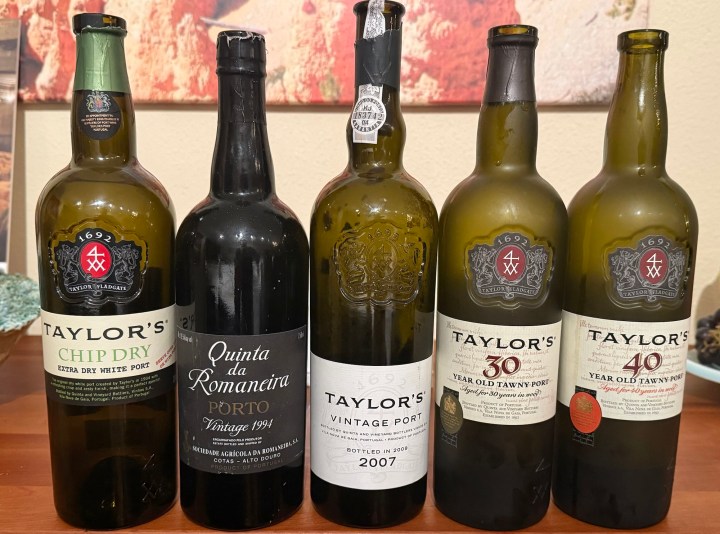
With these principles in mind, I designed the menu. After reviewing my friends’ collections, I selected a 2007 Vintage along with 30- and 40-year-old Tawnies to showcase the two primary styles at their peak. I also contributed a 1994 Vintage from my own cellar. To begin the evening on a lighter note, I chose an Extra Dry White Port.
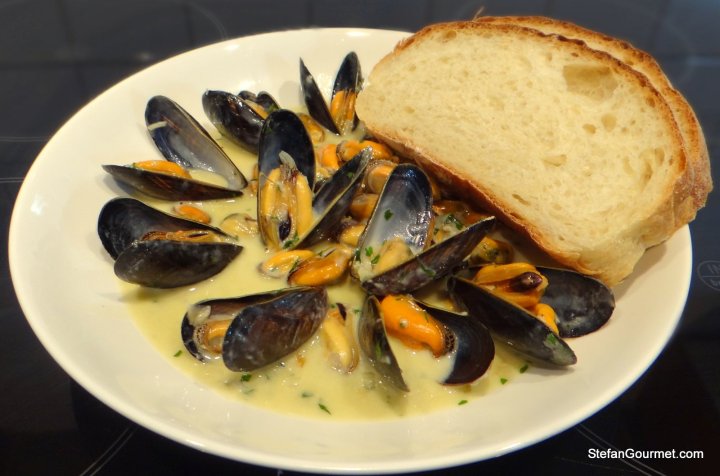
White made me think of seafood and Port made me think of blue cheese, and so it didn’t take me long to come with Moules au Roquefort. Mussels in a creamy blue cheese sauce may sound unconventional, but it is a classic combination often found in Southern France. I was initially skeptical when a friend suggested it, but after preparing it myself, I was convinced. The recipe has since become a popular staple on my blog.
While this dish could certainly pair with a fruity, full-bodied dry white wine, it coexisted beautifully with Taylor’s Chip Dry. Despite the name “Extra Dry,” this Port carries more sweetness than a standard dry wine, providing the necessary body to match the rich, salty sauce without either element overpowering the other.
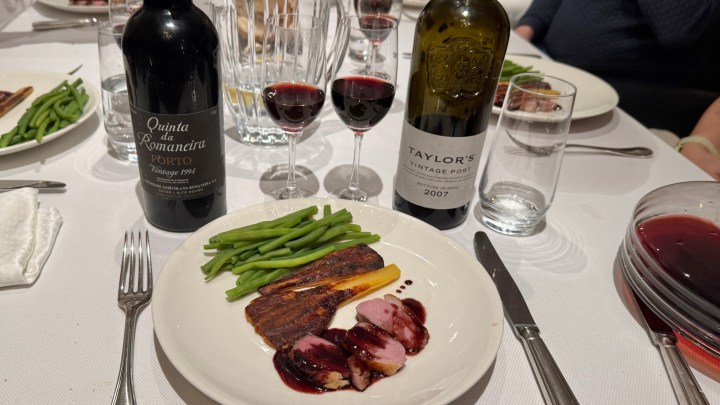
When using regular wine, the best progression for a menu is to start with younger, fruitier wines and move toward more aged ones. The same holds true for Port, meaning Vintage should be served before Tawny. To pair with Vintage Port, I sought out red meat to neutralize the tannins and a dish with enough complexity to match the wine’s evolved aromas.
This led me to duck breast with a Port demi-glace. The sauce is made with duck stock and Ruby Port, enriched with star anise. I served this with simple steamed haricots verts and parsnip ‘planks’—parsnips roasted in the oven under a heavy weight so they caramelize and compress into a flat shape. The green beans provide a neutral element on the plate, while the natural sweetness of the parsnips complements the sweetness of the Port.
The sauce is prepared by sautéing shallots, garlic, fresh bay leaves, thyme, and star anise in duck fat. Once the shallots are soft and golden, the pan is deglazed with Ruby Port. It is important to reduce the Port slowly to avoid a sharp edge, or better yet, to burn off the alcohol first in a separate saucepan by bringing it to a simmer and lighting it with a match; this prevents the star anise from burning while the alcohol flames off. Once the Port has reduced by half, I add an equal amount of duck stock and continue to reduce. After filtering out the solids, the liquid is reduced further until it reaches a syrupy consistency, seasoned only then with salt and freshly ground black pepper. (I followed more or less this recipe for the duck and sauce, obviously replacing the red wine with port.)
The resulting sauce is mildly sweet yet hearty. I created this dish specifically to harmonize with Vintage Port, and it was likely the most successful pairing of the evening. The duck and sauce were sensational with the 1994 Vintage Port, as both shared a refined elegance that allowed them to become even more complex together. The 2007 Vintage Port was a bit too bold still, with powerful fruit and tannins that slightly overwhelmed the duck, though it worked wonderfully when combined with the caramelized parsnip and sauce.
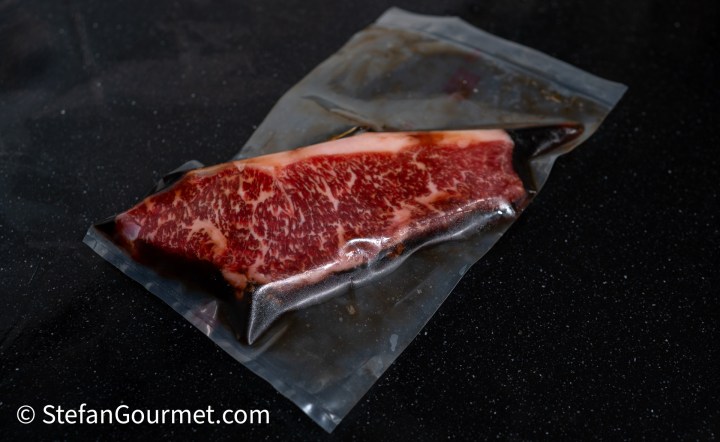
Since my Port-loving friends also enjoy Wagyu beef, and its characteristic richness naturally complements Port, I wanted to incorporate it into the menu. To introduce a sweet note—and as a nod to the beef’s Japanese origins—I decided on Wagyu Teriyaki. I prepared a classic Teriyaki sauce by reducing equal amounts of sake, mirin, and Japanese soy sauce with a small amount of sugar.
I sourced Wagyu strip steaks from a local farm—not the highest grade, but excellent quality and locally produced. After vacuum-sealing them with the marinade for a few hours, I cooked them sous-vide for two hours at 52°C (125°F). Once they had cooled to room temperature, I seared them on the fat cap first to crisp it up and render the fat. I then briefly seared the sides, added the marinade from the bag, and basted the steaks to create a glossy glaze. After slicing the meat, I spooned the further-reduced sauce over the top and served it with grilled broccolini for a crunchy, slightly bitter contrast to the rich Wagyu and sweet Teriyaki.
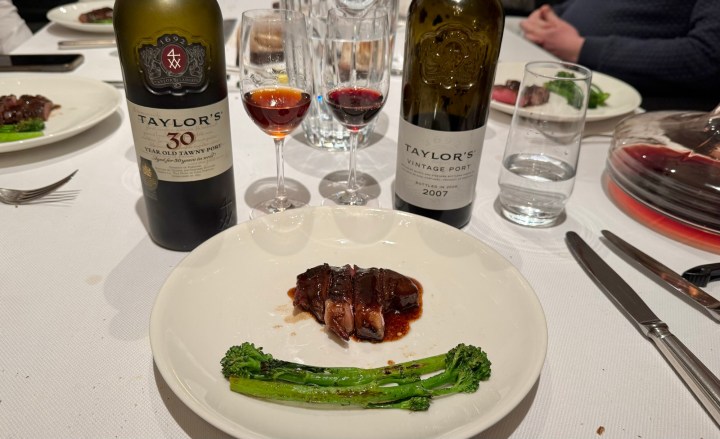
Although I designed this dish for the Tawny ports, I did try it with the 2007 Vintage; while not a failure, the wine was too fruity for the savory-sweet profile of the beef. The 40-year-old Tawny proved to be a very successful pairing. Interestingly, the 30-year-old was less effective because it felt too sharp. I believe this was a characteristic of that specific bottle rather than 30-year-old Tawnies in general, which are typically softer and more mellow.
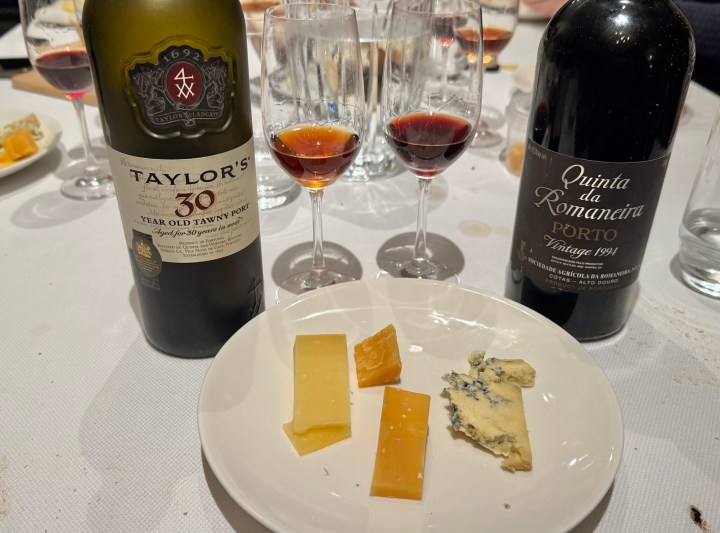
I played it safe with the cheese course by pairing a two-year-old Comté with the Tawny, Blue Stilton with the 2007 Vintage, and aged Beemster with both. Interestingly, the creamier 18-month-aged Beemster worked best with the 2007 Vintage, whereas the crumbly 36-month-aged Beemster was the superior match for the Tawny. The older Beemster even managed to temper some of the sharpness in the 30-year-old Tawny. This course was specifically designed to let the ports shine, and it achieved exactly that.
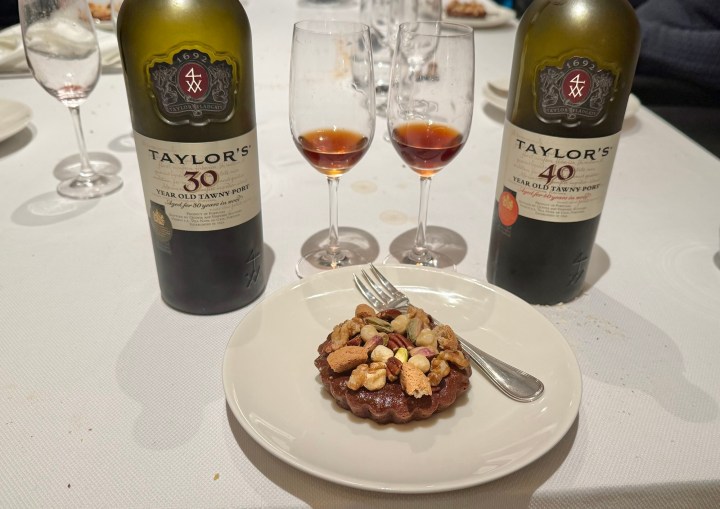
The dessert was designed to pair with the Tawny ports by combining dark chocolate with nuts. I made a small version of Torta Caprese and covered it with toasted pecans, walnuts, hazelnuts, pistachios, and Italian amaretti. Torta Caprese is an Italian chocolate and almond cake with orange zest; I enhanced the nuttiness in this version by replacing the tablespoon of rum with a teaspoon of almond extract. This pairing was quite successful, as the sharpness of the 30-year Tawny somehow worked well with the orange zest in the cake. From previous experience, however, I’d say a chocolate cake with dark fruits like black cherries or blackberries paired with a Vintage Port would be a superior combination of dessert with port.
In conclusion, I believe I succeeded in meeting the objective of creating a full menu paired with various styles of Port without overwhelming the palate or repeating flavor profiles. I was careful to adjust the number of bottles and the size of the pours to account for the high alcohol content; for this same group of seven people, I would usually serve eight or nine bottles of regular wine, whereas we (almost) finished five bottles of Port during this dinner.
Even though I served everything with home-baked bread so my guests could adjust the volume of food to their personal appetite, some still had trouble finishing the dessert. Because Port is inherently rich and requires equally rich pairings, five courses is quite demanding.
I have proven that a full dinner pairing is both possible and enjoyable, though I likely won’t make a habit of hosting dinners with such a high volume of Port. There is a reason it is traditionally consumed in small quantities. While many of these dishes would work as well, or perhaps even better, with regular still wines, this experiment served its purpose. If you have a special bottle of Port and are looking for pairing inspiration, these guidelines and dishes should provide a solid foundation for your own culinary exploration.


I’m very impressed, Stefan. I would have loved to have been sitting around your table!
LikeLiked by 1 person
Thank you. Do let me know whenever you are in the Netherlands; I cook for all international blogging friends when they visit.
LikeLike
Stefan – what an unexpected and interesting read! As port has not been my favourite libation I would not have thought it possible for it to accompany all the courses of a dinner. To be honest I have never drunk white port and only know I prefer tawny over ruby – thus quite a few ‘reads’ and talks with Mr Google ahead to learn more. Fascinating Looking at the happy photo – how much time do you have to still play the piano . . . 🙂 ?
LikeLiked by 1 person
Fascinating! I love port but have never considered having it with a meal!!!
LikeLiked by 1 person
Articolo da collezione! Grazie
LikeLiked by 1 person