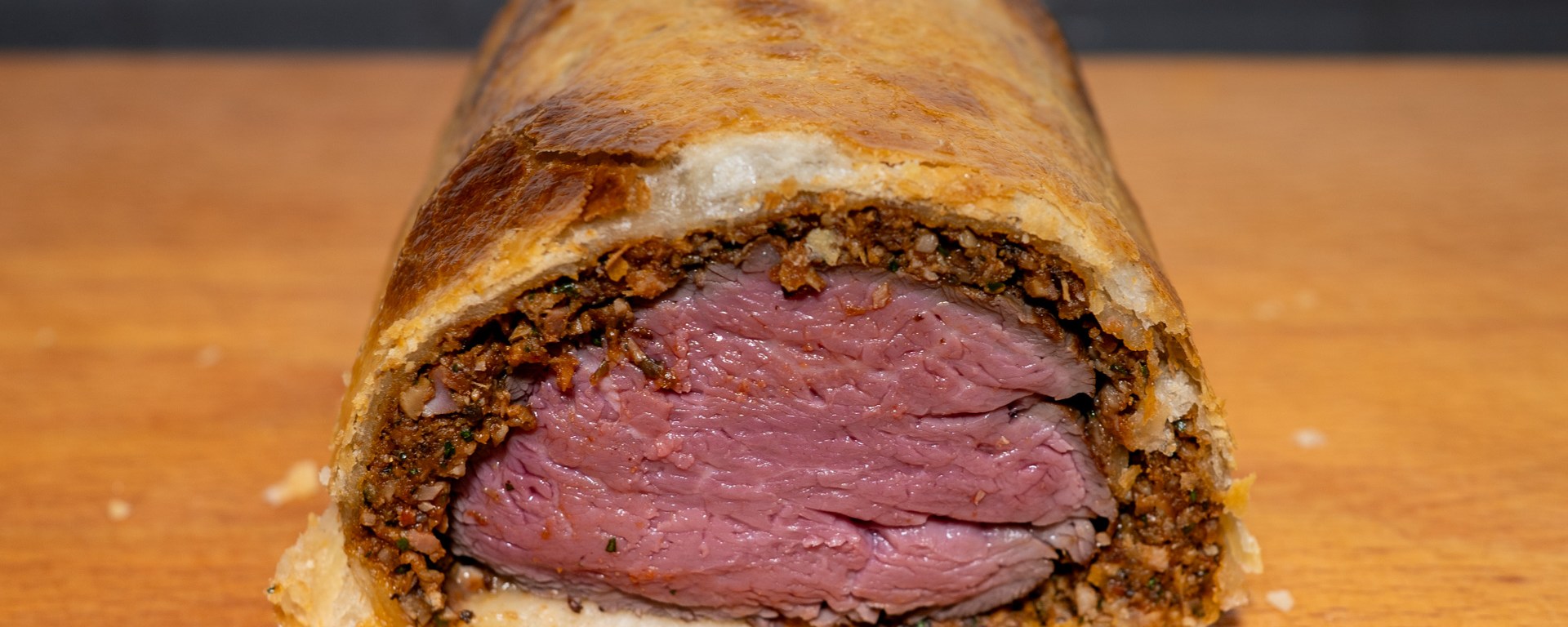
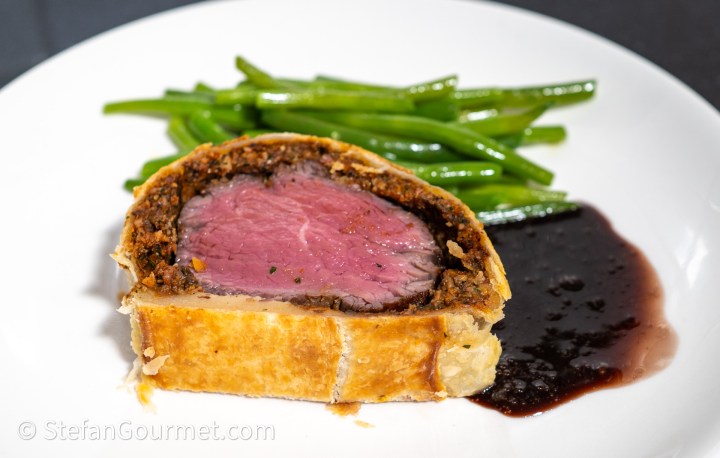
Beef Wellington is one of my favorite dishes for a dinner party. It can be prepared in advance, only needs a quick finish in the oven, and the results are spectacular. This was one of the first technical, high-end dishes I ever mastered, dating back to a cooking workshop with my first employer in 1997. We prepared individual portions that year for a DIY Christmas dinner, and I still use the original paper recipe from that day. That workshop was a seminal moment for my passion for cooking.
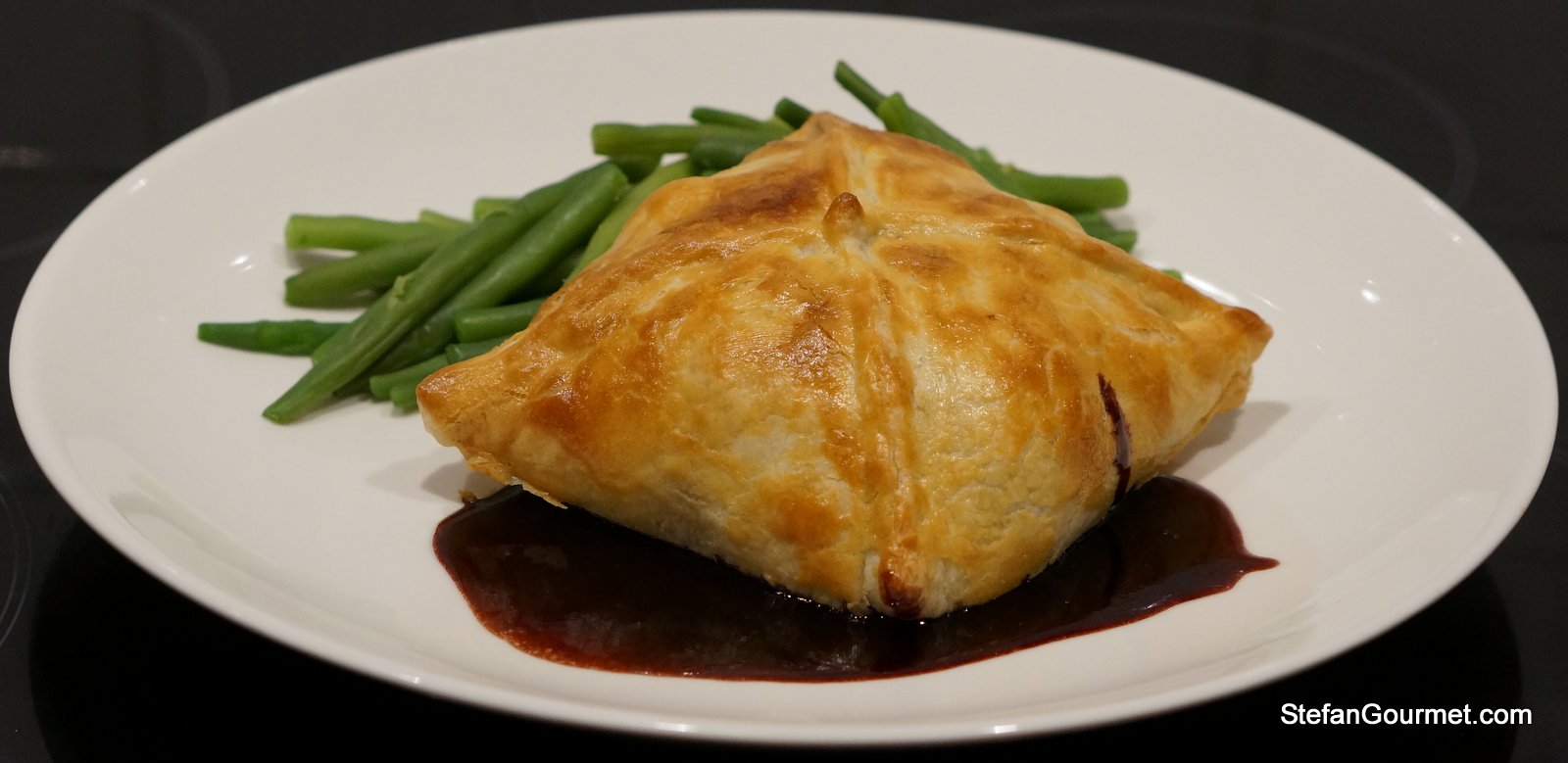
While a whole fillet is impressive when it first leaves the oven, I often prefer individual portions. They are easier to serve and look much cleaner on the plate. Slicing a large Wellington can easily become messy, although as you can see in the photo, I managed a very clean slice this time. Click here for the individual Beef Wellington recipe.
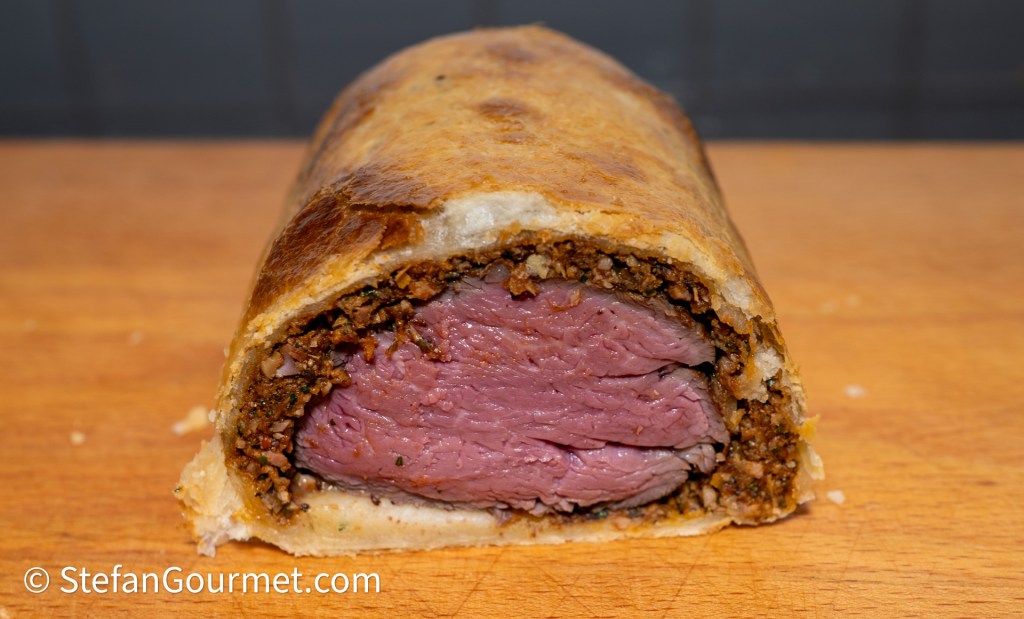
Although I have incorporated sous vide into many of my recipes, I never felt the need to use it for Beef Wellington, as my individual portions always came out perfectly. However, seeing the technique used frequently for whole fillets inspired me to give it a try.
There are three main advantages to this approach. The first is universal to sous vide: achieving a uniform, edge-to-edge doneness that is impossible to replicate otherwise, removing any worry about undercooking or overcooking the meat. The second is specific to Beef Wellington. Because the meat releases its juices during the sous vide process, there is little to no moisture loss when finishing the dish in the oven. This ensures the filling and the bottom of the pastry will not get soggy. The third is the structural integrity of the meat. A whole fillet can be uneven in shape, but tying and cooking it sous vide first ensures it sets into a firm, uniform cylinder. This makes the subsequent wrapping with the duxelles and puff pastry much easier than working with a seared fillet that is still raw inside, as the sous vided meat holds its shape perfectly during the assembly.
I prefer making Beef Wellington with homemade puff pastry, as the flavor is superior to store-bought. While the process takes time, most of it is idle time while the dough rests. If you do choose store-bought puff pastry, ensure it is made with real butter. Click here for my recipe for homemade puff pastry.
There are many variations for the filling, but it almost goes without saying that for this version I have stuck with the original recipe I learned in 1997.
Ingredients
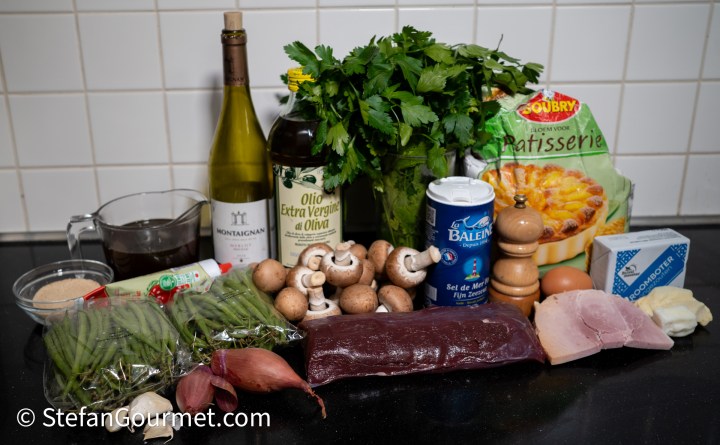
Serves 4 to 6
- 700 grams (1.5 lbs) beef fillet
- 300 grams (.66 lbs) puff pastry
- 250 grams (.55 lbs) button mushrooms, roughly chopped
- 150 grams (.33 lbs) boiled ham, cubed
- 125 grams (.28 lbs) shallots, roughly chopped
- 2-3 cloves garlic, minced
- 2 Tbsp tomato paste
- 2 Tbsp bread crumbs
- 2 Tbsp minced fresh flat leaf parsley
- salt and freshly ground black pepper
- 60 grams (4 1/2 Tbsp) butter, preferably clarified
- 1 egg yolk
- 1 Tbsp olive oil
To serve
- steamed haricots verts
- red wine sauce, made from 500 ml (2 cups) red wine, 750 ml (3 cups) beef stock, 2 shallots, 2 cloves garlic, 2 sprigs fresh thyme, 2 bay leaves, 2 Tbsp butter; click here for a recipe
Instructions
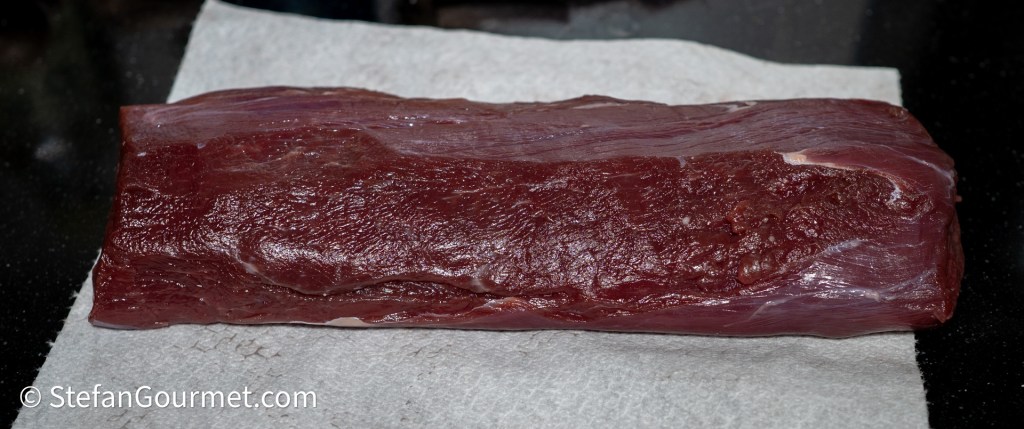
The first step is to salt the beef fillet evenly on all sides with 7 grams (1 teaspoon) of fine salt, which is 1% of the weight of the fillet. Allow the salt to penetrate for at least 45 minutes. You will notice that the salt initially draws out some juices before dissolving and being absorbed back into the meat. The beef should look quite dry by then, but pat it thoroughly with paper towels anyway to ensure a good sear.
Salting the beef before searing and sous vide cooking helps retain juices and enhances the Maillard reaction, as the salt assists in creating the compounds that develop deeper flavor.
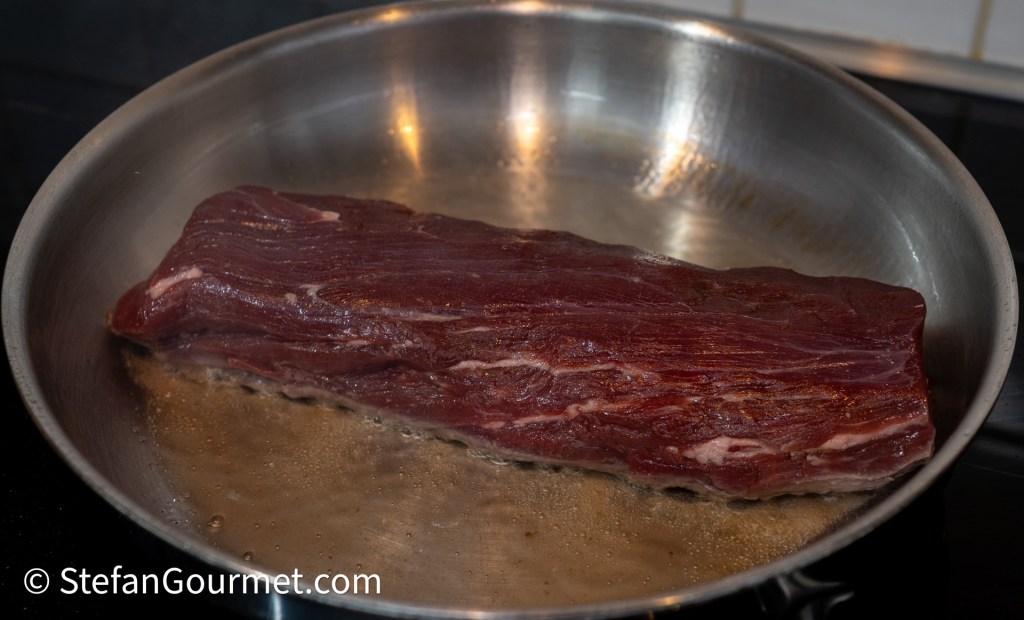
Preheat a heavy frying pan, melt 60 grams of clarified butter, and sear the beef fillet on all sides over high heat.
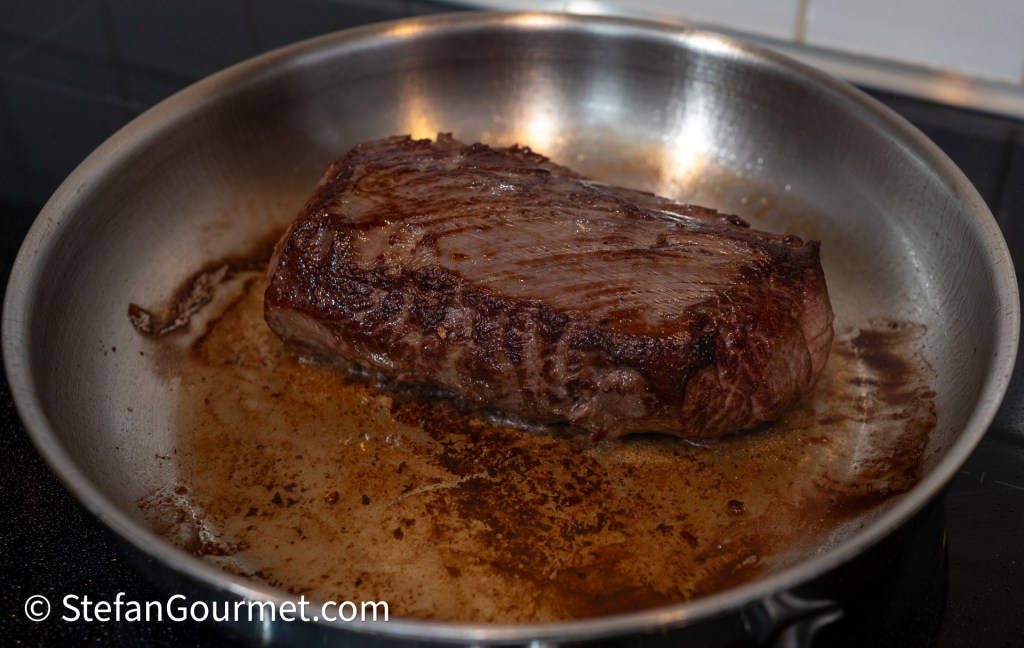
Developing a deep sear is essential for flavor.
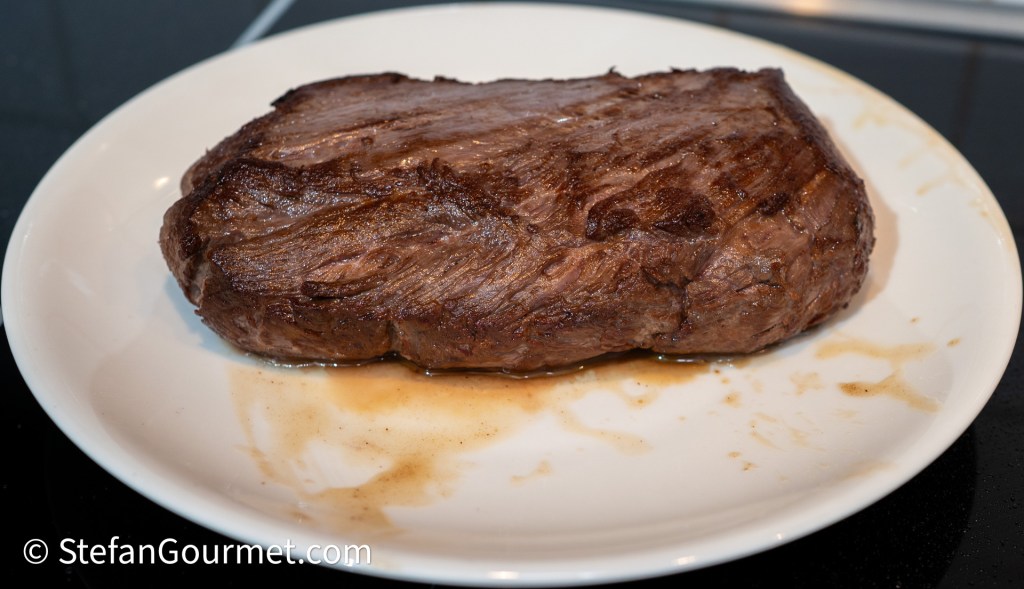
Once seared, remove the beef and let it cool to room temperature before placing it in the refrigerator until completely chilled.
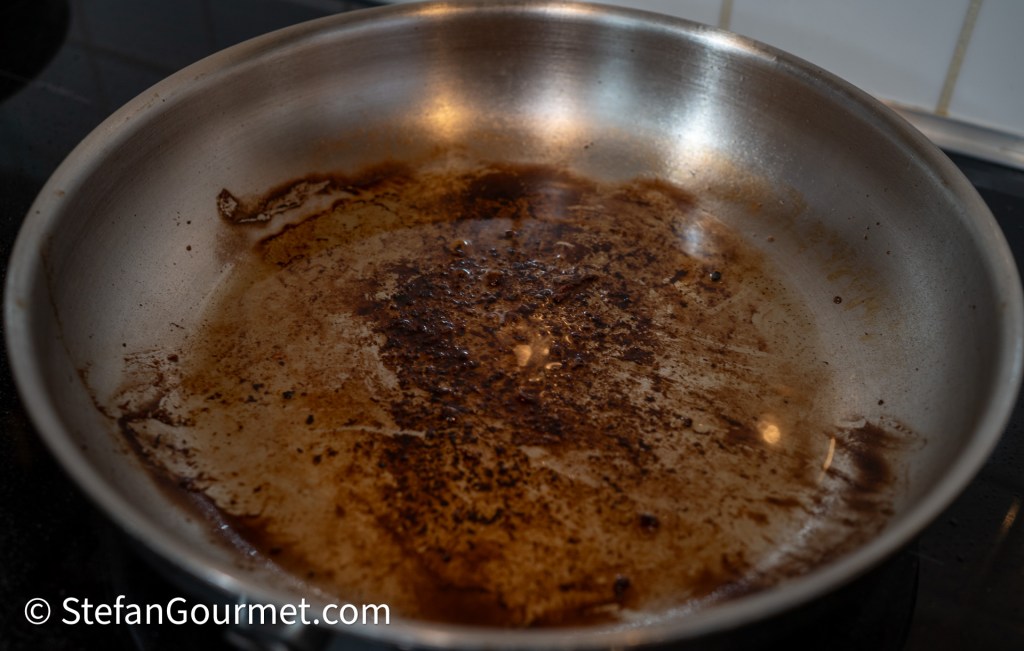
Do not clean the pan; the fond left behind will provide the base for the filling.
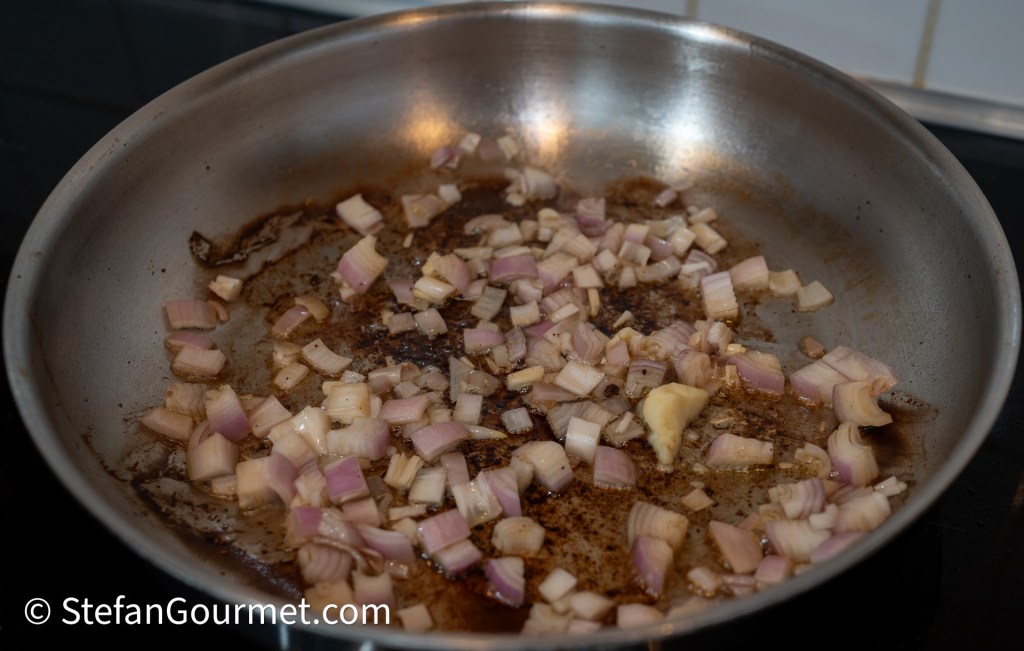
Add 125 grams of chopped shallots.
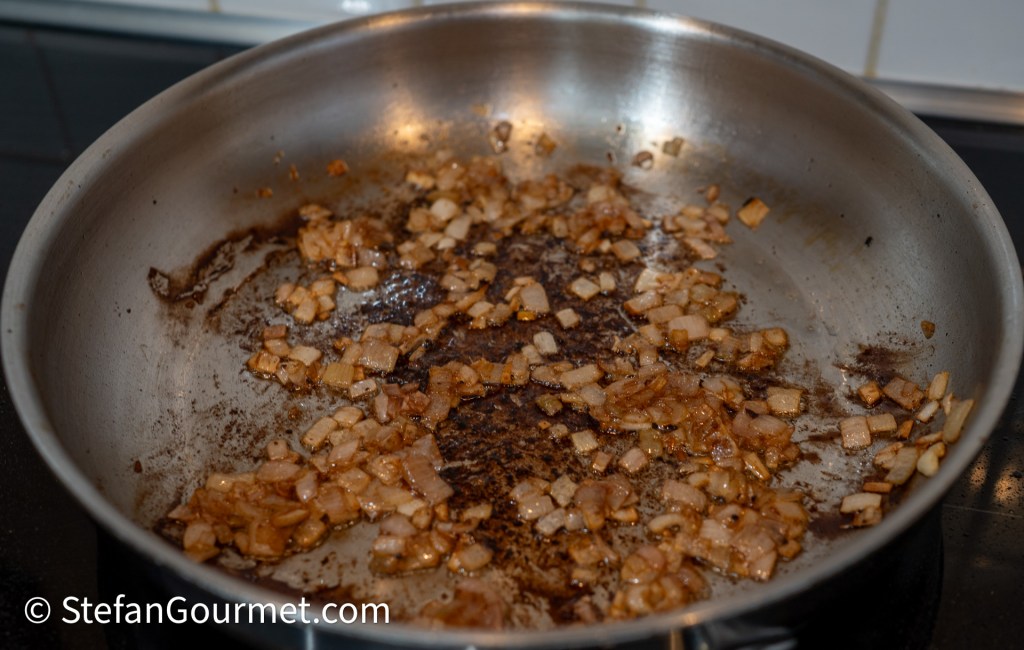
Stir over medium heat until soft and golden.
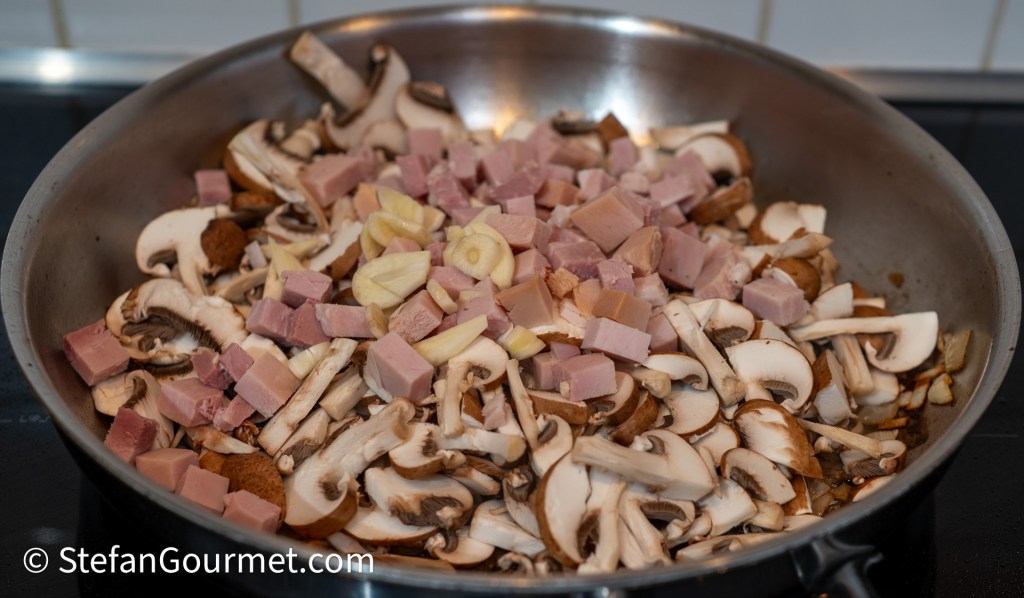
Add 250 grams of roughly chopped button mushrooms, 150 grams of cubed ham, and 2 to 3 minced cloves of garlic.
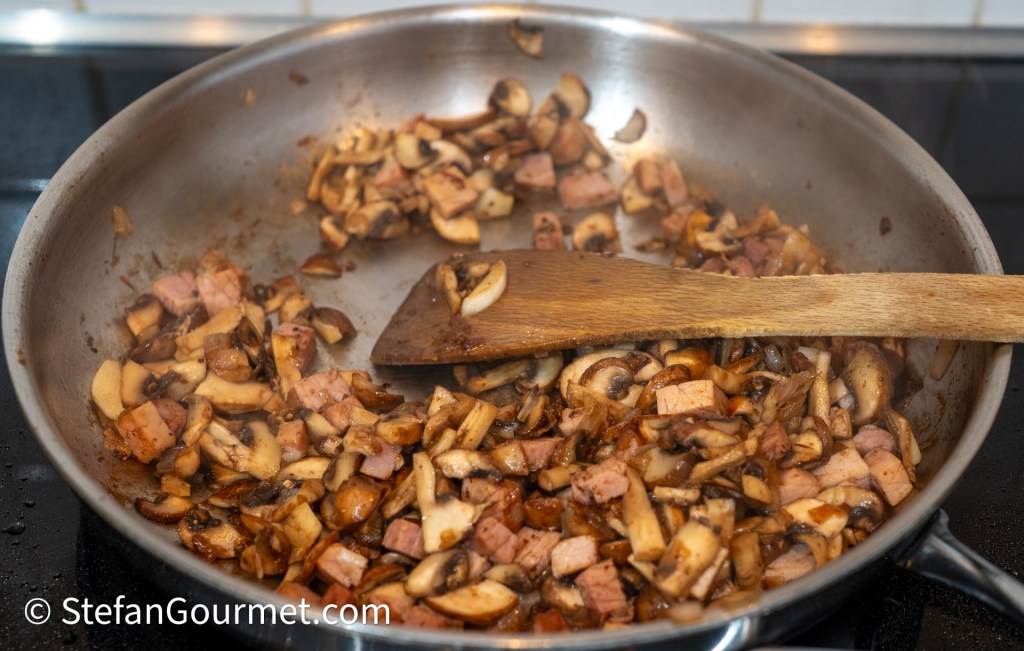
Continue stirring until the mushrooms are cooked through.
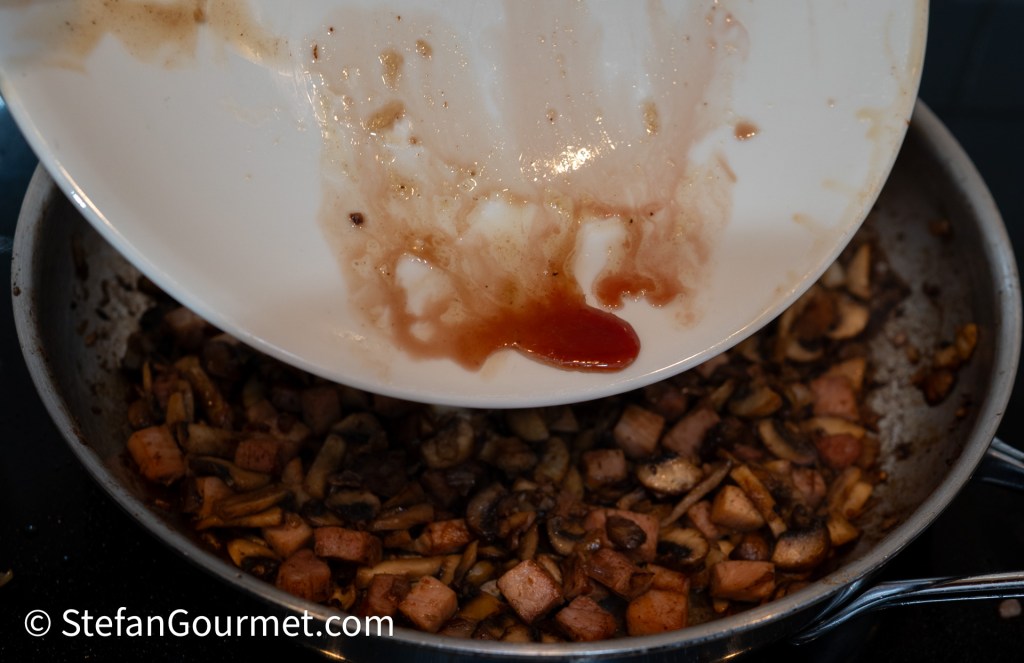
Add any juices that have leaked out of the seared beef onto the plate.
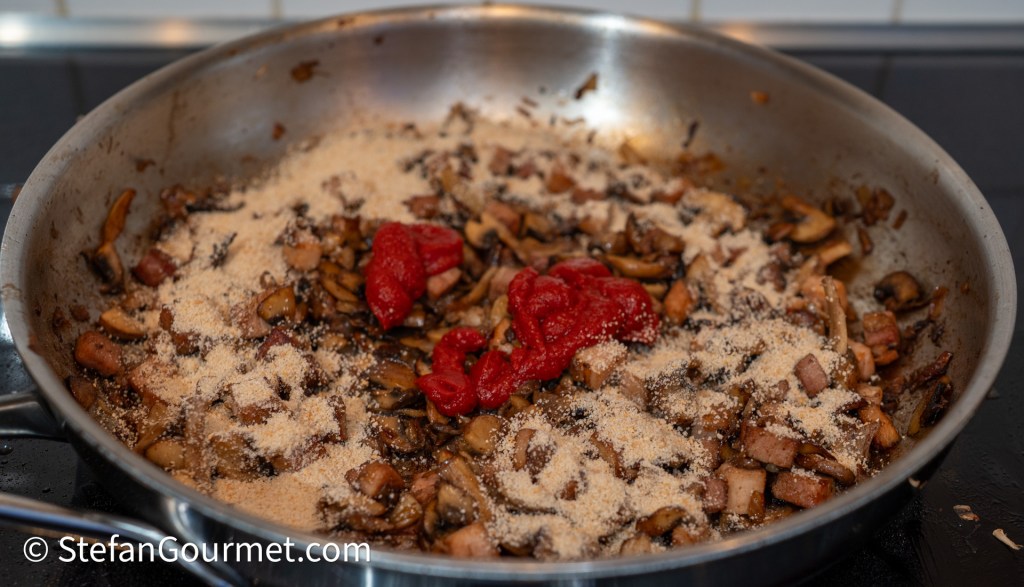
Stir in 2 tablespoons of tomato paste and 2 tablespoons of dried breadcrumbs…
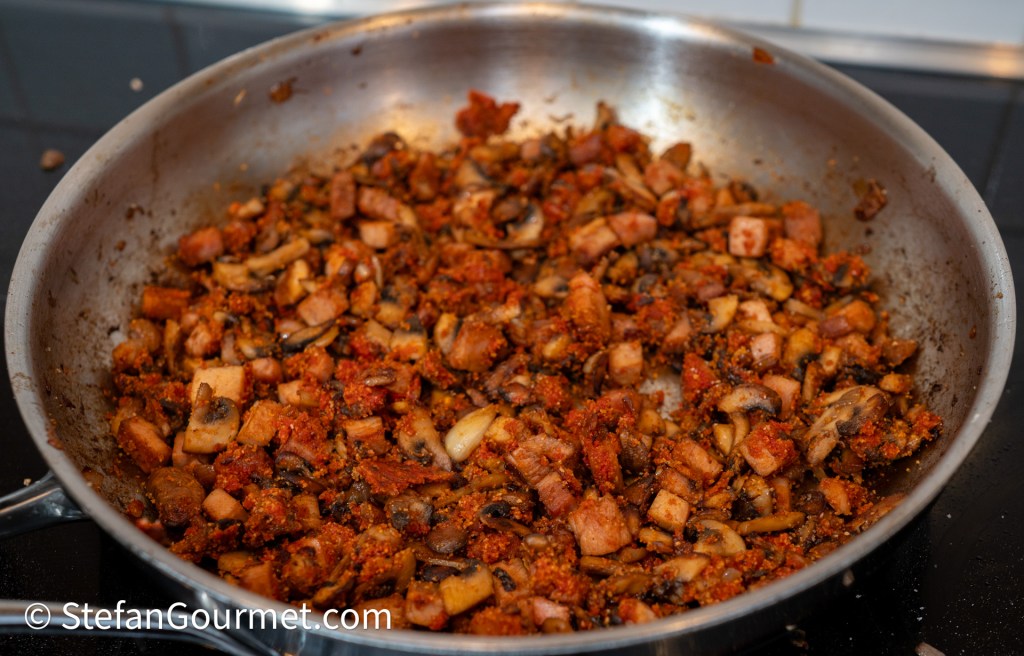
… until well combined, then remove from the heat.
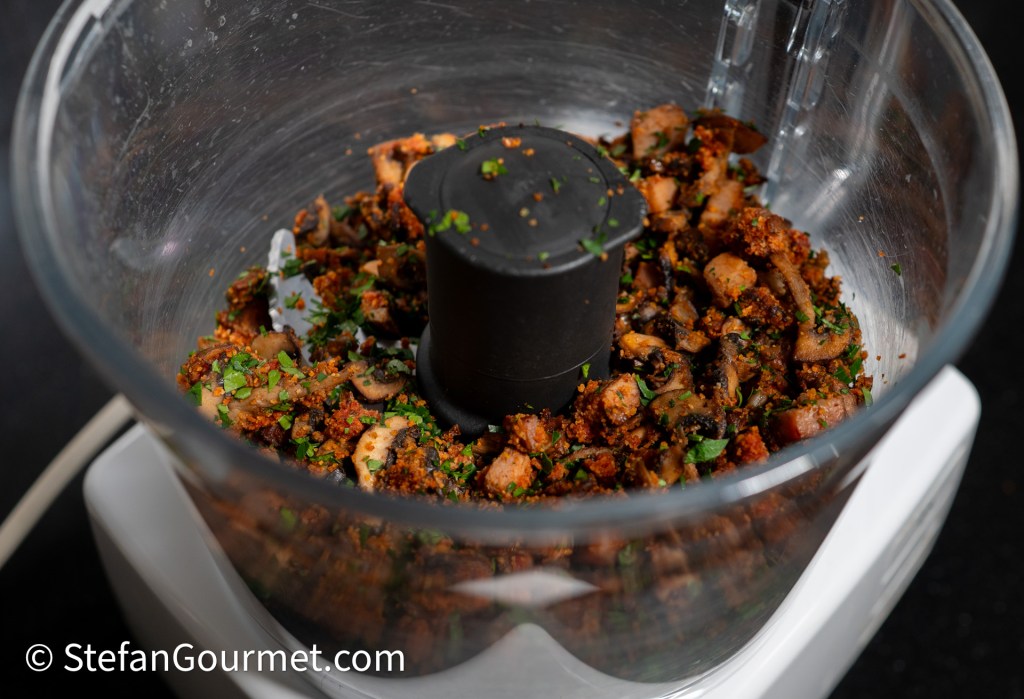
Transfer the mixture to a food processor and add 2 tablespoons of minced parsley.
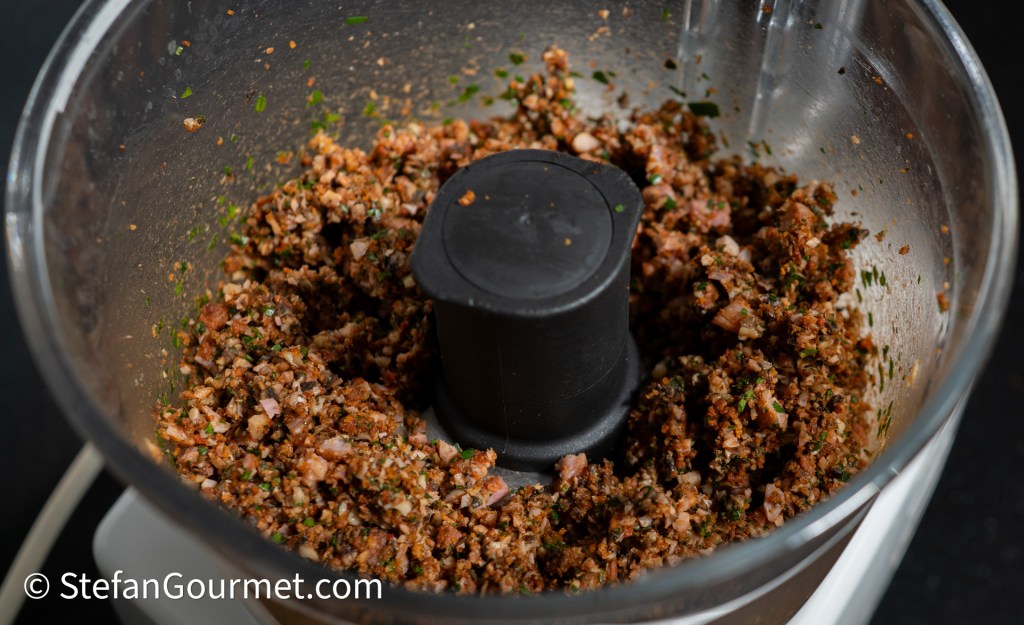
Pulse into a coarse puree. Season to taste with salt and freshly ground black pepper. This is your duxelles. Allow it to cool completely, first at room temperature and then in the refrigerator.
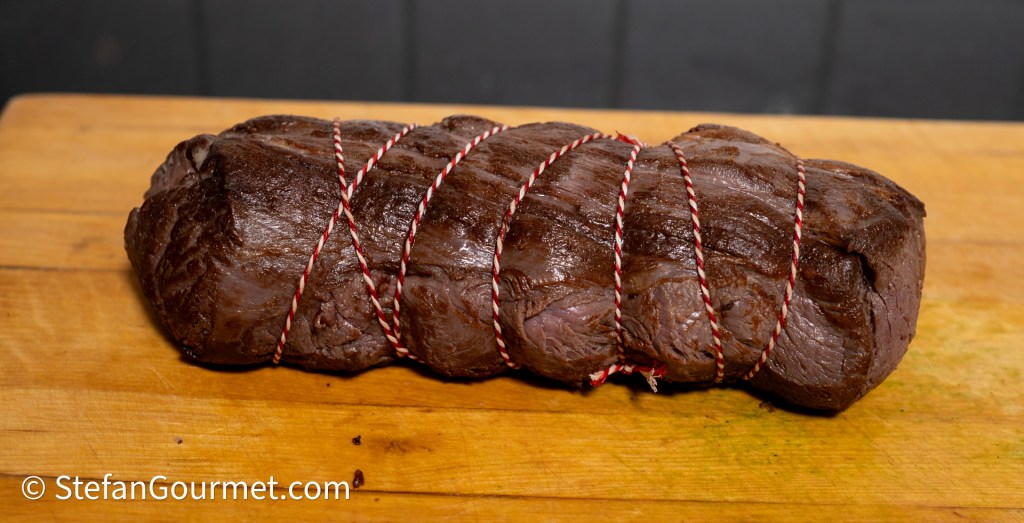
Once the beef fillet has been chilled completely, tie it with kitchen twine to maintain its shape.
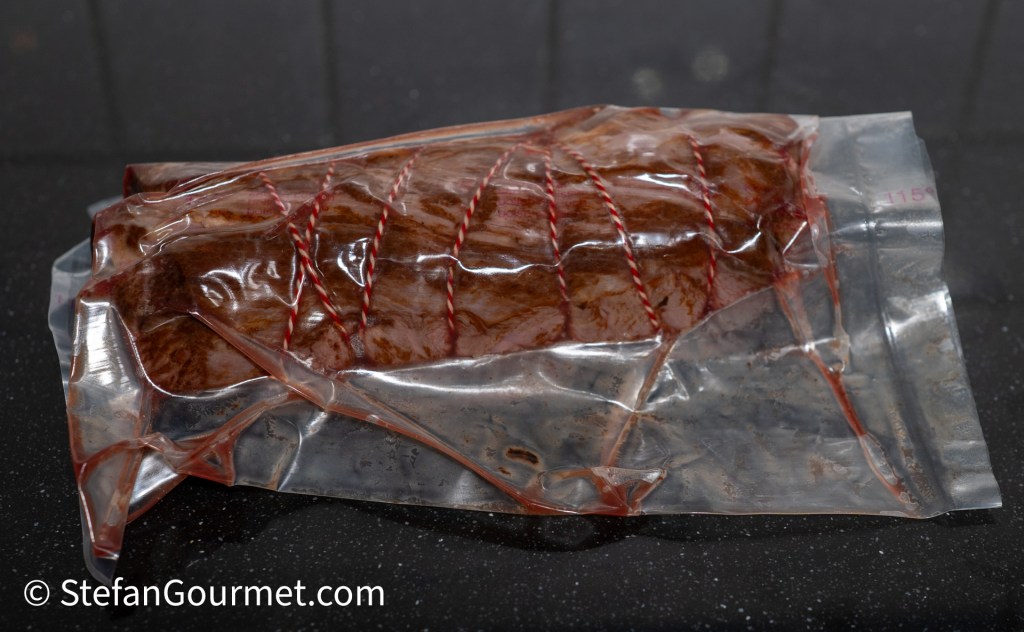
Vacuum seal the meat and cook it sous vide for 3 hours at 53°C (127°F) for the rare side of medium-rare. You can choose a higher temperature if you prefer your fillet closer to medium.
A 3-hour cook time is sufficient for a diameter of up to 7.5 cm (3″). To ensure the core reaches the target temperature, measure the diameter of your fillet and verify the timing using the table in this article.
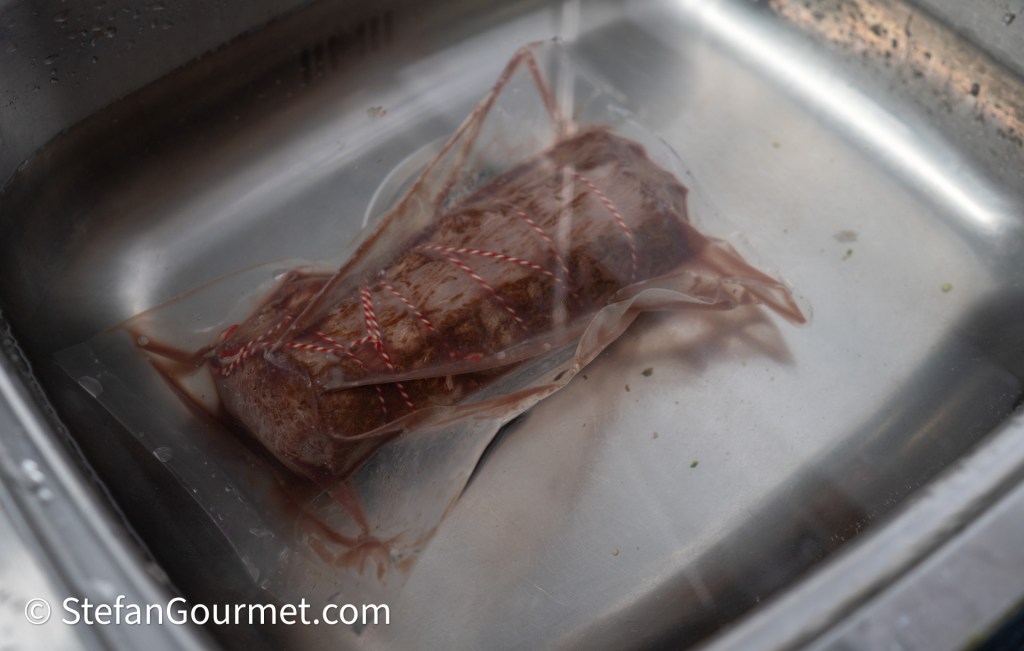
After the sous vide process, chill the fillet in cold water while it is still in the bag; you can add ice cubes to speed this up. The meat needs to be chilled at least to room temperature, though chilling it completely in the refrigerator will make the final assembly easier.
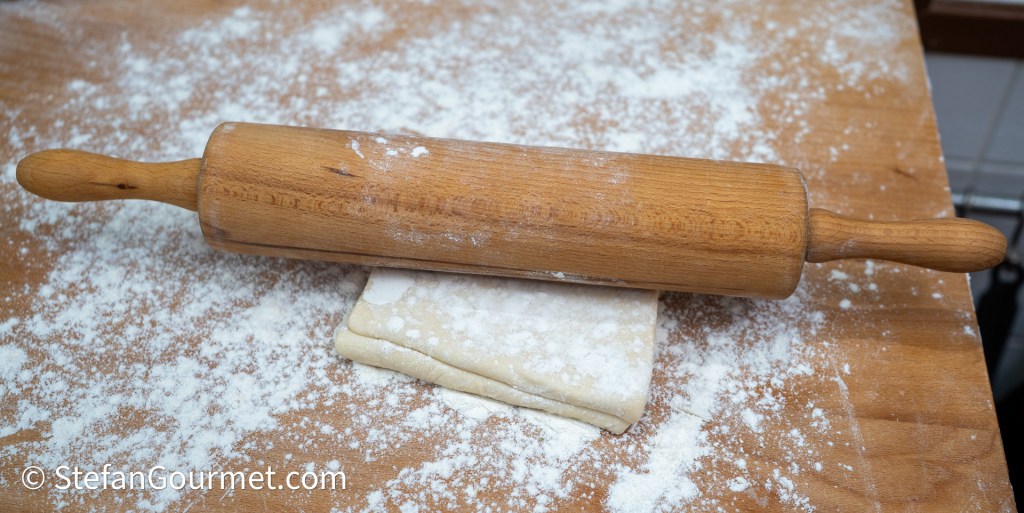
If using homemade puff pastry or store-bought dough that is not yet rolled out, roll it out on a floured surface.
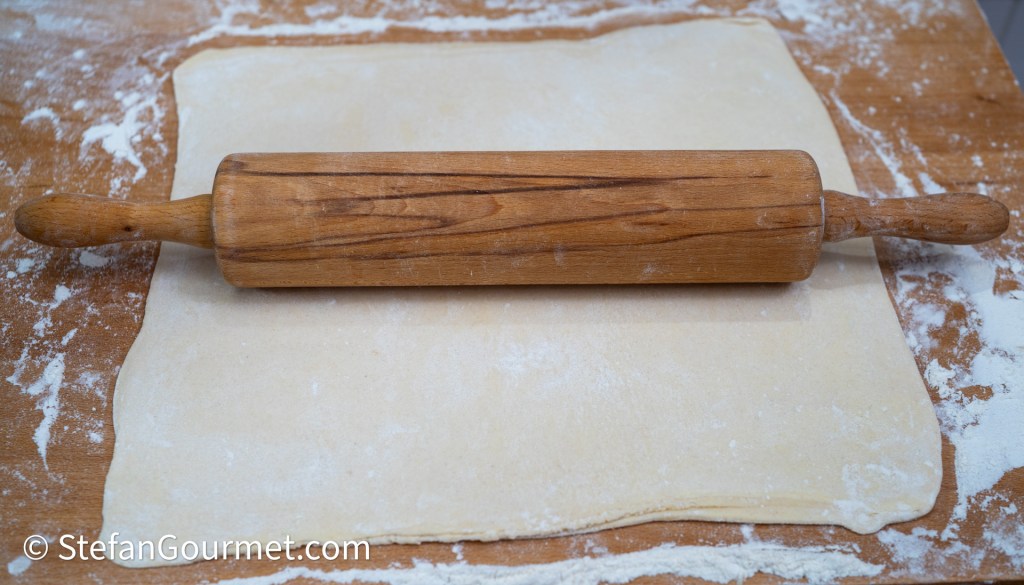
To achieve a rectangular shape, roll in diagonal directions as well. The sheet should be large enough to wrap around the beef and a layer of duxelles.
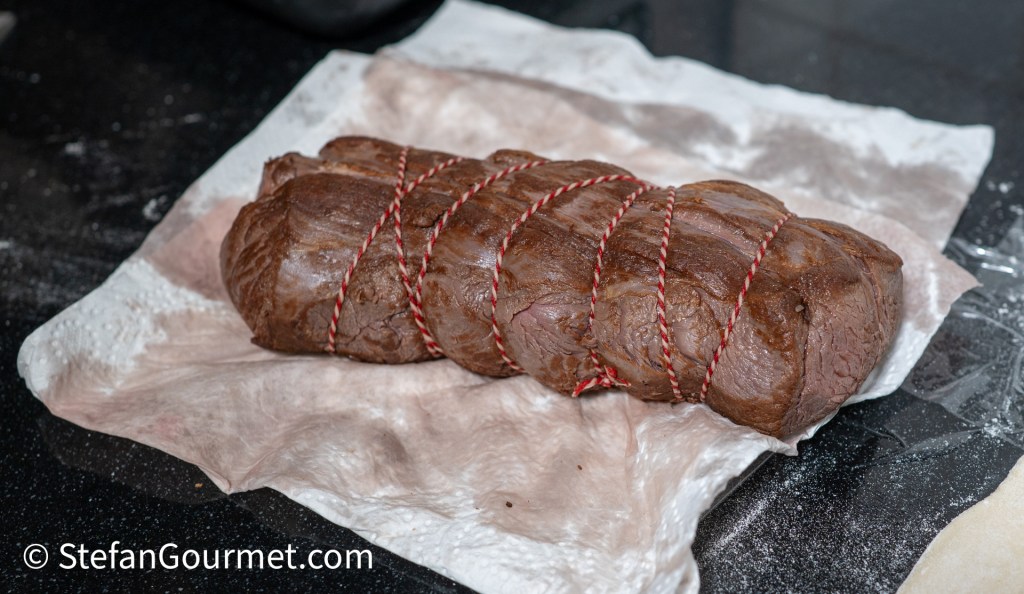
Take the beef out of the sous vide bag, remove the kitchen twine, and pat it dry with paper towels.\
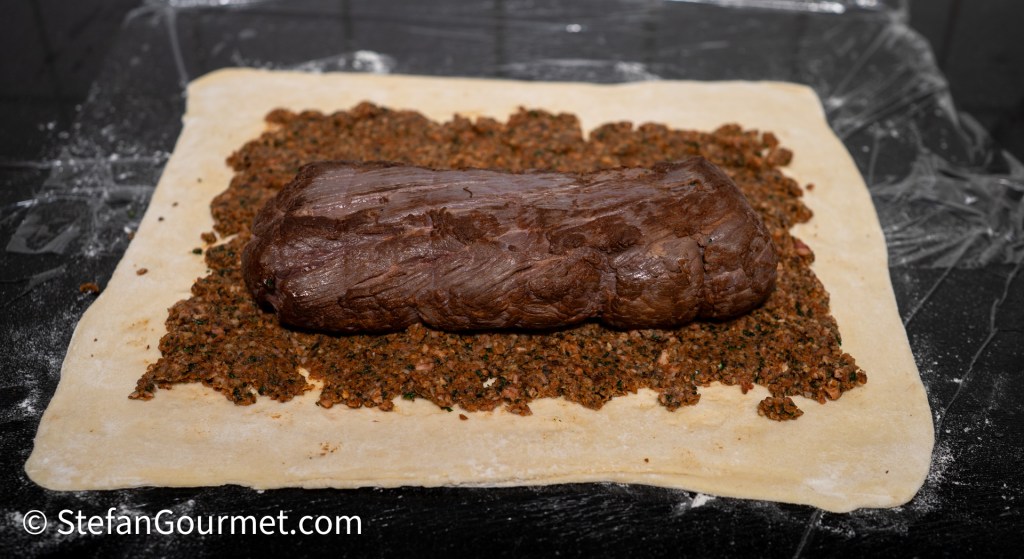
Place the sheet of puff pastry on a layer of cling film or a clean tea towel. Spread the duxelles in an even layer over the pastry, leaving a 3 cm (1″) border on all sides. Place the fillet on top and roll the pastry and duxelles around the meat, using the cling film or tea towel like a sushi mat to guide the process.
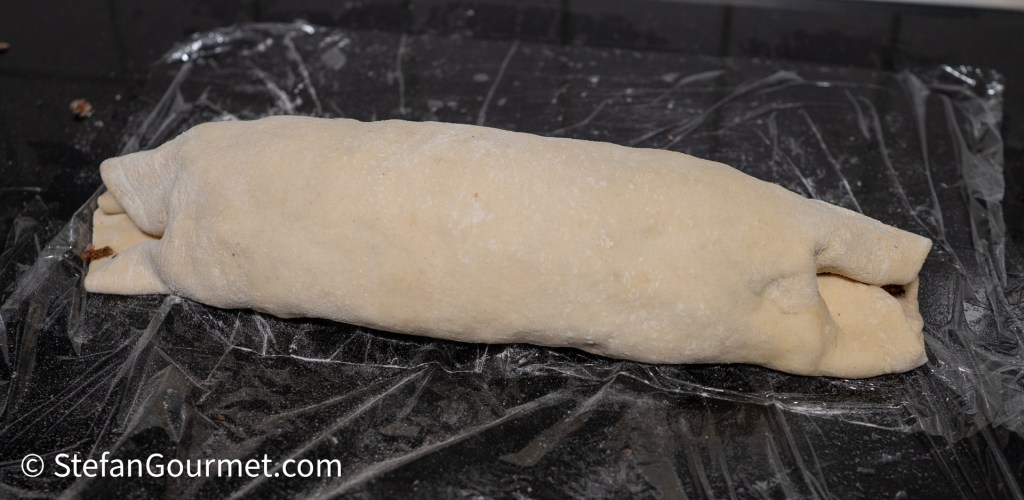
Seal the edges and trim away any excess pastry.
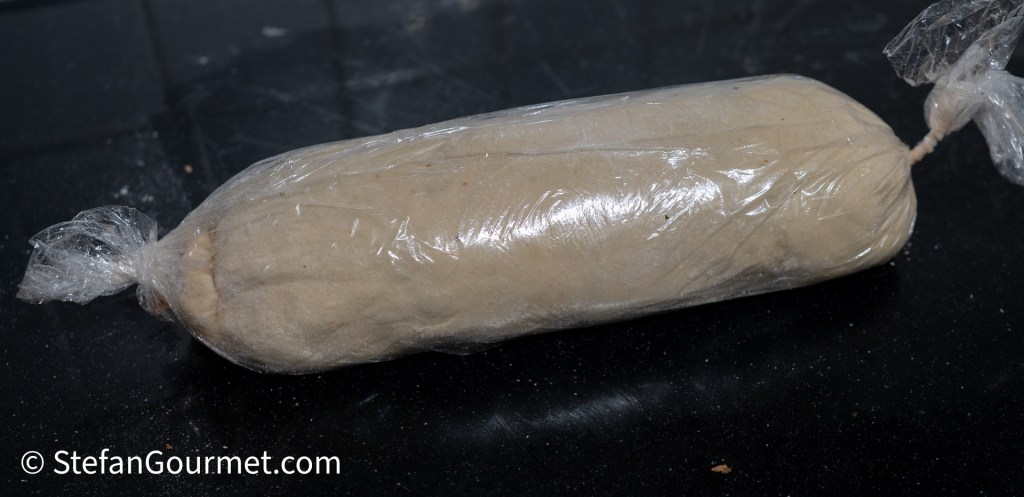
Wrap the Wellington tightly in cling film and refrigerate until you are ready to bake. The dish can be prepared up to this point a day in advance.
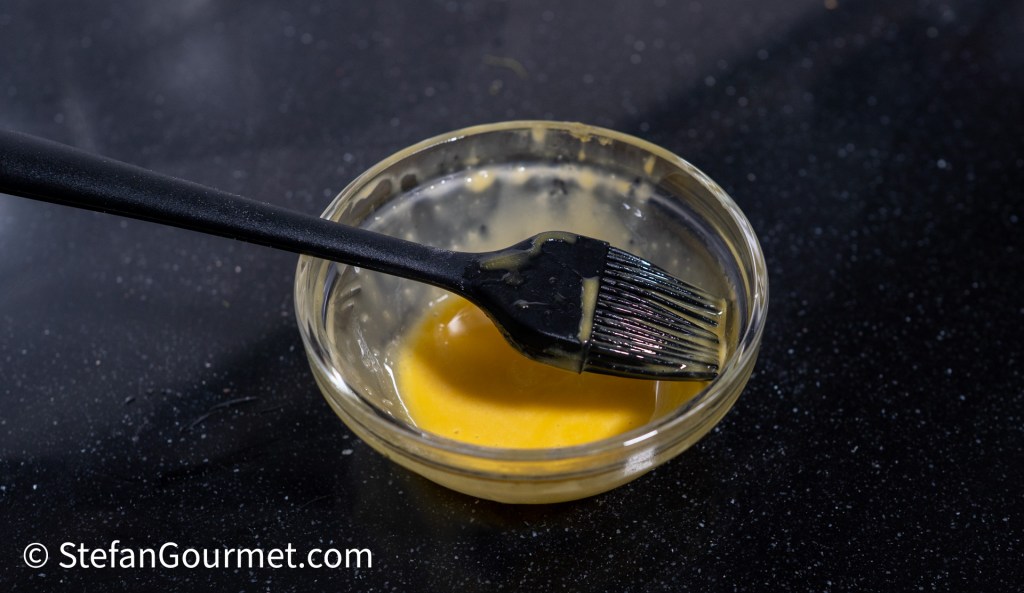
To finish, preheat the oven to 225°C (440°F) without the fan. Mix one egg yolk with a tablespoon of olive oil to create the dorure.
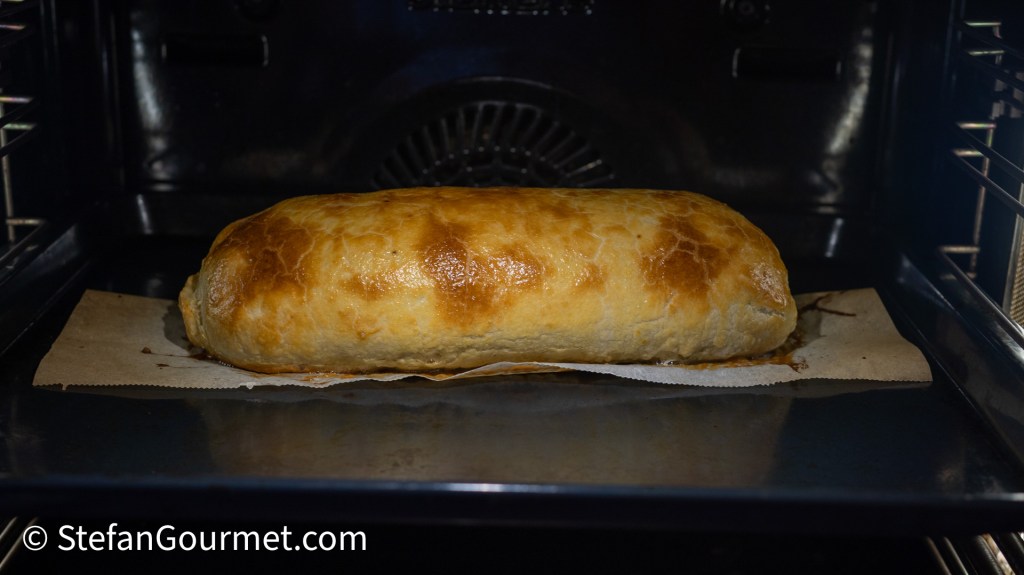
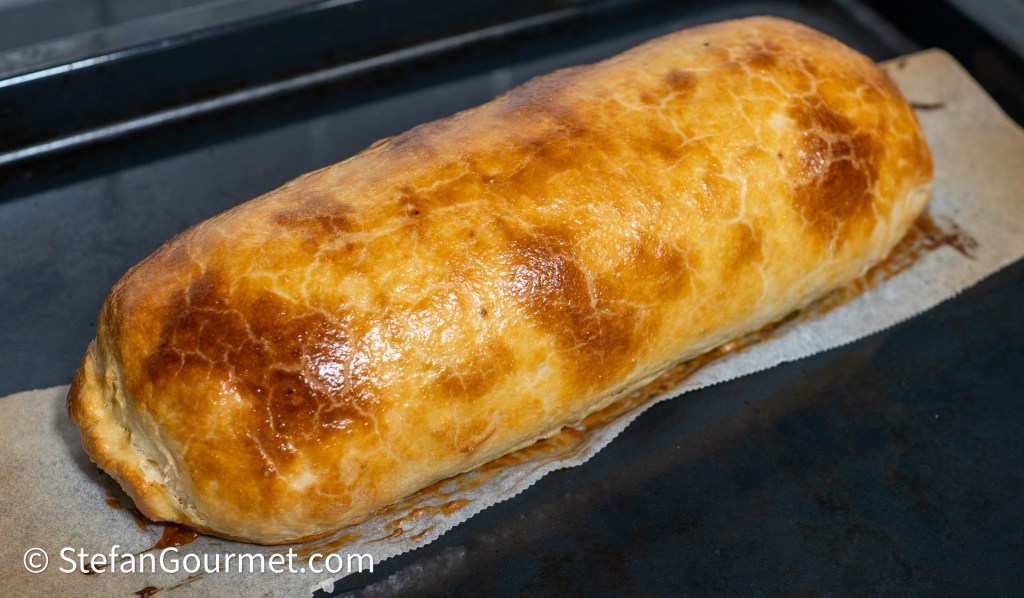
Place the Wellington on a baking sheet lined with parchment paper and brush the top and sides with the mixture to ensure a deep golden-brown finish. Bake the Wellington for about 20 minutes until the pastry is golden. Since the beef is already cooked, it should be ready as soon as the crust looks perfect. However, ovens behave differently. If the beef is not warm enough by the time the pastry browns, consider a lower temperature for a longer duration next time. Conversely, if the beef overcooks, a higher temperature for a shorter time may be necessary. This adjustment assumes the fillet is a consistent size.
While 20 minutes at 225°C worked well in my oven, you may prefer using a digital probe thermometer to ensure the center is properly warmed. I recommend a core temperature between 45°C (113°F) and 50°C (122°F) when removing it from the oven. Because the meat reached its target temperature during the sous vide process, you only need to bring it to serving temperature without cooking it further.
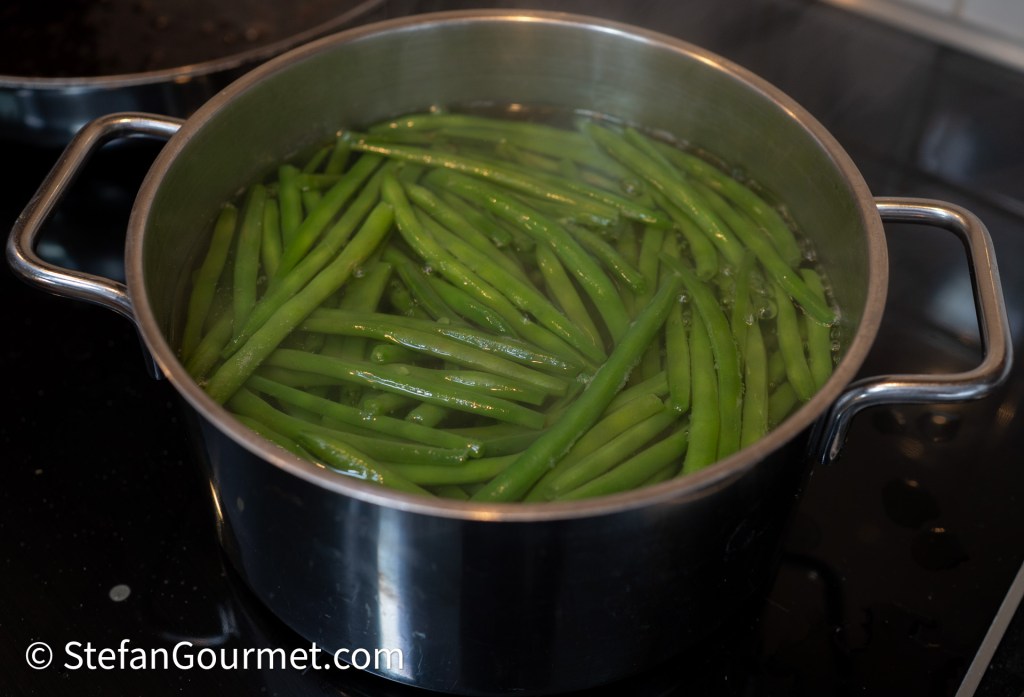
Steam or boil the haricots verts while the Wellington is in the oven. If boiling, add salt and a pinch of baking soda to the water. The baking soda will brighten the green of the beans and soften them more quickly; 5 or 6 minutes should be enough for an al dente texture. Drain the beans and toss them with high-quality extra virgin olive oil.
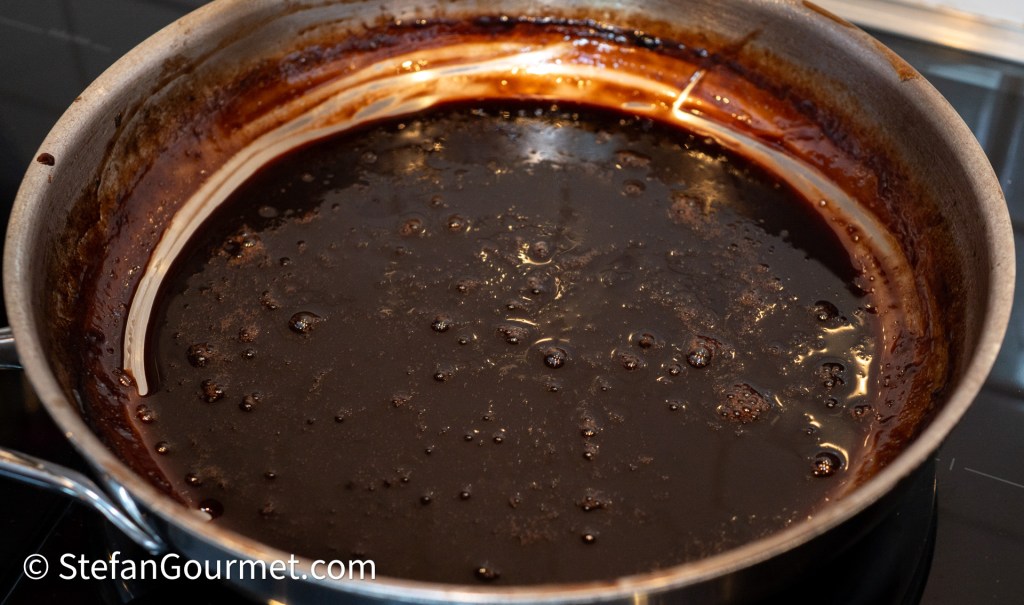
Reduce the red wine sauce until it reaches a syrupy consistency, and only then adjust the seasoning with salt and freshly ground black pepper.
Slice and serve the Wellington as soon as possible after it leaves the oven to ensure it remains hot and crispy. As always, use preheated plates and ask for help plating the green beans while you slice the meat.
Serve the red wine sauce next to the Wellington rather than over it to avoid making the pastry soggy.
Wine pairing
This French dish pairs exceptionally well with a Pomerol or Saint-Emilion, or another full-bodied Merlot. A blend consisting mostly of Merlot with some Cabernet Franc or Cabernet Sauvignon—whether from Bordeaux, California, Bolgheri, or South Africa—is also an excellent choice. The richness and earthiness of these wines perfectly complement the weight of the dish and the deep flavors of the mushrooms.


Beautiful! For a second I thought you Sous vide’d the whole Wellington, pastry and all!!! Couldn’t imagine that!!!
LikeLiked by 1 person
You go to a great deal of trouble to achieve an absolutely perfect result. I have not seen the dish done in individual portion size but that actually looks very inviting! Unfortunately, this dish is at the moment not oft prepared in Australian homes – as it was the moot point in a recent murder trial here . . . but people will forget . . . I love it also 🙂 !
LikeLiked by 1 person
Well you actually have seen the individual portion before, right here on the blog, on 23 December 2013. Or at least that is when you left a comment 😉
LikeLiked by 1 person
OMG Stefan – you have totally made my day! You mean I have been bugging you since 2013 !!! My apologies 🙂 ! And . . . memories do ‘fade’ . . . but with love . . . .
LikeLiked by 1 person
After breakfast coffee – looked up, was surprsed and delighted. Some well-remembered names there recalled with fondness > amongst others Chicago John was my ‘guru’ in how to ‘read’ and ‘respond’ . . .
LikeLiked by 1 person
Sono estasiata!
LikeLiked by 1 person
I made beef wellington last year and boy what a disappointment, the pastry became soggy after the meat let out all of its juices. I was still tasty but not very pretty. I will try your sous vide version, yours looks top notch profressional!
LikeLiked by 1 person
I’ve always wanted to make beef wellington. And I do have a sous vide! Thanks for your detailed recipe.
LikeLike