
We have been visiting De Librije to celebrate our anniversary for 20 years, a period during which the restaurant has consistently held three Michelin stars. This was our first visit since Jonnie Boer’s sudden passing earlier this year. Jonnie and Thérèse had planned a gradual retirement, passing the reins to their children, Jimmie and Isabelle, as well as chef Nelson Tanate. However, Thérèse has remained fully involved, finding comfort in continuing Jonnie’s legacy. Since Tanate had already been the chef for some time and is a shareholder in the restaurant, Michelin decided to maintain its three stars—and our experience confirmed that this was the right decision. De Librije offers a fixed eight-course menu for €319 (with a vegetarian alternative for €299), to which we added the “high-end” wine pairing for €335 (the regular wine pairing is €155).

We started with a very nice Champagne, the Au Fil du Temps 2020 by Domaine Lagille. It is made from 55% Pinot Noir, 35% Pinot Meunier, and 10% Chardonnay. The high percentage of red grapes gives the wine a full body, and the relatively high percentage of Meunier provides a wonderful fruity aroma. The wine is very dry but remarkably creamy at the same time, thanks to four years of aging on the lees.

The first set of amuse-bouches consisted of peas in a pod with horseradish and young mustard, kohlrabi with verveine, and an edible rose with beetroot and lovage.
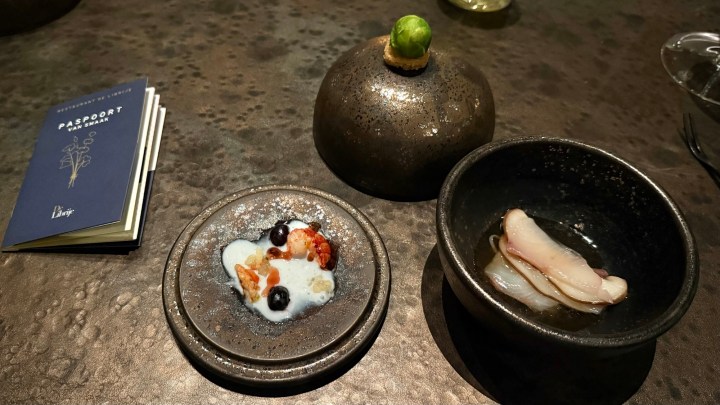
This was followed by the “flavor passport,” where De Librije showcases ingredients from its suppliers—in this instance, kingfish with mushroom and dashi, Brussels sprout filled with goat cheese, and crayfish.

The first wine of the pairing was a 2019 Sauvignon Blanc from Friuli, Italy. The wine had aged beautifully, with well-balanced aromas of tomato leaf.

It was an outstanding pairing for the “drunk eggs”—a crispy cherry leaf with caviar that had been aged in fino sherry, served with grated cured egg yolk. The dish brought out the complexity of the wine; an amazing dish and pairing.
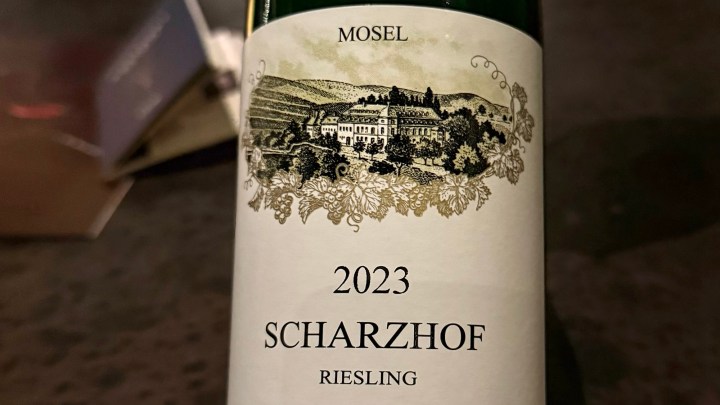
The following wine was paired with two dishes: a Scharzhof Riesling from the Saar by the famous producer Egon Müller. It had only 8.5% alcohol, a perfect balance between sweetness and acidity, and some pleasant petrol aromas. The wine was still quite young, so sommelier Sem Beks had decanted it. The wine possessed more body and creaminess than is typical for the Mosel, and especially the Saar, making it an excellent pairing for both dishes.

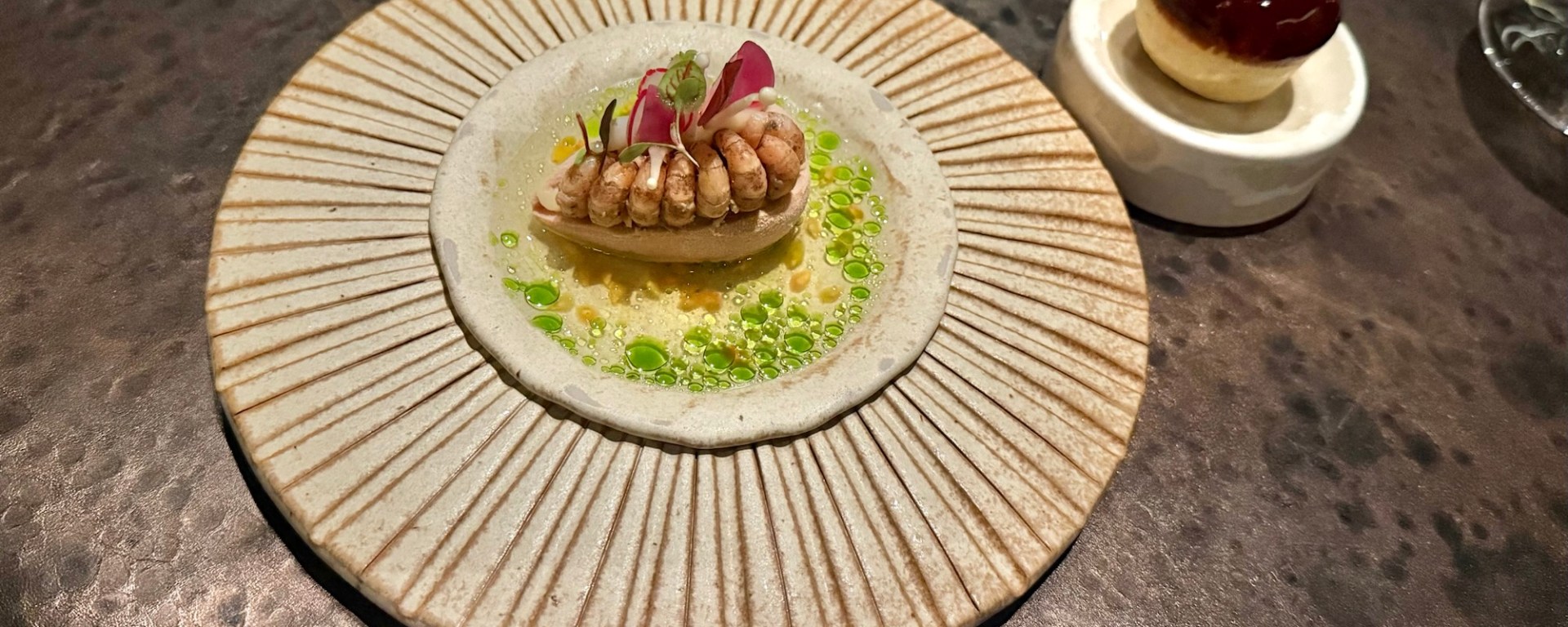
The first was what has become the signature dish of the restaurant: foie gras with Dutch shrimp, tomato water, and lime. The dish also includes a brioche with reduced shrimp stock.

The second was a langoustine, ‘cooked’ in kombucha and served with cherry and almond. Langoustine in kombucha has been on the menu for a long time, but they continue to surprise us with new variations. The texture of the langoustine was perfect.

Maître Gert Wiltvank gave us a tour of the kitchen and wine cellar. He told us that after we were the first last year to have DRC by the glass, he had just finished selling the fourth bottle by the glass. The tour included a very nice piece of eel, grilled Japanese-style and brushed with unagi sauce. This was even better than regular Japanese unagi because the eel was more plump and juicy.

The next wine was the Terres Blanches by Bernaudeau, a Chenin Blanc from Anjou in the Loire Valley, France, made outside the appellation with minimal intervention (but luckily not a full-blown natural wine). The wine had a great body thanks to 12 months of aging in oak on the lees, balanced by acidity.
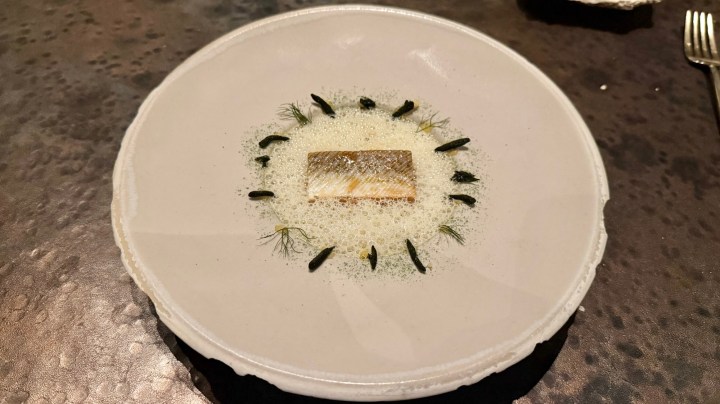
It was a very good pairing for the weeverfish with jalapeños and seaweed, although the acidity of the wine did make the peppers burn a bit more.
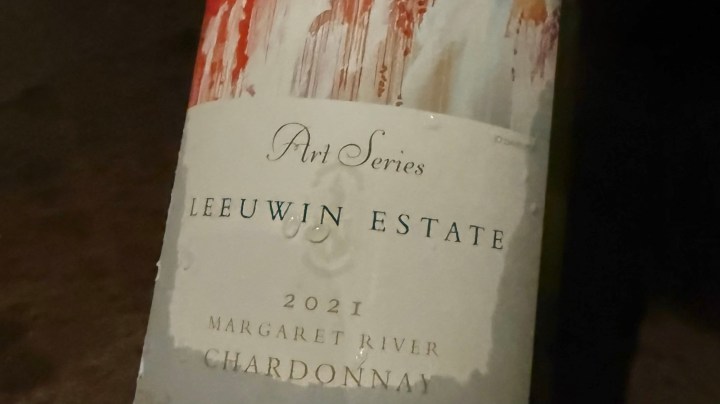
The next wine was a wonderful Chardonnay from Margaret River by Leeuwin Estate, a winery that we visited last year during our trip to Australia.

It was an excellent pairing for the perch with kale and cured sausage, a strongly flavored yet perfectly balanced dish.

The next dish was originally paired with a 2022 Aux Montagnes Côte de Nuits Villages by Charles Lachaux. A special wine by a famous winemaker, it seemed more like a Syrah from the Northern Rhône valley than a Pinot Noir from Burgundy. The wine was quite young with hefty tannins, and unfortunately, with the dish, the wine became too astringent for me. This is a wine that requires red meat to be enjoyed. That was resolved very quickly by replacing it with an excellent Condrieu La Doriane by Guigal. Very elegant and well-balanced.
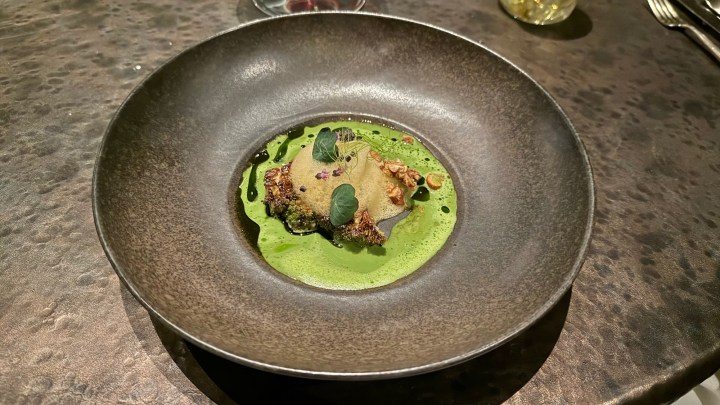
The dish was another signature dish: romanesco cauliflower baked in clay, with nasturtium and cashew.

The wine for the main course was the Domaine de la Grange des Pères 2021 from the Hérault (Languedoc, France), a blend of Syrah, Mourvèdre, and Cabernet Sauvignon.

This full-bodied red was a good pairing for the fillet of hare, served with a ‘royal’ sauce, mandarin, and witlof. The mandarin provided a nice fruity contrast to the ‘dark’ flavor of the hare. For my taste, the rare could have been served a touch more rare.
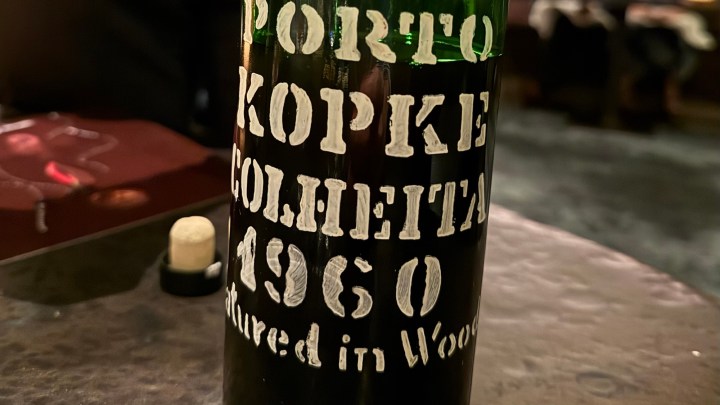
We upgraded the menu with a selection of cheese, and as always wanted to pick cheeses that would work well with a wine. Sem said he had a 1960 Colheita Porto by the glass, so that meant hard and blue cheese for me.
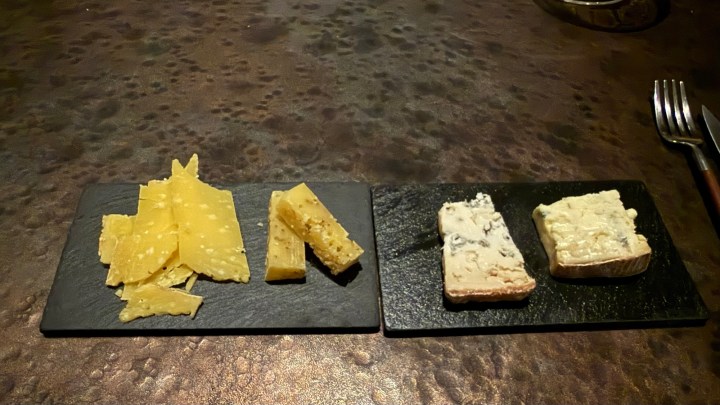
The port worked especially well with the Dutch old cheese enriched with cumin seed.

The dessert wine was a 1998 Château Rieussec, nicely aged with notes of saffron.

The first dessert was crayfish stock with dark chocolate and rum, an original combination of flavors that I thought was quite hefty.
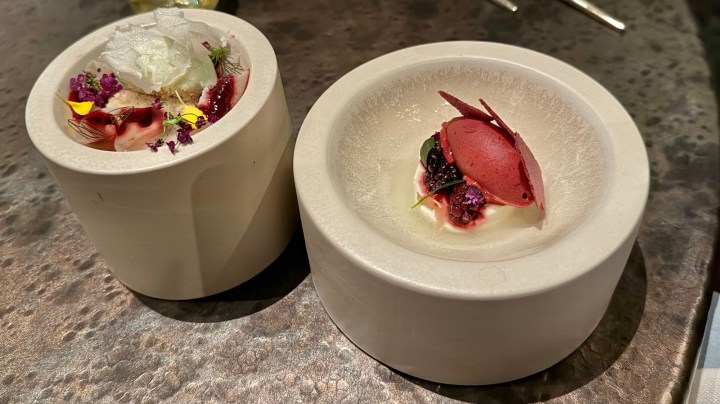
The second dessert was called “cold drip”, named after the technique to extract flavors from berries. It was delicious and a very good pairing with the Sauternes.

The meal was concluded with coffee or tea with Dutch sweets.
As mentioned in the introduction, De Librije has successfully maintained its stratospheric standards, even as it navigates a new chapter without Jonnie. The menu balances reverence for the past with a clear drive for innovation, proving that the kitchen’s creative pulse remains as strong as ever.
The service continues to be a masterclass in hospitality—an intricately choreographed ballet that manages to feel entirely effortless, ensuring every guest feels genuinely welcome. Furthermore, the wine pairing remains a standout; while many sommeliers at other restaurants chase ‘interesting’ bottles at the expense of the palate, the selections here are both original and delicious, offering precise pairings that elevate each dish. Twenty years on, the magic remains. We can’t wait until next year.


Oh I did not expect the privilege of being ‘back’ at ‘Librije’ tonight. Sincere congratulations to you two first of all . . . two decades together . . . may there be twice twenty more . . . When I follow you to other restaurants around the world, as I have for well over a decade now, the excitement factor is always high . . . when you show your night at the ‘Librije’ it’s almost like ‘coming home’ after all these years. Love the place and the food and the ambience you show . . . Love the look of the langoustine and the perch and the hare . . . and am fascinated by the crayfish stock dessert . . . am so glad one of the wines actually came from here . . . and methinks it has been my privilege to taste the same, a rarity as far as your wines go . . . thank you both . . . looking at this has made my night . . .
LikeLiked by 1 person
Thanks Eha. We’ve been together for 26 years, but started our annual celebration at Librije 20 years ago.
LikeLiked by 1 person
What an amazing meal! Happy anniversary!
LikeLiked by 1 person
Happy Anniversary to you both! What a lovely way to spend the evening, the food looks absolutely beautiful. I am sorry to hear of the owner/chef’s sudden passing, one of our dear friend also passed this year and the world is lonelier without him.
LikeLiked by 1 person
Happy anniversary!
LikeLiked by 1 person