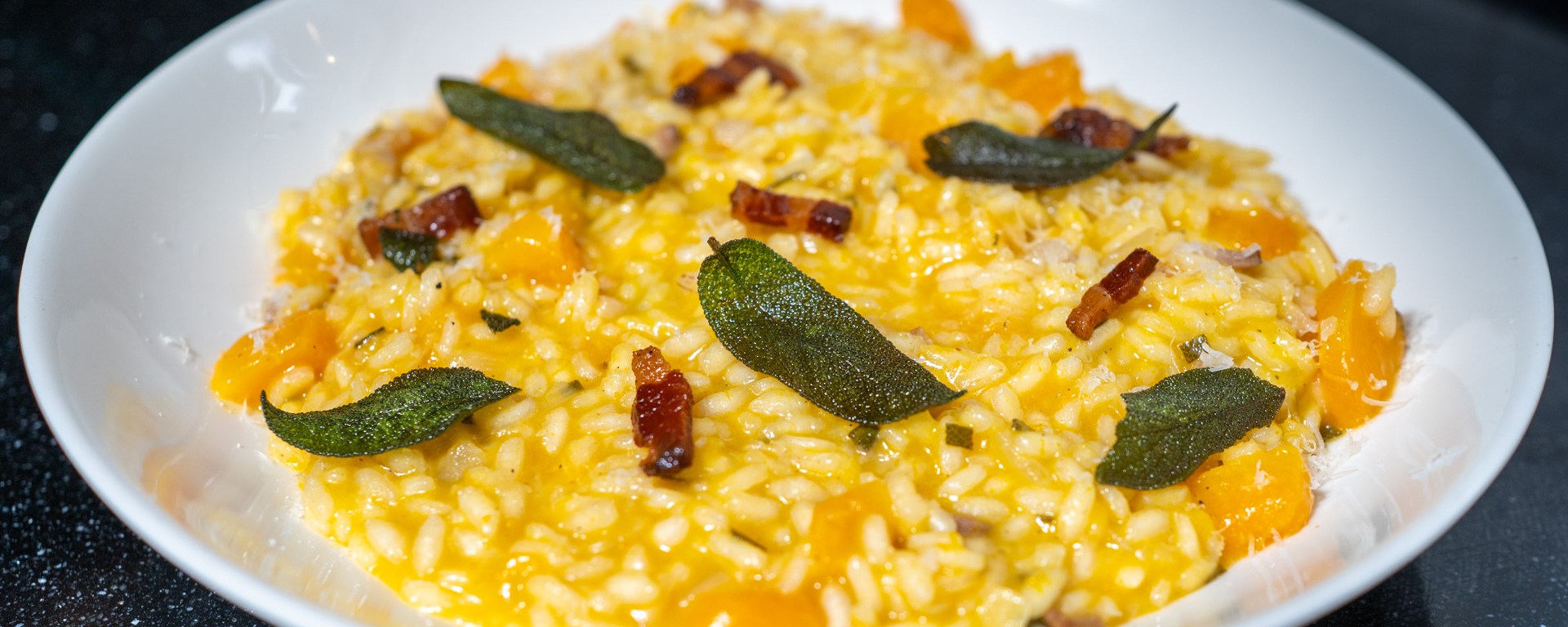
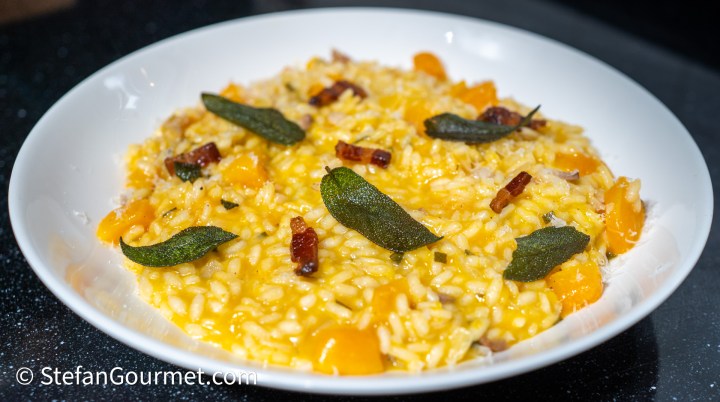
I had some pumpkin and sage in my fridge that needed to be used up. I thought they would make a great risotto, especially with the addition of some homemade pancetta from my freezer. This combination is a classic of Northern Italian cuisine, particularly in Mantua, a town famous for its pumpkin dishes like tortelli di zucca.
As always with risotto, the two critical success factors are the stock and the texture. It is best to make your own vegetable stock, as it provides more flavor and less salt than store-bought versions. In this case, you can even add the pumpkin seeds and membranes to the stock to extract additional flavor. (I omitted the peels to avoid any potential pesticides.) For the texture, it is important to cook the rice until it is al dente: tender without a hard center, yet still firm to the bite. Finally, ensure you serve the risotto all’onda: flowing and creamy, never soupy.
Ingredients
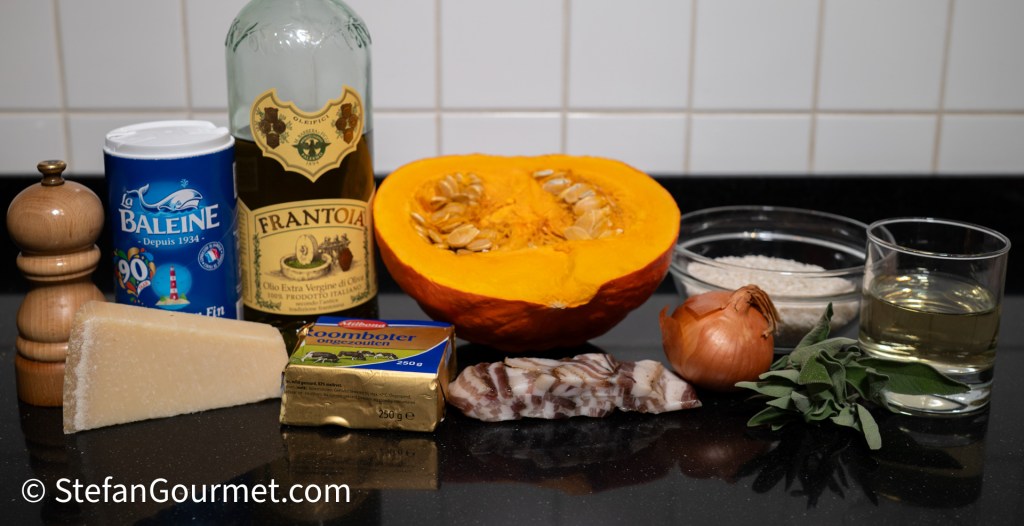
For 2 large or 3 medium servings
- 200 grams (1 cup) risotto rice, I prefer carnaroli because the cooking time is less critical
- 300 grams (.66 lb) cleaned pumpkin, diced
- 100 grams (3.5 oz) pancetta, diced or cut into lardons
- 1 small onion
- 120 ml (1/2 cup) dry white wine
- 1 Tbsp minced fresh sage, plus more sage leaves for garnish
- 30 grams freshly grated parmigiano reggiano or grana padano, plus more for garnish
- 2 Tbsp olive oil
- 2 Tbsp butter
- salt and freshly ground black pepper
- 750 ml (3 cups) vegetable stock, preferably homemade from 500 grams (1.1 lbs) of carrot, onion, celery, and other optional vegetables like fennel scraps, leeks, tomato (no cabbage)
Preparation
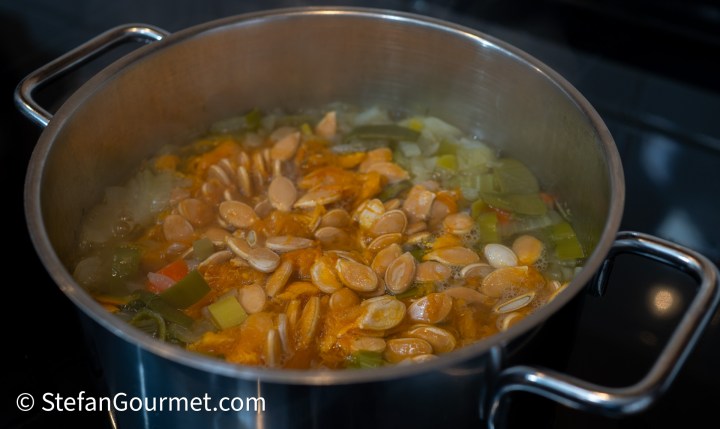
Make the vegetable stock by covering 500 grams (1.1 lbs) of carrot, onion, celery, and optional additions like fennel scraps, leeks, or tomato (avoid cabbage) with 750 ml (3 cups) of water. Include the pumpkin seeds and membranes as well. Cover, bring to a boil, and simmer for 30 minutes.
Strain the stock through a fine sieve, then squeeze as much liquid as possible from the vegetables using a clean, old tea towel. Wrap the towel around the vegetables like a candy wrapper and twist the ends to extract the juice. To get every last drop, open the parcel and rearrange the vegetables so the drier outer pieces move to the center before squeezing again.
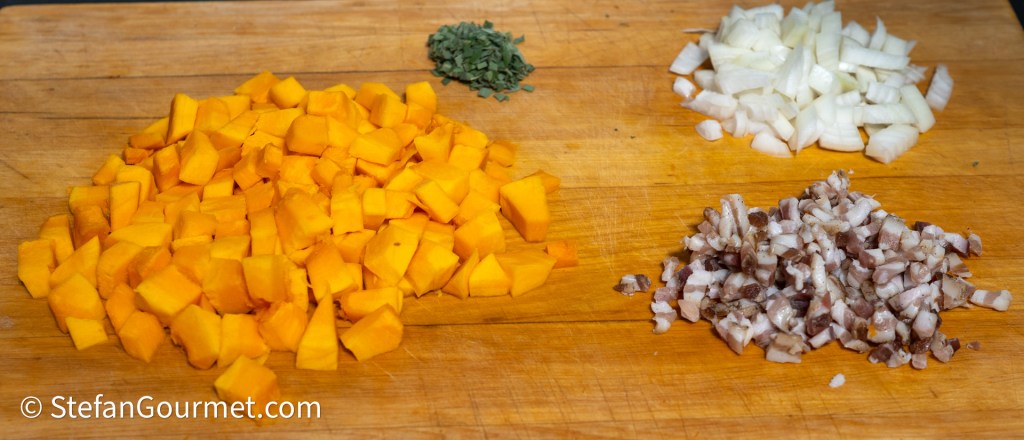
In the meantime, peel the pumpkin and dice 300 grams of the flesh. Clean and mince a small onion, dice 100 grams of pancetta into lardons, and mince a tablespoon of fresh sage. Reserve a small portion of the pancetta for the garnish.
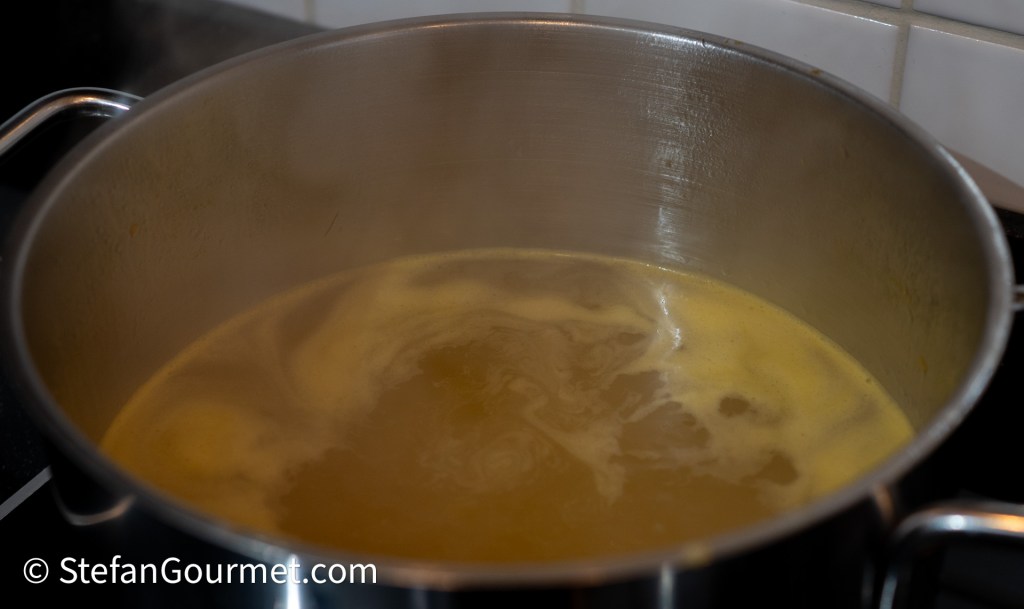
Reheat your stock and keep it at a gentle simmer.
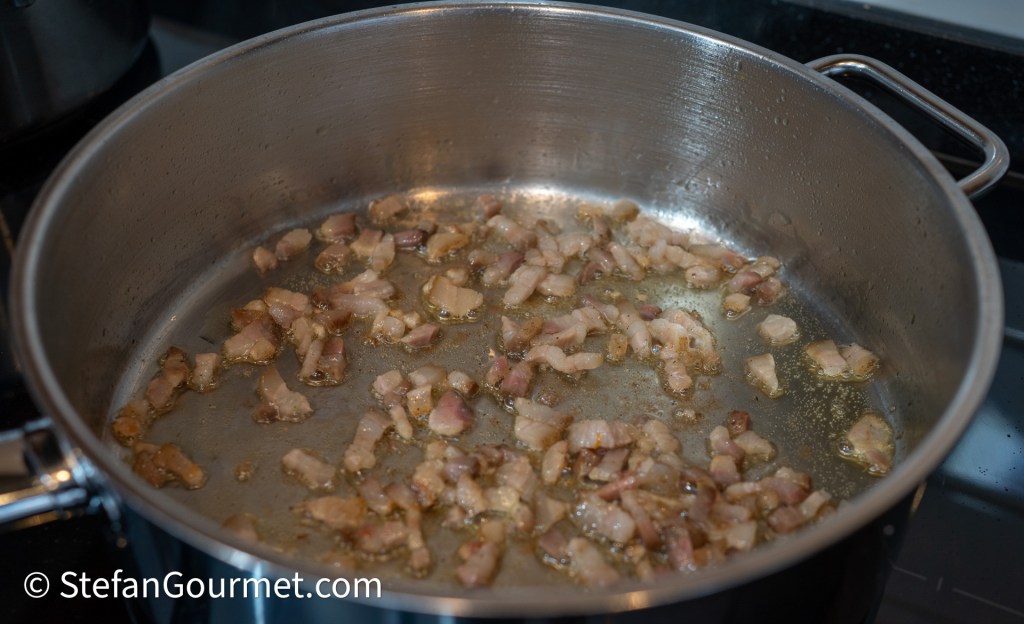
In a wide, heavy-based pan, heat a tablespoon of olive oil over medium heat. Add most of the pancetta and stir until the fat begins to render.
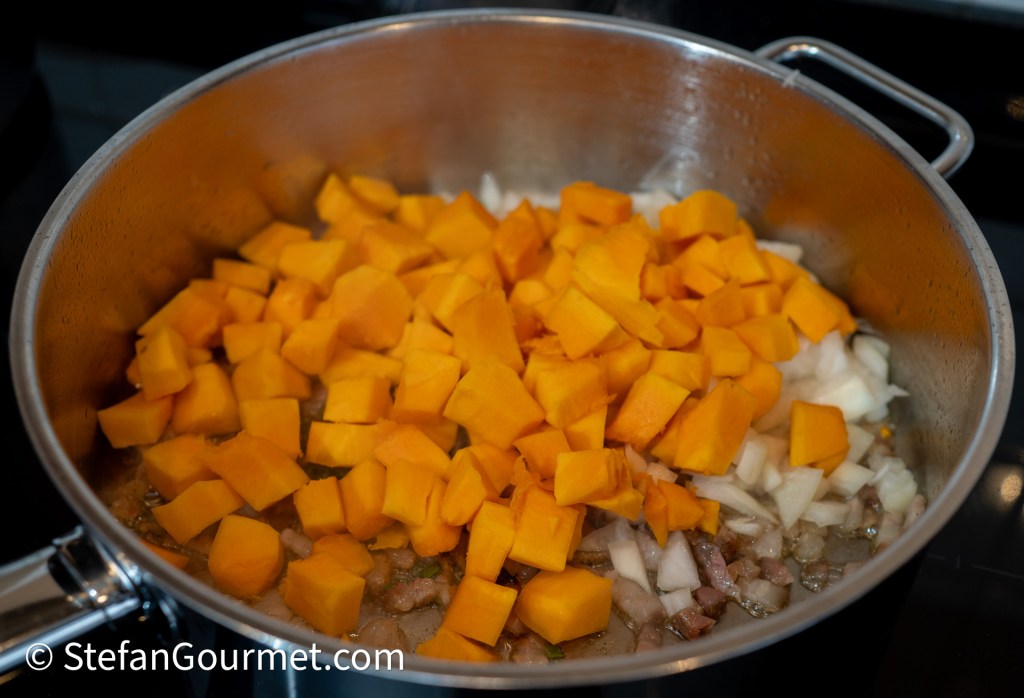
Add the pumpkin, onion, and minced sage, seasoning with salt and freshly ground black pepper.
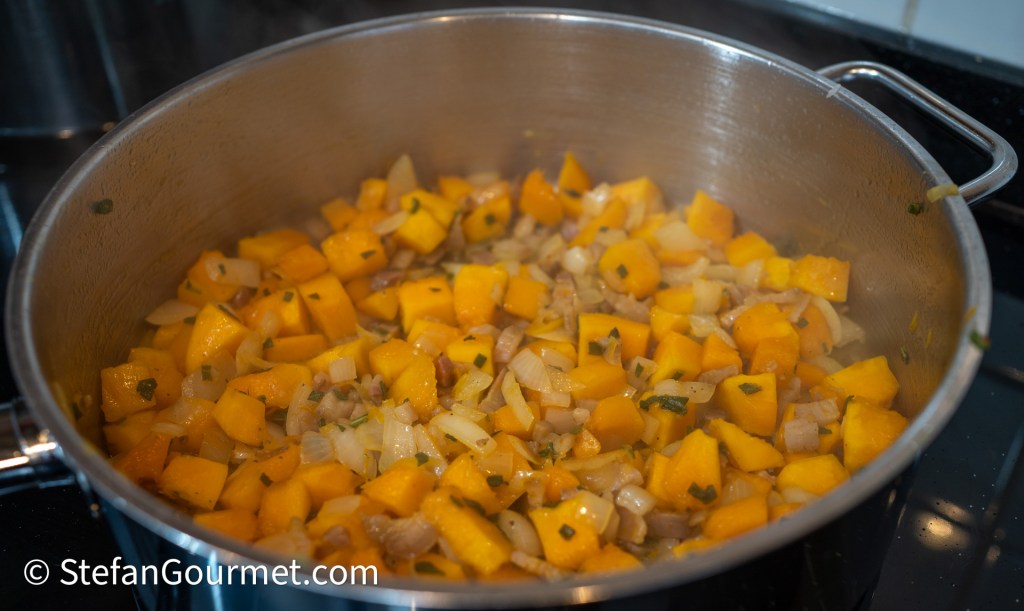
Sauté for about 5 minutes until the pumpkin begins to soften.
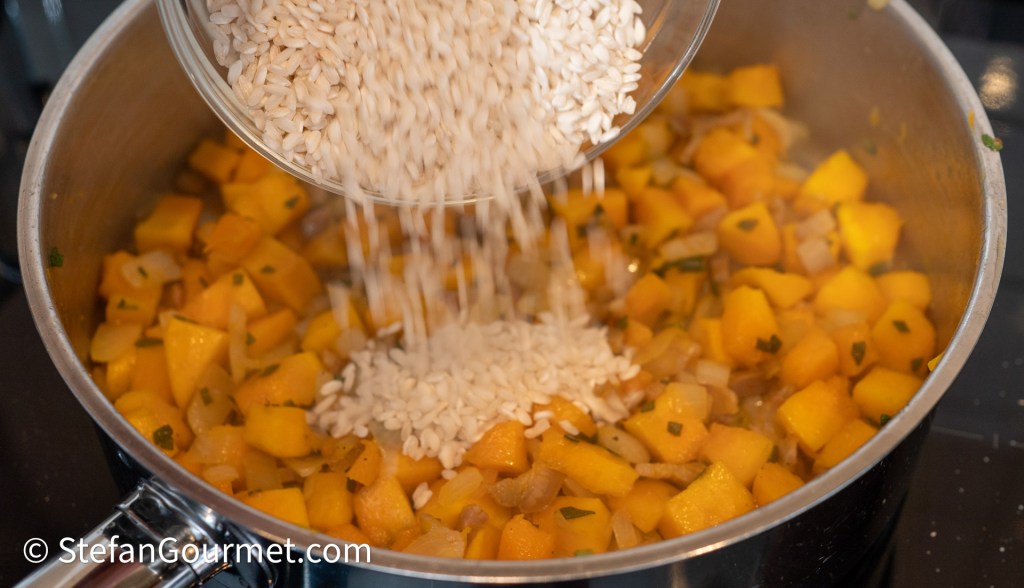
Add 200 grams of risotto rice…
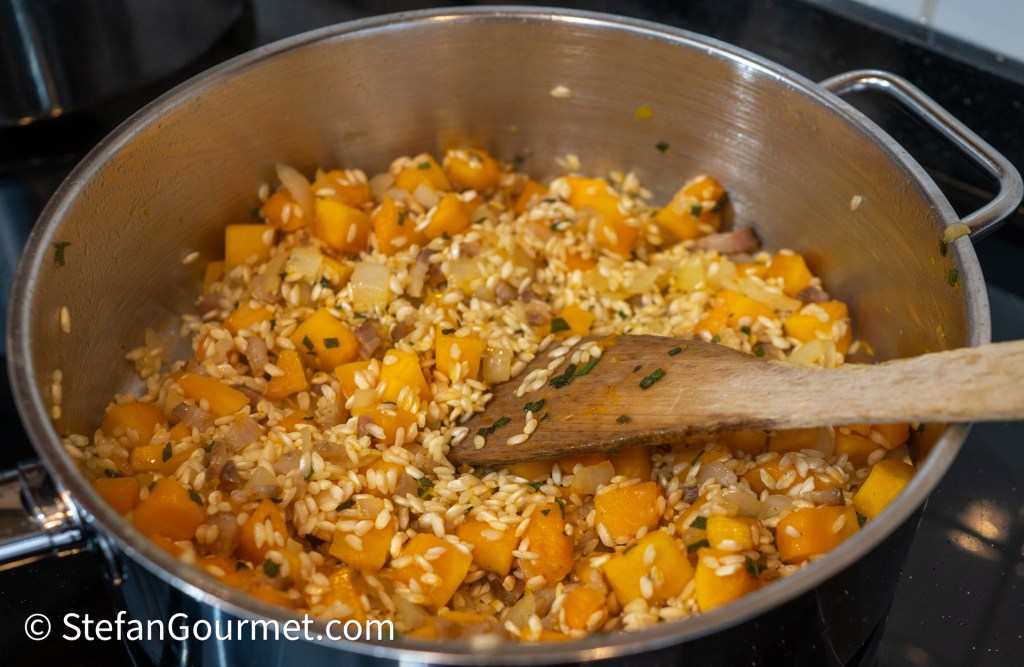
…and toast the grains for a few minutes.
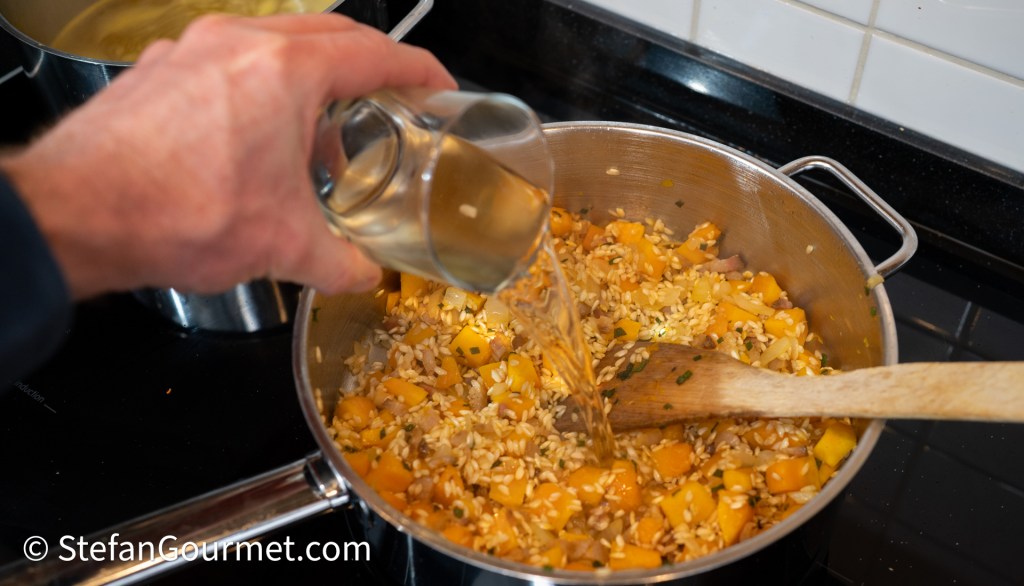
Deglaze the pan with 120 ml of dry white wine, stirring until the liquid has completely evaporated.
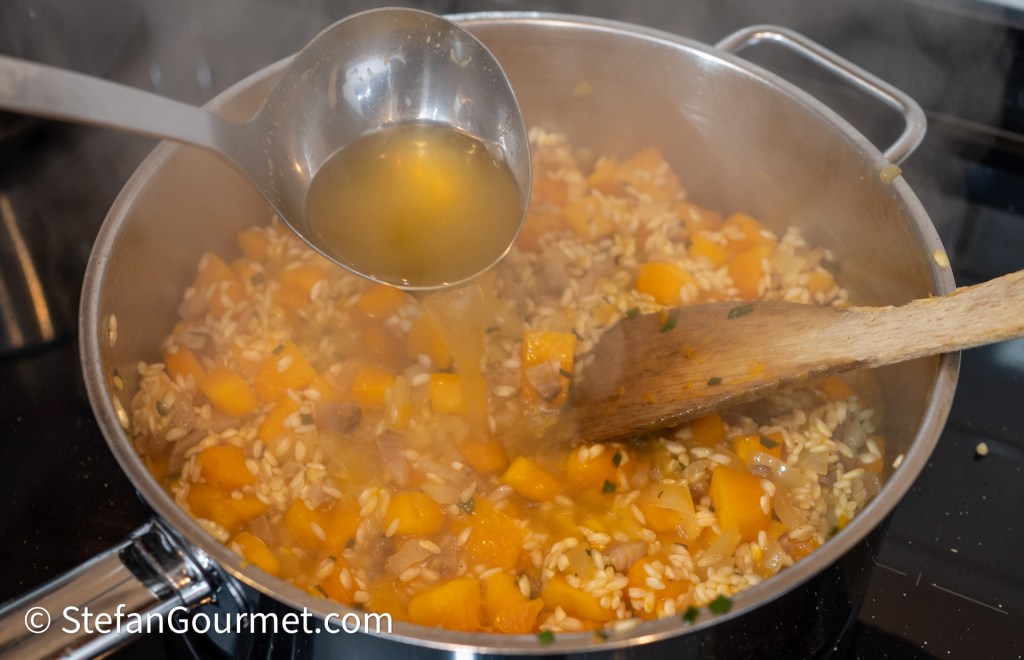
Begin adding the hot stock one ladle at a time, stirring constantly and allowing each addition to be absorbed before adding the next.
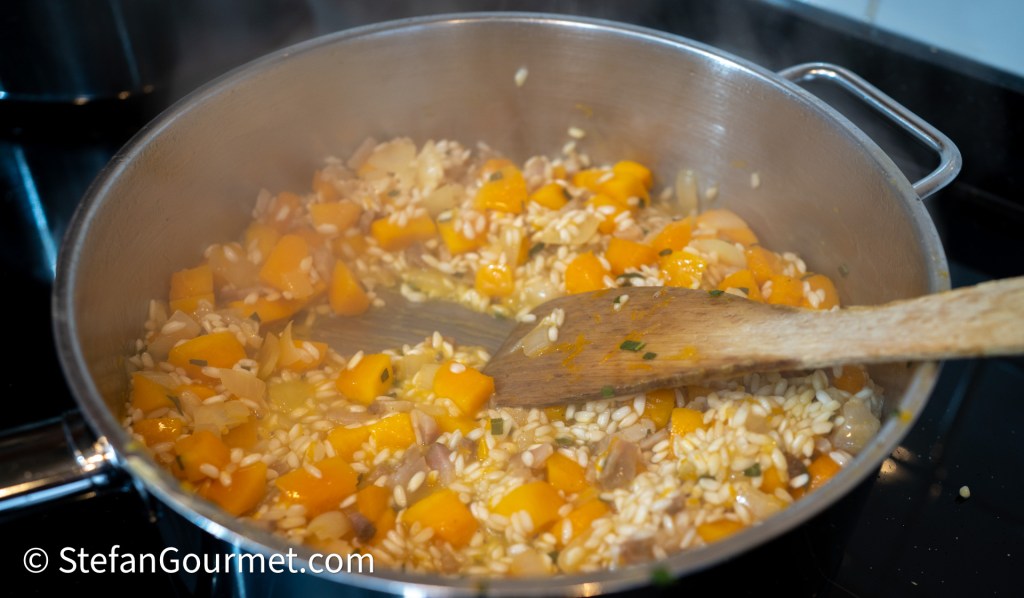
Continue this process until the rice is al dente—usually 16 to 18 minutes. The grains should be firm to the bite but without a hard core.
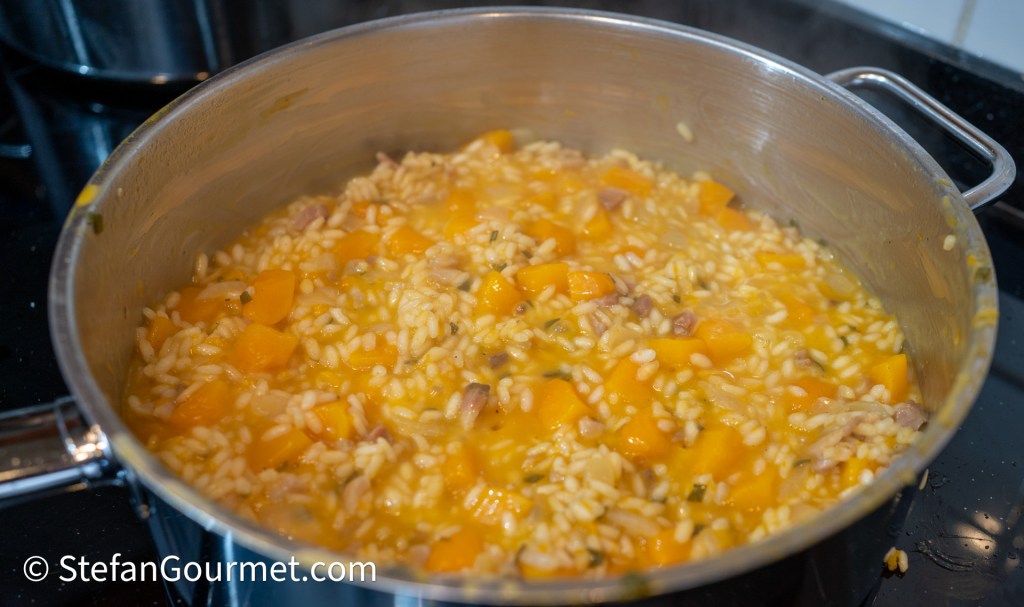
When the rice reaches the correct texture, add one final ladle of stock to ensure the risotto is all’onda, then turn off the heat.
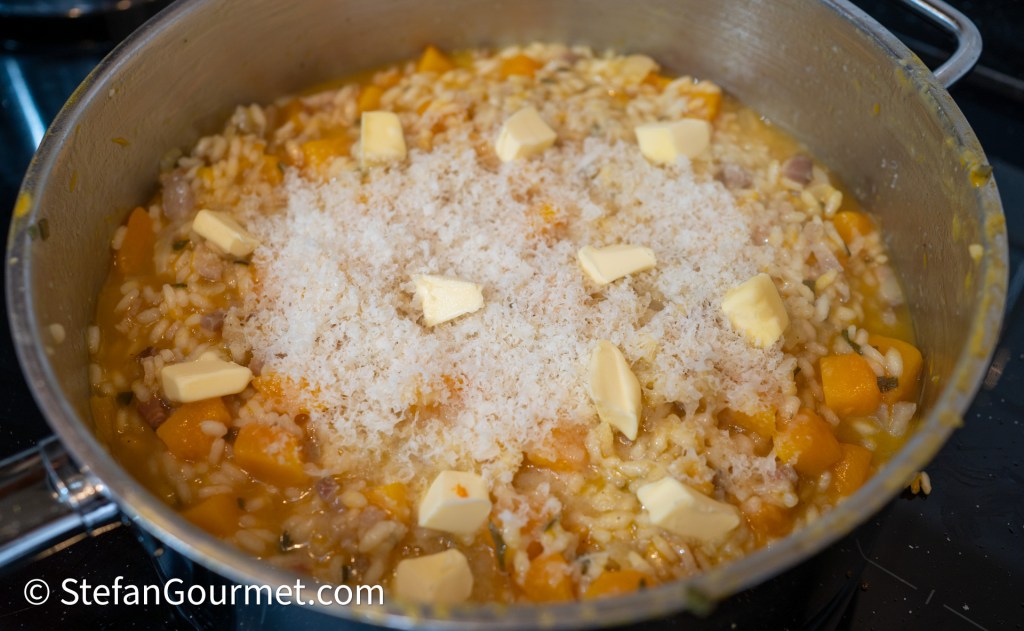
Perform the mantecare by stirring in 30 grams of freshly grated Parmigiano Reggiano or Grana Padano and 2 tablespoons of cold, diced butter until melted and creamy.
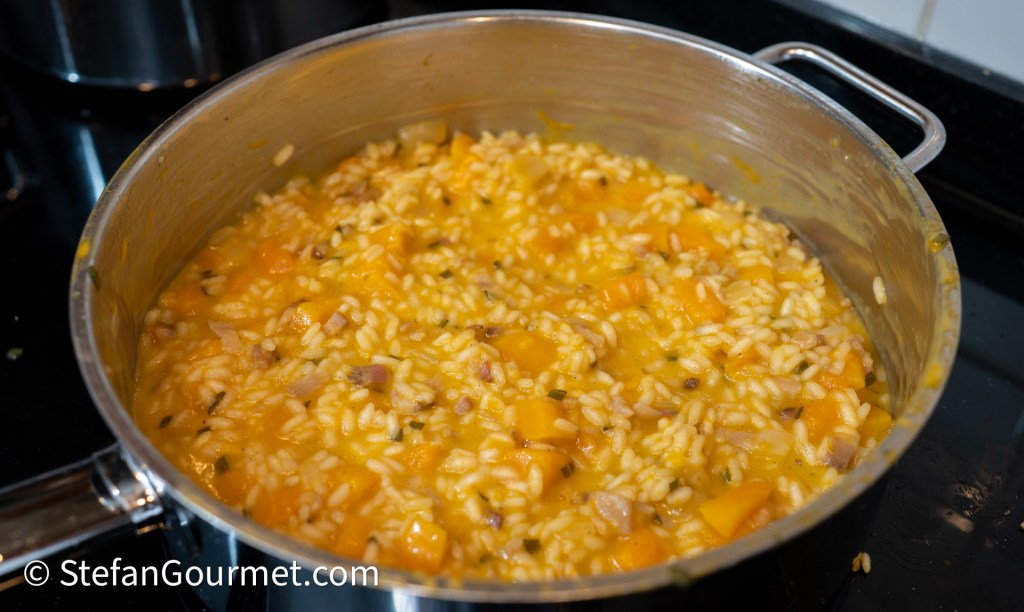
Let the risotto rest for a couple of minutes.
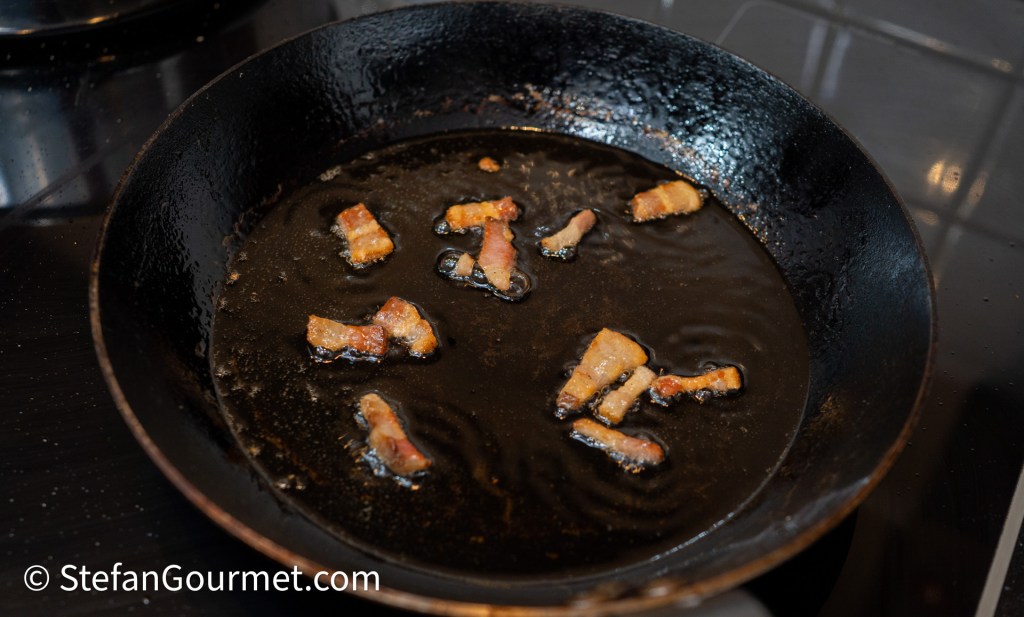
While the risotto rests, heat a tablespoon of olive oil in a small frying pan. Fry the reserved pancetta until the fat renders and it becomes crispy but not hard.
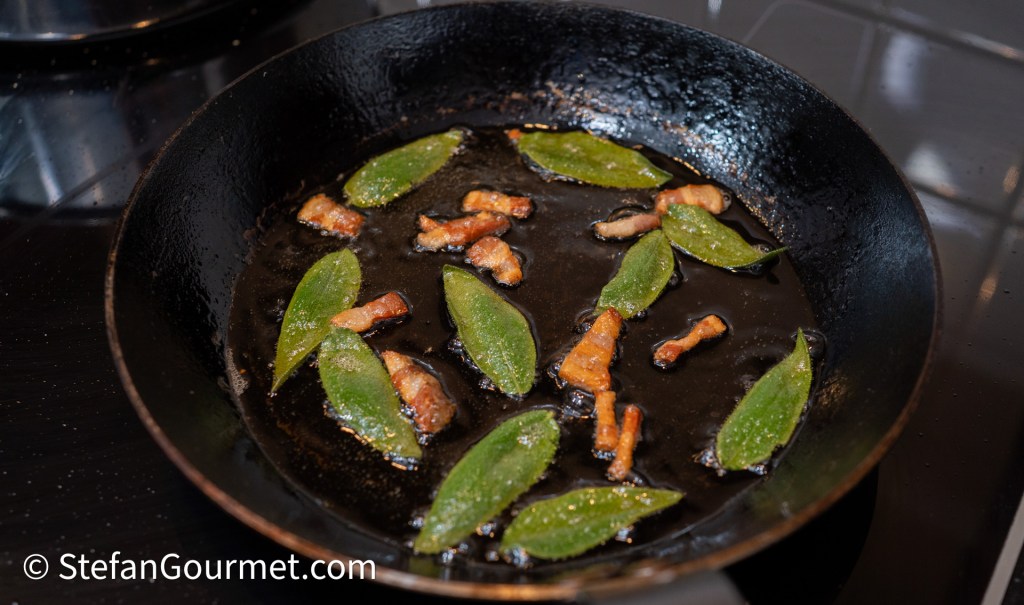
Add whole sage leaves and fry them briefly on both sides.
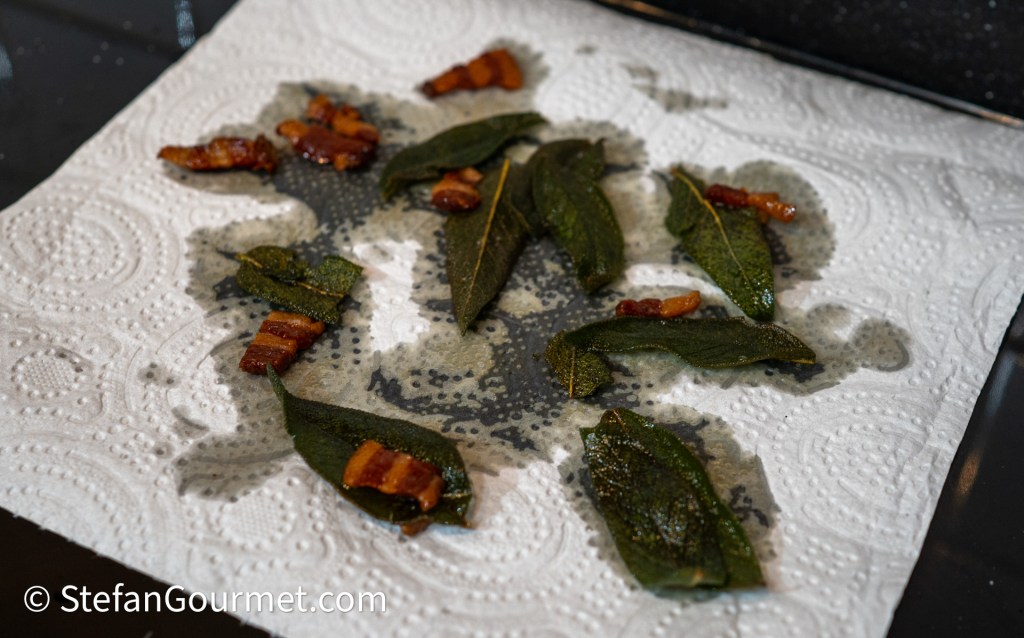
Carefully transfer the pancetta and sage to paper towels to drain. Blot them gently to remove excess oil without breaking the brittle sage leaves.
Serve the risotto on preheated plates, garnished with the crispy pancetta, fried sage, and an extra dusting of grated cheese.
Wine pairing
This dish requires a soft, medium-bodied, dry white wine without high acidity, such as Soave (Garganega), Arneis, or Pinot Bianco. Because these varietals can sometimes lean toward higher acidity or a fuller body depending on the producer, it is important to taste the wine first to ensure it won’t overpower the delicate flavors of the dish.


Eighteen minutes, stirring constantly, being in a daydream . . . one of my very favourite things to do in the world . . . you add a tad more wine than I do . . . smile . . . a glass of Soave would be nice alongside . . .
LikeLiked by 1 person
Funny you mention the wine. Usually I put 60-80 ml, but there was about 120 left in the bottle and I figured the pumpkin could use a bit of acidity from the wine to balance out the sweetness.
LikeLiked by 1 person
*smile* Well, Stefan – it does show I really do pay attention to what you write . . . anyways, a little extra depth of flavour produced would not have hurt . . .
LikeLiked by 1 person
La salvia è il tocco magico!
LikeLiked by 1 person
I love the way you made your vegetable stock!
LikeLiked by 1 person