The contrast between yesterday’s visit to Osteria del Mirasole, a temple of humble cooking and one of Italy’s finest trattorie, and today’s visit to Osteria Francescana, a temple of fine dining and one of the country’s best restaurants with three Michelin stars, could not be larger. My first visit to Osteria Francescana was in 2010, before I started the blog. While I loved the food, the wine and service were not at the same level.
I had not returned in the meantime, partly because Osteria Francescana was named the best restaurant in the world by The World’s 50 Best Restaurants in 2016 and again in 2018, making a reservation nearly impossible to secure. It was also because we hadn’t been in the area, and our previous experience wasn’t enough of a draw to plan a trip specifically around it. It would not have been the first time I tailored an entire vacation around a restaurant visit, as I did for El Celler de Can Roca, or traveled specifically to dine at places like Geranium, Noma, Aqua, or Torre del Saracino. In 2019, the rules for The World’s 50 Best Restaurants changed, stipulating that restaurants which had topped the annual poll were no longer eligible for the list. Instead, they joined the Best of the Best category. Osteria Francescana is now one of only 11 restaurants to hold that honor. Since chef Massimo Bottura has become world-famous and I still remembered the amazing food from 2010, I decided to give Osteria Francescana another chance. We were already in the area and I found it surprisingly easy to get a reservation—at least for lunch, though even dinner seemed possible with enough notice and flexible dates.
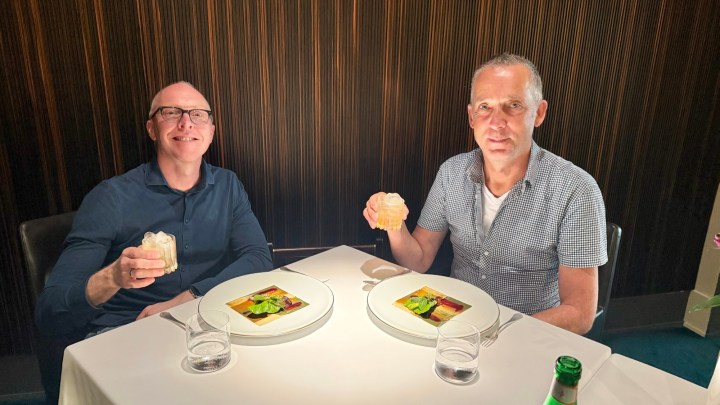
The dining room is different from what I remember, divided into separate rooms with about three tables in each. There was a line when we arrived, as all lunch reservations were apparently for the same 12:30pm start. This translated into a bit of waiting—not just to get in, but also to receive a menu, water, and an aperitif, and to place our order.
The restaurant offers an 11-course tasting menu for 350 euros, though a la carte is also available. The wine pairing is 240 euros for seven wines, with pours being topped up as needed if the same wine is paired with two consecutive courses. The current tasting menu is called “Ho Fame! Ho Fame!” (“I’m Hungry! I’m Hungry!”) and was inspired by a ceramic artwork by Vincenzo Cabiati. It captures a scene from the film “L’Argent de Poche,” depicting a girl yelling that line to her father with a megaphone from a balcony. The menu reflects Massimo Bottura’s “Tradition in Evolution” philosophy and focuses on a deep appreciation for essential ingredients, transforming humble resources into high-concept dishes. The courses on the menu often honor a specific artist or work of art.
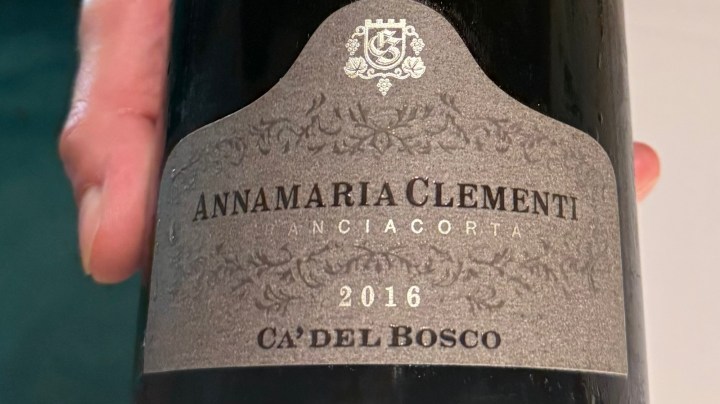
We started with a glass of magnificent 2016 Annamaria Clementi by Ca’ del Bosco, a Franciacorta of great complexity. No amuse-bouche were served, and the first wine of the pairing and the first course of the menu arrived before we had finished enjoying the Franciacorta.
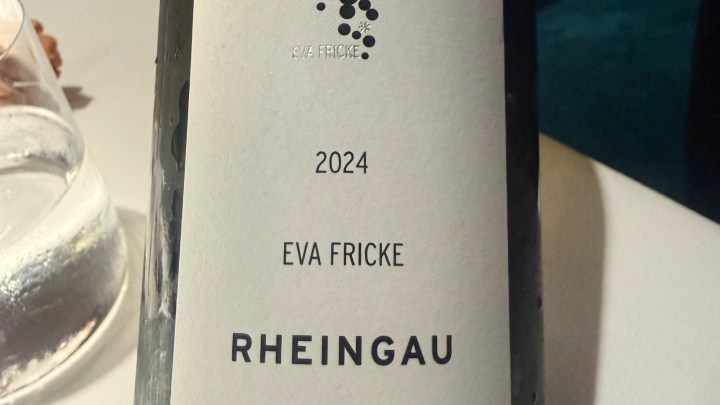
The first wine was a dry Riesling from Rheingau in Germany, a fresh wine with aromas of green apple.
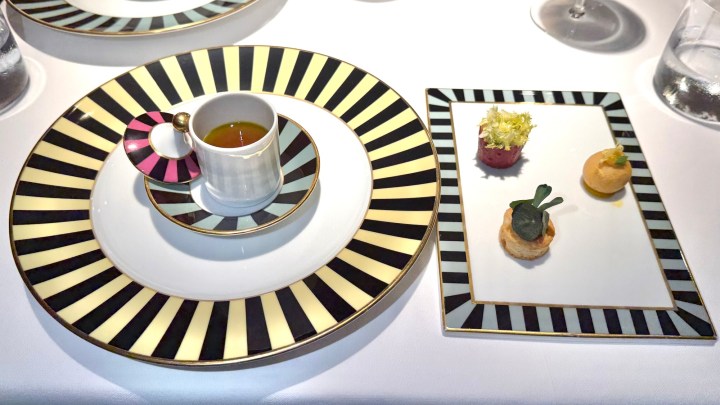
The first course was called “Artusi”, paying homage to the man whose 1891 book, Science in the Kitchen and the Art of Eating Well, unified Italy’s diverse regional cuisines into a single national identity. It included three small bites with a cup of liquid panzanella to cleanse the palate in between them. The first was a small version of erbazzone, a chard pie from Emilia Romagna. The second included smoked eel from Comacchio, and the final one raw langoustine in a crispy basket. The wine didn’t really work with the liquid panzanella, as the sweetness and umami made the wine appear thin. The liquid panzanella was the clarified essence of the traditional tomato and bread salad, referred to as “Italian dashi”.
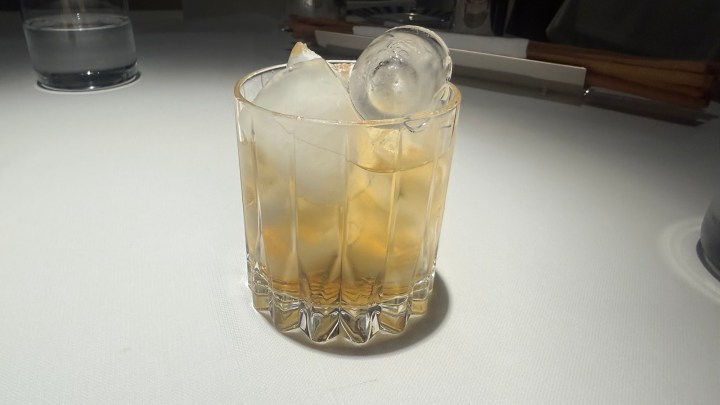
The next beverage in the pairing was not wine but a cocktail of white Vermouth from Piemonte with soda water and lemon. This was an easy escape, as artichoke is notoriously hard to pair with wine.
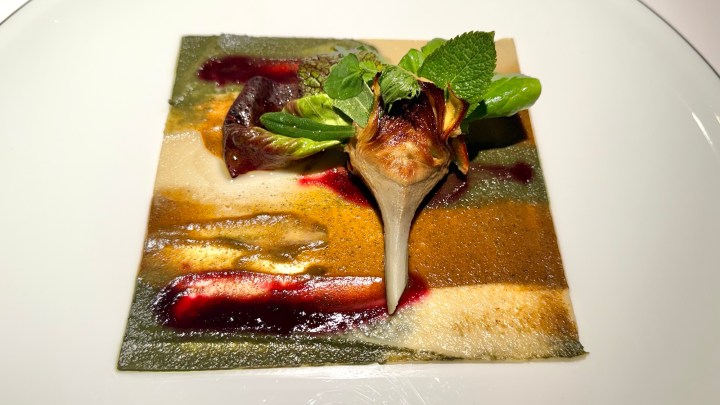
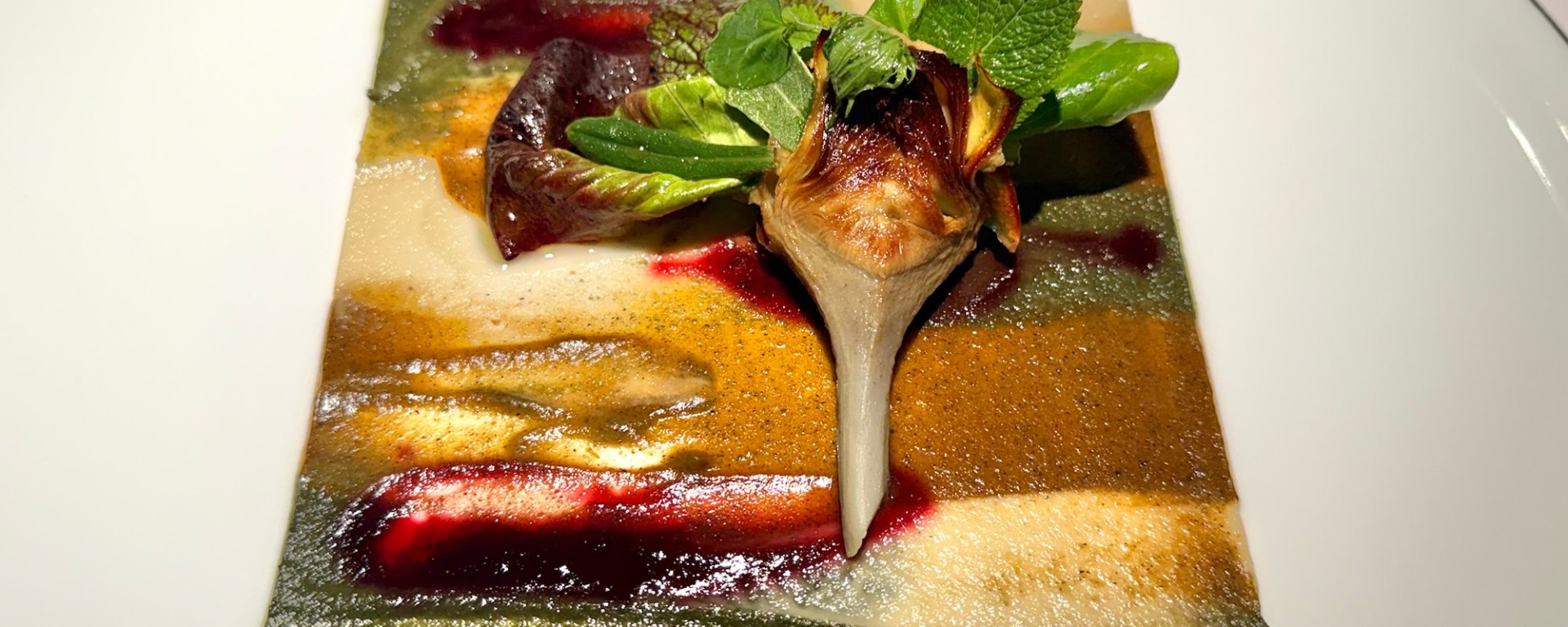
The second dish was called “Difesa della Natura” (Nature’s Defense) and consisted of artichoke with fresh herbs served over a painting of colorful vegetable purees. I missed having bread here to finish the tasty puree in the Italian way (fare la scarpetta), as the breadsticks provided were not suitable for that task.
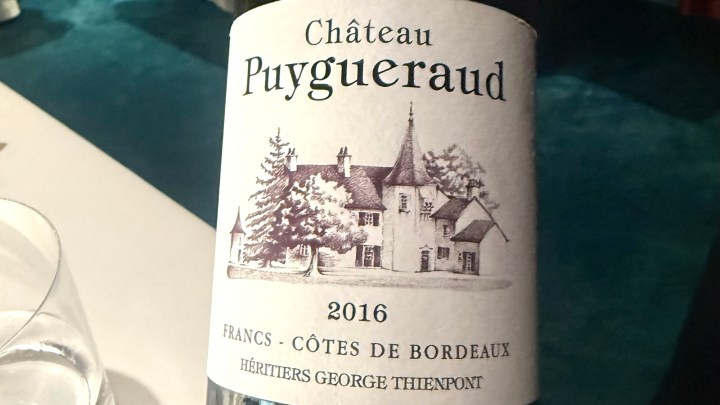
The next wine was a white Bordeaux, a blend of Sauvignon Blanc and Sauvignon Gris.
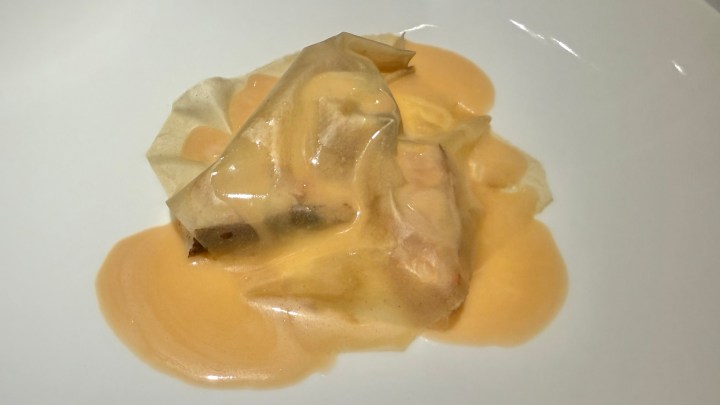
The third dish was “Achrome” and consisted of barely cooked red mullet served under a veil made from fennel and a bisque of the red mullet itself. The mullet had excellent texture and the flavor of this dish was amazing. Again I missed having bread to finish everty last drop. The wine pairing was acceptable, with the wine and the dish coexisting without elevating each other. The name of the dish refers to a series of colorless works by artist Piero Manzoni, by covering the vibrant red mullet with a pale veil.
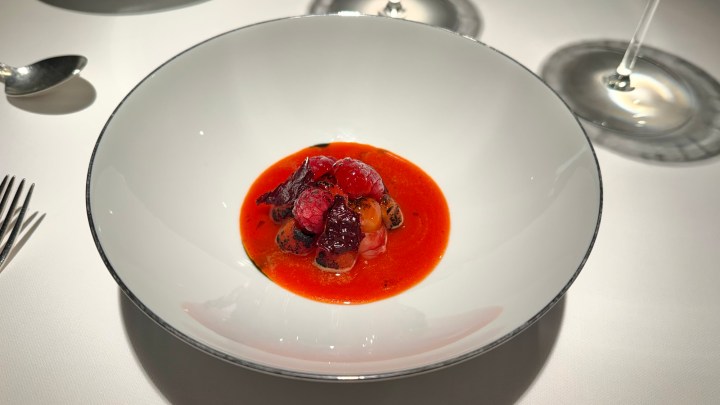
The same wine was paired with the next dish, called Grande Rosso, and this pairing worked a bit better as the red bell pepper juice and the Sauvignon in the wine complemented each other. The dish itself was a very original creation of raw red shrimp with charred and then frozen raspberries, charred tomatoes, and the aforementioned red bell pepper juice. The combination of flavors—fresh and burnt—and textures—creamy shrimp, cold raspberry, and slightly chewy tomato—was wonderful.
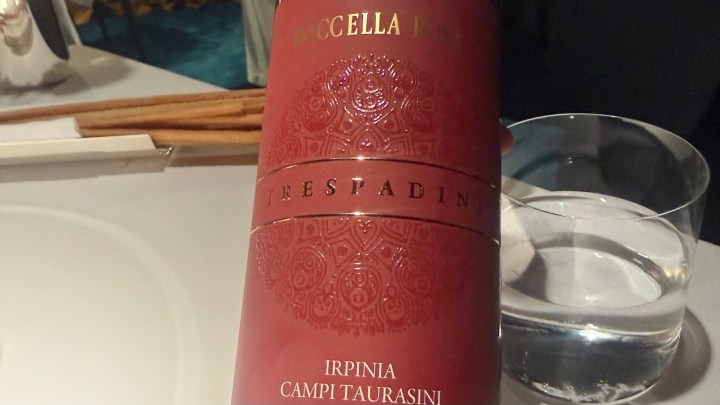
The next wine of the pairing was an Aglianico from Campania, quite young and fruity but also with some notes of oak.
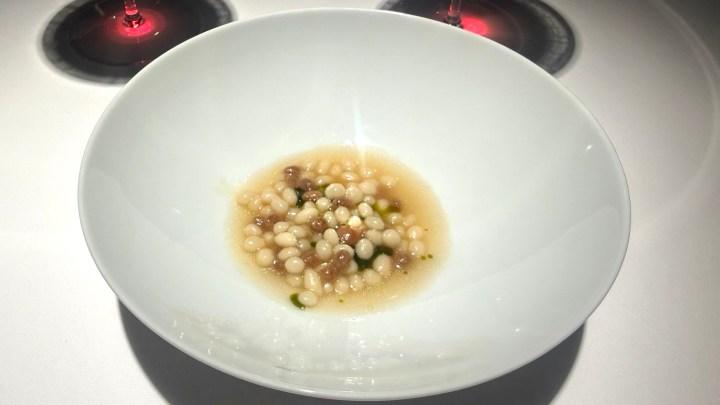
The fifth dish, “Dove vuole andare, ancora, questa pasta e fagioli?” (Where does it want to go, again, this pasta and beans?), is a modernist version of the Italian classic. The ‘beans’ in this soup were actually made of pasta. The star of the show, however, was the culatello broth. Culatello is the prized charcuterie from Parma made from the most tender part of the ham and cured with salt, pepper, and garlic. Again, the wine pairing was just acceptable but did not truly function as a pairing.
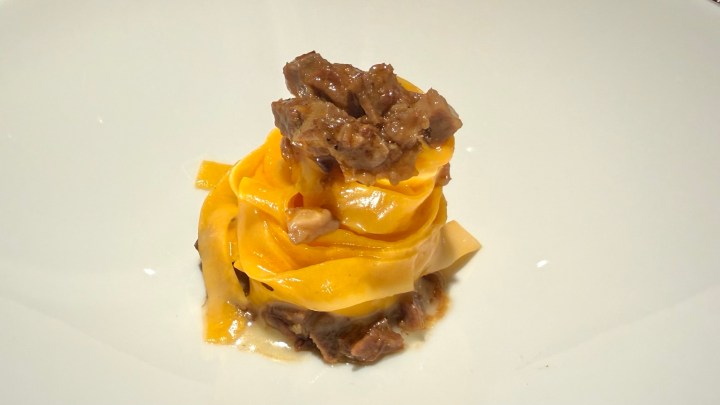
The next dish was Tagliatelle 3.0, the famous tagliatelle al ragù taken to the next level. The pasta was made with egg yolks only, making it very rich and yellow. The ragù consisted of a very flavorful jus containing all the usual components of a ragù alla Bolognese, but the meat was cubes of tender and juicy beef and pork, cooked at low temperature, rather than the traditional minced and braised meat.
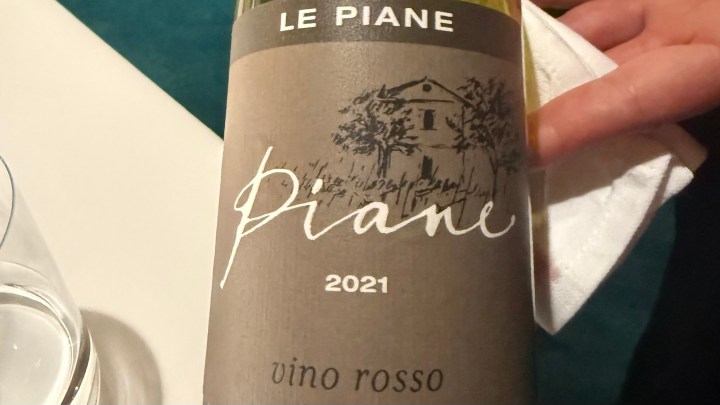
The Aglianico really ruined the experience, as it was too acidic and overpowered the velvety flavor of the dish. I pointed this out to the sommelier, who provided a better pairing—and certainly a better wine—a Croatina from Piemonte. I believe an aged Sangiovese Riserva from Emilia-Romagna would have been a much better pairing and could have taken the experience to the next level while including a wine from the restaurant’s own region. Despite the disappointing wine pairing, this was one of the best dishes of the meal with amazing flavor and texture, truly a version 3.0 of the classic dish.
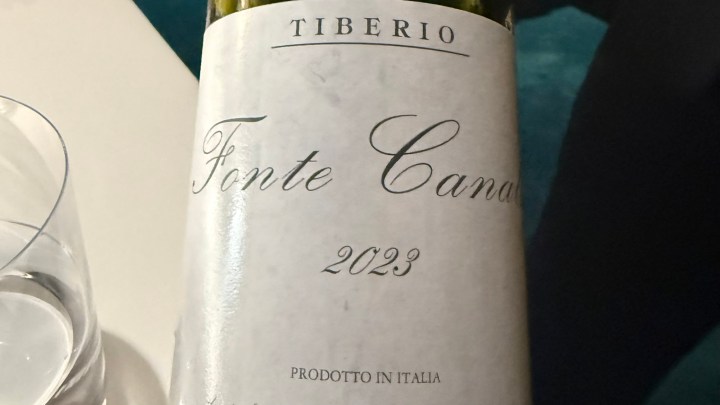
The next wine was a high-end Trebbiano from Abruzzo, possessing a great deal of structure and acidity. I believe this wine is well-suited for aging, and an older vintage would likely be more balanced and complex than this rather recent 2023 vintage.
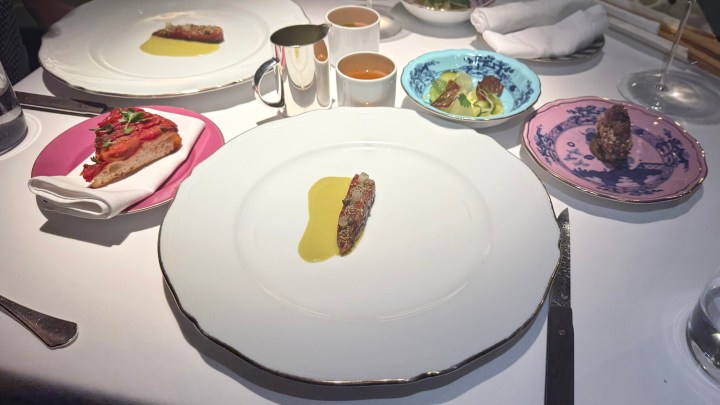
The main course was called “Mediterraneo Contemporaneo” and consisted of a piece of pigeon breast with lemon, and sides of a fresh salad and grilled eggplant, as well as a slice of pizza Margherita, and a very flavorful pigeon broth. The different parts of the dish were delicious, but the reason for combining them eluded me. This may also be the reason why it was hard to pair a wine this creation. The wine didn’t clash with anything, but only really worked with the pizza. The story behind the dish may be that the chef attempted to combine both the high-brow (pigeon) and low-brow (pizza) elements of Mediterranean cuisine in a single course. In my view, the intellectual concept of the dish was more important than the sensory harmony.
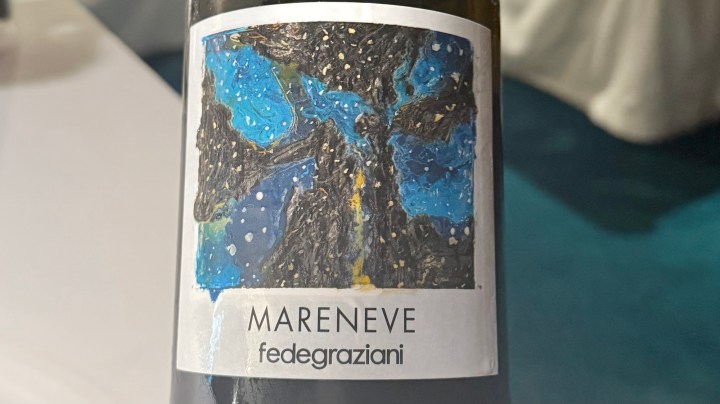
The wine for the first dessert was a blend of Grecanico, Caricante, Traminer, Riesling, and Chenin Blanc from Sicily. An aromatic and dry wine.
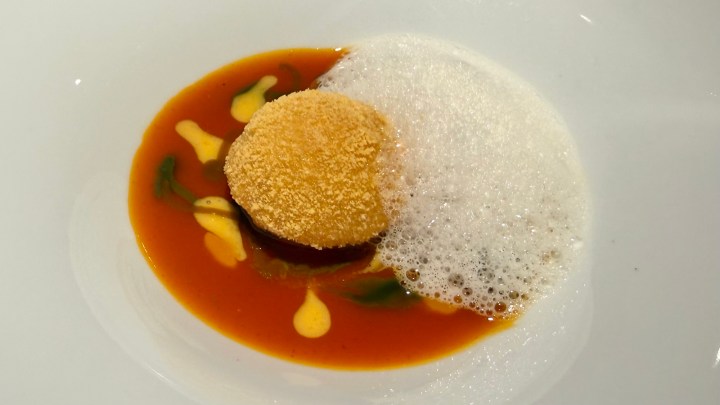
This was paired with the first dessert, “Alba,” a tribute to Sicilian flavors such as almond, lemon, and olives. Because the dish was only mildly sweet, it didn’t clash with the wine, but it wasn’t a great pairing either—though I can see why pairing a wine with such disparate flavors would be challenging.
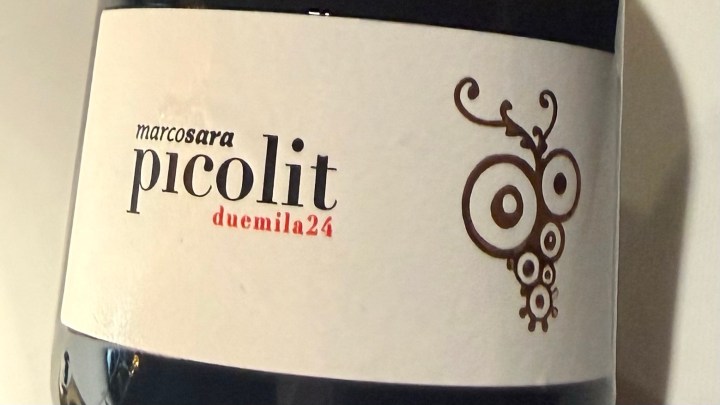
The second dessert wine and final wine of the pairing was a very nice Picolit from Friuli, which I believe was the first Picolot I’ve ever tasted with botrytis. This added a nice additional element to the wonderful aroma.
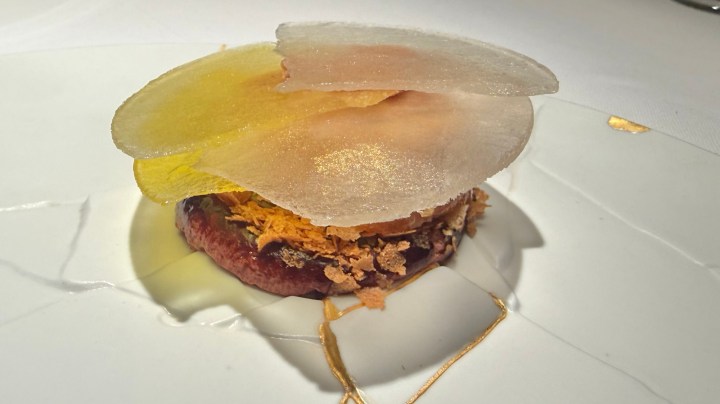
The pairing of the Picolit with the second dessert called “Luce” (Light) was the best pairing of the meal, the first and only where the wine and dish elevated each other. The dessert did feature bright flavors, like the name suggested.
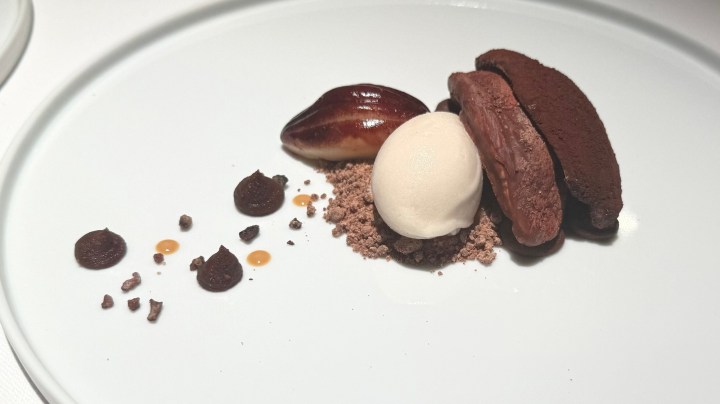
The third dessert was called “L’Oscurita” (Darkness) and featuring dark flavors of chocolate.
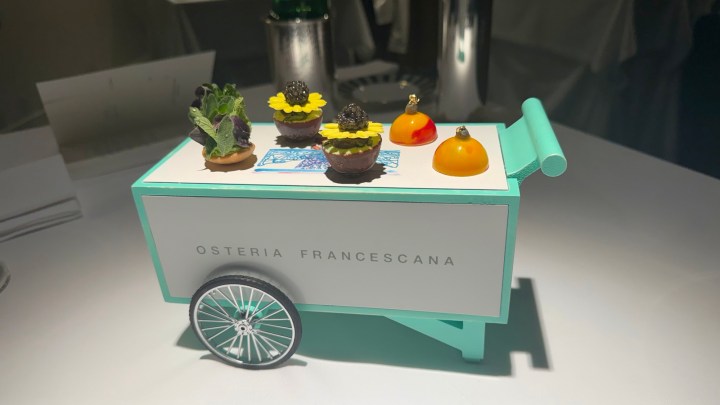
The friandises were called “Untitled” and featured the first ever time that caviar was included. They were delicious.
Massimo Bottura is certainly one of the greatest chefs in the world. All of his dishes were profoundly creative, delicious, and beautifully presented. He pays immense attention to the narratives behind his creations, acting as a hybrid of chef and poet. While for me a dining experience is ultimately more about flavor than storytelling, most of his dishes are masterpieces that hold their ground even when stripped of their narrative context.
However, despite having one of the world’s greatest chefs at the helm, Osteria Francescana does not quite rank among the greatest restaurants for me. A truly world-class experience encompasses not just the food, but the wine and service as well. In this regard, the experience faltered; the wines weren’t paired well with the dishes and some of the wines were quite simple—certainly not worthy of a 240 euro pairing—and the one premium bottle was served far too young. It significantly diminishes the experience when the wine and the food fail to elevate one another. Furthermore, while the service was attentive and, aside from the initial delay, flawless in execution, it seemed to lack soul. It felt more like a choreographed and rehearsed performance than a warm welcome. We never felt that genuine connection through a shared passion for food and wine that makes us feel at home at other top-tier establishments. Ultimately, our experience was unfortunately similar to our visit in 2010: amazing food, but wine and service that simply weren’t on the same level.


*smile* Methinks the 2016 at the beginning should be 2026 and you do seem to be on another Italian venture at the moment and I am pea green with envy! Love the photos and descriptions as always tho’! I do appreciate what you are saying re the totality of the experience, but even leaving service and wine aside, some of the photos do make me wonder . . . the main course somehow does not present as such and the super-colourful ‘Nature’s Defense’ does look more like an artwork than a dish to be relished? Thank you for taking us along, love your photo and trust you are having a wonderful time . . .
LikeLiked by 1 person
Thanks for catching that typo! I know what you mean regarding how the food looks. Often when a lot of effort has been put into how a dish looks at a restaurant, this unfortunately means the flavor has not had as much attention. This is luckily not the case with most of Bottura’s dishes. It was only the main course where I think his desire to tell a story has been more important than flavor. Also half of a pigeon breast is already quite small, so serving half of that (about the size of a finger) is indeed too small for a main course.
LikeLiked by 1 person
Sono stata solo una volta all’Osteria Francescana, avevamo scelto piatti alla carta e una sola bottiglia di vino. Mi era piaciuto molto perchè, oltre a quanto avevamo ordinato, avevano arricchito il pasto con assaggi a sorpresa. Ma quello che davvero mi sorprende è la mancanza di cordialità, insolita per Modena. Io ero stata invitata a visitare la cucina … Comunque mi dispiace che siate stati “dalle mie parti” e io non c’ero 😉
LikeLiked by 1 person
Hi Stefan,
it still looks amazing, but you definitely ask the question about form over function (as I had at Disfrutar as well…)
As I once heard Massimo Bottura passionately speak about food and cooking at Chef’s Revolution many years ago, I decided I needed to go there. This restaurant was since a long time on our bucket list (mainly because of impossible reservation options), but not sure anymore after your second experience, about moderate wine pairings and mediocre service. Did you speak to the chef about your experience and how did he respond? I very often try to share our thoughts afterwards with chefs and staff. Some really appreciate the feedback. It seems to me not many do that.
With best regards,
Frans
LikeLiked by 1 person
The chef was not present and I did not feel like the staff would appreciate or even understand the feedback.
I have been wondering about Disfrutar and will probably decide to go to Celler de Can Roca instead.
LikeLike