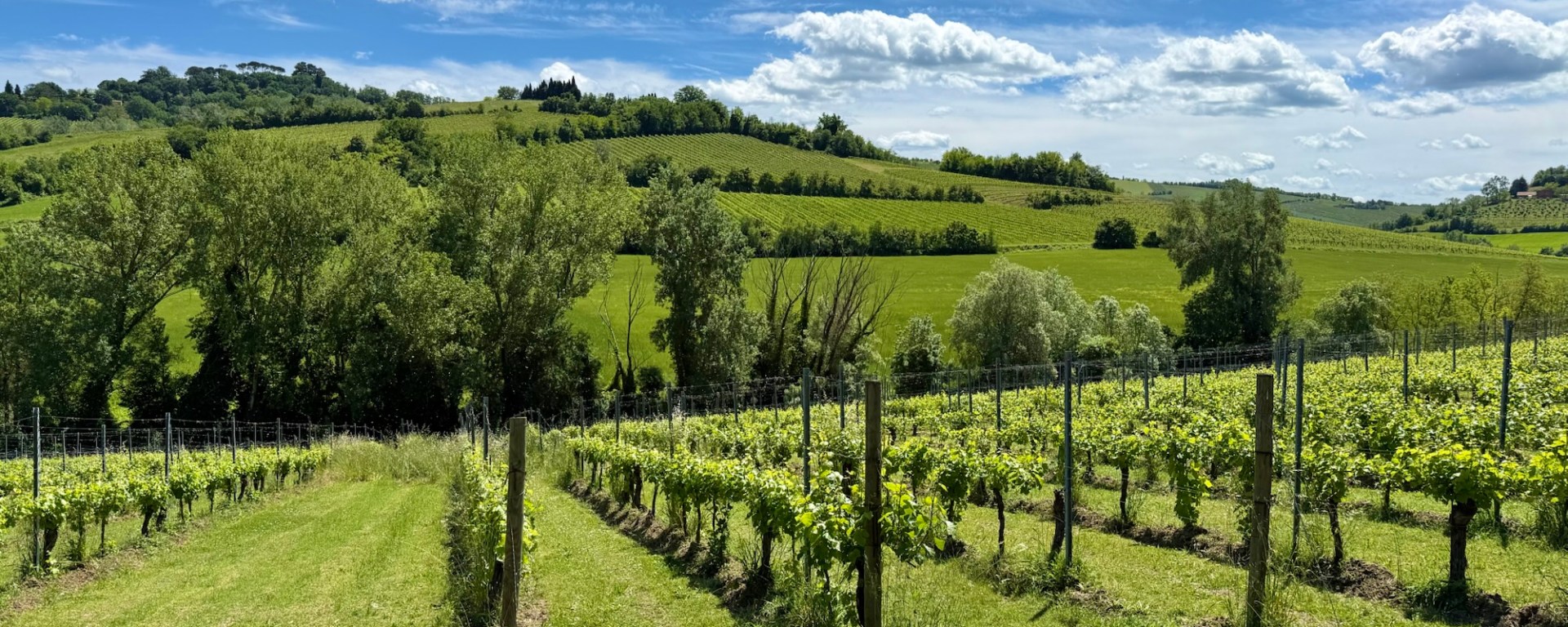
As a member of the Dutch association of wine connoisseurs with a level 4 diploma (Verenigde Vinologen Nederland), I serve on the VVN travel committee. Together with Fred Nijhuis, I organize wine trips to Italy. Following our previous journeys to Campania in 2024 and Friuli in 2025, we are visiting Emilia-Romagna and the Marche this year. Both are lesser-known Italian wine regions, which is precisely what makes them so interesting to explore.
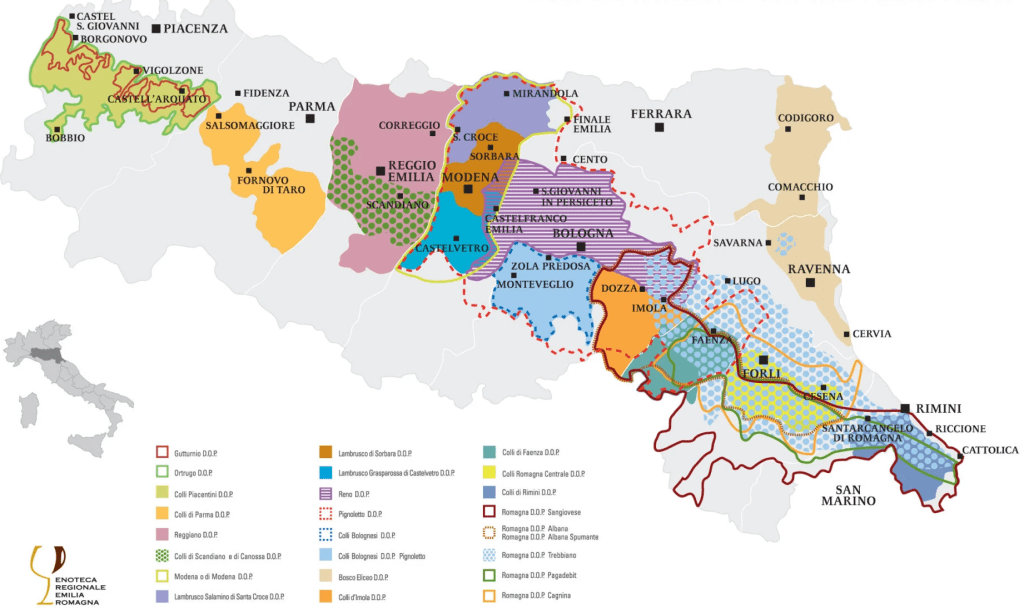
After our first day in Emilia focusing on Lambrusco, and the morning of the second day featuring Pignoletto, the afternoon of the second day as well as the whole third day our tour were dedicated to Romagna. The two most important appellations here are Romagna Sangiovese DOC for red and Romagna Albana DOCG for white, each focusing on its respective grape variety. There is also the more generic Romagna DOC, which is used for international varieties like Merlot, Cabernet Sauvignon, and Syrah, as well as some local grapes.
Sangiovese is most famous for the wines of Tuscany, including Chianti, Brunello, and Vino Nobile di Montepulciano. In Romagna, different clones are used, the climate is warmer, and most vineyards are located at lower elevations than those in Tuscany. Generally speaking, Sangiovese from Romagna is more fruity with softer tannins and lower acidity than its Tuscan counterparts.
There are 16 subzones, such as Predappio and Bertinoro. Wines can be labeled Superiore if they are produced from hillside vineyards with lower yields and a minimum alcohol content of 12.5% (compared to 12% for the base DOC). The Riserva designation requires at least 24 months of aging in the barrel or bottle. Despite these higher minimum requirements, it is not always the case that a Superiore outperforms a base Sangiovese, or that a Riserva represents the highest quality.
Tre Monti
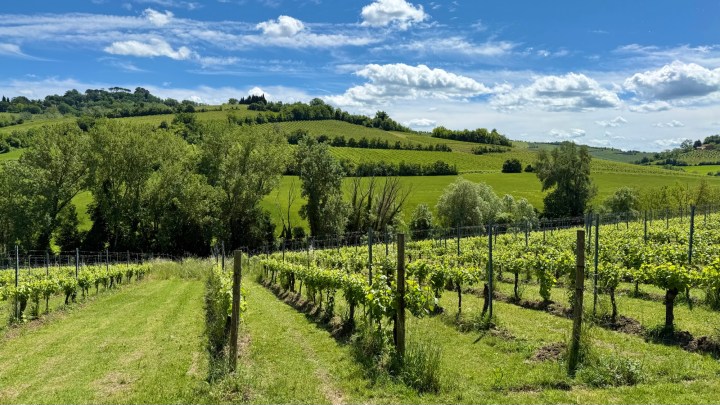
Our first visit in Romagna was to Tre Monti, a family business managing 19 hectares (48 acres) of vineyards near Imola and another 20 hectares (50 acres) near Forlì. We were received by brothers David and Vittorio. Although the winery itself is located in Emilia, it sits right on the border with Romagna, where most of their vineyards are situated. David shared a local tip for distinguishing the two regions: if you ask for a drink and receive water, you are in Emilia; if you receive wine, you are in Romagna. Tre Monti produces wine exclusively from their own estate-grown grapes. They operate fully organically, with a clear focus on translating the pure flavor of the fruit directly into the bottle.
Production in Romagna used to be very high, reaching up to 200 hl/ha or more. At Tre Monti, they restrict yields to only 60-75 hl/ha to achieve higher quality, utilizing training systems with 3,500-6,000 vines per hectare and green harvesting. This approach requires significantly more manual labor in the vineyards.
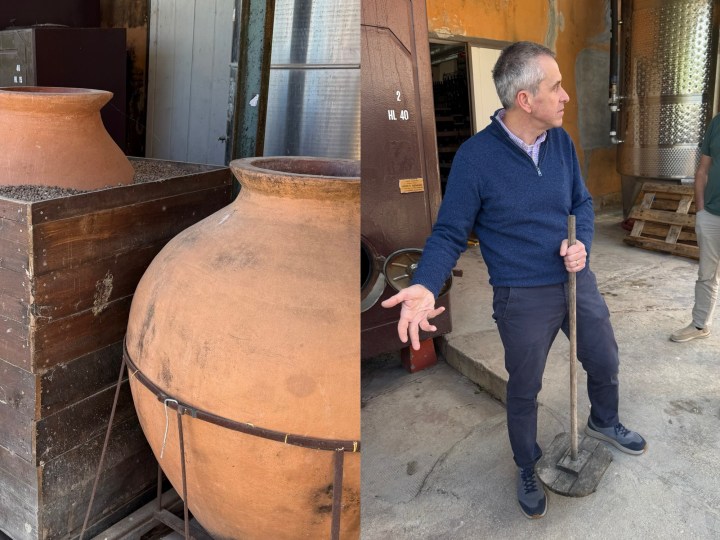
Inspired by Gravner, they imported original clay amphora (qvevri) from Georgia and visited the country to master the traditional Georgian winemaking process. This method is remarkably simple: the Albana grapes are placed in the qvevri and left to ferment with natural yeasts. The only intervention is a daily punch-down for approximately three weeks. As a white wine fermented on its skins, the result is an orange wine. They taste the wine daily to determine when to stop the maceration, followed by three months of aging. Due to the antibacterial properties of the qvevri, the wine does not oxidize, even though the vessel is only covered by netting to keep out flies. Unlike in Georgia, where qvevri are buried because they cannot stand on their own, Tre Monti uses metal stands or buries them in pebbles within wooden crates. At Tre Monti, they prefer to bottle the wine unfiltered, though this is only possible if the natural yeast has fermented all sugar into alcohol. If residual sugar remains, the wine must be filtered to ensure biological stability before bottling.
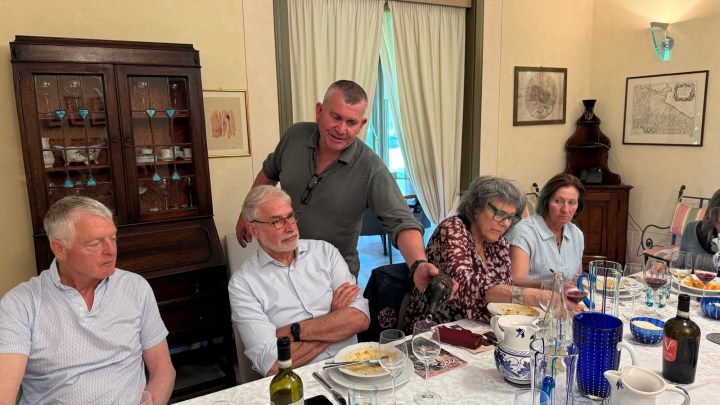
We enjoyed the fantastic hospitality of the Navacchia family, where the wine tasting was accompanied by a plentiful and delicious lunch. The meal included a green salad with lardons, tagliatelle al ragu, cold cuts, and squacquerone cheese.
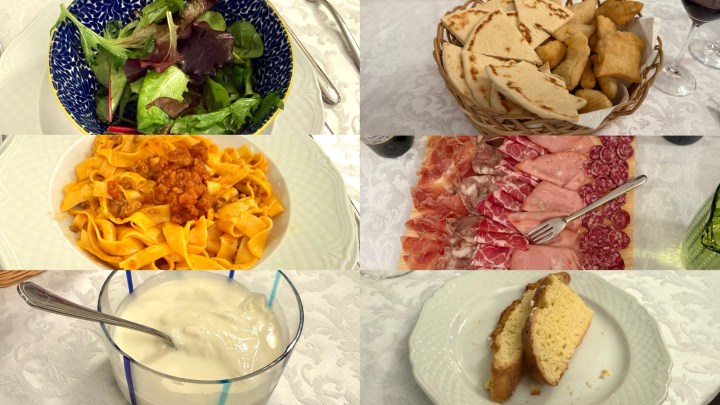
We also enjoyed piadine (flatbread from Romagna resembling wheat tortillas from Mexico), gnocco fritto (deep-fried bread from Emilia), and ciambella (cake).
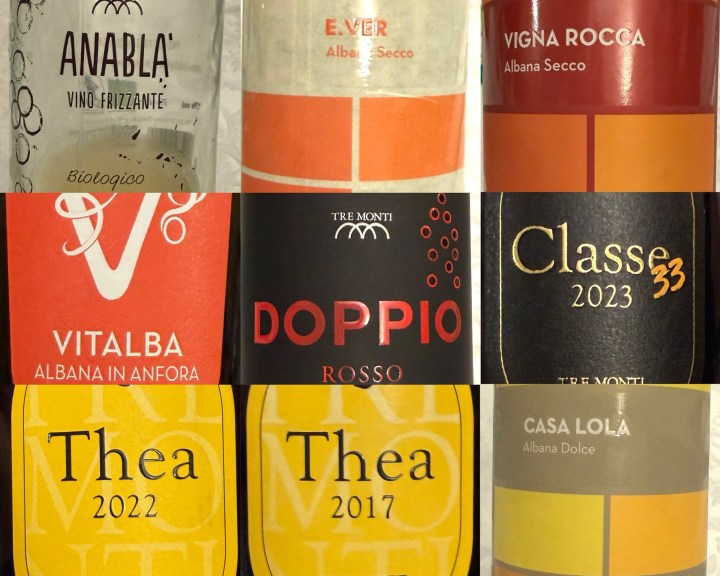
We tasted the following wines:
- Anabla. Albana ‘petnat’ sur lie. Fresh.
- E.ver Romagna Albana Secco DOCG 2025. Fresh with high acidity, but balanced.
- Vigna Rocca Romagna Albana Secco DOCG 2025, made from grapes that are harvested once they just start to shrivel, because the skin needs to be perfectly ripe because of 15 days skin contact in a steel tank with controlled temperature and a bit of stirring. Structured wine with light tannins.
- Vitalba Romagna Albana Secco DOCG 2024. This orange wine is crafted in qvevri and is the best of its kind I have ever tasted. It is full-bodied with light tannins and lacks even a hint of oxidation, which sets it apart from most other orange wines. The 8 grams per liter of residual sugar likely helps to round out the tannins and balance the profile. Good pairing with the tagliatelle al ragù.
- Doppio Rosso Barbera Frizzante Rubicone IGP 2025. Fruity with a soft bubble. Present but soft tannins. 16 grams per litre of residual sugar balanced by the acidity of the Barbera.
- Classe 33 Romagna Sangiovese Serra DOC 2023, dedicated to the father Sergio. Sangiovese clone from Montalcino (Tuscany) from clay soil near Imola in the Serra subzone, made in concrete with 15% whole bunch. Medium bodied with nice dark fruit.
- Thea Romagna Sangiovese Oriolo Riserva DOC 2022, dedicated to the mother. Sangiovese planted in 1968 near Forlì in subzone Oriolo. Fermented in concrete and aged for 9 months in oak tonneaux. Structured and a fuller body with soft tannins and nice acidity.
- Thea Romagna Sangiovese Oriolo Superiore Riserva DOC 2017, the same wine with 5 additional years of bottle age. Beautiful fruit. Medium-high but velvety tannins, nice acidity.
- Casa Lola Romagna Albana Dolce DOCG 2024. The wine was made sweet (85 g/l residual sugar) by stopping the fermentation by chilling and then filtering out the yeast, rather than drying the grapes (passito). This gives the wine a nice balance between sweetness and acidity, and a good pairing with the ciambella.
Zerbina
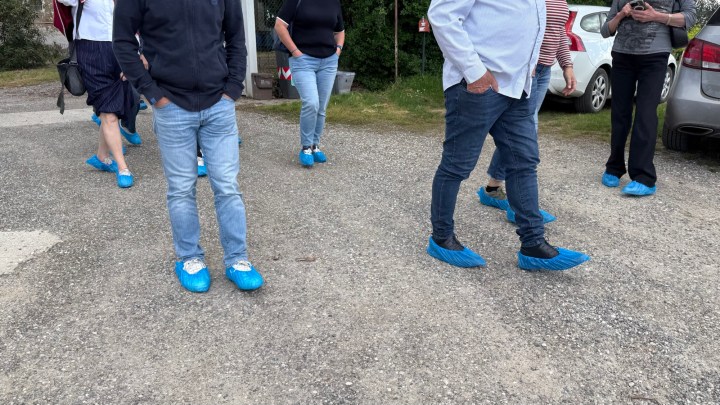
Our next visit was to Fattoria Zerbina, where Cristina Geminiani took us into the vineyards. We wore covers over our shoes to avoid getting mud on them. The family business was started in 1966 by Cristina’s grandfather, Vincenzo, who planted the first vineyards and produced good red wine. Cristina holds a degree in agriculture and studied winemaking in Bordeaux. Since taking over in 1987, she has played a pivotal role in increasing the quality of Sangiovese and Albana, not only at Zerbina but throughout the Romagna DOC.
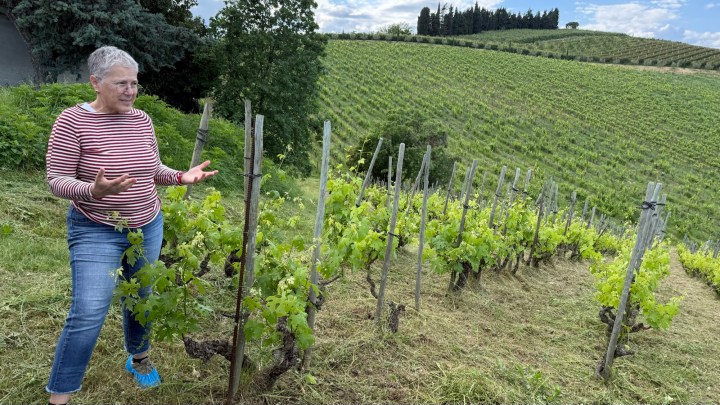
She planted a high-density vineyard of 10,000 vines per hectare using Sangiovese bush vines, experimenting with clones from both Romagna and Tuscany. She explained that Sangiovese is highly sensitive to the soil in which it is planted. Because clones from Tuscany are too productive on the red clay soil of this area, local clones are better suited here. Clones with large berries produce more fruit-forward wines, whereas those with small berries are more suitable for Riserva wines. Inspired by Sauternes, she successfully produced a botrytis wine using the local Albana grape variety. To promote the humid conditions required for botrytis to develop, she planted the rows close together with a dense canopy.
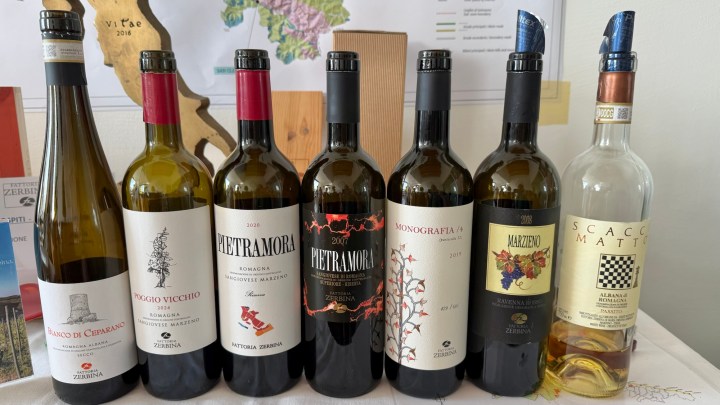
We tasted the following wines at Zerbina:
- Bianco di Ceparano Romagna Albana Secco DOCG 2025, low temperature fermentation, aged 4 months on the lees, high acidity.
- Poggio Vicchio Romagna Sangiovese Marzeno DOC 2024, from the subzone Marzeno, fruity with soft tannins.
- Pietramora Romagna Sangiovese Marzeno Riserva DOC 2020, from 9 vineyards of bush vines each vinified separately and blended afterwards, fermented and aged in wood, clear cherry color, full bodied.
- Pietramora Romagna Sangiovese Marzeno Superiore Riserva DOC 2007, same wine but 13 years older and including 2% of the local indigenous grape called Angelotto, more extraction than the 2020 causing a darker color and higher tannins, complex aged aroma with notes of chocolate, seems slightly sweet because of the high alcohol (15.5%).
- Monografia 4 Romagna Sangiovese Marzeno Riserva DOC 2019. Each year Catarina selects one of the 9 vineyards used for the Pietramora to make a selection for the Monografia, of which only 695 bottles were produced in this vinage. This was from vineyard #32 with loam and sand and from a moderate vintage. Notes of licorice.
- Marzieno Ravenna Rosso IGT 2008, 65% Sangiovese blended with 35% Merlot, Cabernet Sauvignon and Syrah, aged in barrique, mostly French but some American. Full body, notes of chocolate, soft tannins.
- Scaccomatto Albana di Romagna Passito DOCG 2024. This is the wine for which Zerbina is most famous: the first botrytis Albana from Romagna. Production is only possible in vintages with sufficient humidity, which has not occurred frequently in the last 10 years. This specific vintage has not yet been released to the market.The process requires multiple picking rounds through the vineyard over several weeks, selecting only the berries affected by botrytis during each pass. With 180 g/l residual sugar, the wine remains perfectly balanced by its acidity. It features a complex aroma of honey, orange peel, and dried apricots.
La Baita
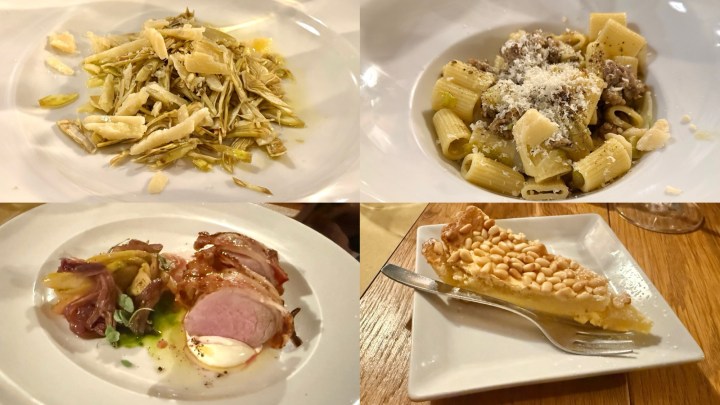
We had dinner at Osteria La Baita, which is known for its creative Romagnola cuisine. We started with a salad of thinly shaved raw artichokes, dressed with extra virgin olive oil and garnished with generous shards of aged parmigiano reggiano. The primo of mezze rigatoni with scarola, sausage meat, taggiasca olives, and cracked black pepper was outstanding. The pork tenderloin wrapped in lard and served with caramelized onion and apple was also very good. We finished with a classic torta della nonna with pastry cream and pine nuts.
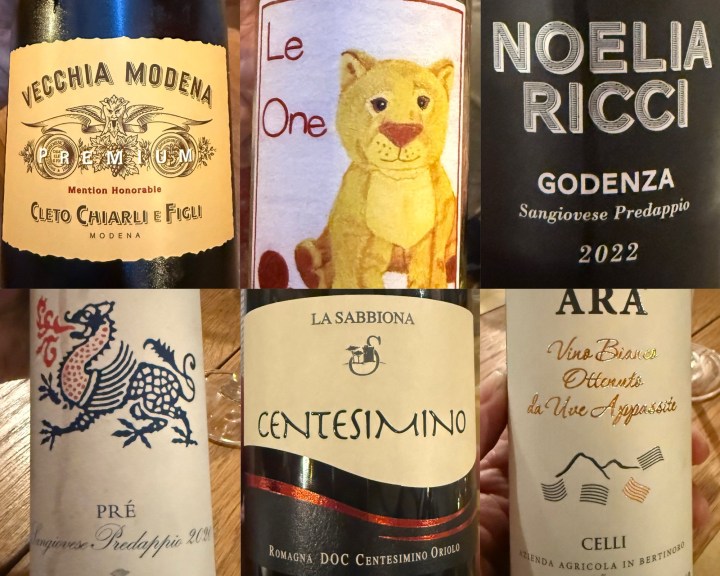
Of course, this was accompanied by wine. We started with a Lambrusco, followed by an aromatic local white variety called Famoso that served as an unexpectedly good pairing with the artichokes, which are notoriously difficult to pair with wine. We continued with two different Sangiovese from Romagna, both from the Predappio subzone. Then we enjoyed another local variety, the Centesimino, before finishing the evening with an Albana Passito.
Drei Donà
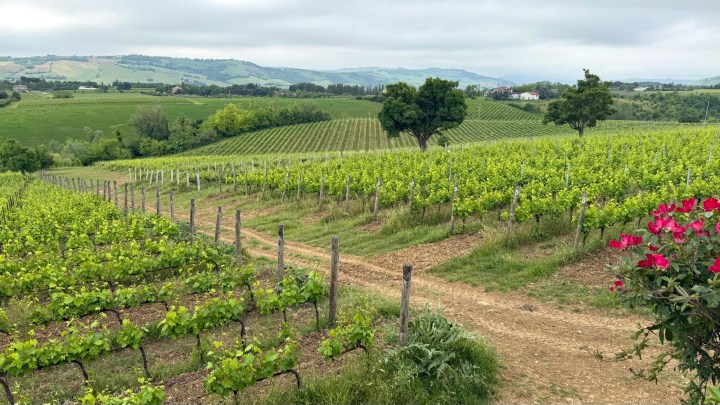
The following morning we continued our exploration of the wines of Romagna at Drei Donà, a family business managing 23 hectares (58 acres) in the Predappio subzone since 1923. The terroir here is an interesting mix of clay, sand, and a specific type of limestone called spungone. The estate was originally a farm and hunting lodge that sold grapes to individuals for home winemaking, a common practice at the time. In the late 1950s or early 1960s, Drei Donà began bottling their own wine. When father Enrico took over in 1980, he shifted the focus entirely toward quality viticulture. A lawyer by trade, he replanted the vineyards with old clones. This included the R24 clone, which is known for its superior quality, producing small berries with thick skins and loose bunches, resulting in wines with deep color, concentrated flavors, and excellent structural integrity. Its performance was so impressive that it was officially registered and widely adopted by Tuscan producers during the Chianti Classico 2000 project, where it helped shift the focus of that region toward lower yields and higher quality. During the 1980s, Drei Donà was the first to produce a Cabernet Sauvignon in Romagna, doing so before the variety was officially permitted within the appellation.
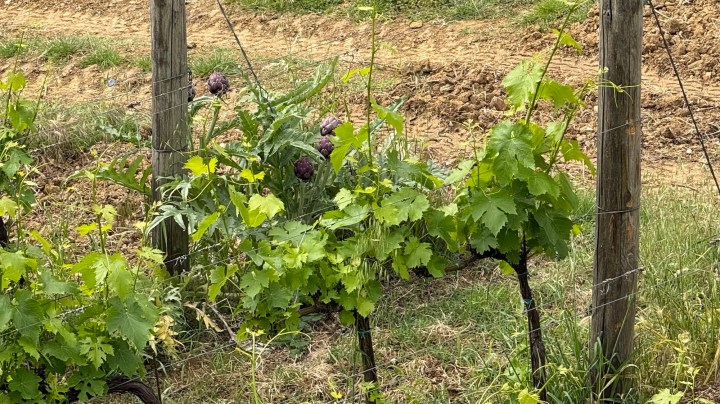
They follow organic practices, focusing their efforts in the vineyard and maintaining a non-invasive approach in the cellar. Artichokes are planted at the start of the rows. These serve as a sentinel or early warning system for vine health, much like the more common roses, with the added benefit of providing a crop of artichokes.
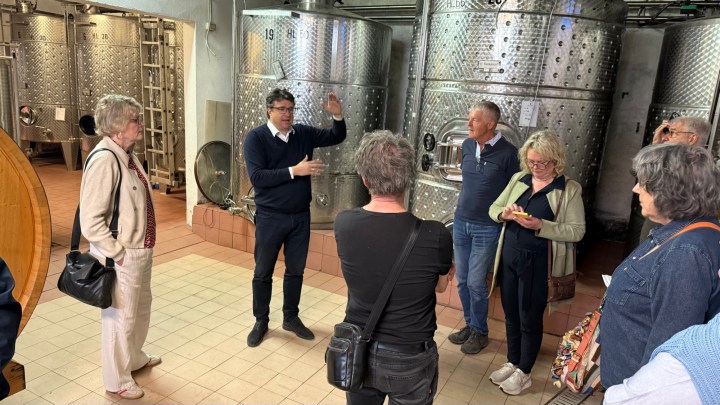
In the cellar, they utilize clay amphorae produced by the Tava company in Trentino. These vessels allow the winemaker to specify the desired rate of oxygen exchange. For their Pruno wine, they age 25% in amphora and 75% in barriques or tonneaux. Since 2020, they have also produced a wine that is 100% fermented and aged in amphora. Additionally, they occasionally produce an orange wine from Pagadebit and Trebbiano, macerated for 60 days in these clay vessels.
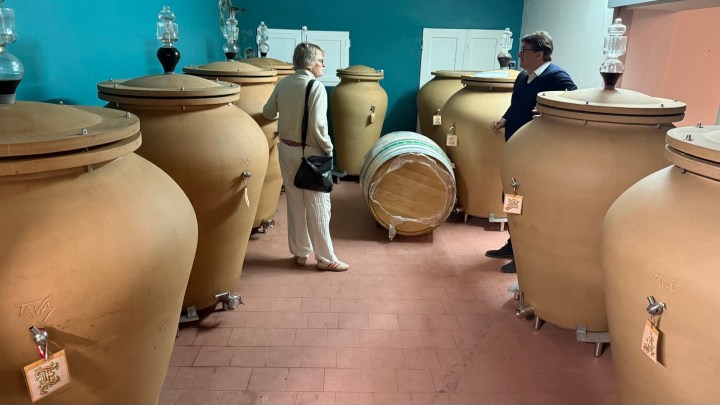
The wines aged in amphora are perceived as fresher, even though the analytical acidity in grams per litre remains the same. Many of the wines are named after the family’s horses. Enrico shared an anecdote that the grapes for the wine named after the horse Pruno are harvested only when the horse begins nibbling on the clusters, signaling their perfect ripeness.
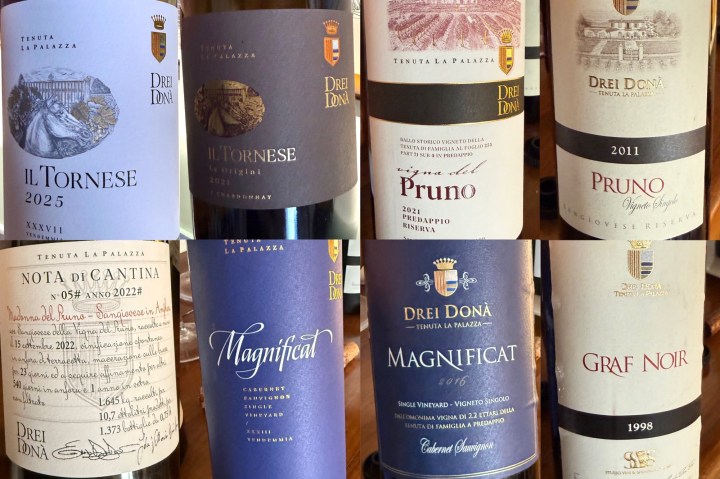
We tasted these wines at Drei Donà:
- Il Tornese 2025 Forlì IGT 2025, 55% Chardonnay, 45% Riesling, aged in stainless steel on the lees. Fresh, aromas of blossom and yellow apple.
- Le Origini di Tornese Forlì IGT 2022, 100% Chardonnay aged in new oak tonneaux of 500 litres for 4 months on the lees with battonage and malo. Aromas of oak and ripe fruit.
- Pruno Romagna Sangiovese Predappio Riserva DOC 2021, aged in amphora and tonneaux. High tannin, closed at first but opens in the glass, still young.
- Pruno Romagna Sangiovese Superiore Riserva DOC 2011, the same wine but 10 years older. Tannins have softened, the aroma is showing signs of advanced aged (lovage).
- Madonna del Pruno Romagna Sangiovese Predappio DOC 2022, fermented and aged in clay amphora, fresh, fruity, grainy tannins.
- Magnificat Forlì IGT Cabernet Sauvignon 2021, aged in amphora and barrique, aromas of pencil and dark fruit, high tannins.
- Magnificat Forlì IGT Cabernet Sauvignon 2016, the same wine but 5 years older. At the peak of its development with softened tannins, aromas of dark fruit, and elegance.
- Graf Noir Forlì IGT Rosso 1998, blend of Sangiovese, Cabernet Sauvignon, Cabernet France, and Uva Longanesi. Soft tannins, high acidity, tertiary aromas.
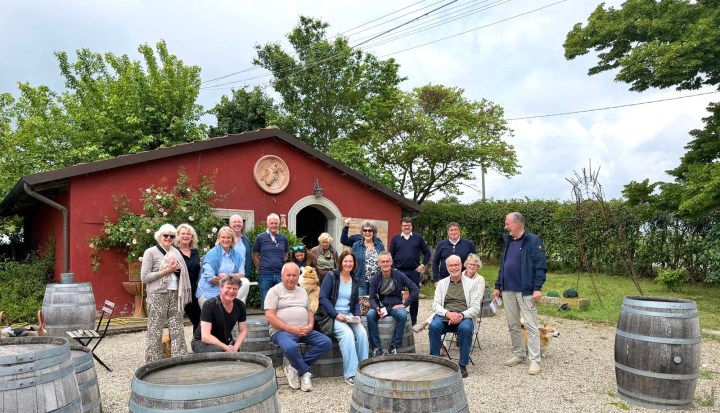
Nicolucci
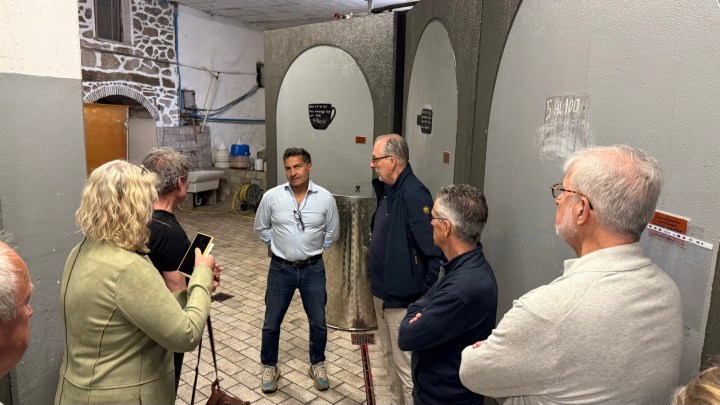
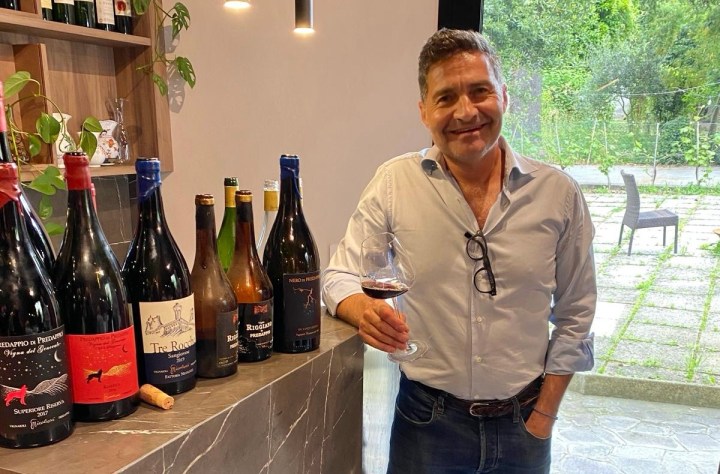
Our next stop was at Nicolucci, a family business managing 10 hectares (25 acres) of their own vineyards along with 10 hectares of rented land, producing approximately 100,000 bottles annually. While Nicolucci focuses primarily on red wines, they also produce a white wine from Trebbiano Ramato.
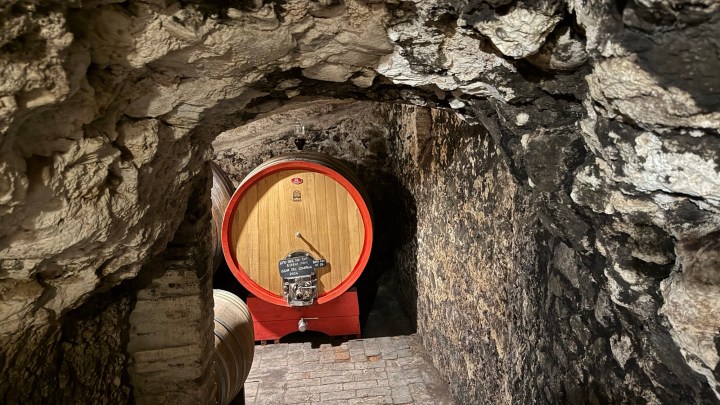
The estate utilizes a historic cellar located within a rocca (fortress) dating back to 1283. Alessandro shared that his grandfather, a veteran of World War I, purchased a vineyard from a general that is still known today as Vigna del Generale. Only twice per decade do they produce a special selection from this site. For this wine, they harvest only the finest fruit by picking each berry individually and extend the aging process to four years in the barrel, rather than the standard two.
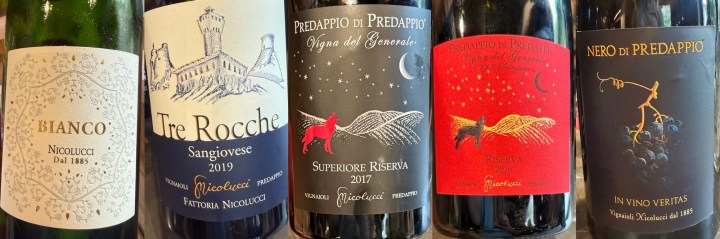
The wines we tasted at Nicolucci were:
- Bianco Forlì IGT Trebbiano 2025, made from Trebbiano Ramato with 15 days of skin contact and aged for 2 month in 500 litre new oak barrels. Earthy, golden color, structure.
- Bianco Forlì IGT Trebbiano 2018, produced in a completely different way using appassimento for 2 months. A beautiful wine with a deep golden color and aromas of honey and caramel. They stopped producing it like this because it was too difficult to sell.
- Tre Rocche Romagna Sangiovese Superiore DOC 2019, medium bodies, tertiary aroma, softened tannins.
- Vigna del Generale Romagna Sangiovese Superiore Riserva DOC 2017, complex, balanced, full bodied.
- Vigna del Generale Selezione Romagna Sangiovese Superiore Riserva DOC 2016, complex, more fresh and elegant than the regular Generale 2017 (perhaps also because 2017 was a hot vintage).
- Nero di Predappio Forlì Rosso IGT 2018, made from 60-year old vines of Terrano, which is the local name for the Friulan variety Refosco dal Peduncolo Rosso. Dark fruit, complex, soft tannins, at its peak drinking.
- Vigna Riggiano in Predappio 1988, a blend of 80% Sangiovese and 20% Cabernet. Remarkably still alive and fresh, with notes of caramel in the aroma.
Bertinoro
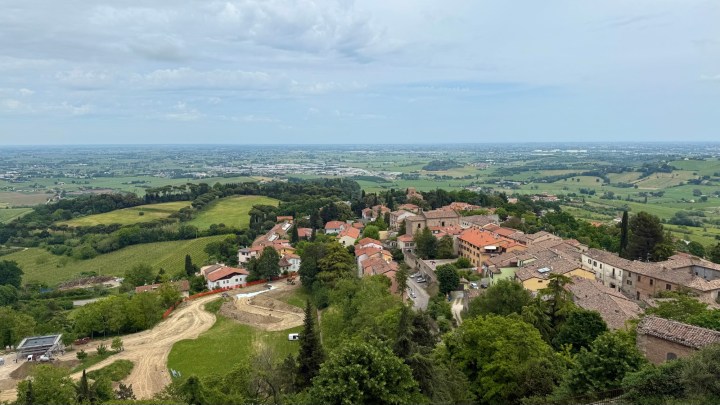
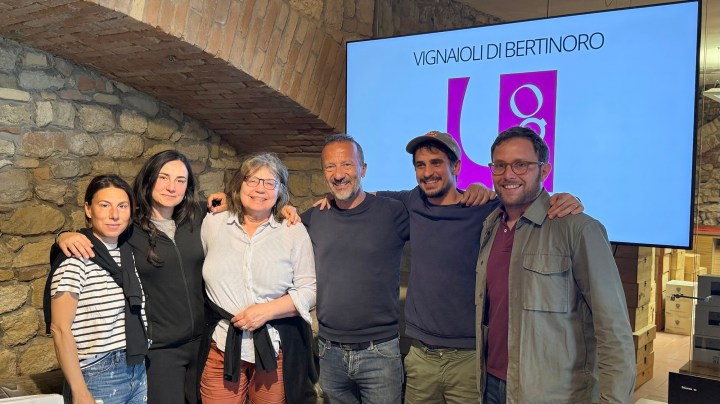
Our final visit in Romagna brought us to the “balcony of Romagna,” a spot known for its sweeping views of the sea, though the hazy weather kept the horizon hidden during our stay. This is the heart of the Bertinoro subzone, where we enjoyed lunch and a tasting at Ca’ de Be’ (the “house of drink”), hosted by the local producers’ consortium.
The vineyards in Bertinoro are primarily concentrated on the slopes and the ridge connecting Monte Cesubeo, where the town itself is situated, and Monte Maggio. This unique geography provides the exceptional ventilation and exposure that define the character of the local Sangiovese and Albana. Albana is particularly striking for the golden hue it takes on at harvest time. It is prized for its ability to maintain high acidity even with significant sugar levels, as well as the subtle touch of tannin found within its skins.
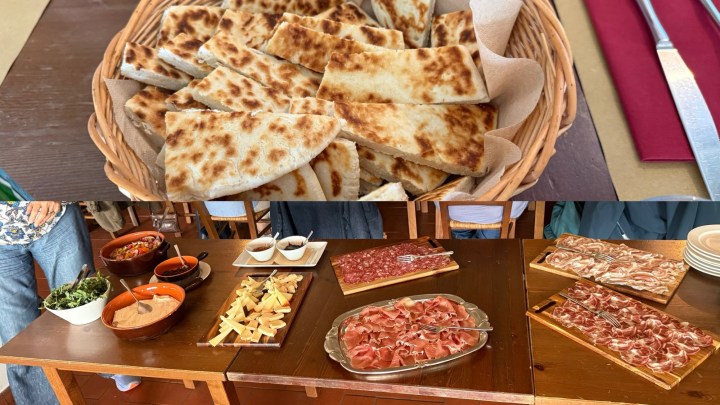
We started with a light lunch consisting of salad, cold cuts, squacquerone cheese, and piadine.
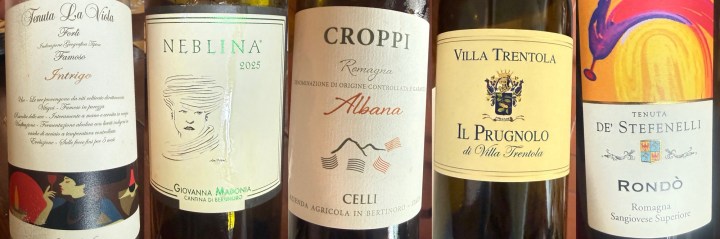
With lunch we enjoyed these local wines:
- Tenuta la Viola, Forlì IGT Famoso 2024
- Giovanna Madionia, Neblina Romagna Albana Secco DOCG 2025
- Celli, Croppi Romagna Albana Secco DOCG 2025
- Villa Trentola, Il Prugnolo Romagna Sangiovese Bertinoro DOC 2021
- Tenuta de’ Stefanelli Rondò Romagna Sangiovese Superiore DOC 2023
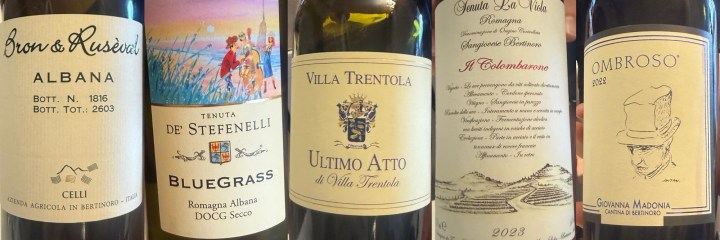
Then we had a tasting, where it was very nice that each winemaker presented his or her own wine:
- Celli, Bron & Rusèval Romagna Albana Secco DOCG 2024, made in stainless steel, structure, fresh, body.
- Tenuta de’ Stefanelli, BlueGrass Romagna Albana Secco DOCG 2024, the first vintage of this winemaker made with cryomaceration. Floral, mineral, acidity less pronounced than many other Albana.
- Villa Trentola, Ultimo Atto Romagna Sangiovese Superiore DOC 2021.
- Tenuta La Viola,Il Colombarone Romagna Sangiovese Bertinoro DOC 2023, made with 20% whole bunch, peppery and spicy fruit, ripe tannin, balanced, excellent.
- Giovanna Madonia Ombroso Romagna Sangiovese Riserva Bertinoro DOC 2022, from the highest vineyard in Bertinoro with only spungone soil, aged in French oak tonneaux. High but velvety tannins, amarena cherry aroma.
This concluded our tour of Romagna, because after this tasting we drove to the Marche.


Stefan – I know you keep these very exact notes for your own reference but they do make fascinating reading and studying for us ‘ordinary wine lovers’ – and your photos of the area are just beautiful. Of course, for us in primary school, notice is taken of things like ‘water in Emilia and wine in Romagna’ and blue covers on shoes to avoid mud and the serving of raw, sliced artichoke salad 🙂 ! Thank you so much for taking us along also . . .
LikeLiked by 1 person