El Rincón de Juan Carlos is the restaurant of chef Juan Carlos and pastry chef Jonathan Padrón on the Costa Adeje, Tenerife. Their wives, María José and Raquel, serve as the sommeliers. Originally opened in Los Gigantes in 2003, the restaurant earned its first Michelin star in 2016. In 2021, it moved to the top floor of the Royal Hideaway Corales Resort, followed by a second Michelin star in 2022.
Because I believe seamless communication between the kitchen and the cellar is essential—and many of my favorite restaurants share a family bond, such as De Librije, El Celler de Can Roca, and Laite—I was eager to experience this dinner.
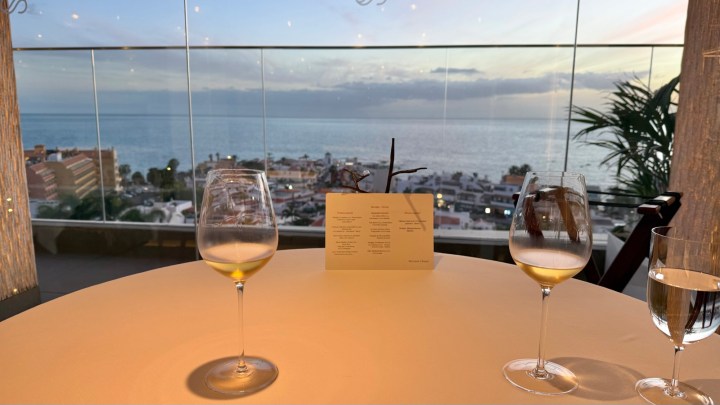
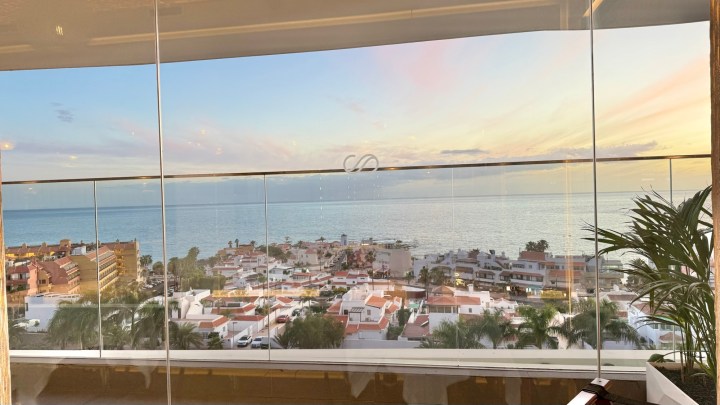
The restaurant offers a single 13-course tasting menu for 180 euros. Three tiers of wine pairings are available: 6 glasses for 90 euros, 8 glasses for 115 euros, or 12 glasses for 195 euros. We naturally chose the latter; only a dedicated pairing for each dish can achieve the optimal balance, and it is simply more engaging to explore a wider variety of wines. Bread service is billed separately at 9 euros. The dining room overlooks the sea, offering beautiful sunset views.
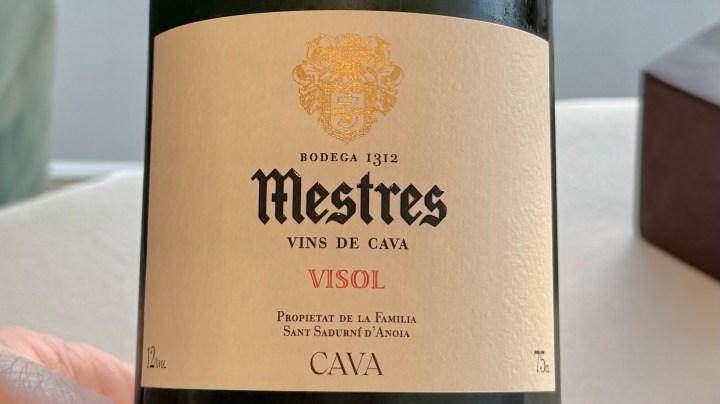
We started with a glass of Cava, unaware that the wine pairing would begin immediately with the amuse-bouches.
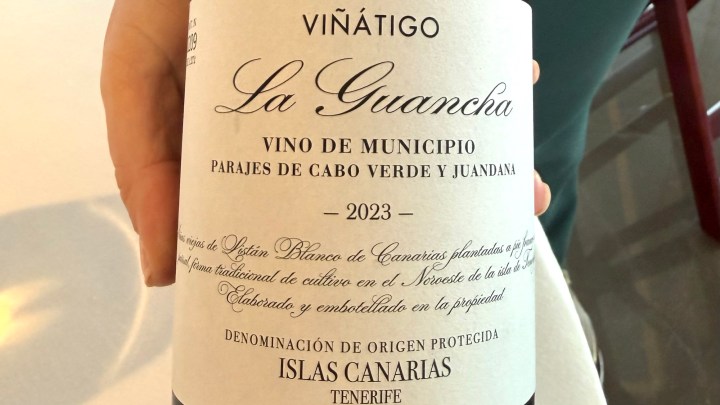
The first wine was a Listán Blanco from Tenerife, which I had encountered earlier in the week during a visit to the Viñátigo bodega. They mentioned this specific wine is produced exclusively for the restaurant. It was complex and balanced, with distinct aromas of raw lobster and crushed seashells.
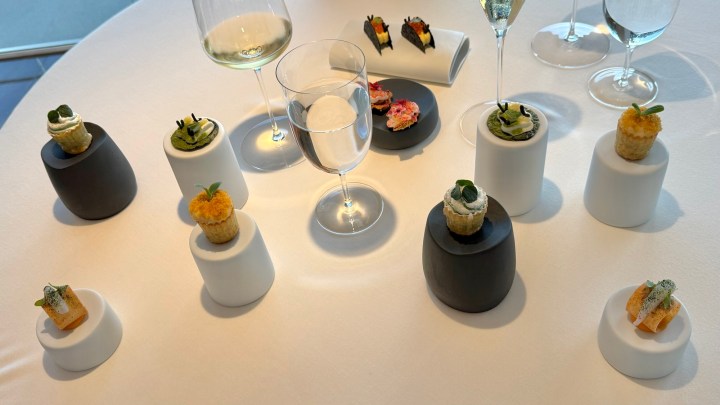
The wine paired well with the wonderful collection of amuse-bouches, although the creamier items found a better match in the Cava. A crispy nori bite was filled with a rich foie gras pastry. The delicate crispy roll with raw baby shrimp was seasoned with savory soy butter. A lobster tartlet was topped with a flavorful miso mayonnaise. Fresh sea lettuce was filled with a creamy cod brandade. A classic creamed spinach was served in a delicate tartlet shell. Crispy chicken skin was combined with smoky eel and a light chantilly, which was perhaps the most delightful of them all.
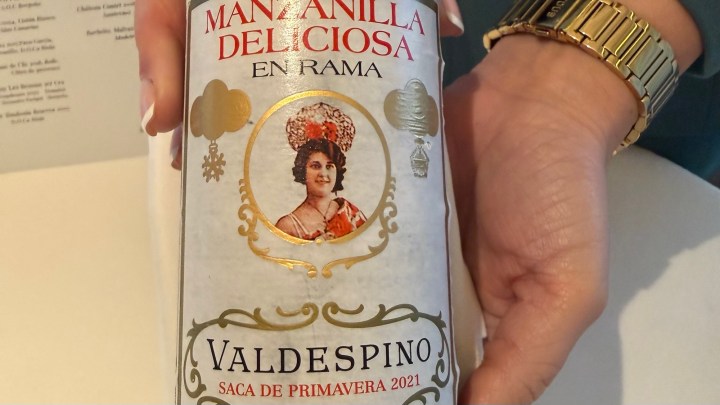
The next wine was a Manzanilla En Rama, an unfiltered bottling from 2021 featuring notes of green apple, nuts, and an intensely savory palate. While I am not usually a fan of Fino sherry, this was an excellent specimen that leaned toward an Oloroso due to its remarkable creaminess.
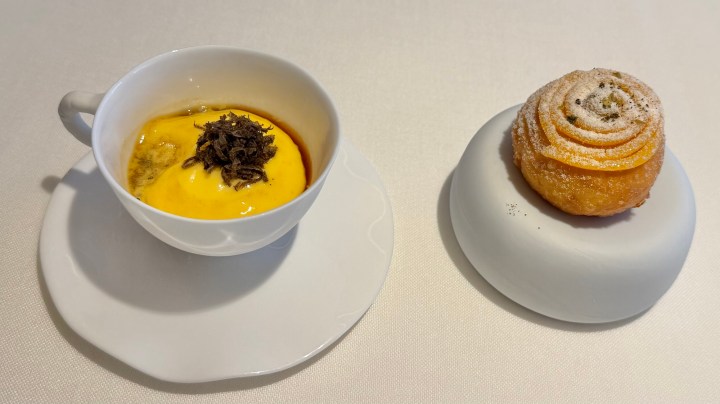
The wine was a good pairing for the sweet onion soup with broken flan and grated black truffle, which was accompanied by a brioche filled with pungent local Flor de Guía cheese.
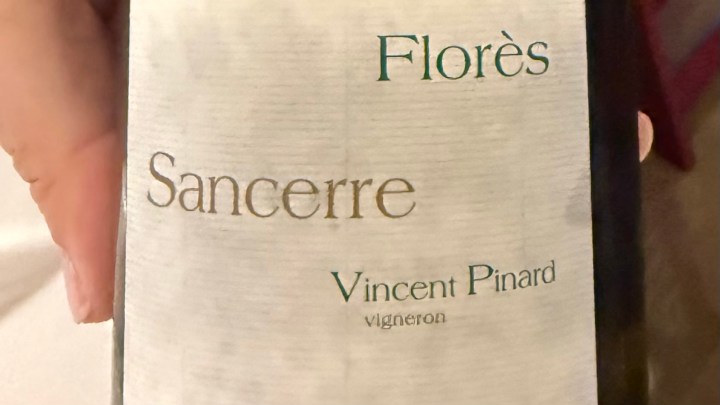
The third wine was an elegant Sancerre, a Sauvignon Blanc from central France.
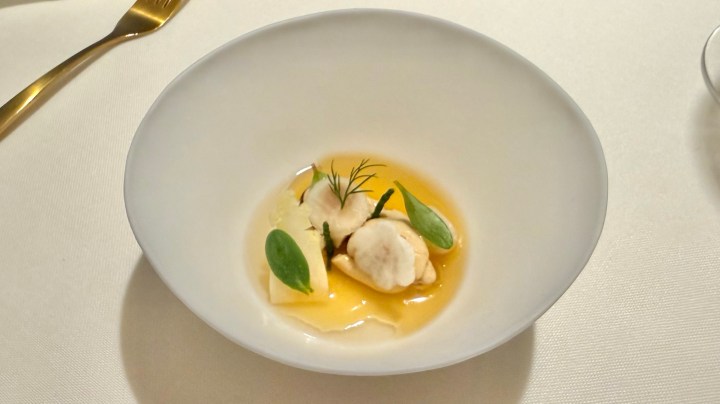
It paired beautifully with the mussels and scallops served with vinaigrette.
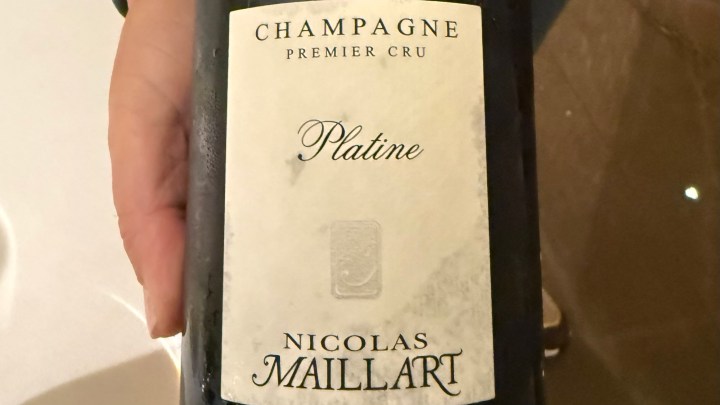
We continued with a very dry Champagne.
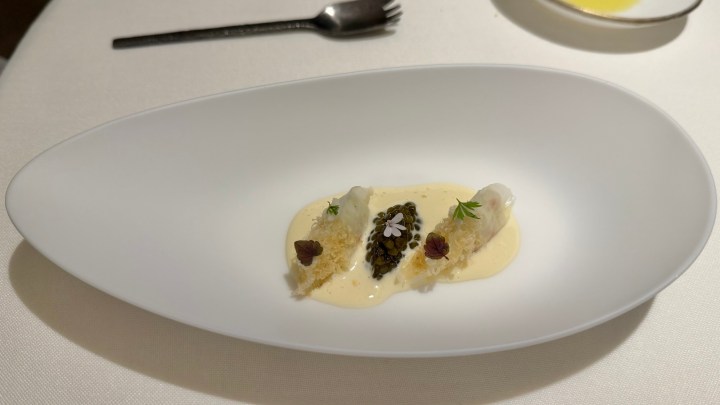
The Champagne served as a palate cleanser for the dumplings, which were stuffed with tender cuttlefish and served with a creamy sauce and caviar.
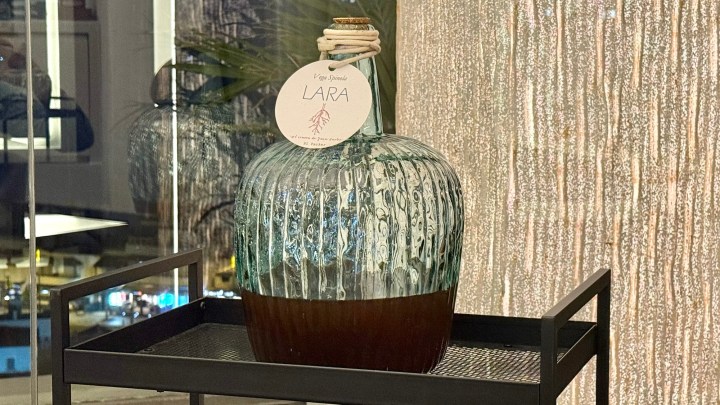
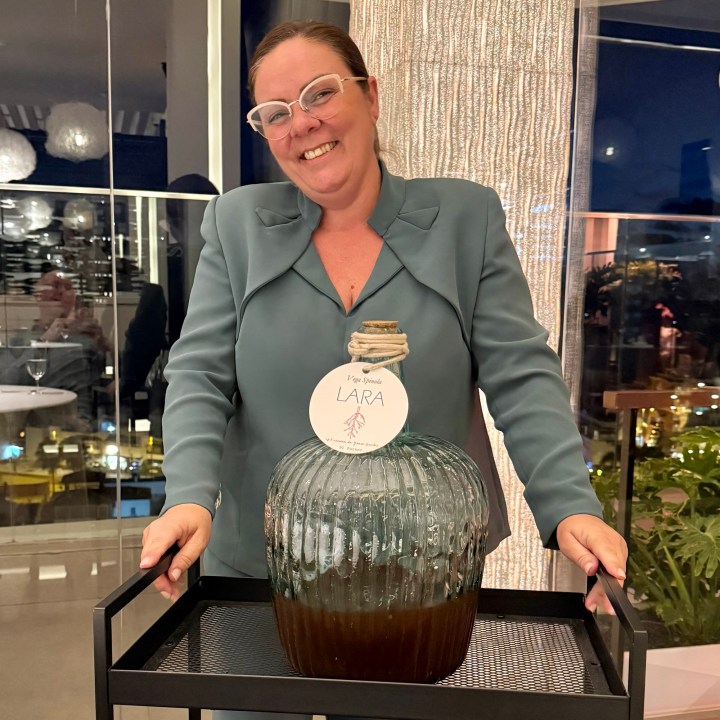
The next wine was Lara from Vega Spínola, a unique wine from the island of Lanzarote produced using a solera system similar to Sherry, but without fortification. It is made from Listán Blanco, which is the Canarian name for Palomino, the primary grape of Sherry. The solera system for this wine includes components dating back to the 1980s. The result was saline and oxidative, yet also possessed a subtle appearance of sweetness.
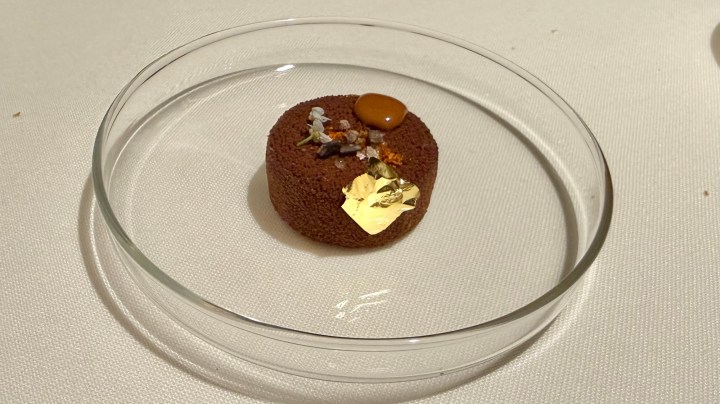
It was an excellent pairing for the Canarian black pudding nougat with salted almond praline. The wine easily handled the dark chocolate notes, while the salinity and almonds in the dish were mirrored by the aromas of the wine.
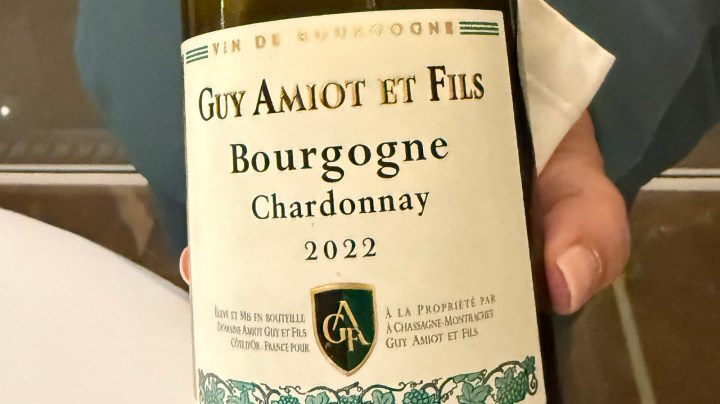
The next wine was a mineral and elegantly fruity white Burgundy with very little oak.
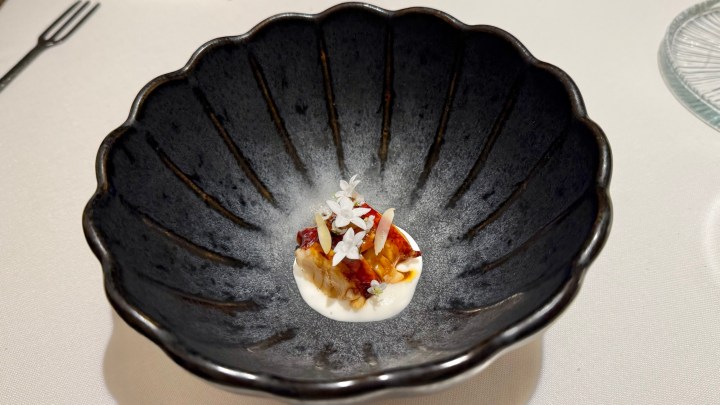
It served as an excellent pairing for the lightly smoked lobster, which was lacquered with sweet pepper and served with an ajo blanco sauce. Technically, it was impressive that the lobster had been sliced so thinly to make it exceptionally tender, carrying a wonderful smoky aroma from the Big Green Egg. The combination with the sweet peppers and ajo blanco made the dish even more special—certainly worthy of three Michelin stars.
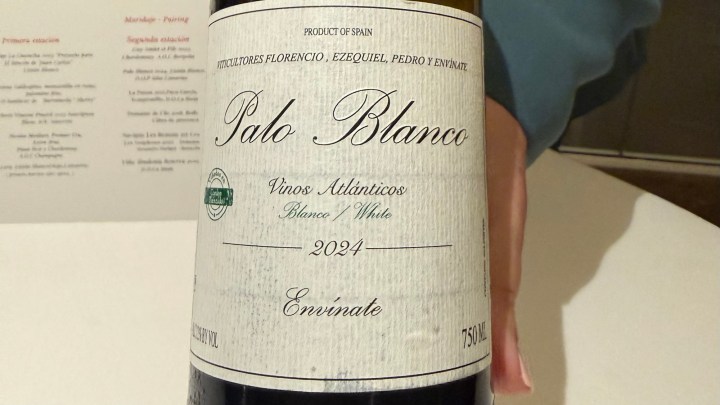
Next was another Canarian wine, a Listán Blanco, featuring the typical saline and volcanic aromas.
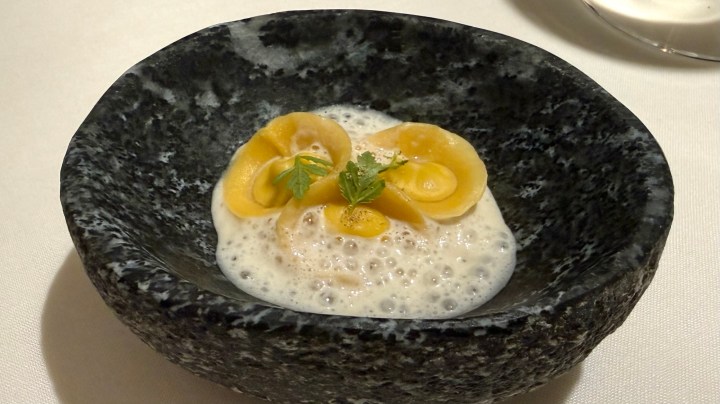
It was a good pairing for the delicate fennel cappelletti with fennel cream and anchovies.
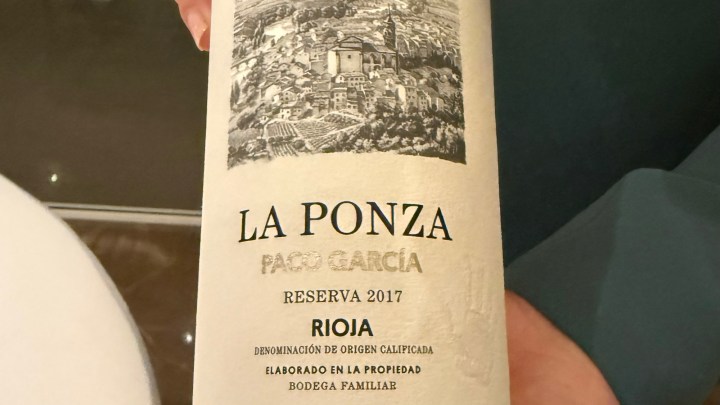
The next wine was a white Rioja Reserva from 2017.
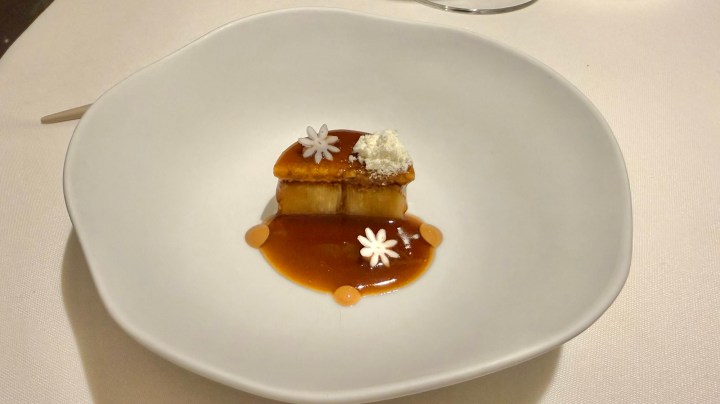
The earthy and nutty notes of the aged white Rioja provided a good pairing for the celeriac roll with celeriac toffee and pine nut, although the toffee was perhaps slightly too sweet for such a dry wine.
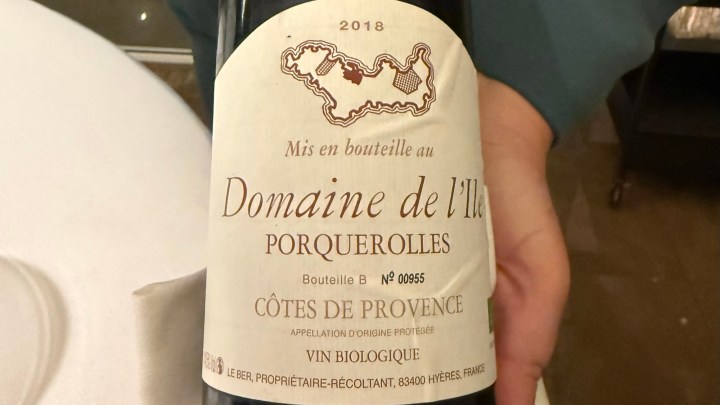
We continued with an aged Rolle (Vermentino) from the Côtes de Provence.
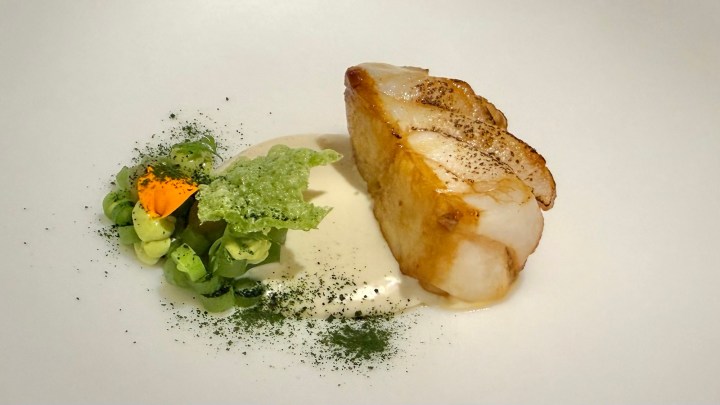
The tertiary aromas and creamy texture of the wine worked very well with the local Cherne fish, which was served with a light white sauce and crunchy vegetables. The fish was perfectly fried with a nice crust on the outside, but tender and juicy on the inside.
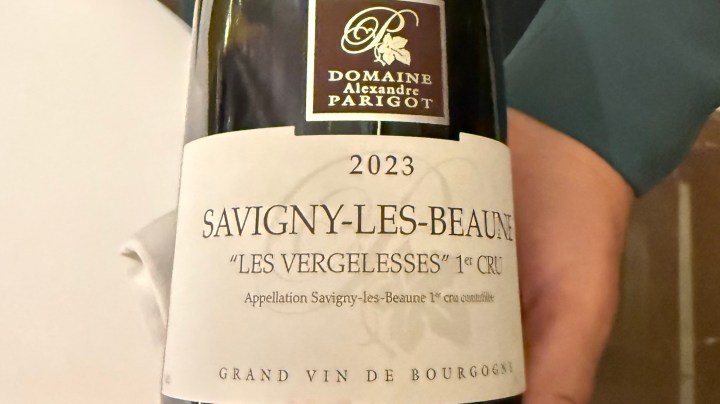
The following wine in the pairing was a Savigny-les-Beaune 1er Cru Les Vergelesses, a very elegant and complex Pinot Noir from Burgundy.
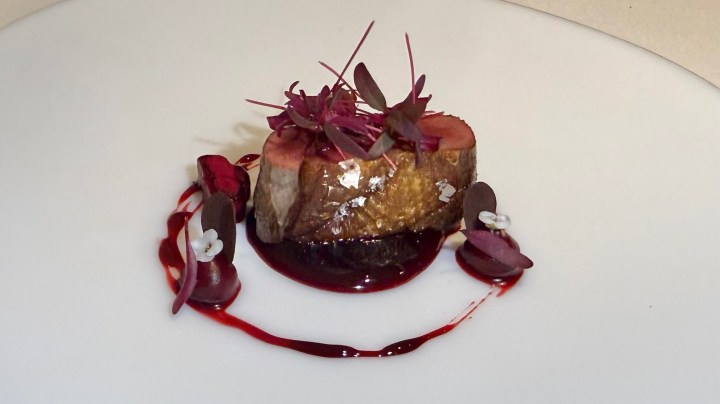
It was an excellent pairing for the pigeon breast, which was served perfectly tender and juicy alongside beetroot. The earthy notes of the wine brought out a wonderful beetroot flavor.
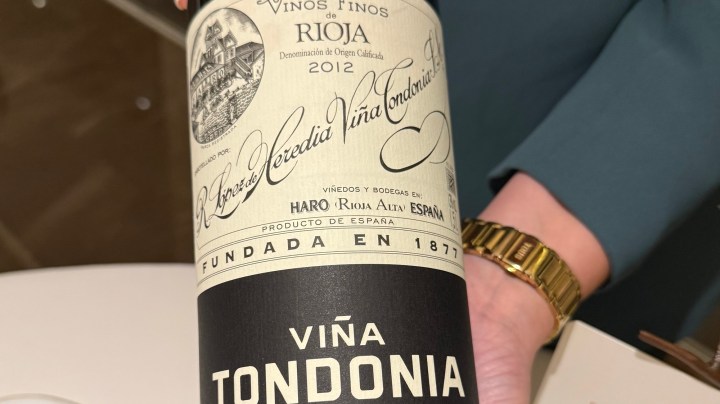
The wine for the final savory dish was a 2012 Rioja from the renowned Viña Tondonia bodega.
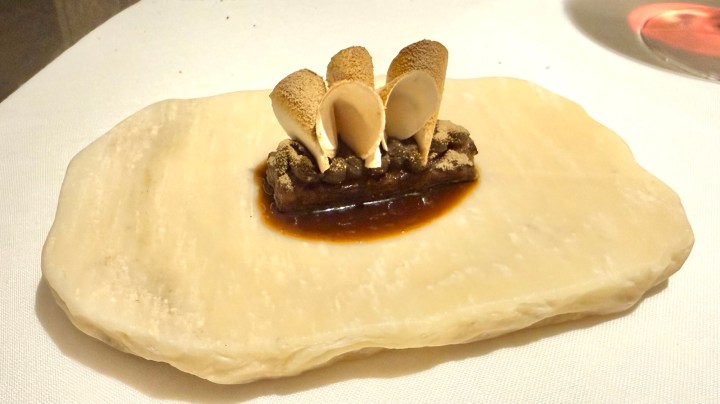
This complex wine, characterized by its silky tannins, provided a perfect pairing for the tender and flavorful Wagyu beef and porcini mushrooms. The richness of the beef was nicely complemented by the various preparations of the mushrooms.
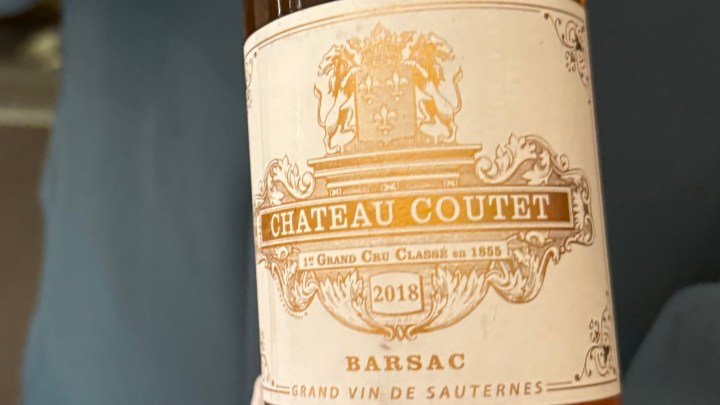
The first dessert wine was a 2018 Château Coutet, a relatively elegant Sauternes with a beautifully complex aroma.
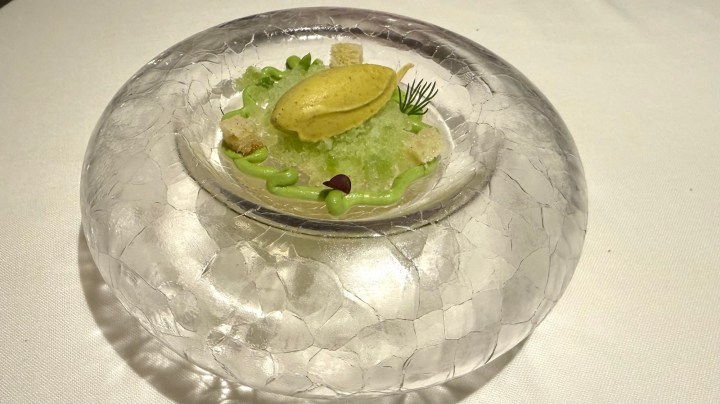
It provided a good pairing for the fresh dessert of tomato, cucumber, and mustard, which was served with passion fruit ice cream.
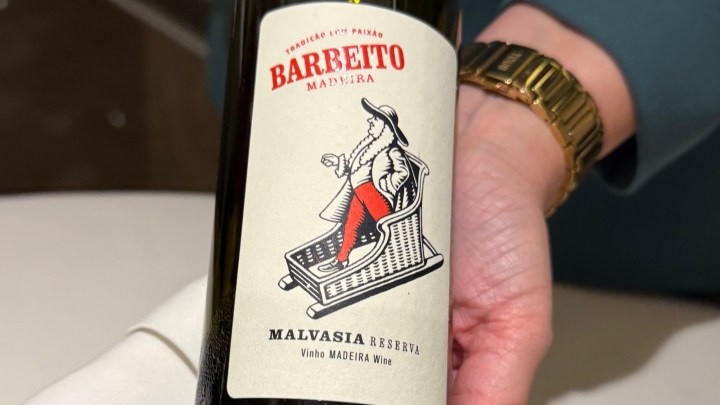
The other two desserts were paired with a Madeira Malvasia Reserva, the sweetest type of Madeira.
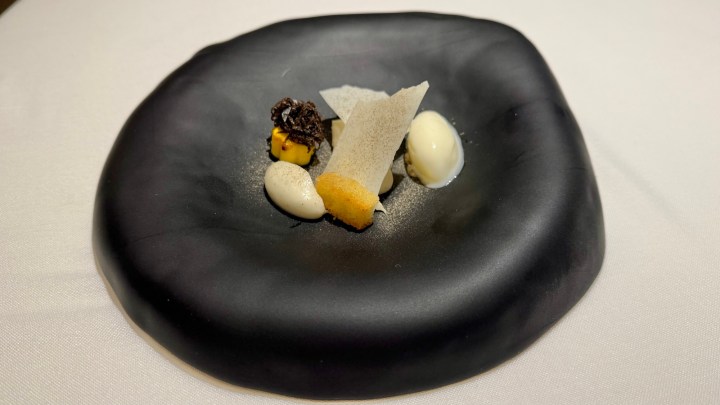
The sunchoke with butter ice cream and truffle was beautifully earthy.
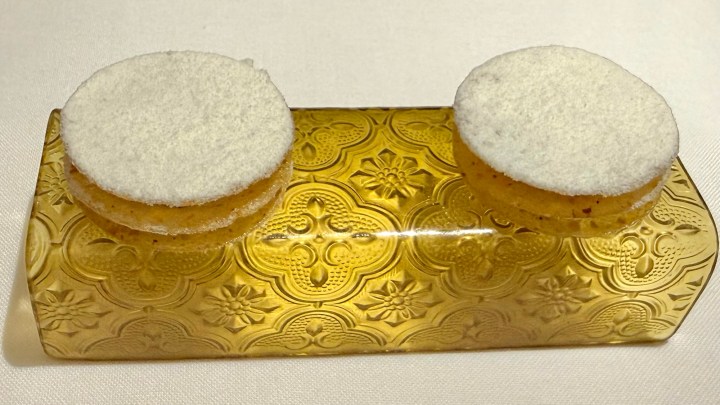
The corn millefeuille with toasted butter cream and black garlic was complex and delicate.
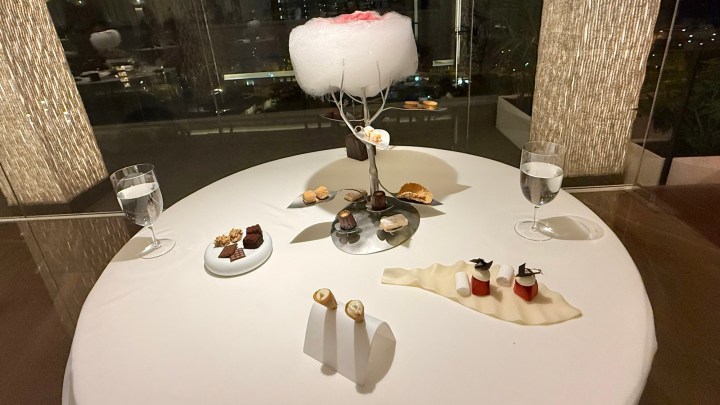
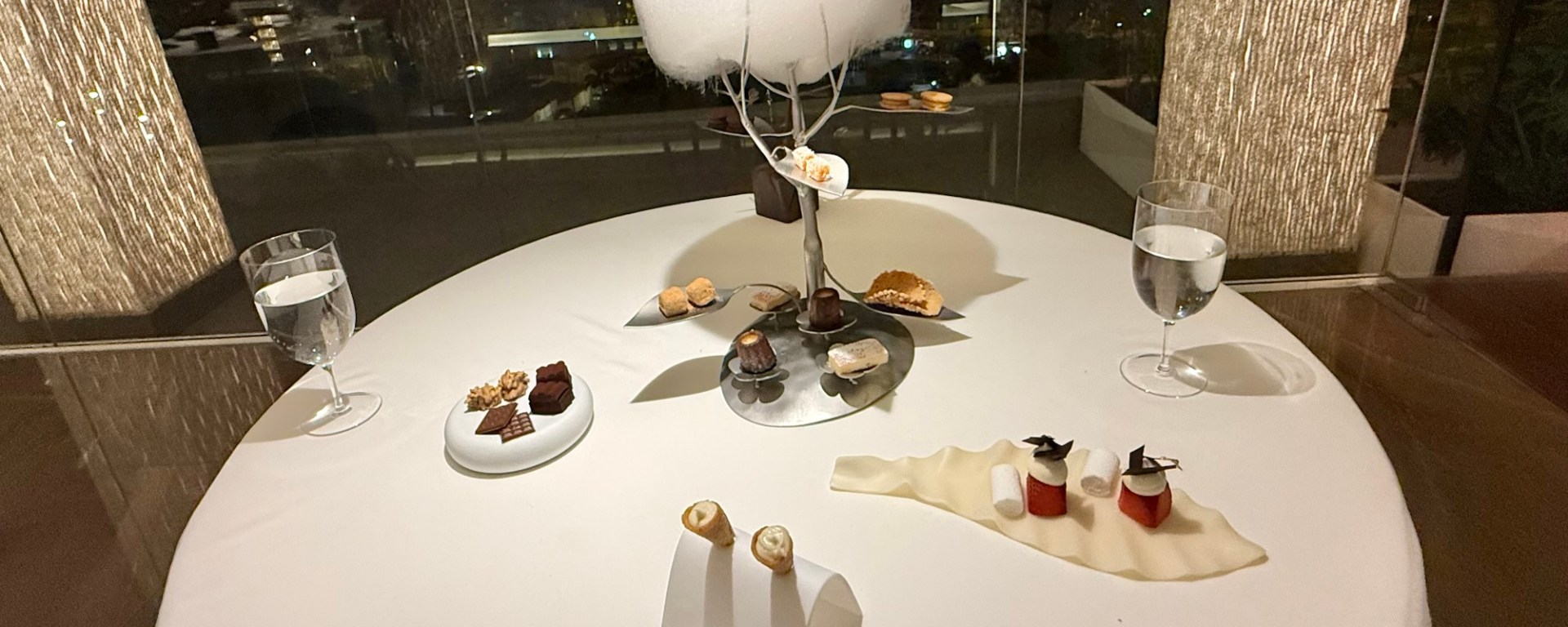
With a pastry chef as one of the owners, the friandises were every bit the spectacle you might imagine.
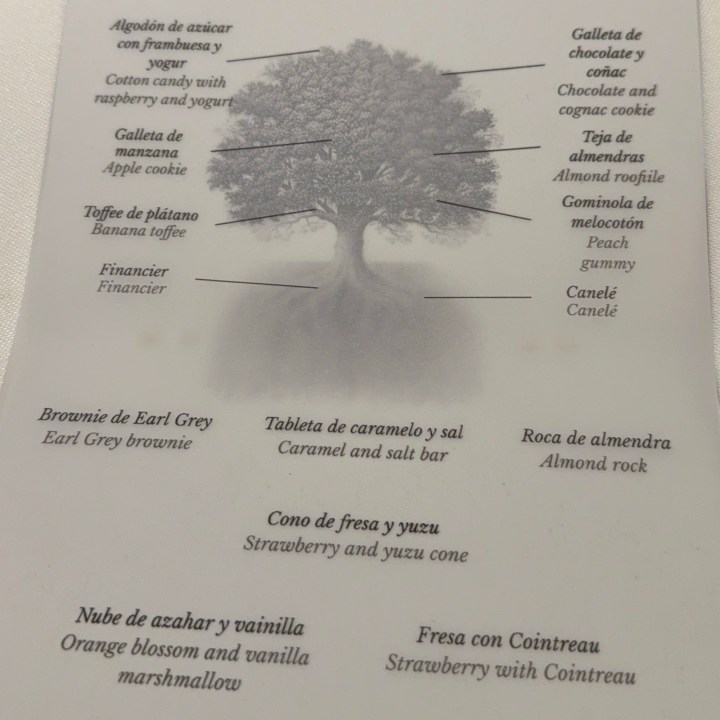
Here is the description that was provided to peruse at your own leisure.
Our dinner at El Rincón de Juan Carlos certainly lived up to our high expectations. Every dish was like a small piece of art, and the wine pairings were exquisite; it was truly wonderful to experience such a vast array of courses and wines. If it had been up to me, a third star would certainly have been merited.
Perhaps a limiting factor for the restaurant in receiving that third star was the inherent difficulty of basing a signature identity entirely on local ingredients. Even though they did an admirable job of incorporating local produce and wines into their offering, there was only so much they could do, given that such a small amount of food is produced on the islands that nearly 90% must be imported.
The service leaned slightly toward the formal side, with the notable exception of the very sweet and charming María José. While the bread was excellent and we had eaten a very light lunch in preparation for the thirteen courses, the portions were delicate—each consisting of only about three bites. Consequently, we found ourselves repeatedly asking for more bread to suit our appetites. I would have expected the staff to pick up on that and offer the bread spontaneously, but that didn’t happen. That certainly didn’t affect our evening, however; we had a wonderful time and left with a great reason to return to Tenerife soon.


Am sitting at my writing desk late on a very quiet Saturday evening just saying ‘oh . . . wish there were such entities as genies . . . ‘ – you have me totally enchanted and I have never ever been anywhere near the Canary Islands. Love everything from the view to the look of the dishes and the varied choice provided . . . looking at the size of the dishes the number would have delighted in their variety . . . The sweet onion soup, the mussels and the ‘fresh’ dessert served in an unreal way are in front of my eyes . . . thank you for a great night of dreaming ahead I hope . . . and lucky, lucky you . . . 🙂 !
LikeLiked by 1 person
Great review, Stefan! 12 glasses is a lot of wine, how big were the pours?!
LikeLiked by 1 person
You can see it in the photo of the amuse bouche. I may have taken a sip of that glass before the photo was taken. So modest pours but enough to enjoy the wines with the food.
LikeLike