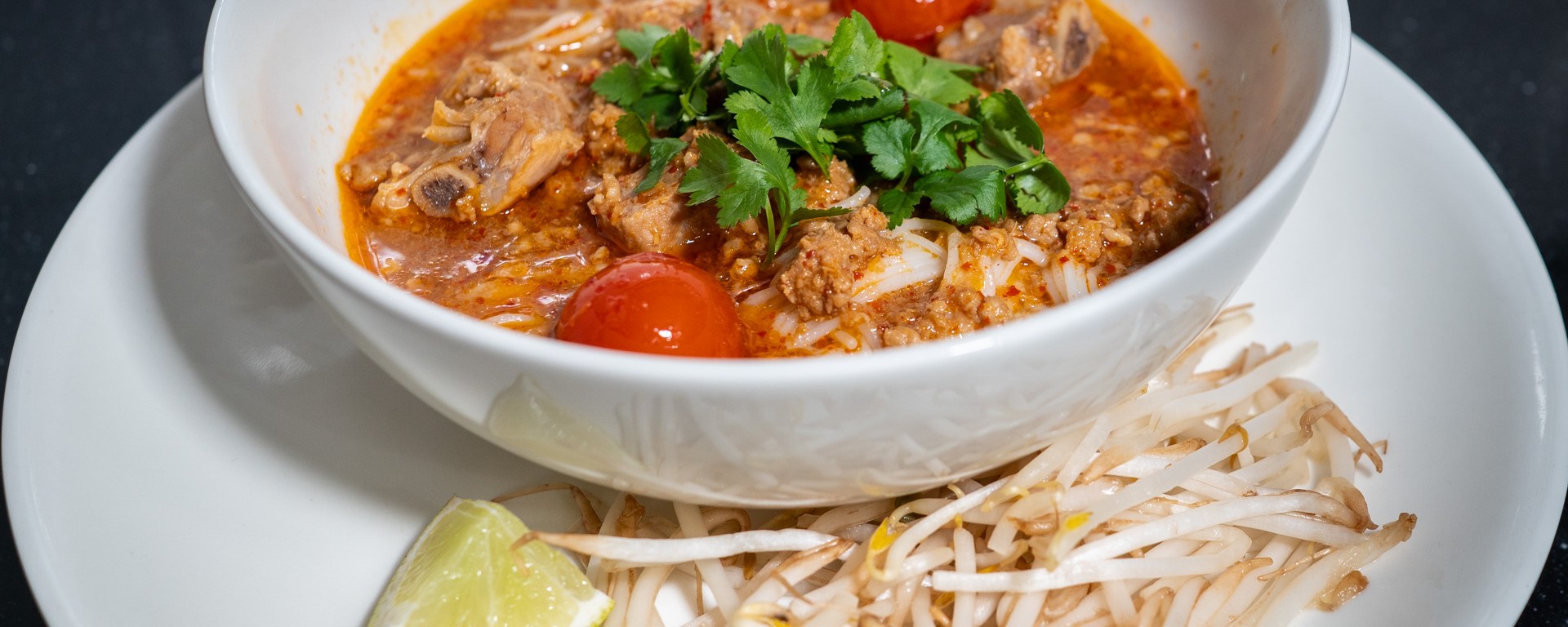
Still blogging from Italy, I am waiting for the rain to end so I can walk to the gym without getting soaking wet before I even get there. This reminded me of our vacation to Thailand last November, where it was raining so much in the south that we changed our itinerary and had an impromptu stay in northern Thailand to enjoy the great weather there.

When I mentioned to my friend Melvin we were going to Chiang Rai, he said I should definitely check out the pork and tomato noodle soup called Kanom Jeen Nam Ngiew (ขนมจีนน้ำเงี้ยว) while I was there. Although noodle shop Pa Suk was mentioned in the Lonely Planet guide, I only saw locals there, and the only sign in English was “Cash only”. Luckily, there was a young Thai working there who spoke very good English and could help me place my order.
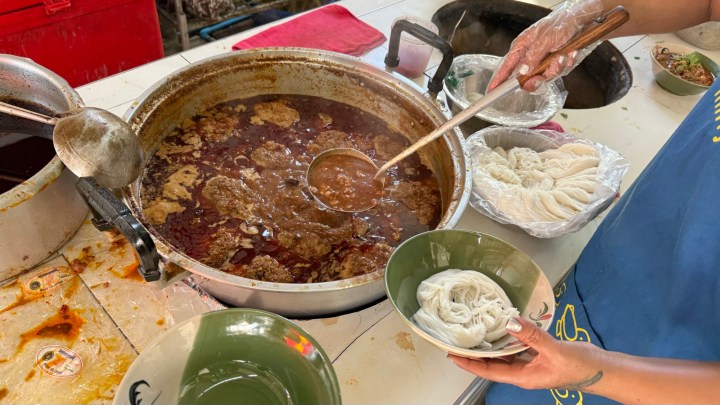
A bowl was priced between 40 baht (1 euro) for small size and 60 baht (1.50 euro) for large. The thin rice noodles (kanom jeen) were already cooked, placed in a bowl, and the hot pork and tomato soup (nam ngiew) was ladled on top from a huge pot. It was served garnished with fresh cilantro and with bean sprouts, lime, pickled mustard greens, and chilli flakes on the side. You could also buy crispy pork skin as an additional garnish.
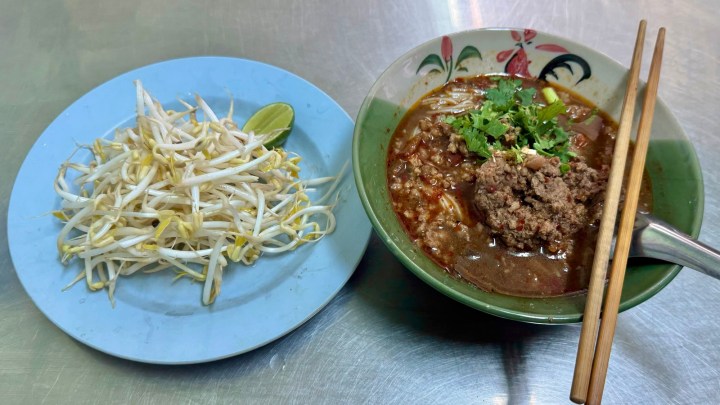
Without the additional chilli flakes, it was only mildly spicy. The broth had the full flavor of pork but was not very rich. I also tried the dish at a restaurant near the night market, where it was quite similar but with a slightly richer broth. As I had experienced previously with Northern Thai food, the combination of ground pork and tomato reminded me of an Italian pasta sauce. The addition of the rice noodles, which are not unlike spaghettini, augmented this effect.
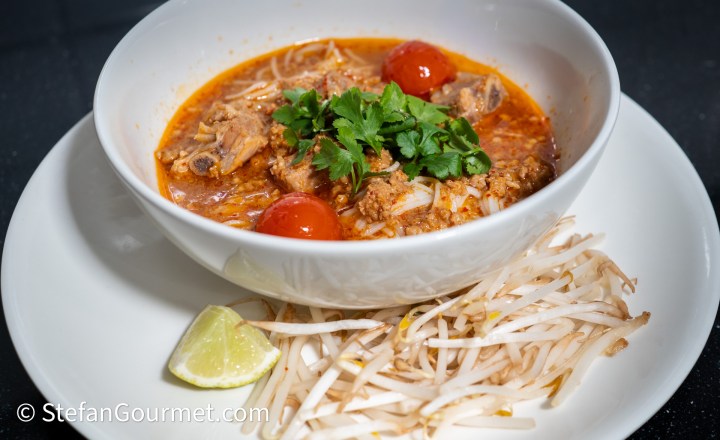
Back home I prepared this dish together with Melvin, following Hot Thai Kitchen’s recipe mostly, but also using another Thai recipe and my memory from the versions I had in Chiang Rai. Like Pai Lin, I left out the Dok Ngiew, dried flowers of the red cotton tree, because they were difficult to procure and would not add much flavor anyway. Instead of Tua Nao (fermented soybean disks), I used bottled fermented soy bean sauce (tao jiew). We also left out the congealed pig’s blood for reasons of availability. It was included in one of the bowls I had in Chiang Rai, but was quite similar to silk tofu except for the red color. Based on my experience in Thailand, I used a combination of pureed canned tomatoes and cherry tomatoes added at the very end to get both a deep tomato flavor and the brightness and crunch of the cherry tomatoes.
Ingredients
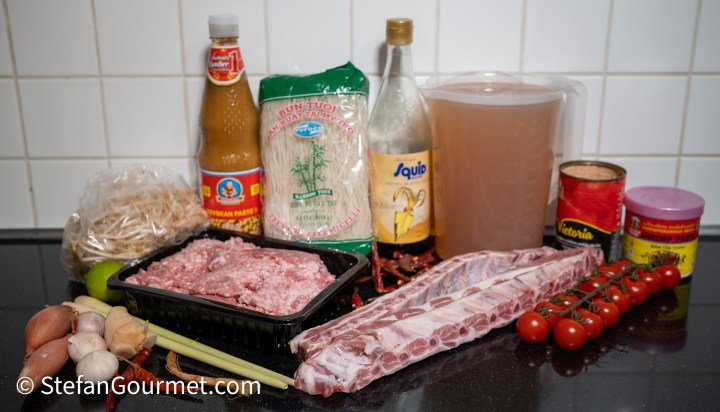
For 4 generous servings
- 700 grams (1.5 lbs) cross-cut pork ribs
- 1.5 litres (6 cups) pork stock, see below
- 2 Tbsp fish sauce
- 1 tsp sugar
- 2 Tbsp vegetable oil
- 400 grams ground pork
- 250 grams cherry tomatoes
- 200 grams pureed tomatoes
- 350 gram Vietnamese rice vermicelli
For the Nam Ngiew curry paste
- 20 grams mild dried red chilies
- 5 grams cilantro root, chopped
- 2 lemongrass, bottom half only, thinly sliced
- 2 Tbsp minced galangal
- 50 grams garlic, chopped
- 60 grams shallots, chopped
- 3 Tbsp Thai fermened soybean paste (tao jiew) or fermented soybean disks (tua nao)
- 1 Tbsp Thai fermanted shrimp paste (gapi)
To serve
- bean sprouts
- lime wedges
- pickled mustard greens, rinsed and chopped
- roasted chilli flakes
- cilantro
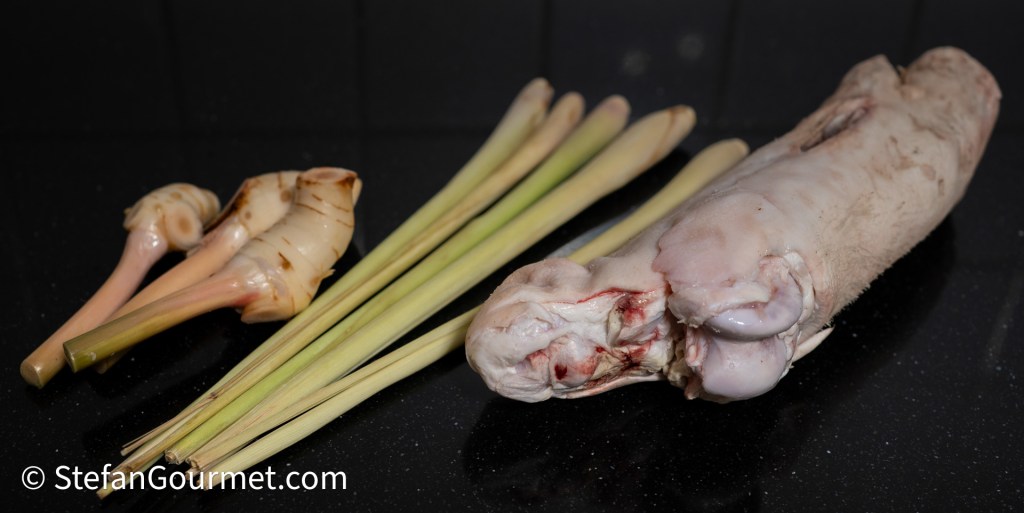
For the pork stock
- 1 pork foot (pork trotter)
- to halves of the lemongrass, crushed
- tops and trimmings of galangal
Instructions
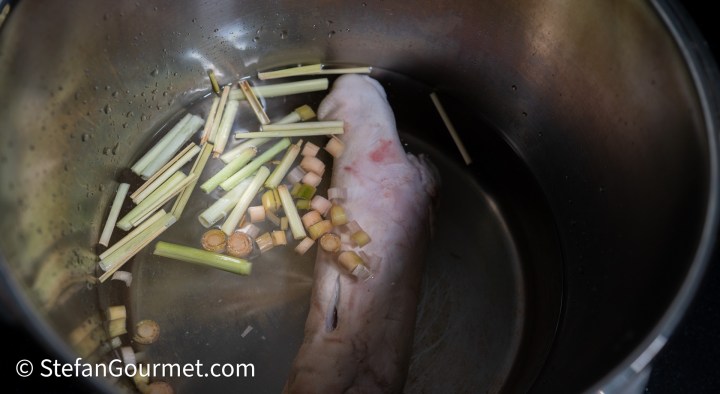
Start by making the pork stock. Place a pork trotter in a stockpot or pressure cooker. Add top halves of lemongrass and galangal trimmings. Cover with water, at least 1.5 litres (6 cups).
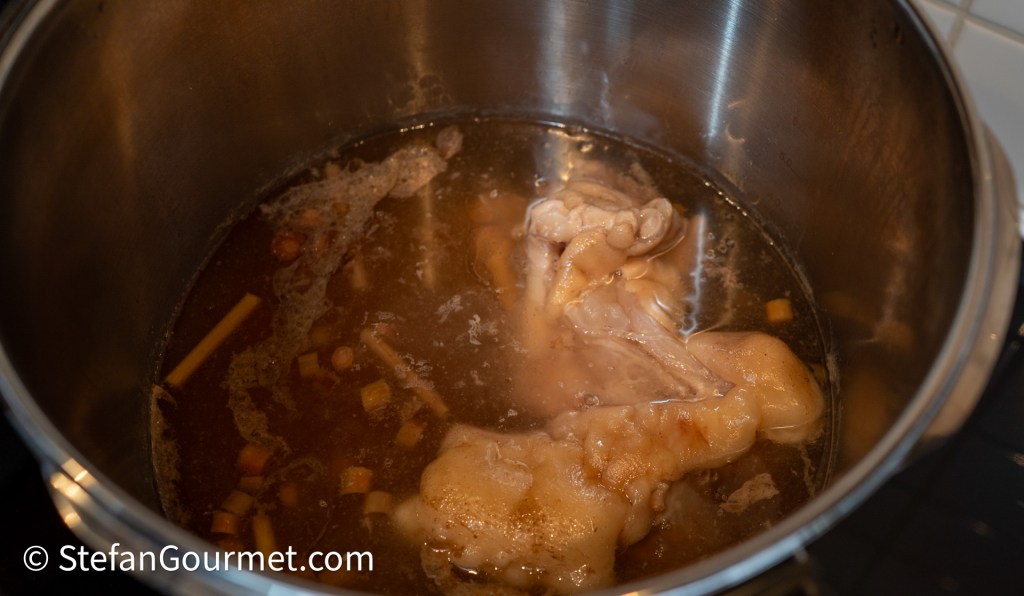
Cover, bring to a boil, and simmer for 3 hours, or bring to pressure, and pressure cook for 1.5 hours.
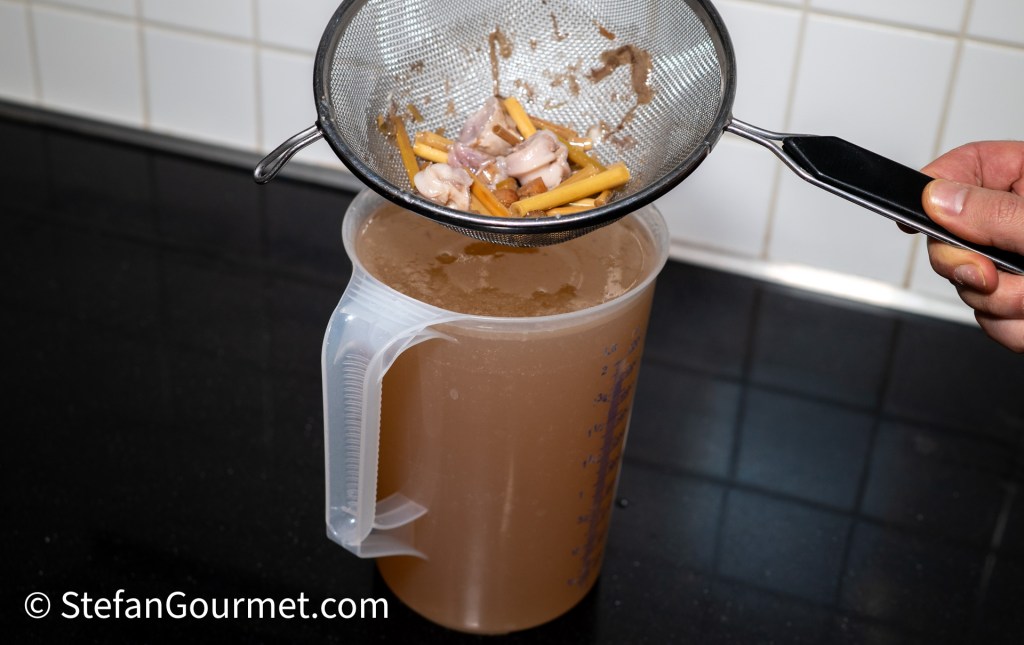
Strain the pork stock through a fine sieve. If you made more than 1.5 litres in order to add enough water to cover the pork trotter, reduce it to 1.5 litres by simmering in a wide shallow pan to concentrate the flavor.
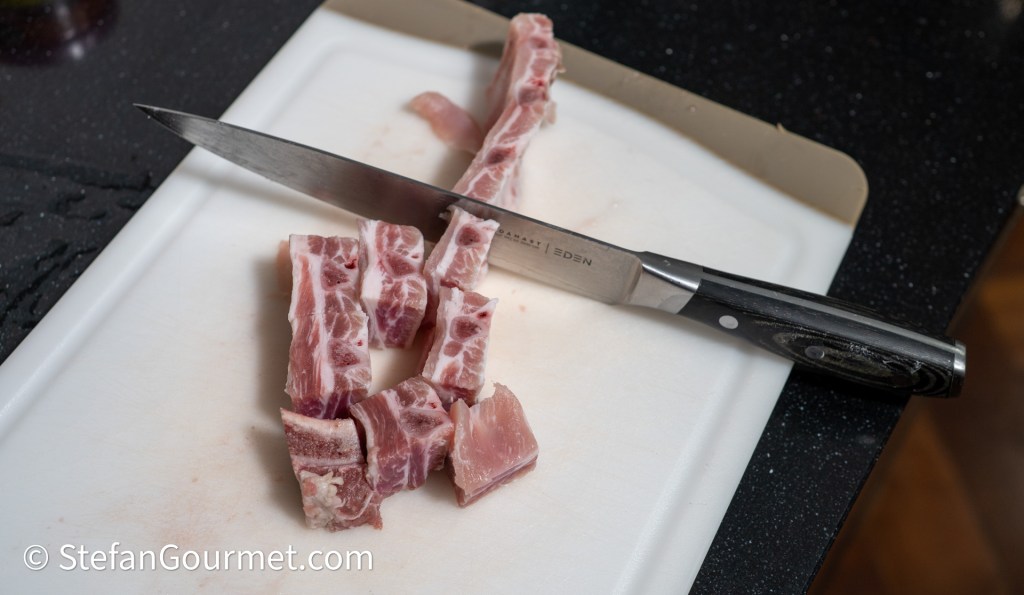
It is important that the pork ribs are cross-cut so the marrow is exposed, allowing for better extraction into the soup. Cut the strip of pork ribs into individual pieces by slicing carefully in between the ribs.
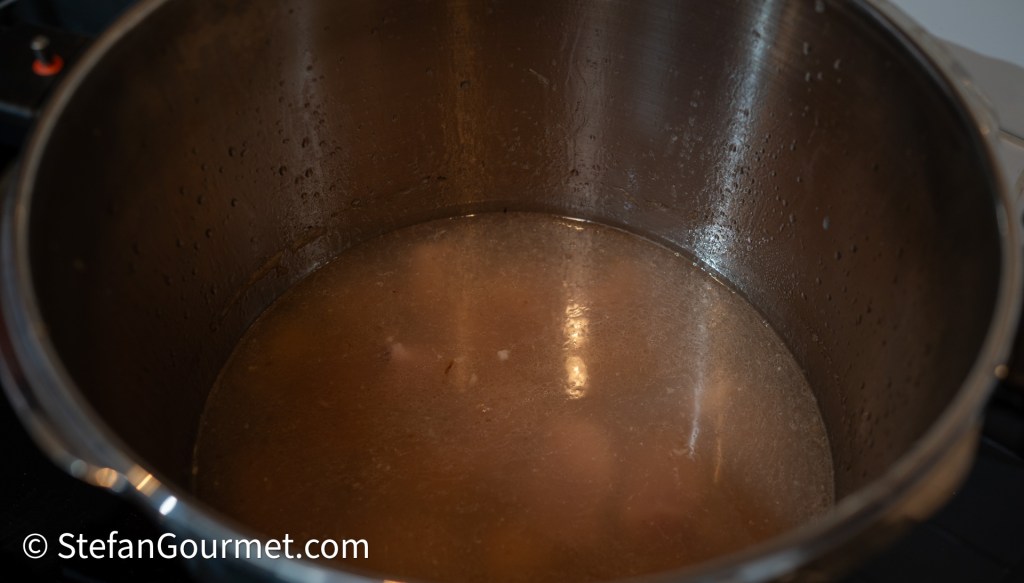
Place the pork ribs in a stock pot and add the 1.5 litres of pork stock.
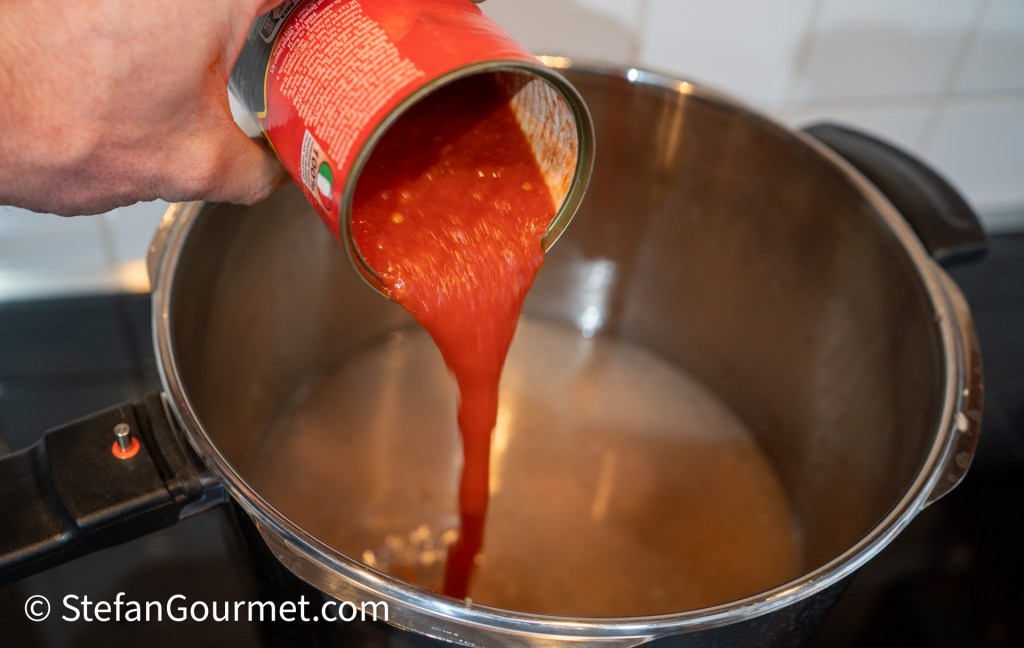
Add 200 grams of pureed tomatoes, 2 tablespoons of fish sauce, and 1 teaspoon of sugar.
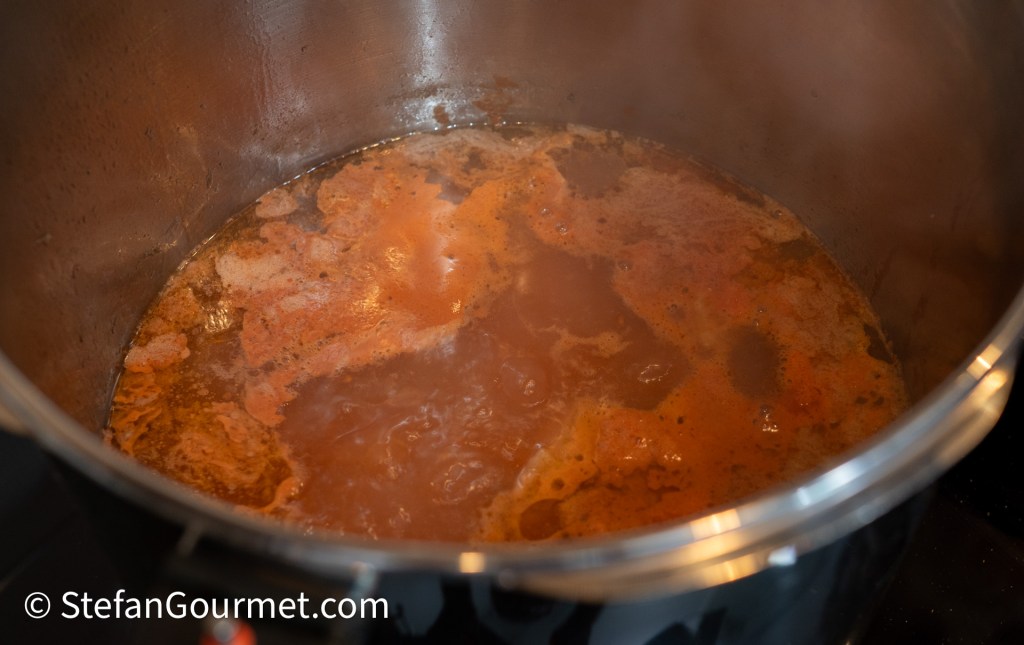
Cover and bring to a boil, then reduce the heat to a simmer. Start the timer for 1.5 hours.
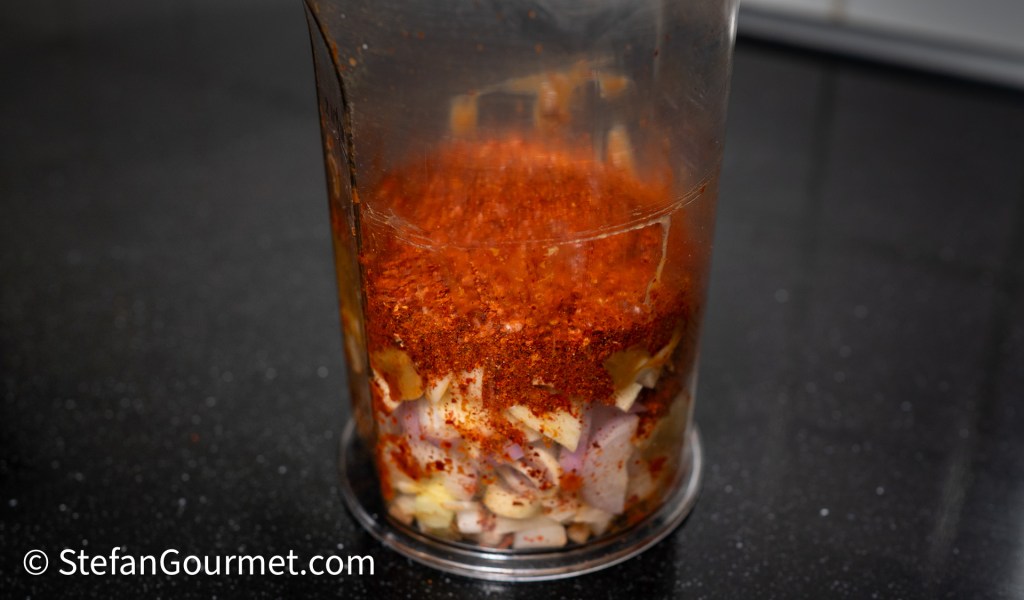
While the ribs are simmering, make the curry paste. You can use a mortar and pestle or immersion blender. Remove the stems and seeds from the dried chillies and grind them into a fine powder with a spice grinder (or coffee grinder). To use a blender, place all of the ingredients in a suitable container.
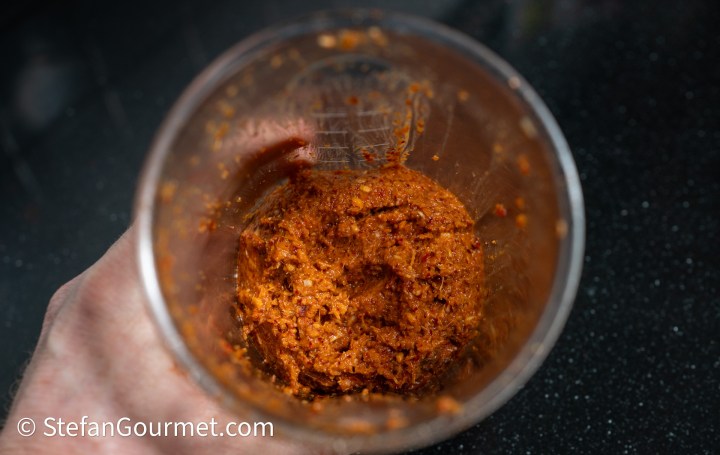
And then blend into a fine paste.
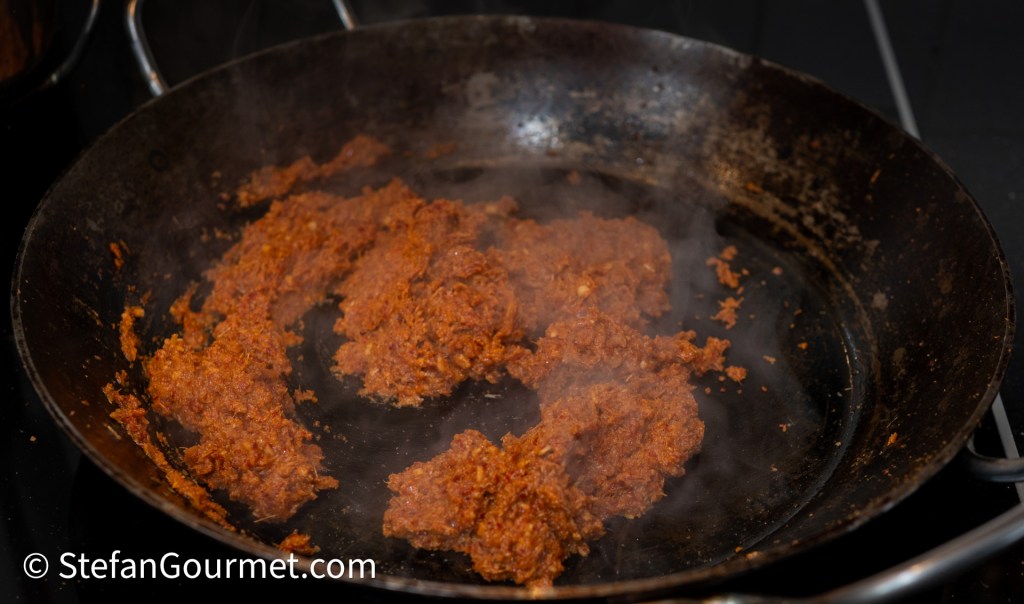
Heat 2 tablespoons of oil in a frying pan and add the curry paste. Sauté the curry paste over medium-high heat until it is fragrant and sizzles.
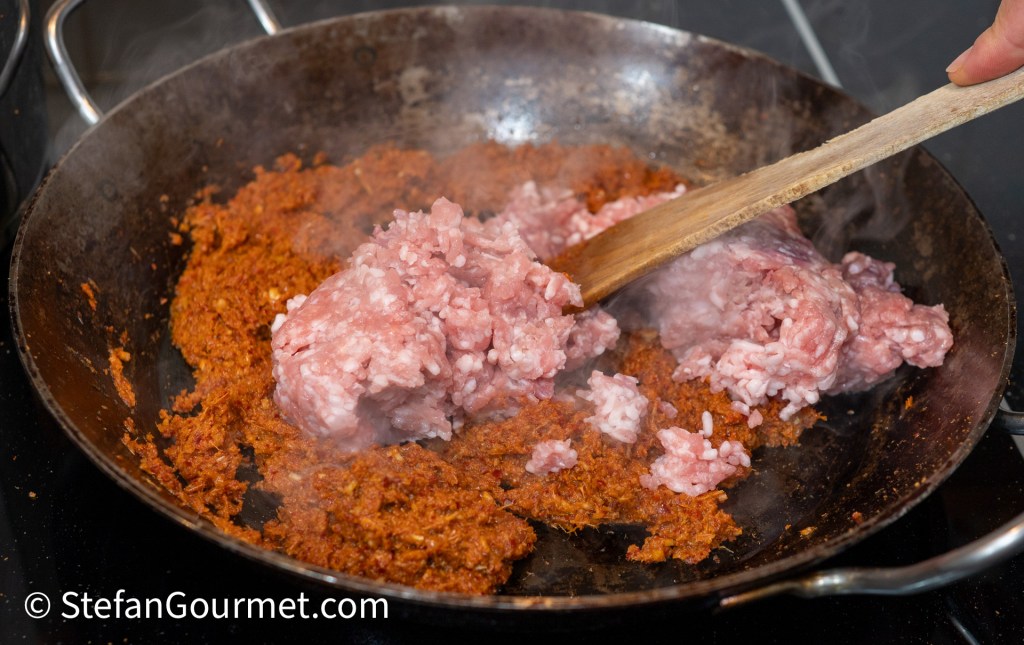
Add 400 grams of ground pork.
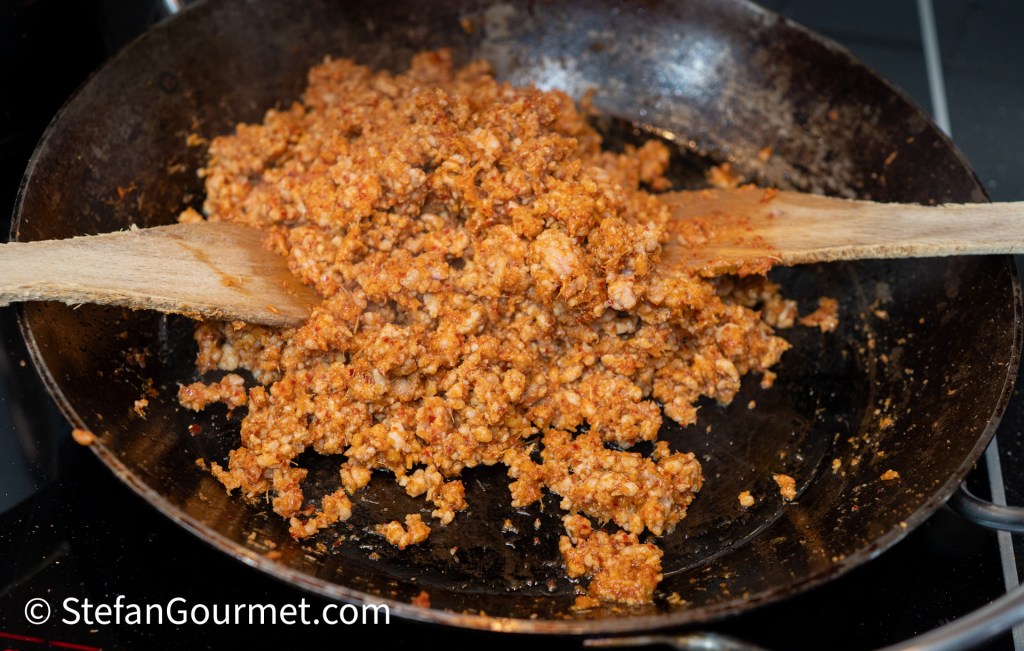
Stir-fry the pork with the chilli paste over high heat, breaking up the meat and mixing it with the chilli paste using wooden spatulas.
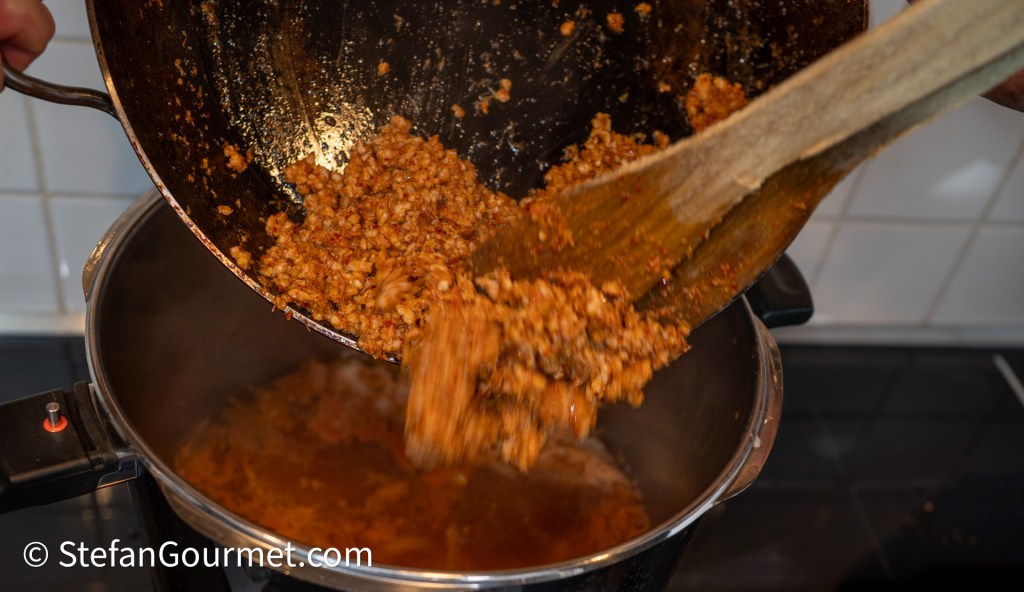
When the pork has been broken up and has lost its raw color, add it to the pan with the ribs and pork stock.
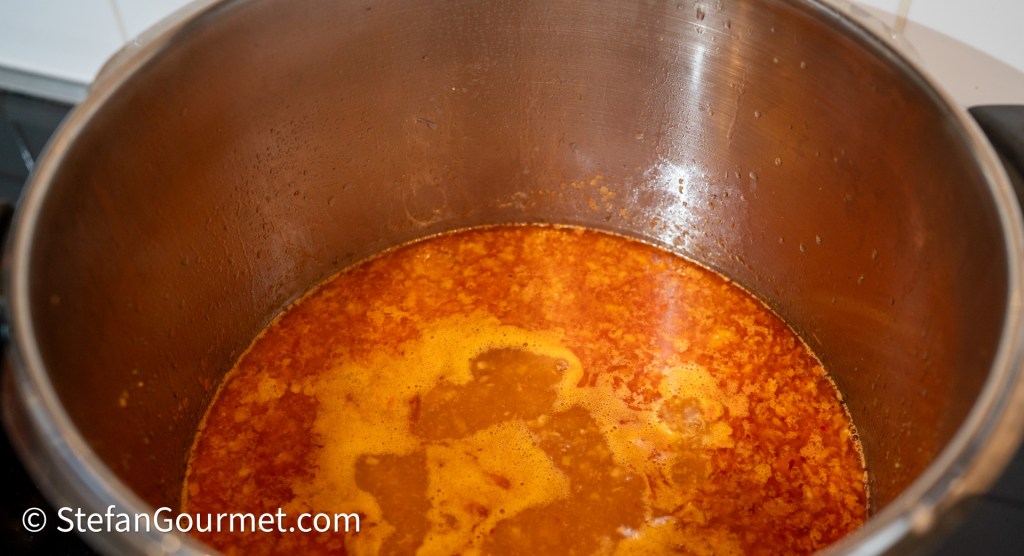
Keep simmering until the ribs are fall-off-the-bone tender, about 1.5 hours.
Check whether the ribs are done and check the seasoning, adding fish sauce or sugar as required.
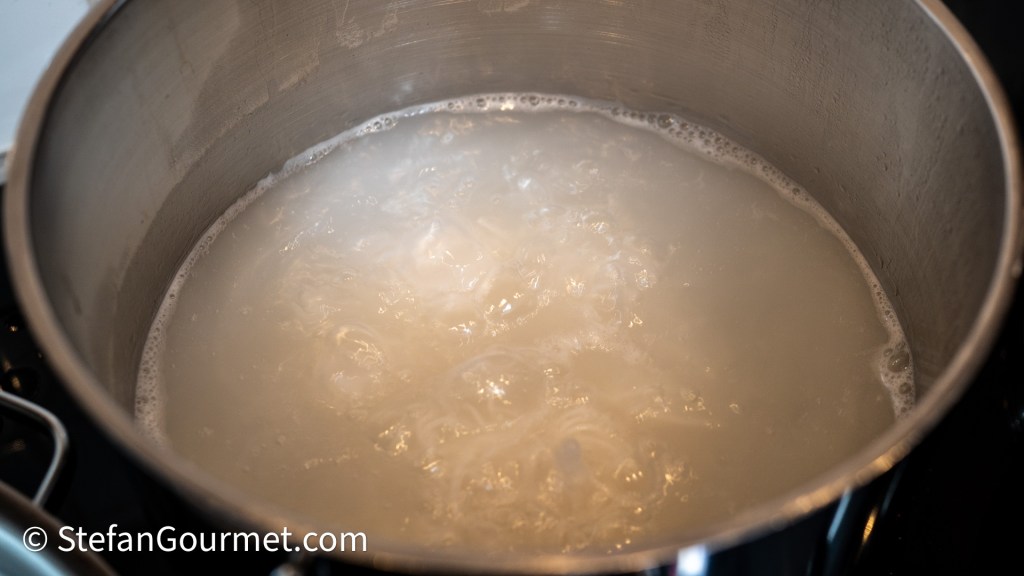
Prepare the rice noodles according to the package instructions.
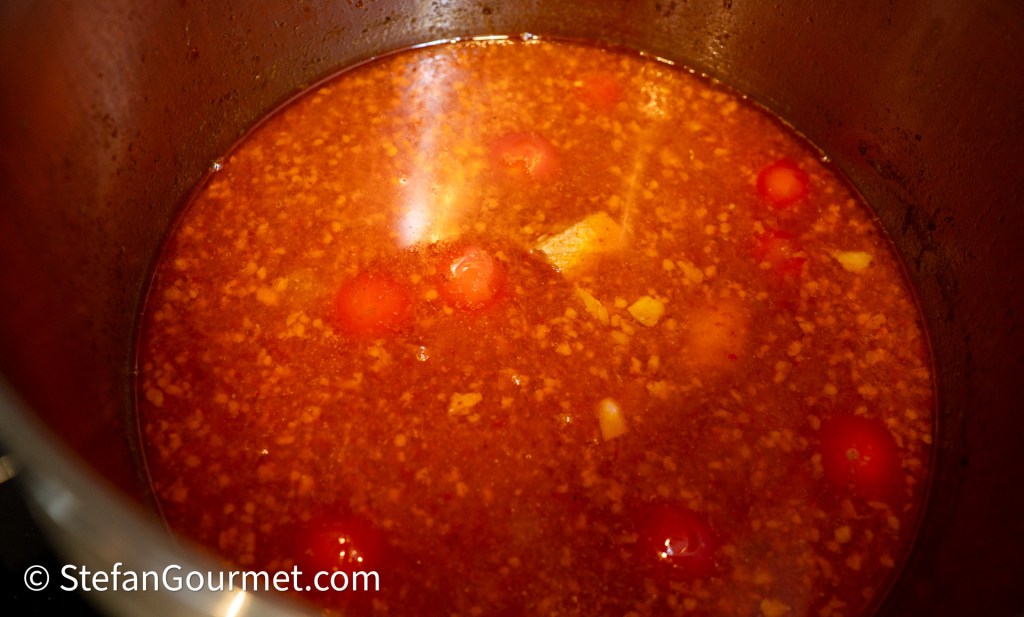
Add 250 grams of cherry tomatoes to the soup and cook them for a couple of minutes. They should be wrinkly but whole.
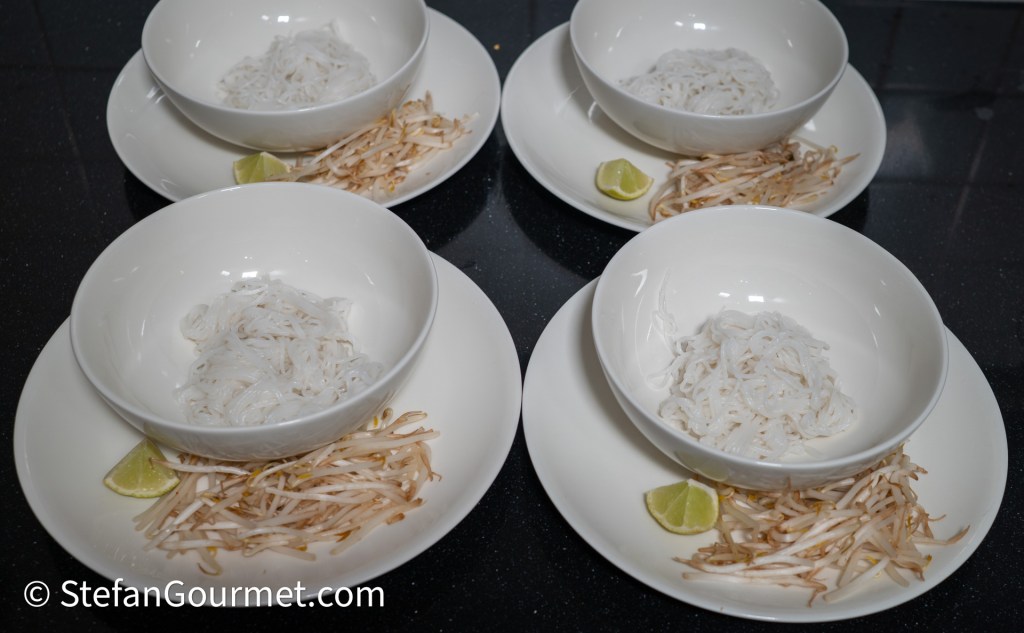
Prepare bowls with rice noodles.
Ladle the soup on top of the noodles, making sure that each bowl gets enough ribs, cherry tomatoes, and ground pork. Garnish with cilantro and serve with bean sprouts, lime wedges, pickled mustard greens, and roasted chilli flakes. I like to place the bean sprouts in a sieve and pour boiling water over them before serving. This makes them slightly less raw and ensures they are safe to eat.


This sounds wonderful!
LikeLiked by 1 person
Quite some effort to copy such a regional Thai dish. For me two things stand out > the use of the pork in two different forms in the same dish and the very practical suggestion to pour some hot water over bean sprouts to take the edge of rawness off in whatever dish one may use them. Quite fascinating to learn of a Thai soup in my morning Australia written up by a Dutchman on holiday in rainy Italy 🙂 ! Hope the rain stopped and you are happy with your time off . . . and when you can’t get to a gym, do breathing and mobility exercises near your open window in the hotel – have a great time 🙂 !
LikeLiked by 1 person