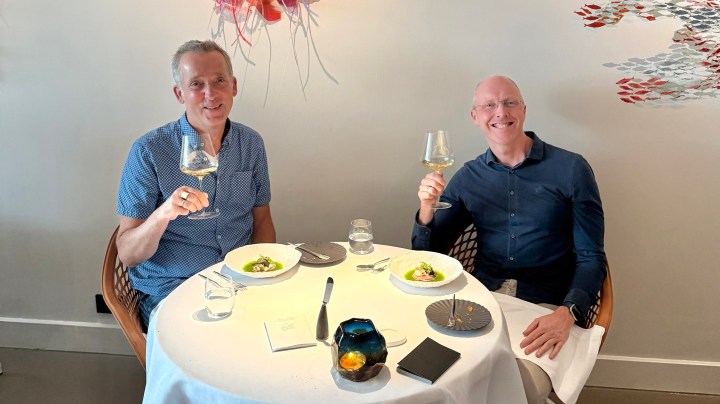
The island of Texel was named a top 10 European destination in 2016 by Lonely Planet. Located less than two hours north of Amsterdam, including the ferry crossing, it is the largest of the Dutch Wadden islands. The only Michelin-starred restaurant on any of these islands is Bij Jef, established in 1996 by chef Jef Schuur, a Texel native. In 2003, his partner Nadine Mögling, also from Texel, joined as host and sommelier.
A strong synergy between chef and sommelier is a critical success factor for an outstanding fine dining experience, so it is no surprise that at most of my favorite restaurants—such as De Librije, El Celler de Can Roca, and El Rincón de Juan Carlos—the chef and sommelier are a couple or family. Bij Jef had been on my radar for a long time, but discovering it was run by a couple convinced me it was worth the trip to Texel to celebrate our 24th wedding anniversary.
Because the last ferry leaves Texel at 9:00pm, staying on the island is a must if you want to have dinner there. Fortunately, Bij Jef is also a five-star boutique hotel. Since we stayed in the ground-floor suite, it made for the shortest walk from our table to our bed ever—about 20 meters/60 ft.
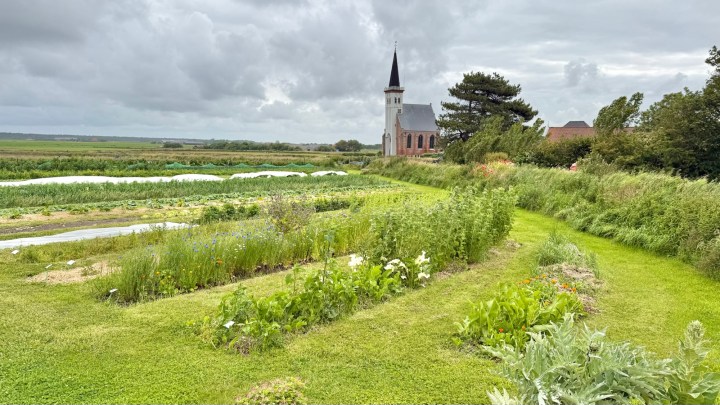
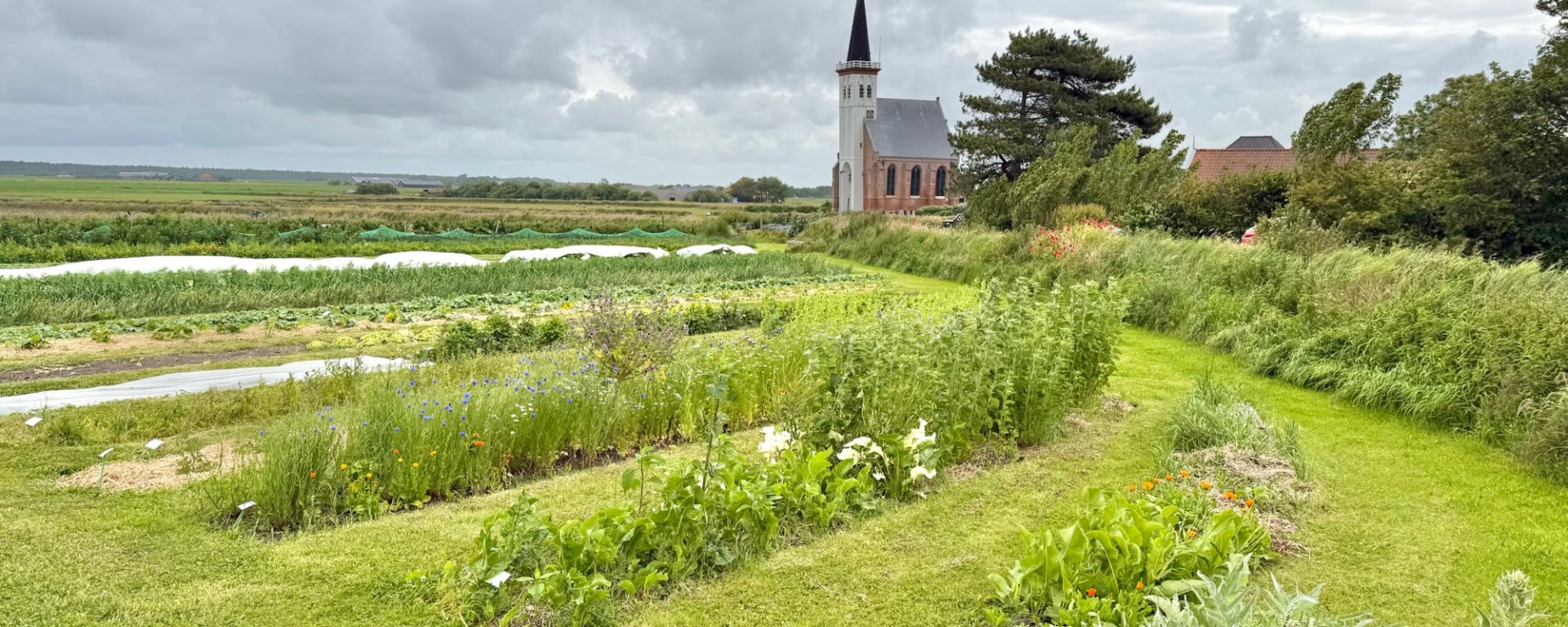
Jef showcases local produce from Texel and the other Wadden islands in his dishes, including the famous Texel lamb, seafood, and regional cheeses. It is also a true farm-to-table restaurant, as most of the fruits, vegetables, and herbs are grown in their own 7000 square meter (2 acre) garden, located just behind the building.
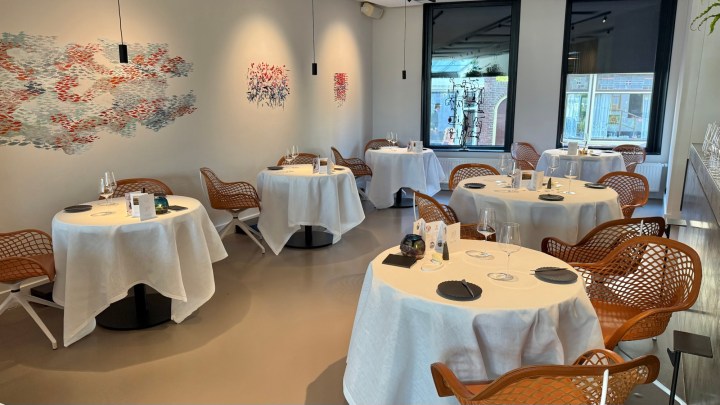
The restaurant features a daily changing tasting menu called “Local Meets Cosmopolitan,” offering 7 courses for 190 euros, with an optional cheese course available for a 19.50 euros supplement. The regular “Adventure” wine pairing is priced at 97.50 euros, but we opted for the premium “Pearls” pairing for 190 euros. All-in packages are also available, covering either just the food and wine or including bed and breakfast.
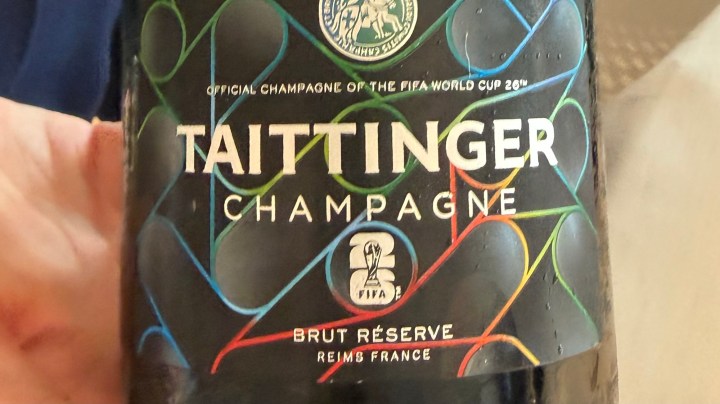
We started with a glass of Taittinger Brut Réserve Champagne.
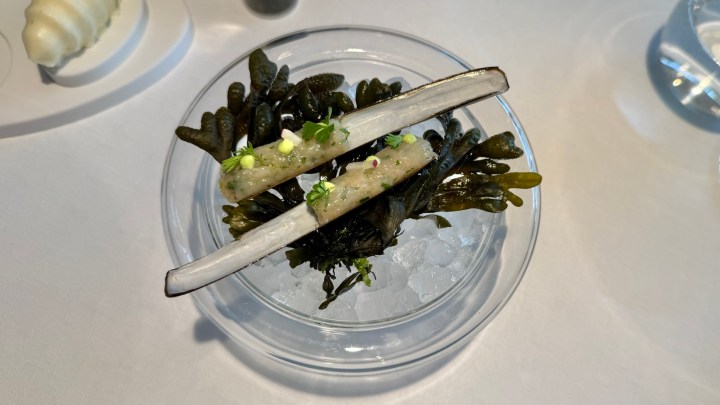
The amuse-bouche started with a tartare of razor clams, which were tender and naturally slightly sweet.
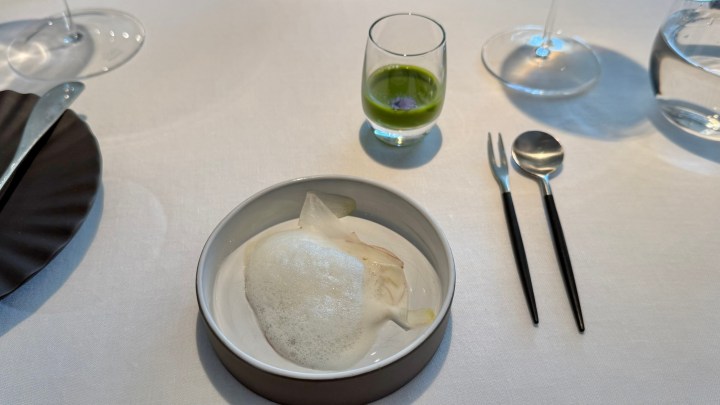
This first round also included shaved turnip with lemon verbena, and an intensely flavored fennel juice.
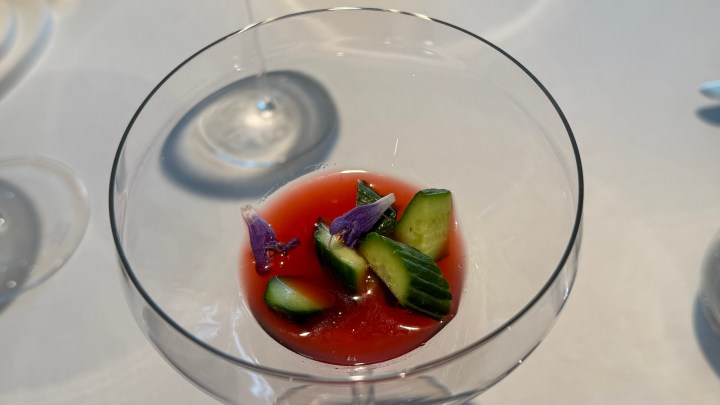
The final amuse-bouche was young cucumber served with a juice of radishes and sage flowers.
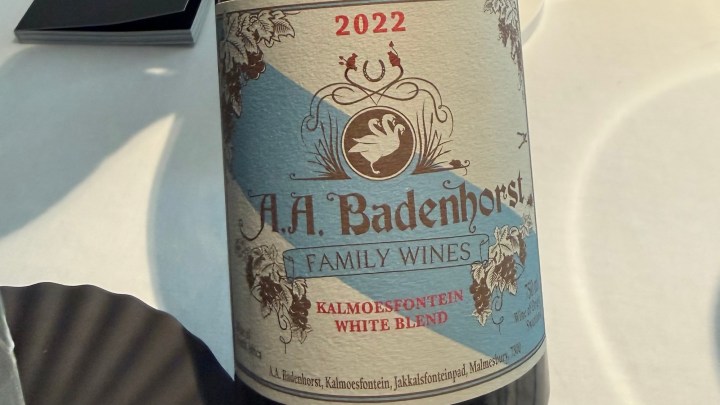
The first wine was a white field blend from South Africa. Nadine had asked us if we wanted a list of the wine pairings up front, but when Kees mentioned I had won last year’s blind tasting championship, she served all the wines blind so I could guess. It turned out that most of the wines were too difficult to identify in a blind tasting, but we had fun with it anyway.
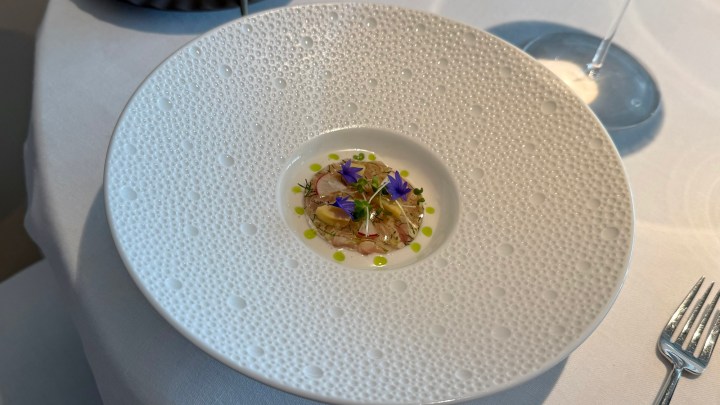
The first wine was a very good pairing for the initial course: a tartare of horse mackerel with dill, coconut, and kohlrabi jelly. The fish itself was impeccably fresh and tender, making this a highly elegant dish. While coconut is typically a dominant flavor that is easy to distinguish, in this creation it was integrated with remarkable subtlety, remaining exceptionally faint.
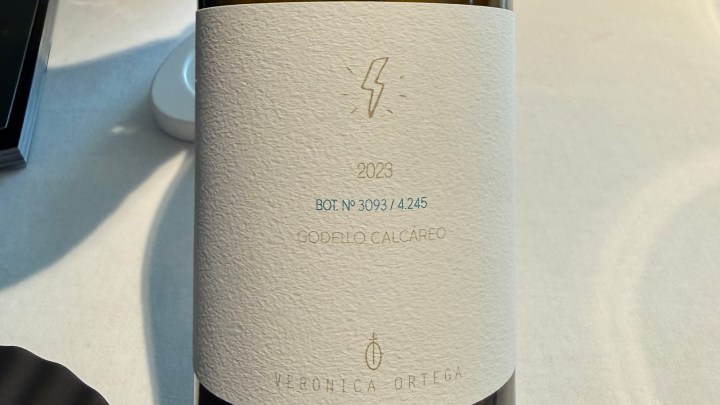
The next wine was a Godello from Spain that showed a striking resemblance to a wine from the Jura, characterized by high acidity and oxidative aging with distinct nutty aromas, which is exactly what I had incorrectly guessed it to be.
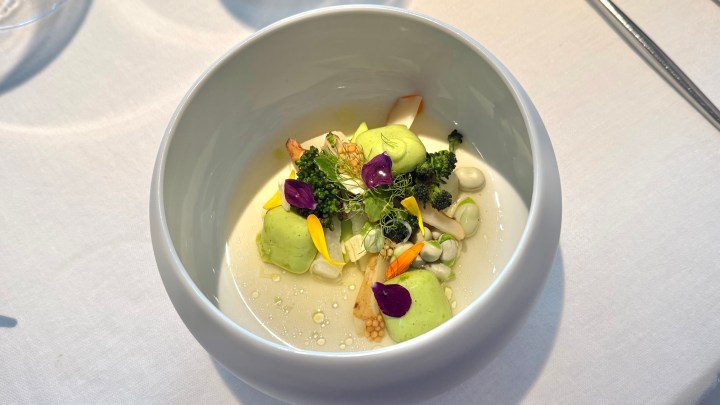
It was an excellent pairing for the vegetables from the garden, including ‘bonbons’ of lettuce, raw tomato juice, and bergamot.
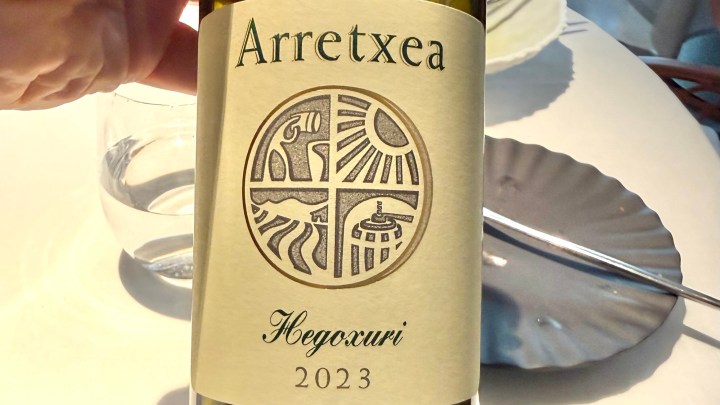
The third wine was a blend of Gros Manseng, Petit Manseng, and Petit Courbu from the south-western French appellation of Irouléguy in the Basque country, featuring pronounced floral aromas that made it seem almost sweet, despite being completely dry.
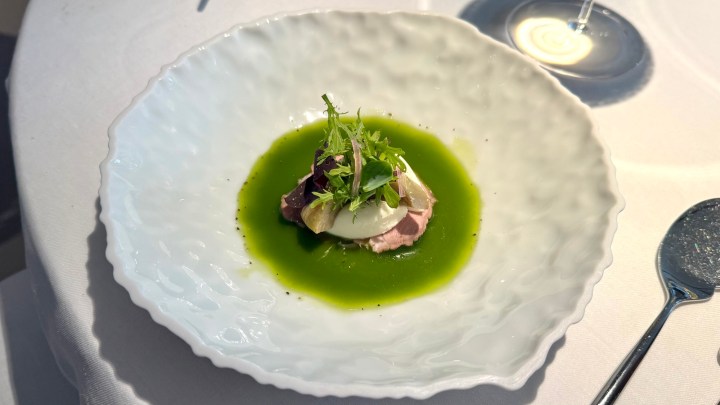
This proved to be a very good pairing for the thinly sliced ham of lamb with artichoke, green herb juice, and a one-day-old sheep’s milk cheese. Artichoke is notoriously every sommelier’s worst nightmare, but Nadine nailed the pairing here. The dish itself was excellent as well, showcasing remarkably tender lamb and a surprising yet delicious combination of flavors.
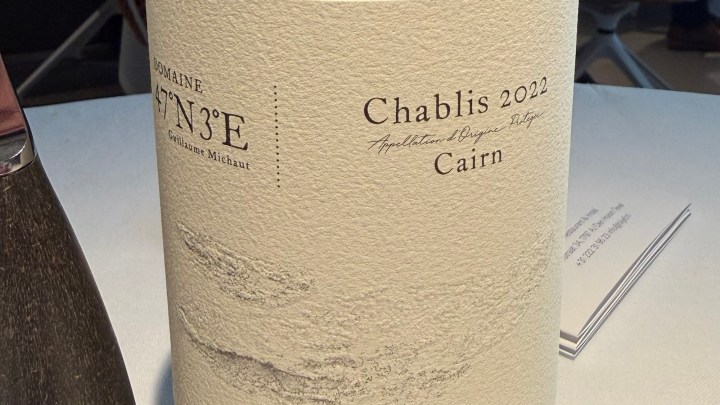
The wine pairing continued with a Chablis that, thanks to climate change, presented itself more like a white Burgundy from a more southern appellation. This worked entirely in its favor, as traditional Chablis can occasionally lean toward excessive acidity, whereas this wine offered a beautiful body and balance.
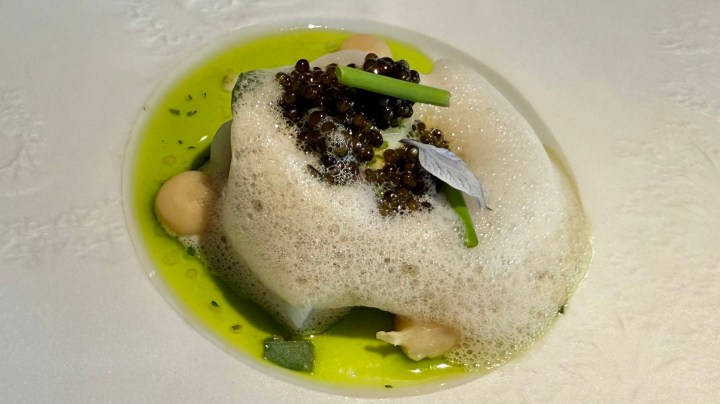
It provided a very good pairing for the asparagus with caviar.
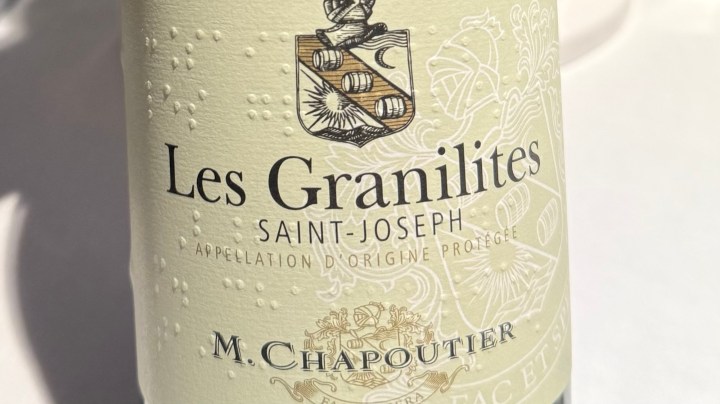
The next wine was a Marsanne from Saint-Joseph in the Northern Rhône Valley in France. The wine possessed a wonderfully integrated acidity that paired beautifully with the sauerkraut in the dish.
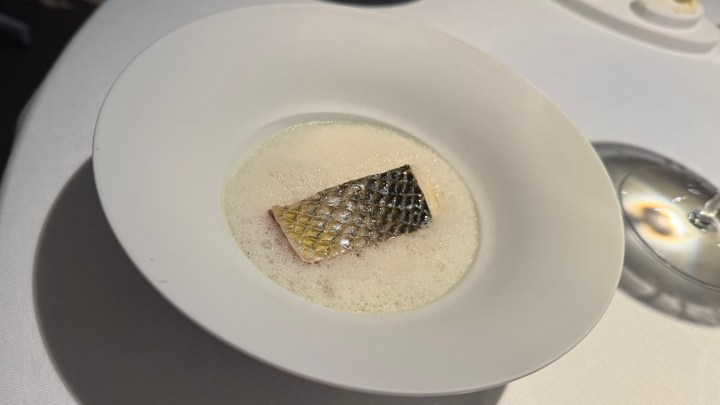
The dish itself also featured slow-cooked branzino, cockles from the Wadden Sea, and smoked flank of lamb. The combination of the tender fish and sweet clams with the smoky lamb and the tart sauerkraut was wonderful, making it our favorite dish of the evening, with the wine elevating it to the next level.
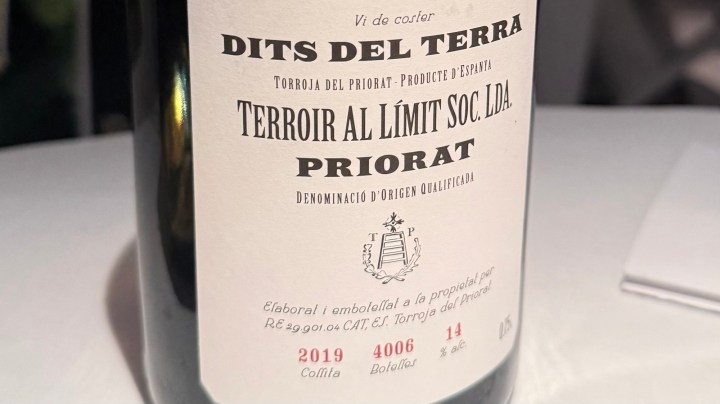
The red wine of the pairing was a highly refined Carignan from Priorat in Spain. While Carignan is mostly known for producing rustic wines, this particular bottle was exceptionally elegant.
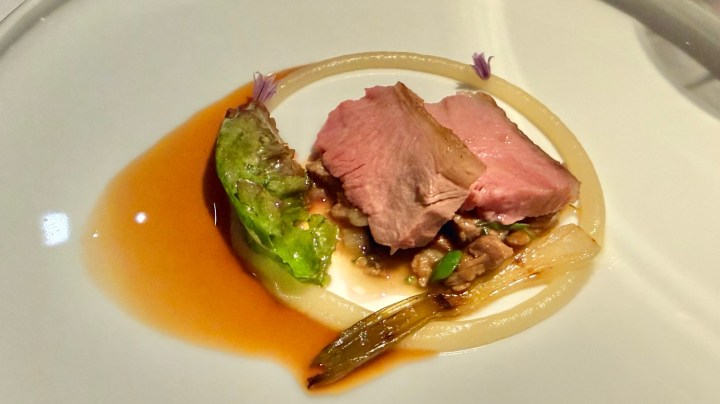
It provided an excellent pairing for the lamb, which was served remarkably tender and medium, accompanied by an outstanding jus.
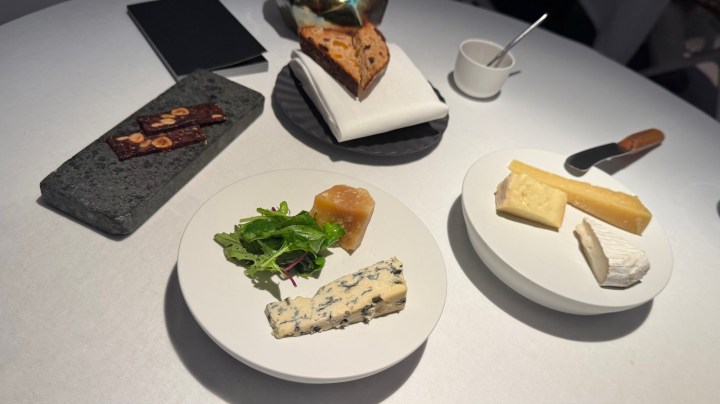
The cheeses were excellent. There was no cheese cart, as only a limited number of cheeses are produced on the Wadden islands (and they actually had to cheat a little by sourcing the washed-rind cheese from the mainland). The selection included a white mold cheese, a blue cheese, and two hard cheeses.
The suggested pairing was a Macvin, which is a style we do not particularly care for. Since we had already enjoyed quite a bit of wine, we made the unusual decision for us to skip a pairing for this course. Nadine generously offered a sample of the Macvin anyway, which did indeed work well with the blue cheese and the aged hard cheese.
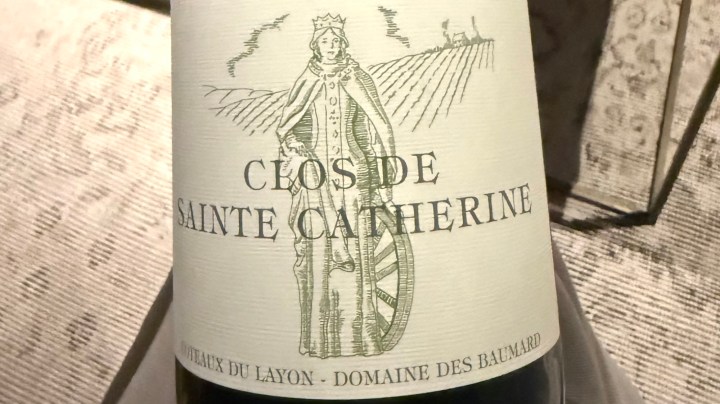
The dessert wine was a beautiful 2015 Coteaux du Layon, a noble rot Chenin Blanc from the Loire Valley in France.
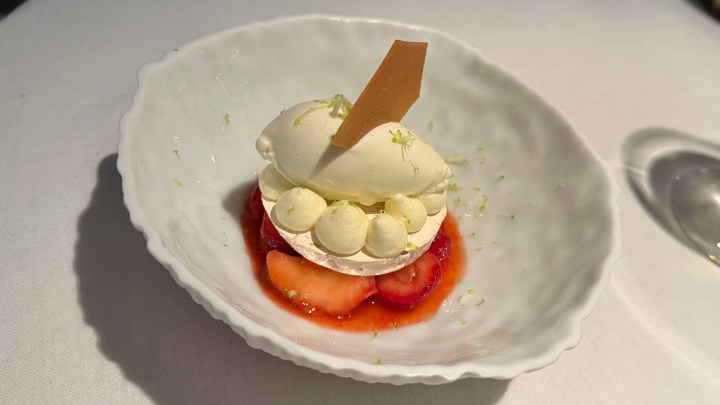
The wine exhibited a perfect balance between sweetness and acidity, providing an excellent pairing for the dessert, which featured strawberries, rhubarb, and vanilla ice cream.
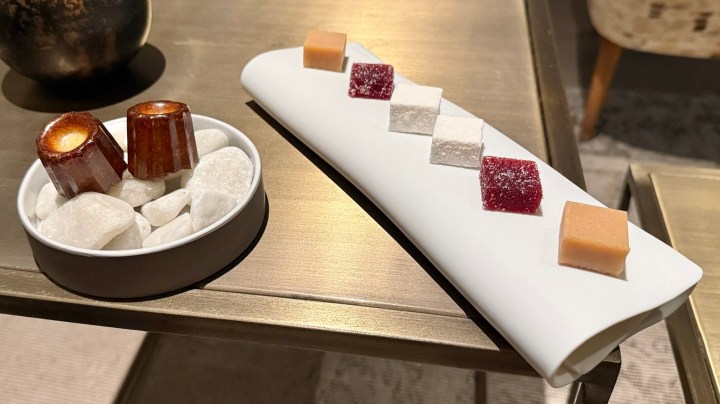
The meal was concluded with a nice set of petit fours, including excellent cannelés.
It would be too simple to say that Bij Jef is the place to go for fine dining on Texel, because it is the only option, and that wouldn’t do them justice. You can clearly tell Jef and Nadine have been doing this for a long time, and that they thoroughly enjoy showing their guests a great time. Perhaps it also plays a small role that we share the same directness and sense of humor typical for people from the province of North Holland from boven het Noordzeekanaal, but we felt right at home from the moment we walked in.
Chef Jef has his own distinct style and makes the absolute best of the exceptionally high-quality local ingredients. It is not often that so many dishes in a non-vegan tasting menu let vegetables shine, and it is certainly the first time we experienced three separate dishes featuring lamb, including one paired with seafood. Nadine also brings her own unique style to her wine curation; the fact that she has named her base pairing “Adventure” speaks for itself regarding the bold, unexpected bottles she selects. Yet, beyond the intrigue of the selection itself, her skill as a sommelier is undeniable—every single pairing we experienced worked beautifully with the food.
The service was remarkably friendly and attentive, and by the end of the evening, we felt like we had connected with everyone. The only critique I could offer is the wait of more than half an hour between the first and second serving of amuse-bouches, without any topping up of our Champagne. After that initial hiccup, the pace of the dinner was fine and the pouring of the wines was timed perfectly. We had an excellent experience at Bij Jef and will certainly return.


First of all, belated but sincerely meant congratulations on your wedding anniversary . . . I surely began being a bird on your shoulder whilst celebrating a number far smaller than 24 🙂 ! I had never heard of Texel island, so you are teaching me Dutch geography as well as showing what meals you can enviably access. Absolutely love this year’s choice — there is a simplicity in the place and the food served which truly appeals. The lamb, the asparagus, the beautiful vegetables all attract . . . I’d love to reach for the razor clams now . . . I am not surprised you are thinking of coming back . . . and it must have been a delight to collapse into bed after a two-minute walk from the table 🙂 !
LikeLike
Congratulazioni per l’anniversario!! Sai che Paolo e io l’anno scorso abbiamo festeggiato i 50 anni di matrimonio?
LikeLiked by 1 person
Non lo sapevo. Sarete stati giovanissimi al matrimonio!
LikeLike
Congratulations of your anniversary!
LikeLiked by 1 person