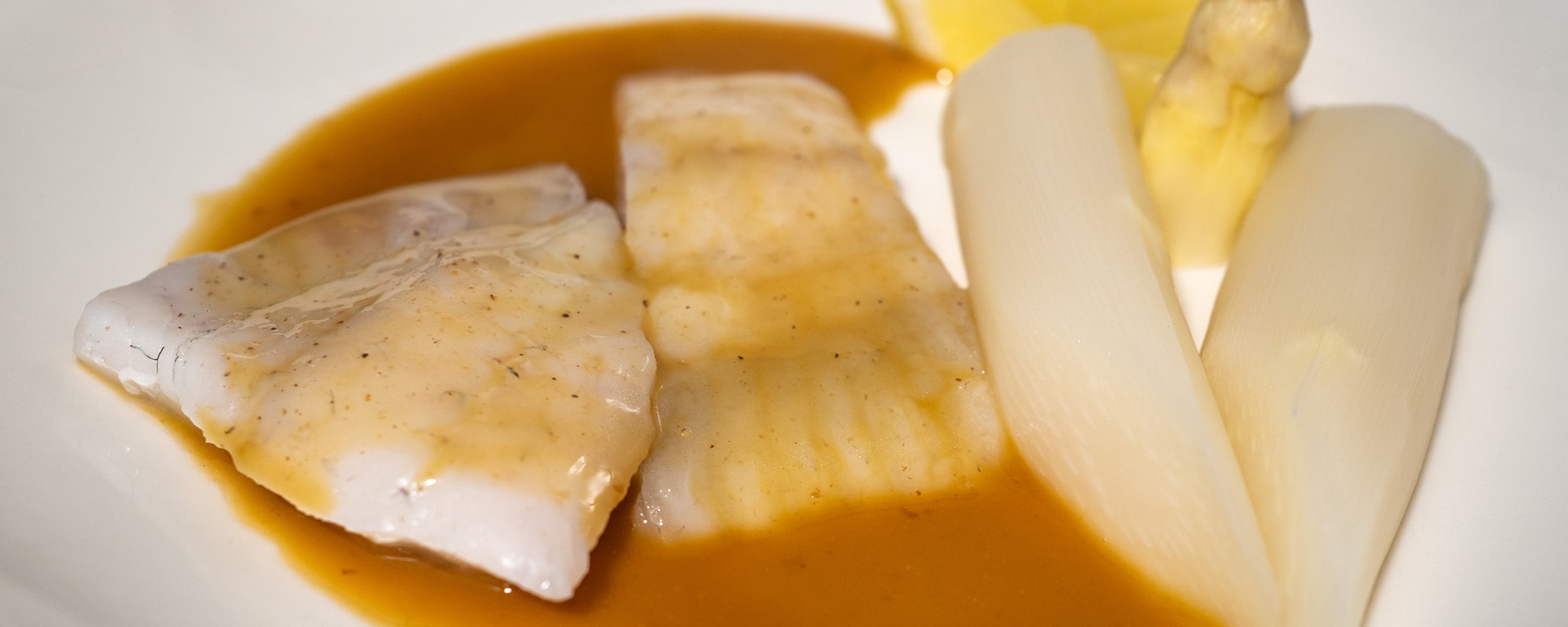
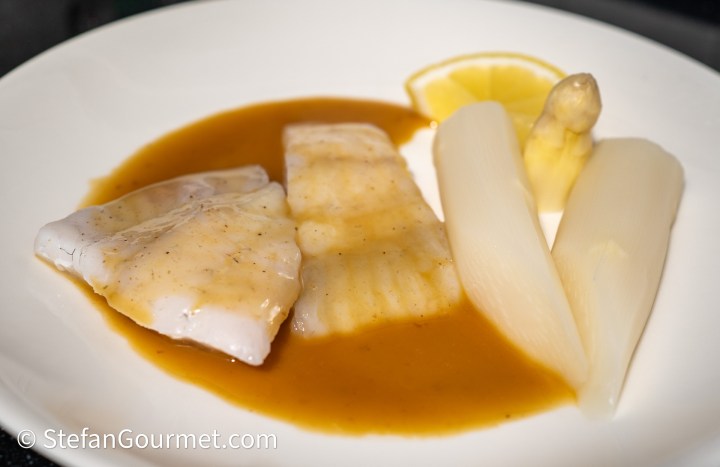
The season for white asparagus is almost ending here in the Netherlands, so I’m just in time to post this delicious recipe. It utilizes every bit of flavor from the key ingredients, as the head, bones, and skin of the turbot, along with the peels and bottoms of the asparagus, form the base for the rich jus. What takes this dish over the top is cold-smoking the turbot remains for a couple of hours first. This infuses the jus with an elegant smoky note that enhances the complex flavor profile. Dry white wine and cream are the final additions to create a sauce that is balanced, sophisticated, and deep. Cooking both the fish and the asparagus sous vide guarantees perfect texture and flavor. Although the process requires patience, the steps are straightforward and the ingredient list is quite limited.
This makes it an excellent dish for a dinner party, as nearly everything can be prepped in advance. When it is time to serve, you only need to drop the asparagus into the sous vide 30 to 45 minutes beforehand, and the turbot 15 minutes before serving. The only caveat is that you will need two sous vide devices, because the turbot and asparagus require vastly different temperatures. If you only have one, you can sous vide the asparagus first, then lower the water bath temperature by adding cold water and adjusting the setting before adding the turbot. The asparagus will not continue to cook at this lower temperature and will simply stay warm. To boost the serving temperature of the asparagus, you can optionally dip its bag briefly into very hot or boiling water just before plating.
You can use heavy cream, crème fraîche, or butter to finish the jus. After trying all of them, I prefer heavy cream as it gives the most velvety result and is much easier to work with than butter, which requires whisking a large amount of cold butter into the sauce in many small batches to mount it properly. Crème fraîche is even easier to use because there is no risk of the jus curdling, but it lends a fresh acidity to the sauce rather than that rich, creamy texture.
Ingredients
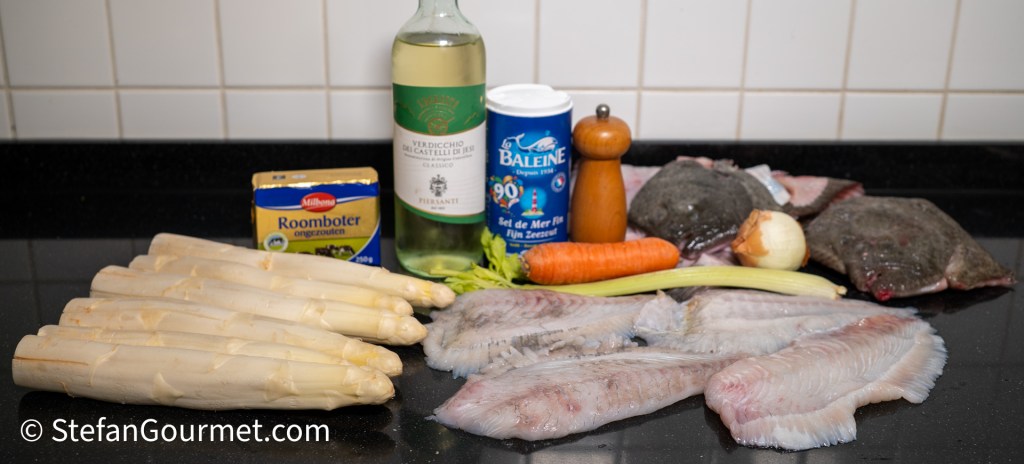
Serves 4 as a main course
- 1 turbot of about 1.5 kilos (3.3 lbs), yielding approximately 600 grams (1.3 lbs) of fillet, filleted
- 8 white asparagus
- 375 ml (1.5 cup) dry white wine
- 160 ml (2/3 cup) heavy cream (or crème fraîche)
- salt and freshly ground white pepper
- 1 carrot, 1 onion, 1 stick celery
- 1 bay leaf, fresh thyme
- minced fresh flat leaf parsley (optional garnish)
- 1 Tbsp cornstarch
- 4 slices of lemon
Instructions
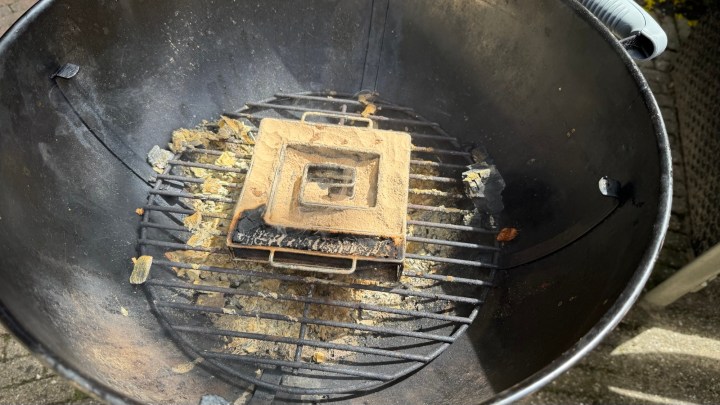
Ask your fishmonger to provide the head, bones, and skin of the turbot, or fillet the turbot yourself. Remove the eyes and gills from the head, as they will impart a bitter flavor to the stock. Set up a cold smoker…
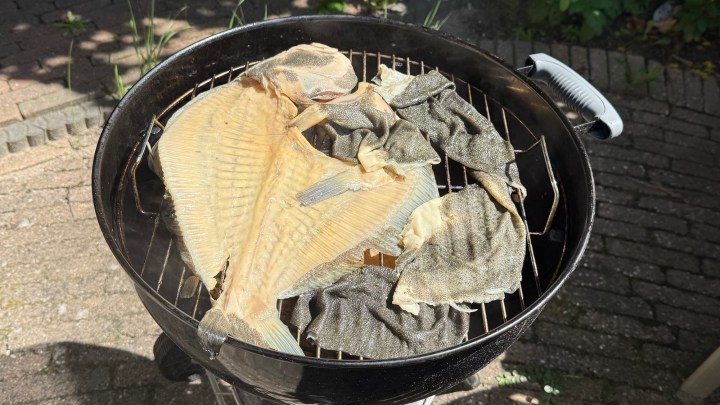
…and smoke the head, bones, and skin for about 2 hours or until slightly golden.
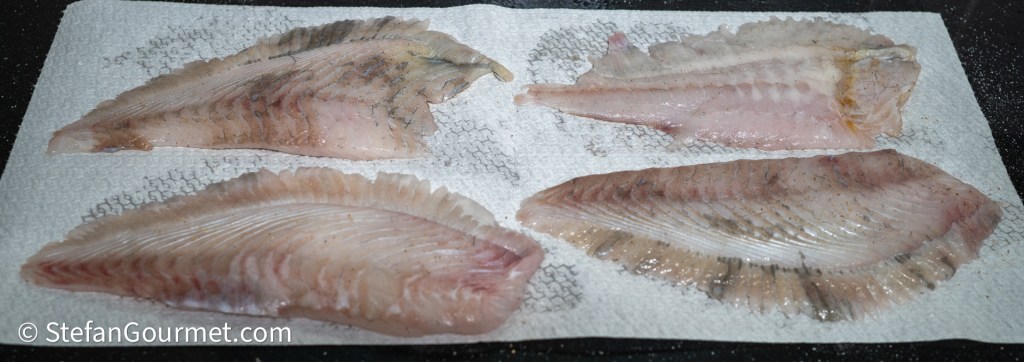
Season the turbot fillets with salt on both sides.
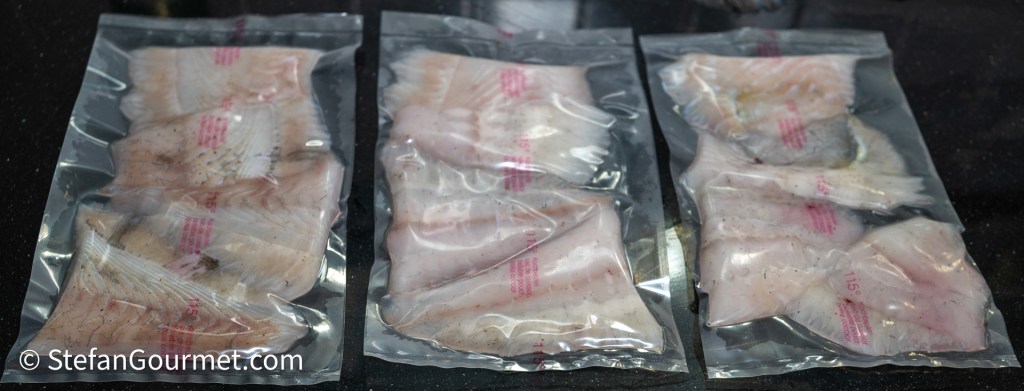
Then vacuum seal the fish in a single layer and refrigerate. The texture of the fish will improve if you give the salt time to penetrate, so it is best to start with this step.
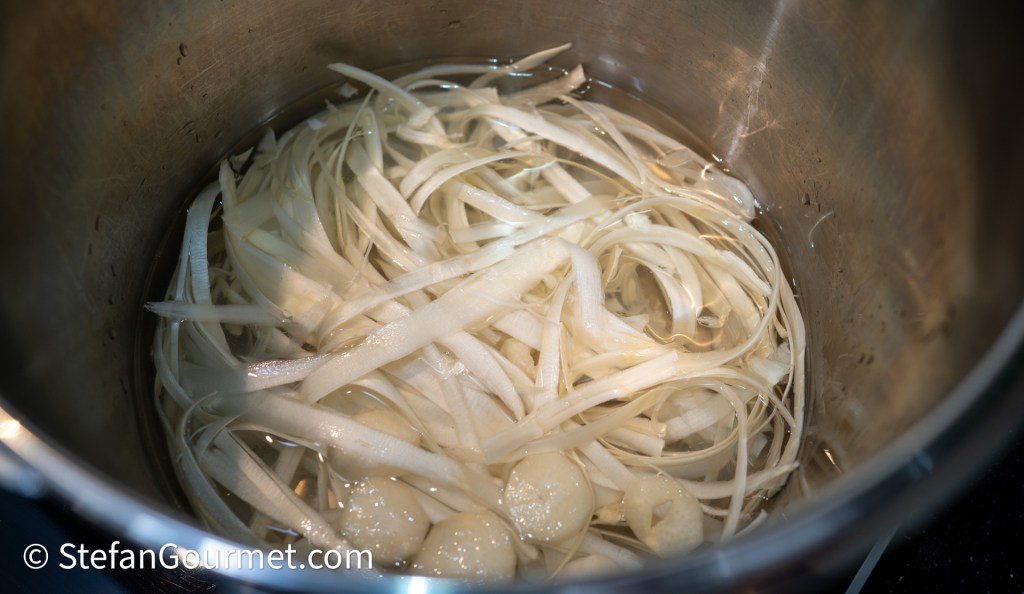
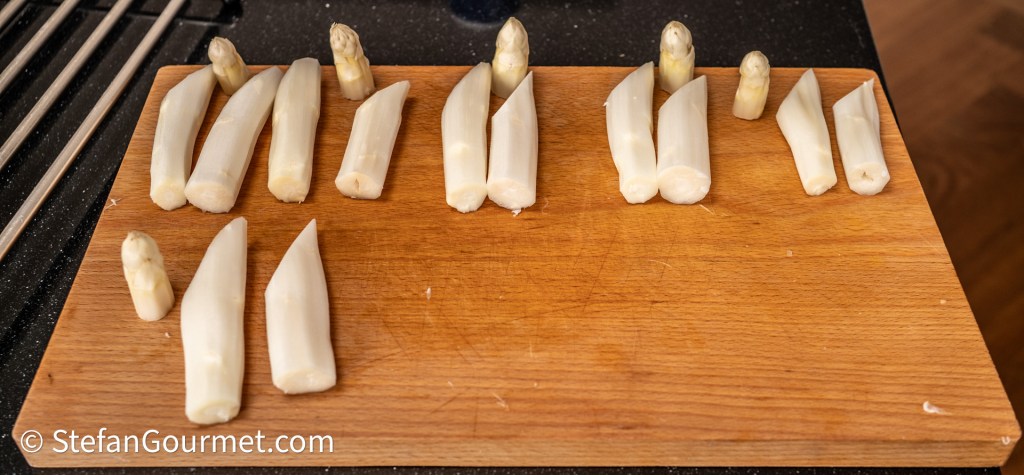
Wash the asparagus, then cut off 1 cm (1/2 inch) from the bottom and peel them thoroughly. Reserve the peels and bottoms to make the jus.
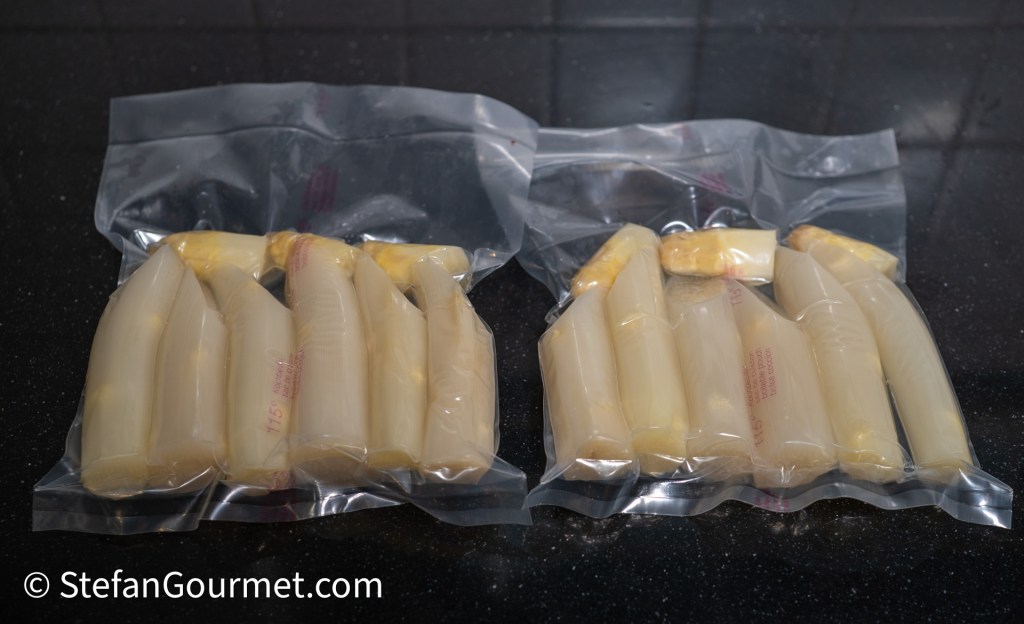
Season the asparagus with salt and vacuum seal them.
If you like, you can cut the asparagus as shown in the photo for plating, which also makes it easier to fit them into a sous vide bag.
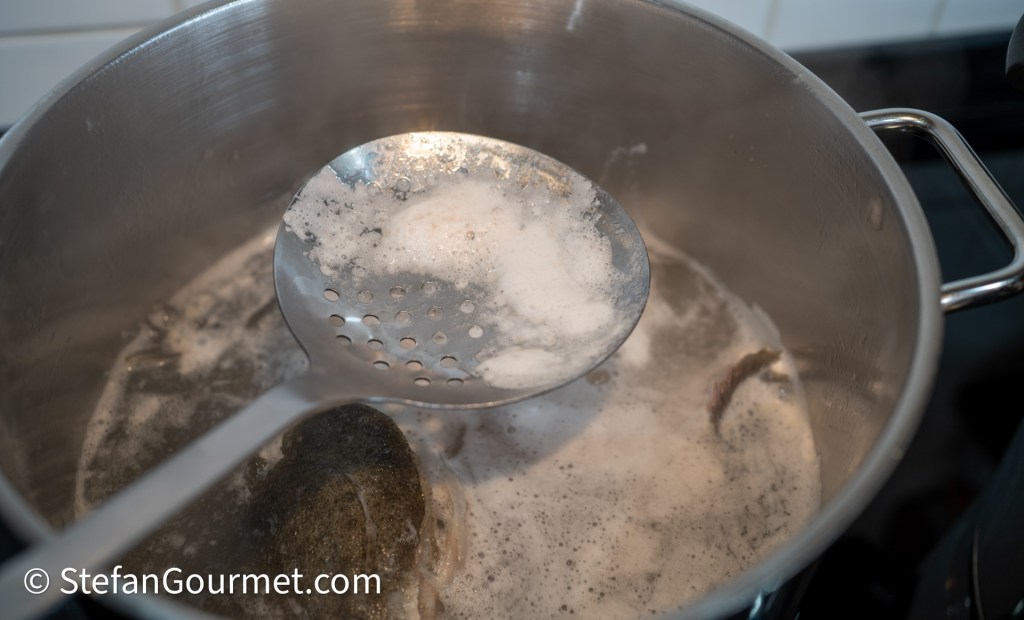
Chop a carrot, an onion, and a celery stick. When the fish remains are done smoking, place them in a stockpot along with the reserved asparagus peels and bottoms, and cover with cold water. Bring this to a boil, and remove the scum that rises to the surface with a strainer.
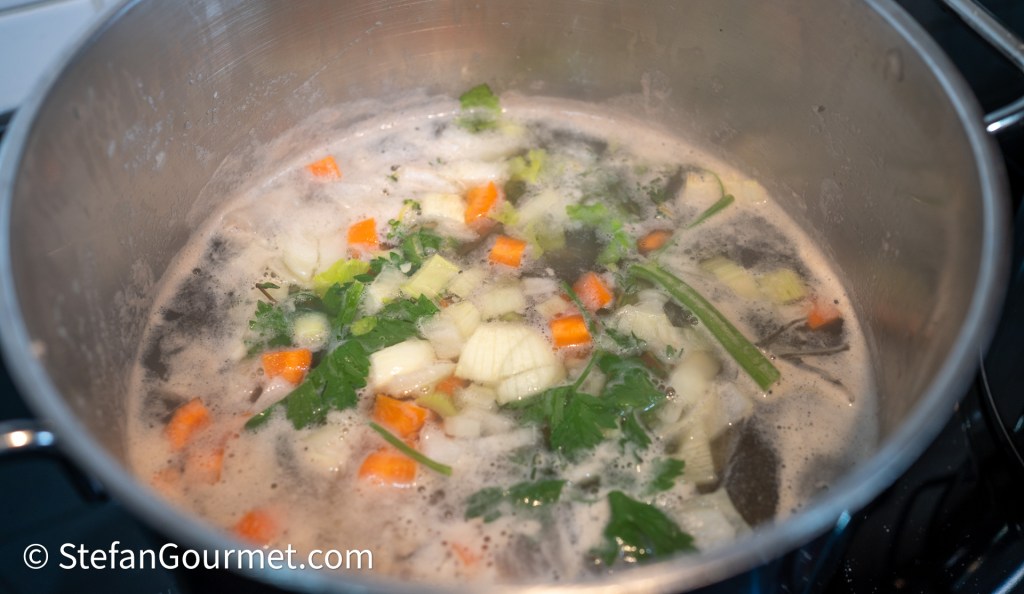
Then add the chopped carrot, onion, and celery, as well as a bay leaf and some fresh thyme. Simmer the stock for 15 minutes only, to avoid extracting bitter flavors from the asparagus or smoked fish remains.
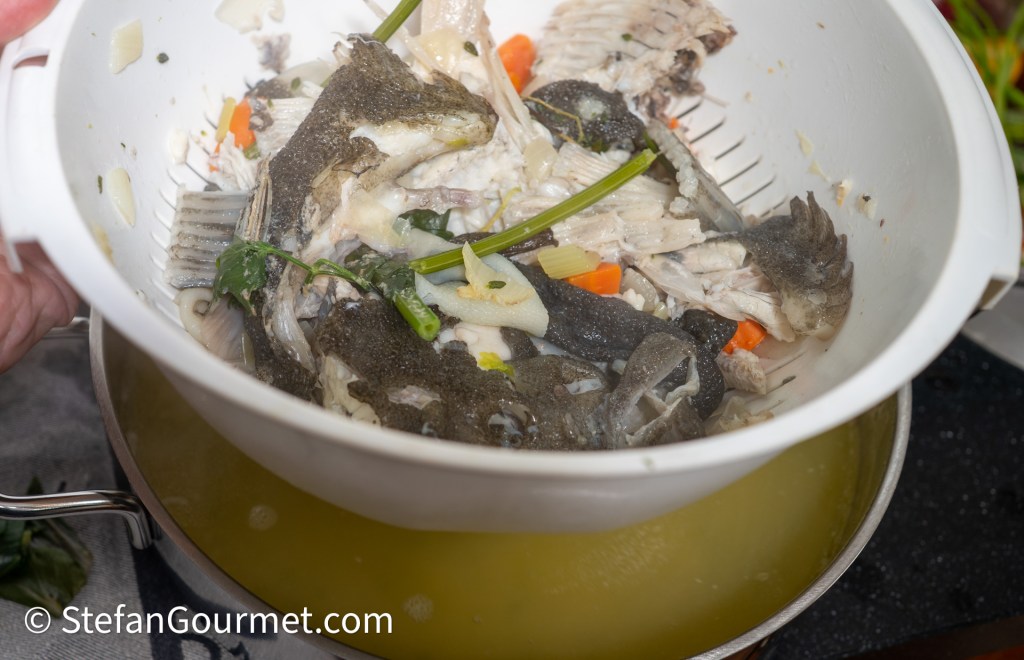
Strain the stock through a fine sieve.
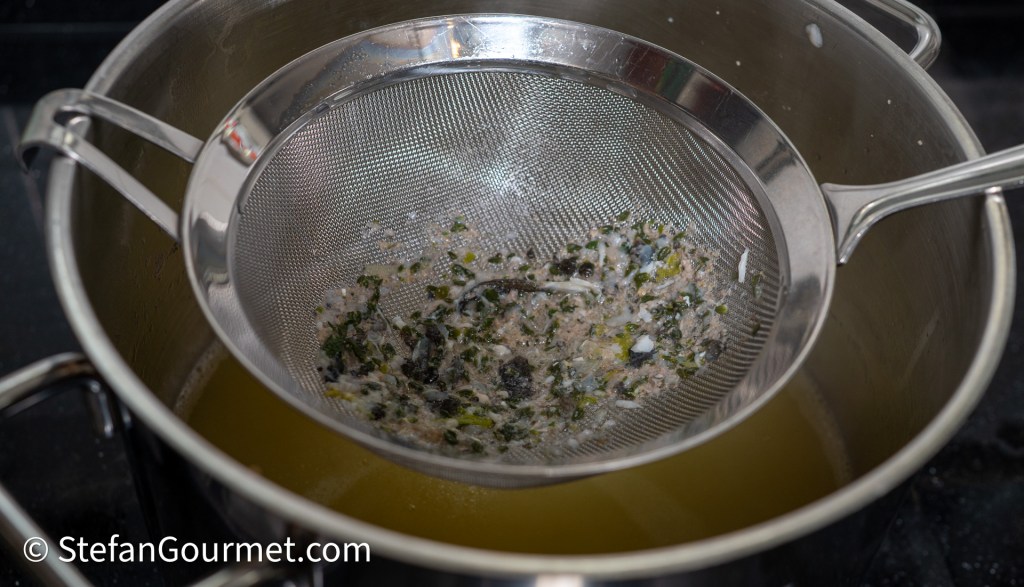
If you do not own a fine sieve that is large enough, you can first strain it through a colander to remove the large pieces, and then strain it again through a fine sieve.
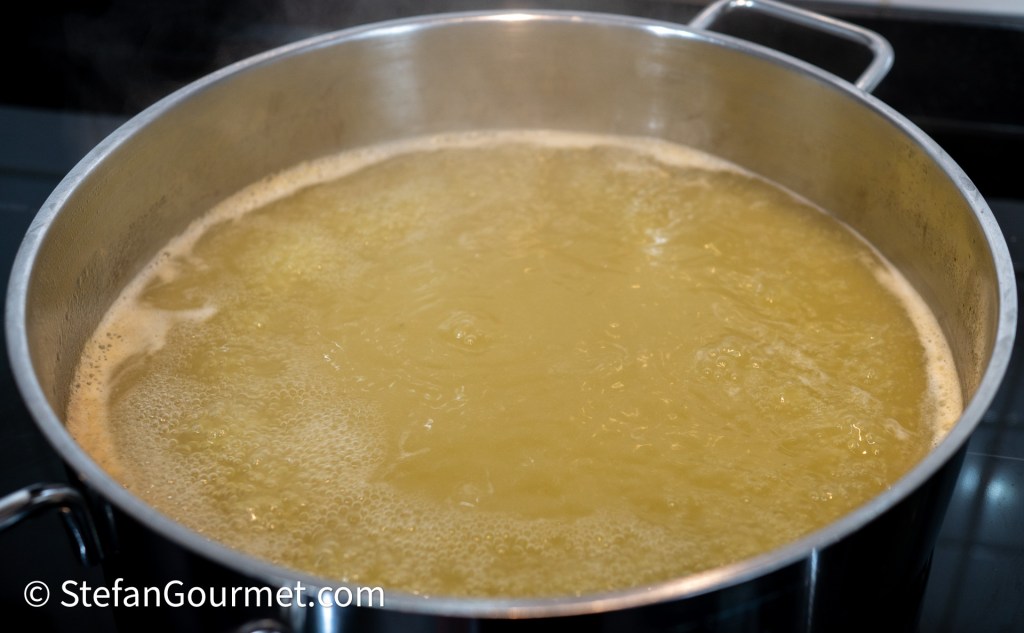
Pour the strained stock into a wide, shallow pan, bring to a boil, and simmer…
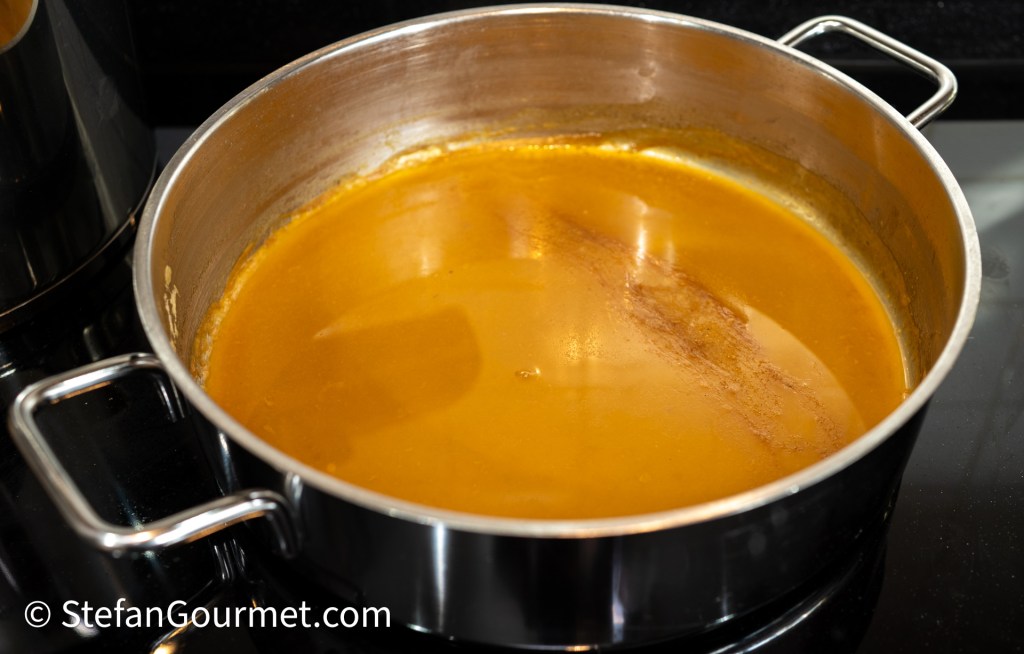
…until reduced to about 250 ml (1 cup).
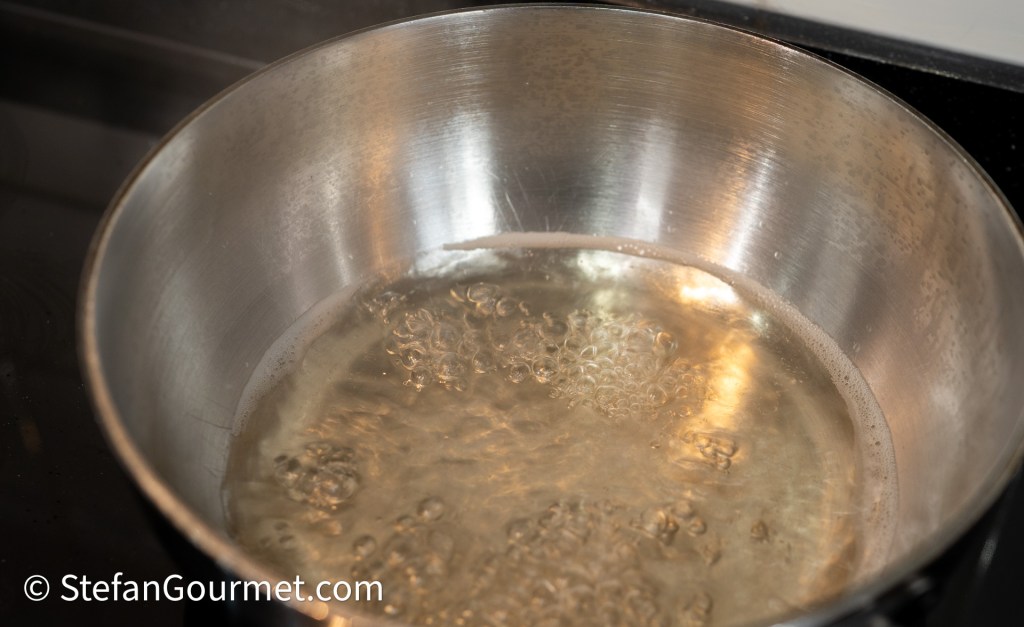
In a separate saucepan, bring 375 ml of dry white wine to a boil, and simmer until reduced by half. In a small bowl, combine 160 ml of heavy cream with a tablespoon of cornstarch and whisk until the cornstarch has completely dissolved. Add the reduced stock and the cream mixture to the white wine. Whisk well and bring to a boil. The cornstarch not only thickens the sauce but also helps prevent curdling.
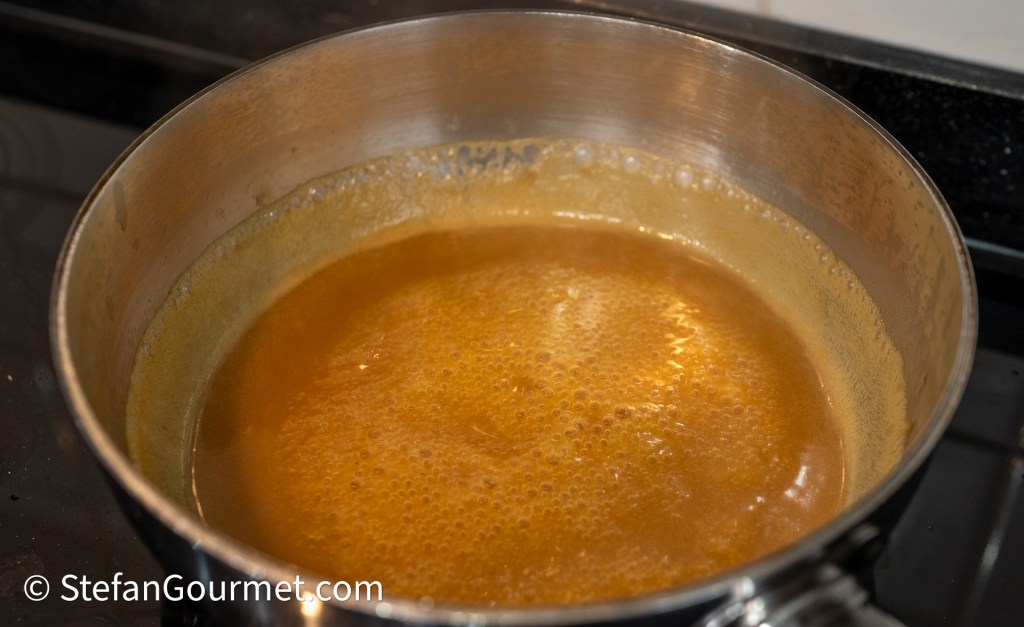
Taste the sauce and season with salt and freshly ground white pepper. You can reduce the sauce further by gently simmering to concentrate the flavor, but be careful with adding salt before doing so to avoid over-salting.
Cook the asparagus sous vide for 30–45 minutes at 85°C (185°F), depending on how thick they are and how soft you prefer them. Cook the turbot sous vide for 10–15 minutes at 50°C (122°F), timing it so that it finishes at the same time as the asparagus. Plate the asparagus and turbot on preheated plates, and pour the jus partly over the asparagus and the fish. Garnish with a slice of lemon. Green always looks great on a plate, so you could also garnish with some minced fresh flat-leaf parsley. Serve at once.
Wine pairing
This dish is outstanding with an oaked Chardonnay, preferably the finest you can afford. It was spectacular paired with a Corton-Charlemagne Grand Cru from Burgundy, and a Meursault or Chassagne-Montrachet would also be exceptional. However, a premium oaked Chardonnay from anywhere else in the world will also work beautifully.


An absolutely beautiful classic dish I cannot copy here at the moment but am scanning your writing, wishing and pretending 🙂 ! Love white asparagus – when our spring arrives in a couple of months shall do my homework to see whether some has become available somewhere . . . trust you are enjoying your summer days . . . daresay as hot as elsewhere in Europe . . .
LikeLike
This sounds delicious. I have never tried asparagus in the sous vide – we seldom get white asparagus here, but if we do this summer I will try that 🙂
LikeLiked by 1 person
It’s great for both texture and flavor.
LikeLike