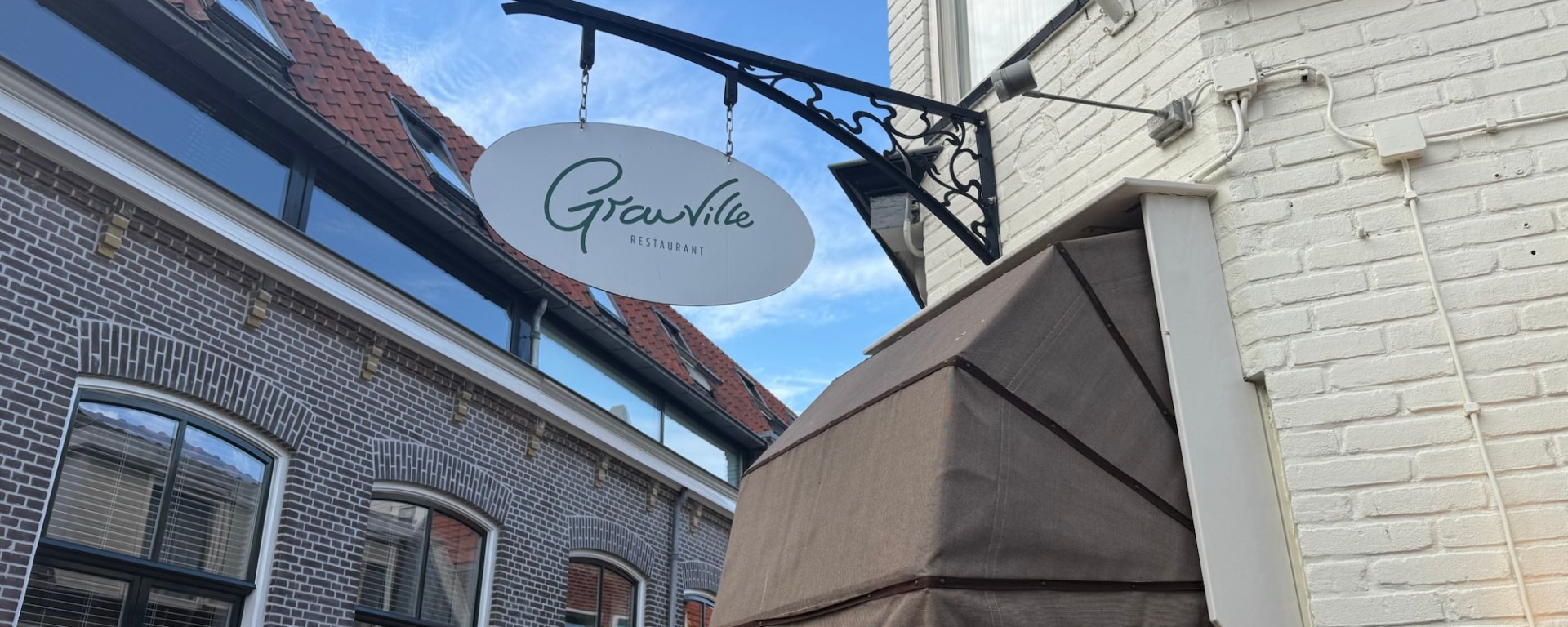
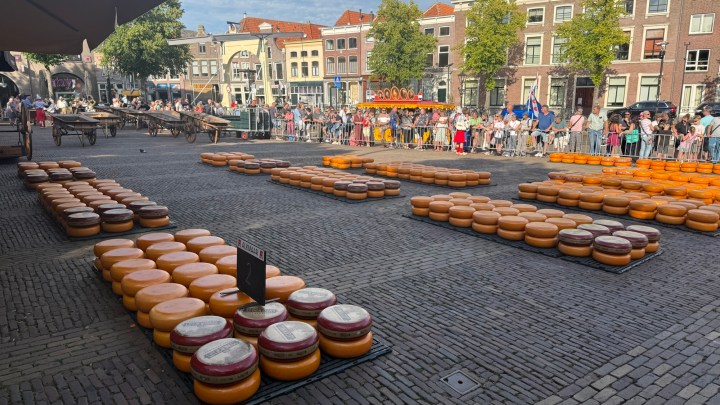
Alkmaar is a provincial town in North-Holland famous for its cheese market and canals, located just over half an hour north of Amsterdam. Living roughly halfway between the two, we usually head to Amsterdam because it has so much more to offer. However, with the beautiful weather, we decided on an impromptu two-day trip on the boat. Alkmaar turned out to be a fantastic destination on the water: it is a shorter and more pleasant trip, there are fewer rules to comply with, and finding a place to spend the night on the boat is far easier.
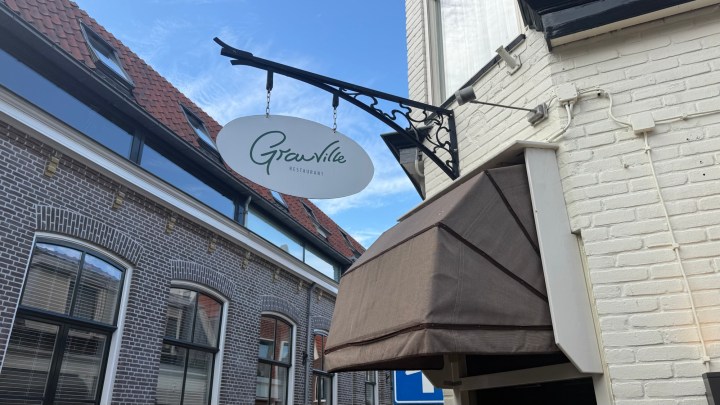
The culinary scene in Alkmaar is less developed than in other towns of a similar size, holding just two listings in the Michelin guide with no stars or even a Bib Gourmand. Fortunately, through Star Wine List, I discovered a promising new restaurant that opened in late 2024: Granville, boasting a 4.9-star rating on Google Maps.
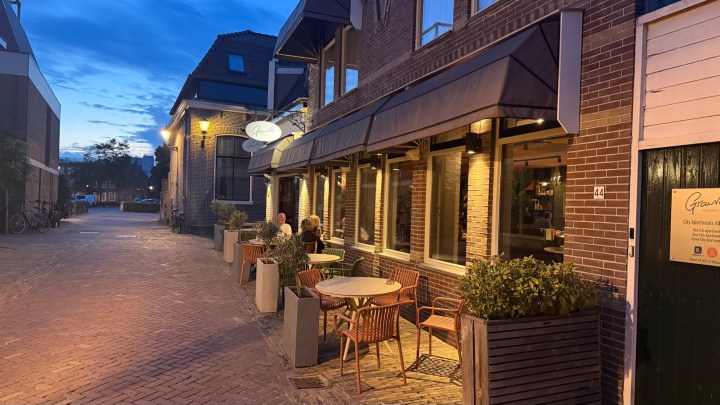
Named after the Granville Island Public Market in Vancouver, the restaurant offers a regularly changing market menu featuring the best seasonal local produce paired with international flavors. Chef Bram Haver gained experience at Michelin-starred restaurants like Chapeau and Duin en Kruidberg, and he started the restaurant together with host and sommelier Joris Baars. Their six-course menu is 95 euros (four- and five-course options are also available for 69.50 and 82.50 euros), with matching wines priced at 9 euros per glass.
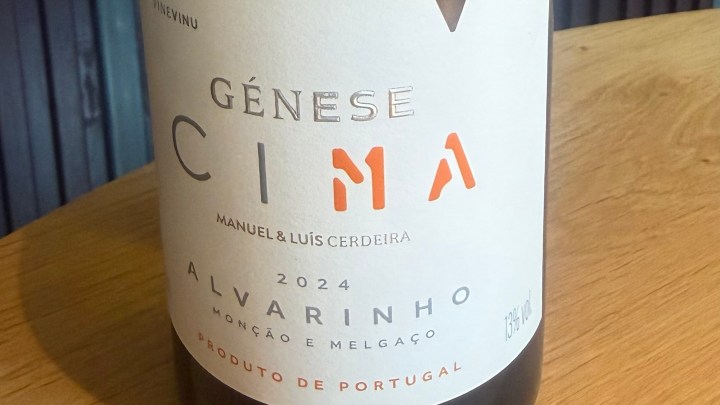
We thought six glasses of wine would be sufficient for a Tuesday night, making it an excellent suggestion by Joris to start right away with the first glass of the pairing. This was a delightful Alvarinho from the far north of Portugal, just across the border and very similar in style to a Spanish Rías Baixas Albariño. It offered vibrant fruit and crisp acidity, balanced by a creamy mouthfeel from sur lie aging.
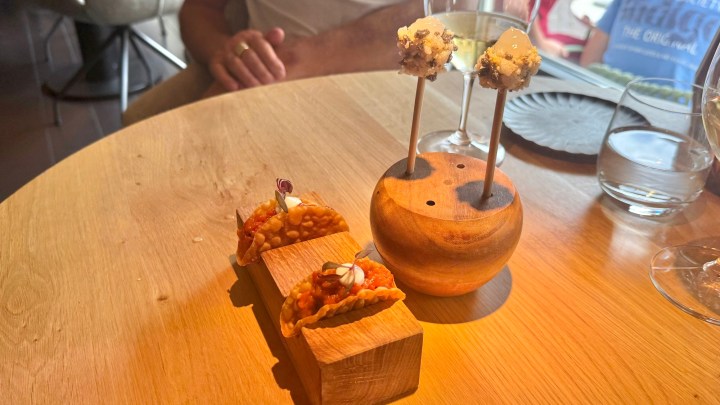
Before the first course arrived, three introductory bites were served. My favorite was a crispy taco filled with sweet potato…
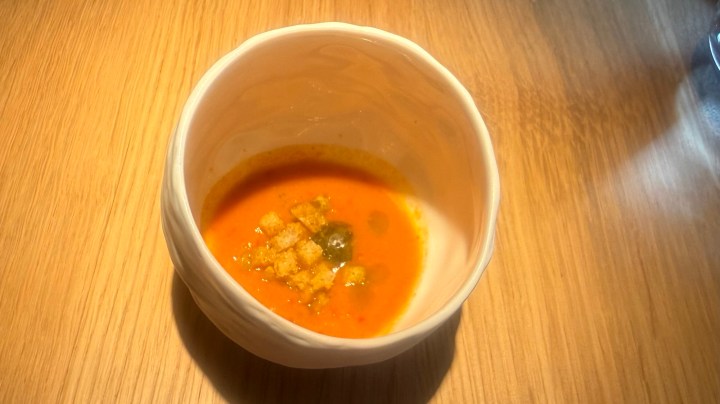
…though the gazpacho with frozen basil and croutons was also quite good.
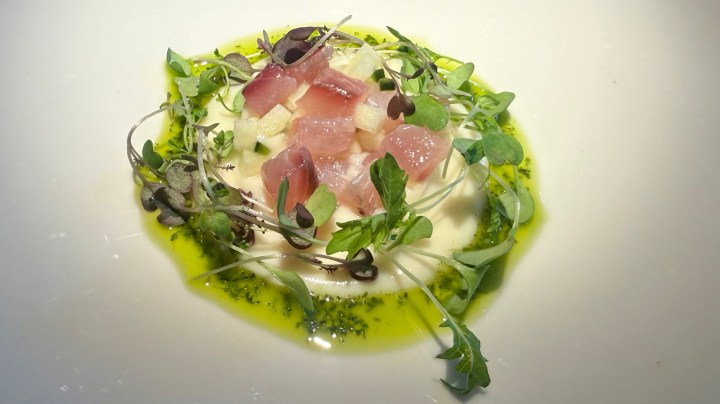
The Alvarinho was an excellent pairing for the ceviche of grey mullet on a cream of sunchoke with fresh parsley oil and brunoise of green apple. Although tiger milk was mentioned, it had been applied so lightly that I would be inclined to call this lightly cured rather than ceviche. This was by no means a bad thing, as the salt accentuated the excellent fresh flavor of the fish while the dressing provided a bright, refreshing element. I am not usually a fan of cress, but in this dish it worked well. I didn’t think the apple added anything.
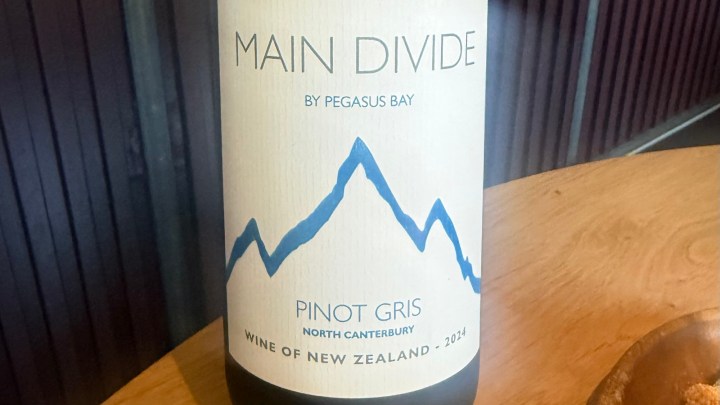
The second wine was a Pinot Gris from Canterbury in New Zealand in a very original style. This is largely thanks to the region’s unique climate, sheltered by the surrounding mountain ranges, which creates a semi-continental microclimate with strong diurnal temperature swings despite being on an island. The grapes receive plenty of sun and heat during the day, but cold nights preserve their natural acidity and delicate aromatics. The wine had a touch of residual sugar balanced by vibrant acidity, making it quite distinct from a sweet Pinot Gris from Alsace, which can easily tilt toward being flabby. On top of that, it displayed pronounced tropical fruit aromas.
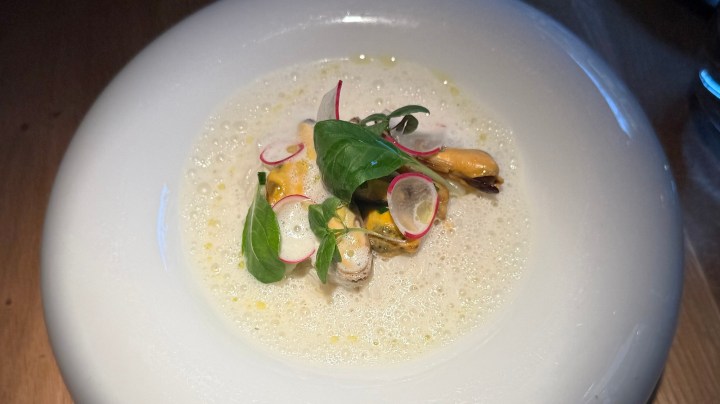
This was an excellent pairing for a stellar dish: mussels with coconut milk, a hint of green curry, rice, thinly shaved radish, and Thai basil. I describe it deliberately as coconut milk with just a hint of green curry, because the ratio was quite different from a standard Thai curry, allowing the sweet coconut milk to take center stage. The rice was cooked nicely al dente, providing a wonderful textural contrast in what was almost like a refined rice soup. While we thoroughly enjoyed the dish, we did suggest that a touch more of their homemade green curry paste would elevate it even further. Given that Alkmaar can be somewhat reserved in its flavor preferences, they may have chosen to play it a bit safe initially, much like with the tiger milk. Joris mentioned this was their first service back after the summer break and the debut of this menu, leaving plenty of room for those final subtle adjustments to shine through.
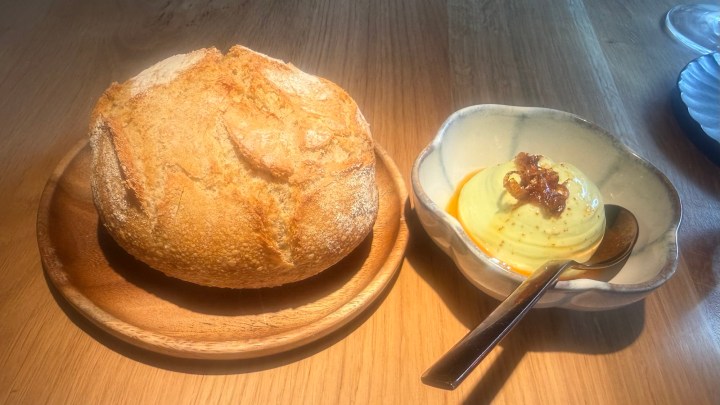
I do not always mention the bread in my reviews, but at Granville the bread—or rather, what was served alongside it—deserves a special mention. They had leftover leeks in the kitchen, likely the green tops, and decided to turn them into a condiment by whipping leek oil with yogurt. It was creamy with a lovely leek flavor, yet much fresher and lighter than the whipped butter seen everywhere at the moment. Well done.
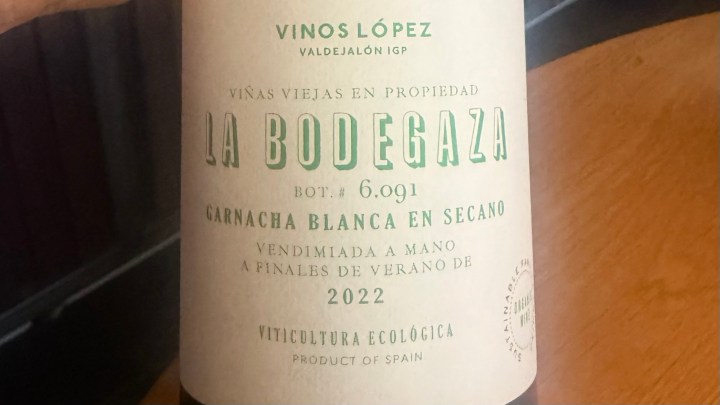
The third wine was a Garnacha Blanca from old vines on limestone in the Valdejalón region of Spain. The label featured a term I was not familiar with: “en secano”, which means dry-farmed without irrigation. Thanks to the high elevation and dry farming, the wine showed more freshness and herbal character than is typical for Grenache Blanc. It had been aged for 10 months in 600-liter oak barrels, which lent subtle toasted aromas and added body.
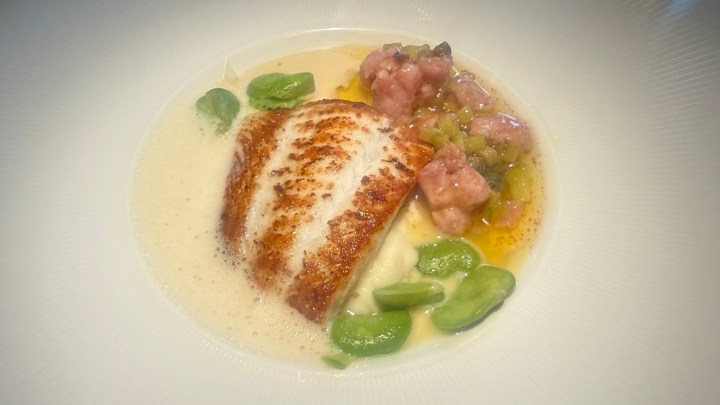
It proved to be an excellent pairing for the plaice, served with a beurre noisette infused with Ciauscolo (a spreadable cured pork salami from the Marche in Italy) and vinegar-pickled capers alongside a cream of celeriac and double-shelled fava beans. Plaice is a locally caught, humble relative of sole and turbot, elevated here into a true fine-dining dish.
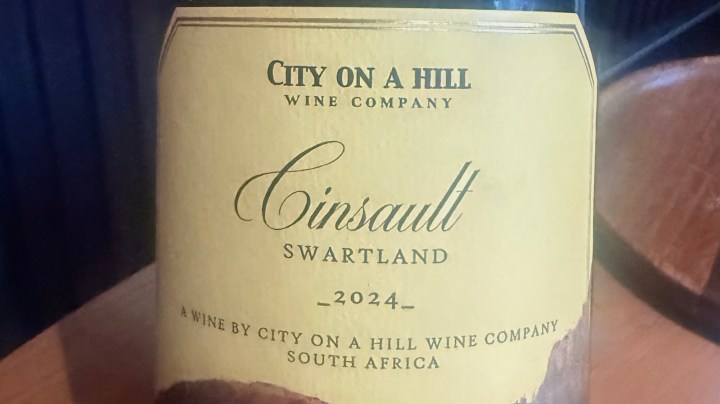
The fourth wine was a Cinsault from Swartland in South Africa, medium-bodied and fresh with pleasant red fruit and herbal aromas.
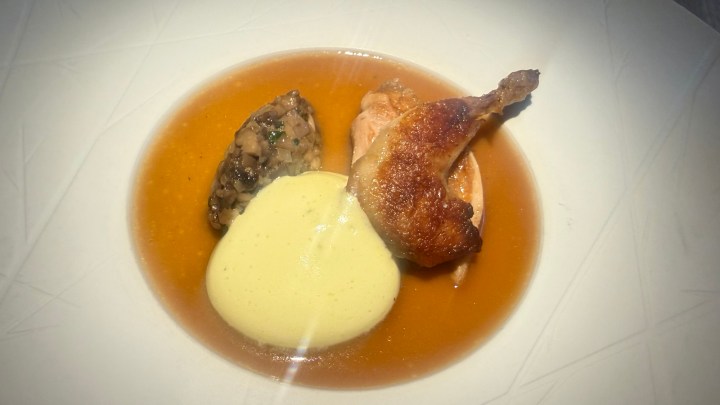
It was a very good pairing for the quail, served with mushrooms, a quail and chicken jus, and a lovage hollandaise. The quail came three ways: the leg cooked as confit with a crispy skin, the breast remarkably tender and juicy, and the carcass utilized for the jus. I could see why the Cinsault was chosen to match the lovage in the hollandaise, though I felt the hollandaise itself was somewhat superfluous; the generous portion and potent lovage flavor tended to overpower the delicate quail and mushrooms. Additionally, the quail jus was a bit watery and would have benefited from being reduced further. It lacked intensity and was difficult to eat as it did not cling well to the meat. The quail and mushrooms were undeniably delicious on their own, but with a lighter hand on the hollandaise and a more concentrated jus, this dish could have been stellar.
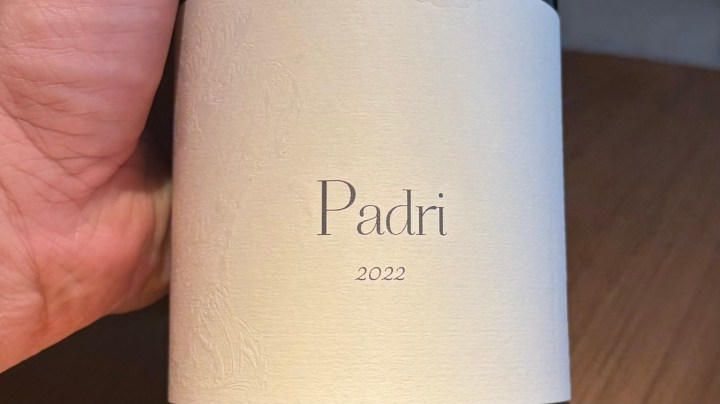
The fifth wine was an MSG blend from the Roussillon region in France. While the more common GSM blend is predominantly Grenache with some Syrah and a splash of Mourvèdre, this was the inverse: mostly Mourvèdre with some Syrah and a touch of Grenache. Mourvèdre (known as Mataro in Australia and Monastrell in Spain) has very thick skins that can easily yield harsh tannins, but this wine was full-bodied with velvety tannins and wonderful black fruit aromas. The higher proportion of Mourvèdre gave it more structure and freshness than a standard GSM, making it an excellent pairing for the roe deer venison served with orange, fennel, and a roe deer jus.

Wild game is traditionally associated with autumn and winter, but the hunting season for roe deer bucks in the Netherlands runs from May through mid-September. By incorporating orange, the chef brilliantly transformed the venison into a true summer dish. Served both as fresh segments and a smooth sauce, the orange provided a delightful contrast to the subtle gamey note of the meat. Matching both the citrus acidity and the sweetness of the orange was a true challenge, but the wine mastered it with ease.
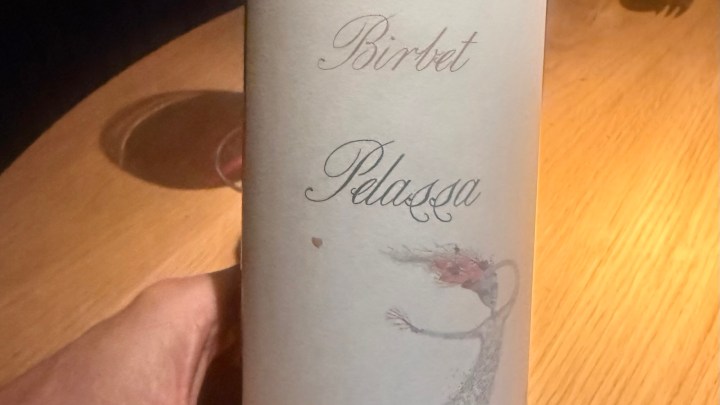
The dessert wine was a Brachetto, not from the Brachetto d’Acqui appellation, but crafted in the same style as an elegant, sweet sparkling wine with red fruit aromas—produced using the same method as a white Moscato d’Asti, only less sweet.

It proved to be an excellent pairing for the dessert of cherry clafoutis with almond ice cream. The dessert itself was only mildly sweet, which was delightful on its own and harmonized beautifully with the delicate sweetness of the wine.
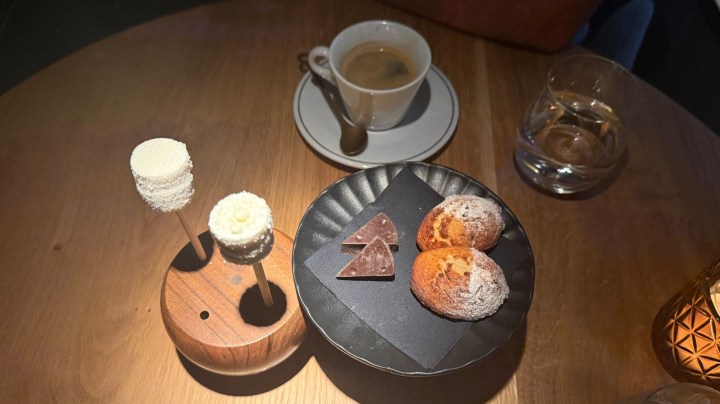
Tea and coffee were served with excellent petits fours, most notably the madeleines, which were perfectly crisp on the outside and moist on the inside.
Granville is a fantastic addition to Alkmaar’s culinary scene. The food was excellent and remained true to the restaurant’s philosophy of letting local ingredients shine with a refined exotic twist. While already at a high standard, a few dishes could become even better with subtle tweaking or simply a lighter hand, which may well be tied to this being the first service of the new menu. The wine pairings were exceptional throughout. While good pairings ought to be standard practice, it is unfortunately rare, as chefs and sommeliers do not always collaborate closely or take the time to rigorously test combinations. At Granville, they have clearly done the work, and it pays off handsomely, especially at this accessible price point. Coupled with friendly, highly attentive service, the restaurant offers outstanding value for money and comes strongly recommended. We already know where we will be dining on our next boat trip to Alkmaar. (And if you don’t come by boat, it is just as easy to reach from Amsterdam by train or car.)


A lovely, not overly ‘fussy’, combination of dishes to enjoy – like the look of the plaice and the mussels. More so . . . was and am really interested in the wines served . . . from all over the world obviously chosen with such care to meld with the food . . . The bread looks moreish and I cannot quite believe the bill . . .
LikeLiked by 1 person
Interesting idea to combine lovage and quail! One to remember.
LikeLiked by 1 person