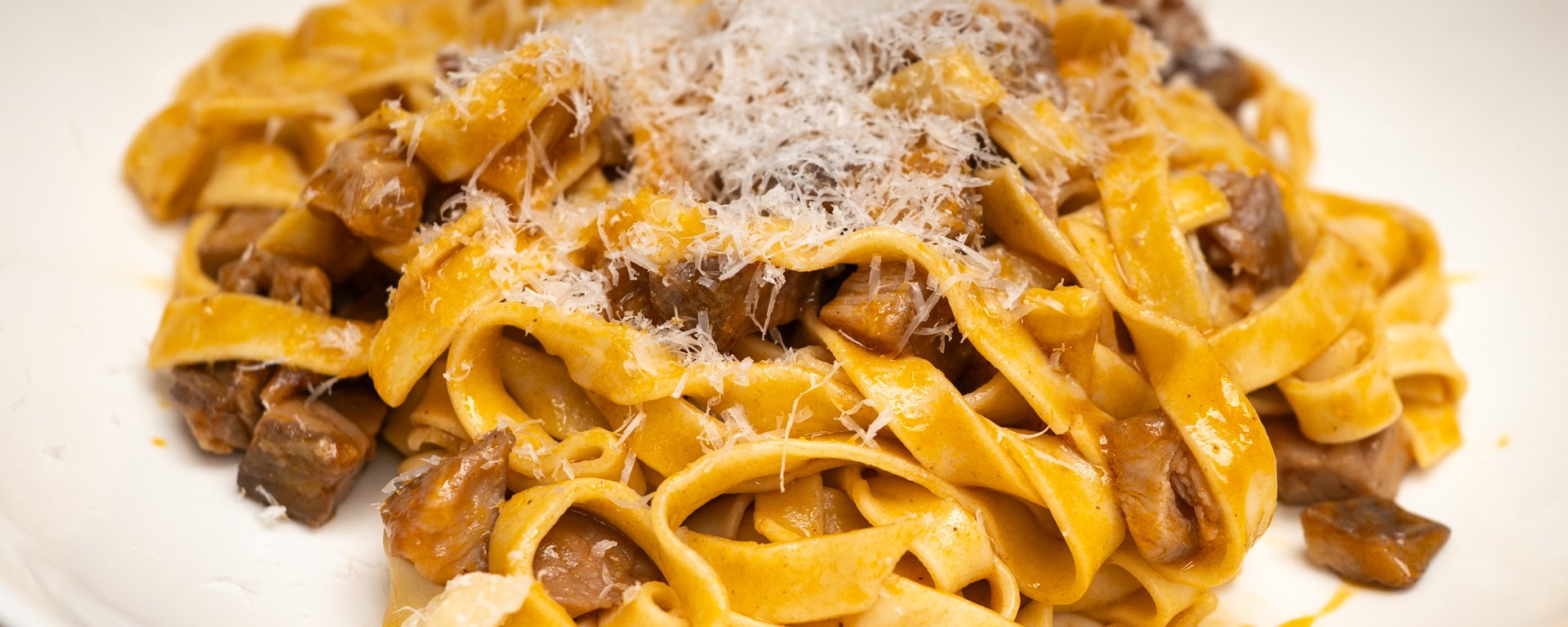
Massimo Bottura’s Osteria Francescana in Modena is widely considered one of the most famous restaurants in the world, holding three Michelin stars. During our meal there, we were served Tagliatelle 3.0, a elevated rendition of classic tagliatelle al ragù. The pasta dough was prepared exclusively with egg yolks, yielding an intensely rich flavor and a deep golden color. Instead of traditional minced meat braised into the sauce, the ragù featured tender, juicy cubes of beef and pork cooked at low temperature, bathed in a deeply flavorful jus that captured all the essential elements of a Bolognese. Additionally, the waiter noted that the pasta had been boiled in a broth made from Parmigiano Reggiano rinds.
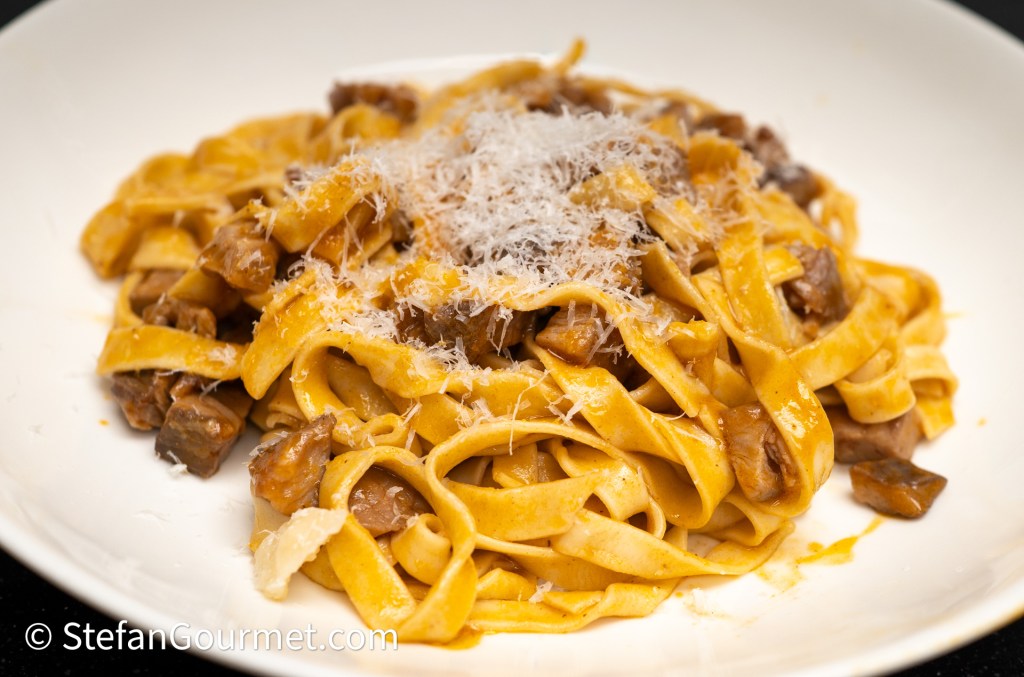
Impressed by the dish, I set out to create my own version at home. While not a direct copy, it is heavily inspired by Massimo Bottura’s creation, and I was thrilled with the final result. It requires considerably more effort than a standard ragù alla Bolognese, but the outcome makes it well worth the extra work for a special occasion.
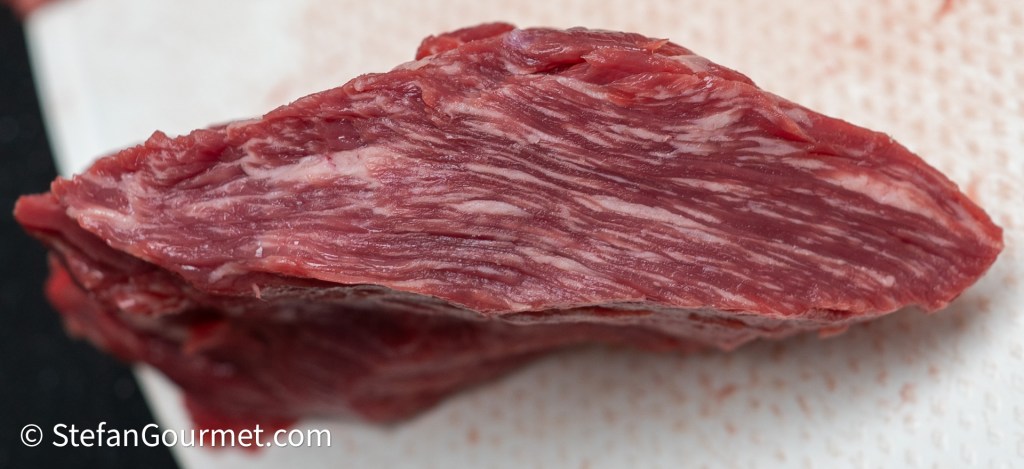
Meat with marbling (intramuscular fat visible as thin white lines running through the lean meat rather than thick outer layers) yields the best result for these beef and pork cubes. Any thick layers of fat should be trimmed away and reserved for making the jus.
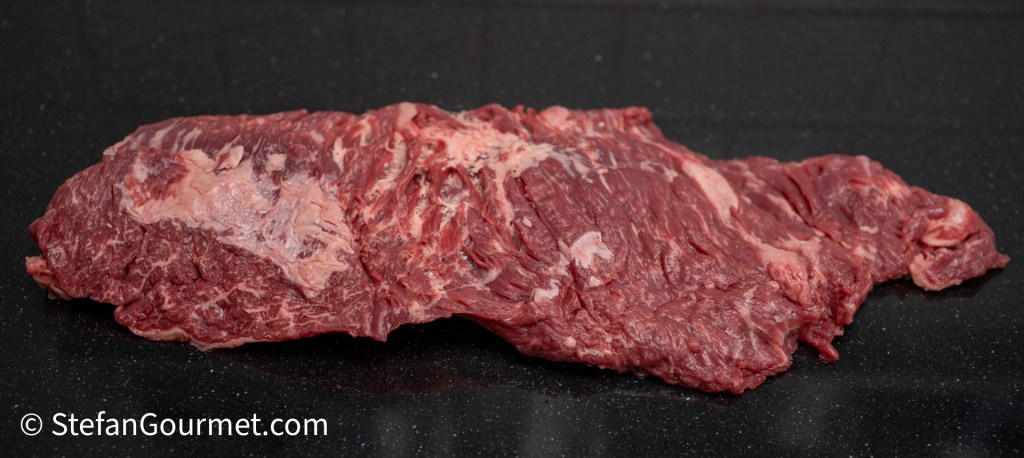
Grain-fed flank steak performed very well for the beef.
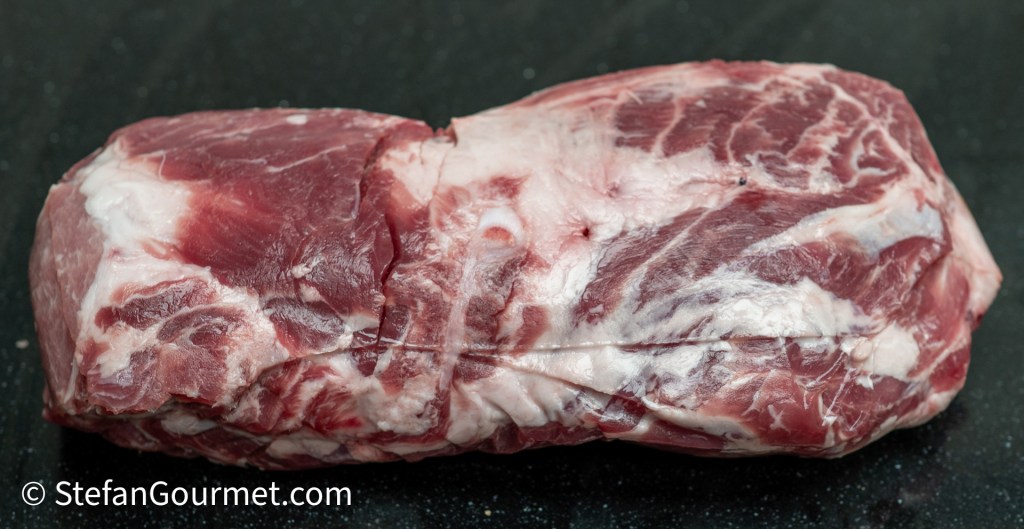
For the pork, an Iberico neck joint offered outstanding flavor…
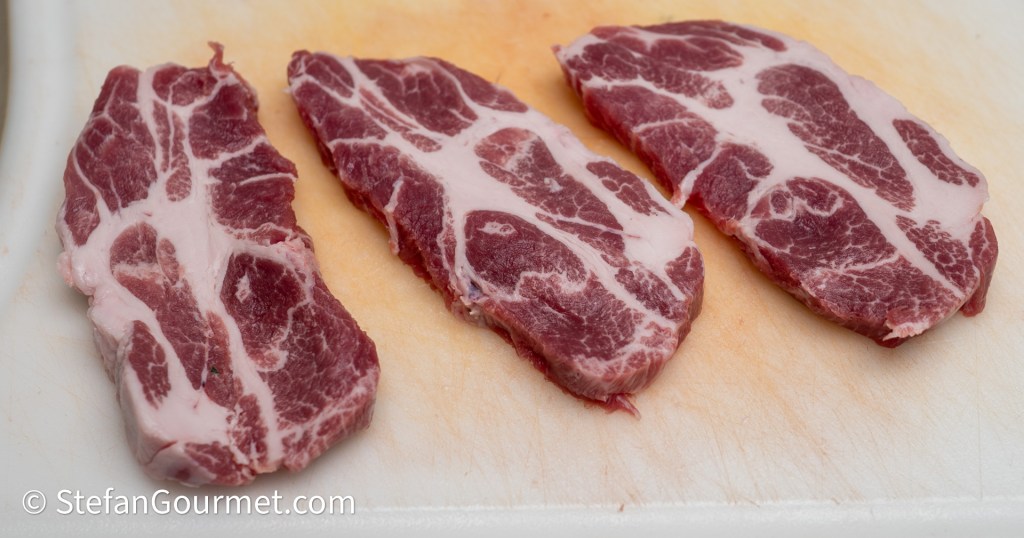
…though separating the leaner sections from the heavy fat layers required significant effort and resulted in a low yield. I ended up with more and fattier trimmings of the pork than I needed for the recipe.
To determine whether dicing before or after sous vide yielded better results, both methods were tested side by side. Tossing meat diced prior to cooking in extra virgin olive oil failed to keep the pieces from sticking together, and the resulting cubes appeared uneven once separated. Pre-slicing the meat into slabs of the intended thickness, cooking them sous vide, and dicing them afterward proved far superior, producing clean, uniform cubes. Aim for a size roughly equal to the width of the tagliatelle, about 6 mm (1/4 inch).
The method to make the jus (which could also be called an essence or distilled ragù) is quite straightforward: prepare a ragù alla Bolognese as usual, but with less meat and less reduction. Once finished, sieve and squeeze out as much liquid as possible. This liquid is the jus and contains most of the flavor.
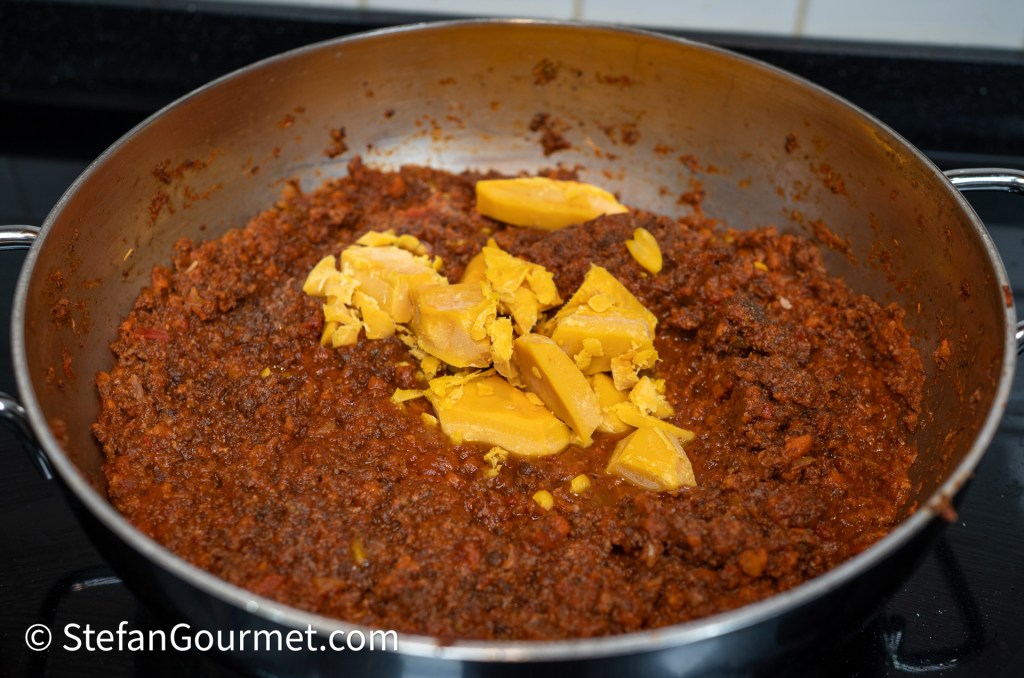
Discarding the remaining dry solids may seem wasteful, and in fact they can be transformed into a reasonable ragù by adding tomato and leftover beef fat from making homemade beef stock. Adding that fat is essential, as the recycled ragù will taste flat without it.
Making enough Parmigiano rind broth to boil a batch of tagliatelle may be a reasonable approach for a restaurant that can reuse the boiling water for dozens of orders throughout the service, but for a home cook it would be highly wasteful. The cheese broth does not actually penetrate the interior of the noodles; it merely coats the surface. Since the starchy pasta water used to mantecare the tagliatelle with the ragù carries the flavor extracted from the rinds, you can achieve the exact same effect in a home kitchen far more efficiently. Simply prepare a small quantity of concentrated Parmigiano broth and add it directly to the pasta along with the ragù.
Ingredients
Makes enough meat and jus for 1800 grams fresh tagliatelle, made from 1200 grams Italian 00 flour and about 36 egg yolks, serving 12 to 16 people
- 600 grams (1.33 lbs) lean but marbled beef flank steak
- 600 grams (1.33 lbs) lean but marbled pork neck or shoulder
- 300 grams (.67 lb) beef trimmings
- 300 grams (.67 lb) pork trimmings
- 400 grams (.9 lb) pancetta
- 200 grams each of finely diced carrot, celery, and onion
- 300 ml (1 1/4 cup) red or white wine
- 800 grams sieved tomatoes (passata di pomodoro)
- 300 ml (1 1/4 cup) whole milk
- extra virgin olive oil
- salt and freshly ground black pepper
- For the cheese broth: 60 grams of parmigiano rinds and 250 ml (1 cup) reserved lightly salted pasta cooking water
Instructions
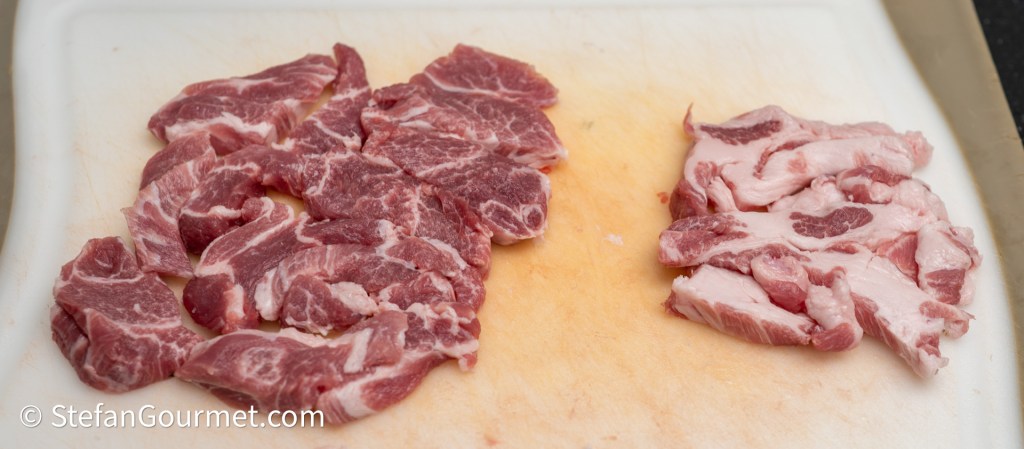
Start by trimming the beef and pork so that the meat is nicely marbled without containing thick sections of fat.
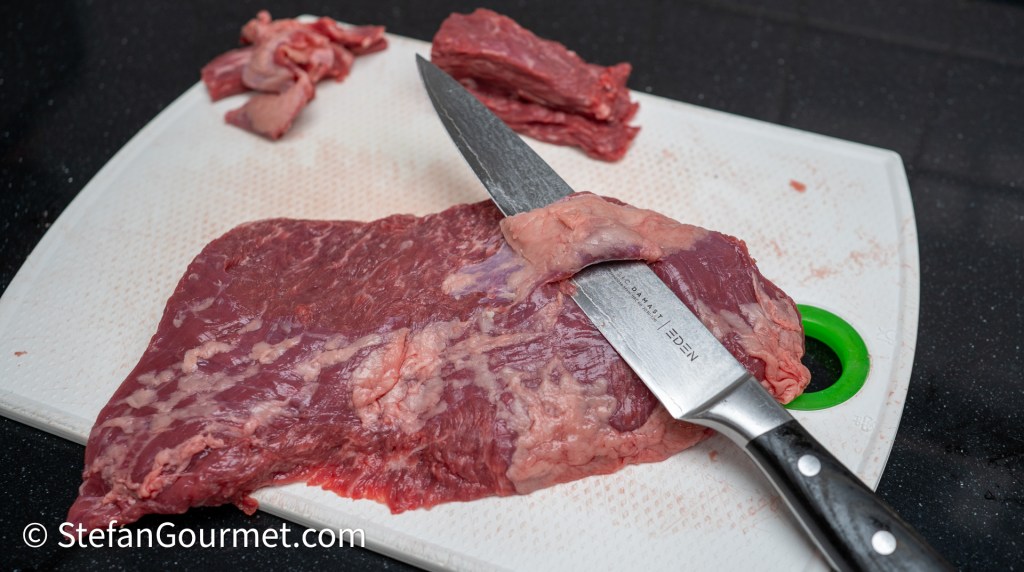
The method for doing this depends on how the fat is distributed within the meat. For the pork, I needed to slice it first and eliminate the fat from each slice, whereas for the beef, the fat was mostly on the outside, so I could simply trim it away before slicing.
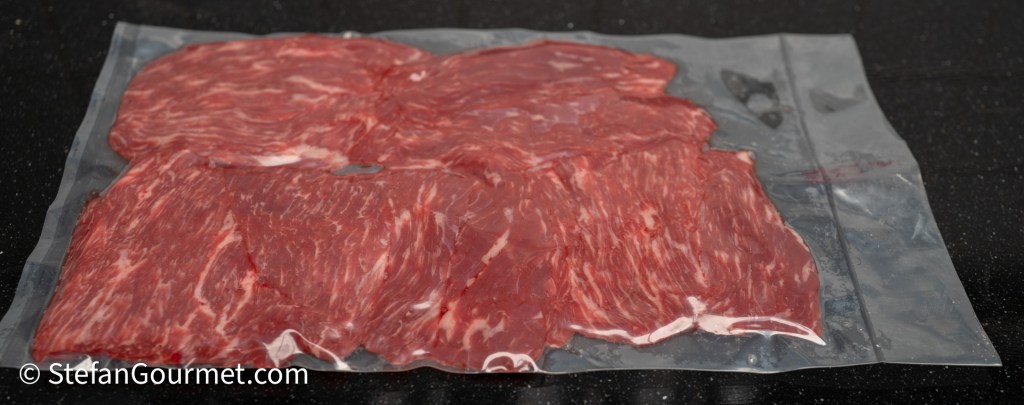
Slice both the beef and the pork into slabs of about 6 mm (1/4 inch) thick.
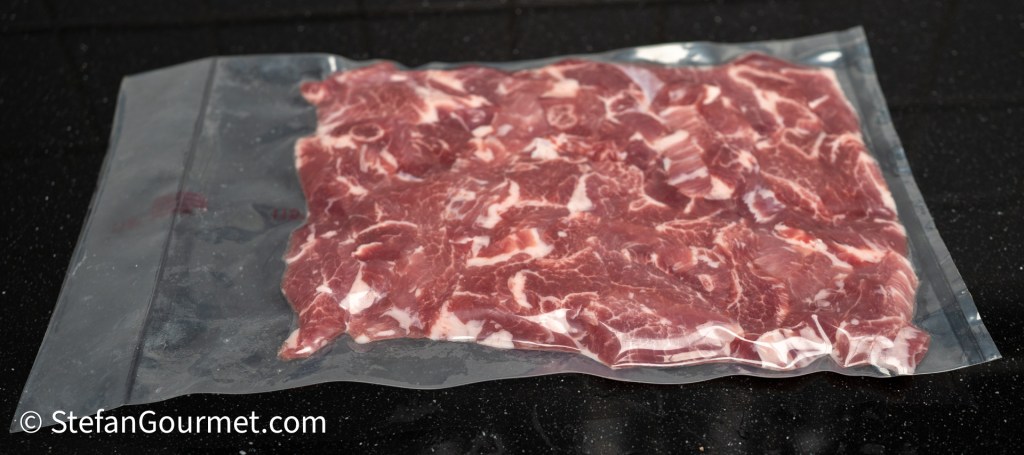
Season them lightly with salt, seal them in vacuum bags, and dip the sealed packages in boiling water for 10 seconds to prevent any unwanted odors from developing during the long cook (click here for more information about that).
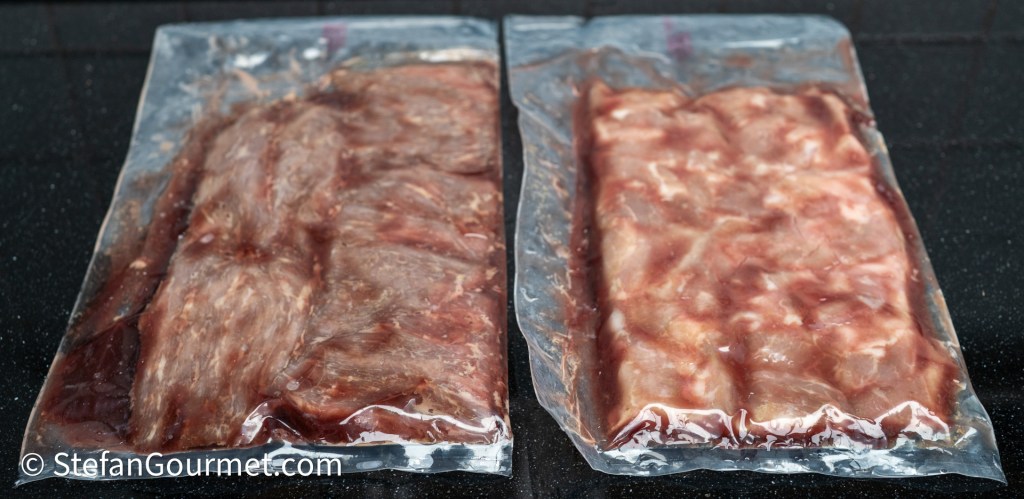
Cook sous vide for 24 hours at 57°C/135°F.
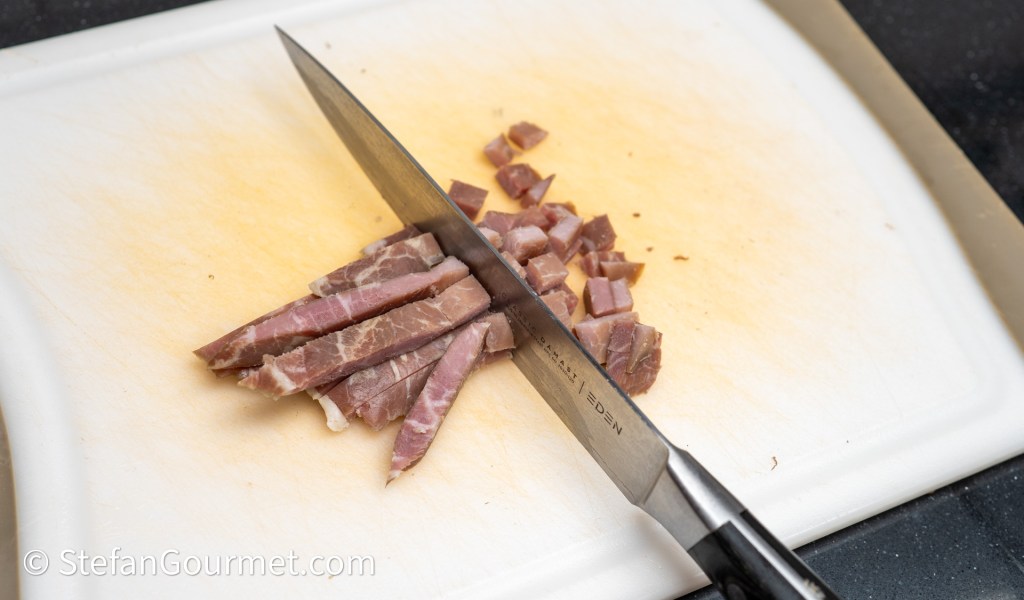
Drain the liquid from the sous vide bags and reserve it. Dice the meat evenly into neat 6 mm (1/4 inch) cubes.
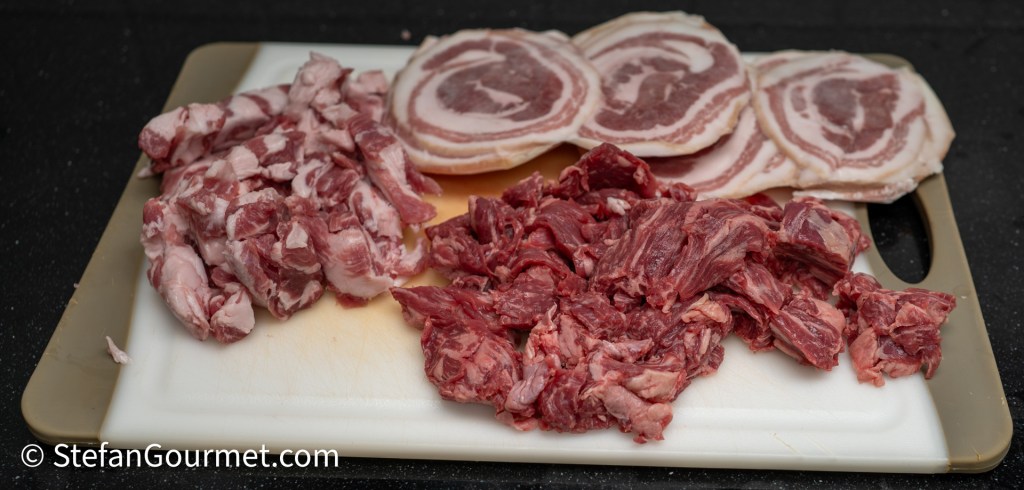
The meat that needs to be chopped for the jus consists of pancetta together with trimmings from the beef and pork.
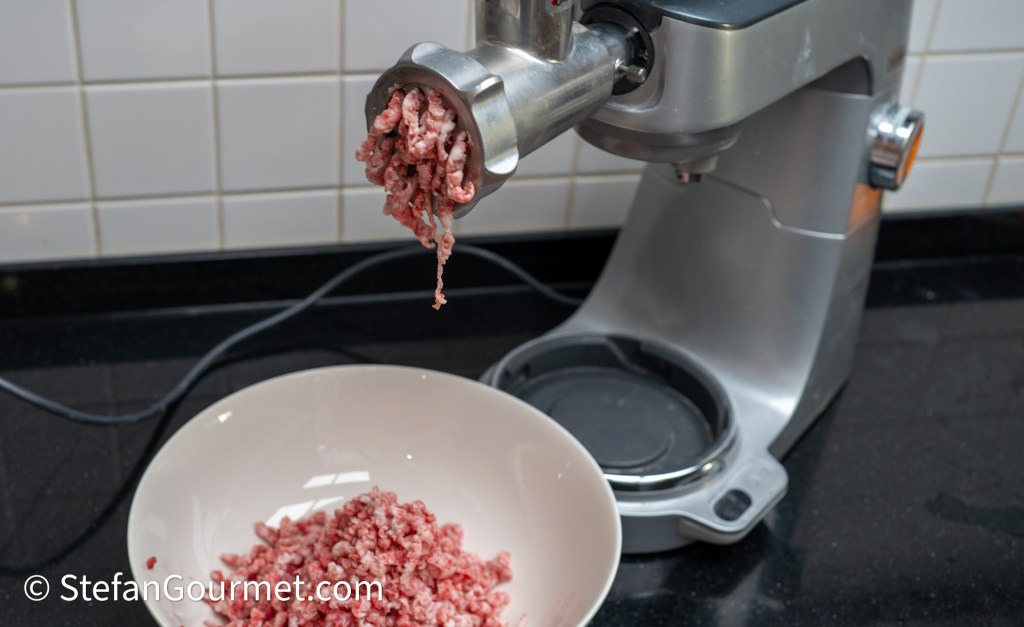
While you could chop everything by hand to facilitate flavor extraction, using a meat grinder is much easier and faster if you have one.
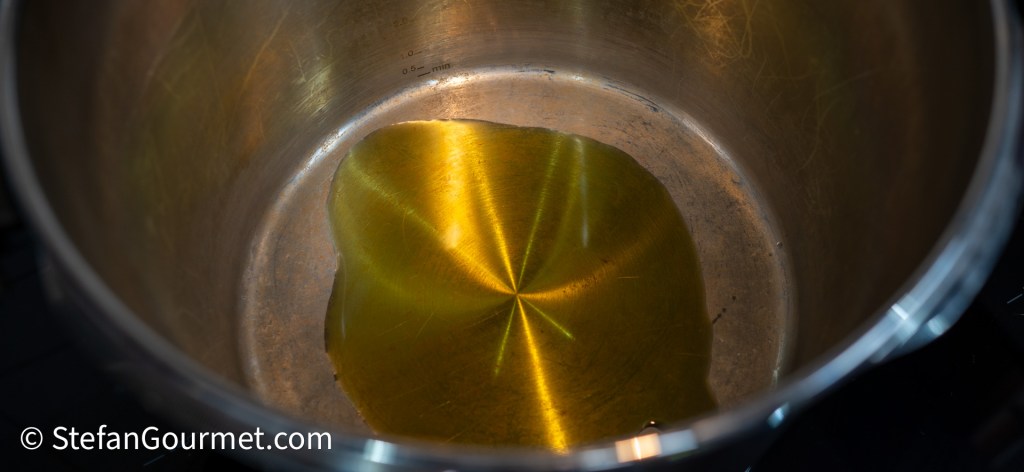
Heat about two tablespoons of olive oil in a casserole. You will only need a bit of oil, as the trimmings and pancetta will provide plenty of fat.
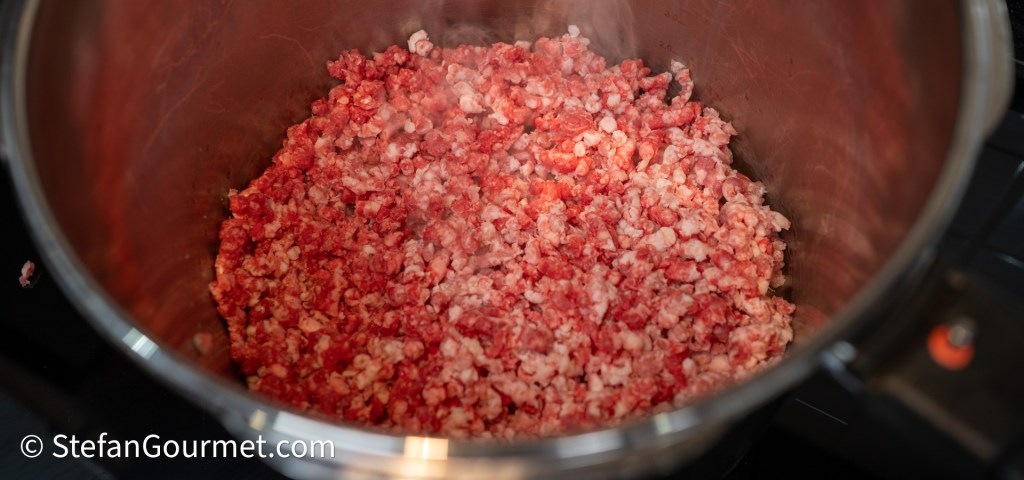
Add the ground or chopped trimmings and pancetta and stir over medium-high heat…
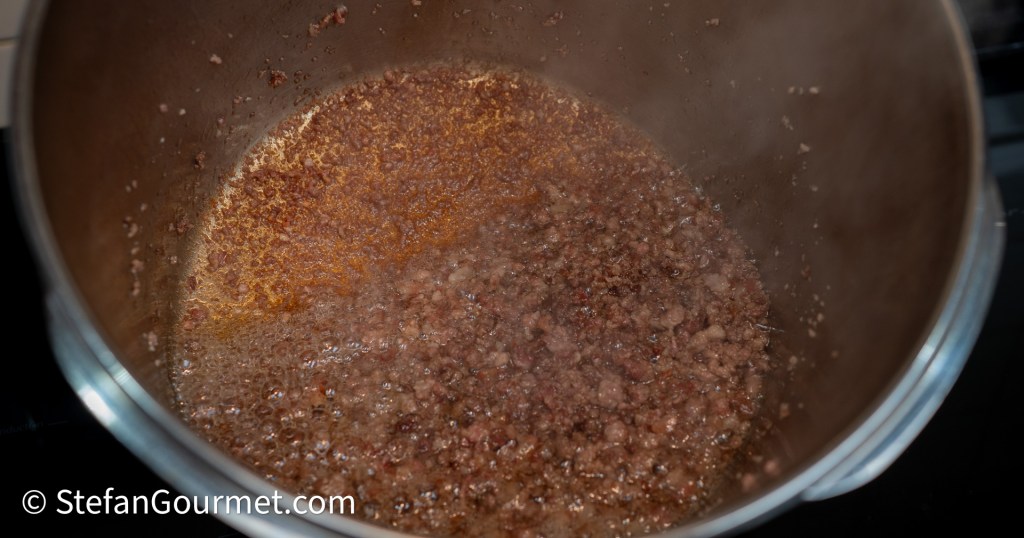
…until the meat starts to sizzle and starts to brown a little, and the bottom of the casserole is covered with a nicely browned fond.
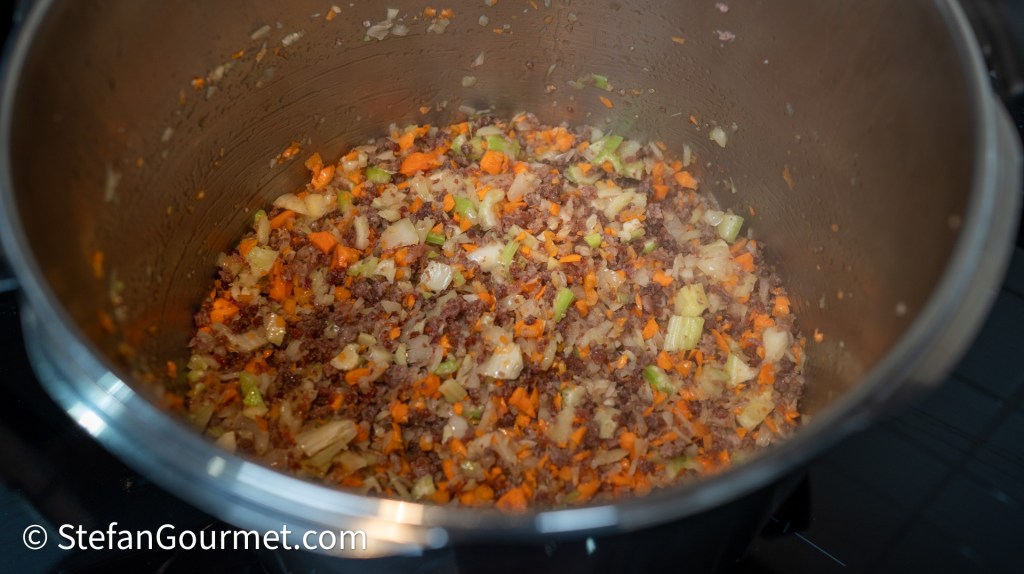
Add the minced carrot, onion, and celery, and stir over medium heat until the aromatics start to brown.
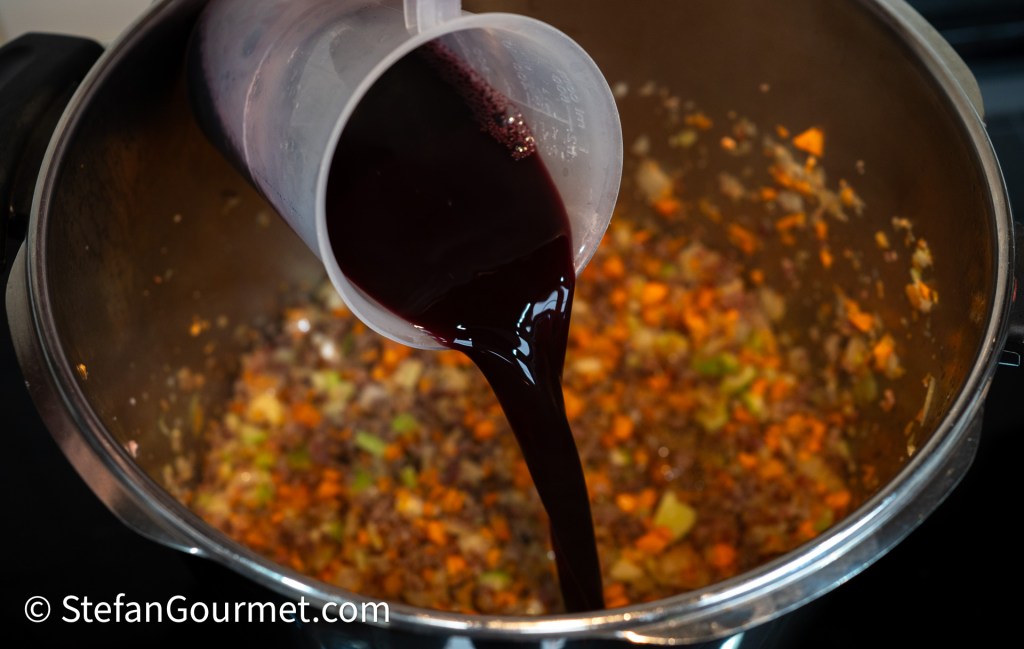
Add the wine…
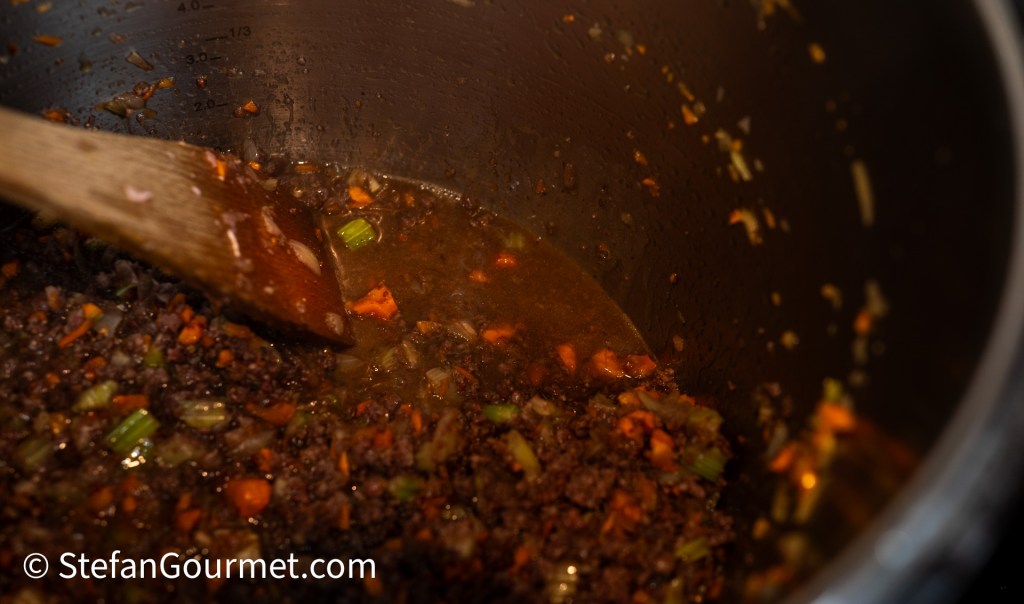
…and scrape along the bottom of the pot with a wooden spatula to loosen the browned bits.
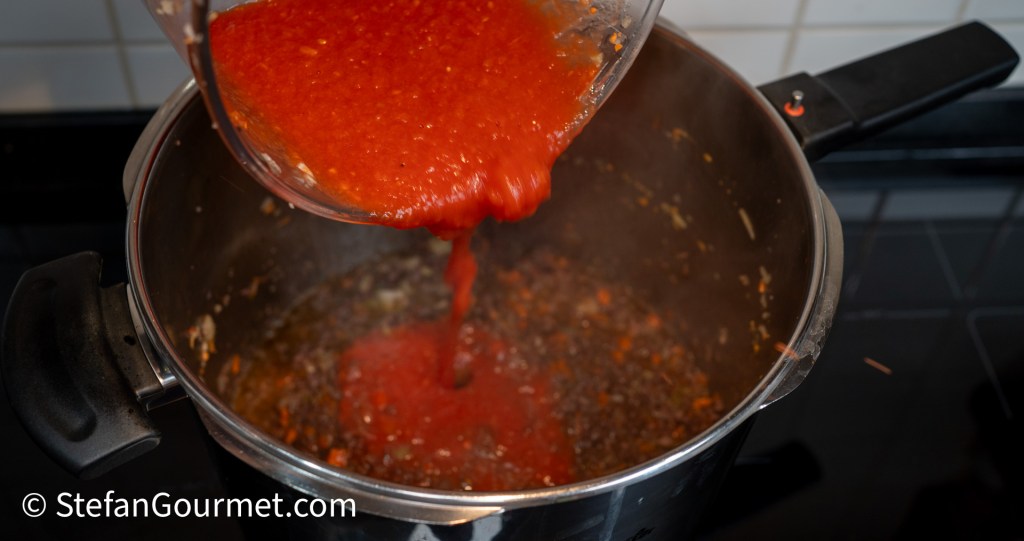
When the wine has reduced by half, add the tomatoes, and stir to incorporate.
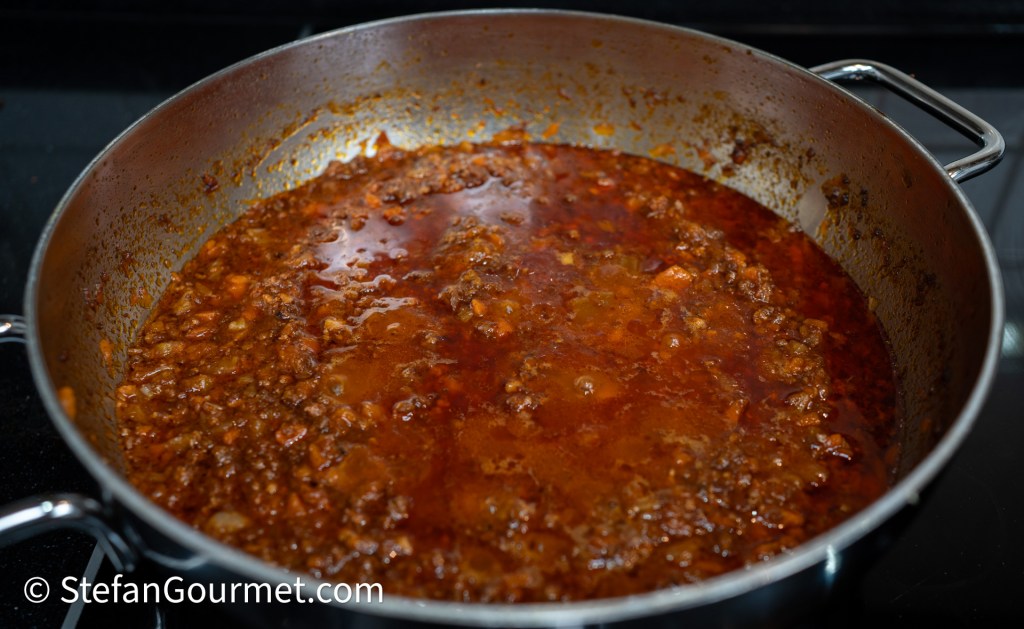
Cover the pot and simmer very gently over low heat for 2 hours, stirring occasionally. With a heavy, high-quality casserole and a very gentle simmer, minimal stirring is required.
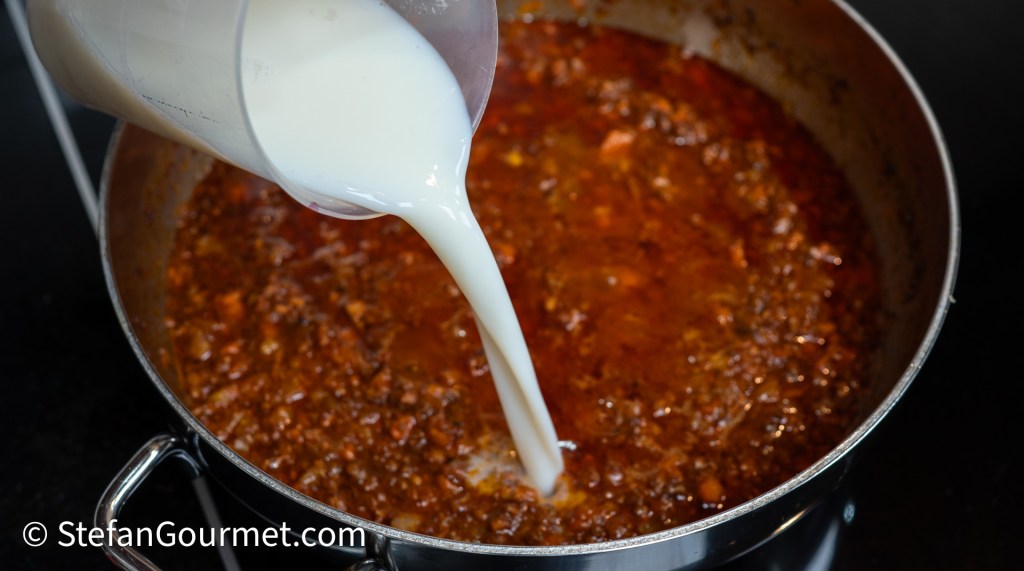
After 2 hours, add the milk…
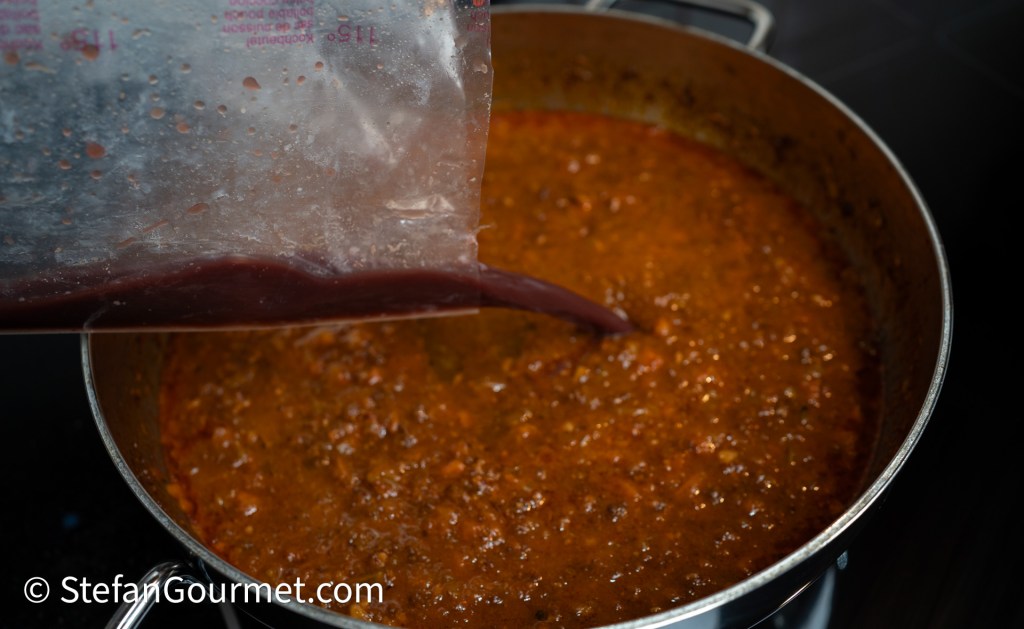
…and the reserved juices from the sous vide bags. Stir to combine and simmer covered for another hour. Keeping the pot covered yields a less reduced ragù, which allows for better flavor extraction.
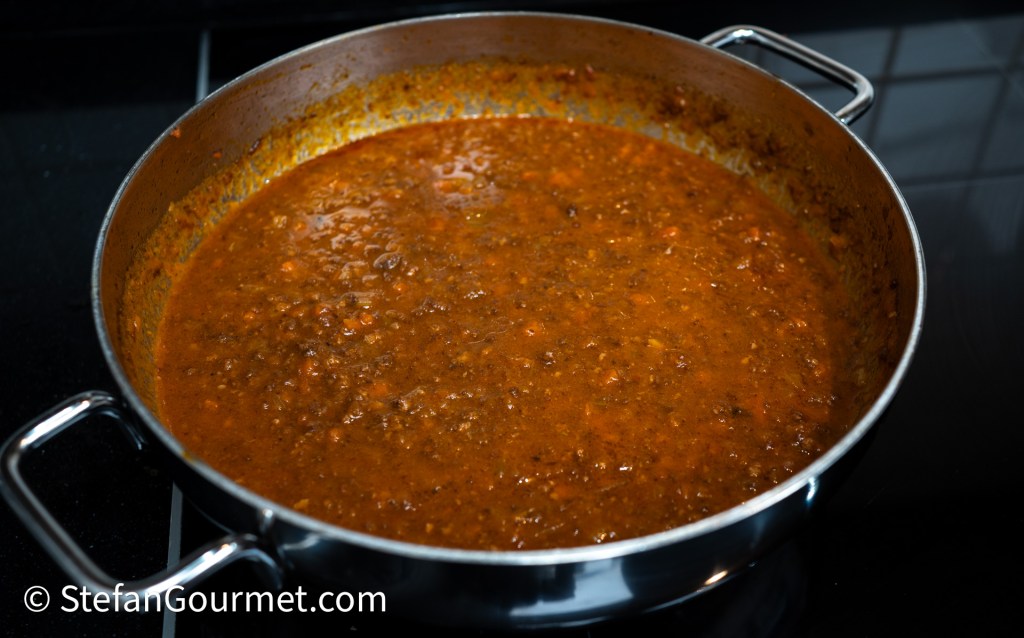
Taste and adjust the seasoning with salt and freshly ground black pepper after the final hour of simmering. Given the salt content of the pancetta and the sous vide juices, additional salt may not be necessary. Up to this point, the process closely mirrors a traditional ragù.
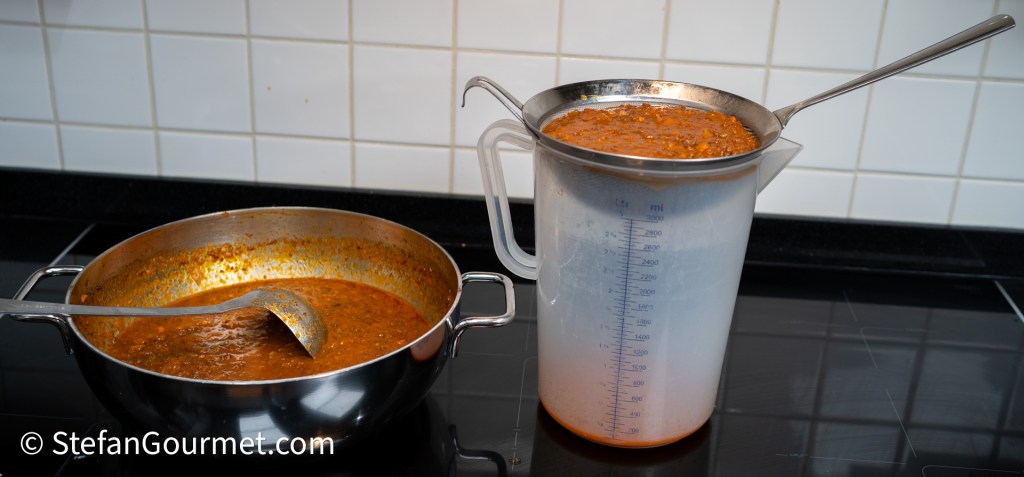
To make the jus, place a fine sieve over a container and ladle in some of the hot ragù.
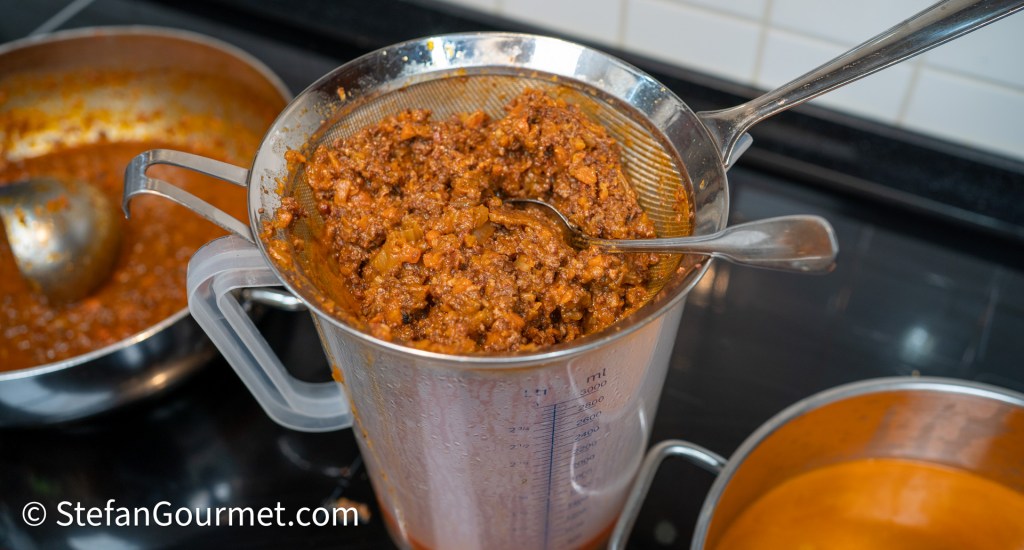
Stir gently inside the sieve with a spoon to help the liquid pass through, taking care not to press so hard that solid particles are pushed through the mesh.
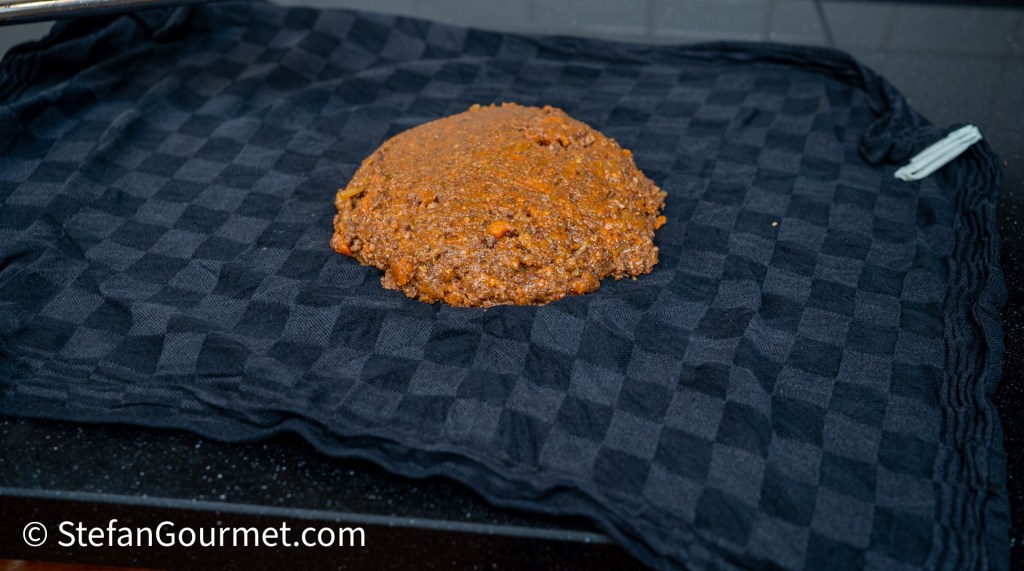
Next, transfer the contents of the sieve onto a clean, damp tea towel.
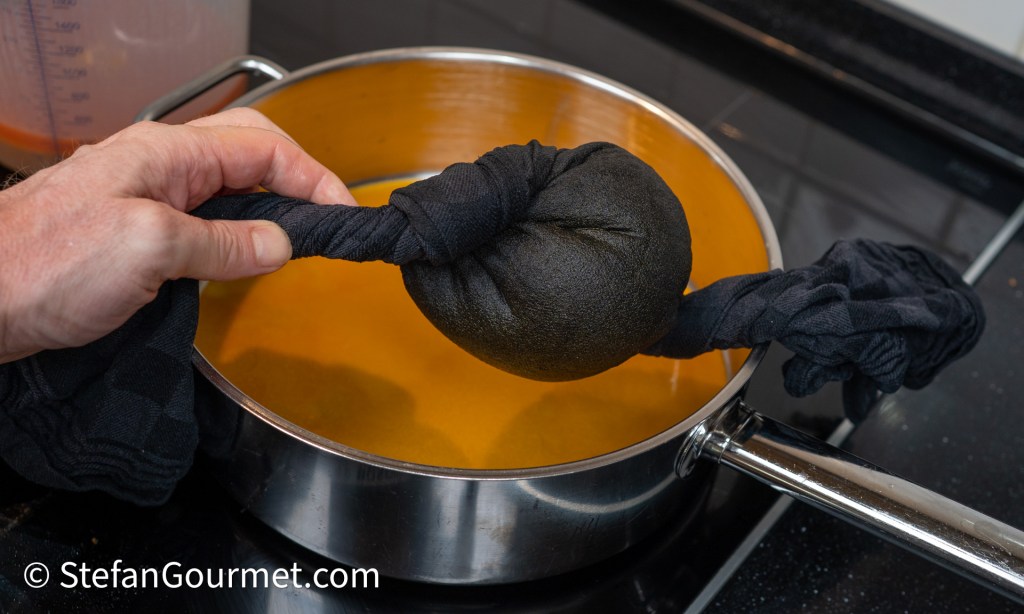
Wrap the towel around the ragù, twisting both ends so it resembles a wrapped piece of candy. Hold this over the container and continue twisting to squeeze out as much liquid as possible.
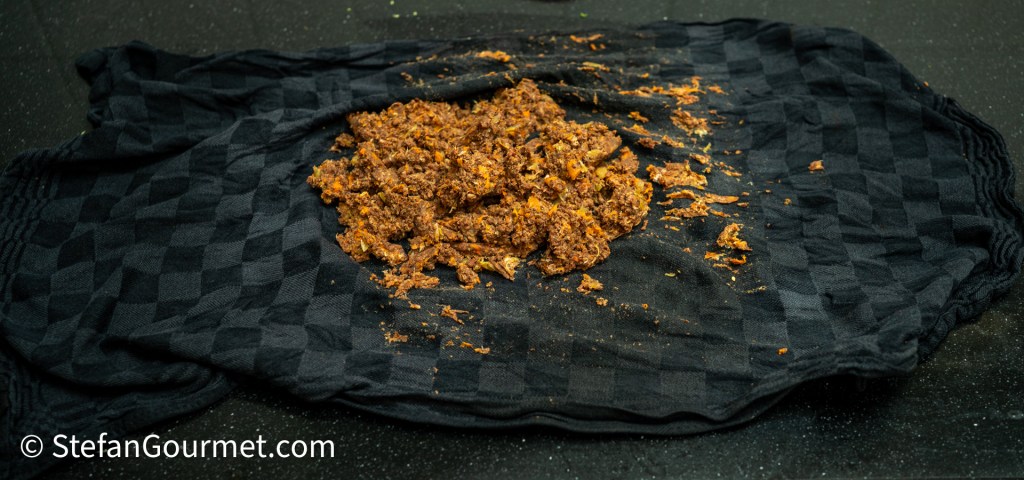
Unfolding the towel to stir the contents before re-wrapping exposes the moister center, making it easier to extract the remaining liquid.
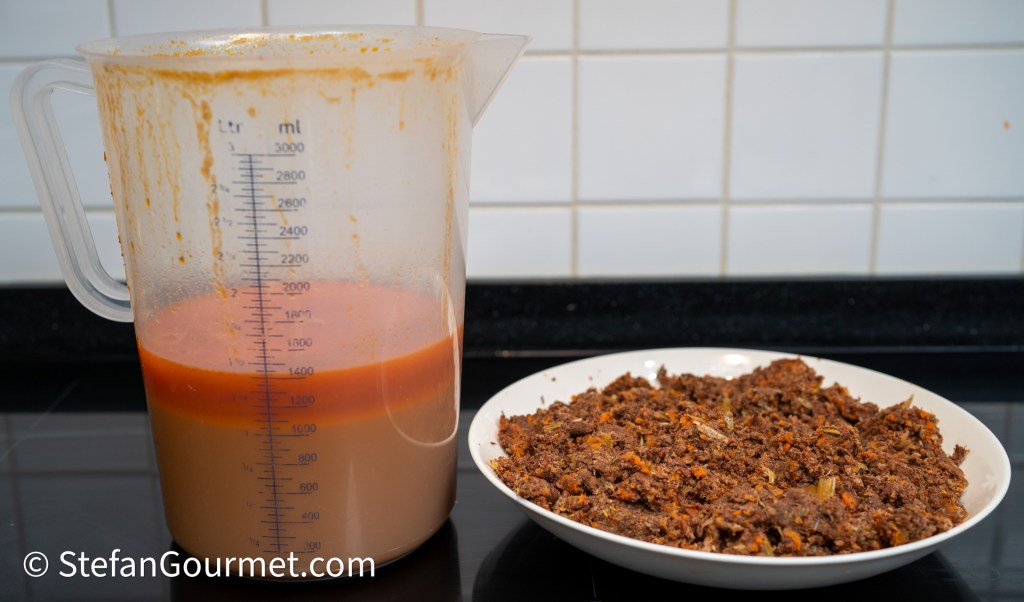
Repeat this process until all of the ragù has been strained. The dry solids can be reserved to make a recycled ragù if desired. The jus will contain a significant amount of fat that floats to the top. Be sure to use all of it and stir the jus thoroughly when using it or dividing it into portions, as this fat is crucial for both the flavor and texture of the jus.
Everything up to this point can be prepared in advance. You can also divide the jus and meat into portions and freeze them together for later use. Reheat the jus and meat sous vide at 57°C/135°F. If you choose to reheat them using another method, make sure to keep the temperature of the meat below 57°C/135°F to prevent it from drying out.
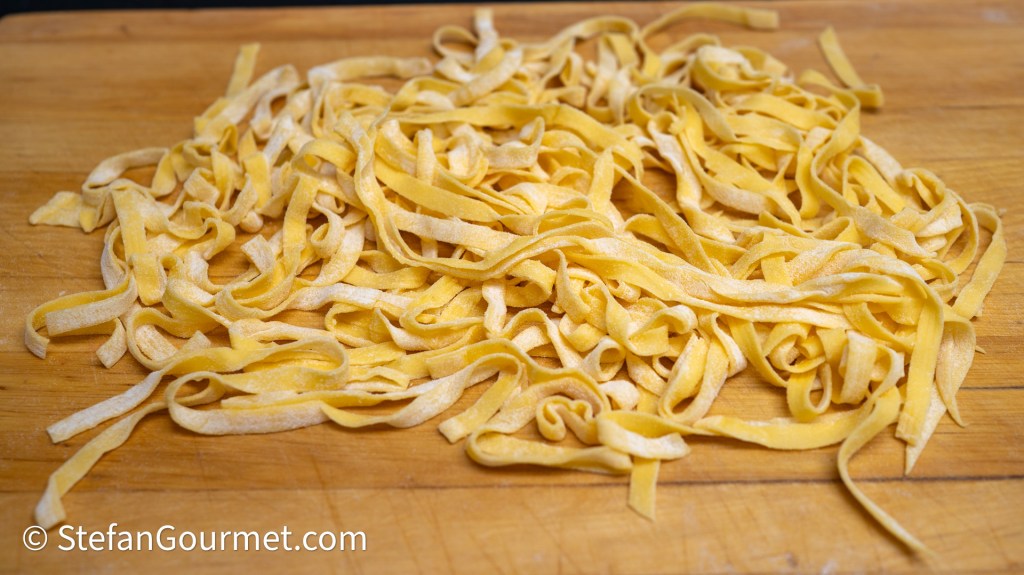
Fresh egg tagliatelle are essential for this dish. Roll them quite thin so they suit its elegance. You can make the pasta using egg yolks only, just as they do at the restaurant, for a richer flavor and texture. However, even with standard fresh egg tagliatelle, this will still be a spectacular dish.
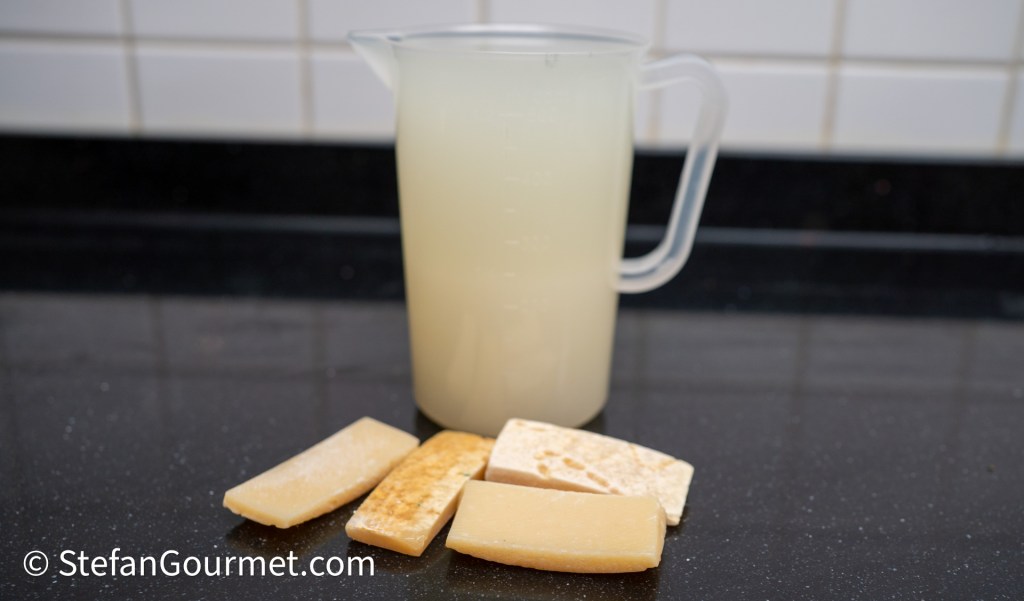
To make the Parmigiano broth, you will need 250 ml of pasta cooking water reserved from a previous pasta dish. You cannot use the water from cooking this batch of tagliatelle, as by the time that water is ready, the pasta is already cooked and must be served immediately. And you will need to use pasta water rather than plain water, as the starch helps to emulsify the cheese fat with the jus during mantecare, whereas plain water would thin out the sauce without aiding emulsification. The pasta water should not be salted too heavily, to avoid overseasoning the final dish.
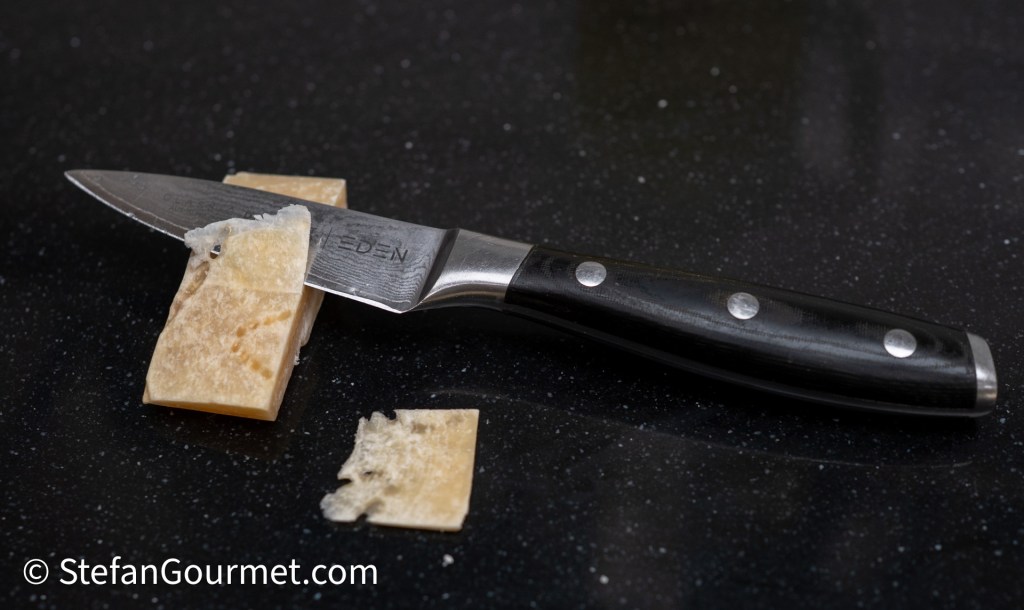
Remove the outer layer of 60 grams of Parmigiano rinds, including any wax or ink, using a sharp paring knife.
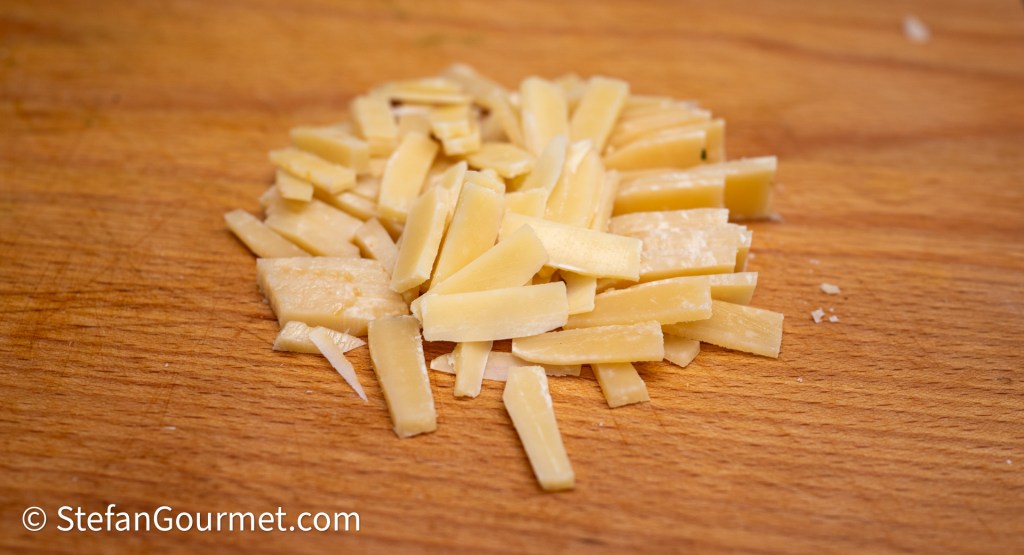
Then slice the rinds thinly.
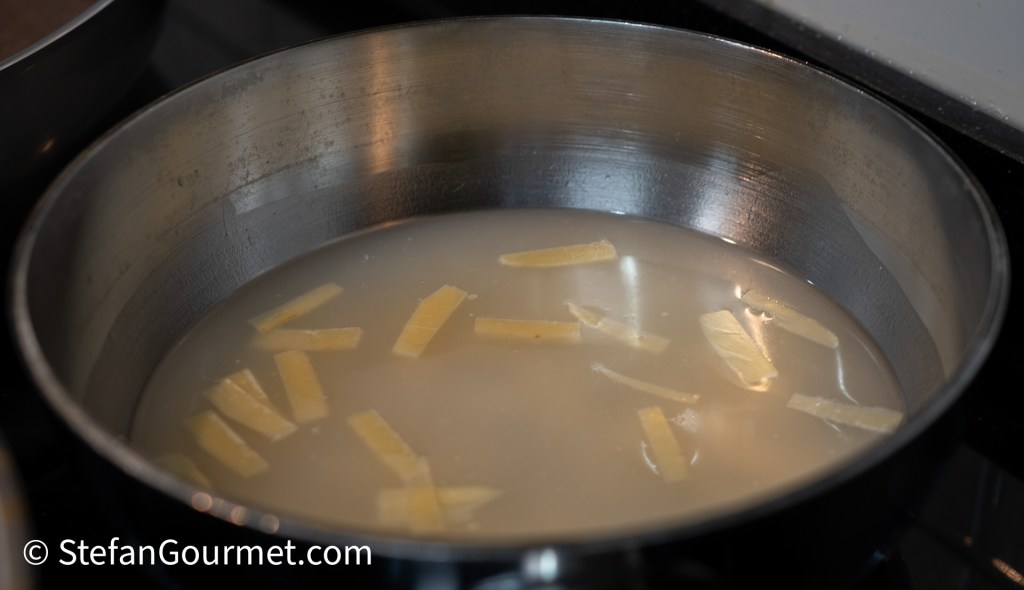
Place the trimmed and sliced rinds into a saucepan with the 250 ml of reserved pasta cooking water, and bring to a boil.
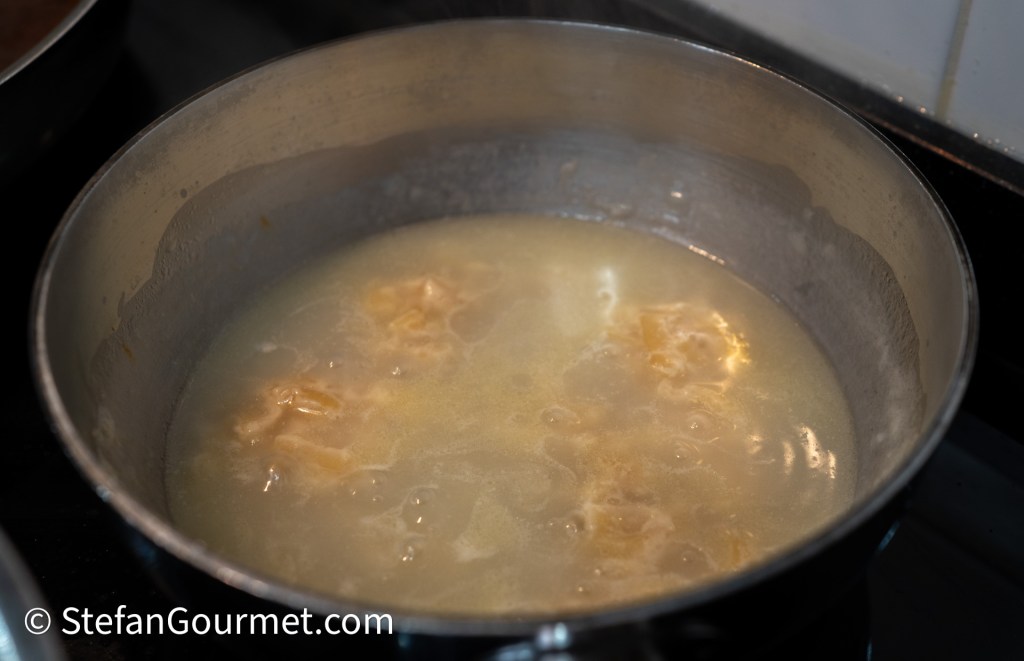
Simmer for about 15 minutes. The rinds will clump together, but plenty of cheese flavor will infuse into the water.
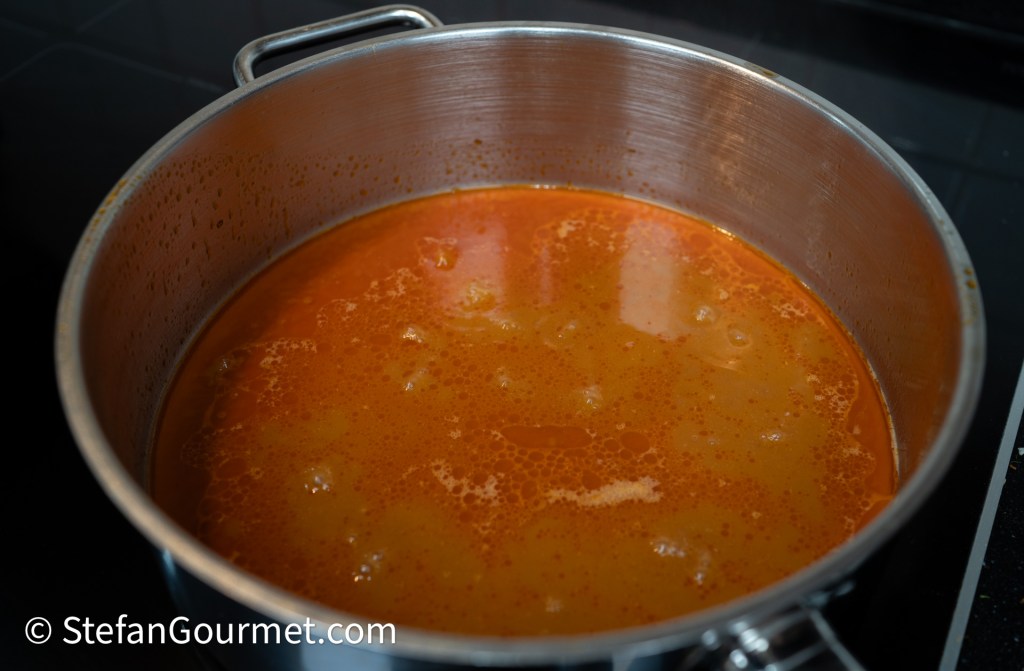
To finish the dish, bring a large pot of water to a boil for the tagliatelle. In the meantime, pour the jus into a wide pan large enough to hold the cooked pasta and the meat. Bring it to a boil and stir vigorously to mix the fatty part with the watery part, then turn off the heat.
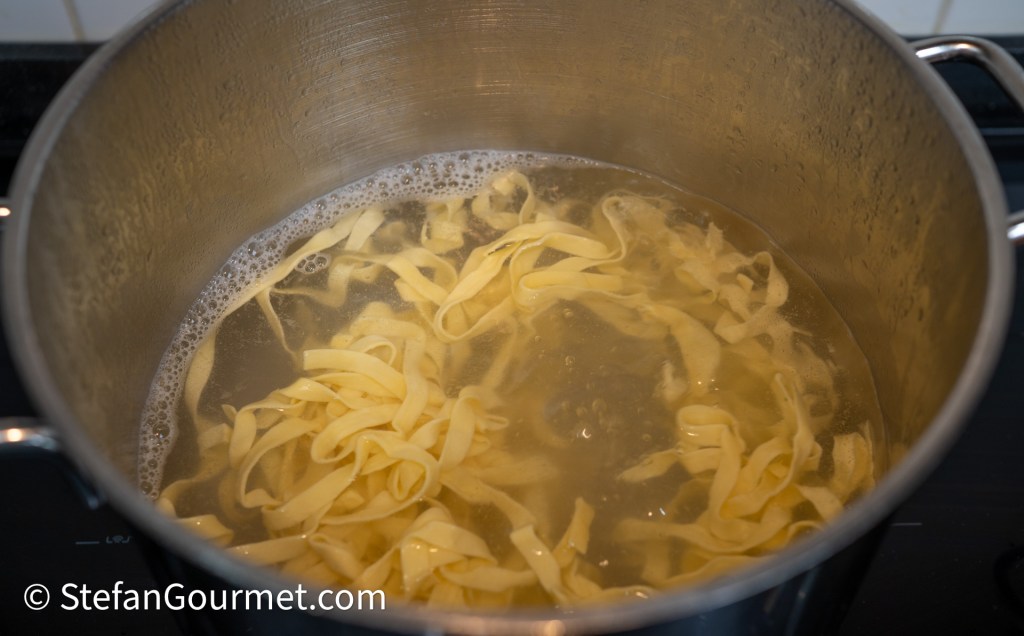
When the pasta water reaches a rolling boil, add salt and the tagliatelle. Cook for just 30 seconds to 1 minute, then drain the tagliatelle and add them to the pan with the jus.
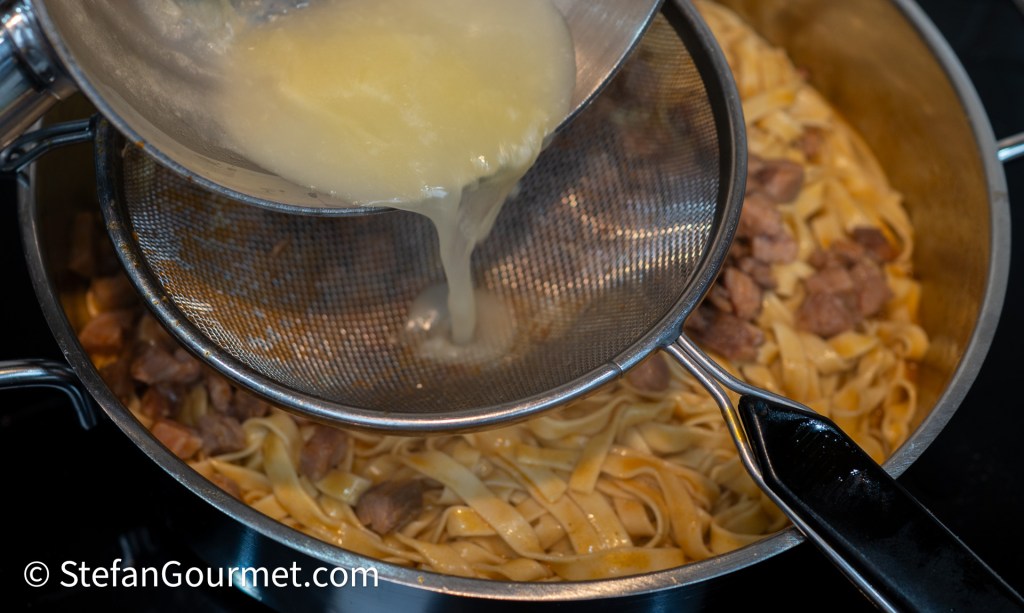
Add a splash of the Parmigiano broth alongside the meat, stirring over low heat until the pasta is completely coated in the jus.
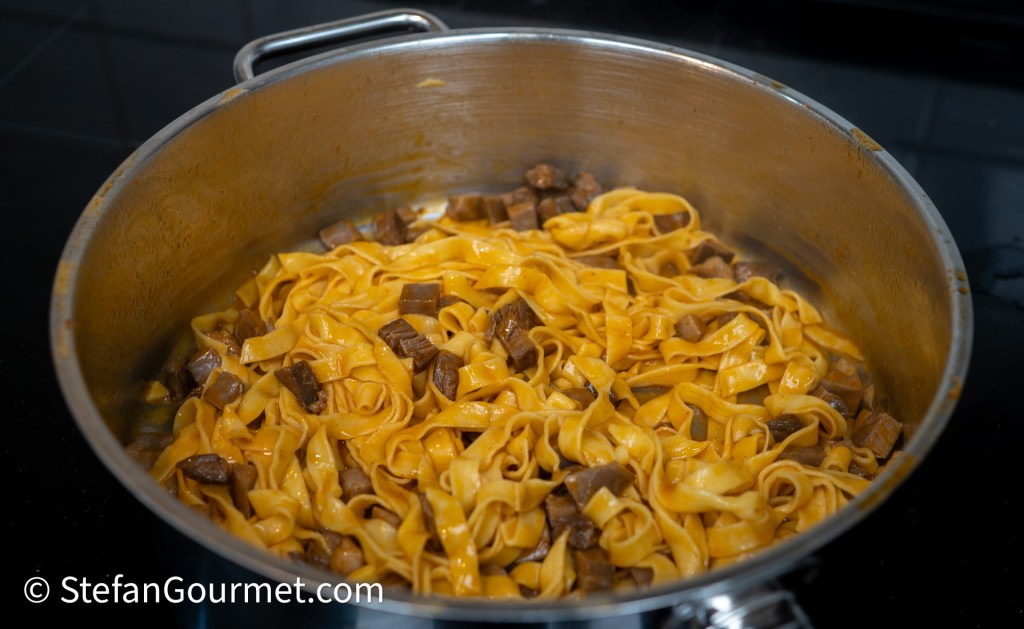
Add a little more Parmigiano broth if the mixture looks dry. Keep this process brief and over low heat to prevent overcooking either the pasta or the meat. A bit of finely grated Parmigiano can be tossed in with the meat, or simply used as a garnish after plating.
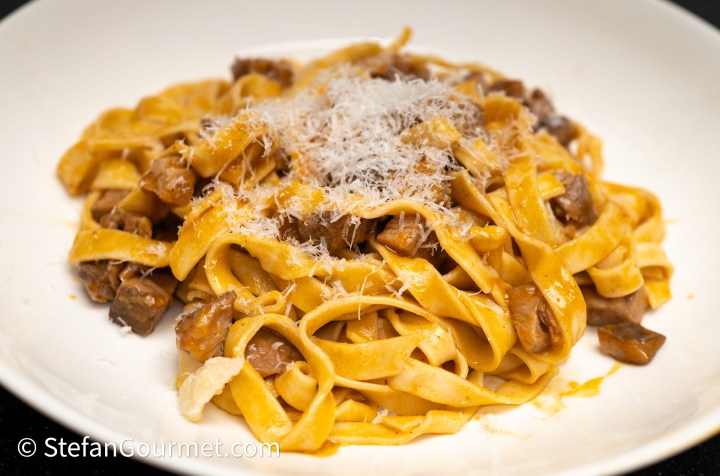
Serve immediately on preheated plates.
Wine pairing
This pairs nicely with a Sangiovese di Romagna, or a medium-bodied Chianti.


Ohhhhh my! This sounds incredible! Definitely worth the extra work.
LikeLike