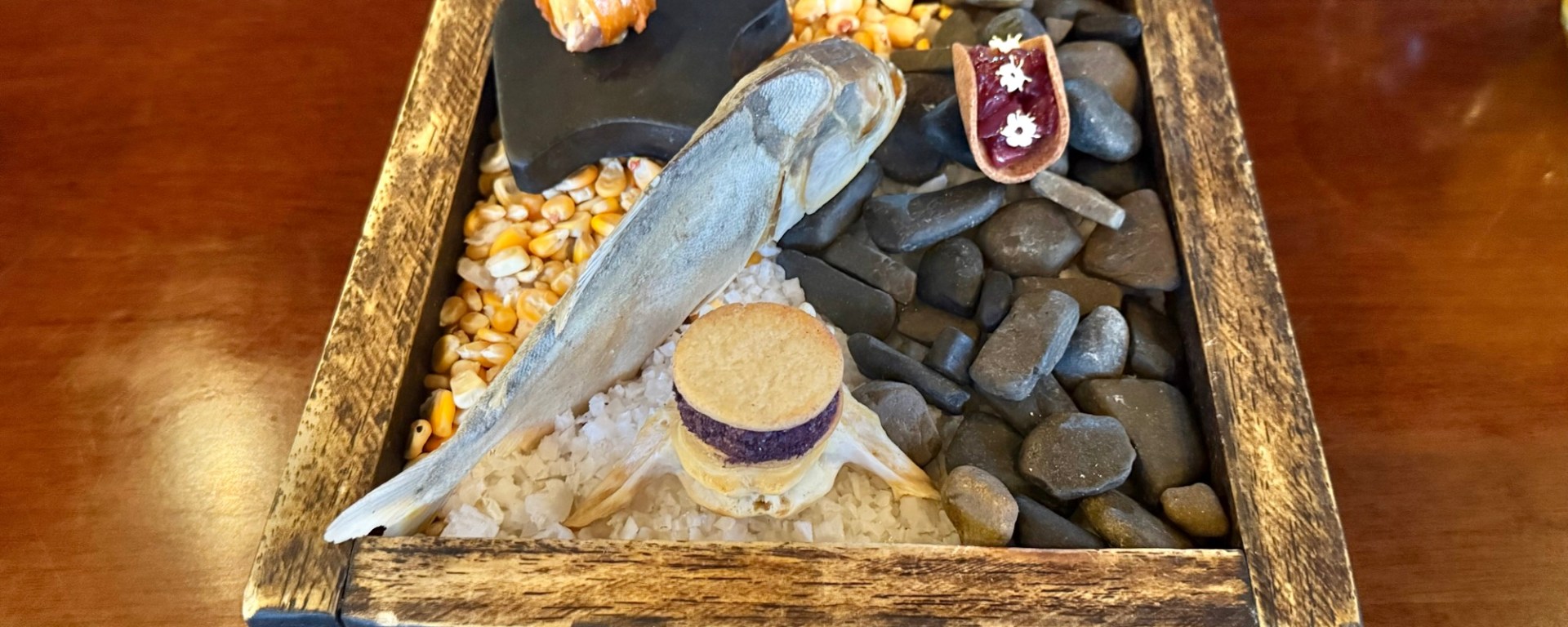

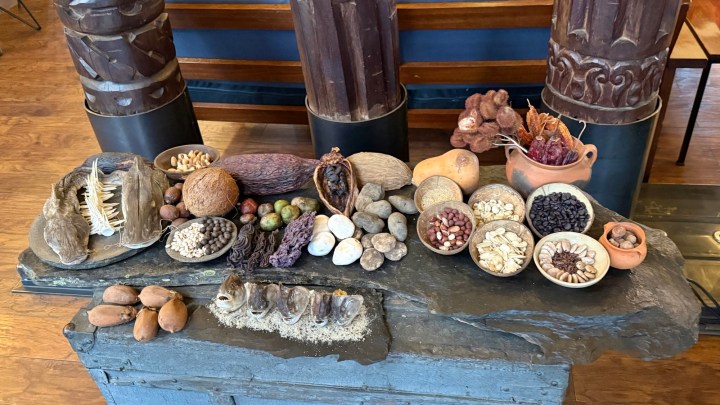
Gustu restaurant in La Paz was started by Danish culinary entrepreneur and Noma co-founder Claus Meyer in 2013, initially with a Danish chef and sommelier at the helm. It was part of the Melting Pot foundation, with the aim of promoting Bolivian gastronomy based on the principles of the Nordic Model. Gustu works exclusively with products from Bolivia’s natural pantry.
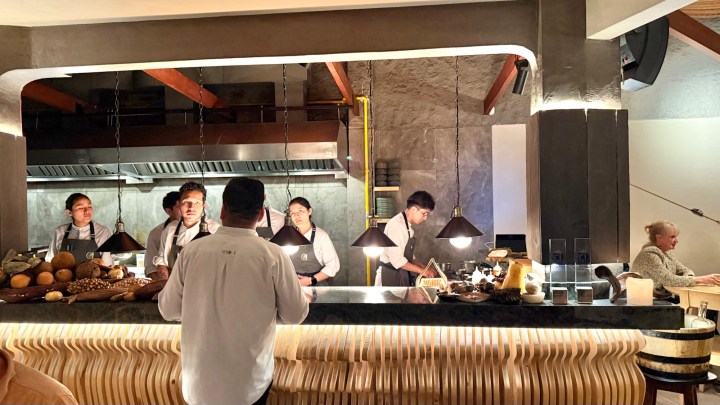
By now the staff is fully Bolivian.
We ordered the 8-course tasting menu for about 45 euros. There is a beverage pairing available that includes 3 wines and 3 cocktails, but as we prefer wine, we decided to order some bottles from the exclusively Bolivian wine list. We had tasted a large portion of the bottles on the list during our tour of Bolivian wineries over the last few days, so we knew exactly what to order.
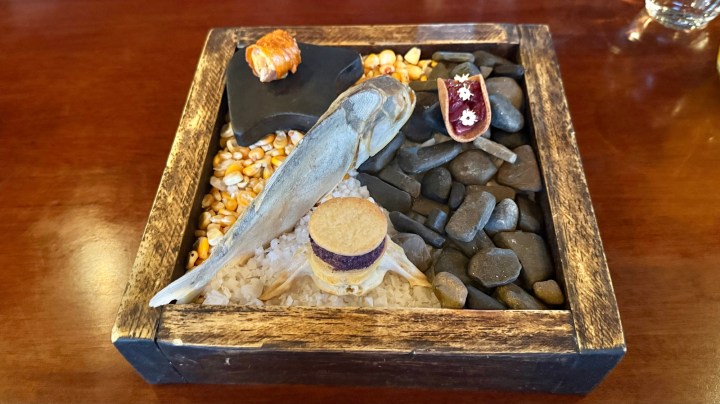
The amuse bouche included a taco with piraña ceviche with kombucha instead of citrus juice and a drop of garum (fish sauce) made from piraña, a potato cracker with trout, and pickled pineapple and duck wrapped in crispy chicken skin.
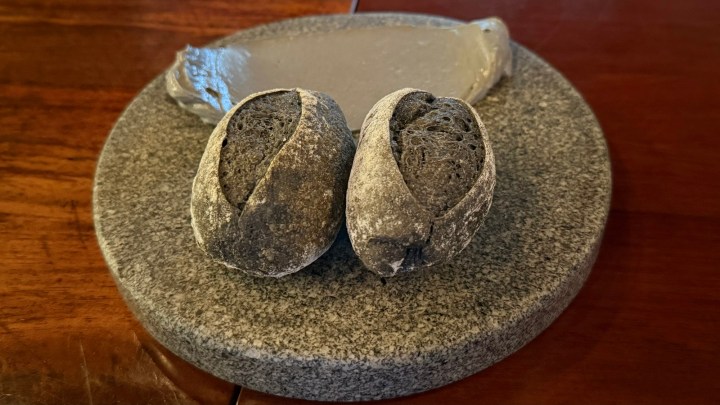
The bread was flavored with black garlic and vegetable ashes, and served with butter that was flavored with onion ashes. The onion flavor in the butter was really nice.
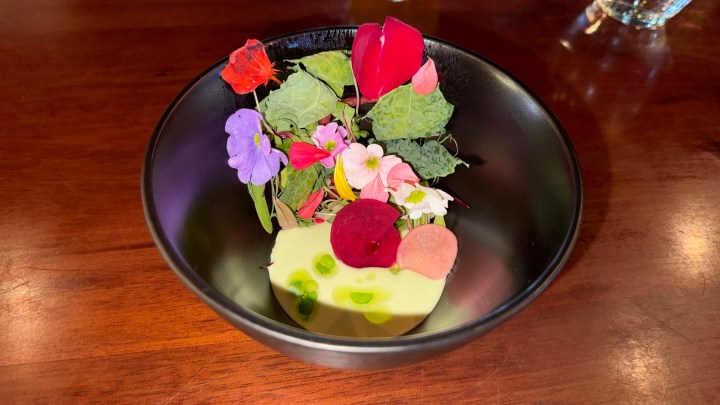
The salad included flowers, cream of haba beans, and tea of haba beans. Habas are Bolivian fava beans. This was nicely crunchy and refreshing.
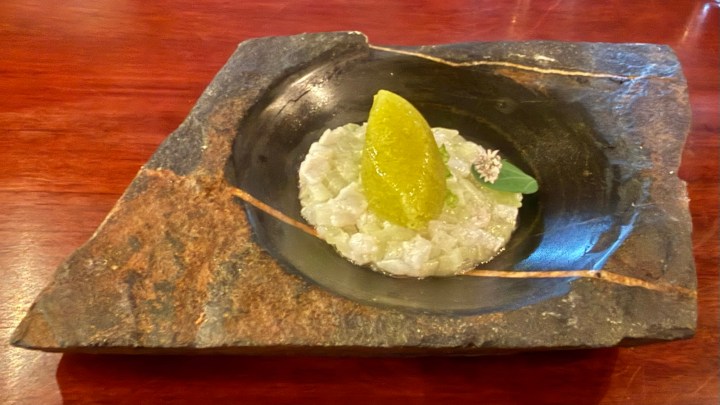
We continued with alligator ceviche with a lemon, cilantro, and ginger sorbet. The alligator had a very nice texture.
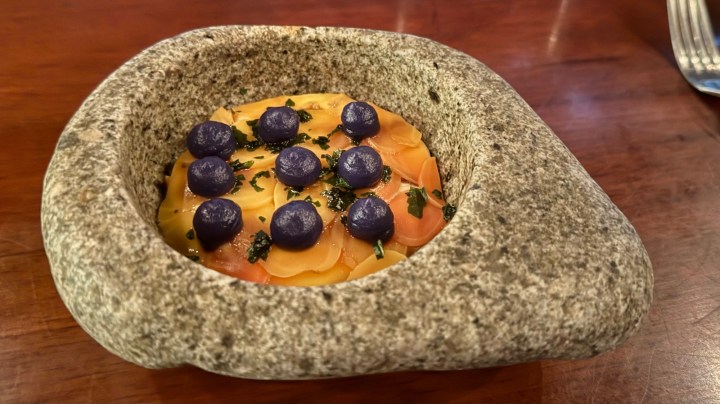
The next course was layers of potatoes and papalisa tubers.
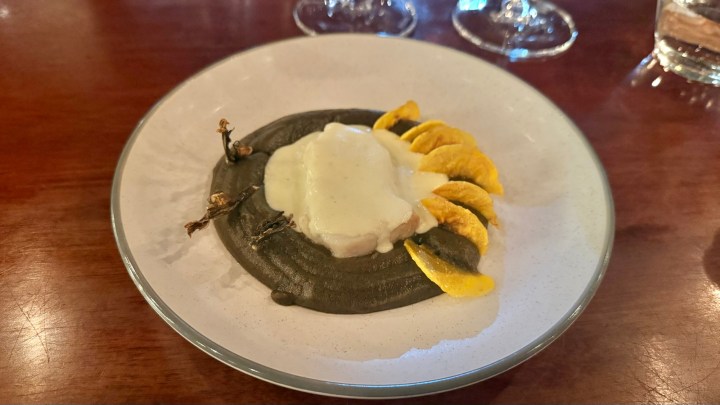
The Amazonian catfish was served with almond milk, a puree of tubers and green leaves, and slices of dried plantain.
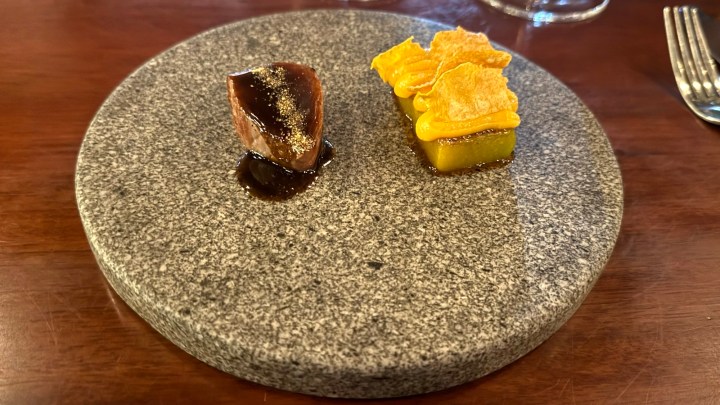
The llama fillet was served with a demi-glace and a Bolivian type of pumpkin. I had never tried llama meat before. It was very tender and had an elegant gamey flavor.
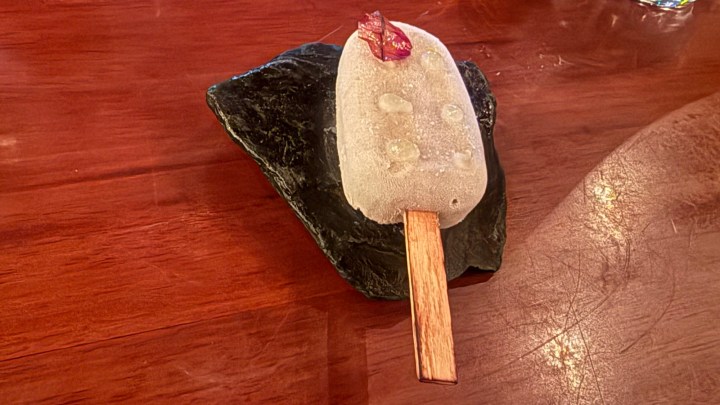
The mushroom ice cream was served as a lollipop with red fruit and cidra lemon. It had a very elegant flavor of dried mushrooms.
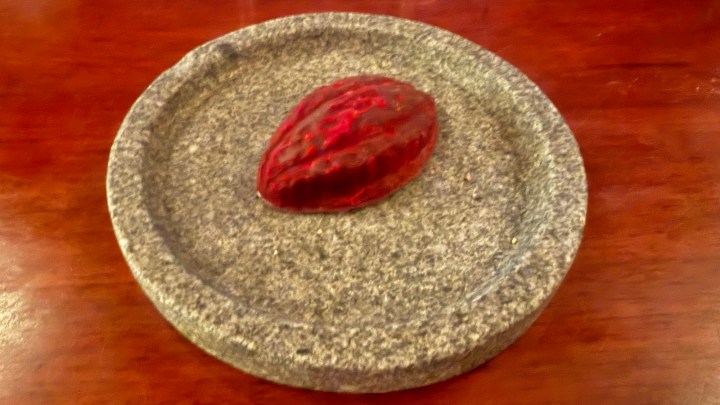
The final dessert featured three Amazonian fruits from the cacao family: regular cacao, macambo (also known as jaguar cacao), and cupuaçu (which tastes like a mix of pineapple, banana, and chocolate). It consisted of white ice cream encased in a thin, brittle red chocolate shell: essentially an Amazonian Magnum.
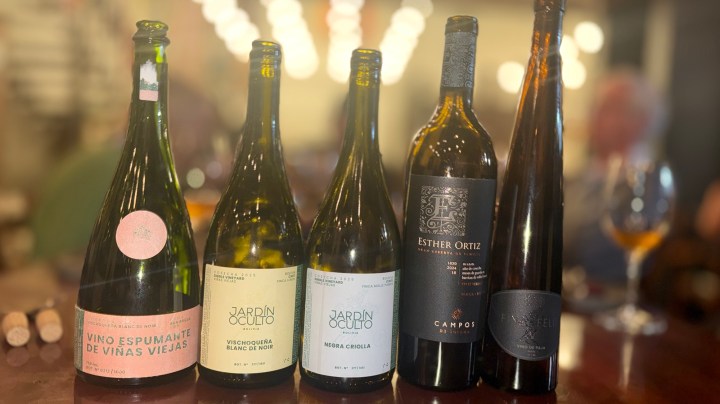
The wines we had selected were:
- Jardín Oculto, Vino Espumante de Viñas Viejas, Vischoqueña Blanc de Noir 2025 (traditional method sparkling without disgorgement from Cinti).
- Jardín Oculto, Vischoqueña Blanc de Noir 2025 (white wine of black grape Vischoqueña, which is a crossing between Negra Criolla and Moscatel de Alejandría from Cinti).
- Jardín Oculto, Negra Criolla Molle Pampa 2025 (red wine from Cinti of Negra Criolla also known as País, Mission, or Listán Prieto).
- Campos de Solana Esther Ortiz 2024 (Petit Verdot aged in oak from Tarija).
- Jardín Oculto, Vino de Paja Final Feliz (pink Moscatel fortified with Singani; this was bottle 23 of the only 32 bottles made of this wine).
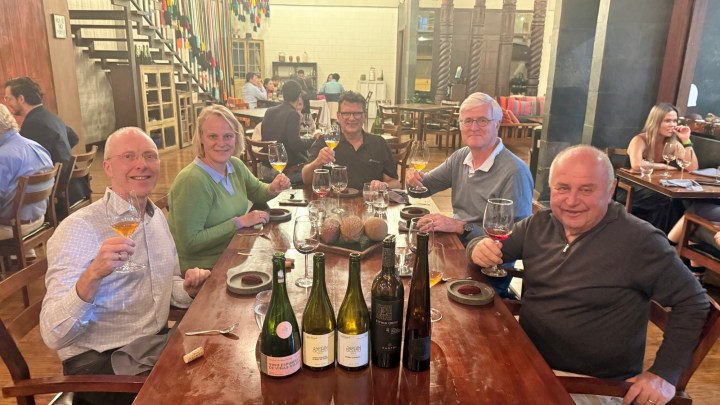
We had a memorable dinner at Gustu. Every course was delicious and beautifully plated, yet remained deeply satisfying—what I like to call “real food” rather than purely conceptual bites. Although the individual servings are modest, the pacing and overall quantity were spot-on. Combined with warm, attentive service and a final bill of just 85 euros per person including aperitifs and wine, it offers extraordinary value compared to fine dining in Lima or anywhere else in the world.

