Central is one of the most pioneering and famous culinary destinations in the world. It was founded by chef Virgilio Martínez Véliz and his wife and chef de cuisine Pía León. It is one of the 12 restaurants in the world that is part of the “Best of the Best”, formed by all the restaurants that have topped the annual list of The 50 Best Restaurants. This was in 2023 for Central. Once a restaurant becomes part of the Best of the Best, it is no longer included in the list of the The 50 Best Restaurants.
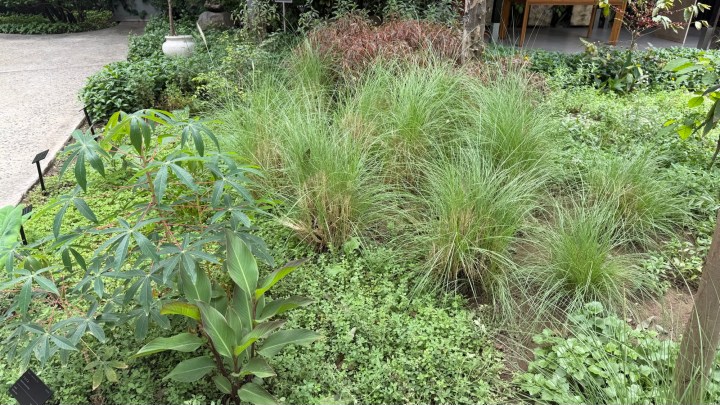
Virgilio and Malena Martinez started the Mater organization in 2013 with the aim to research biodiverse ecosystems and the cultures that inhabit them. They had noticed that species and practices changed with the altitude in every ecosystem. Mater is not limited to the ingredients, but also takes the social, ecological, and economical dynamics into account. Apart from the restaurants Central, Kjolle, MIL, MAZ, and Masi, there are five departments: academia, art and culture, humanities, edible resources, and materials.
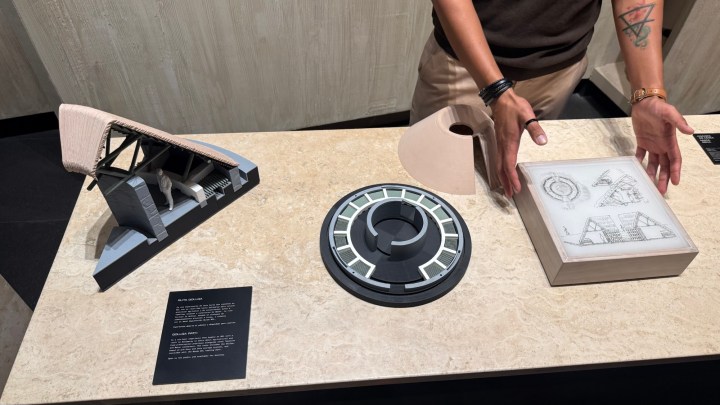
When arriving at the restaurant, we were given a short presentation of the various projects. A qollqa is a type of building used by the Incas to preserve food. It is positioned in such a way in the mountains at high altitudes that it catches the cool winds, creating a natural refrigerator. Mater has worked with a local community to build a qollqa, mixing the ancient traditions with some modern techniques.
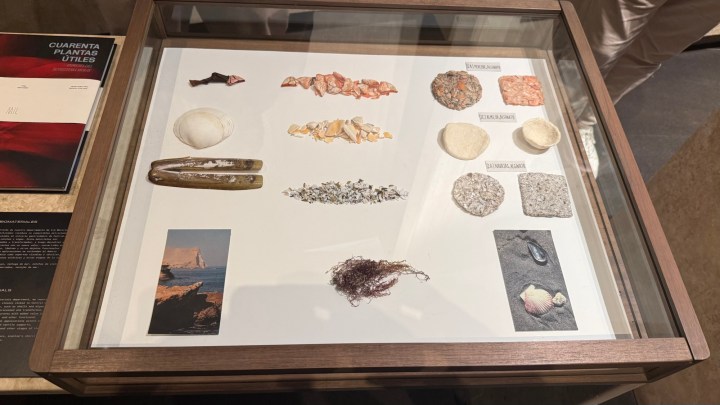
Another project is biomaterials. Many of the plates and cutlery used in the restaurant are made from waste from the kitchen, like a plate made from shellfish shells glued together with alginate. In this way they are biodegradable and waste is reduced.
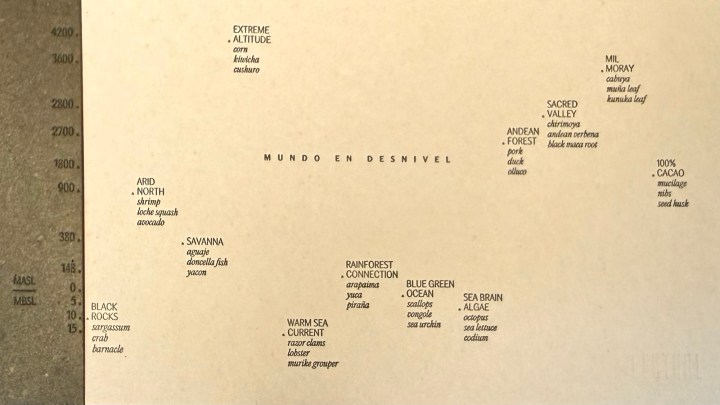
The “Mundo en Desnivel” (world at varying altitudes) tasting menu lasts 3 hours and provides a journey through 32 preparations from 12 ecosystems and is priced at around 425 euros. Since we visited as part of a wine tour through Peru and Bolivia with a group of 15 and selected our own wines, I did not experience the wine pairing as offered by the restaurant. The wines we had are described in my report of the wine tour. The tasting menu is organized by altitude, with the altitude going both up and down from course to course.
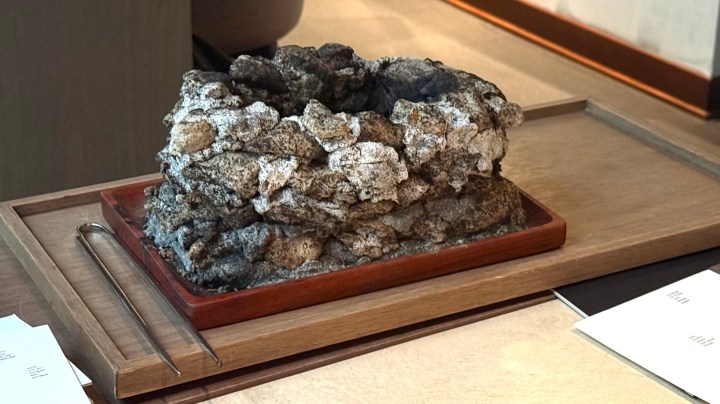
1. Black Rocks (-10 meters altitude)
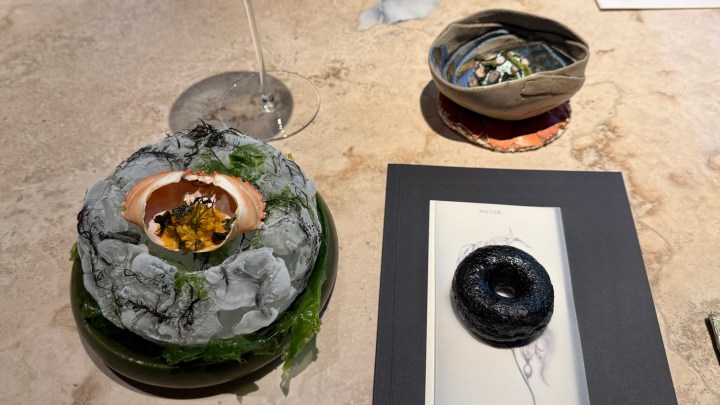
A black doughnut-shaped foam structure made from dehydrated Sargassum (a marine brown alga) with a slightly sweet taste. Tender but firm to the bite slices of Percebes (goose barbacle) on a creamy base from mollusk broths and sea lettuce. Crab with crunchy seaweed.
2. Arid North (900m altitude)
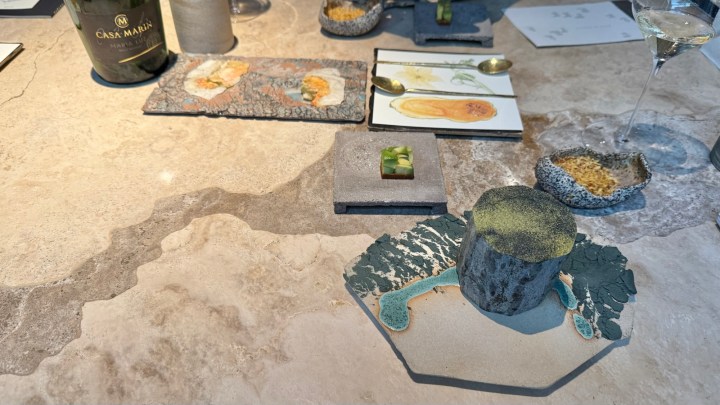
From the desert ecosystem of northern coastal Peru. Loche squash filled with a river shrimp bisque. The avocado was salty and fresh. The squash was also dried and smoked into something like katsuobushi flakes.
3. Savanna (380m)
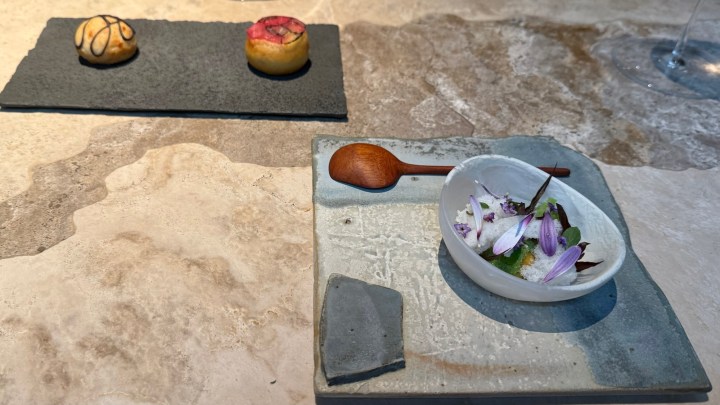
Doncella fish (freshwater tiger catfish), aguaje (oil-rich ‘tree of life’ palm fruit) and syrup from yacón (root tuber).
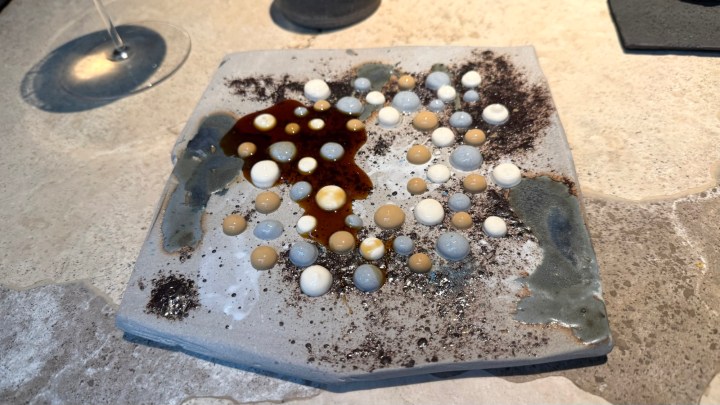
The sauce was presented as three different-colored components on a plate.
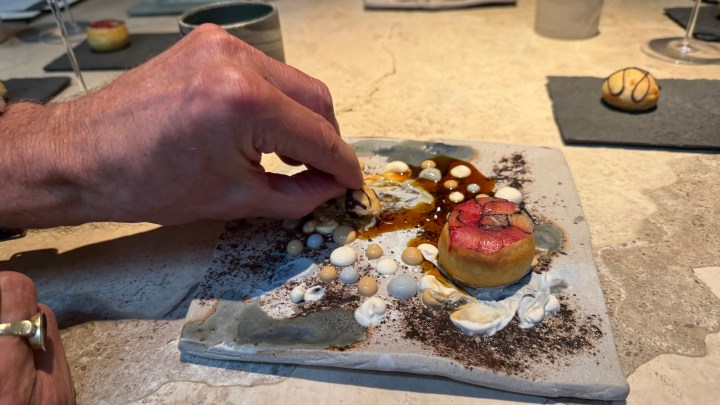
You were supposed to mix the sauces and dip them up with the provided ‘muffins’.
4. Extreme altitude (4200m)
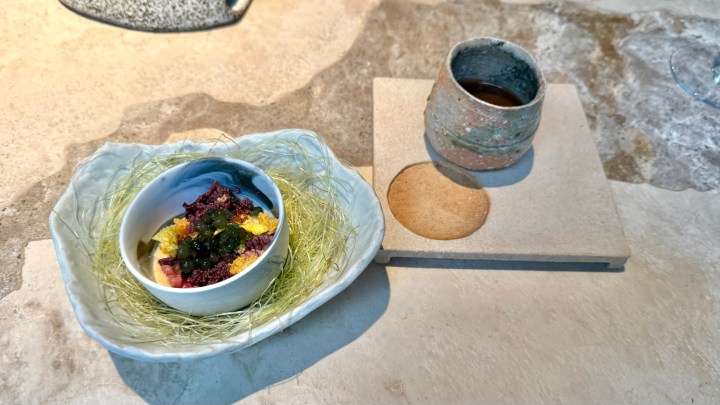
High-altitude corn varieties, an infusion of the leaves of the corn that tasted like beetroot with a hint of corn, and cushuro (spherical green bacteria also known as Andean caviar) on a sweet corn base and crunchy toasted Amaranth. The cushuro provided mostly texture, as their delicate flavor was overpowered by the corn.
5. Warm sea current (-15m)
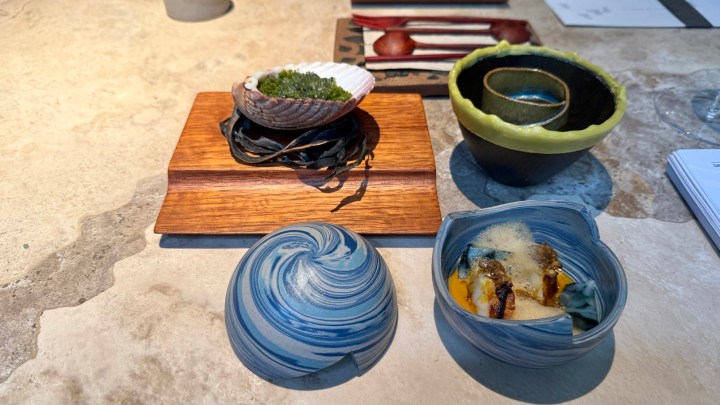
Murike grouper, lobster, and razor clams with dried seaweed and a slightly spicy fragrant broth.
6. Rainforest connection (148m)
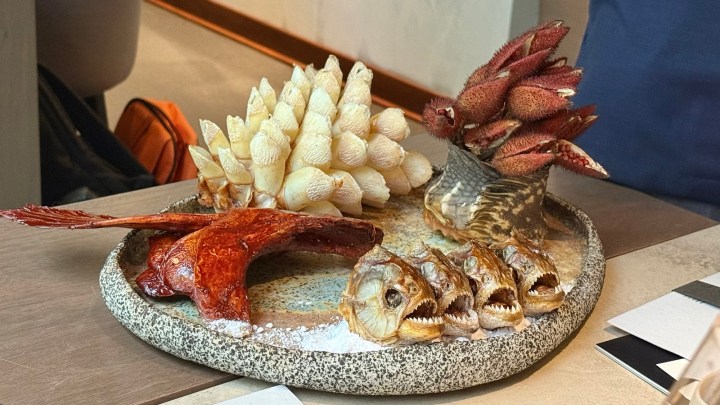
A dish centered around two Amazonian river fish: piranhas and paiche.
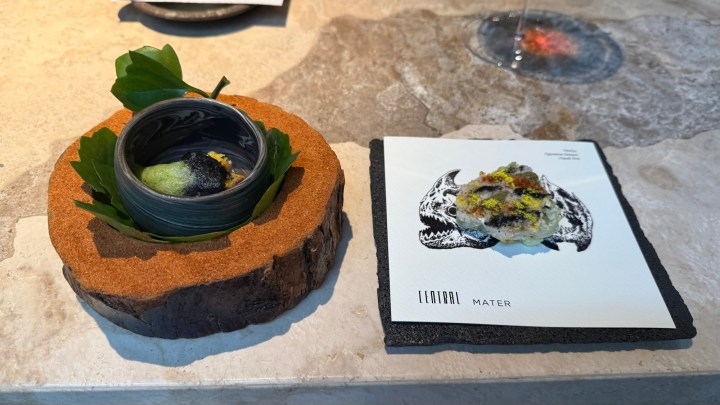
The piranha was quite meaty and was served on a base of cassava. The paiche was served with lettuce cream.
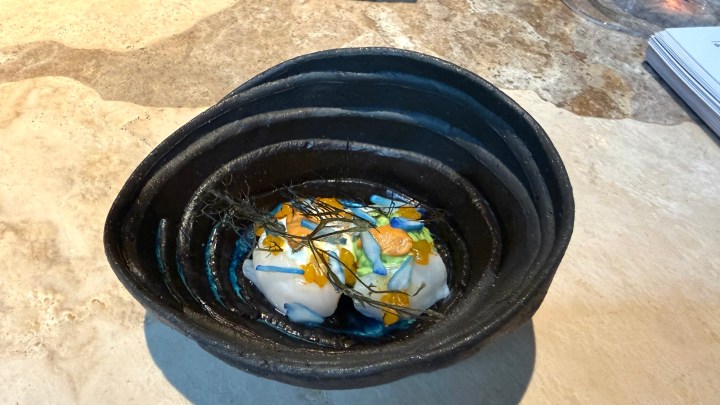
7. Blue green ocean (0m)
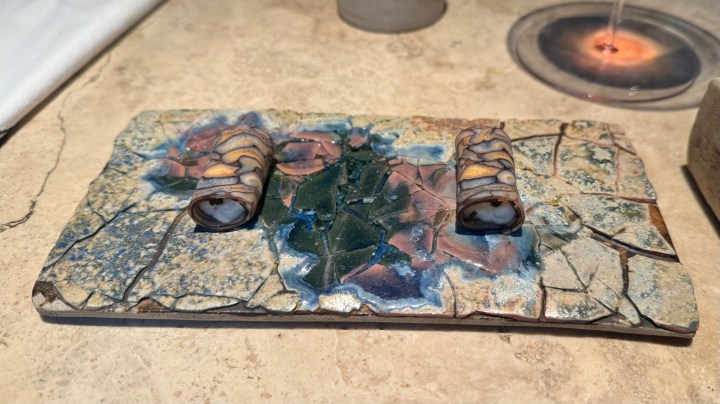
Peruvian scallops, vongole, and sea urchin.
8. Sea brain algae (-5m)
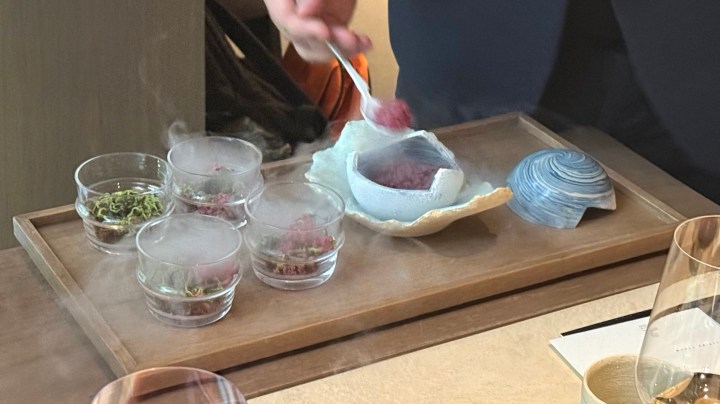
Octopus served with citrus-marinated sea lettuce crisps and as octopus broth and codium (goosefoot algae) foam.
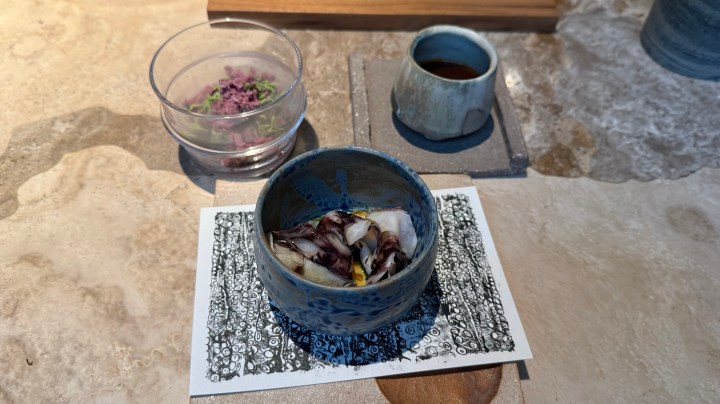
9. Andean forest (2700m)
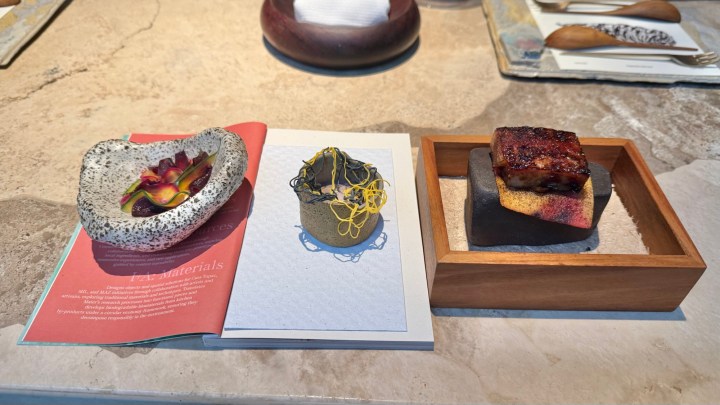
Smoky, tender, and untuous pork jowl (cooked sous vide for 16 hours and then smoked for 6 hours). Duck with mushrooms. The Andean tuber Olluco in a spicy preparation.
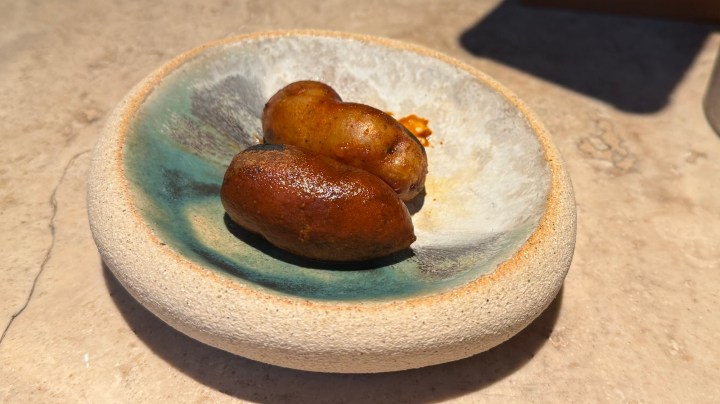
Andean potato cooked in a traditional cooking vessel using charcoal.
10. Sacred Valley (2800m) and 11. Mil Moray (3600m)
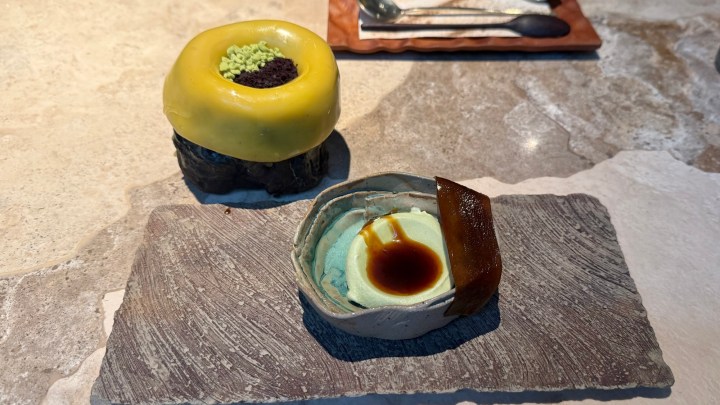
We were instructed to first taste these two desserts together, and then mix them. The first included chirimoya, Andean verbena, and black maca root. The second agave syrup, Andean mint, and kunuka leaf.
12. 100% Cacao (1800m)
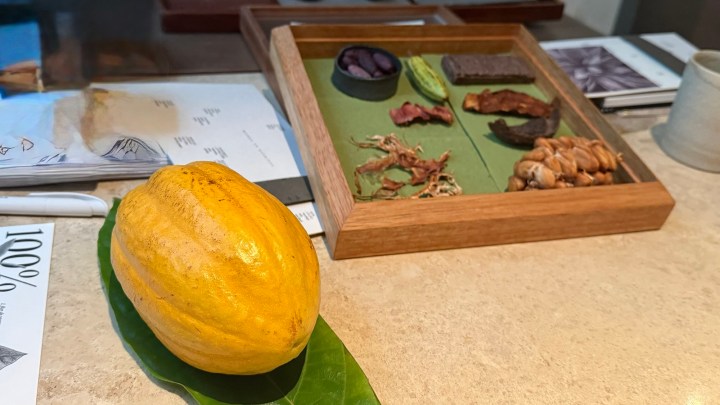
The highlight of the meal was the final dessert. Rather than presenting a standard chocolate dessert, Central serves the entire fruit of Cacao Chunco, highlighting parts of the pod that are typically discarded during commercial chocolate production. They used a highly aromatic native cacao variety from the inter-Andean dry valleys at 1800 meters above sea level.
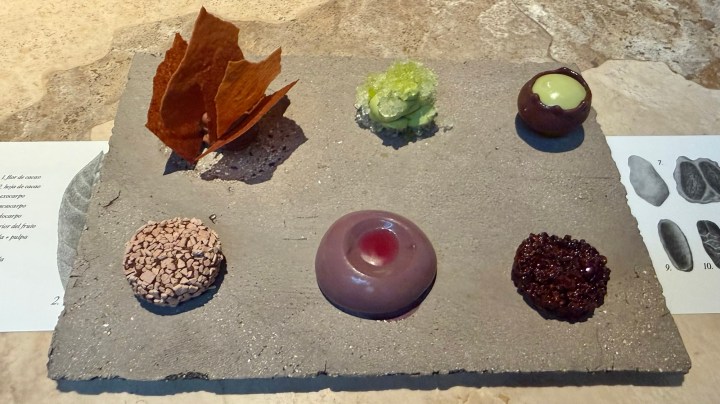
This includes the muculage, a translucent, sticky white pulp surrounding the raw cacao beans that is extracted and used fresh or lightly fermented. It provides a bright, refreshing acidity reminiscent of passionfruit, lychee, and citrus.
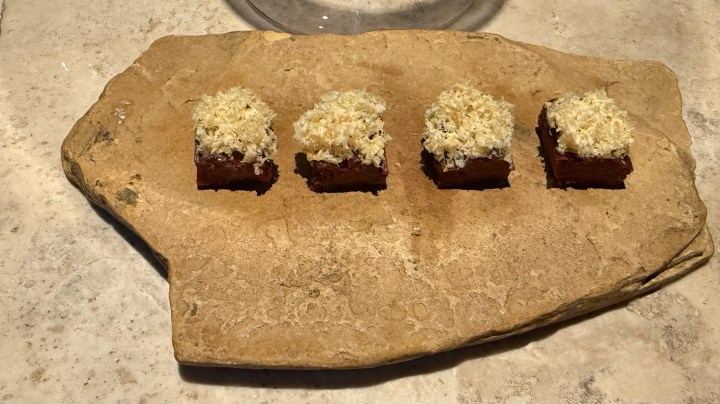
The prized Chuncho beans are gently roasted and broken into nibs, bringing complex notes of red fruit, nuts, and floral aromatics without heavy commercial processing or excessive sugar.
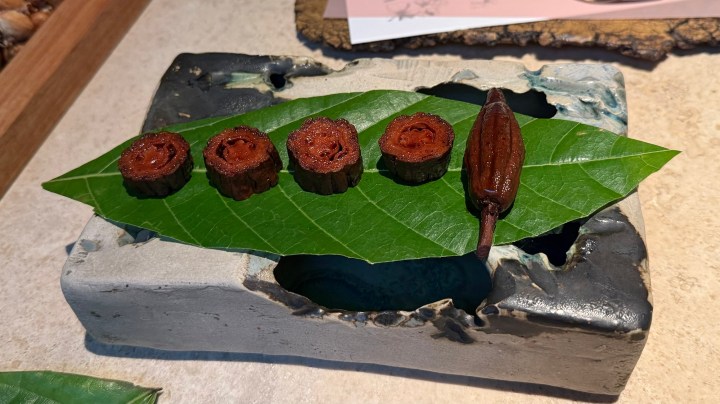
The highlight within the highlight was a young whole cocoa pod that was prepared and sliced. Amazingly aromatic and it tasted like licorice and berries.
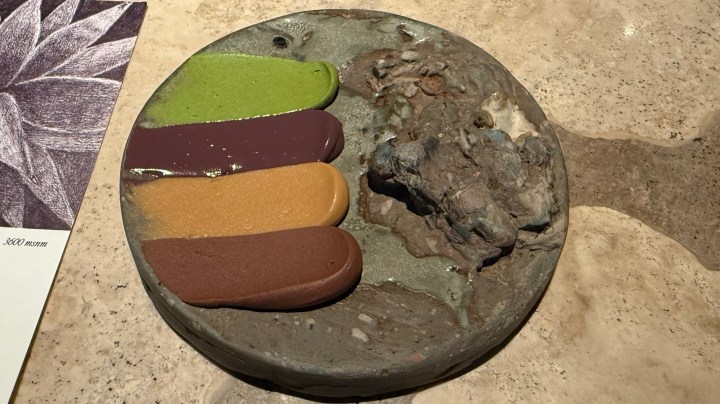
But also the seed husk was used, as well as the leaves.
The meal at Central was an extraordinary, thought-provoking experience. Across 11 courses and 12 ecosystems, we were introduced to 32 distinct preparations—many featuring ingredients I had never encountered before outside of our recent visit to Mayta. Because of this, the evening was a continuous showcase of unfamiliar flavors and textures. At times, the rapid recitation of complex, exotic descriptions in accented English made it hard to fully grasp what was on the plate, and because each preparation is limited to just one or two bites, some moments flash by before you can fully process them.
While certain bites were transcendent—such as the crab with crunchy seaweed, the rich smoked pork jowl, or the sweet squash with shrimp bisque—others proved surprisingly unremarkable in flavor despite their exotic pedigree, like the charcoal-roasted potato. Yet, the final cacao course alone was nearly worth the journey.
Having just dined at Mayta, which offers a similarly stunning showcase of Andean biodiversity, a comparison is inevitable. Both kitchens execute their craft with impeccable precision. However, Central feels fundamentally driven by its overarching research project—an immersive lesson in ecosystems that you are invited to study. Mayta, by contrast, functions more purely as a restaurant where the guest’s enjoyment is the main objective. Even though Mayta’s dishes are arguably even more beautiful, the meal never feels merely conceptual; it delivers the rich, deeply satisfying flavor of a truly great dinner.

