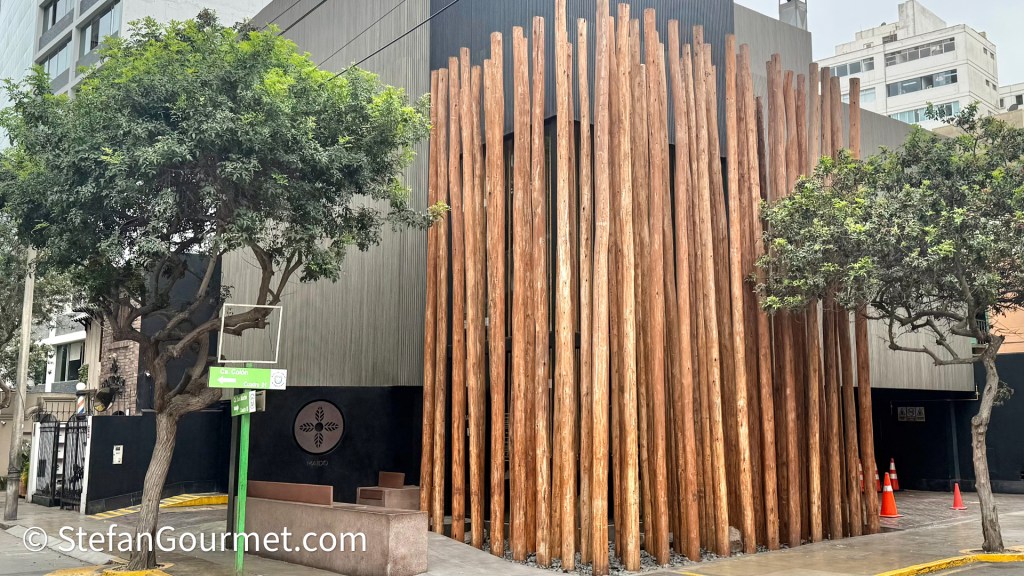
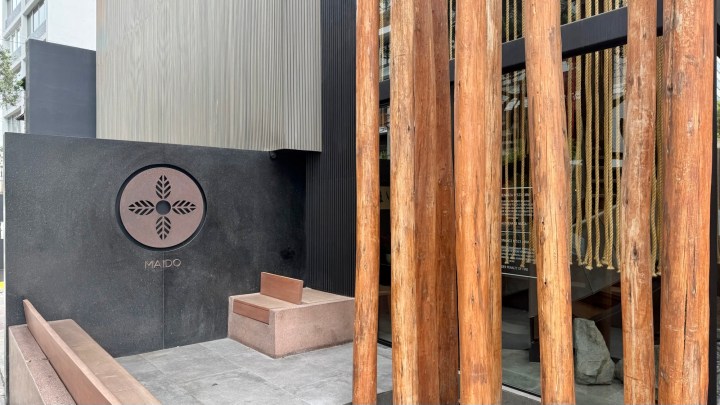
Maido is one of Lima’s most celebrated dining institutions and a global benchmark for Nikkei cuisine, which fuses Japanese culinary technique with Peruvian ingredients. Led by Chef Mitsuharu “Micha” Tsumura, it was named the world’s best restaurant in 2025. That achievement placed it among the 12 restaurants in the world included in the “Best of the Best”, whichh is a group formed by all the restaurants that have previously topped the annual list of The World’s 50 Best Restaurants. Central achieved this honor in 2023 and I was there last week (read about that here). Once a restaurant joins the Best of the Best, it is no longer eligible for the annual ranking. With Central being the other, Lima is the only city in the world to boast two restaurants on this exclusive list. Dining at two of the twelve most acclaimed restaurants in the world within a single week is a rare privilege.
A note about the World’s 50 Best Restaurants, which recently changed its name to The 50. I have had the pleasure of dining at least once at six of the twelve Best of the Best. That will soon be seven out of thirteen, as I have also been to Asador Etxebarri, the 2026 winner about to be inducted into the group. Beyond that, I have eaten at many restaurants featured in the top 50, as well as numerous acclaimed establishments that have never appeared on the list.
Because the ranking is the result of a voting process rather than a judgment based on strict criteria, placing high on this list can be more a matter of being different, original, or interesting than of truly offering the best tasting food, the best wine pairing, and the best service in the world. Voters simply list their best restaurant experiences from the previous 18 months. Because they travel constantly, a restaurant that is novel, theatrical, or culturally unique sticks in their memory far more easily than one executing classic technique at absolute perfection. Even though the voters are industry experts rather than the general public, novelty wins recall, and pure deliciousness or great service often get taken for granted.
Although it is impossible to have eaten everywhere, in my experience restaurants like El Celler de Can Roca and Geranium truly deserve to be called the best in the world. Yet there are others, especially on the annual top 50 list, that are merely different and offer a mediocre experience once you strip away the interesting element, such as Nobelhart & Schmutzig in Berlin, which ranked as high as number 17. Or take Central, which to me feels fundamentally driven by its overarching research project rather than having the guest’s enjoyment as its main objective. After all, if someone calls your cooking or the way you have decorated your house interesting, do you consider that a compliment? Since Maido combines a strong conceptual identity with the 2025 top title, I was curious to see which side of the divide between most interesting and most enjoyable it falls on.
The Maido Experience is the 13-course tasting menu, priced at about 350 euros without pairing or about 525 euros with wine and sake pairing. Due to the popularity it is advised to make a reservation well in advance. Note that Maido requires full prepayment of the experience and only accepts cancellations up to 7 days in advance.
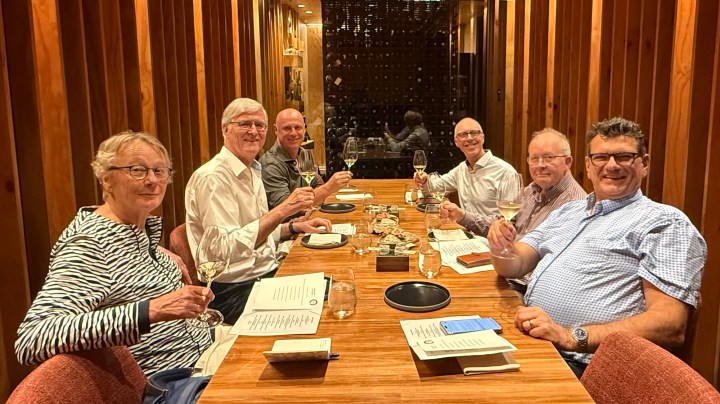
We were in a private room that seats between 6 and 10.
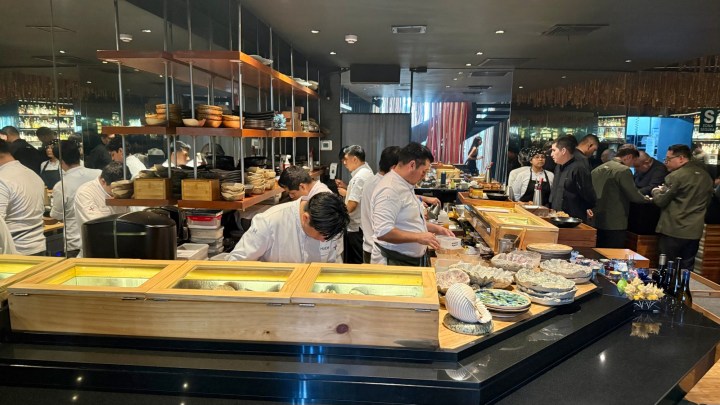
This was a different more quiet experience compared to the hustle and bustle of the general dining room, where you can see the chefs at work.
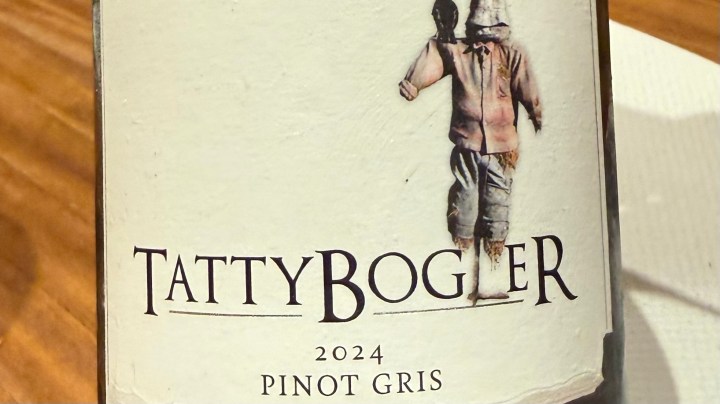
The first wine was a Pinot Gris from Waitaki Valley, North Otago, New Zealand. Part of the wine spends 3 months in large oak barrels. It had pronounced aromas of a spicy type of honey and was to be paired with the first two amuse bouche.
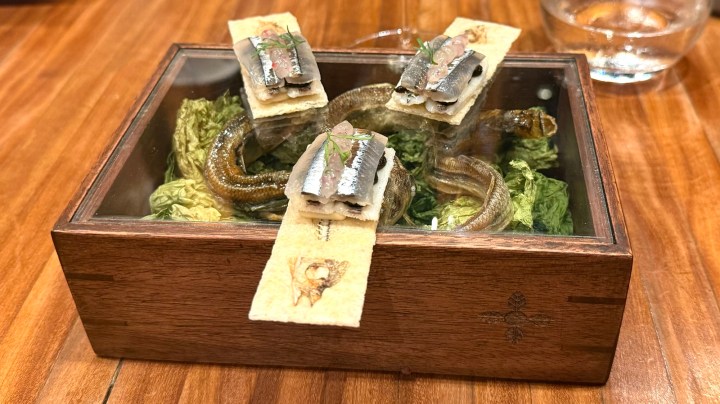
The first amuse bouche was silverside fish in two textures: cured and confit. It was served on a rice cracker and flavored with ponzu and nori tsukudani, which is a traditional Japanese preserved condiment made by simmering nori seaweed in a concentrated mixture of soy sauce, mirin, sugar, and often sake or dashi until it breaks down into a thick, glossy, deeply savory paste. The complexity and balance of flavors and textures was wonderful. The pairing with the Pinot Gris was excellent, refreshing both the wine and the dish.
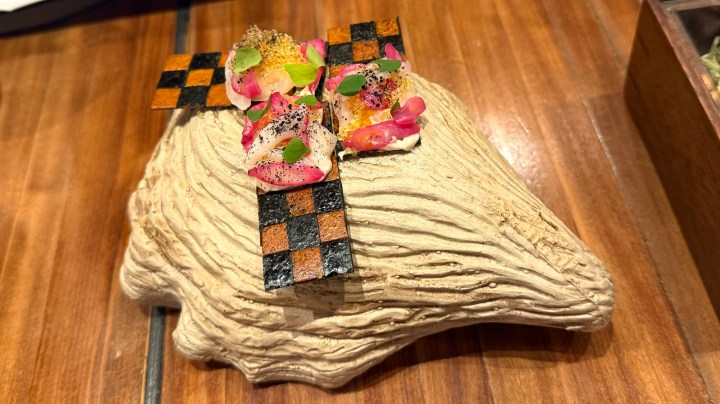
The second amuse bouche, served along with the first, was razor clams on a cracker of loche squash. The cracker was made into a checkered pattern, using squid ink to color the black squares. The razor clam was steamed in sake and very tender. It was flavored with Airampo (the dried, deep crimson seed of a small prickly pear cactus) and Tobiko (the salt-cured roe of the flying fish). This was also an excellent pairing with the Pinot Gris, but with an entirely different effect as it accentuated the honey notes in a very pleasant way.
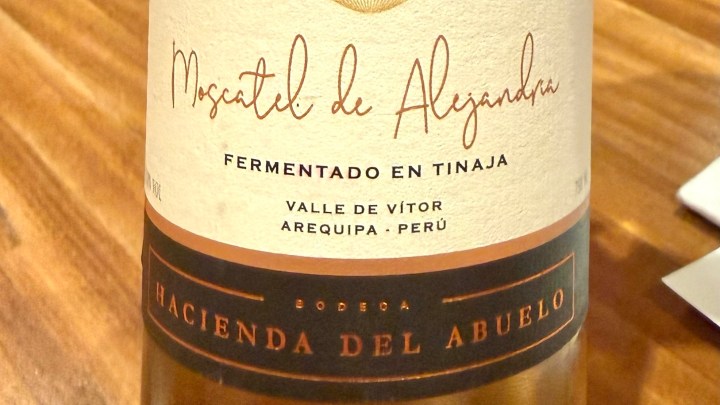
The next wine was Peruvian, a Moscatel de Alejandría fermented in amphora, made like an orange wine.
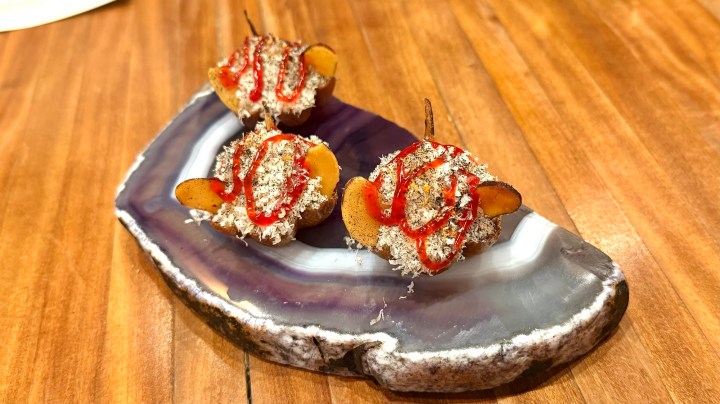
This was an excellent pairing for the next amuse bouche, an ‘Amazonian basket’ with grated Peruvian chestnuts, local chorizo, and yacon syrup. Again wonderfully complex and balanced, with nice smoky and nutty notes.
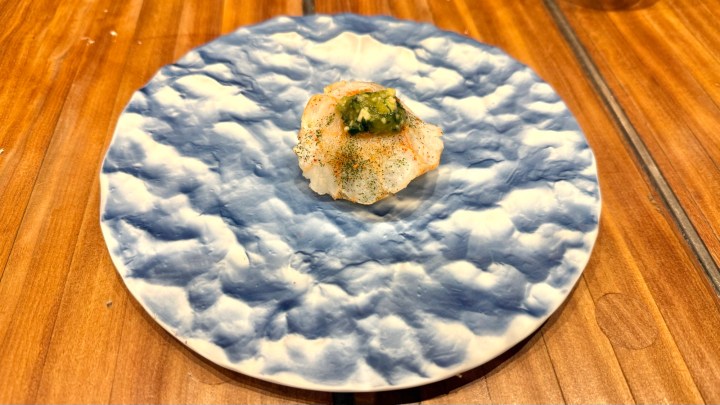
It was also a good pairing for the final amuse bouche: raw crawfish on top of a chupe croquette. Chupe de camarones is a rich, intensely flavorful river prawn chowder from the Arequipeña cuisine in southern Peru. It was flavored with Huacatay (Peruvian black mint) and Paria cheese. Next to the wonderful flavors and textures, we were also impressed with the beautiful embossed plate.
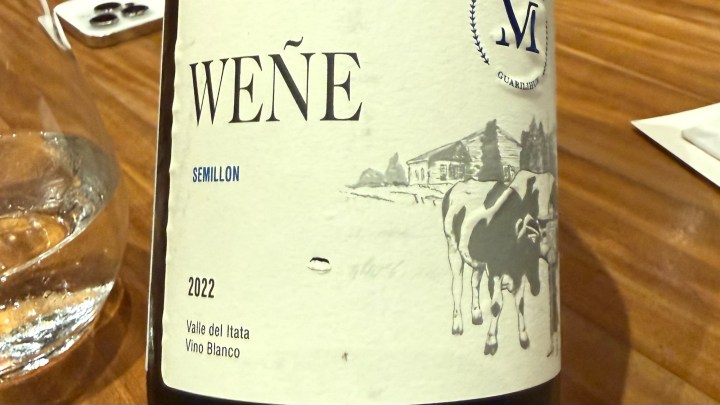
The third wine was a Semillon from the Itata valley in Chile, with pronounced varietal notes of green asparagus.
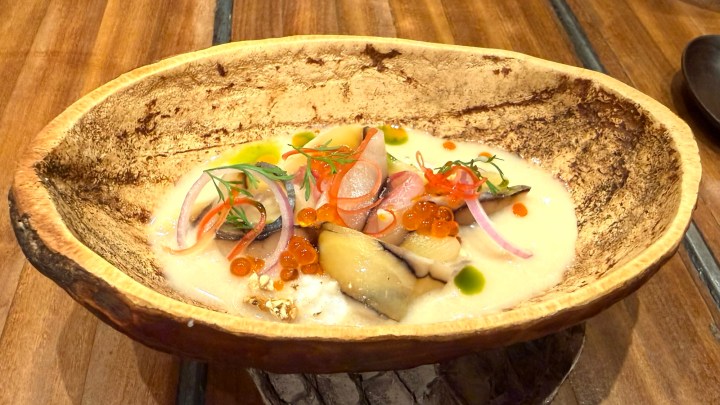
The dish was Tiradito of squid, giant Peruvian razor clam (Concha de Pala) and catch of the day with salmon roe, miso and seed cream of Macambo (a wild Amazonian relative of the cocao tree), leche de tigre, chilli oil, and cilantro oil. All the fish was amazingly tender and it was another outstanding pairing, as the wine made the wine more complex and balanced. The dish was served in the shell of a Macambo cacao bean.
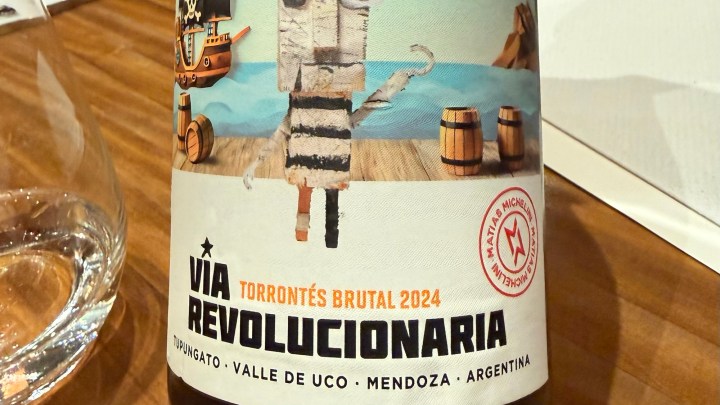
We continued the wine pairing with an orange wine of Torrontés from Tupungato in Uco Valley, Argentina. Being an orange wine, it didn’t have the usual pronounced muscat aromas that this variety is known for.
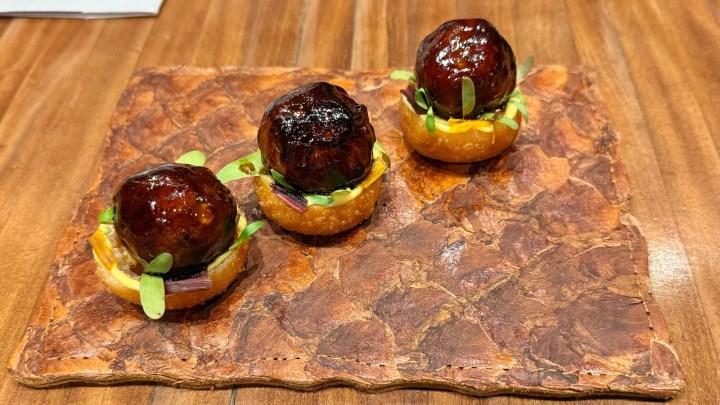
It was a very good pairing for the “hambaga”, a Japanese style mini-hamburger that tasted almost like it was made from beef, but it was actually made using Paiche, a giant Amazonian fish. It was flavored with Karashi (Japanese mustard) and Melipona honey from the Amazon.
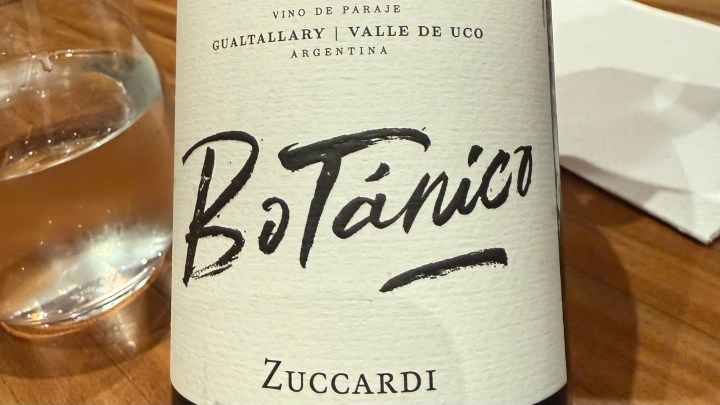
We continued the pairing with another wine from Valle de Uco in Argentina, in this case a Chardonnay. It was made in a cool climate limestone style to resemble Chablis or Puligny-Montrachet, rather than a typical oak Mendoza Chardonnay.
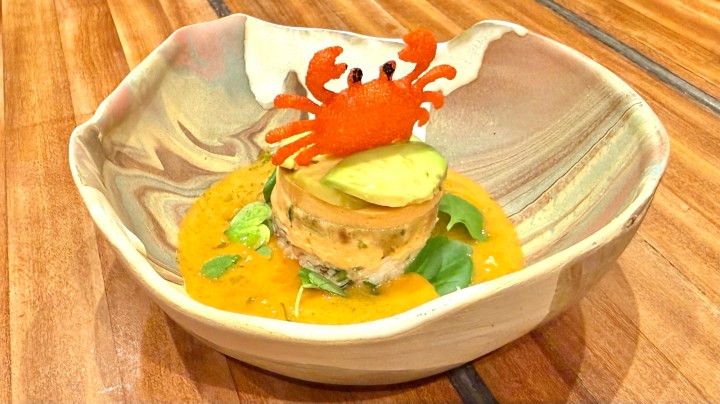
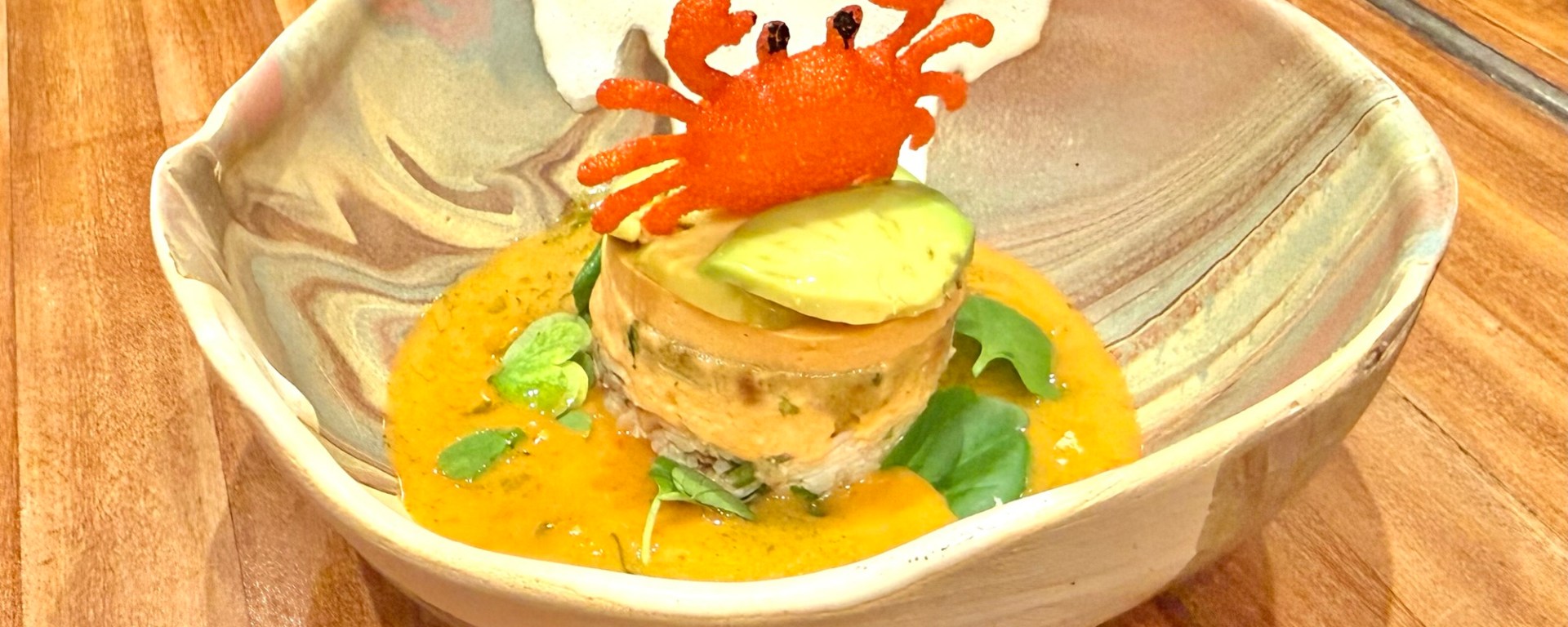
This was a very good pairing for Peruvian purple stone crab with avocado, pistachio cream, and Acebichada sauce. This sauce is a fusion between Japanese mayonnaise and Peruvian leche de tigre. The crispy crab on top was made with a batter that included crab bisque. The crab meat was exceptionally tender and the combination of flavors and textures in this dish was simply divine.
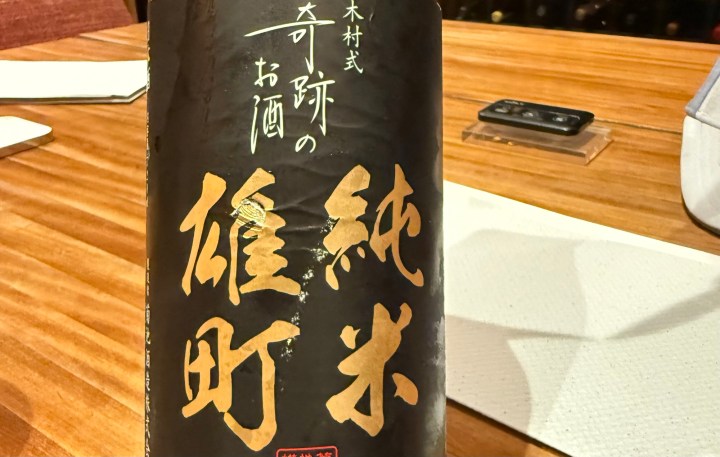
The only sake in the pairing was a Junmai sake (which means pure rice sake without added alcohol) from Omachi rice (an heirloom sake rice variety) grown organically, and polished to 70%. It was a very smooth and elegant sake.
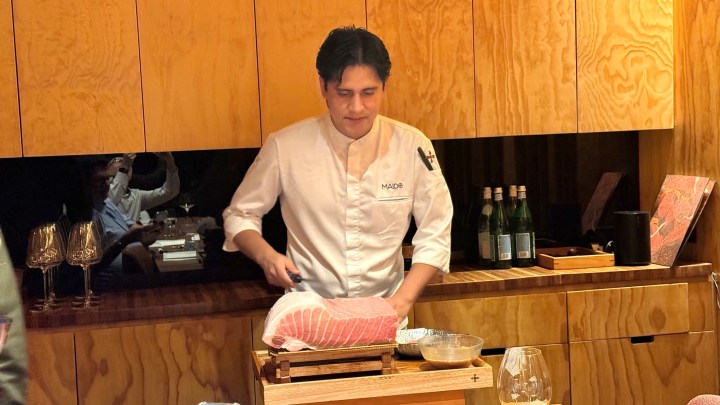
The sushi was prepared tableside, sliced from a huge (and pricey) slab of toro, the prized belly of the tuna.
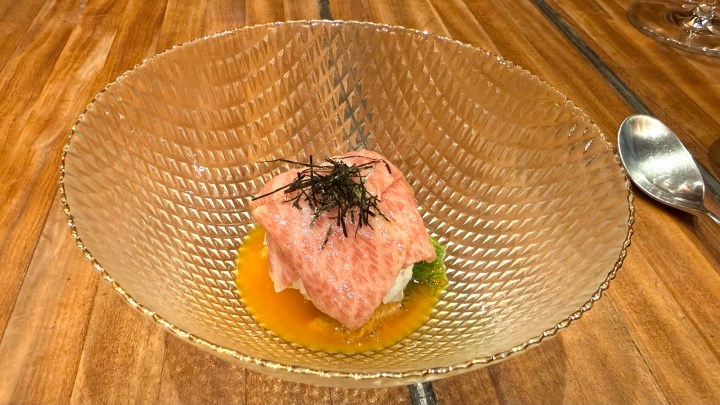
Just when we thought this meal couldn’t get any better, this course took it to the next level. Although it was called sushi, it wasn’t a regular set of nigiri; instead, it consisted of a portion of rice roughly two or three times the size of a single nigiri, topped with multiple slices of toro, a couple of pieces of uni, cured but still creamy egg yolk, and nori chiffonade. We were instructed to mix it all together before eating. It was so delicious that I found myself making “When Harry Met Sally” noises as I ate, much to the amusement (or embarrassment) of my fellow diners. The sake was an excellent pairing.
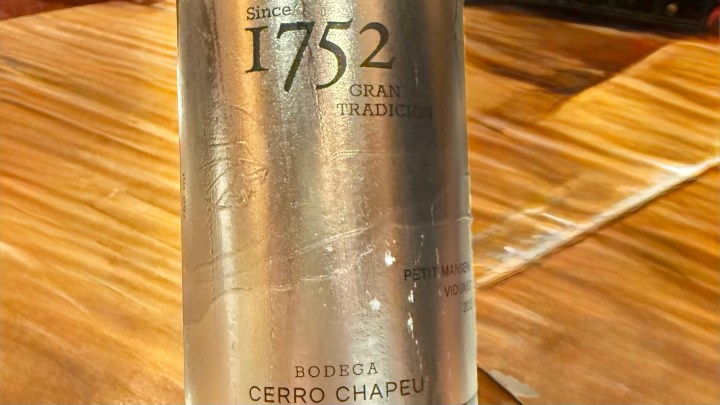
The next wine did not come from 1752 meters of altitude, but from a bodega founded in the year 1752 in Uruguay. It was a blend of 90% Petit Manseng and 10% Viognier. As Tannat from the south-west of France is the most common grape variety in Uruguay, it makes sense that they also grow Petit Manseng (which is also from the south-west of France). This is the first time I’ve seen a blend with Viognier, but at only 10% the Petit Manseng was dominant. Half of the wine is fermented and aged in oak for 6 months. This gave the wine a wonderful balance and complexity between freshness and creaminess.
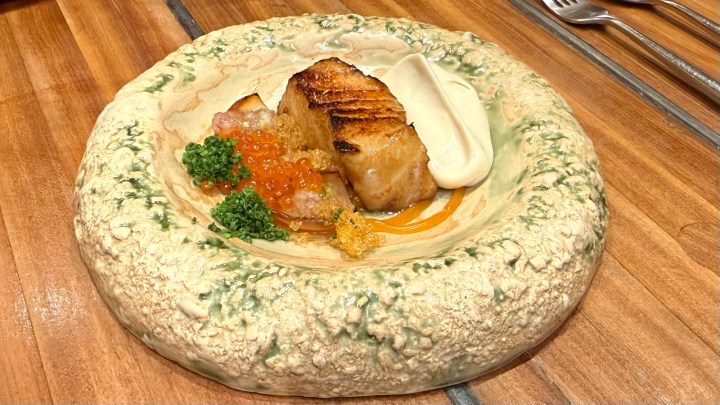
This was an exellent pairing for the fish main course of charcoal grilled black cod with fish collagen, trout roe, and crispy tubers. Black cod is completely different from Atlantic cod, as it has a much more creamy texture.
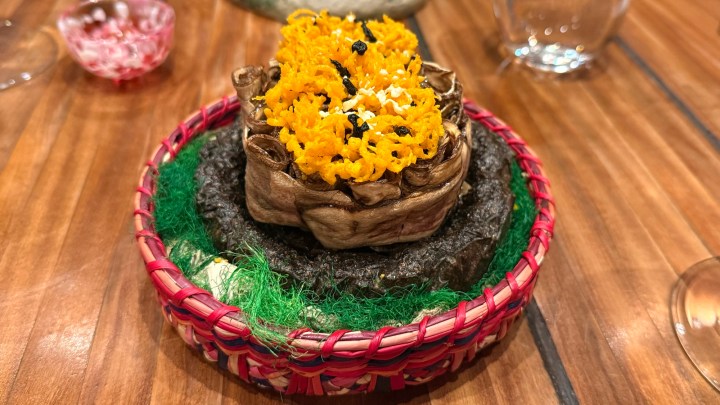
The crispy tubers were served separately in a beautiful presentation, and we were instructed to crumble them on top of the fish and mix everything. This was another amazing dish with a wonderful contrast between textures (the unctuous black cod and fish collagen with the crispy tubers) and flavors (the sweetish fish with the salty roe).
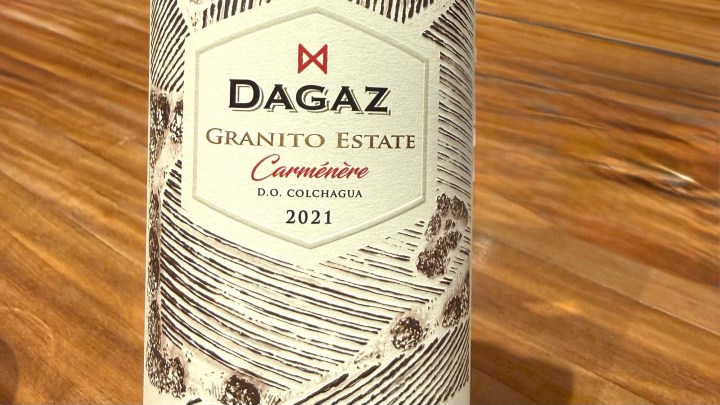
The only red wine of the pairing was a Carmenère from Colchagua in Chile. I was skeptical about this as Carmenère can taste like green bell pepper juice, but this was one was very nice.
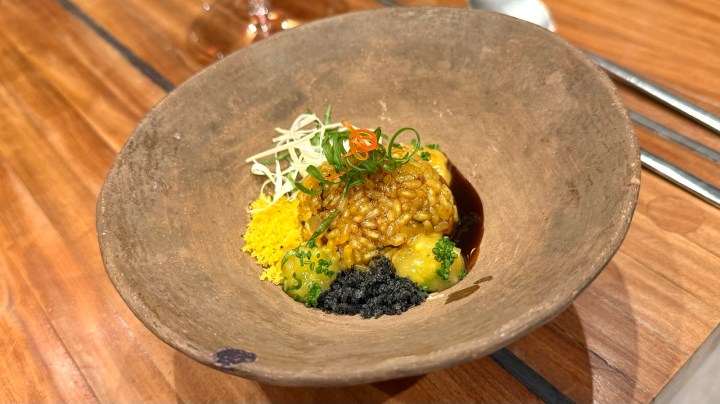
It was a very good pairing for the Nikkei reinterpretation of Juane, a celebratory dish of the Peruvian Amazon, traditionally eaten during the Feast of San Juan. Traditionally, juane is a parcel of seasoned rice, chicken (or occasionally fish), hard-boiled egg, and black olives, flavored with turmeric or guisador and sacha culantro (Amazonian coriander). It is wrapped tightly in bijao leaves (similar to banana leaves) and boiled, emerging as a fragrant, steamed bundle shaped like a small dome. Instead of the traditional poached chicken, Maido uses richly marbled Wagyu beef short rib, braised until tender. Rather than standard white rice, they used Mochigome, which is a Japanese sweet glutinous short-grain rice (used to make mochi). Its naturally sticky, chewy, cohesive texture binds the rice effortlessly without needing excessive fat. The dish also included heart of palm and native potatoes, and was flavored with Cocona, an Amazonian citrus-like fruit, and an “Amazonic reduction”. More Harry & Sally noises from me here.
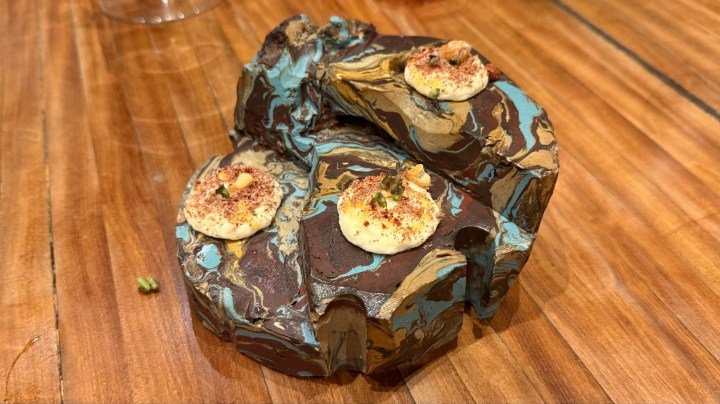
The pre-dessert was Taperiba foam with cashew nuts, plantain jam, and lemon basil. Taperiba is a tart Amazonian fruit that is also known as ambarella, June plum, or golden apple.
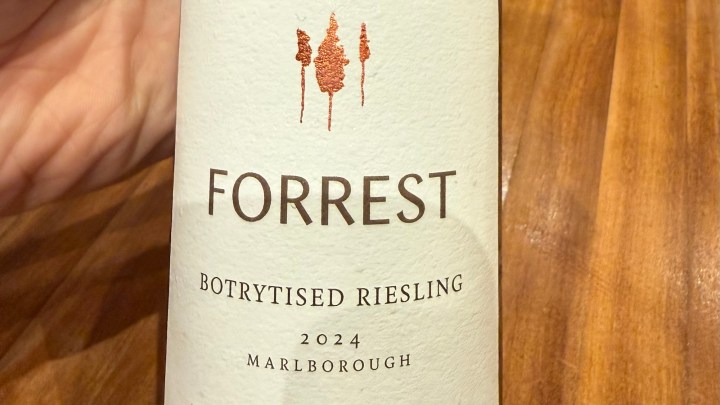
For the dessert wine we returned to New Zealand for a botrytised Riesling from Marlborough, which resembled more or less a Germen Beerenauslese. The sweetness was balanced by the acidity.
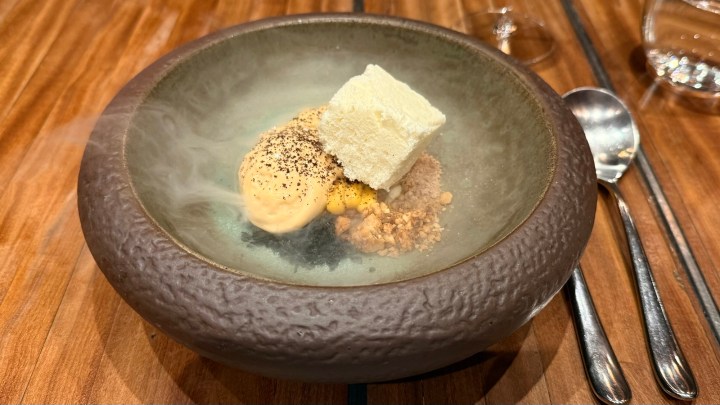
The dessert was another sublime combination of flavors and textures, including Copoazú (a close Amazonian relative of cacao and macambo) and Aguaje (the fruit of the moriche palm) with nuts, 70% cacao, and corn soy suace.
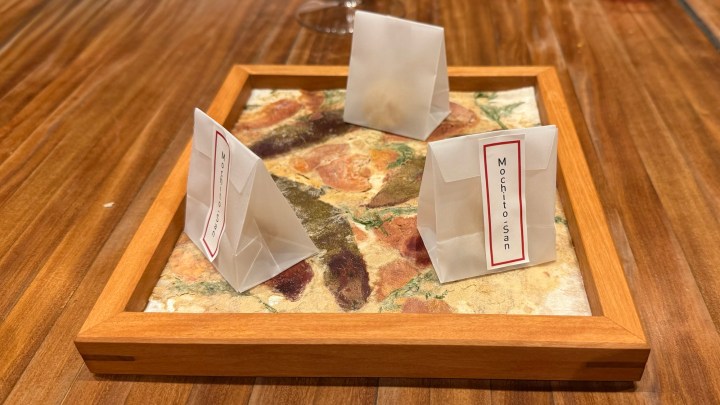
We finished with a lúcuma mochi. Lúcuma is an Andean fruit and mochi is a Japanese rice cake. Mochi is usually quite insipid to my palate, but this one was rather nice.
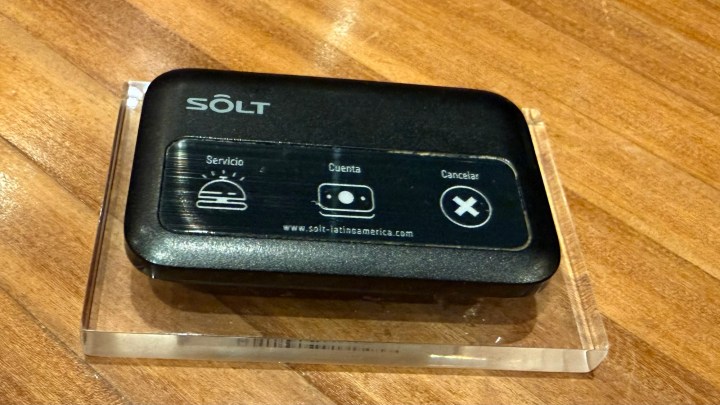
The service at Maido was excellent. All the dishes and wines were explained very well. Our main waiter left a device with which we could call him to our private room, but we never had to use it as everything went smoothly. They also took into consideration that we had to leave after 3.5 hours to catch our flight back to Amsterdam. The pace felt perfect. The wine pairings were excellent; all wines matched very well with the dishes.
Referring back to my introduction, I can firmly state that Maido deserves its place among the top twelve restaurants in the world. The food was not only beautifully presented and true to the Nikkei concept, but it was also genuinely delicious. As wine connoisseurs, our group is accustomed to evaluating wines based on complexity, intensity, balance, and length of flavor. Applying that same framework to the food at Maido, every dish was remarkably complex and intense, offering a myriad of flavors and textures that remained wonderfully harmonious while lingering long on the palate. This easily ranks among the finest meals I have ever experienced, and it was by far the highlight of our trip to Peru and Bolivia.

