This is the first installment of my chronicles of the 9-day wine tour of Peru and Bolivia 2026 of the Verenigde Vinologen Nederland (Dutch association of wine connoisseurs), with Master of Wine Cees van Casteren as our guide.
Wine in Peru
Today most of the wine production in South America is in Chile and Argentina, but when the Spanish conquistadores came to South America in the 16th century, missionaries planted the first vines in the Ica Valley in Peru. Wine was needed for the catholic holy mass, and planting vineyards locally meant that wine did not need to be imported from Spain.
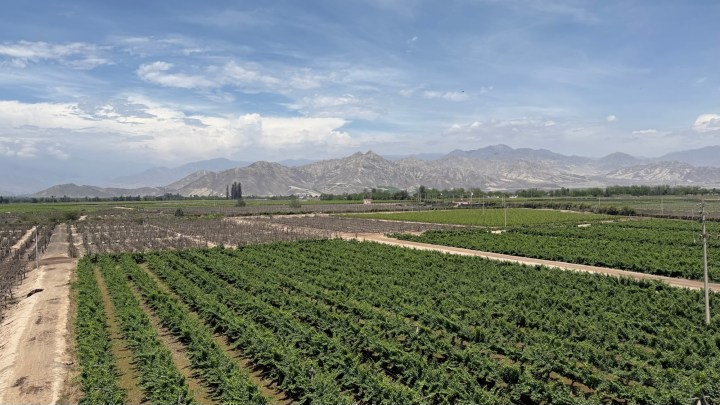
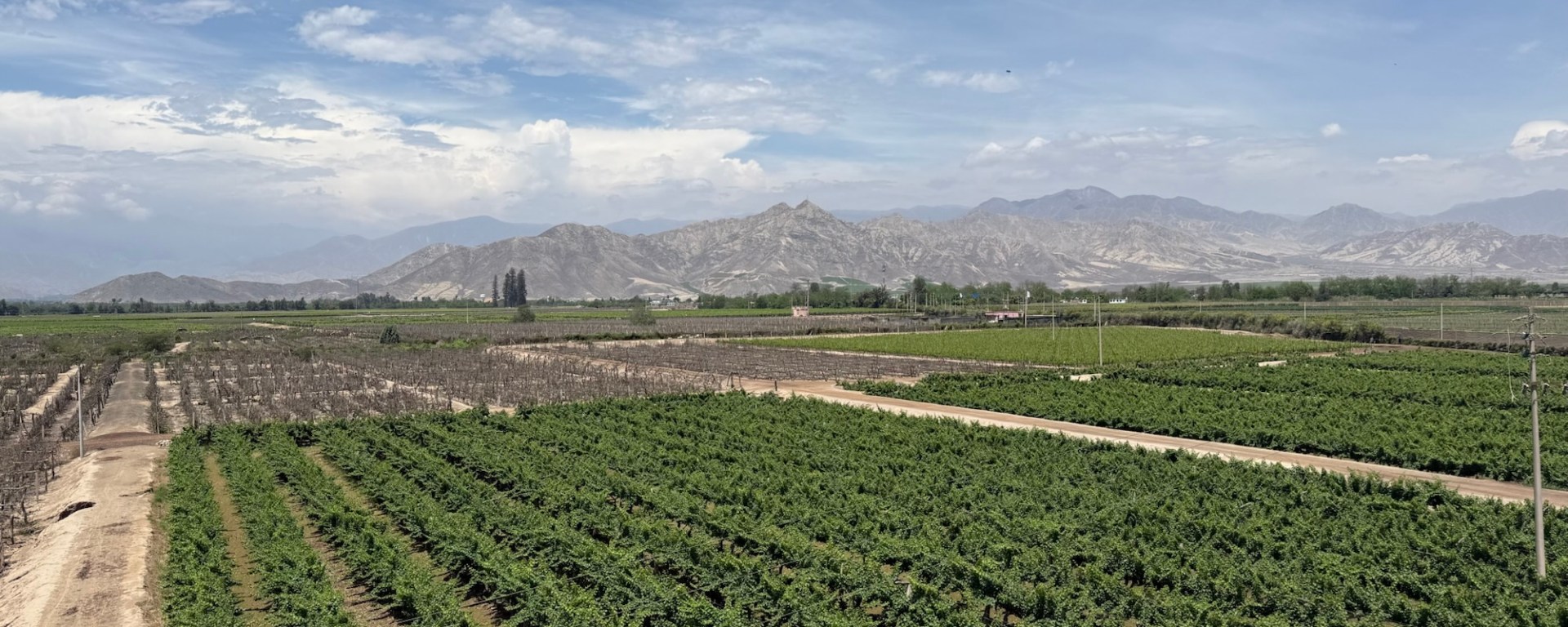
The Ica valley is located at a latitude of 13 degrees south of the equator, which is well outside the usual zone suitable for viticulture, which is between 30 and 50 degrees latitude. Closer to the equator it is usually too hot, which means the grapes ripen too quickly and the vines don’t get their needed rest in winter. The Ica valley is suitable anyway because of the cooling influence of the Pacific Ocean and the cold Humbold current, as well as the high diurnal range. The difference between day and night temperatures is around 20C/40F, slowing down the ripening of the grapes. Another issue is the availability of water. It is a desert here, but before the Spanish already the Incas established agriculture here using irrigation with water from the Andes. Modern drip irrigation allows for very efficient use of the water. The alluvial soils with sand, loam, and gravel are fertile, but the vines imported from Europe needed to adapt to the local conditions like high UV and salinity in the soil before becoming productive.
The main grape varieties brought from Europe were Listan Prieto (also known as Mission in California, País in Chile, Criolla Chica in Argentina, or Negra Criolla in Peru), Muscat of Alexandria (known in Peru as Italia), Negramoll (from the Canary Islands, known as Mollar Cano in Peru), and Palomino Fino (known as Albilla in Peru, or Listan Blanco in the Canary Islands). New varieties appeared that are unique to Peru, which are Quebranta (a cross of Listan Prieto and Negramoll) and Torrontel (a cross of Muscat of Alexandria and Listan Prieto). Quebranta has a ‘grey’ skin (like Pinot Gris) and produces lightly colored red or rosé wines. Torrentel makes aromatic white wines, similar to the Argentinian Torrentés. There are several crossings between Muscat of Alexandria and Listan Prieto that are recognized as different varieties of Torrontes/Torrontel.
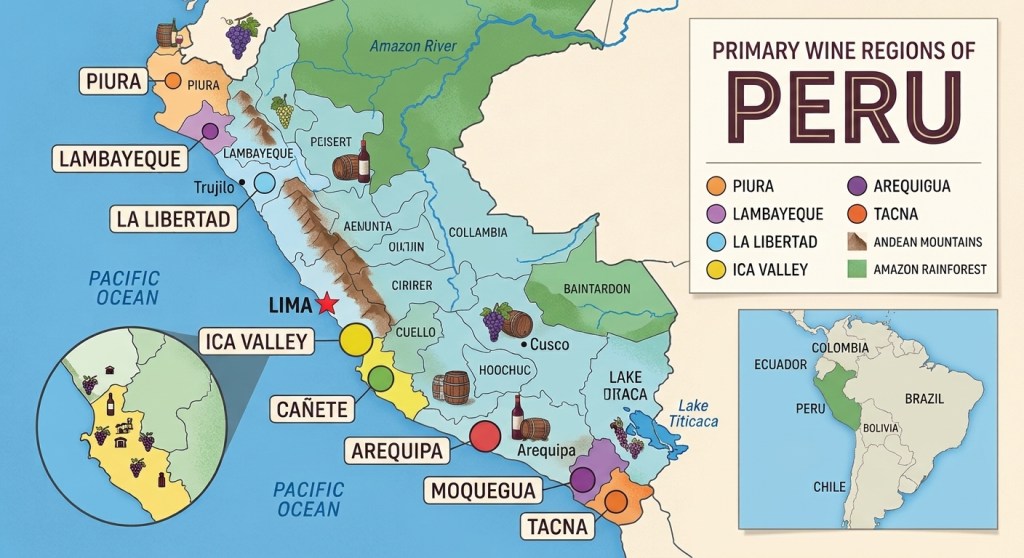
During the 17th and 18th century, Peruvian wine was exported all over South of America. Due to trade restrictions from Spain, in the 19th century the production shifted to production of Pisco, which is distilled wine. In the 21st century a revival of dry table wines from Peru has started, with Tacama and Intipalka as the leading estates. They are both located in the Ica valley. Next to the traditional Peruvian varieties discussed above, they also started producing international varieties like Chardonnay, Sauvignon Blanc, Tannat, Malbec, and Cabernet Sauvignon.
Lunch at El Mercado
We started our tour with a lunch at restaurant El Mercado in the Miraflores district of Lima, created by chef Rafael Osterling. Because of the traditional Peruvian seafood culture where daytime is prime for raw fish, the restaurant is open for lunch only. We sampled 5 appetizers, 3 mains, and 4 desserts.
Peruvian Ceviche and Tiradito both feature raw fish flash-marinated in a lime juice-based dressing called leche de tigre. The main difference is that Ceviche uses cubed fish tossed with red onions, whereas Tiradito uses thin, sashimi-style slices without onions. Traditional leche de tigre contains freshly squeezed lime juice seasoned with salt, ají amarillo or rocoto chili, garlic, and cilantro. Unlike ceviches from other Latin American countries that cure for hours, Peruvian ceviche is dressed just minutes before serving.
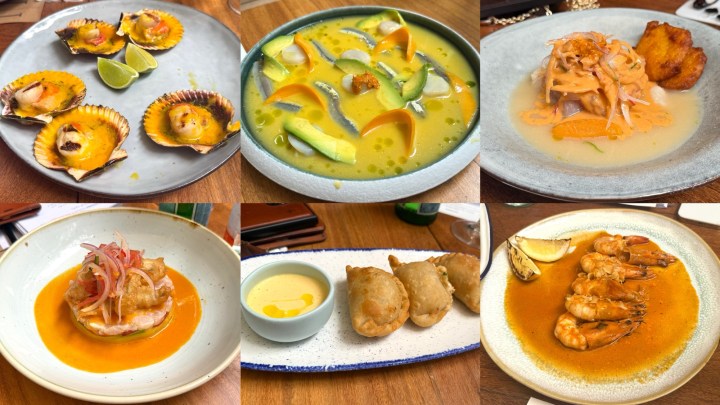
- Greek scallops with bubbling yellow chilli, pisco, and oregano butter.
- Punta Hermosa Tiradito with silverside fish, scallops, mochero chilli, and tropical tigress milk.
- Navigator ceviche with lemon sole, scallops, prawn chili, roasted sweet potato, and corn cake.
- Exuberant Causa with deep fried silverfish, catch of the day, coral mayo, and roasted chilli cream.
- Empanadas with prawns, corn, artichokes, and yellow chilli.
- Chargrilled prawns with macha drunken beurre blanc and toasted focaccia.
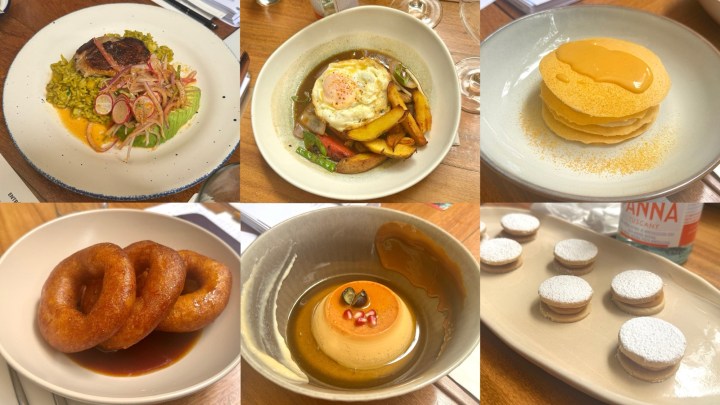
- Arroz con Pato. Duck stew in beer with green chilli rice and avocado salad.
- Anconero Wok Fried Tuna with Hoisin, Chica de Jora, Soy Sauce, and Pisco. This is a tuna-version of the Peruvian classic lomo saltado.
- Flying Convent (Volador) with soursop, pineapple compote, dulce de leche, lemon cream, and pisco.
- Picarones. Peruvian doughnuts with pumpkin and sweet potato, with fig honey and cinnamon ice cream.
- Crème reversée with candied caramel milk and chilled custard apple cream.
- Cookies filled with dulce de leche.
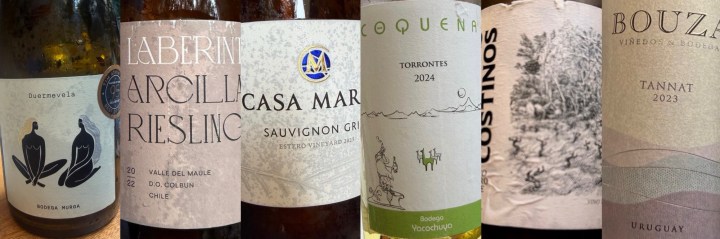
These are the wines we enjoyed with this lunch:
- Bodega Murga, Duermevela 2023, Pisco Valley, Peru. Orange wine of Albilla and Italia (Muscat of Alexandria), macerated for 19 days on the skins and vinified and aged in stainless steel. Saline finish.
- Laberinto, Arcillas Riesling 2022, DO Colbun, Valle del Maule, Chile. Riesling made in amphora with spontaneous fermentation. Crisp.
- Casa Marin, Sauvignon Gris 2025, Valle de San Antonio, Chile. Green bell pepper aroma.
- Yacochuya, Coquena Torrentes 2024, Salta, Argentina. Aromatic with a long finish.
- Morros Costinos, Huenchullami 2022, DO Maule, Chile. País.
- Bouza, Tannat 2023, Uruguay. Aged for 12 months in French and American oak. Dark fruit with nicely integrated oak.
Tacama
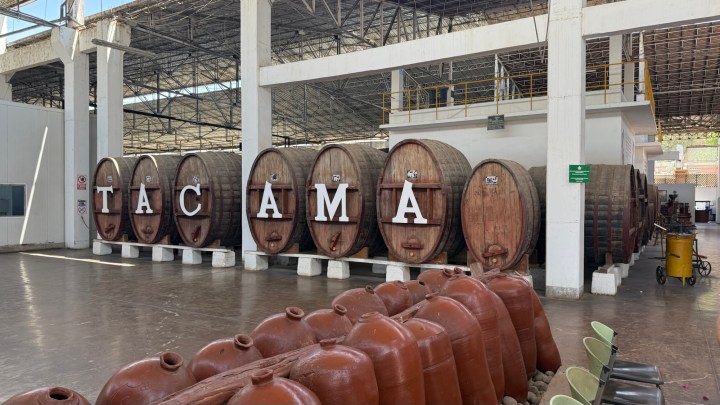
The Tacama vineyard was established in 1540 and is the oldest still active vineyard in the New World. The Olaechea family purchased it in 1889 from the order of San Agustin, and in the 20th century imported French technology and knowledge for a revival of winemaking in Peru. To this day, the estate continues to use winemaking expertise from France. They also produce Pisco. Peruvians like sweet wine, but for the export market they started making dry wines.
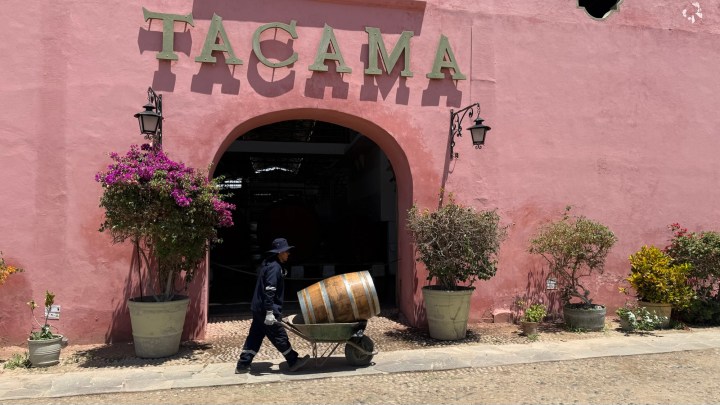
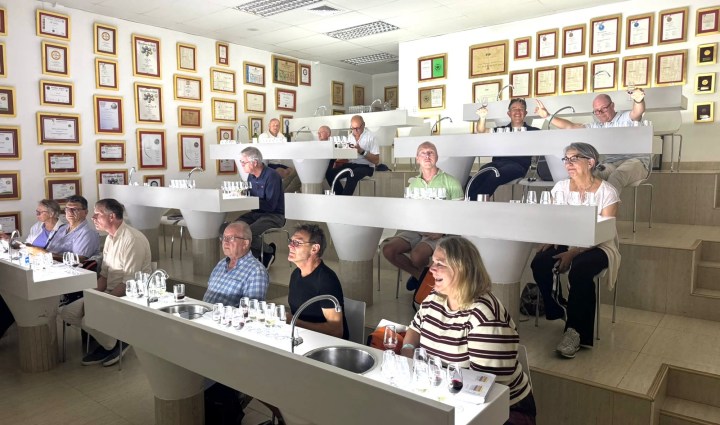
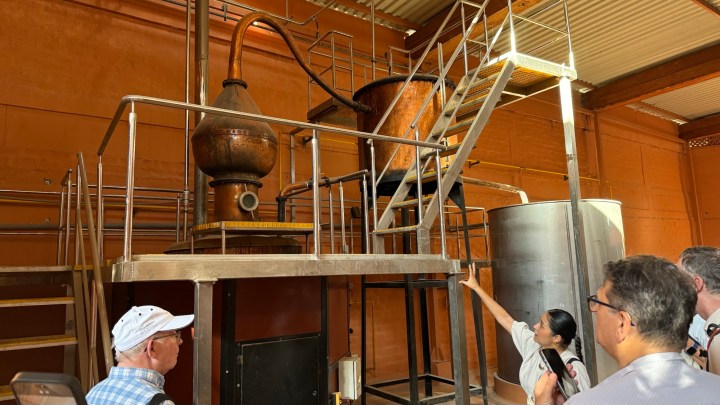
We did a tour of the historic grounds and facilities of the winery, which still include buildings from the times that monks were still making wine here and antique equipment from the early 20th century that is no longer in use.
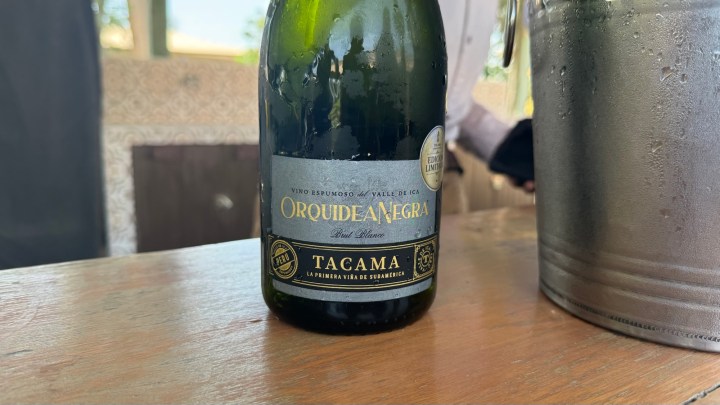
We started our tour with a refreshing glass of Orquidea Negra, a Brut sparkling wine of Sauvignon Blanc, Chenin Blanc, and Ugni Blanc produced with the Charmat method.
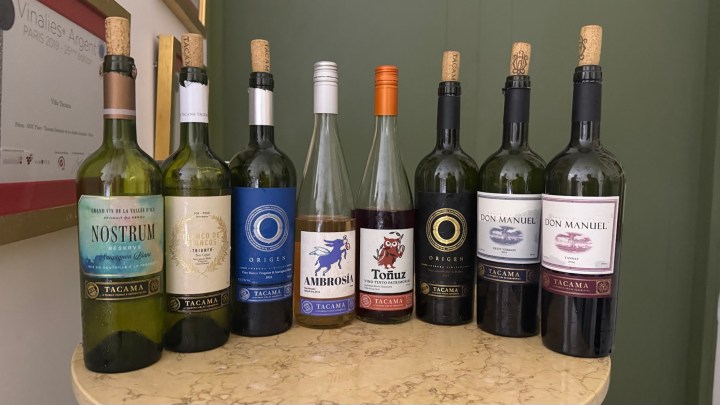
All the wines we tasted at Tacama were of good to outstanding quality with good freshness, balance and elegance.
- Tacama Nostrum Reserve Sauvignon Blanc 2024 (100% Sauvignon Blanc in stainless steel). Fresh with aromas of tropical fruit.
- Tacama Blanco de Blancos Triunfo 2025 (Sauvignon Blanc, Chardonnay, Viognier in stainless steel). Fresh and structured.
- Tacama Ambrosía 2025 (rosé of 90% Nielluccio (the Corsican name for Sangiovese, because the vines were imported from there) with some Sauvignon Blanc and Malbec). Elegant fruit, light color, refreshing.
- Tacama Origen Blanco 2024 (Viognier and Sauvignon Blanc in stainless steel). An unusual blend. Aromatic with an almond finish.
- Tacama Toñuz Vino Tinto Patrimonial 2025 (rosé of 80% Quebranto, 20% Tannat). Soft tannins.
- Tacama Origen Tinto 2024 (Malbec, 70% in oak and 30% in stainless steel). Full bodied with silky tannins.
- Tacama Don Manuel Petit Verdot 2024 (100% Petit Verdot aged for 15 months in new French oak barriques). Dark fruit with a touch of mint, high but ripe tannins, fresh.
- Tacama Don Manuel Tannnat 2024 (100% Tannat aged 12 months in new French oak barriques). Jammy fruit, less fresh and softer tannins than the Petit Verdot.
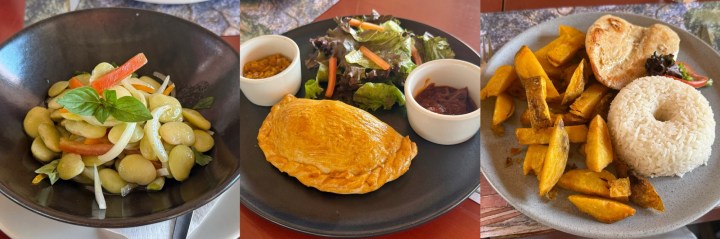
We concluded our visit of Tacama with a nice lunch that included empanadas, a bean salad, and chicken.
Santiago Queirolo / Intipalka
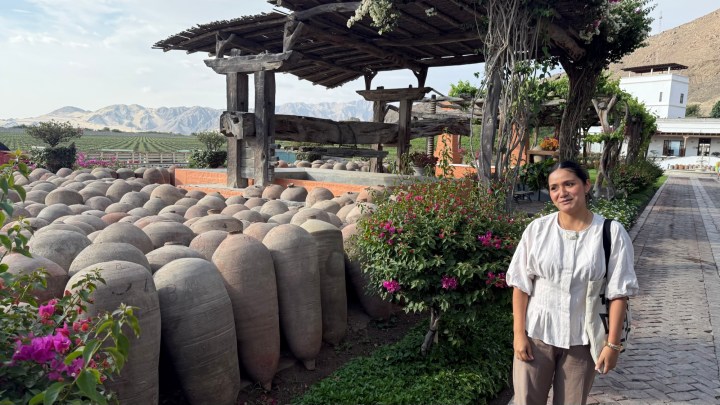
The Santiago Queirolo estate was started in 1880 by an Italian family that had emigrated to Peru and started to produce wine and later Pisco to serve at their restaurant. In 2008 they started producing wine for the export market under the label Intipalka. The estate is very large with 850 hectares (2100 acres) in the Ica valley as well as the cooler Cañete to the south (closer to the Pacific) to produce both Pisco and wine. We were received by Grasiela Torres, who showed us around the winery.
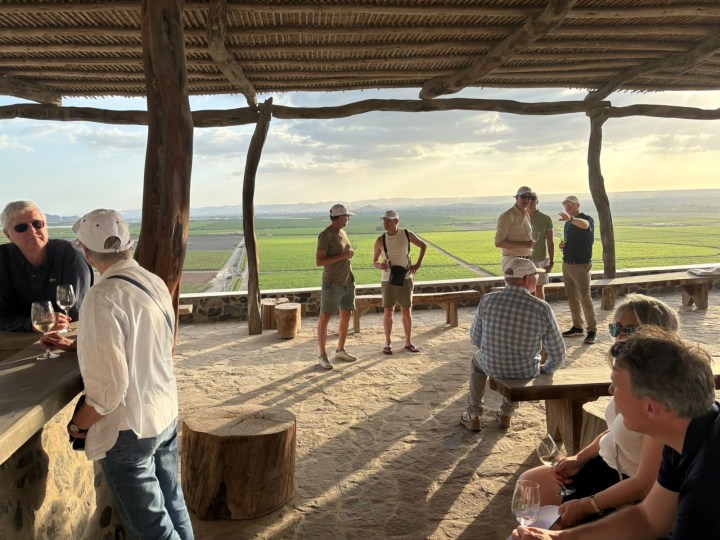
Then we went to a beautiful viewpoint to watch the sunset over the vineyards.
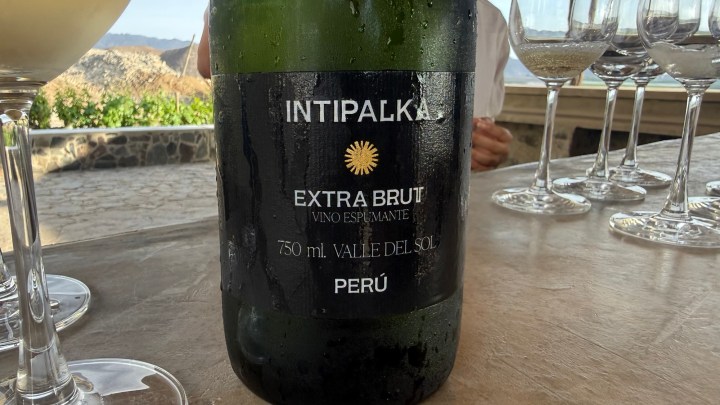
There we enjoyed a glass of the Extra Brut sparkling wine, produced with the Charmet method from 50% Chardonnay (Ica) and 50% Pinot Noir (Cañete). It was refreshing with aromas of green apple and lemon.
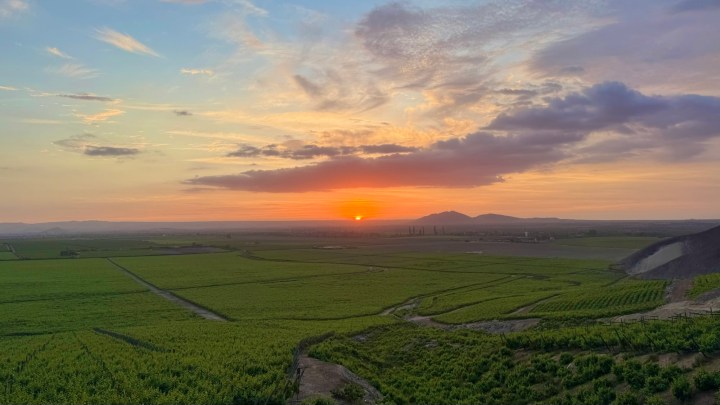
Grasiela explained that it is challenging to pick the grapes at exactly the right moment, because the sugar goes up very quickly in the hot climate and arranging a manual harvest can take some time to coordinate.
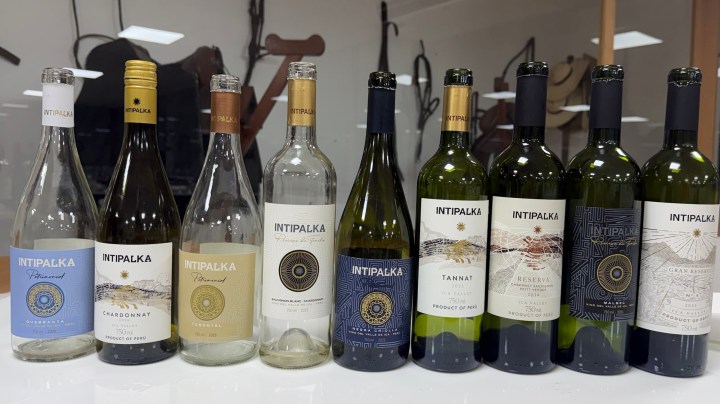
Back at the estate we had a masterclass tasting the wines of the estate. They were all of good to oustanding quality with good freshness and elegance, and clearly showed the continental climate by the smoky note in most of the red wines.
- Intipalka Patrimonial Quebranta Rosé 2026 (100% Quebranta in stainless steel). Refreshing with elegant strawberry aromas. Due to the uneven ripening of the variety, it is difficult to make a red wine. Protective winemaking is required as the variety is sensitive to oxidation.
- Intipalka Chardonnay 2026 (100% Chardonnay, unoaked, 3 months aging on the lees). Refreshing with tropical fruit aromas.
- Intipalka Patrimonial Torontel 2026 (100% Torontel in stainless steel). Fresh and aromatic with floral, lime, and lime zest aromas.
- Intipalka Reserva de Familia Sauvignon Blanc – Chardonnay 2025 (40% Chardonnay from Ica, 60% Sauvignon Blanc from Cañete, fermented and aged for 9 months in French oak, second use). Nicely oaked and balanced between fresh and creamy, somewhat remimniscent of a white Pessac-Léognan with the Chardonnay playing the role of Semillon. This is one of the few oaked whites from Peru.
- Intipalka Patrimonial Negra Criolla 2025 (100% Listan Prieto in stainless steel). Remarkably deep color for this variety, due to the high UV by growing the grapes on slopes for more optimal sunlight interception. Smoky and earthy with red fruit and silky tannins.
- Intipalka Tannat 2025 (100% Tannat in stainless steel). Licorice, dark fruit, firm tannins.
- Intipalka Reserva Cabernet Sauvignon & Petit Verdot 2024 (60% Cabernet Sauvignon, 40% Petit Verdot, 50% in stainless steel and 50% in second use French oak for 6 months). Aromas of struck match.
- Intipalka Vindo de Finca Malbec 2024 (100% Malbec from Lot #4, various clones, 12 months in oak barrels). Fresh and elegant with dark fruit and firm tannins.
- Intipalka Gran Reserva N°1 2023 (40% Malbec, 30% Tannat, 15% Petit Verdot, 10% Syrah, 5% Cabernet Sauvignon, aged 15 months in new French oak barrels). The blend of this flagship red is different every vintage. Full body, firm but ripe tannins, fresh, 10 years aging potential. Complex aromas of dark berries, mocha, caramel, and sweet baking spices.
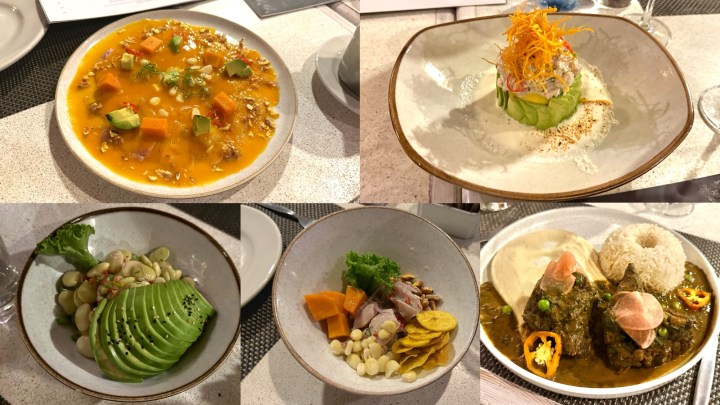
We ended with a dinner that started with ceviche, tiradito, bean salad, and causa as appetizers, followed by an à la carte main. I had Seco de Res a la Iqueña, the variant of the Ica valley of a Peruvian beef stew that is different because the pan is deglazed with Pisco rather than with beer.
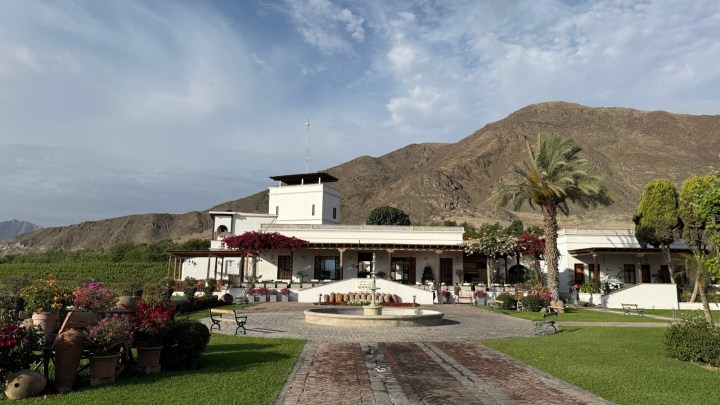
We spent the night at the beautiful resort.
Wine at Central
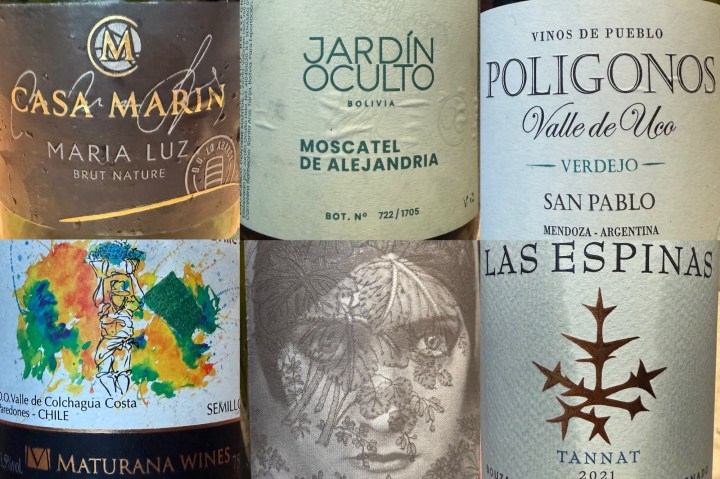
After a long bus ride back to Lima, we had lunch at the famous Central restaurant. The food there deserves a blog post by its own, which will follow soon. We did not have the wine pairing but had these wines selected by Cees van Casteren together with the sommelier. We were seated at four separate tables, because the tables at Central are integrated into the decor and too heavy too move. So there was a bit of a blind tasting contest between the tables, as we had to guess the grape varieties. Our table guessed the Riesling and Tannat correctly and we were very close with the Moscatel de Alejandria (which we thought was a Torrontel, which is a son or daughter of Moscatel de Alejandria). The wines were:
- Casa Marin, Maria Luz Brut Nature, DO Lo Abarca, San Antonio Valley, Chili (100% Riesling, traditional method with 4 to 5 years of aging on the lees, very small production).
- Jardín Oculto, Moscatel de Alejandria 2025, Bolivia (100% Muscat of Alexandria from 200 year-old wines in the Finca San Roque in the Cinti Valley at a very high altitude of 2300 meters (7500 feet) above sea-level, with the vines growing in trees rather than using man-made trellising, low-intervention winemaking).
- Zuccardi, Poligonos Verdejo 2024, IG San Pablo, Valle de Uco, Argentina (100% Verdejo in concrete).
- Maturana Wines Parellon Semillon, DO Valle de Colchagua Costa Paredones, Chile (100% Semillon, 20% with 4 months of skin contact).
- Ver Sacrum, Gloria S. 2023, Los Chacayes, Valle de Uco, Mendoza, Argentina (100% Grenache, 50% whole clusters with carbonic maceration, aged 50% in amphora and 50% in 3rd use French oak for 18 months).
- Bouza, Las Espinas Tannat 2021, Maldonado, Uruguay (100% Tannat from a single vineyard at 2 kilometers from the Atlantic Ocean, aged in oak).
Pisco Masterclass
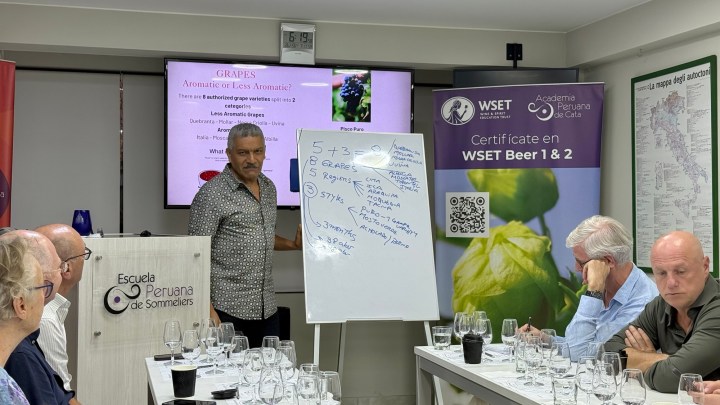
After lunch we went to the Peruvian School of Sommeliers, where we had a Pisco masterclass by Jorge Jiménez. Pisco is Peruvian brandy. Brandy means distilled wine. The main difference with Cognac is that Pisco derives its flavor from the grapes and is created by a single distillation to the desired strength of 38-48% alcohol by volume, whereas Cognac is distilled in two steps to a very high strength of neutral alcohol, which is then watered down to the desired strength, and gets its flavor from aging in wood. When making the base wine, one to six days of skin contact is applied before the fermentation to extract aromas. The first (head) and last (tail) part of the distillation have to be discarded because the alcohol content and flavor are not suitable, only the heart is used. This requires some skills, because it is determined by tasting which part is the heart. Pisco is aged for at least three months in neutral vessels, traditionally called botijas or piskeros and does not have any color. The grapes used for Pisco (more aromatic than those used for Cognac) and the climate in Peru (much warmer than Cognac) allow for a shorter and therefore more economical production process. The first documented production of Pisco was on 30 April 1613. The name derives from the port of Pisco. Peru moved from wine production to Pisco production because of trade restrictions on wine by Spain.
In 1990 the Dominacion de Origen rules for Pisco were put down in Peruvian law. Pisco can be produced in five coastal regions: Lima, Ica, Arequipa, Moquegua, and Tacna. But more important for the flavor are the 8 grape varieties from which it can be produced. Four of those varieties are less aromatic: Quebranta, Negra Criolla, Mollar, and Uvina. The other four are more aromatic: Albilla, Moscatel, Torontel, and Italia. There are three styles of Pisco: Puro (single grape variety), Acholado (blend), or Mosto Verde. The latter is made from partially fermented must (with residual sugar) and the best producers use double the amount of grapes: 14 instead of 7 kilos for a litre of Pisco. This yields a smoother result.
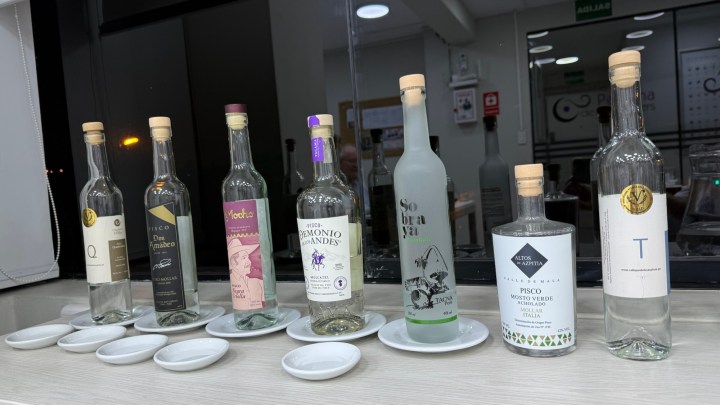
We tasted seven different Piscos. Tasting spirits is different from tasting wine, as you can’t sniff the aromas as deeply as with wine or keep the Pisco in your mouth as long, due to the high proof. I am not used to drinking or tasting spirits, but it was very nice and interesting to note that Pisco does indeed show the primary fruit of the grape varieties.
- Pisco Quebranta 2016, Callejón de Espinos, Valle de Ica, 43.5%. Raisins, banana, peach.
- Pisco Mollar 2018, Don Amadeo, Valle del rio Cañete, Lima, 45%. Red apple.
- Pisco Negra Criolla, El Mocho, Los Angeles, Moquegua, 42%. Lavender, lemon verbena.
- Pisco Moscatel 2024, Demionio de los Andes, Reserva de Familia, Tacama, Valle de Ica, 40%. Muscat.
- Pisco Italia, Sobraya, Valle Viejo, Pocollay, Tacna, 44%. Pineapple, roses.
- Pisco Acholado Italia + Mollar Mosto Verde, Valle de Mala, 42%. Apple, pineapple.
- Pisco Torontel 2016, Ica, 42.5%. Muscat, flowers.
Siete
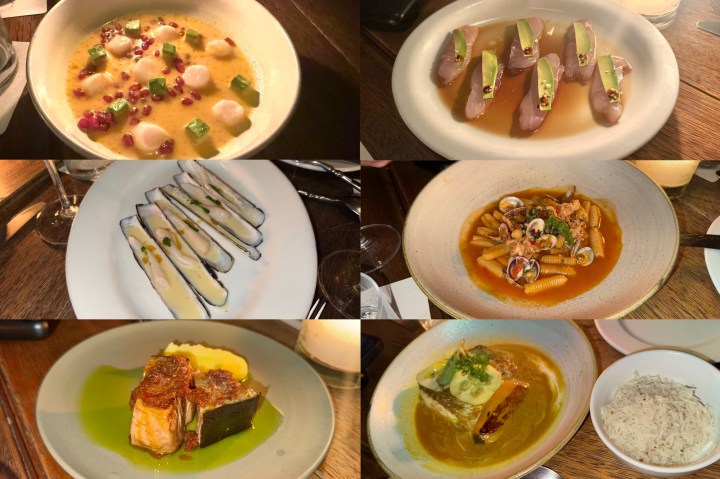
We ended our evening and the Peruvian part of the tour with dinner at Siete in the bohemian Barranco area of Lima. We enjoyed tiradito and ceviche, pasta with crab and clams, tuna marinated in soy sauce and mirin with a hint of star anise, and local fish in a green curry.
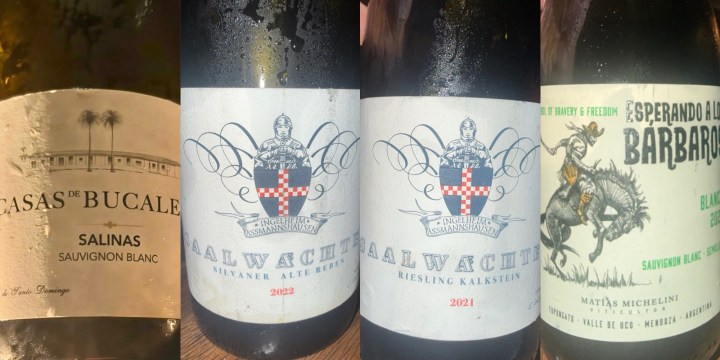
Of course there was wine as well, with wines from Chile, Argentina, and Rheinhessen in Germany. After that, we took a red-eye flight to Bolivia for the next part of our tour.


What fun! Peru has fabulous food. Lots of carbs! The fish was fabulous. I’ve only seen the word “Tiradito in Australia!
LikeLiked by 1 person