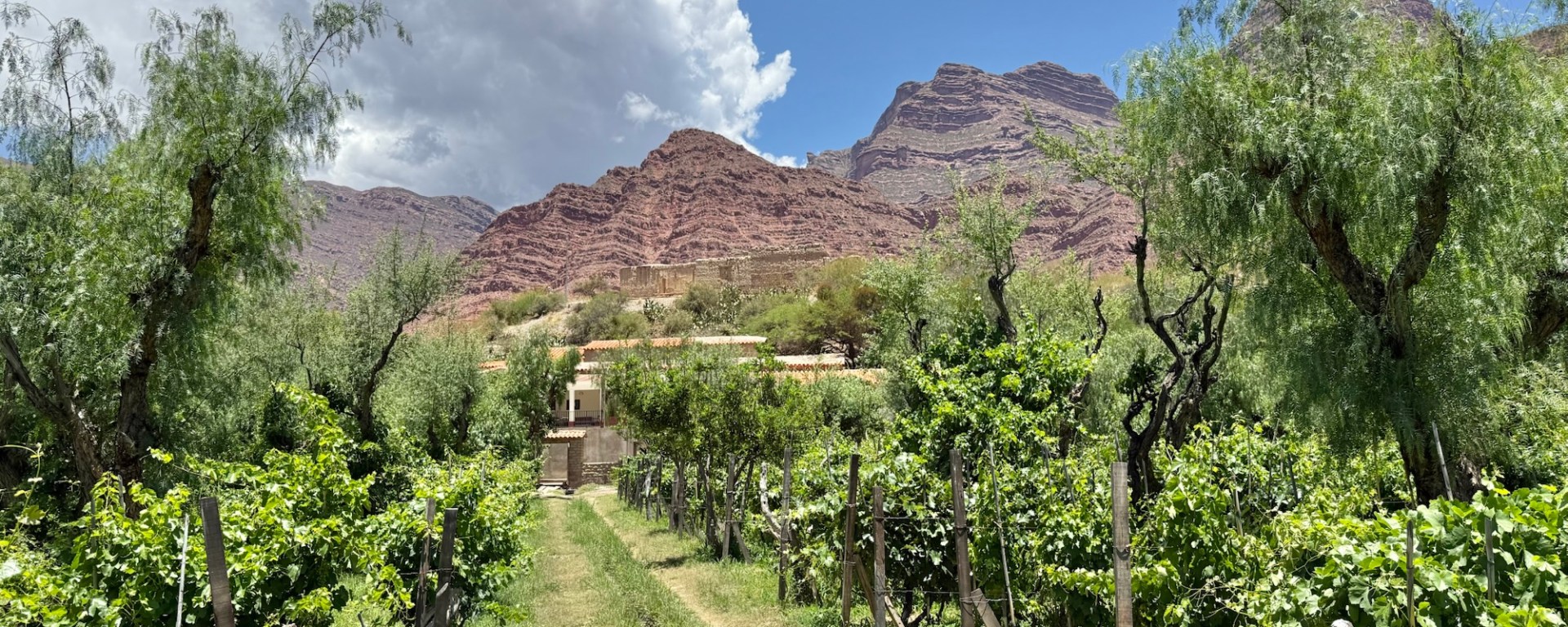
This is the third and final installment of my chronicles of the 9-day wine tour of Peru and Bolivia 2026 of the Verenigde Vinologen Nederland (Dutch association of wine connoisseurs), with Master of Wine Cees van Casteren as our guide. After visiting the most important wineries of Peru, and a visit to Samaipata in Bolivia, we have transferred to Tarija in Bolivia.

We arrived late in Tarija and had pizza for dinner.
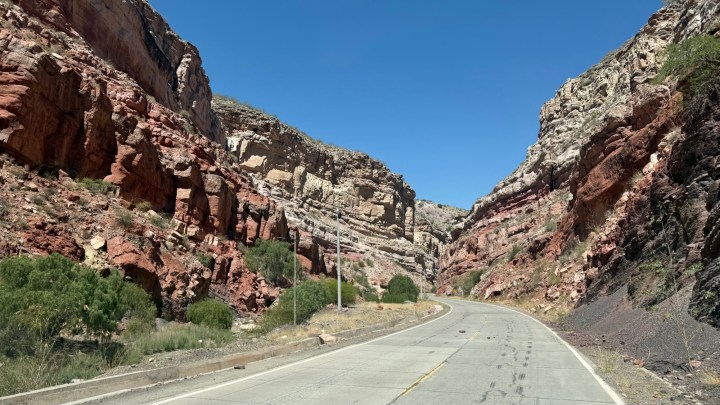
The following morning we left early for the long drive to Cinti valley in a beautiful landscape.
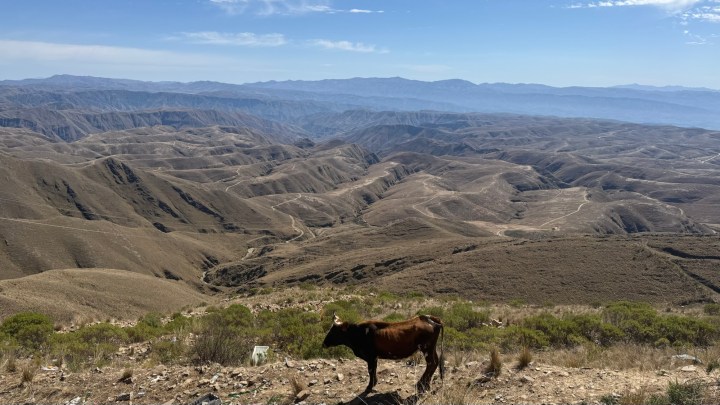
Although Tarija and Cinti are both at roughly the same altitude of 2000 meters above sea-level, we had to cross a pass at 3500 meters to get to Cinti.
Jardín Oculto, Cinti Valley
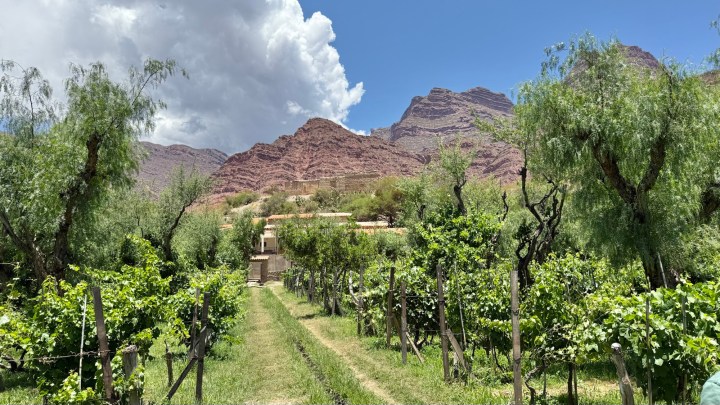
We visited the San Roque vinejard of the Jardín Oculto winery in the Cinti valley. This vineyard of only 3 hectares (7.5 acres) has the oldest vines in South America, which still have their own rootstock and grow in fruit trees like fig, quince, and apple. Most of the vineyard is planted with Listán Prieto, Moscatel de Alejandria, and the crossing between those two Vischoqueña, but there are also 18 as yet unidentified varieties. The vineyard was planted in 1680 and it is estimated that the oldest vines are at least 200 years old. The vines are hidden in the trees, so this truly is a ‘hidden garden’ like the name implies.
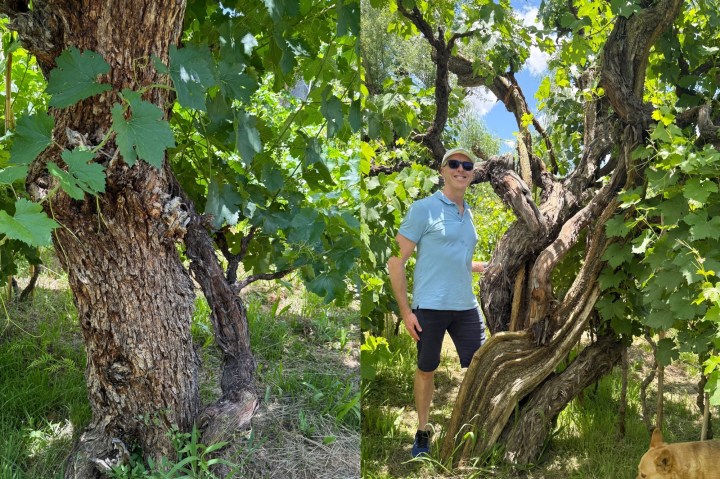
Growing in trees is the natural way for vines to grow, but nowadays the vines in almost all vineyards grow on human-made trellising. That makes it easier to prune and harvest the vines. Here at San Roque everything has to be done by hand, so they need 1 person full-time per hectare. The varieties are mixed in the vineyard and have to be harvested variety by variety. They limit the height of the trees and vines to about 3 meters to prevent tiring the vines and to make them easier to prune and harvest. Despite that, some of the vines are quite large and yield 60 to 80 kilos per vine. The soil here is sandy and the vines do not just grow along the trees above ground, their roots also grow along with the tree roots. The vineyard depends on natural rainfall, as the roots of the vines are everywhere, so a drip irrigation system would not work.
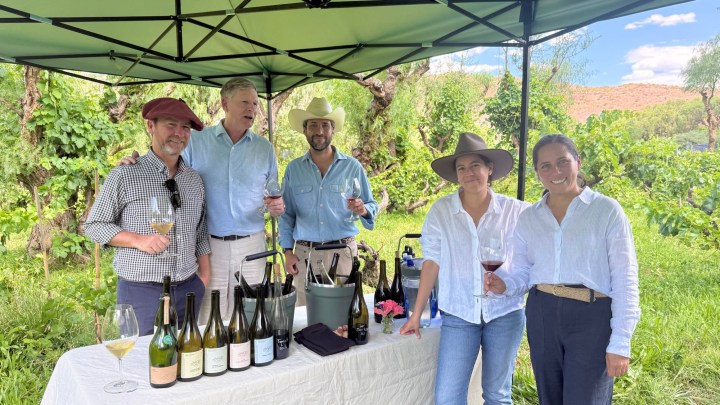
The winery was started by Maria Jose Granier, and her sister Mercedes is the winemaker. Apart from the San Roque vineyard, they also source grapes from the Molle Pampa vineyard across the river.
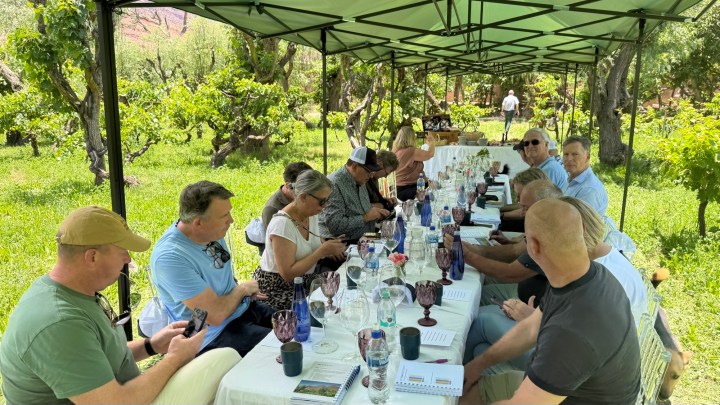
After a tour of the vineyard we had a tasting and lunch in the middle of the vineyard, a magical place.
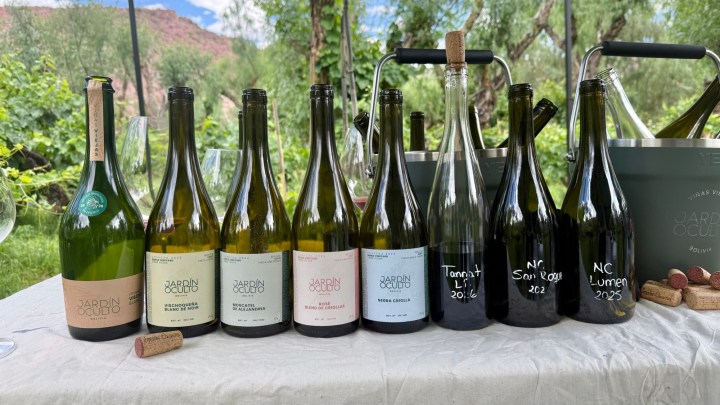
Some of the wines we tasted were not yet bottled and we were asked to weigh in on the decision to release them or wait. Here are the wines we tasted:
- Jardín Oculto Espumante Vischoqueña Blanc de Noirs 2025. Second fermentation in the bottle without disgorgement. No disgorgement means the wine is a bit cloudy as part of the style, but has the advantage that it protects against oxidation and allows the wine to continue to age on the lees for 5-10 years. Brioche, balanced, fine mousse.
- Jardín Oculto Vischoqueña Blanc de Noirs Lumen 2024. Vischoqueña is a black variety, but this wine only has a copper reflection from the 2 days of cold soaking before pressing the grapes. The wine has a beautiful texture and is still a bit restrained on the nose, so some bottle aging will likely improve it.
- Jardín Oculto Moscatel de Alejandría San Roque 2024 (crushed before pressing because of the thick skins, 30% aged in concrete, 70% in stainless steel for 9 months, then a further 9 months in the bottle). Elegant aromas, saline, pleasant mouthfeel despite the acidity.
- Jardín Oculto Rosado de Criollas San Roque 2024 (30% Vischoqueña plus a field blend of 18 unknown varieties, fermented at a relatively high temperature for rosé). Elegant complex aromas, soft texture.
- Jardín Oculto Negra Criolla Molle Pampa 2024 (from the neighbor’s vineyard across the river). Pale ruby color, soft tannins, red fruit, elegant, balanced, and fresh. Very unusual to find a wine of this variety (known elsewhere as País or Mission) of such high quality.
- Tannat Nouveau Barbecho 2025 (made with carbonic maceration, harvested at 11% potential alcohol). Aromas of candy, soft tannins, high acidity.
- Jardín Oculto Negra Criolla San Roque 2024 (same grape, harvested in the same week as the Molle Pampa, but from another vineyard). Higher acidity than the Molle Pampa, because there the mountain heats up during the day and radiates that heat during the night.
- Jardín Oculto Negra Criolla Lumen 2025 (again the same grape, but different vintage and different vineyard). Fresher style.
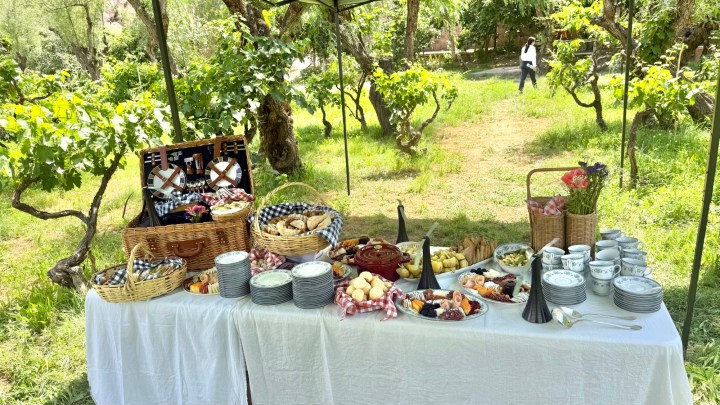
We concludes our visit with a very nice lunch which included a variety of tamales, cold cuts, sweets, and cheese. The highlight was Saice Tarijeño, the signature dish of Tarija, a deeply savory, brothy beef stew defined by its vibrant red color from ground chili pods (ají colorado), served with potatoes and fresh green peas.
Hacienda Kuhlmann
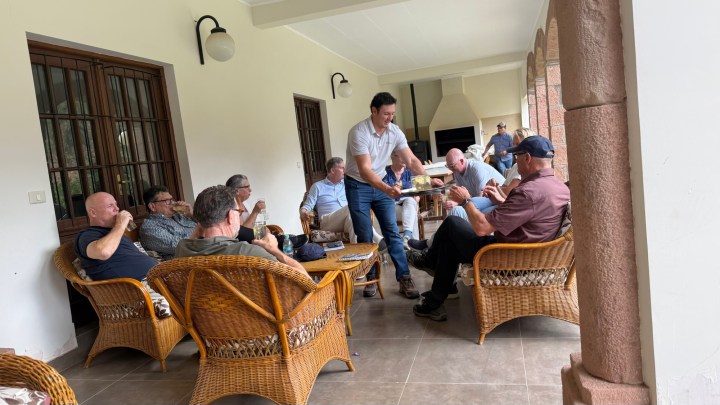
Just like Jardín Oculto, the Kuhlmann has its winery near Tarija, but also has vineyards in the Cinti valley. We were received at Hacienda Kuhlmann by owner Franz Molina. Bodegas Kuhlmann was established in 1930 by his grandfather, Franz Kuhlmann, who he was named after. He served us Chuflay, the typical Bolivian cocktail of Singani, ginger ale, and lime juice. Singani is for Bolivia what Pisco is for Peru. The main differences are that Singani is always made from Muscat of Alexandria, can be distilled multiple times, and can be aged in wood.
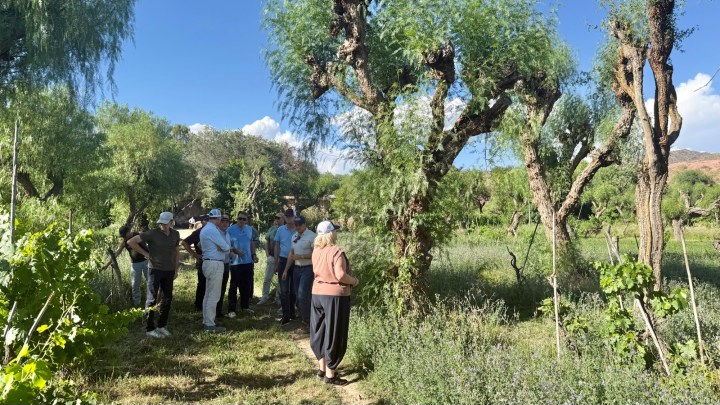
Franz gave us a tour of the vineyard, which was quite similar to San Roque with vines growing in trees. There were also some very old olive trees, dating back to the arrival of the Spanish. Our visit of Bodegas Kuhlmann will be completed at their Tarija location two days later.
Gilgal Hotel Campestre
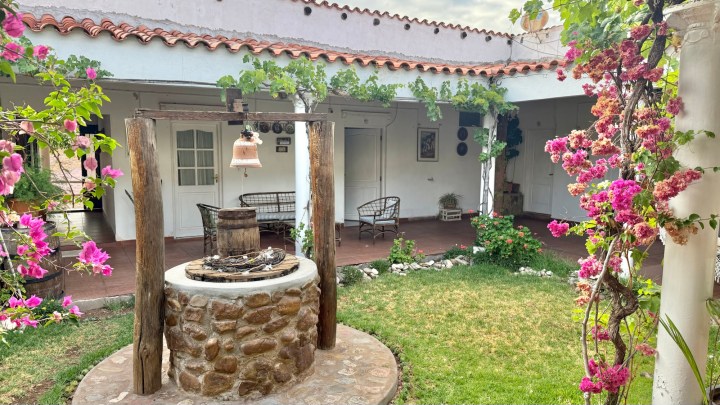
We stayed the night at Gilgal country hotel, rustic and quaint and with a hostess who had very specific opinions about which rooms were for males or females and whether two people who are not married could sleep in the same room (even in separate beds).
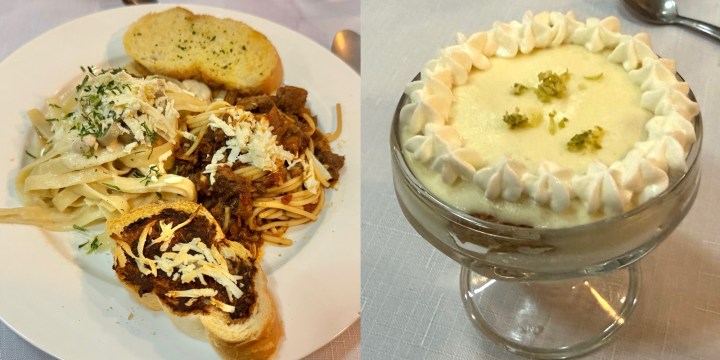
We had a faux-Italian dinner of bruschette, two types of pasta, and a lime version of tiramisù.
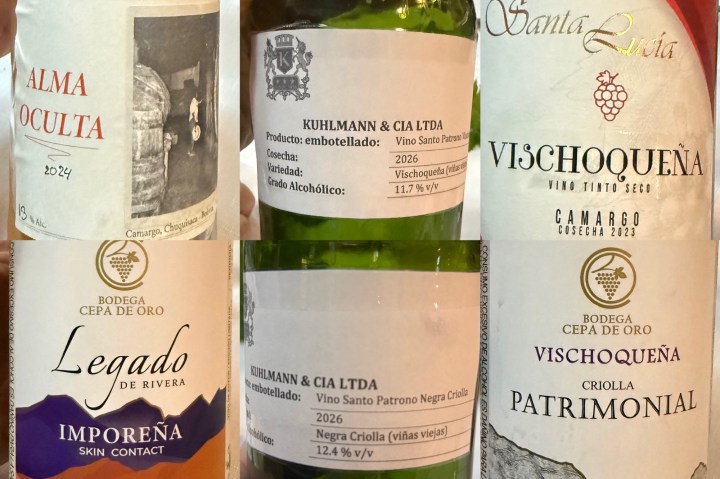
This was accompanied by a tasting of wines from the Cinti valley:
- Cepa de Oro, Legado de Rivera Imporeña skin contact 2025. Imporeña is a sister of Vischoqueña, as it is also a crossing between Listán Prieto and Muscat of Alexandra, but it’s white instead of black. Because of the skin contact, this wine has a lot of structure.
- Alma Oculta 2024. Orange wine of Muscat of Alexandria, aged in demijohns. High acidity and structured.
- Cepa de Oro Vischoqueña Patrimonial 2026. Roses, soft tannins but slightly chalky, high acidity.
- Kuhlmann Vino Santo Patrono Vischoqueña 2026. Candied cherries, roses, fresh, soft tannins. Very young, has just been bottled (improvised label on the bottle).
- Santa Lucia Vischoqueña Camargo 2023. Soft tannins, fresh, roses.
- Kuhlmann Vino Santo Patrono Negra Criolla 2026. Mint, soft tannins, red fruit.
Aranjuez
The following morning we returned via the same long drive to Tarija, to visit Aranjuez. This is a family business that started as a winery in 1976, purchasing grapes.
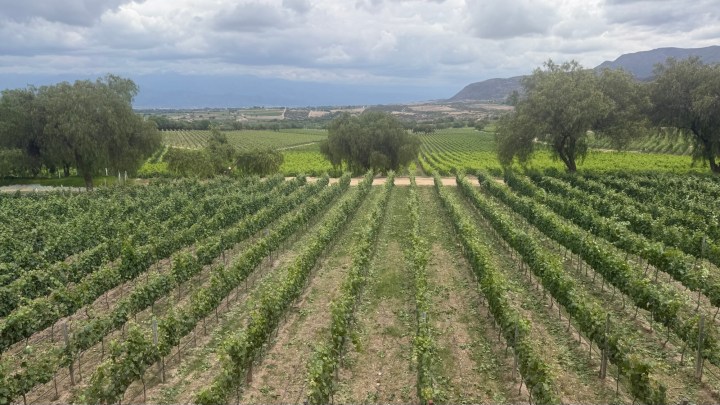
In 1999 they started their own vineyard in the Tarija Valley of 50 hectares (125 acres) at 1900-2100 meters above sealevel. They planted mostly grapes from France, but also Bonardo and Zinfandel. The first harvest was in 2003. They produce 4.7 million bottles per year.
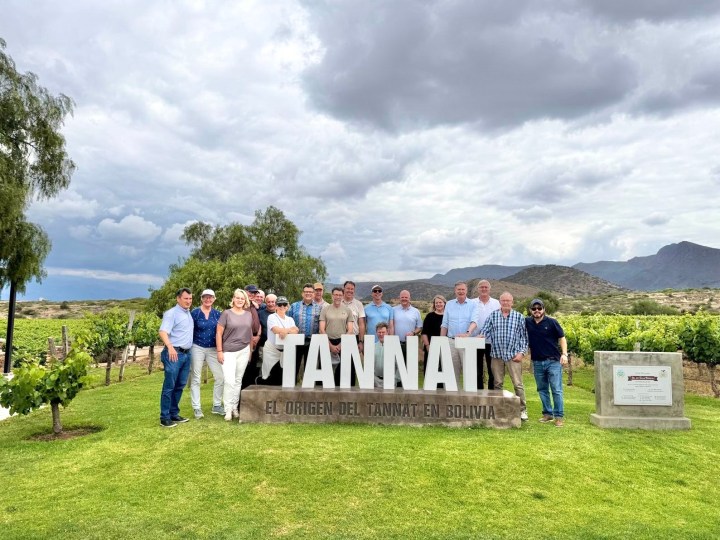
Aranjuez is known for introducing the variety Tannat to Bolivia, having planted the virst Tannat on 10 November 1999. Tannat is originally from the south-west of France, where it is the variety of Madiran. Tannat is a variety with very thick skins, producing wines with a very deep color and very high tannins. Madiran often needs 20 years or longer for the tannins to soften. Tannat is also the national variety of Uruguay. In the much warmer climate there the tannins are much softer. Even though Uruguay is relatively close to Bolivia, the climate here is very different. At Uruguay Tannat is grown at sea-level and close to the see, whereas here the sea is far away and the vines are at 2000 meters altitude.
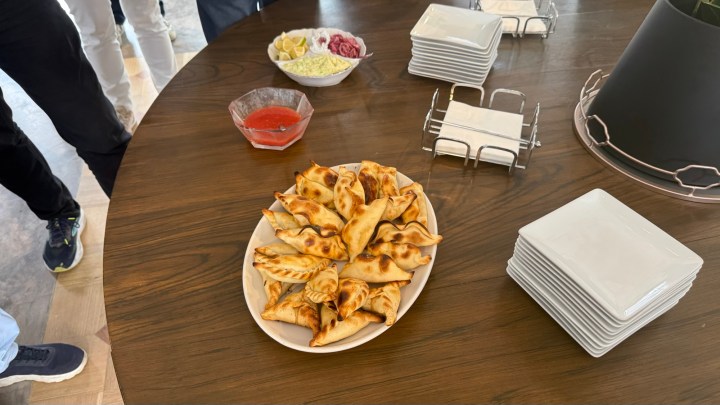
After a visit to the vineyards of Aranjuez and the first vine of Tannat, we returned to the tasting room for a lunch with empanadas and a glass of rosé.
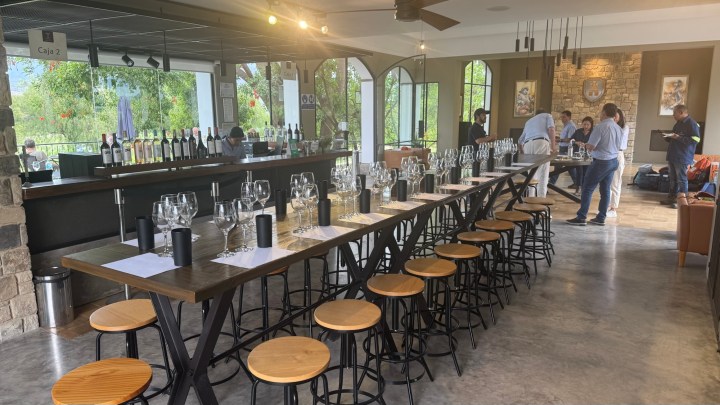
As the place where Tannat production in Bolivia was born, this was a good location of a blind tasting of different Tannats from all over the world. But first we were going to taste some wines of Aranjuez.
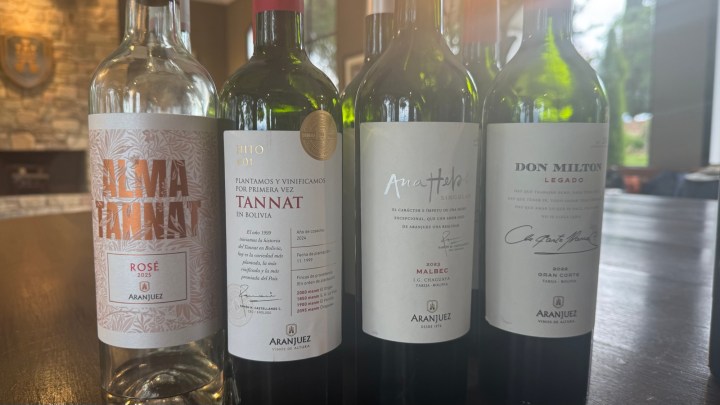
- Aranjuez Hito #01 Tannat 2024 (from three different soils, 6 months in 2nd use oak). Dark fruit, fresh, soft tannins.
- Aranjuez Ana Hebé Singular Malbec 2023 (18 months in new French oak). Very oaky, dark fruit, full body.
- Don Milton Legado 2022 (40% Tannat, 30% Cabernet Franc, 30% Bonarda, 18 months in new French oak). Restrained aroma, stalky tannins, high acidity. Needs time in the bottle, can age up to 10 years.
Tannats of the World Tasting
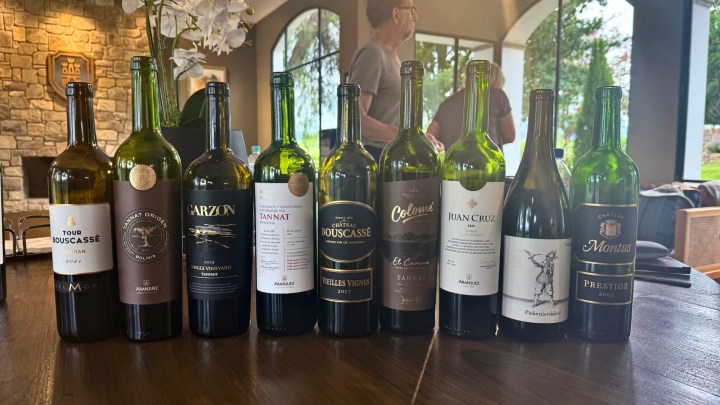
This was a blind tasting from Tannats from all over the world and we had to guess where they were from. It was not even always easy to distinguish between French and new world Tannat, let alone pinpointing the precise location. The Bolivian Tannats were mostly recognizable by their fruitiness, freshness, and soft tannins. My personal favorite was the flagship Tannat by Aranjuez, the Juan Cruz (named after one of the first workers at the estate).
- Tour Bouscassé Madiran AOC 2021, France. Restrained aroma and chalky tannins.
- Aranjuez Tannat Origen 2024, Bolivia (1 year in oak). Notes of coffee. Sticky tannins.
- Garzon Single Vineyard Tannat 2023, Uruguay. High acidity, sticky tannins, ripe cherries.
- Aranjuez Hito #01 Tannat 2024 (from three different soils, 6 months in 2nd use oak). Dark fruit, fresh, soft tannins.
- Chateau Bouscassé Vieilles Vignes Madiran AOC 2017, France. Complex primary, secondary, and tertiary aromas. Chalky tannins.
- Colomé El Camino Tannat 2023, Argentina. High tannins, brett.
- Aranjuez Juan Crux Tannat Grand Reserva 2024, Bolivia (1 year new French oak). Fruity, fresh, soft tannins.
- Piekenierskloof Tannat 2022 WO Piekenierskloof, South Africa. Developed, soft tannins, fresh.
- Château Montus Prestige 2002. High acidity, tannins still present, past its prime.
Casa Real & Campos de Solana
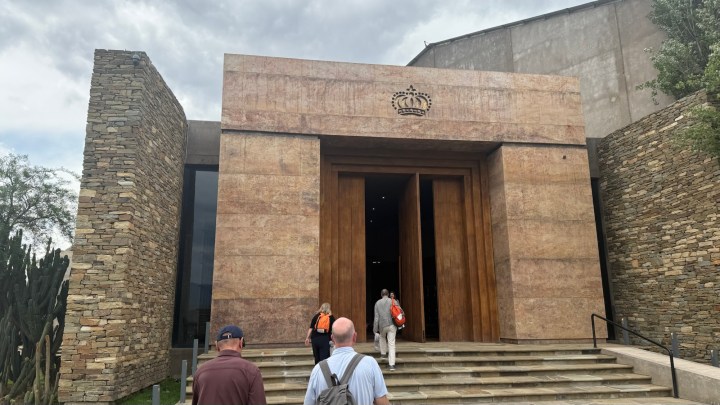
Casa Real is a Singani producing family business since 1925. They also make wine under the label Campos de Solana. They have 200 ha (500 acres) of vineyards, and acquire 70% of the grapes from other growers.
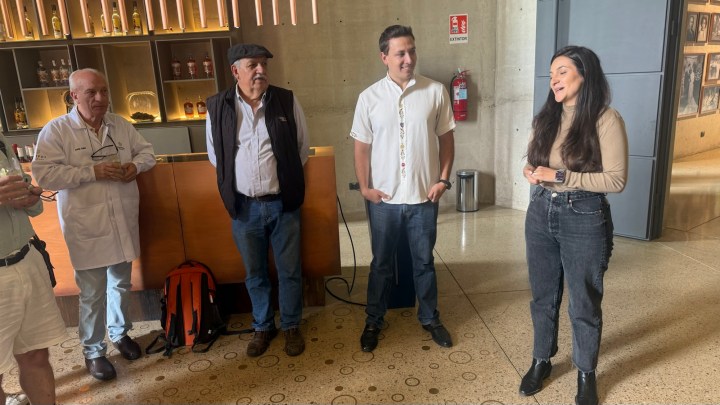
We did a tour of the Singani producing facilities with the master distiller.
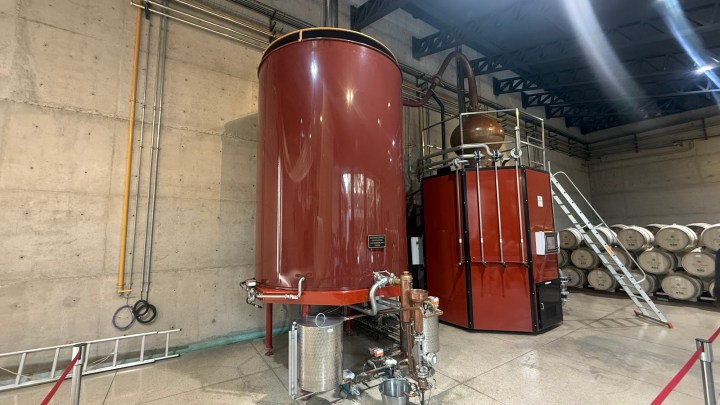
Just like for Pisco, in the distillation process the head and tail and discarded, and only the heart is used. However, Singani can be distilled multiple times to get to a higher strength, and then diluted by water.
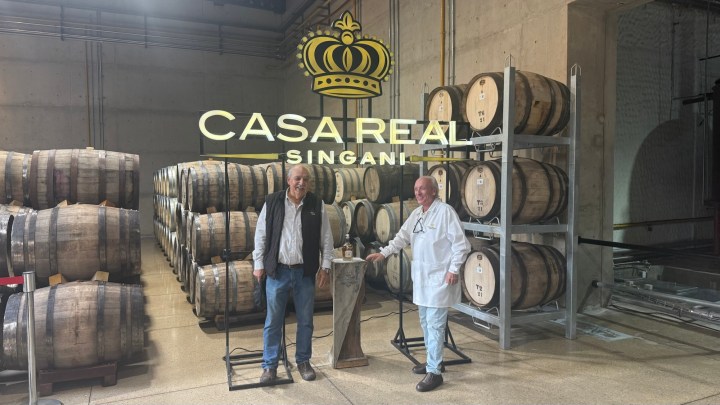
At Casa Real they have multiple product lines. The blue label is the base product, intended for mixing like Chuflay. The black label is distilled twice, obtaining a smoother product. The Luccio line is distilled three times and even softer. They also produce Singani aged in oak barrels.
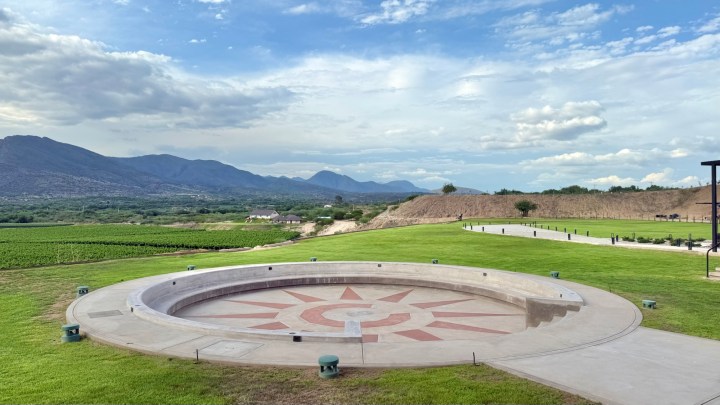
We went to Campos de Solana across the street for a tasting and dinner. The view of the valley there was magnificent and we enjoyed it with a glass of Rosé Reserva 2024, a blend of Marselan and Caladoc aged for 1 year in 3rd use oak.
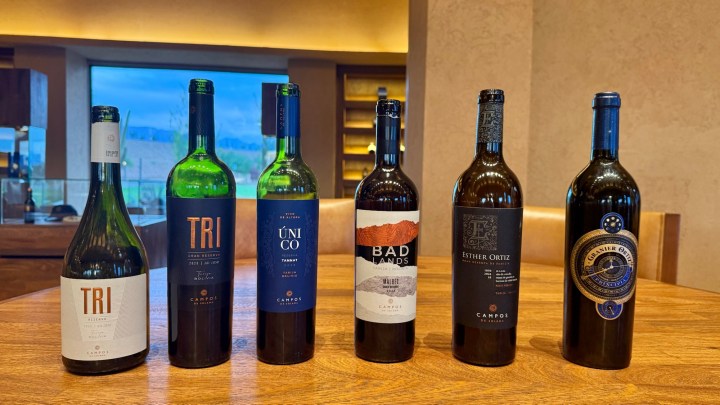
We started with a tasting of Campos de Solana wines:
- Tri Blanco 2025 (80% Viognier, 15% Riesling, 5% Muscat of Alexandria, oak-fermented and aged for 1 year in oak on the lees, using high-pressure CO2 to stir the lees). Needs more bottle aging, right now the acidity is not well integrated. The wine was not as aromatic as one might expect from these varieties.
- Tri Tinto 2025 (50% Tannat, 30% Malbec, 20% Petit Verdot, 15 months in 95% French and 5% American oak, 1st and 2nd use). Oaky, spicy, acidity.
- Unico Tannat Reserva 2024 (100% Tannat, 1 year in French oak). High acidity.
- Badlands 2023 (100% Malbec, 2 years in 92% French and 8% American oak). Red fruit, sticky tannins.
- Esther Ortiz 2024 (100% Petit Verdot, 18 months French oak, 80% new). Needs time in the bottle but seems very promising.
- Granier Ortiz 2024 (100% Tannat, 24 months French oak, mostly new). Is not released yet.
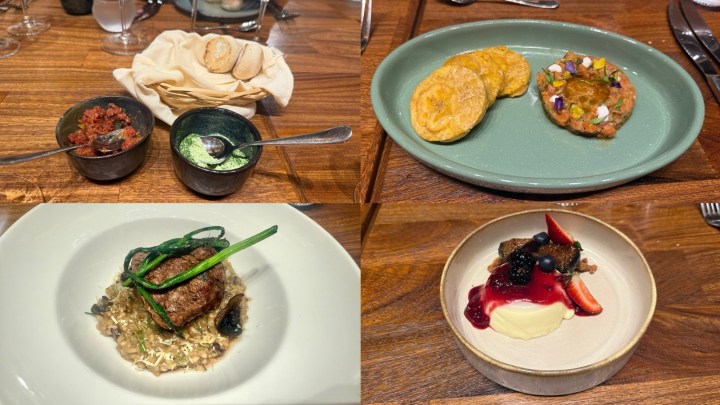
For dinner we started with bread with a spicy tomato spread and an herbal spread. This was followed by plantain crackers with tomato tartare with herbs. The main course was orzo risotto with green asparagus and fillet mignon. We finished with a panna cotta with forest fruits.
Vertical Gran Altura Tasting
Before dinner we had a tasting of wines from high altitudes from all over the world. At high altitudes, there is more UV, which leads to thicker skins (and thus more tannins) and increased ripening. There is also a larger diurnal range, which is the temperature difference between day and night. The cool nights preserve the grapes’ natural acidity. What is considered to be high altitude depends on the latitude. In Europe, vineyards over 500 metres can already be considered high altitude, because at even higher altitudes it becomes too cold. In regions close to the equator like Mendoza in Argentina, the average altitude of vineyards is 1200 metres above sea level because it would otherwise be too warm. So there you need to go higher to be considered high altitude.
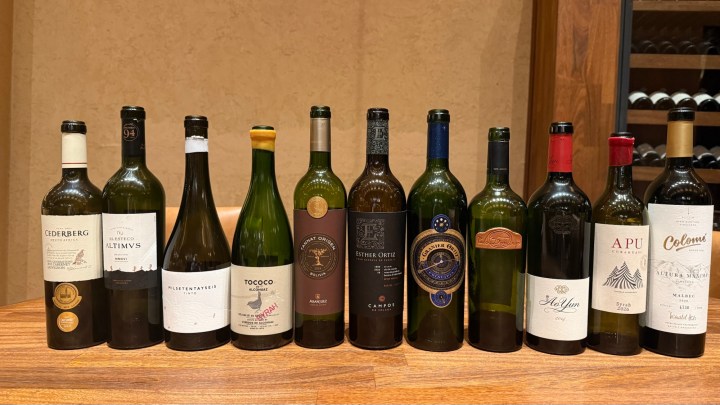
- Cederberg 2015, South Africa, 1100m (Cabernet Sauvignon). Ripe berries, velvety tannin, fresh, present alcohol.
- Altimus El Esteco 2016, Argentina, 1800m (55% Cabernet Sauvignon, 30% Malbec, 15% Cabernet Franc). Fresh, bell pepper.
- Milsenttanyseis 2020, Ribera del Duero, Spain, 1076m (Tempranillo). Red fruit, sticky tannins.
- Tococo Syrah 2015, Elqui Valley, Chile, 1788m. Fresh, berries, caramel.
- Aranjuez Origen Tannat 2024, Bolivia, 2000m. Fruity, fresh.
- Campos del Solana Esther Ortiz 2024, Bolivia, 2000m (Petit Verdot). Needs more time in the bottle.
- Campos del Solana Granier Ortiz Principia 2023, Bolivia, 2000m (Tannat). Mint, ripe dark fruit, full body.
- Palo Domingo 2015, Argentina, 2350m (Malbec blend). Developed, sweet impression.
- Ao Yun 2014, China, 2600m (Cabernet Sauvignon). Complex, vegetal, acidity.
- APU 2026, Peru, 2850m (Syrah). High acidity.
- Colomé Altura Maxima 2020, Argentina, 3111m. Oxidative notes.
The Bolivian wines could certainly hold their own in this tasting, even though their prices are a lot lower than some of the other wines in this lineup.
Kohlberg

The following morning we went to Kohlberg, the largest winery in Bolivia with a production of 6.5 million bottles per year. Our tour started in the chappel of the estate.
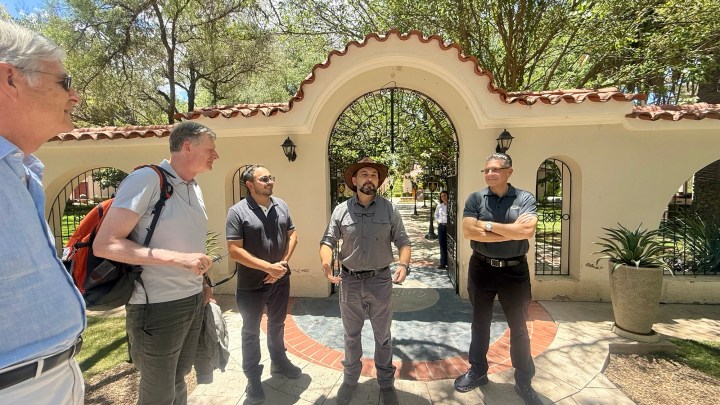
It is a family business with family members at important posts like Helmut as the viticulturist, and Erich and Herbert as the winemakers. The Kohlberg family migrated to Bolivia in 1912. They don’t speak German anymore, but still have German names.
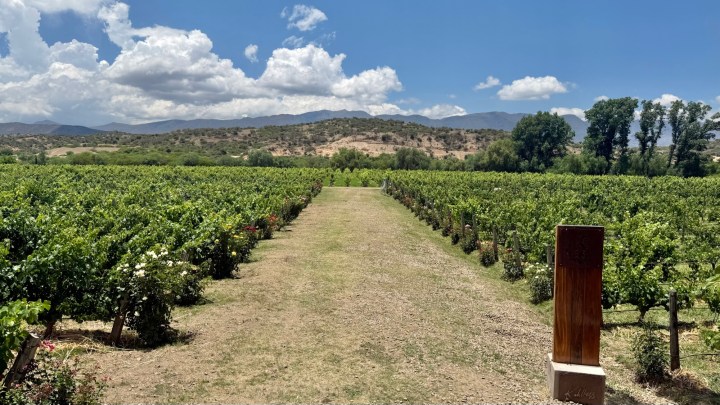
The winery was founded in 1963 with 6 hectares (15 acres) of vineyards. This has now grown to 147 hectares (370 acres) with 21 grape varieties. They are in transition to regenerative viticulture, with the aim to improve soil health and biodiversity. They don’t use chemical herbicides, but mulching and covercrops instead.
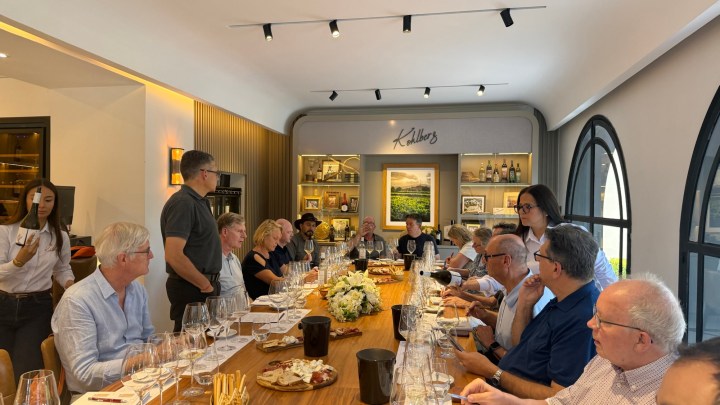
After a tour of the grounds we went to the tasting room.
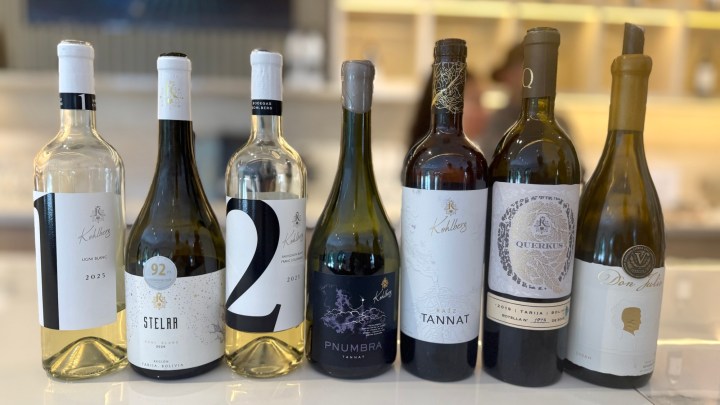
- Uno 2025 (100% Ugni Blanc, 24-48 hours cold skin contact, stainless steel, without malo). Ugni Blanc is not known for making interesting wine as it is a very neutral grape used mostly for Cognac, but here they manage to get it fruity and soft, maintaining the natural acidity thanks to the diurnal range in the mountains. The name refers to the number of varieties.
- Stelar 2026 (100% Ugni Blanc, aged 3 months in used American oak with some French). Ripe peach, fresh, nicely integrated oak.
- Dos 2025 (60% Sauvignon Blanc, 40% Colombard). Vegetal, grapefruit, phenolic grip.
- Pnumbra 2026 (85% Tannat, 15% Marselan, unoaked, pre-fermentation maceration and cool alcoholic fermentation at 24-25C to preserve fruit). Fresh, red fruit, yogurt.
- Raíz Tannat 2025 (100% Tannat, 70% French/30% American 2nd and 3rd use oak for 12-15 months). Ripe dark fruit, integrated oak, grippy tannin, fresh.
- Querkus 2019 (40% Cabernet Sauvignon, Malbec, Syrah, Tempranillo, Merlot, 18-24 months in new French, American, and Hungarian oak, minimum 18 months in bottle). Fresh, dark fruit, soft tannins, complex, balanced, present but ripe tannins, oak well-integrated, develops in the glass.
- Don Julio 2019 (100% Syrah, the flagship wine named after the founder). Restrained aroma, velvety tannin.
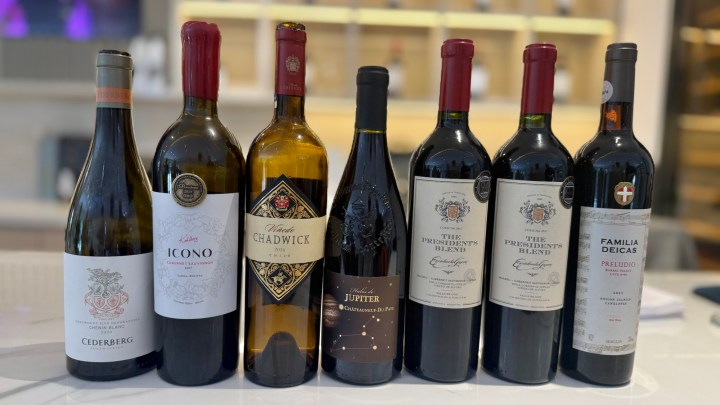
We also tasted some wines we had brought with us to share with the Kolhbergs and compare with their wines. The price difference between the wines we brought and the Kohlberg wines was immense, showing the great value for money of Kohlberg’s wines.
- Cederberg Chenin Blanc 2020, South Africa. Structure, pineapple.
- Chadwick Cabernet Sauvignon 2016, Chile. Roasted red bell pepper, firm tannins, fresh, complex, develops in the glass.
- Kohlberg Icono Cabernet Sauvignon 2017, Bolivia (26 months in French oak, from 45 year-old vines). More developed and less fresh than the Chadwick, ripe fruit, velvety tannin.
- The President’s Blend 2017, Argentina (Malbec, Cabernet Sauvignon, Syrah).
- Familia Deicas Preludio 2011, Uruguay (Tannat, Cabernet Franc, Cabernet Sauvignon, Merlot, Petit Verdot, Marselan). Beyond its peak.
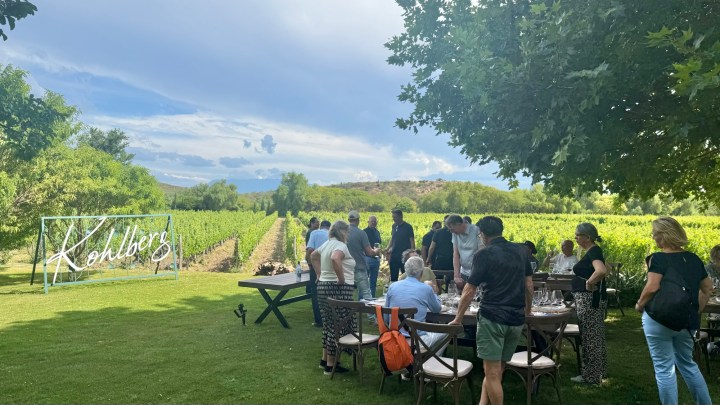
After the tasting we had a BBQ lunch next to the vineyard.
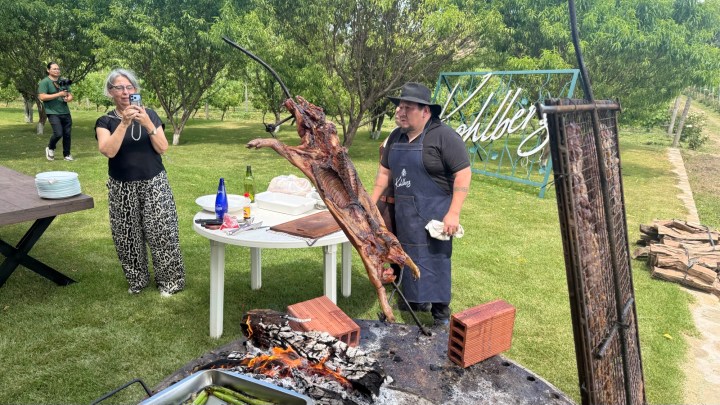
The meny featured suckling pig, beef, and green asparagus.
Kuhlmann
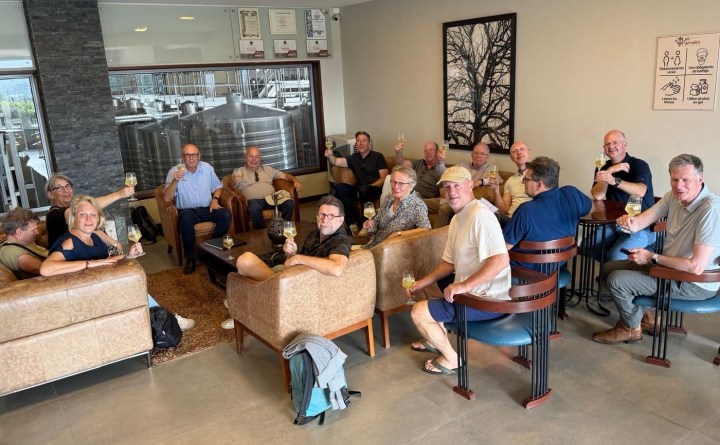
After lunch we went to our final winery of this trip, Bodegas Kuhlmann. We had already visited their Hacienda and vineyard in Cinti two days ago. The vineyard here in the Tarija valley is a conventional vineyard, except for the altitude of around 2000 meters above sea level. We were welcomed by Franz Kuhlmann with Chuflay.
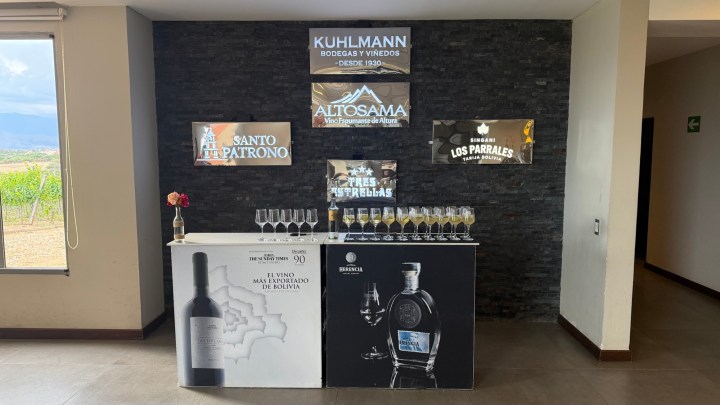
Kuhlmann was established in 1930 and focusses on the production of Singani under the brands Los Parrales, Tres Estrellas, and Herencia (2 million bottles per year). New additions are sparkling wines under the brand Altosama from 2006 and still wines under the brand Santo Patrono from 2014 (100,000 bottles per year). They have 72 ha of vineyards, but also buy grapes from 50 growers. Franz named his sparkling wine after the Sama mountains because of their importance to the local climate.
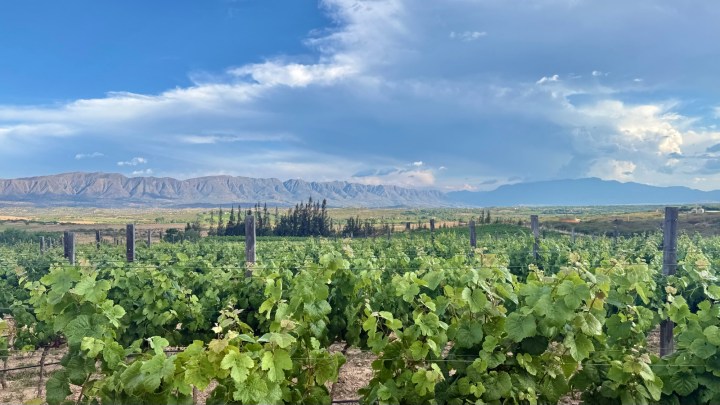
The Sama mountains (up to 4,600 m) block harsh Altiplano winds, supply irrigation water, and send cold air down into the vineyards at night. This creates a 15°C–20°C diurnal shift that preserves crisp natural acidity and delicate aromatics. Meanwhile, the humid Tariquía forest channels warm, moisture-laden air from the east, triggering summer rainfall (600–700 mm) and periodic cloud cover that prevents the Tarija valley from turning into a dessert. Together, they produce concentrated, thick-skinned grapes with vibrant freshness.
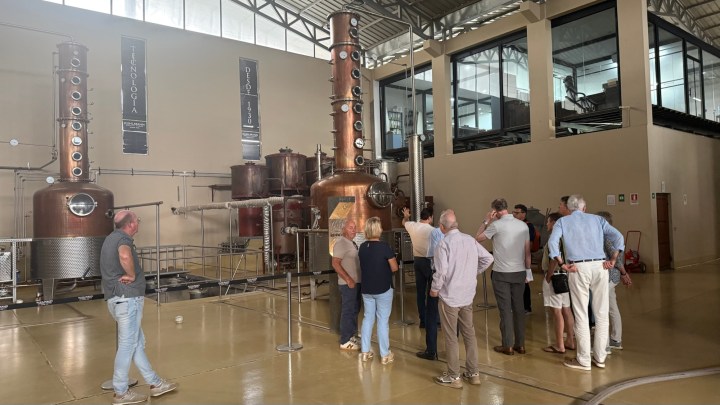
Singani has been produced in Bolivia since 1540, and Franz was heavily involved in establishing its updated Protected Denomination of Origin (DO) in 2013. Driven by research and precision, he focuses on producing the highest-quality Singani possible, keeping methanol levels to a minimum (40 ppm instead of the usual 300-500 ppm) while preserving the grape’s delicate aromatic terpenes.
That precision starts at crush: the Moscatel de Alejandría grapes are chilled to 10°C (50°F) before fermentation and fermented on their skins to extract maximum aromatics without losing volatile compounds to heat. Using German distillation technology, Franz is able to achieve exceptional purity in a single distillation run. Sustainability is also built into the process; he constructed a dedicated treatment plant to convert vinaza (the acidic liquid waste left behind after distillation) into vineyard fertilizer rather than letting it pollute the local environment.
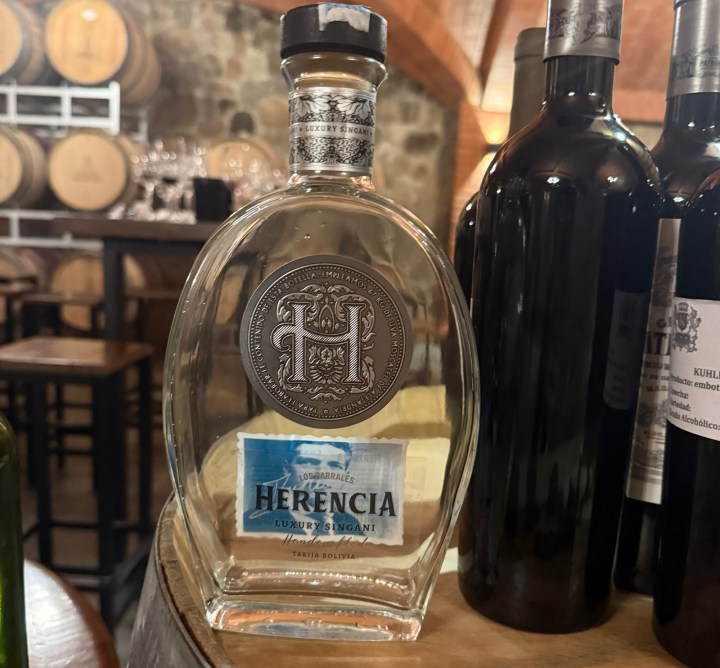
Post-distillation, Franz rests the spirit at 80% ABV, as higher alcohol strength promotes greater ester formation, and provided the pH is low enough, resting actually generates new esters that amplify the Singani’s aroma. While the DO mandates a minimum of 8 months of resting, Franz ages his standard releases for at least a full year, and his flagship Herencia for 10 years. He arrived at that decade mark through systematic experimentation and measurement, determining that it takes 9 years and 4 months for full ester development to complete.
Herencia is drawn exclusively from the “heart of the heart” of the distillate, requiring an astonishing 67 kilos of grapes to produce a single bottle (the remainder of the cut goes toward entry-level Singanis). Finally, the spirit is diluted from 80% down to 40% ABV, a step that requires slow, carefully stirred water addition to prevent saponification and keep those hard-won aromatics stably in solution. We tasted the Herencia and it had a beautiful aroma. It paired exceptionally well with dark chocolate filled with salted caramel.
For sparkling wine he introduced Cava varieties Xarello and Paralleda, which work better here than Pinot Noir. He also uses Chardonnay, Pinot Blanc, and Ugni Blanc. Sparkling wine is mostly made with the charmat method, but recently also with the traditional method.
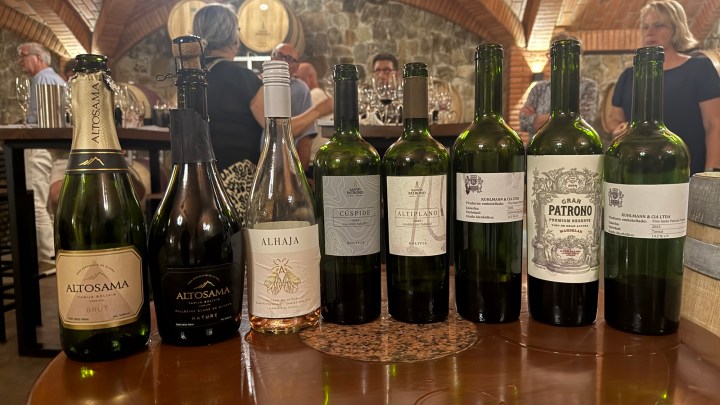
For still wine he focuses on the black varieties Marselan (a crossing between Cabernet Sauvignon and Grenache) and Caladoc (a crossing between Malbec and Grenache), but he also has Cabernet Sauvignon, Malbec, and Tannat. We tasted these wines:
- Altosama 2025 Brut (sparkling Charmat method, Xarello, Parellada, Chardonnay, Pinot Blanc, Muscat, aged 1 month sur lie with stirring, 4 grams/litre residual sugar): floral, pear, fresh.
- Altosama 2019 Nature (traditional method Chardonnay sparkling, aged 4 years sur lie, brut nature): brioche, cooked apple, high acidity.
- Alhaja 2025 Marselan rosé (100% Marselan, only 15 minutes skin contact because the small berries of this variety means there is a lot of skin compared to the amount of juice, so you get a lot of color quickly). Fresh with a bit of grip.
- Cuspide 2024 (Caladoc and Malbec from the Cinti Valley at 2408 meters, 9 months in 2nd use French oak). Soft tannins, fresh, dark fruit.
- Altiplano 2023 (Marseland and Tannat, 9 months in 2nd use oak). Pronounced aromas of ripe blackberries, high acidity and tannins.
- Gran Patrono Homenaje 2023 (100% Cabernet Sauvignon from the Patilla block in the Cinti valley, unoaked, dedicated to his father who did not like oak, fermented in concrete eggs). Herbal, mint, fresh, tannins. Remarkably structured for un unoaked Cabernet Sauvignon.
- Gran Patrono Marselan 2024 (100% Marselan, fermented in concrete egg and then aged for 18 months in new French oak). Cedar, mint, fresh, ripe tannins, needs more time in the bottle for the oak to integrate.
- Gran Patrono Tannat 2025 (100% Tannat, 18 months in new oak, 80% French/20% American). Cedar, high acidity, to be released by the end of 2027.
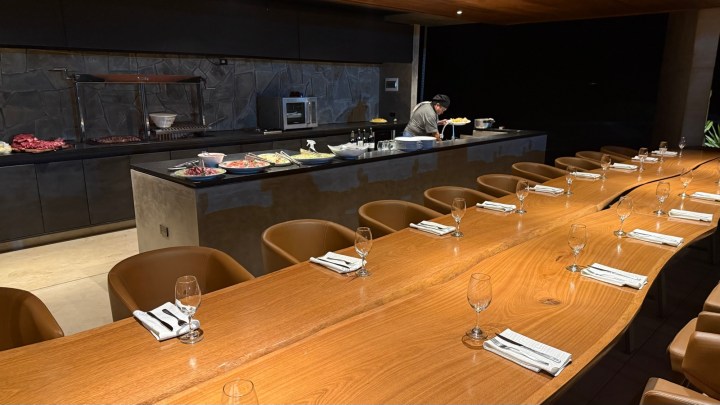
We finished our visit with another BBQ.
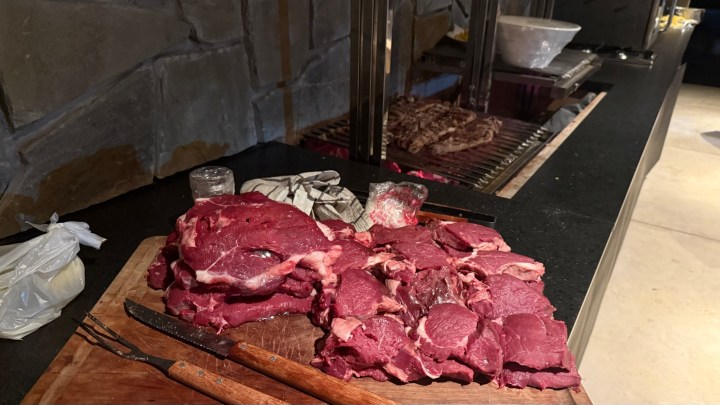
There was enough meat.
La Paz
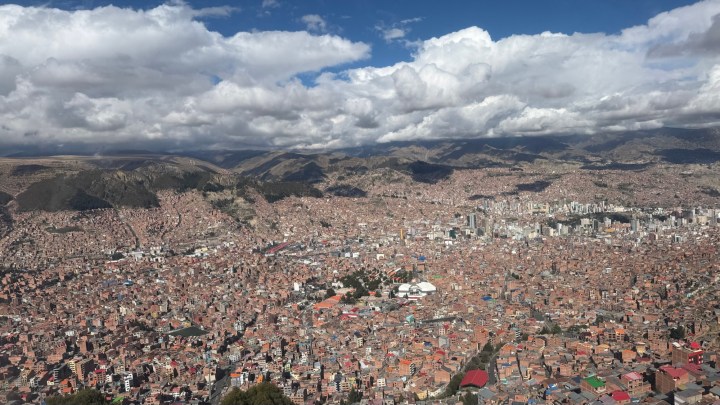
We ended our trip with a visit to La Paz, a remarkable city at 3000-4000 meters above sea level. Even though we had already spent quite some time at 2000-2500 meters, we still really noticed the high altitude.
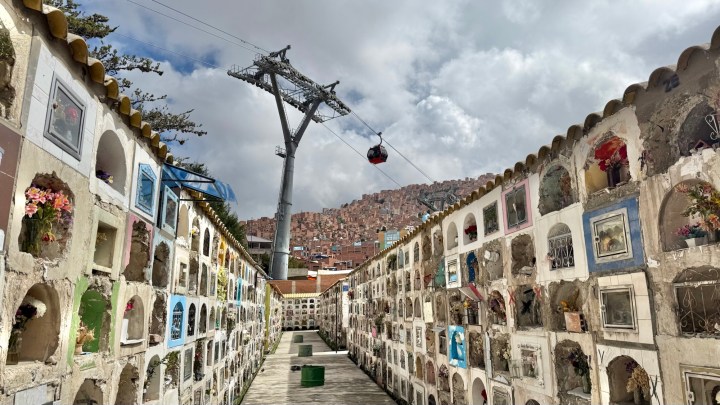
We did a tour of the city, which started at the cemetery. The Cementerio General is a sprawling, multi-story necropolis resembling a miniature city of towering vertical niche blocks, ornate neo-classical mausoleums, and vibrant street murals. Rather than somber quiet, it blends Catholic and Aymara traditions: glass-fronted niches hold photographs, flowers, and favorite drinks of the deceased.
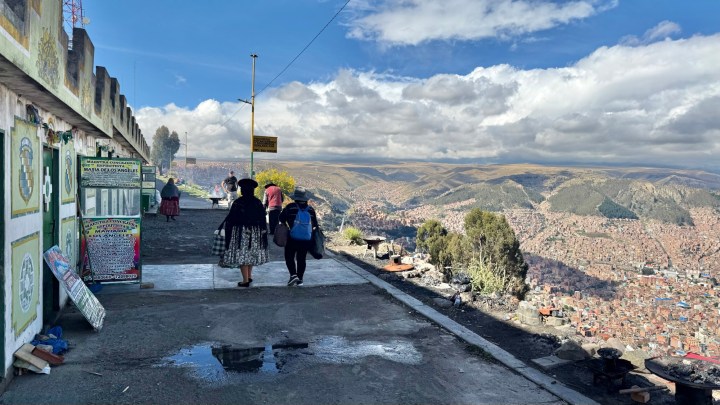
Our next stop was the Witches Avenue in El Alto at about 4100 meters above sea level and a magnificent view of downtown La Paz below.
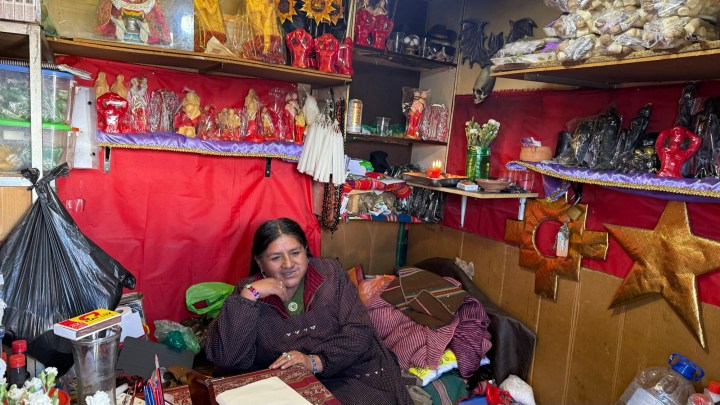
There are endless rows of small, brightly painted tin and brick booths where witches (male and female) perform live consultations, rituals, and cleansings.
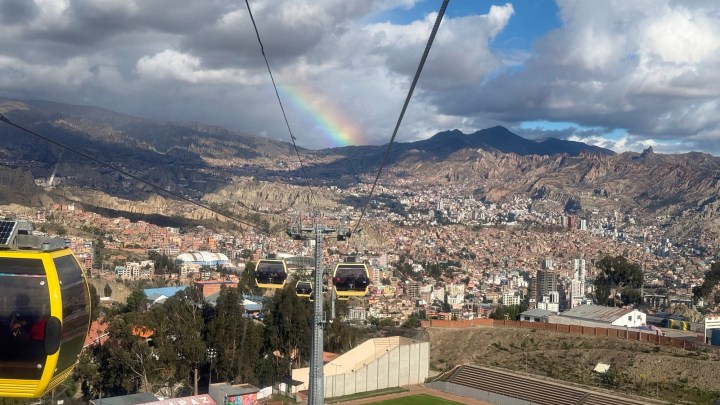
For a public transport system La Paz has cable cars instead of a subway. The views are awesome.
Arami
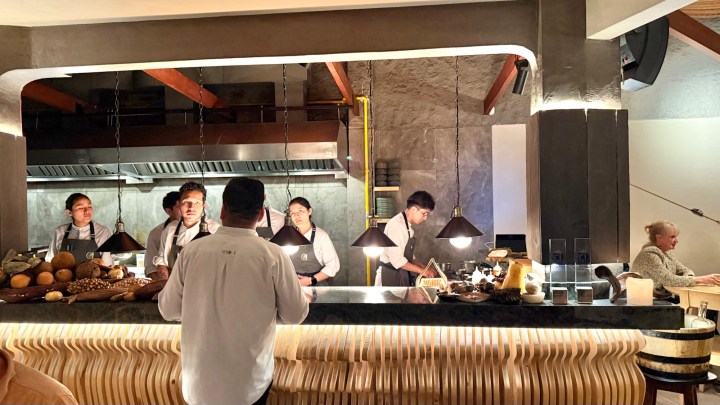
We concluded our tour of Peru and Bolivia at Arami, which is considered to be the best restaurant of Bolivia.
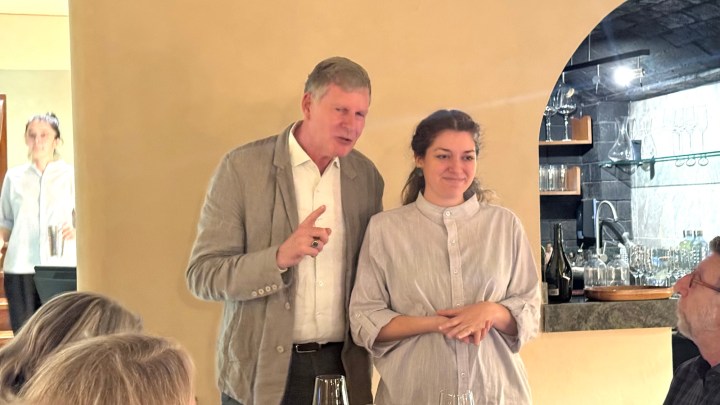
We enjoyed the tasting menu with wines selected by sommelier Andrea. It was nice that they were all Bolivian wines. Some of them we had already encountered during our tour.
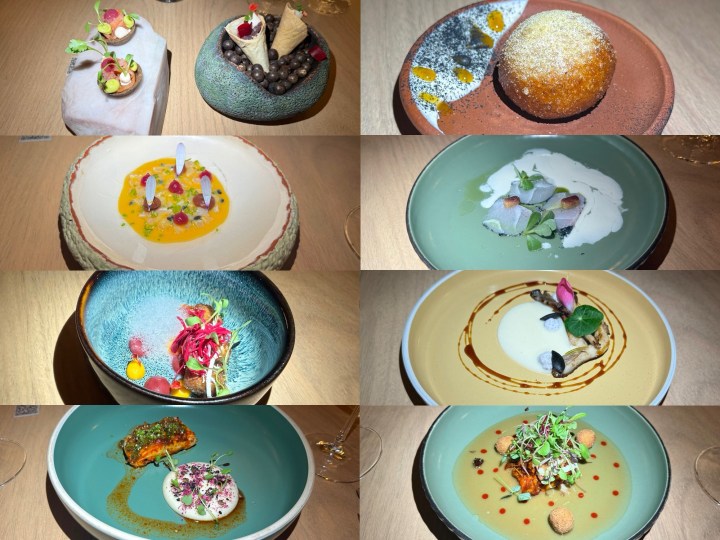
- Lamb, green papaya, and black garlic (slowly fermented garlic).
- Trout, avocado, and kari kari (a wild Andean bramble berry related to the blackberry).
- Carob tree bread (made from algarrobo pod flour), palm heart butter, and joco honey (honey from a native Bolivian winter squash).
- Alligator, passifloras (native passionfruit), and payuje (a traditional Amazonian drink or puree made from cooked, mashed ripe plantains).
- Corvina (a bass from the Amazon) and Castaña nutmilk (pressed from wild-harvested Bolivian Amazonian Brazil nuts).
- Pork, Arazá (a bright yellow, intensely aromatic Amazonian fruit with a vibrant, tart flavor reminiscent of guava and pineapple), and Motacú (a native palm fruit with a sweet, starchy, coconut- and apricot-scented pulp).
- Fungi (mushrooms) and lacayote (a native Andean fig-leaf gourd with crisp, fibrous flesh).
- Paiche (a large Amazonian freshwater fish) and Walusa (an Andean-Amazonian root tuber similar to taro or malanga).
- Duck, Tujuré (a traditional Eastern Bolivian preparation of coarsely cracked corn cooked into a creamy porridge), and Amazonic nuts.
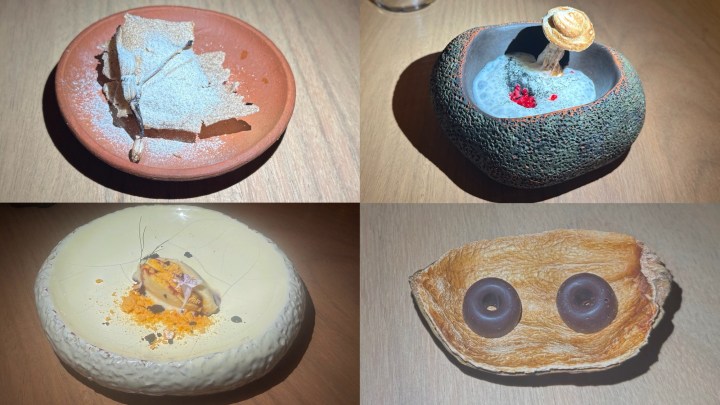
- Guázuma (a sweet, mucilaginous fruit) and Chila (a traditional highland Andean flatbread made from corn or wheat flour).
- Choco mushroom (wild lowland fungi), chiquitan oak wood, and red Andean wild berries.
- Amazonian Vanilla, Isaño Honey (honey from an Andean tuber), and Miso.
- Chocolate with tonka beans.
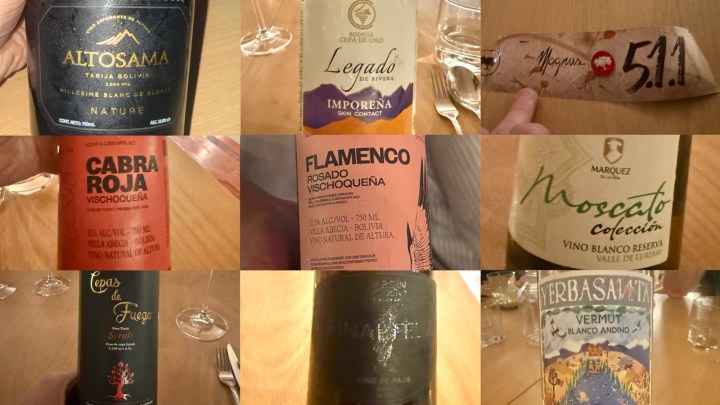
- Altosama Nature Millesime Tarija 2019 (Chardonnay)
- Cepa de Oro Orange Cinti 2024 (Imporeña)
- Bodega Magnus Locura 5.1.1 Tarija 2024 (Sauvignon Gris, Viognier, Chasselas, Müller-Thurgau, Gewürztraminer)
- La Encantada Cabra Roja Cinti 2024 (Vischoqueña)
- La Encantada Flamenco Rosado Cinti 2023 (Vischoqueña & Criolla Negra)
- Marquez de la Viña Colección Vinto 2024 (Moscatel de Alejandría)
- Cepa de Fuego Villa Abecia Cinti 2025 (Syrah)
- Jardín Oculto Final Feliz 2025 (pink Moscatel, fortified with Singani)
- Yerba Santa La Paz (Andean White Vermut)
Our wine tour of Peru and Bolivia has been quite adventurous, discovering high quality and interesting wines in countries that are not known for their wine production, even though wine production started earlier here than in Chile and Argentina. Many of the wines are not available easily in export markets, but it may certainly be worth seeking them out.

