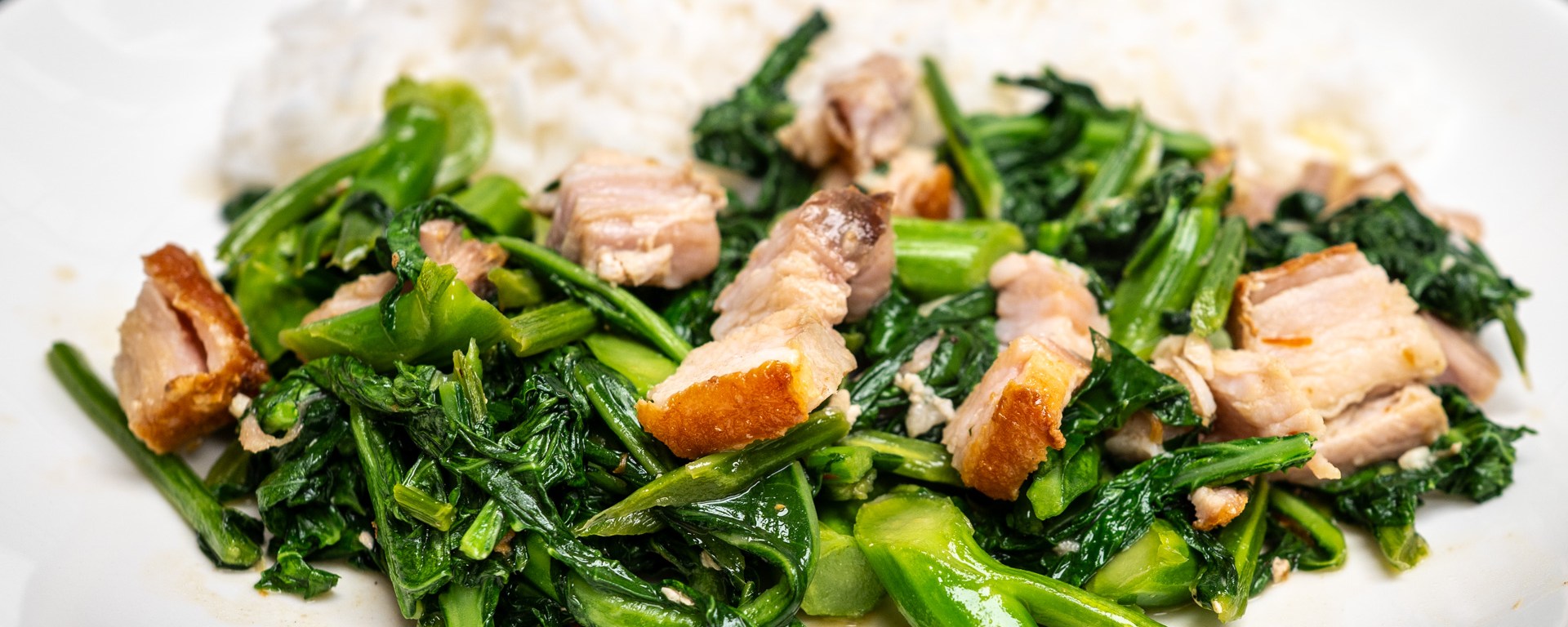
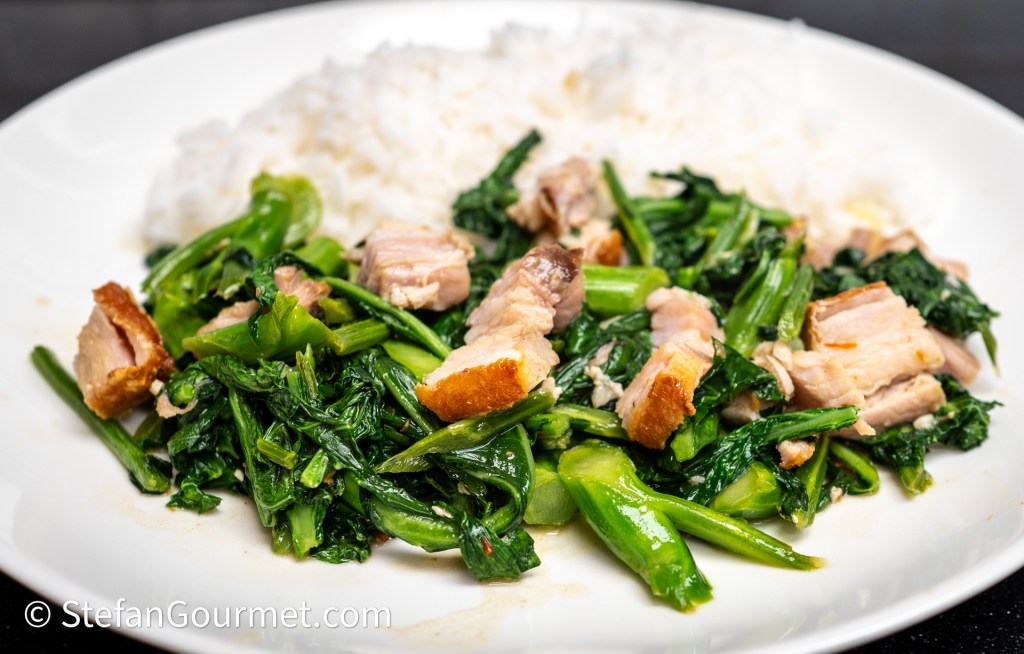
Khana Moo Krop (คะน้าหมูกรอบ) is a staple Thai stir-fry featuring gai lan (Chinese broccoli) and crispy pork belly. I ordered it frequently during our trip to Thailand, as I like it and it was a great way to get my daily dose of leafy vegetables. Moo Krop is the crispy pork belly, which is already roasted until the crackling is crispy and added at the last moment to retain its crispness. Khana is the gai lan, which is cooked only briefly to keep it crunchy. It is seasoned with garlic, red rawit chilli, oyster sauce, light soy sauce, sugar, and sometimes a bit of fish sauce. Provided that the pork belly has already been roasted, it can be prepared in minutes.
What you won’t get in Thailand but makes it even nicer is to cook the pork belly sous vide for 36–48 hours at 57 °C/135 °F. This way the pork will be as juicy and tender as pork tenderloin. I’ve already described in a previous blog post how to get crispy skin, which is to dry it in the oven and then pan-fry. Even if you add the crispy pork belly at the end, the sauce mixture will quickly make it less crispy. So it is up to you if you want to bother with the drying step.
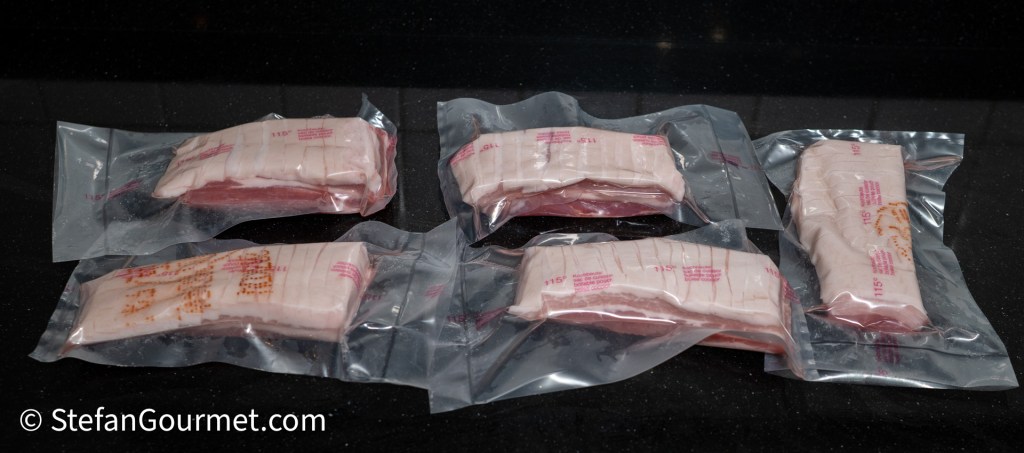
Apart from that, it is very straightforward. I cook a whole slab of pork belly sous vide, cut into single portions before vacuum sealing, and then freeze it. As the sous vide cooking takes 36–48 hours, it makes sense to cook a lot at the same time. And this makes it feasible to prepare this as a quick week-day meal. Simply defrost and slightly reheat the pork belly by placing it in hot water for half an hour or so, and then you are ready to go.
Ingredients
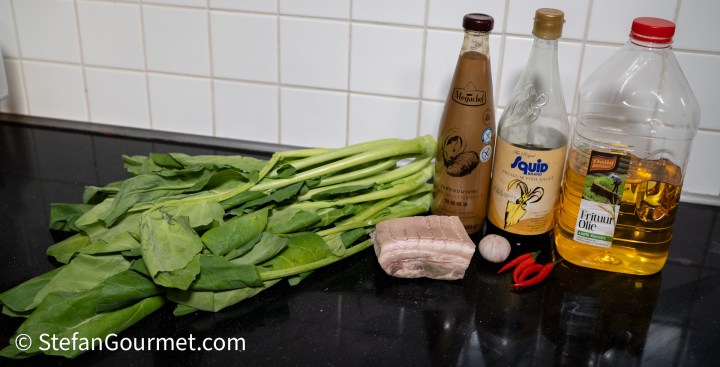
Serves 2 as a full meal (with Jasmin rice)
- 300 grams (.66 lb) pork belly with skin, cooked sous vide for 36-48 hours at 57 °C/135 °F
- 450 grams (1 lb) gai lan
- 2 garlic cloves
- 2 red rawiit chillies
- 2 Tbsp oyster sauce
- 1 Tbsp Thai light soy sauce
- 1/2 tsp sugar
- 1 tsp fish sauce (optional)
- 1 Tbsp cooking oil
Instructions
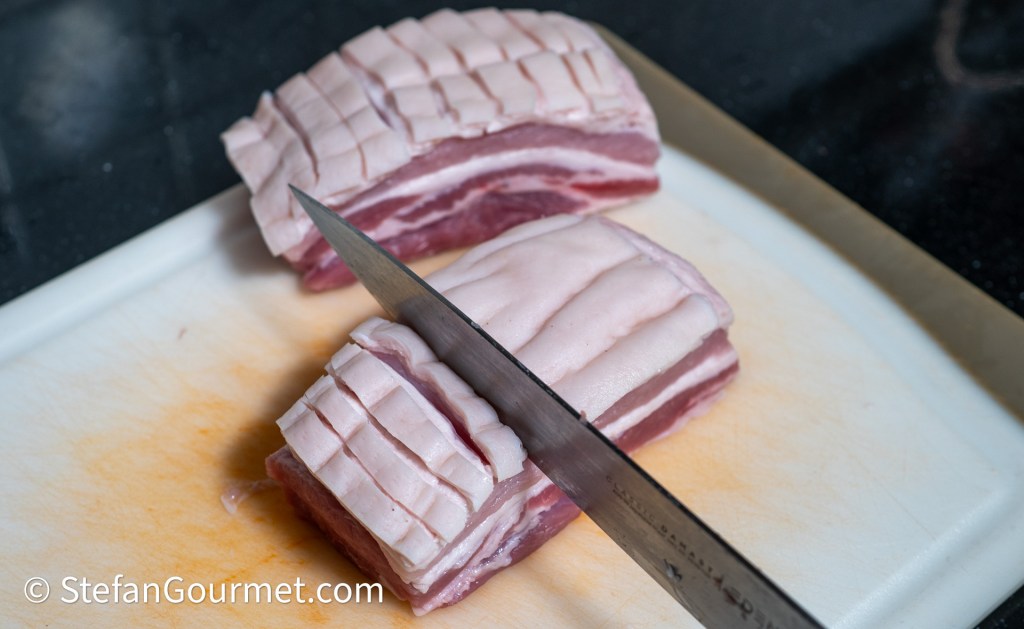
To prepare the pork, score the skin side of the pork belly deep enough to cut through the skin. This makes it much easier to slice later—so keep your target slice thickness in mind while scoring—and helps the skin crisp up. Season each piece with salt on all sides, using roughly 1/2 tsp of table salt per 300 g piece.
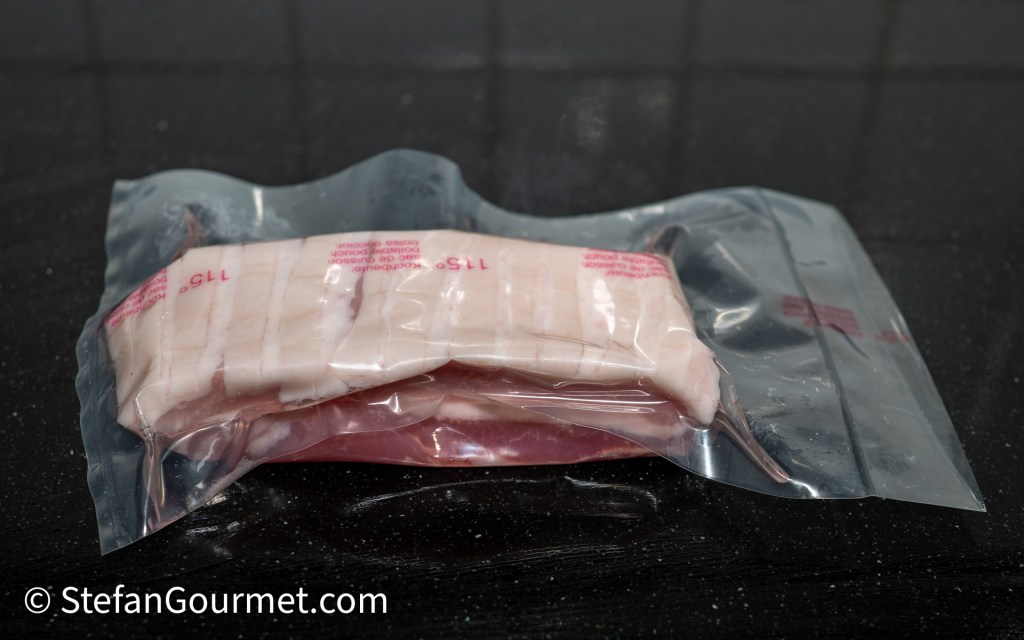
Vacuum seal each portion individually.
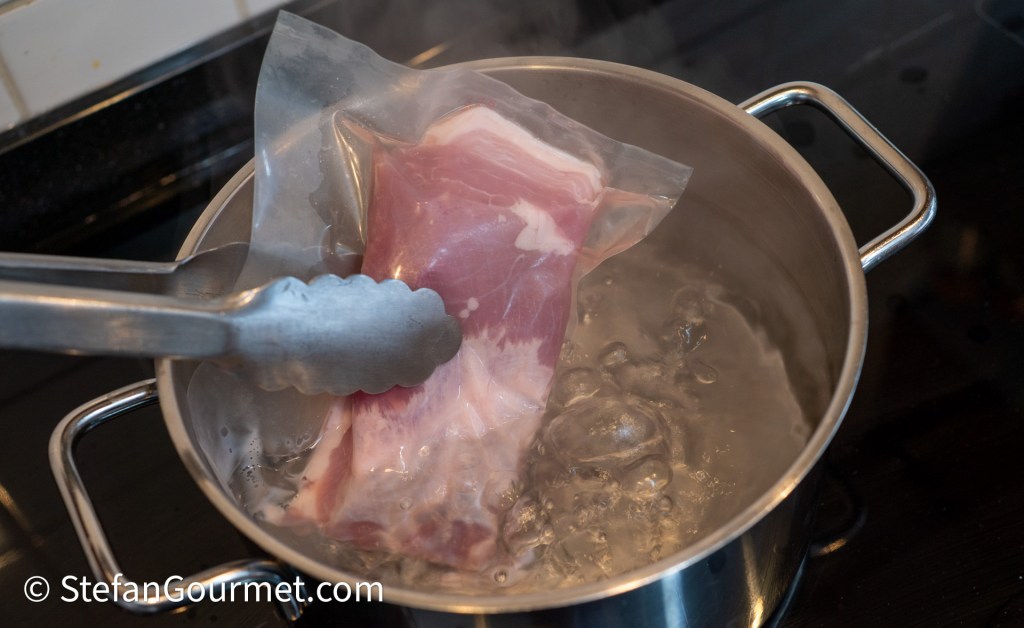
Because the pork cooks for a long period below 60 °C/140 °F, scalding the sealed bags in hot or boiling water first is essential to kill any surface lactobacillus and prevent off-odors from developing.
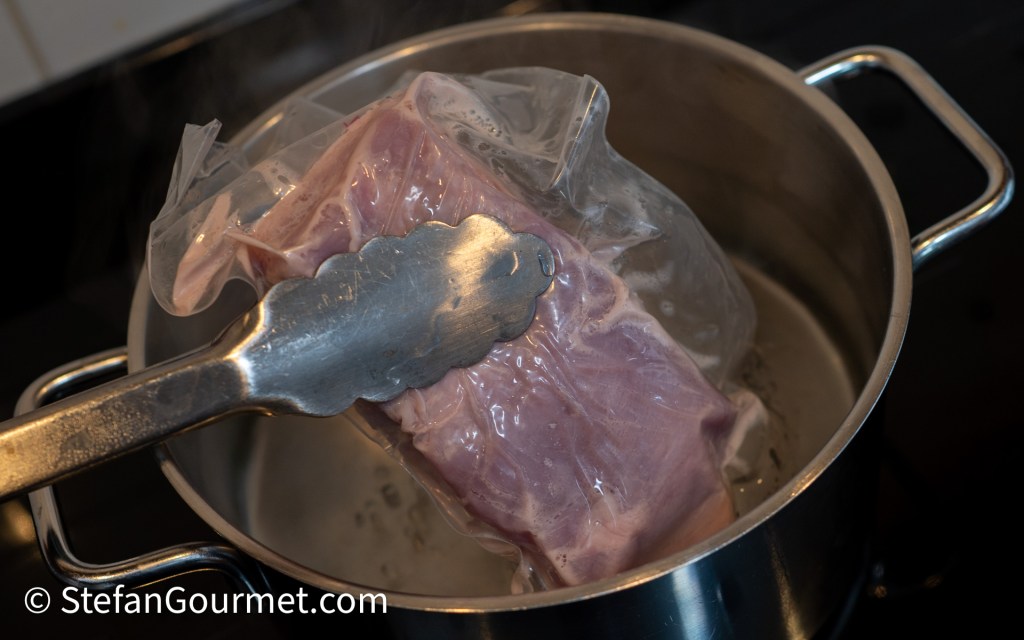
More about that step in this post.
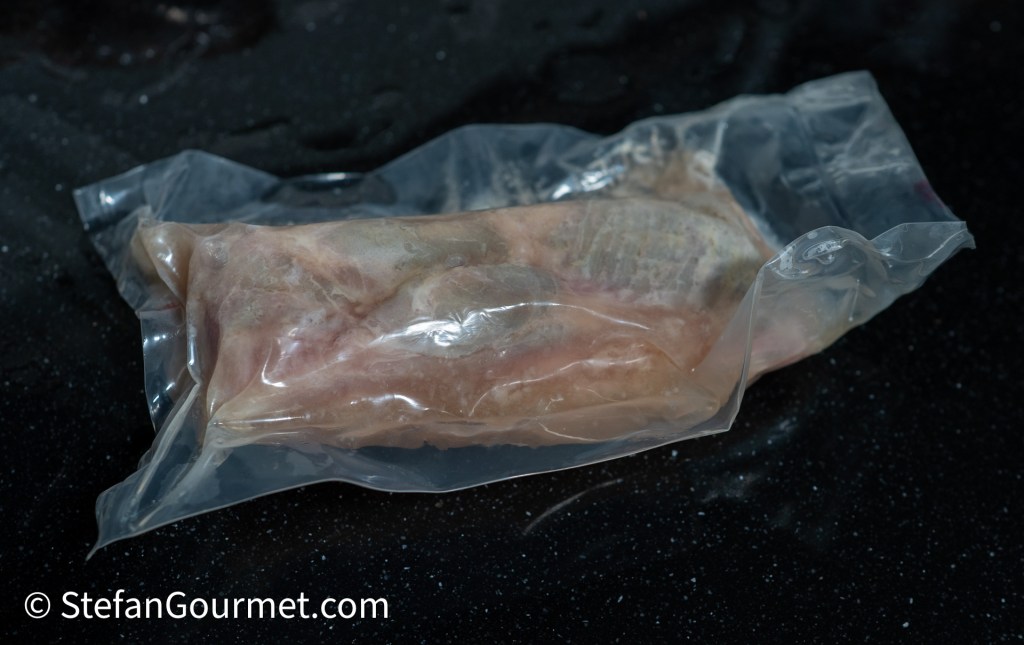
Cook the pork sous vide for 36 to 48 hours at 57 °C/135 °F. Leaving it for 48 hours results in maximum tenderness, though it becomes slightly more prone to falling apart during the final toss with the gai lan and sauce. Once cooked, proceed straight to finishing the dish, or chill the sealed pork in an ice bath to store in the refrigerator or freezer for later.
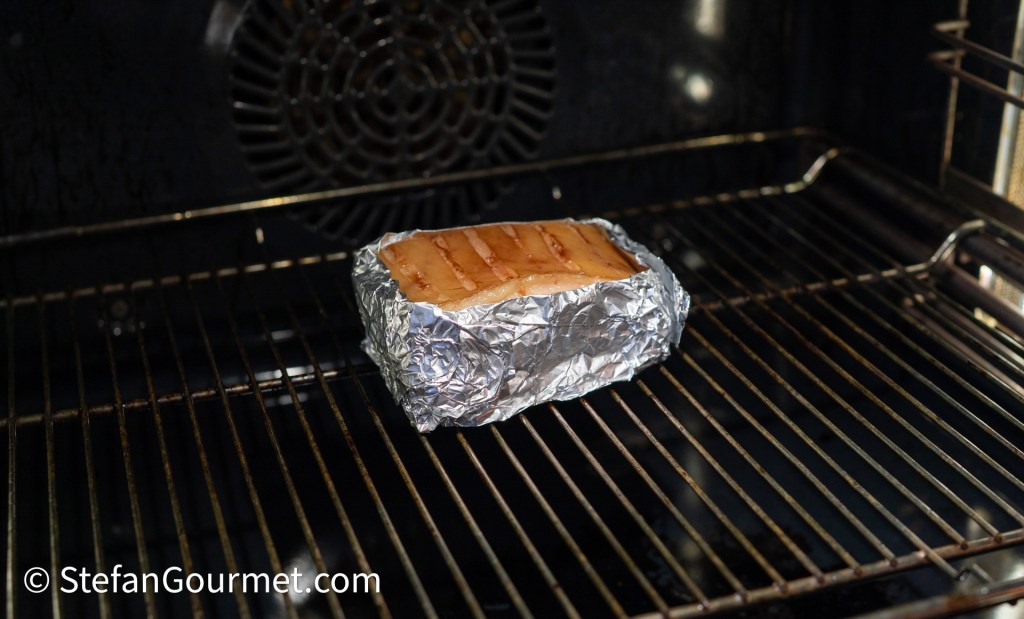
For the most crispy skin and best flavor development, dry the pork skin in the oven at 65 °C/150 °F for at least 1 hour at the drying or fan setting before pan frying it, as described in this post. Reserve the bag juices. The usual method is to add plain water to create steam, but using the bag juices will add porky flavor as well as richness from the gelatin.
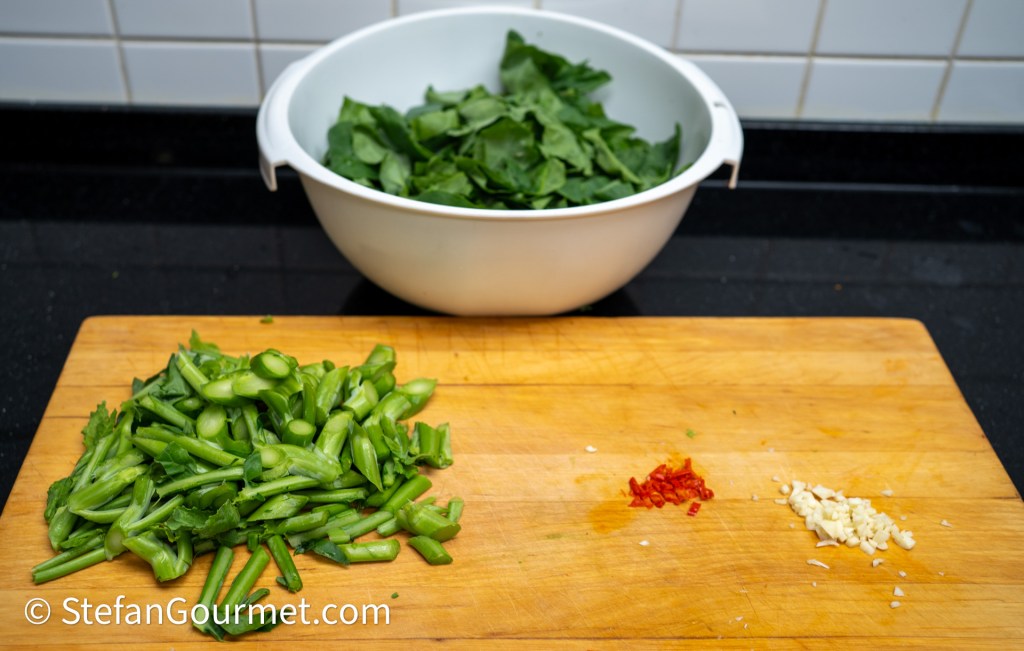
In the meantime, prepare all the other ingredients. I like to separate the leaves from the stalks of the gai lan, in order to cook the stalks a bit longer than the leaves. Thais leave them whole, but do often slice the stalks quite thinly on a bias to cook them more quickly. Mince 2 garlic cloves and 2 red rawits. It is your choice whether to keep or remove the seeds from the rawits, which will determine the spiciness. Instead of mincing, Thais would often use a mortar and pestle.
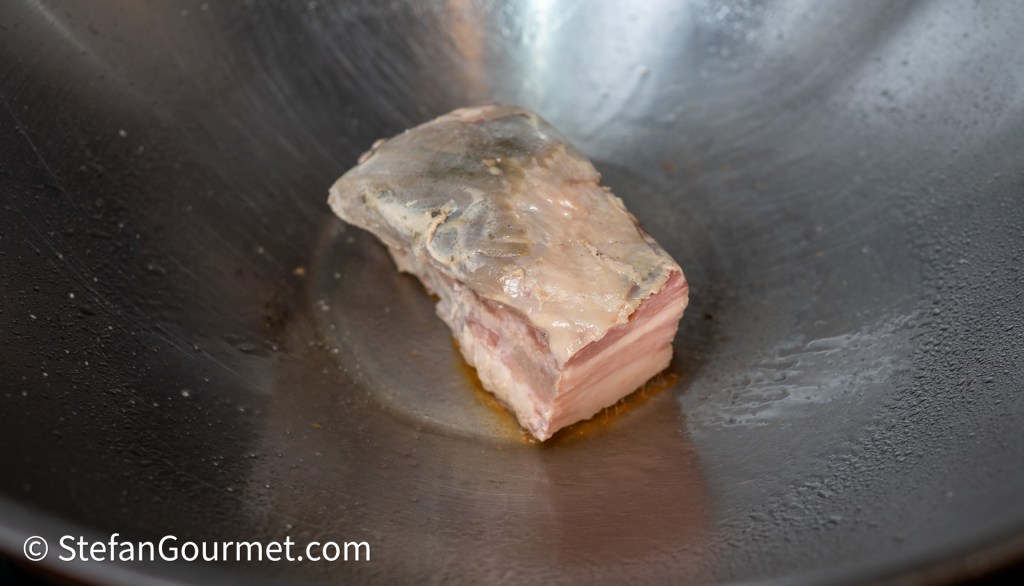
Heat a tablespoon of cooking oil in a wok over medium-high heat. Pat the pork belly dry with paper towels (this should not be needed if you dried it in the oven) and place it in the hot oil skin-side down. This will sizzle and splatter a lot if there is any residual moisture in the skin, so it may be advisable to take a step back until the splattering dies down. Cook the pork belly on the skin until it is deeply browned and crispy. A lot of fat should render from the pork.
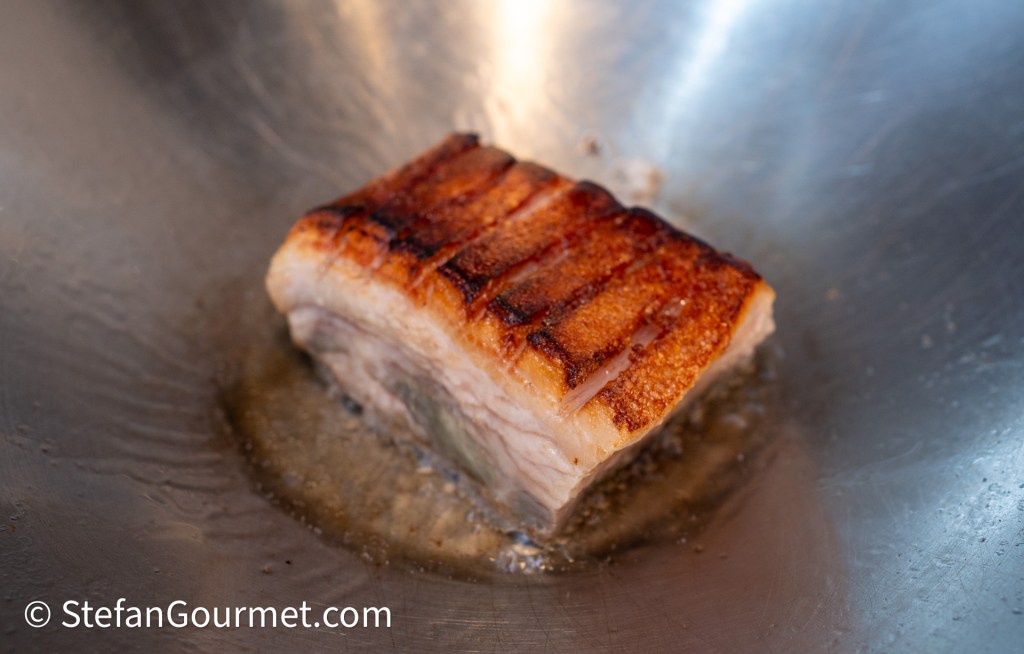
When the skin is done, briefly sear the other sides of the pork over high heat, then take the pork out of the pan and turn off the heat.
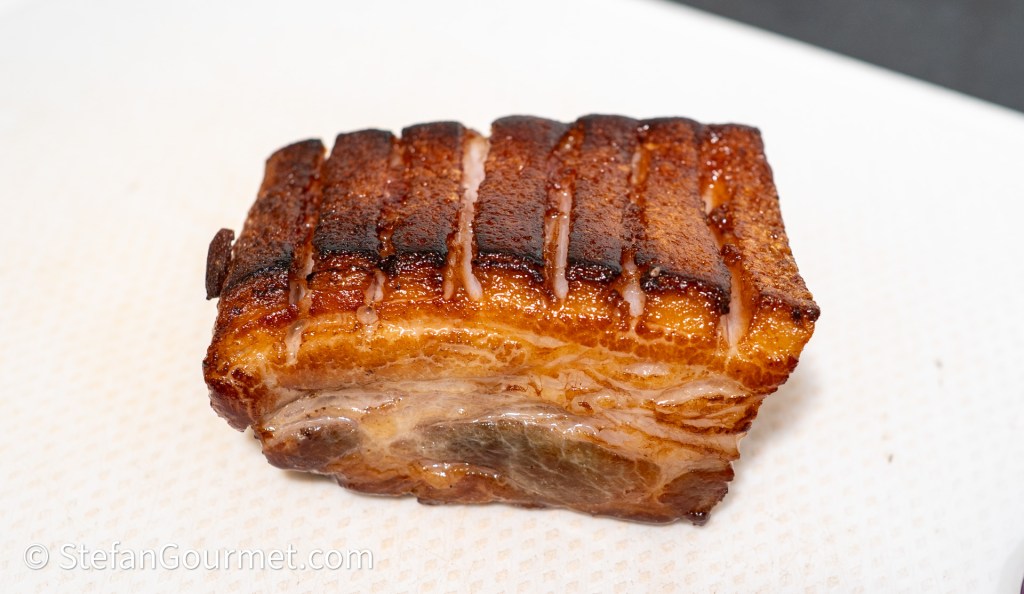
Slice the pork belly (using a fork to hold it, to prevent burning your fingers).
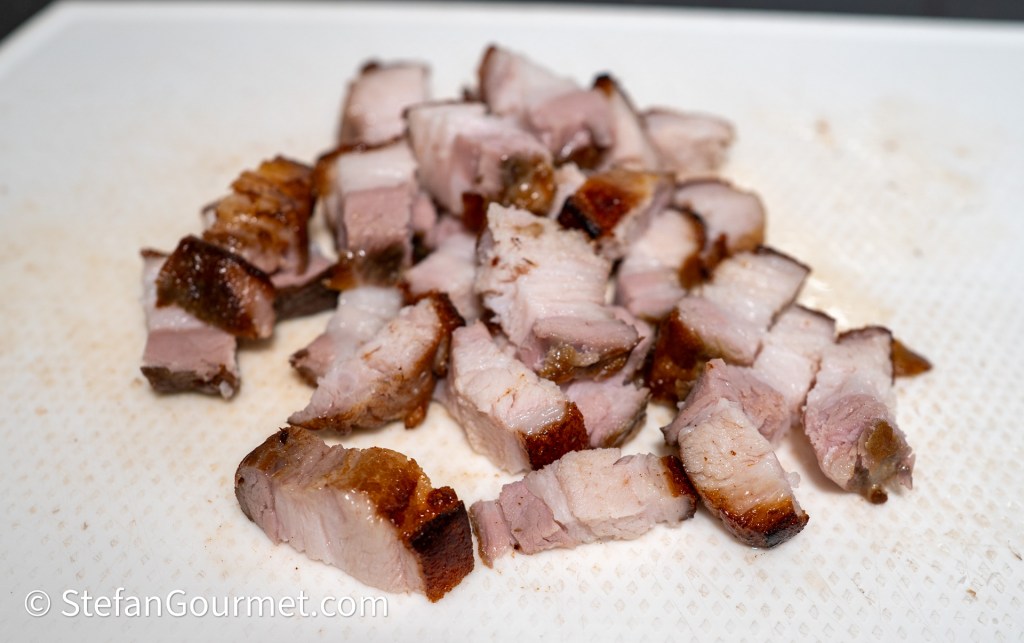
The time needed for this will allow the wok to cool off slightly, so the garlic won’t burn and turn bitter when you add it.
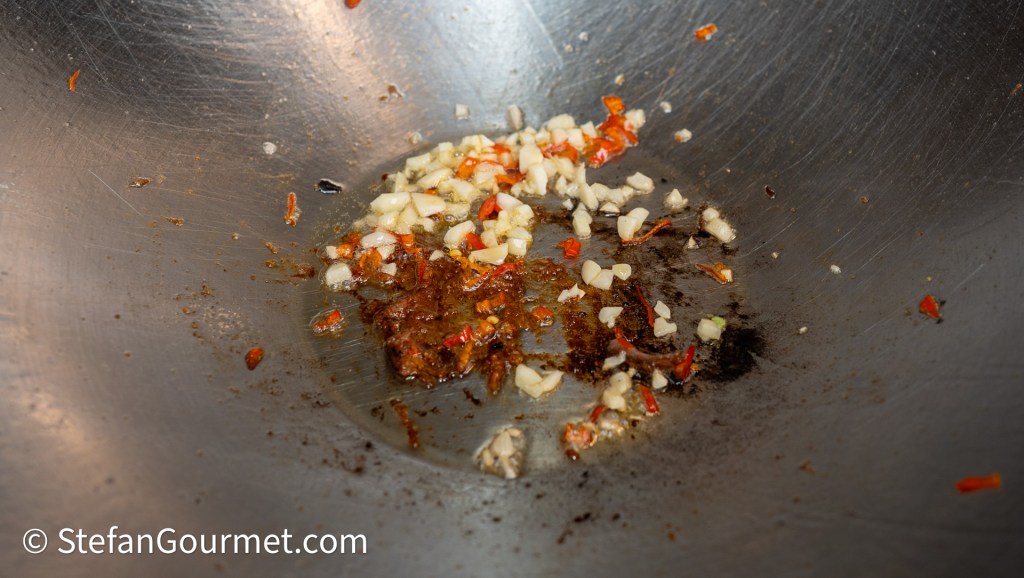
Add the garlic and chilies to the wok with the pork drippings, and cook over medium heat until fragrant.
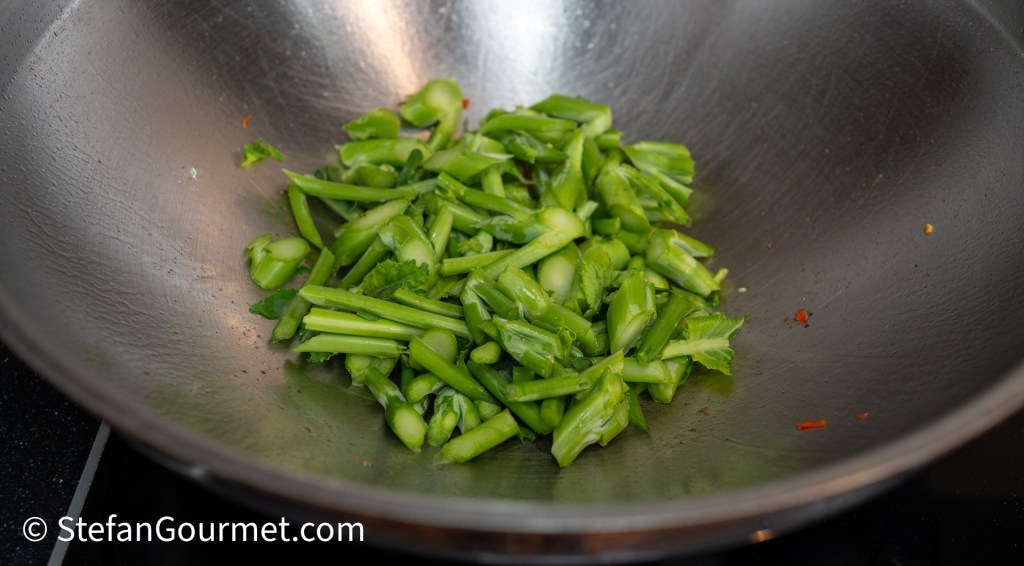
Increase the heat and immediately add the gai lan stems…
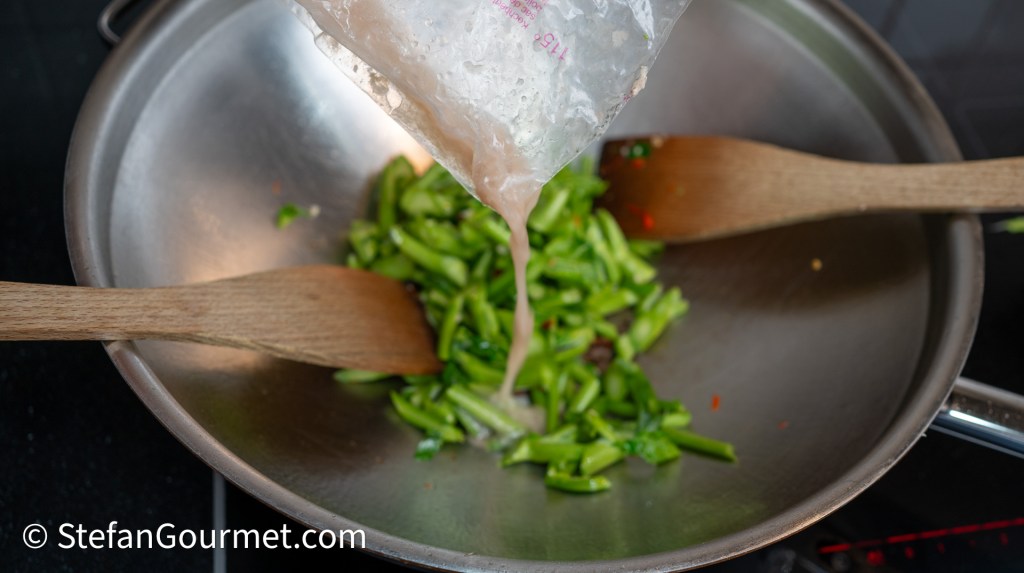
…reserved bag juices…
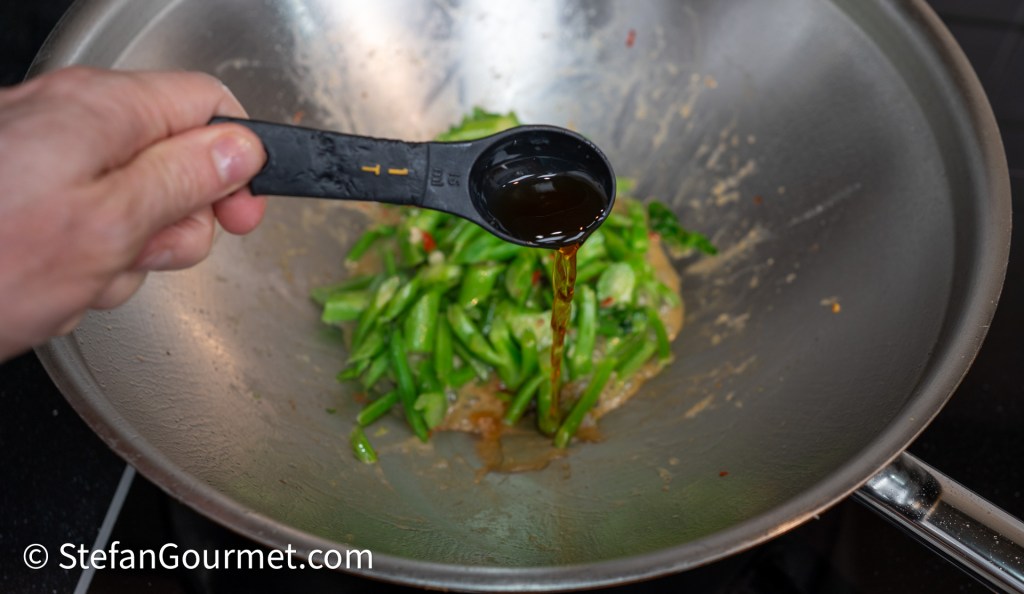
2 tablespoons of oyster sauce, 1 tablespoon of light soy sauce, 1/2 teaspoon of sugar, and 1 teaspoon of fish sauce (if using).
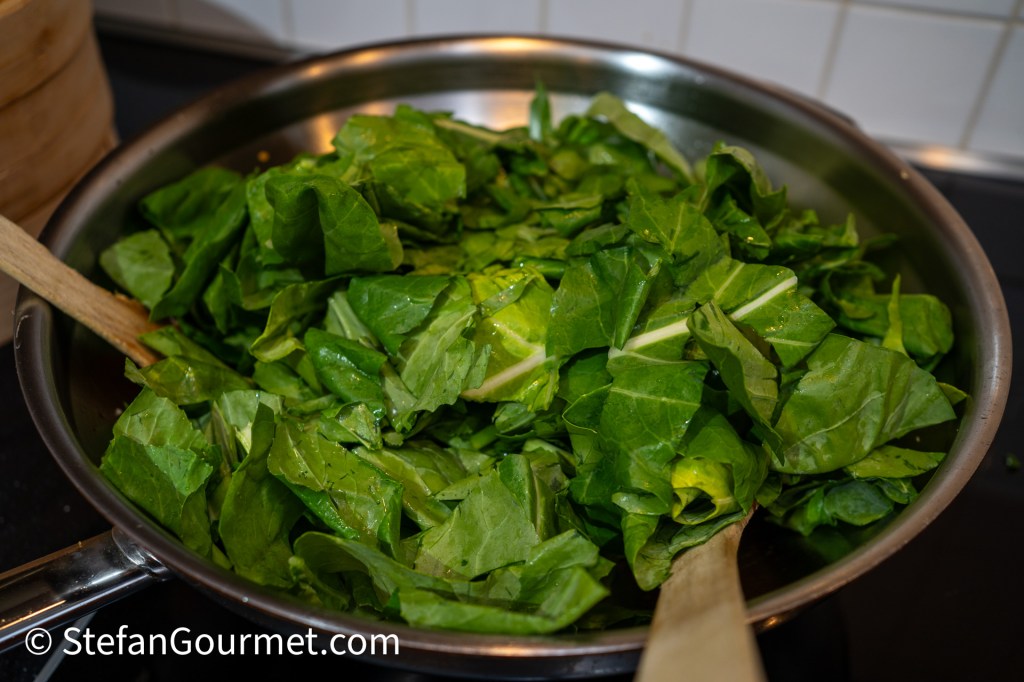
Stir for about 1 minute, then add the gai lan leaves.
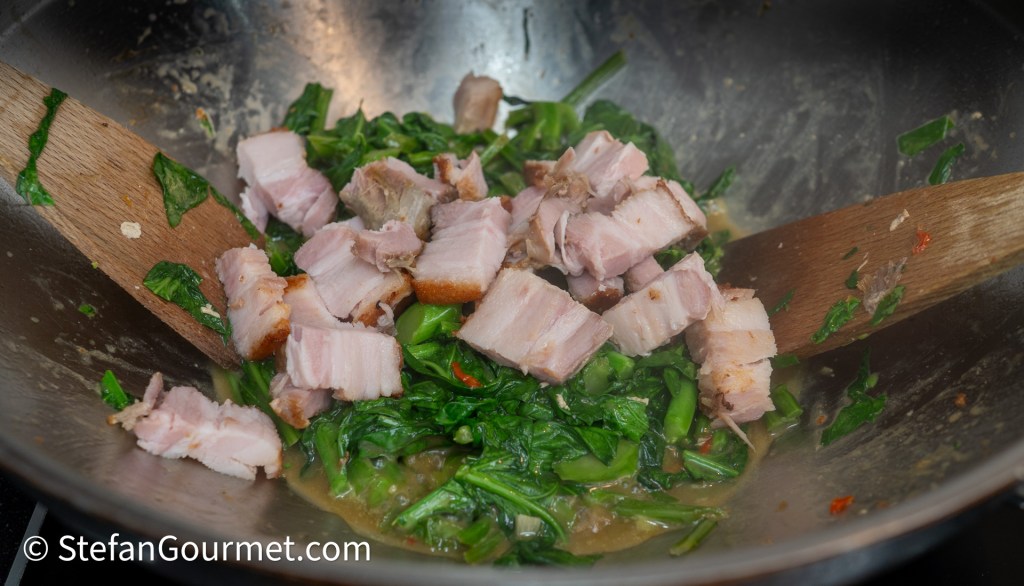
Stir until the gai lan leaves have wilted, then add the sliced pork belly.
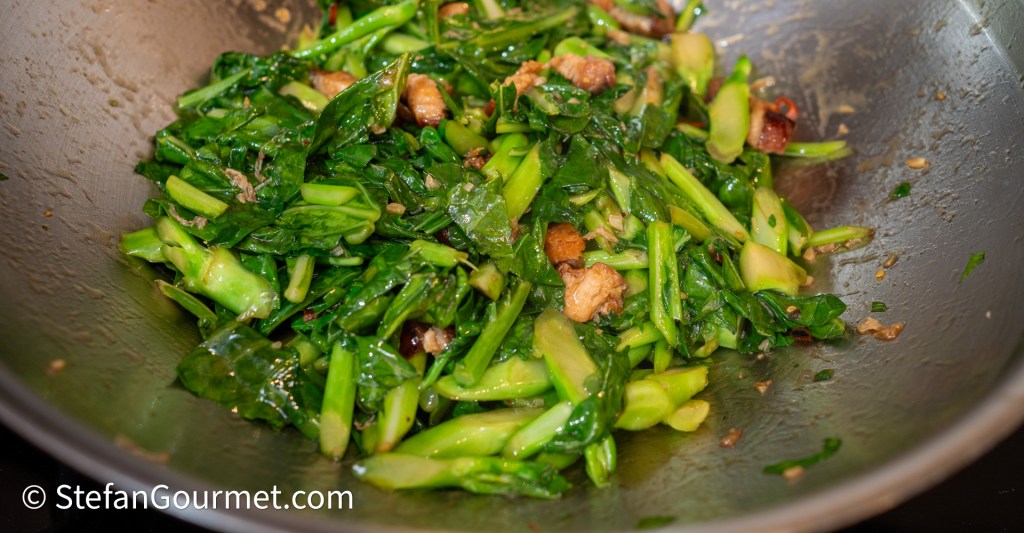
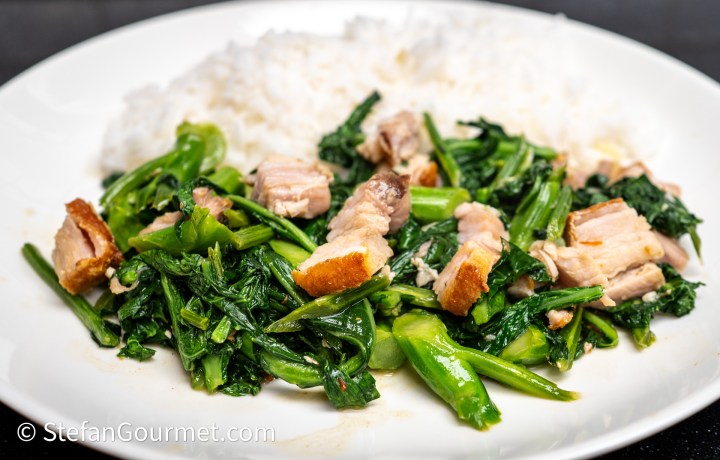
Stir only until everything is mixed, then serve at once with steamed jasmine rice.


Love your way of ‘getting your daily greens’ . . . as I like all the ingredients and making stifry-like dishes . . . this is naturally right up my alley tho’ I’d prepare the pork the old-fashioned way 🙂 ! Have never heard of ‘rawiit’ chillies . . . homework and probable substitution needed. Thanks !
LikeLiked by 1 person
Serrano peppers or Thai bird’s eye chilies are good substitutes for red rawit chilies, as they offer similar heat levels. You can also use cayenne pepper if you need a powdered option.
LikeLiked by 1 person
Rawitt is the small red Thai chillies, very hot.
LikeLiked by 1 person
Thanks for the reply – a new term learned 🙂 ! Hope you well!
LikeLiked by 1 person
Another gorgeous dish, Stefan. I’m still on the fence about cooking in plastic, but the sous vide process is quite intriguing. I am unable to tolerate super hot foods, so I’ll have to temper the heat in this recipe.
LikeLiked by 1 person