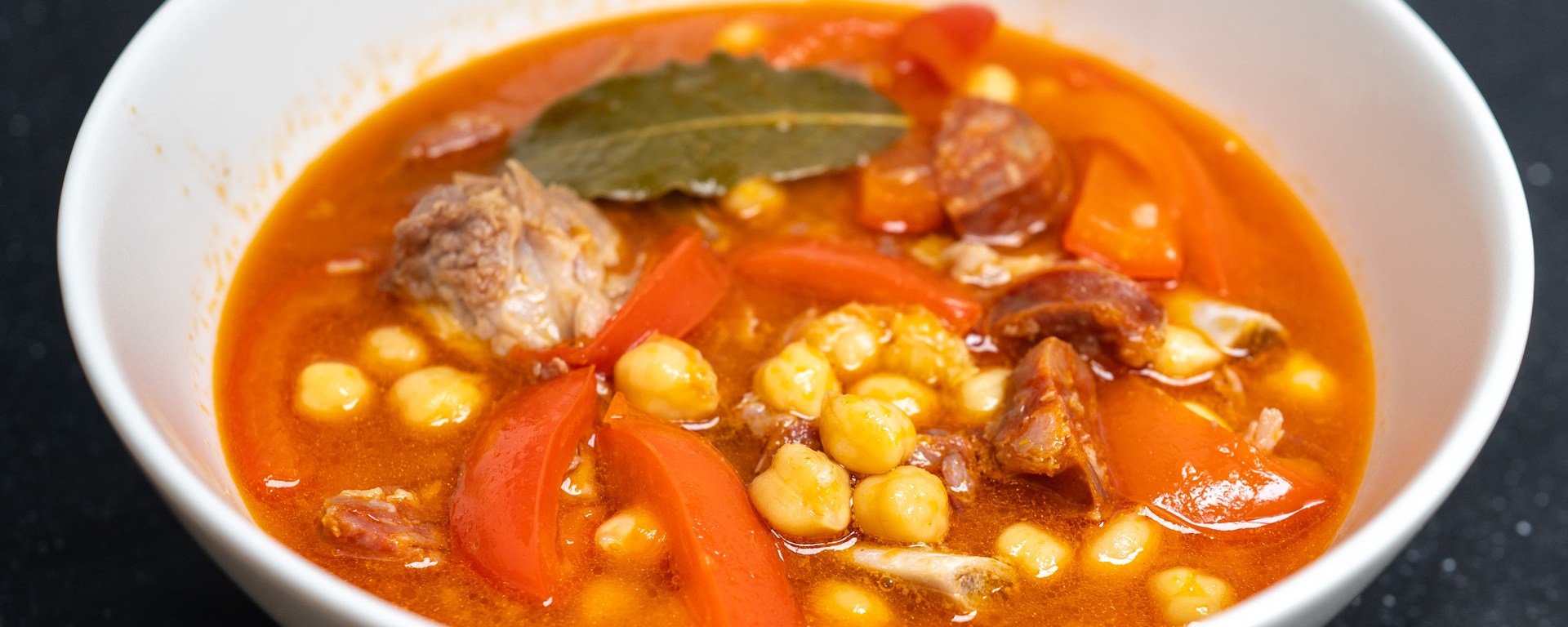
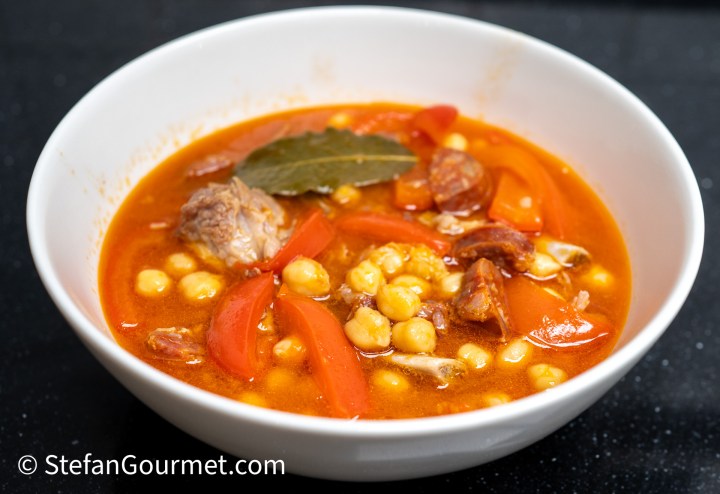
Garbanzas Compuestas is a hearty chickpea and pork stew from the Canary Islands, inspired by versions sampled across Tenerife. A deep, aromatic stock is built from pork trotters, tomato, onion, and garlic, seasoned with smoked paprika, cumin, saffron, and bay leaf. The pork comes as Iberico pork spareribs (chosen for their exceptional marbling) alongside dry-cured Spanish chorizo. For a refined take that skips the traditional salted pork belly, the trotters are simmered first into a gelatinous broth and strained before cooking the meat and chickpeas. Julienned bell peppers go in right at the end, bringing a touch of crunch and fresh brightness to balance the dish.
Ingredients
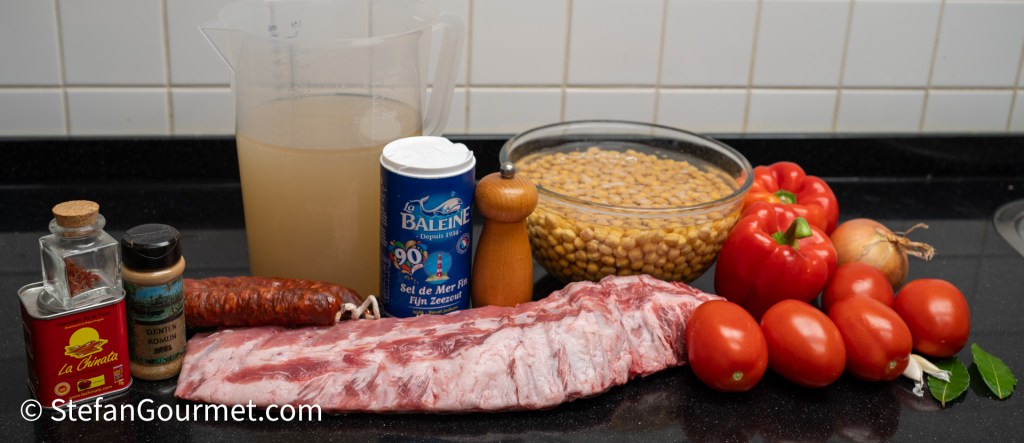
Serves 4 for a full meal
- 500 grams dried chickpeas, soaked overnight in 1.5 litres of water with 1 Tbsp table salt
- 800 grams pork trotters (pork feet)
- 800 grams pork spareribs, preferably Iberico
- 225 grams chorizo (mild or spicy)
- 500 grams ripe plum tomatoes
- 1 onion, chopped
- 2 garlic cloves, minced
- 1 tsp ground cumin
- 1 tsp mild smoked paprika
- 1 tsp salt
- 1/4 tsp freshly ground white pepper
- pinch of saffron threads
- 2 bay leaves
- 2 red bell peppers
- extra virgin olive oil
Instructions
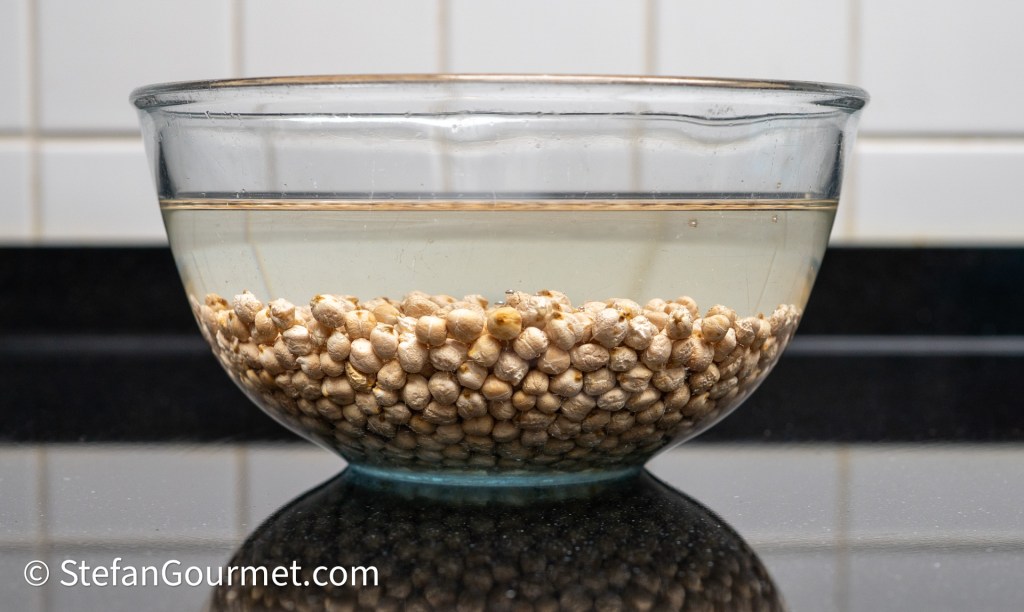
Dissolve 1 tablespoon of table salt in 1.5 litres (6 cups) of room temperature water in a large bowl and add 500 grams of dried chickpeas.
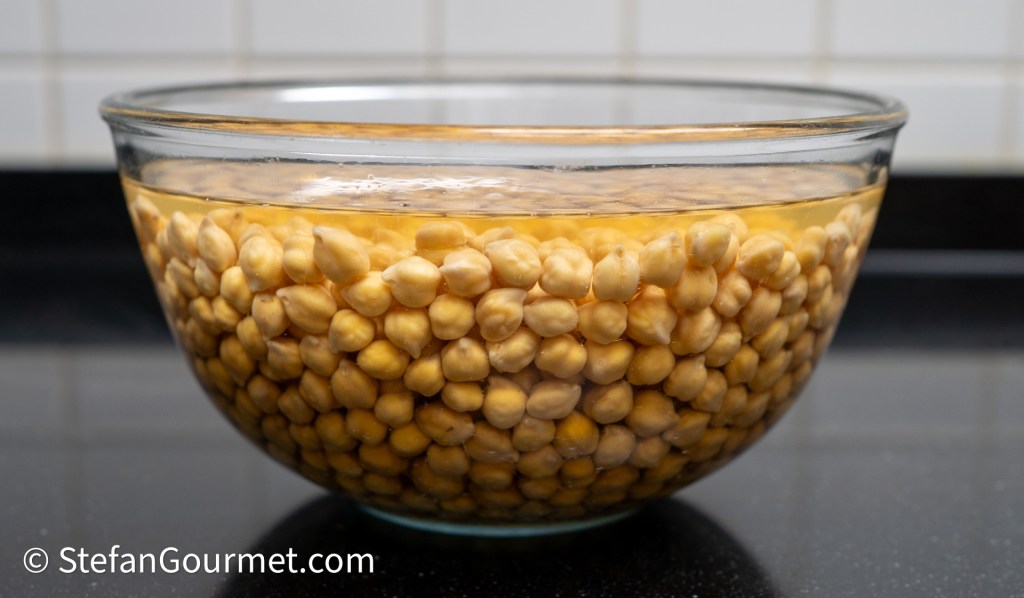
Leave to soak overnight. Soaking dried beans in salted water makes them tender while keeping them intact during cooking, in addition to seasoning them throughout.
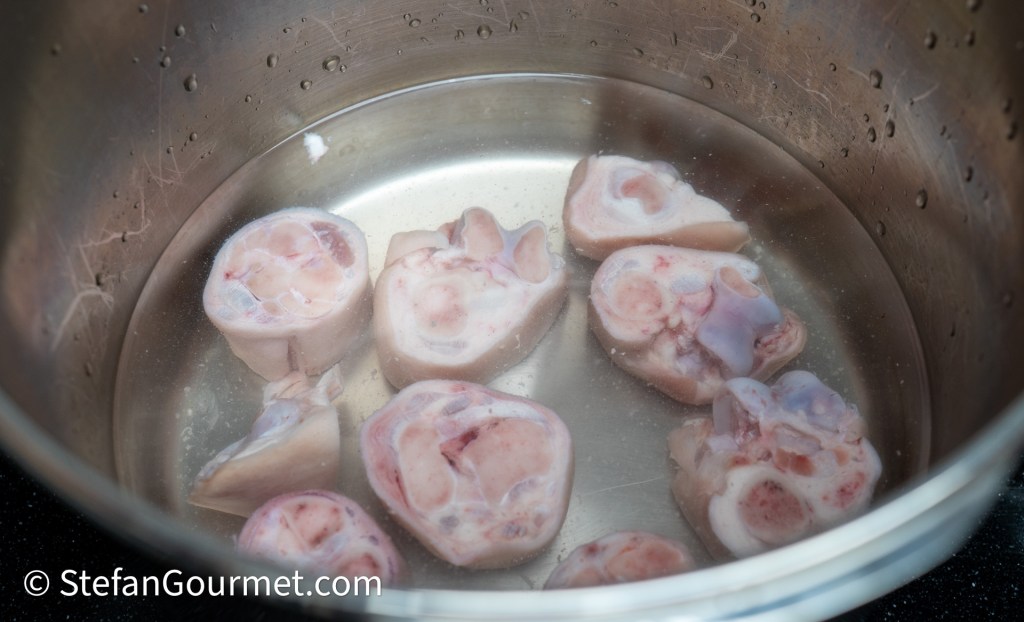
Place 800 grams of pork trotters in a stockpot or pressure cooker and add 2 litres (8 cups) of water.
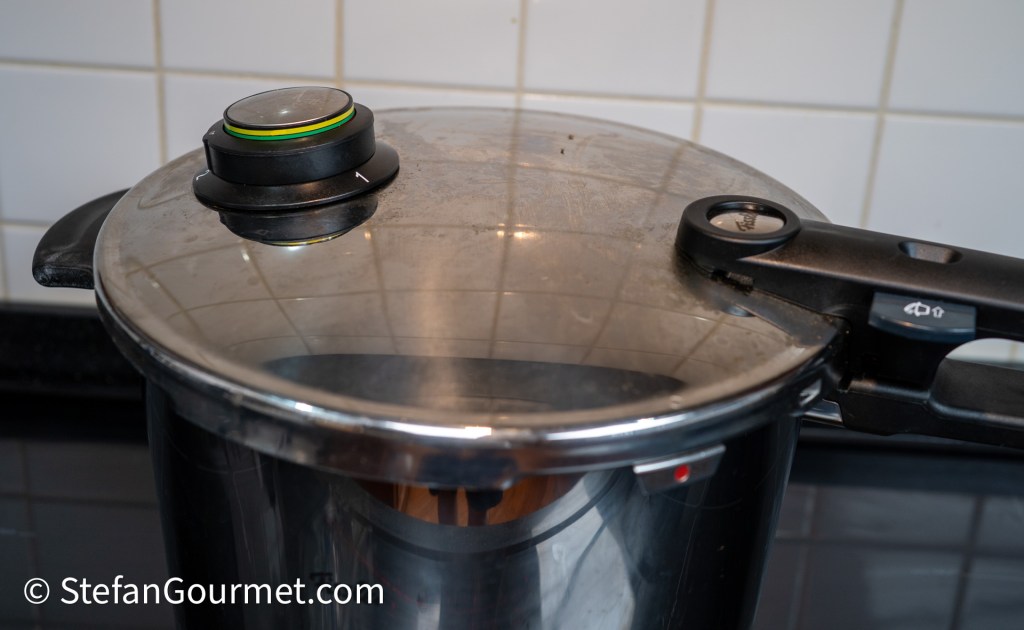
Cover, bring to a boil, and simmer for 4 hours, or bring to pressure and pressure cook for 2 hours. Pork trotters release abundant gelatin, giving the stock incredible body and richness.
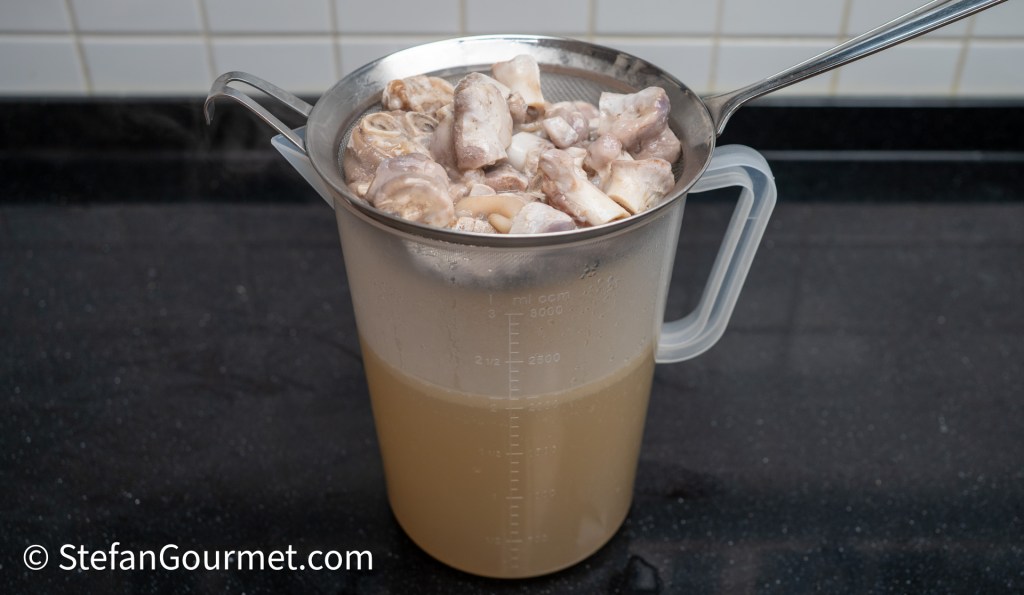
Pass the pork stock through a fine sieve and discard the solids.
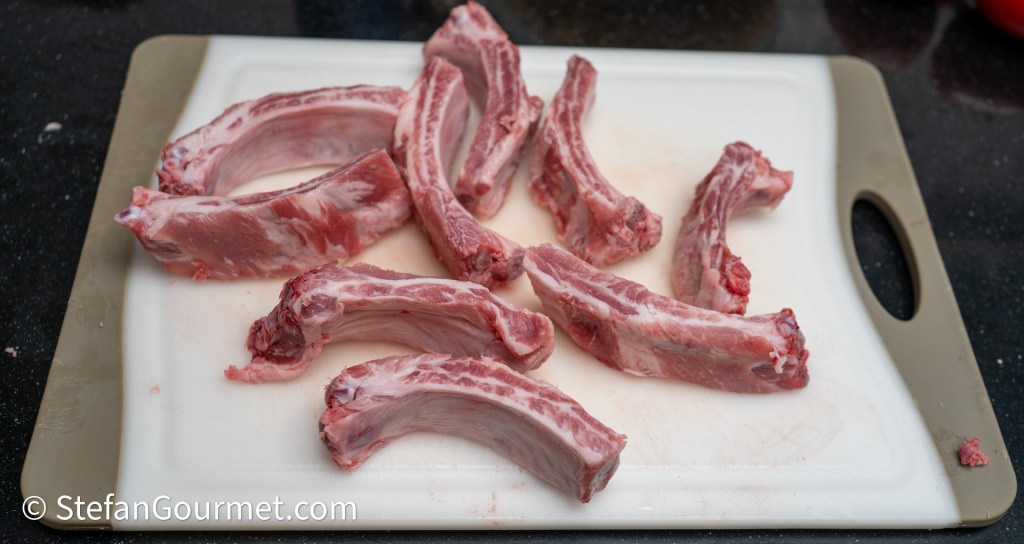
Cut the slab of spareribs into individual ribs.
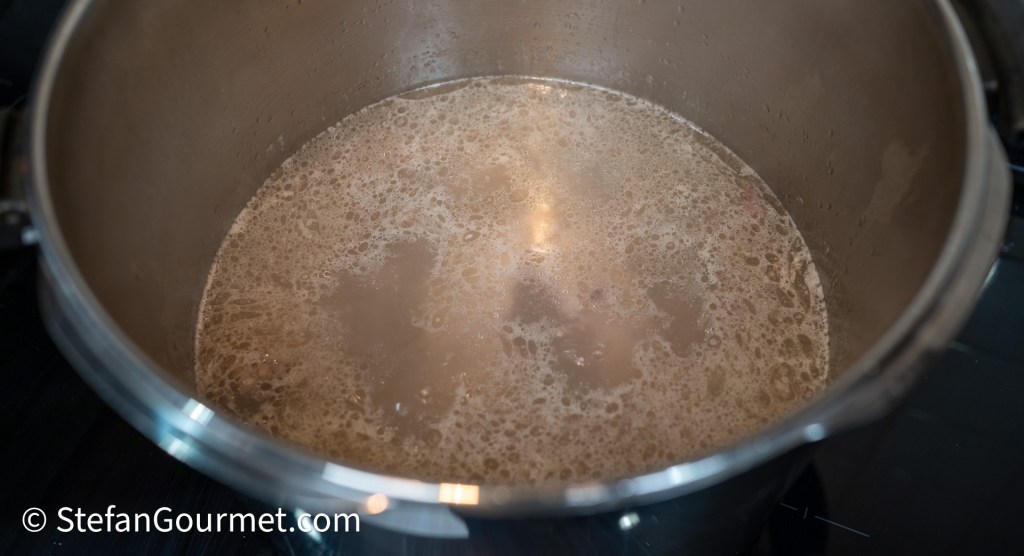
Return the pork stock to the same pot. Add the ribs and 1 teaspoon of salt. Cover, bring to a boil, and simmer for 1.5 to 2 hours, depending on how tender you like the ribs.
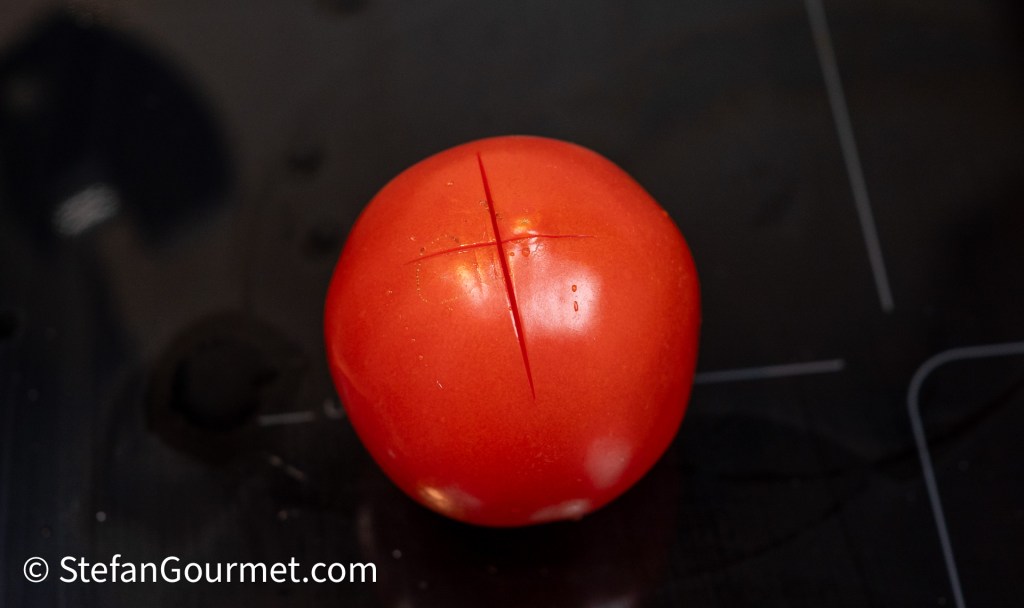
In the meantime, score a cross in the bottom of 500 grams of plum tomatoes.
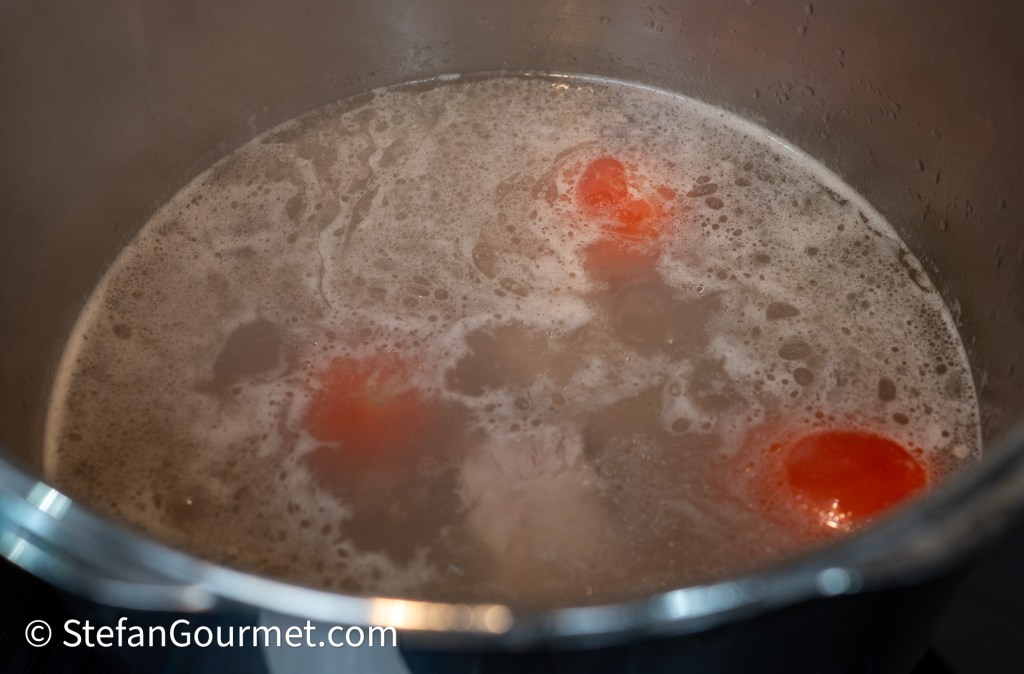
Add the tomatoes briefly to the simmering stock until their skin starts to peel away.
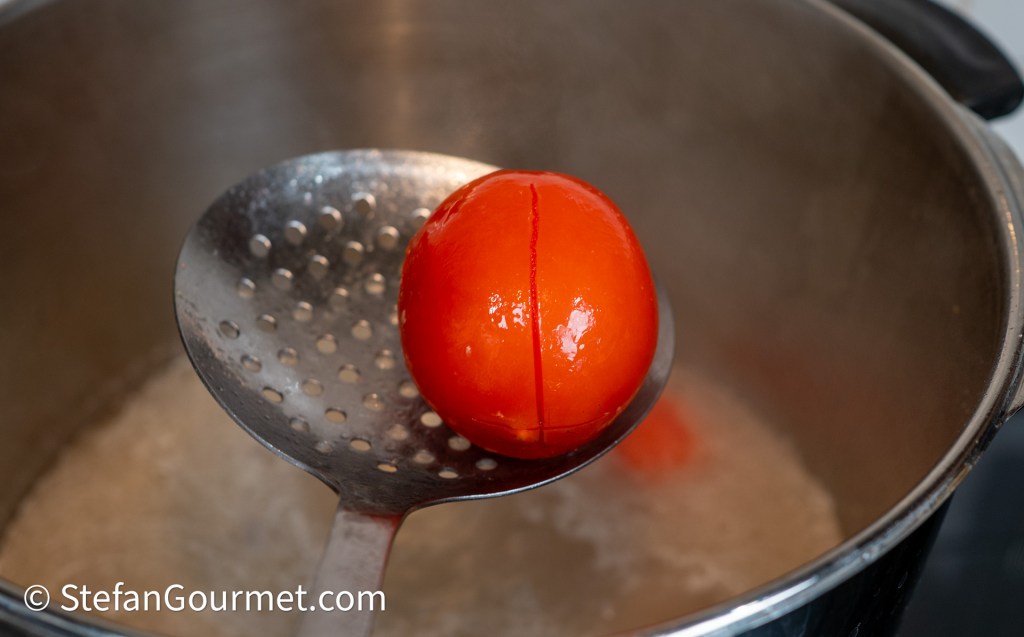
Lift them out with a slotted spoon…
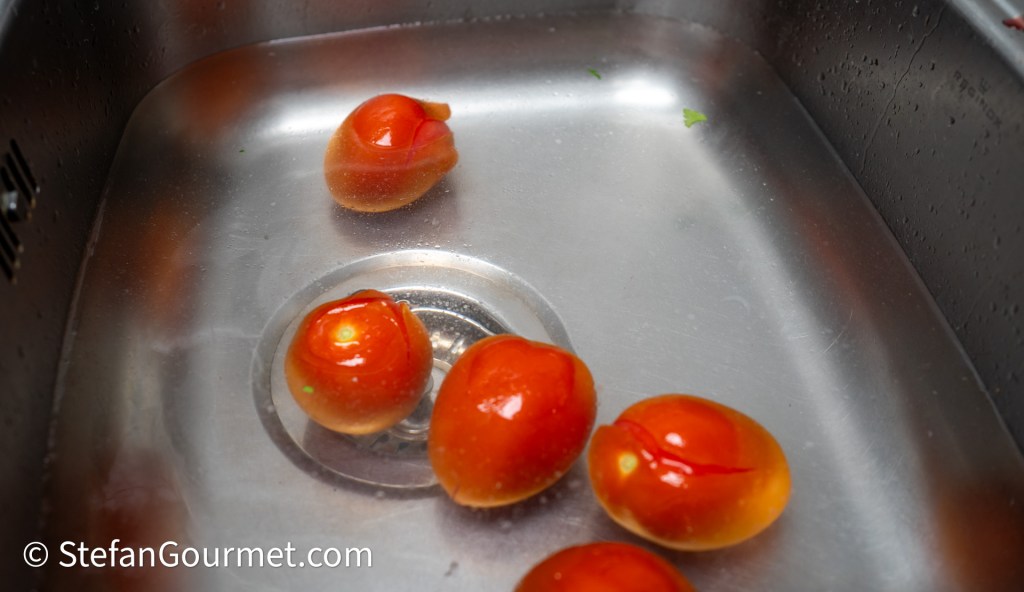
…and plunge into cold water to stop the cooking.
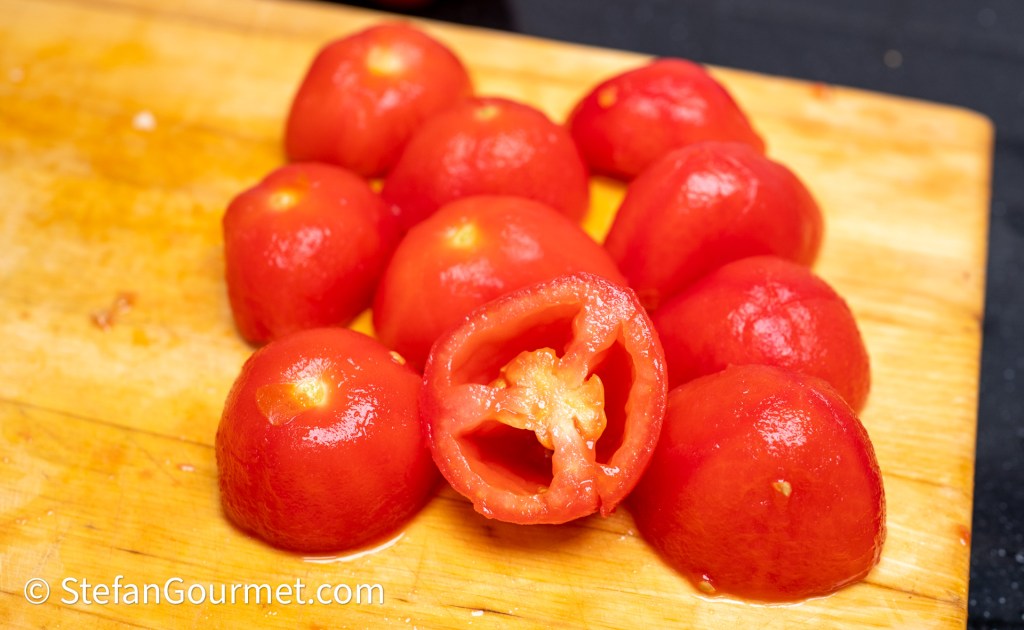
Cut the tomatoes in half crosswise, remove the skin, scoop out the seeds with your fingers or a small spoon.
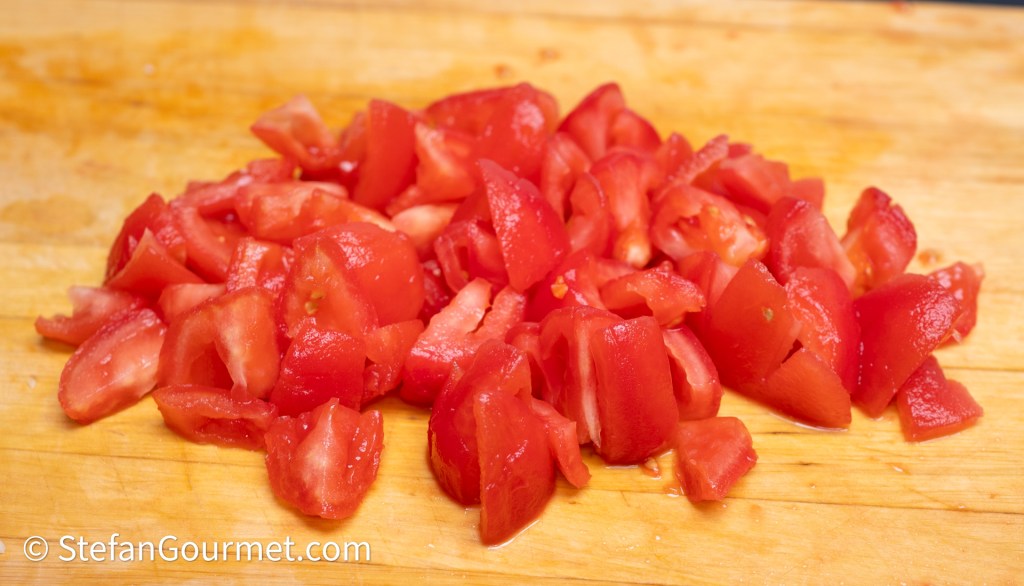
Chop the tomato flesh, and reserve.
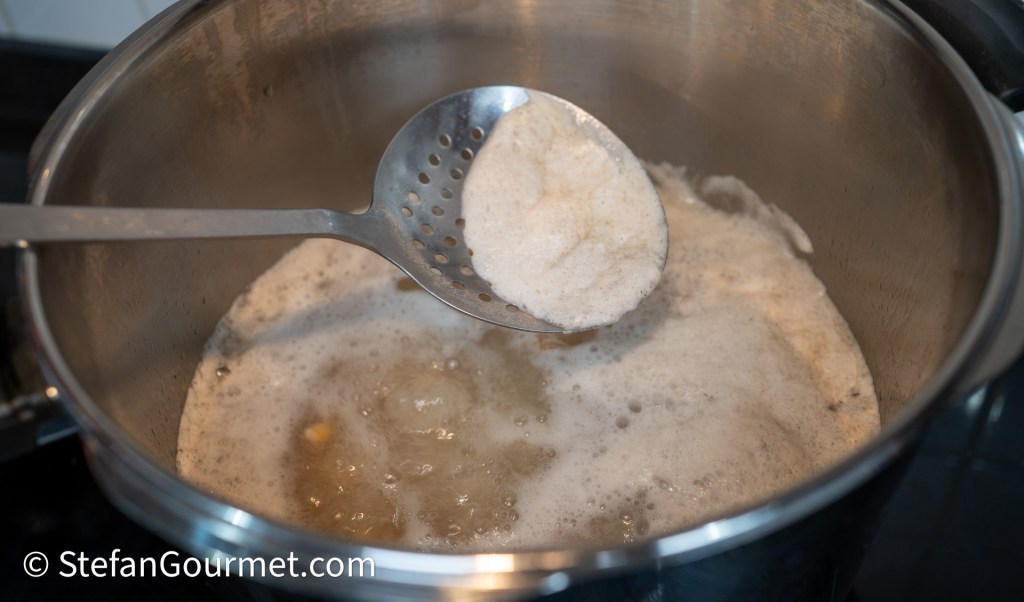
After the ribs have simmered for 1.5 to 2 hours, drain the chickpeas and rinse them thoroughly. Add the chickpeas to the stew and skim off the scum that rises to the surface with a slotted spoon.
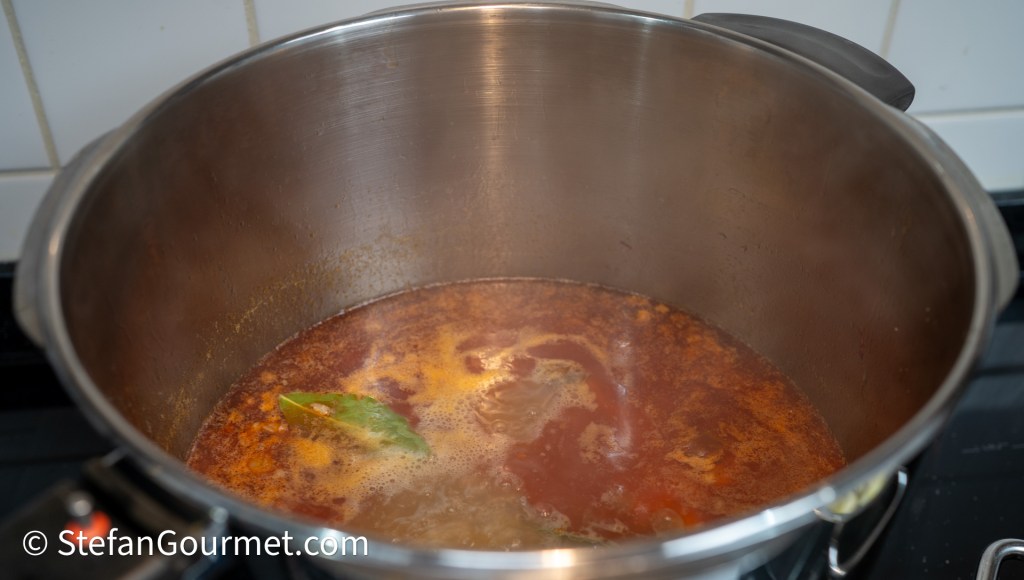
Add 1 teaspoon of ground cumin, 1 teaspoon of smoked paprika, 1/4 teaspoon of freshly ground white pepper, a pinch of saffron threads, and 2 bay leaves. Simmer the chickpeas until tender, about 1 hour.
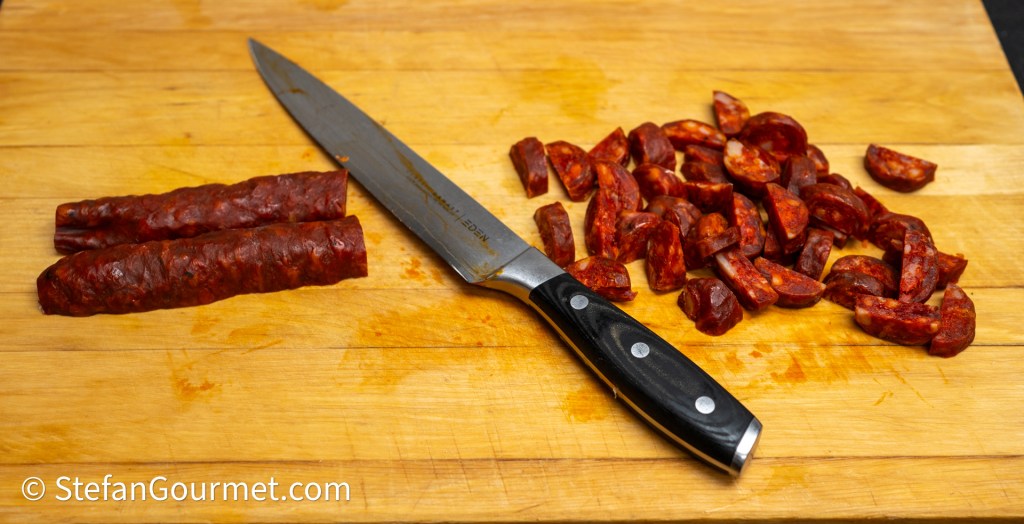
Cut 225 grams of chorizo in half lengthwise, then into slices.
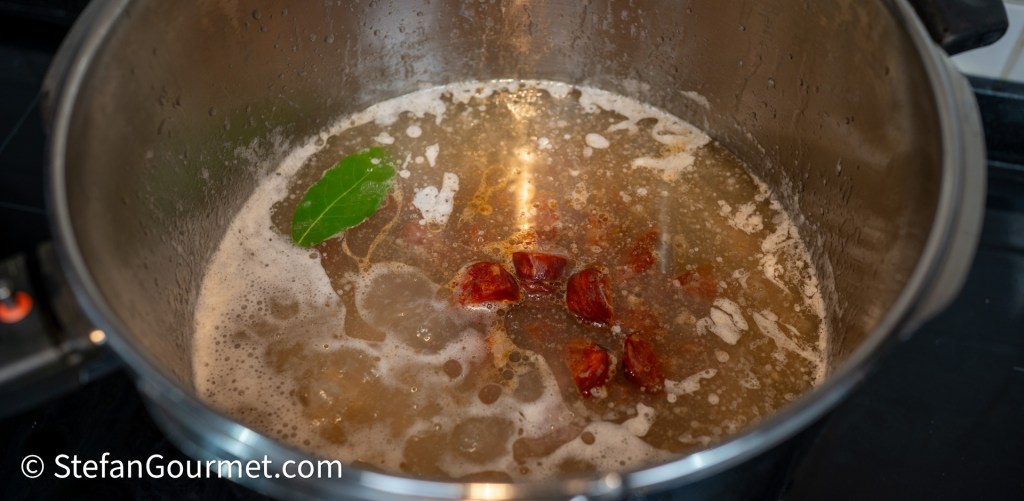
Add the chorizo to the stew.
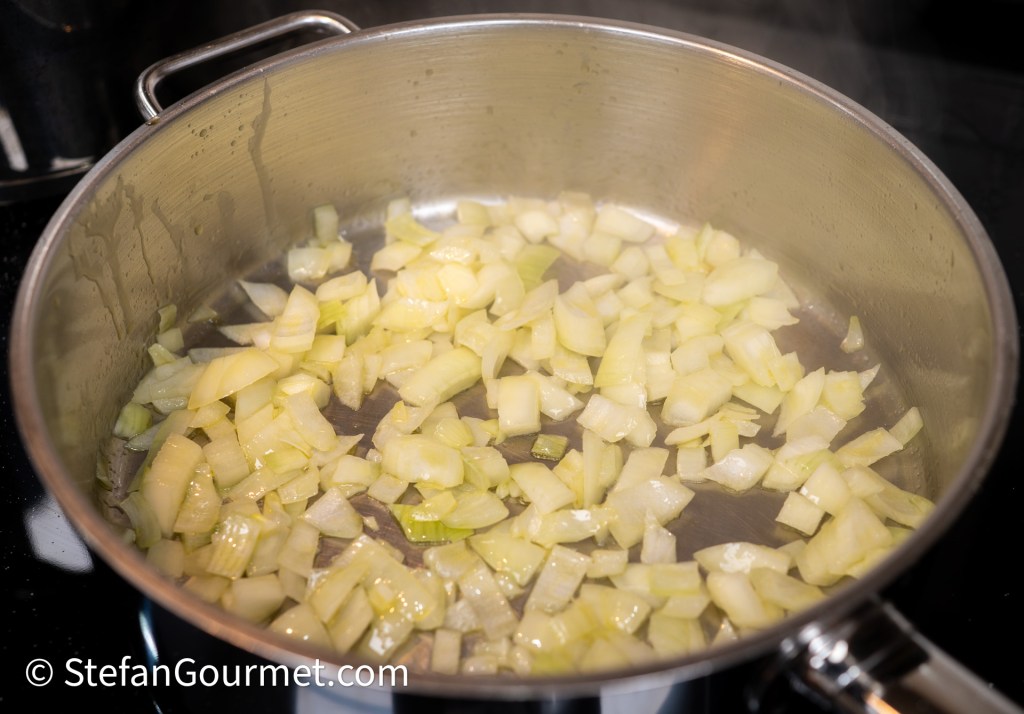
Chop an onion. Heat 2 tablespoons of olive oil in a frying pan and add the onion. Stir over medium heat until the onion has softened, about 10 minutes.
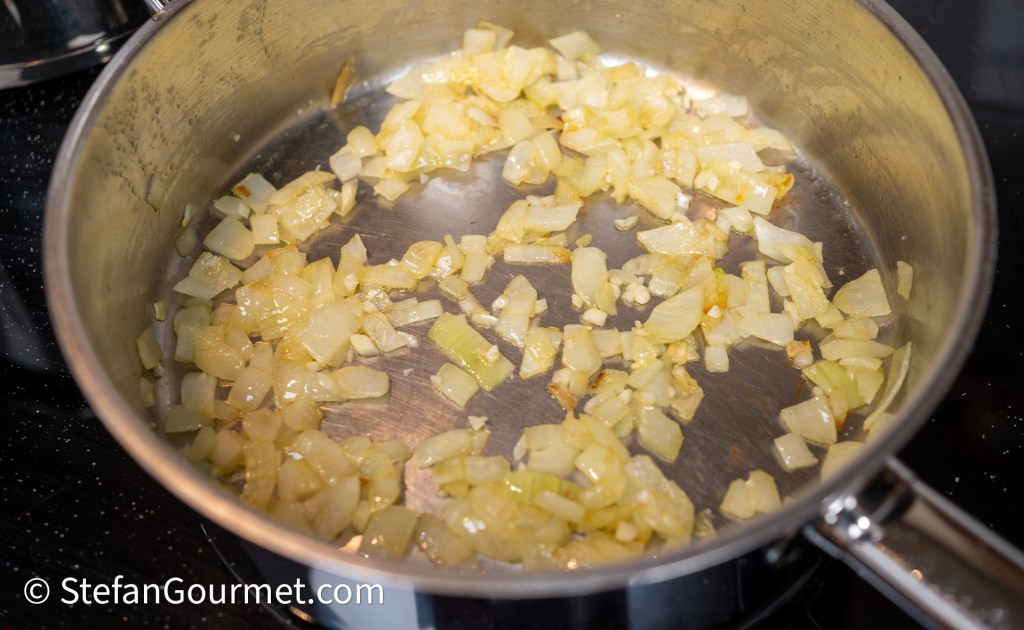
Add 2 minced garlic cloves and stir briefly until fragrant.
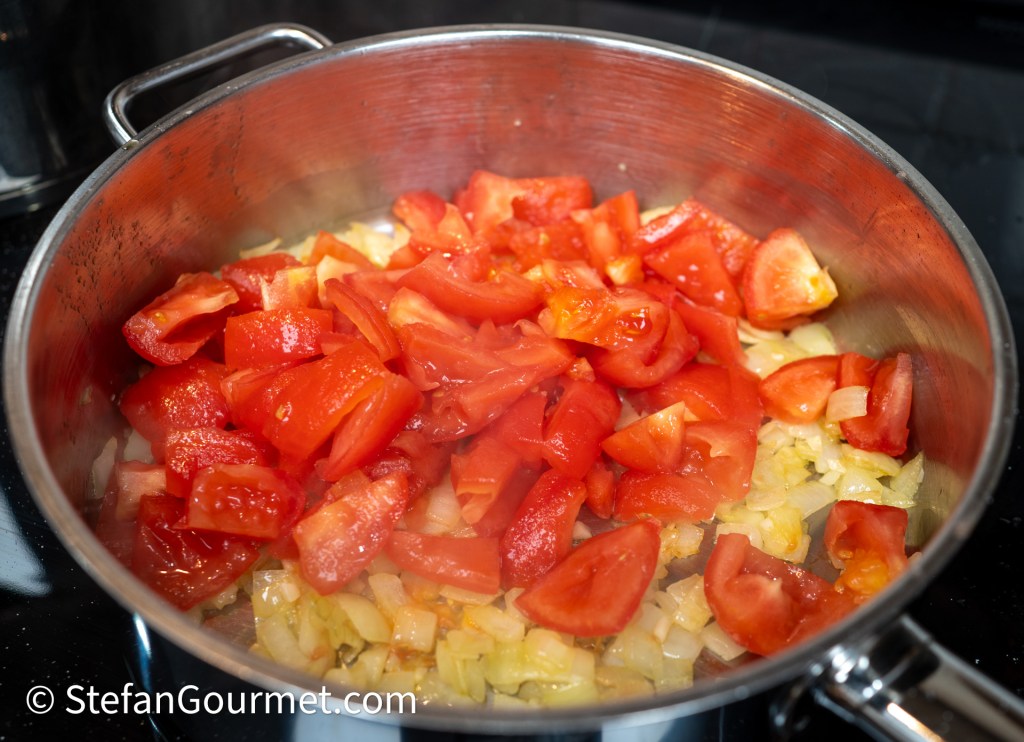
Add the chopped tomatoes.
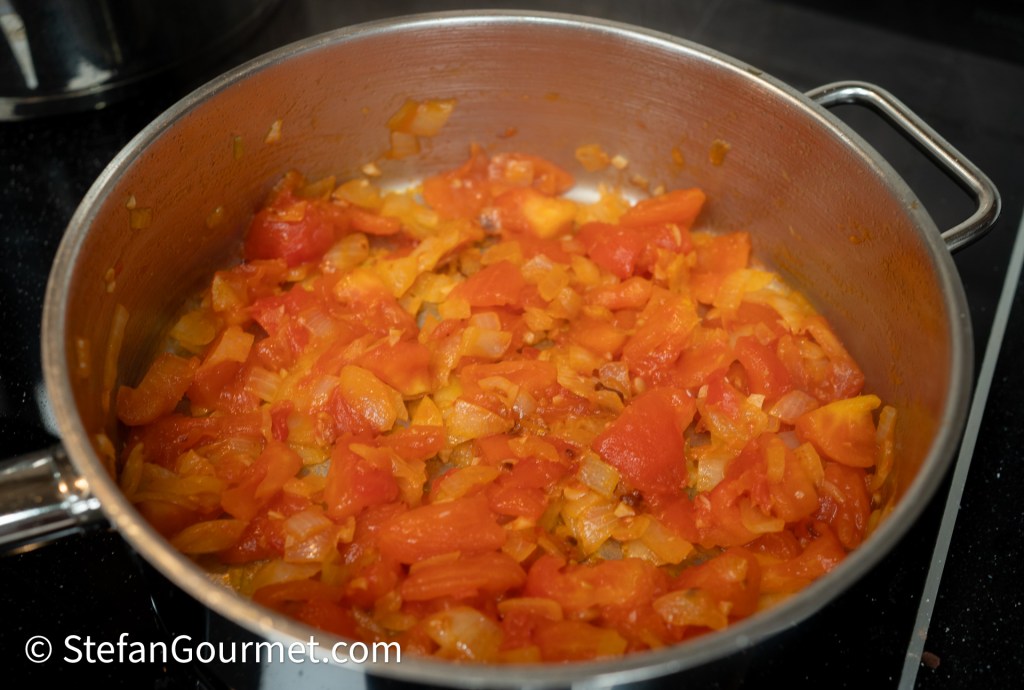
Stir over medium-high heat until they break down.
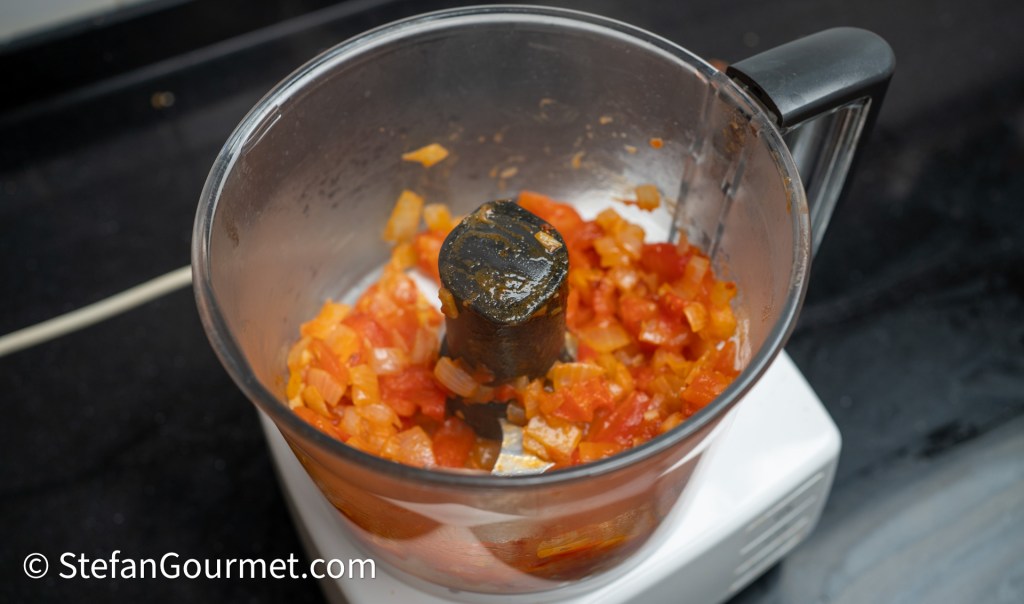
Puree the tomato and onion mixture in a food processor…
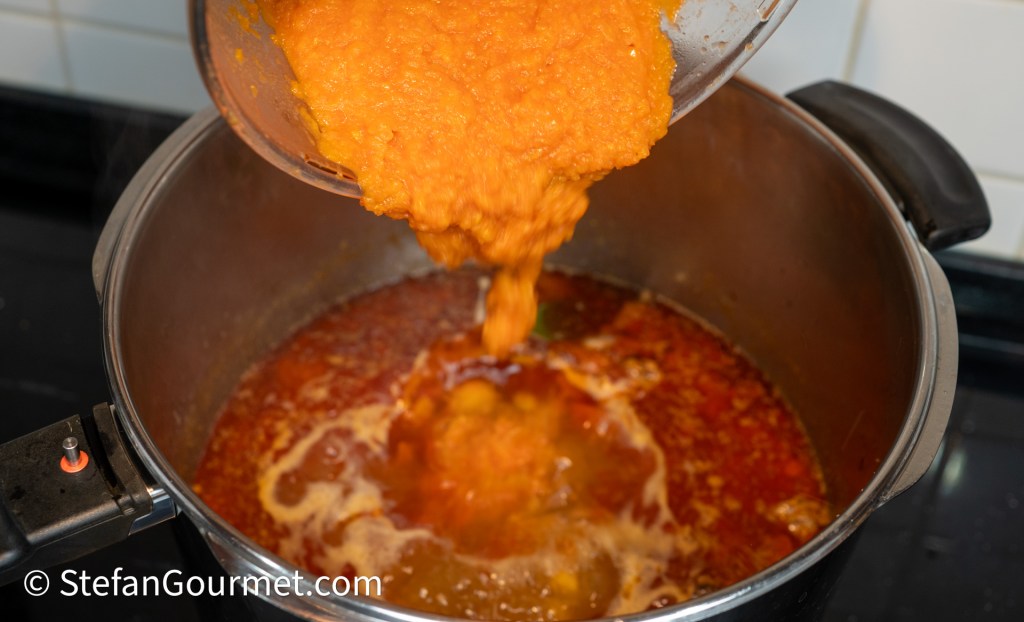
…and add it to the stew.
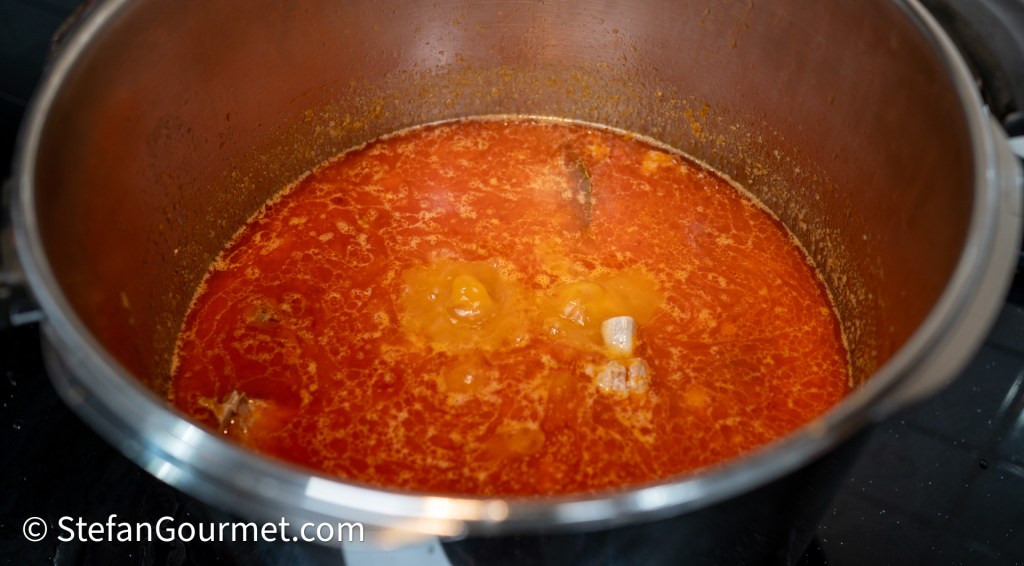
Pureeing the sofrito prevents bits of onion or tomato from floating around, yielding a smooth, refined texture.
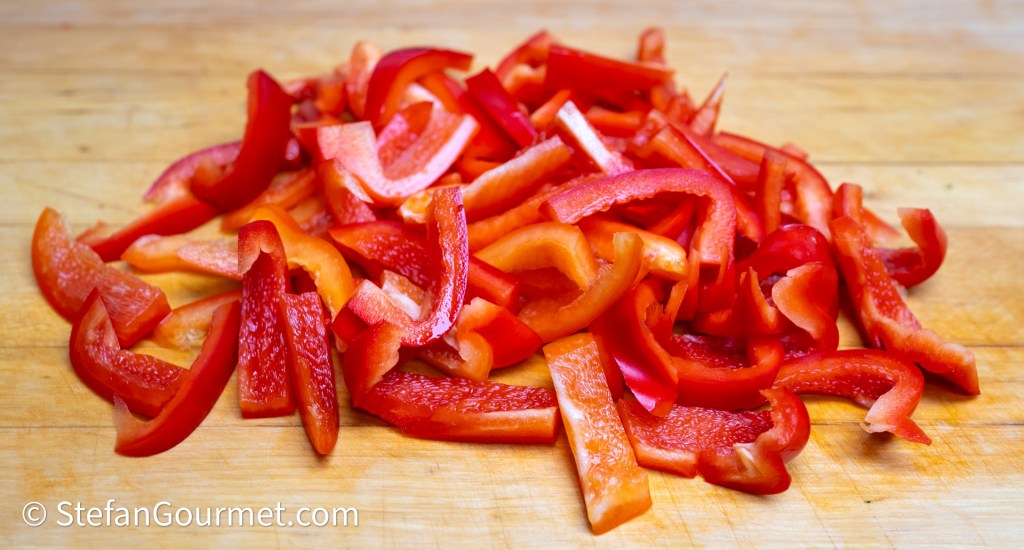
Julienne 2 red bell peppers. Click here for the best way to clean bell peppers.
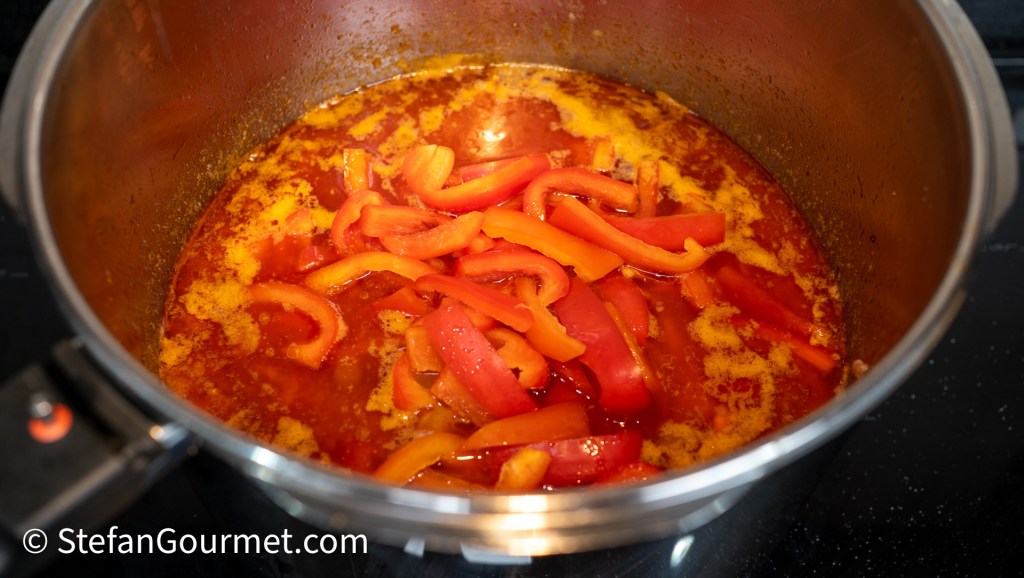
Add them to the stew for the final 5-10 minutes, depending on how much crunch you prefer.
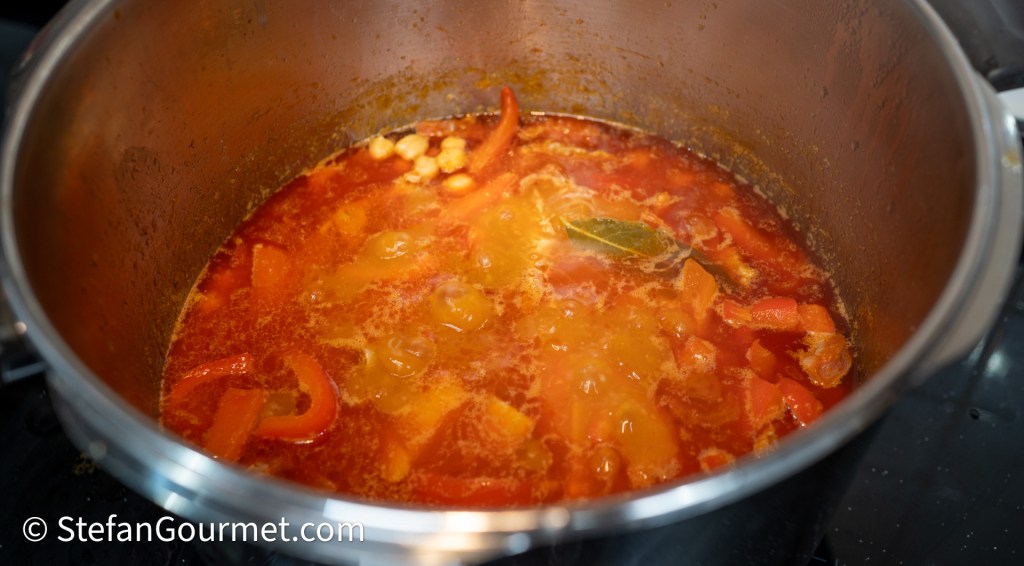
Taste and adjust the seasoning.
Serve in bowls or deep plates. It makes a complete meal on its own, but pairs wonderfully with Canarian potatoes (papas arrugadas) and mojos, or crusty bread.
Wine pairing
The most obvious pairing is a red Listán Negro from the Canary Islands, with modest tannins and enough freshness to cut through the richness of the stew. Since Canarian wines can be difficult to find outside the islands, a Mencía from Bierzo or Valdeorras makes a great alternative in a similar style. If you prefer white, an oaked white Rioja (or an oaked Albillo Criollo from the Canaries, if you can track it down) would also work. Or a rare skin contact wine we discovered during our wine tour of Tenerife: El Medianero (grey label/silver cap), made with 1 week of skin contact, then fermented in stainless steel and aged for 1 year in barrique.


What a wonderfully flavoursome recipe you brought home from the Canaries! I can think of half-a-dozen friends who love these ingredients and will be very happy to have such a great new way of using them!
LikeLiked by 1 person
This sounds wonderful. I like the idea of the raw peppers added towards the end of cooking. I think I could eat just about anything seasoned with smoked paprika.
LikeLiked by 1 person
This looks like a really tasty dish.
LikeLiked by 1 person
This really looks like a wonderful stew. I am going to save it for the colder weather, it’s about 90% humidity ATM! I just love the intense flavours. Have you considered saving the tomato skins, drying them and making tomato powder from them? I have some that I purchased but I’m seeing a lot of people save and dry them.
LikeLiked by 1 person
I deskin tomatoes quite regularly but have never thought about drying them. I do not own a dedicated drying device though. Thanks for the idea.
LikeLike