Restaurant Mario in Neck was founded in 1967 by Italian chef Mario Uva. Every week, he drove to Italy to source authentic ingredients for the kitchen. Neck is a tiny village just north of Purmerend and half an hour from Amsterdam, known almost exclusively for this restaurant. Mario holds the distinction of being the only Italian restaurant in the Netherlands to have earned a Michelin star, which it held from 2001 to 2008. The restaurant is renowned for serving a fixed seven-course chef’s menu. My father, who frequented Mario in the 1970s and 1980s for business dinners, believed that omitting an à la carte option was the main reason the Michelin star took so long to arrive.
After Mario passed away in 2013, his sons took over the family business, expanding it to include a hotel, a pizzeria, and a cooking school. During my last visit in 2019, the focus seemed to have shifted toward lower quality at lower prices, which kept me from returning. Recently, however, Restaurant Mario underwent a reboot. Mario’s son Emilio has taken the helm alongside his partner Daphne, whom he met while she was working at the restaurant. They brought in chef Sil Springorum, a talented alumnus of Mario who gained further experience at one-star Bistro de la Mer, two-star 212, and three-star Hiša Franko. Paired with the ambitious Italian sommelier Fabio Paparella, the new team has everything in place to restore Restaurant Mario to its former glory.
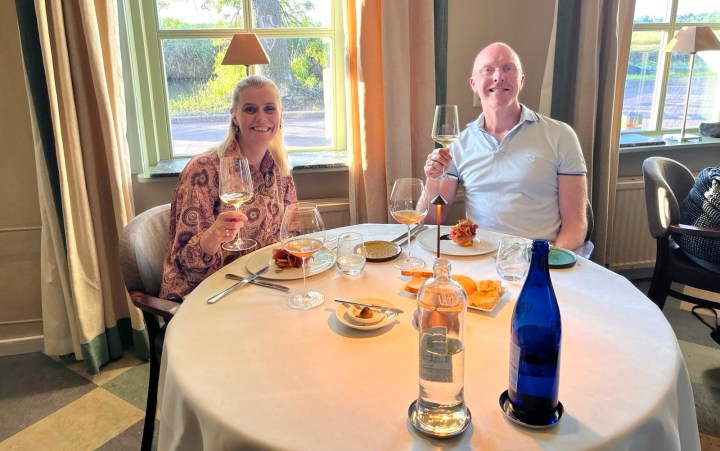
And so this is where I took my friend Anja to celebrate her birthday. We completed the seven-course menu (€95) with the Tesori d’Italia (Italian Treasures) wine pairing for €150. The regular wine pairing is €69. It is also possible to choose 5 or 6 courses instead of 7.
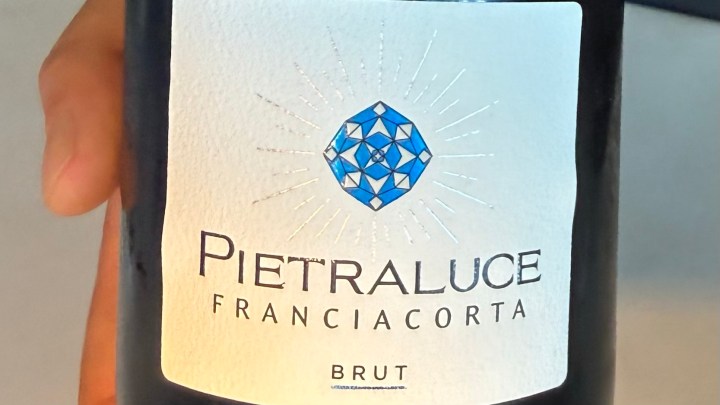
We started with a glass of Franciacorta, a traditional method Chardonnay aged for 30 months on the lees.
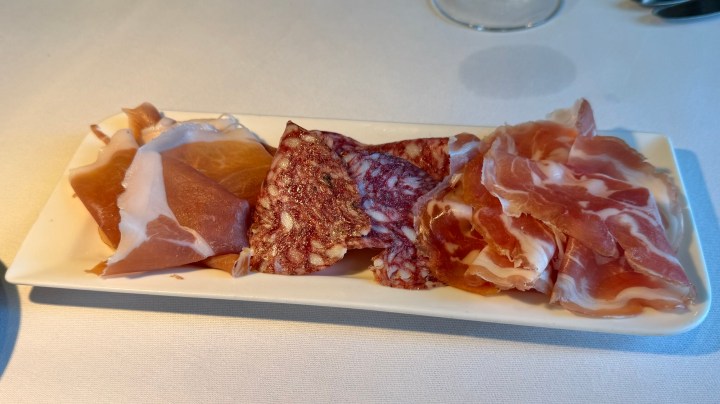
To accompany it, we shared a platter of house-cured salumi aged right in the restaurant’s cellar: pancetta, truffle salame, and prosciutto.
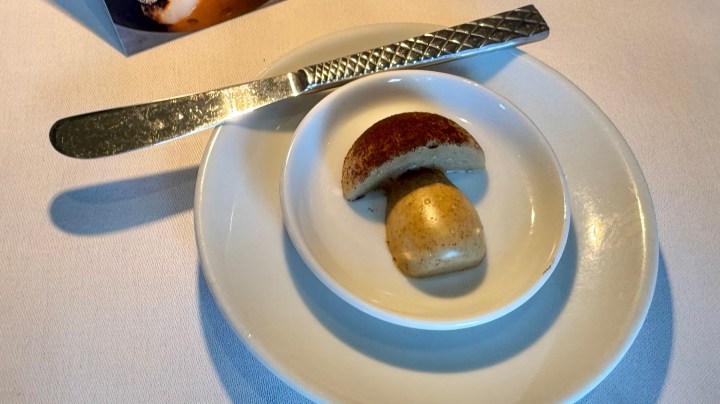
The excellent selection of house-made breads came with a quality extra virgin olive oil and a porcini-flavored salted butter.
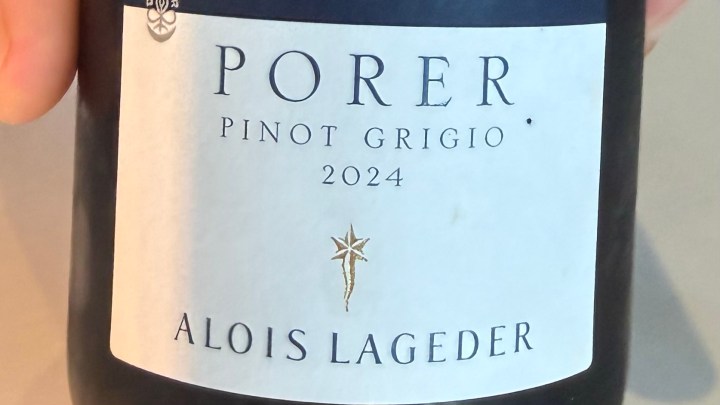
Fabio treated us to an extra wine pairing for the amuse-bouche: a Pinot Grigio from Alto Adige. Crafted partly with skin contact and partly aged on the lees in oak, it offered notable complexity and body.
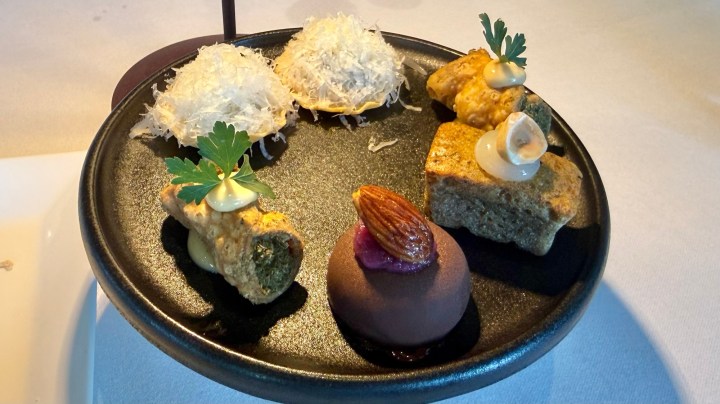
It proved a solid match for the foie bonbon with almond and the delicate pasta-dough tartlet filled with a carbonara-inspired cream of egg yolk, pecorino, and black pepper. It was an absolute standout pairing, however, for the crispy cannolo filled with swordfish, bagna càuda sauce, and powdered capers.
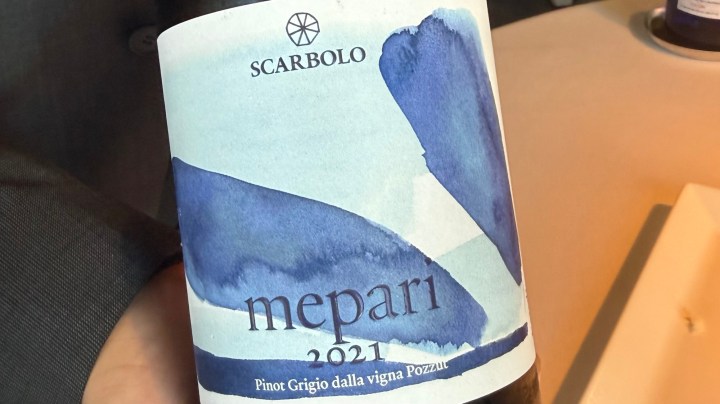
We continued with another Pinot Grigio, this one from Grave in Friuli. It underwent malolactic fermentation and was aged on the lees in large oak casks for 12 months, followed by nearly 4 years of bottle aging as it was the 2021 vintage. This gave the wine a creamy texture and lovely tertiary nutty notes.
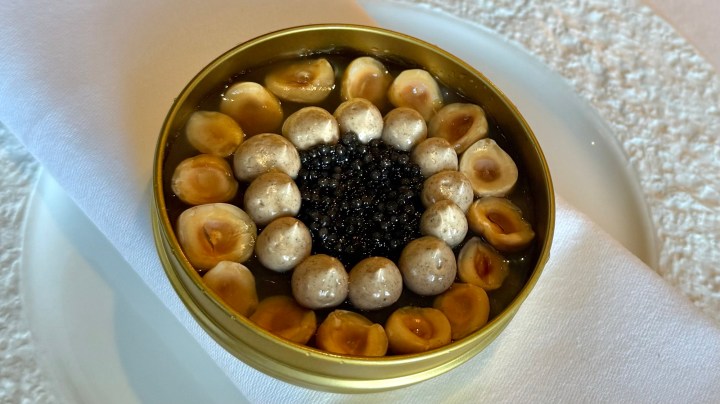
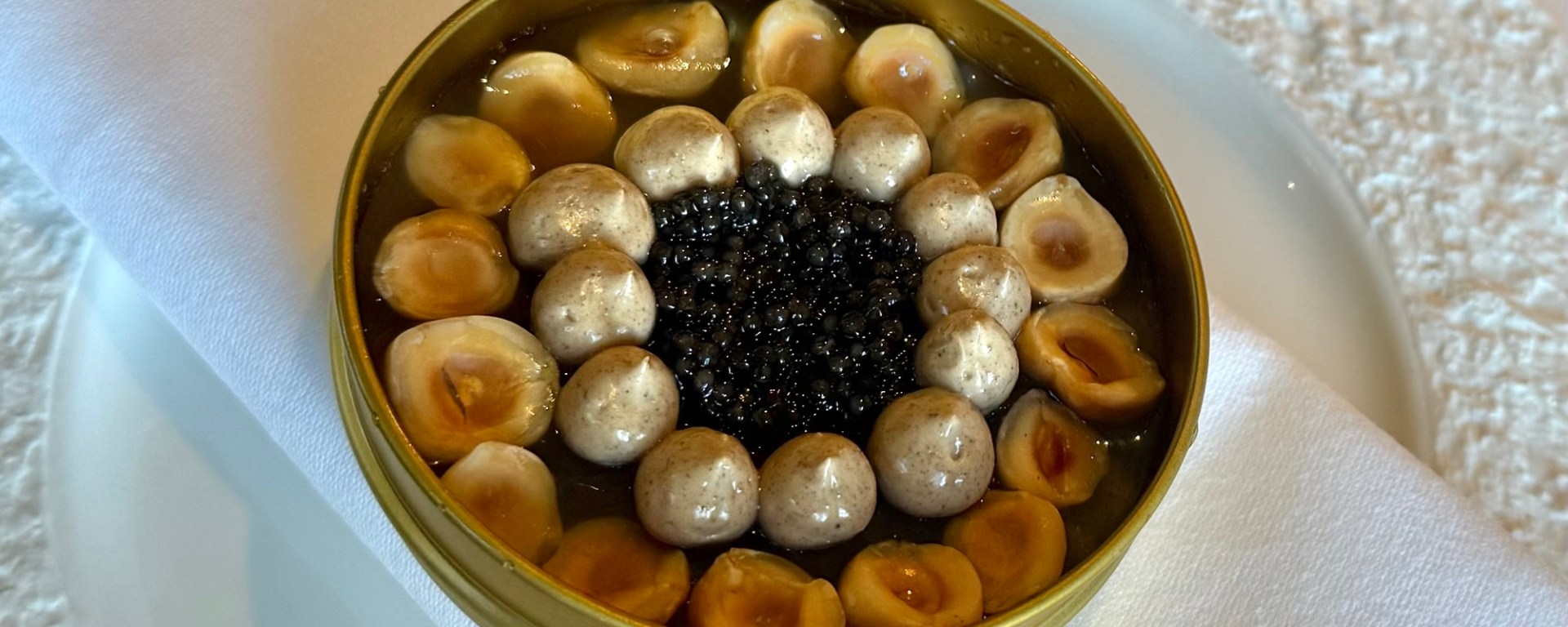
It was a very good pairing for the sea bass tartare served with toasted hazelnuts, porcini mushroom cream, and caviar. A creative and delicious combination of flavors and textures, beautifully presented in a caviar tin.
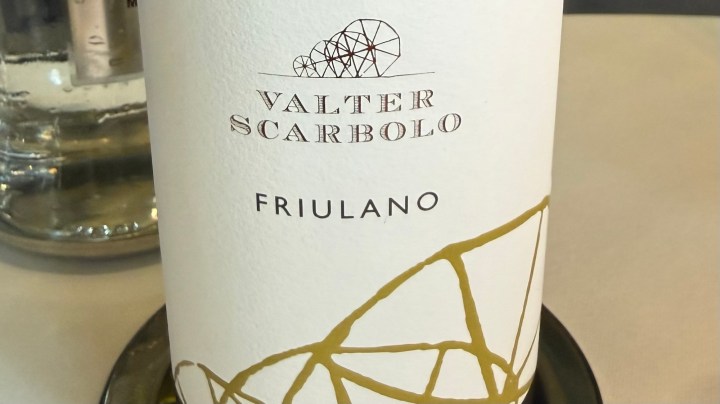
The third wine was also from Friuli, made from the region’s Friulano variety. Malolactic conversion and lees aging with frequent stirring made it creamy and less crisp or aromatic than Friulano often is, creating a good pairing for the rich, earthy flavors of the dish.
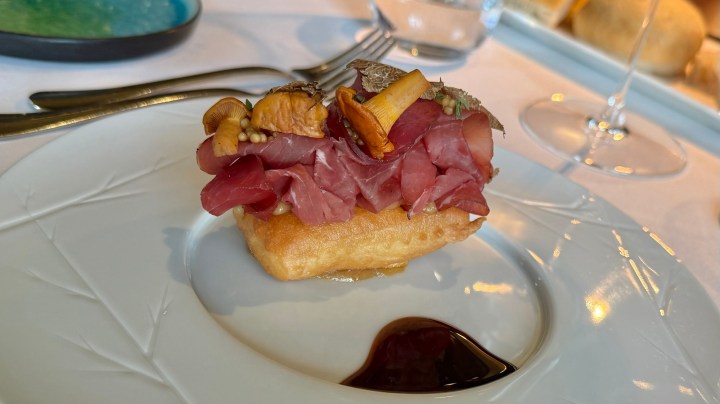
The dish itself was a gnoccho fritto (deep-fried bread dough) filled with Valtellina cheese and topped with Valtellina bresaola, chanterelle mushrooms, and black summer truffle, served with 12-year-old balsamic vinegar on the side for a refreshing contrast.
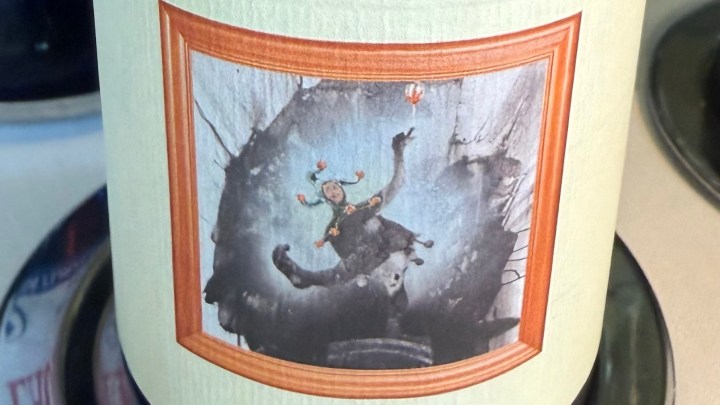
Fabio also offered a Slovenian orange wine as an alternative pairing; its high acidity and tannins worked remarkably well with the bresaola and cut through the balsamic’s sharp contrast.
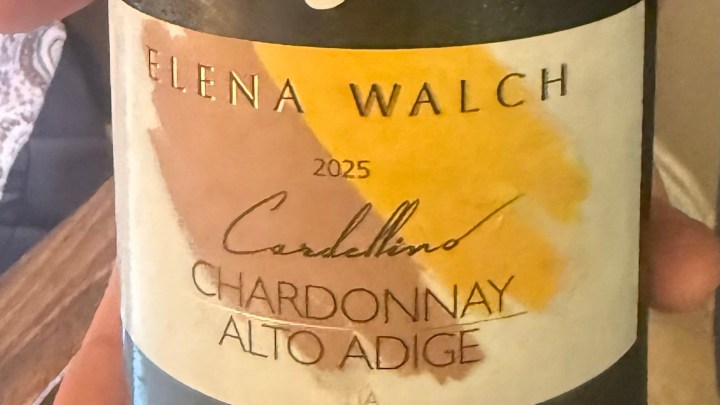
The fourth wine was an unoaked Chardonnay from Alto Adige, displaying fine minerality and crisp citrus aromas.
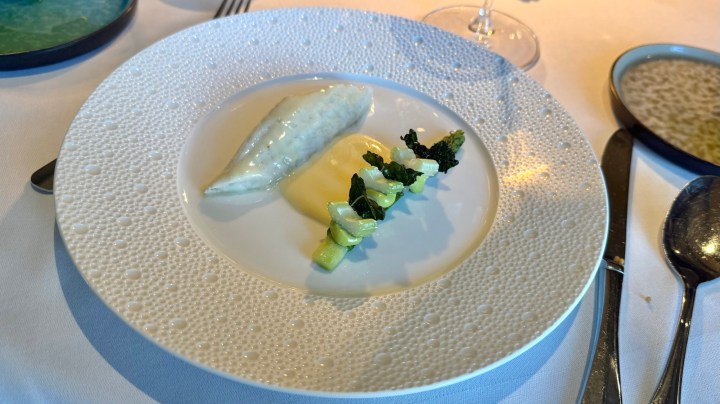
It proved an excellent match for the sole, which came stuffed with a lovage and pistachio pesto, accompanied by green asparagus, crispy celery, deep-fried kale, and a creamy bergamot sauce. While the lovage was somewhat dominant on its own and masked the pistachios, bringing every element together in a single bite delivered an outstanding balance.
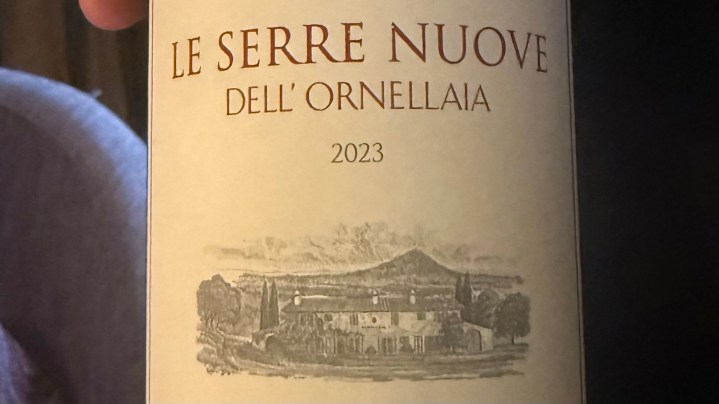
The next wine was the second wine of Ornellaia, a Bordeaux blend from Bolgheri in Tuscany featuring velvety tannins and ripe black fruit.
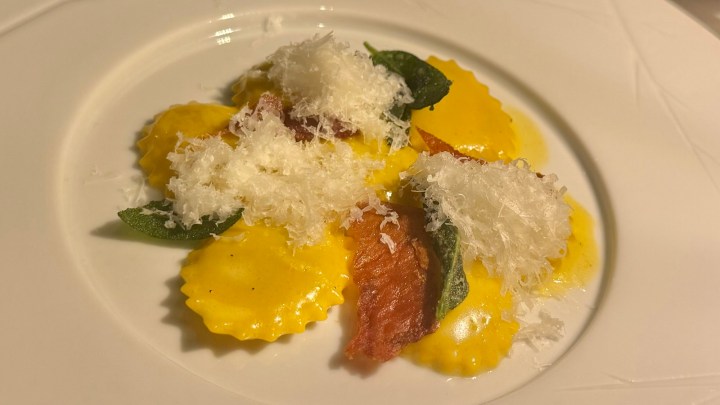
It proved a very good pairing for the button ravioli, which were stuffed with a saltimbocca-inspired filling of veal, prosciutto, and sage, and served with butter, sage, crispy prosciutto, and grated pecorino.
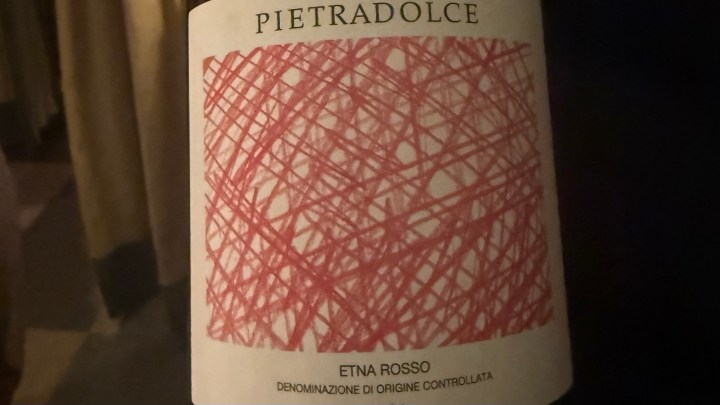
The secondo di pesce was paired with a red wine, a very elegant Etna Rosso made from Nerello Mascalese.
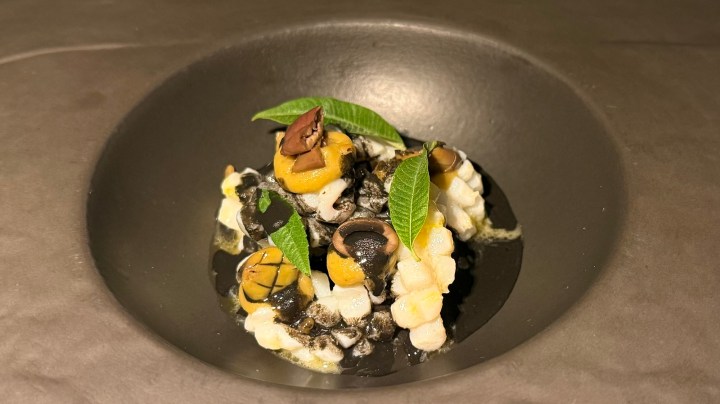
Although I am often skeptical of pairing red wine with seafood, it proved to be an excellent match for the calamari with lemon, Taggiasca olives, and squid ink sauce. The squid was exceptionally tender, and the lemon and olives created a beautiful flavor combination that harmonized seamlessly with the wine. This was perhaps my favorite dish of the evening.
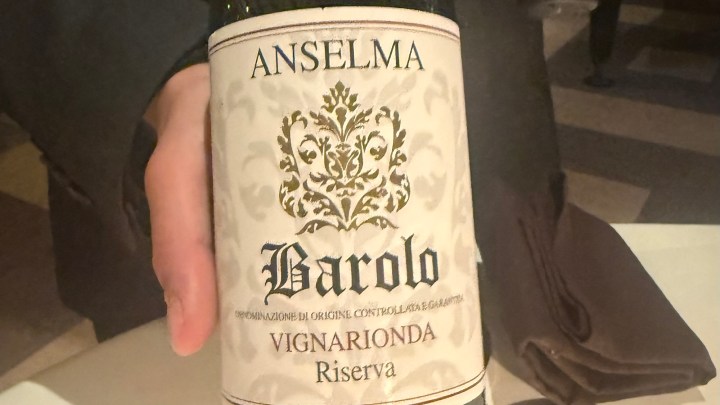
The wine for the secondo di carne was a 2016 Barolo Riserva from the famous cru Vigna Rionda, aged on the estate far longer than the minimum requirements for a Riserva and only just released. 2016 was an outstanding vintage for Barolo, and this wine was amazing, offering a full body, velvety tannins, and all the wonderful, complex aromas for which Barolo is famous, like roses and licorice.
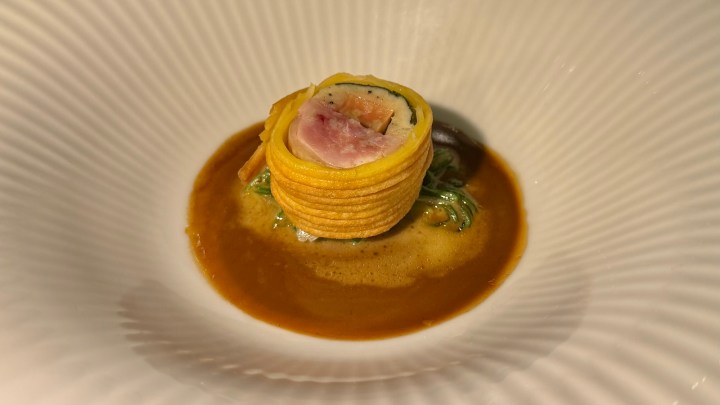
The elegant wine proved a very good pairing for the quail with truffle wrapped in fresh pasta and then fried, served with a quail jus and thinly sliced runner beans. This was the signature dish of Mario Uva, and together with the great Barolo, it was a delight.
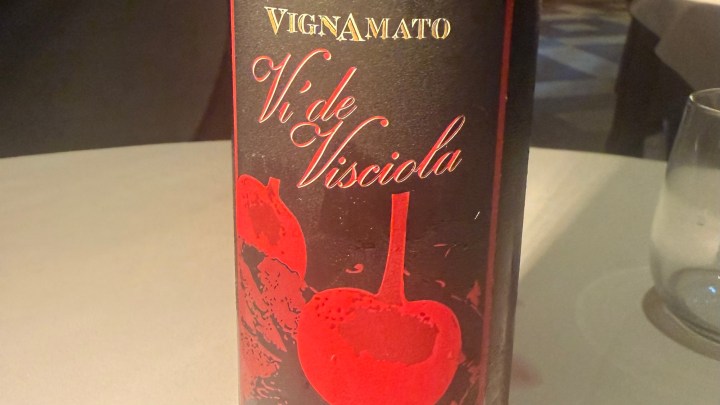
This dessert was paired with a product that officially cannot be called wine, because it is made with cherries as well as grapes: Vi’ de Visciola. Visciole sour cherries are harvested around June and macerated whole with sugar, allowing them to ferment naturally in the summer heat into a rich syrup. In autumn, this cherry syrup and remaining fruit are added to fresh red wine or fermenting red grape must made from Montepulciano grapes. Fermentation continues, integrating the fruit solids with the structural tannins of the wine. It is then pressed and aged before bottling. The resulting drink is sweet with a pronounced aroma of cherries.
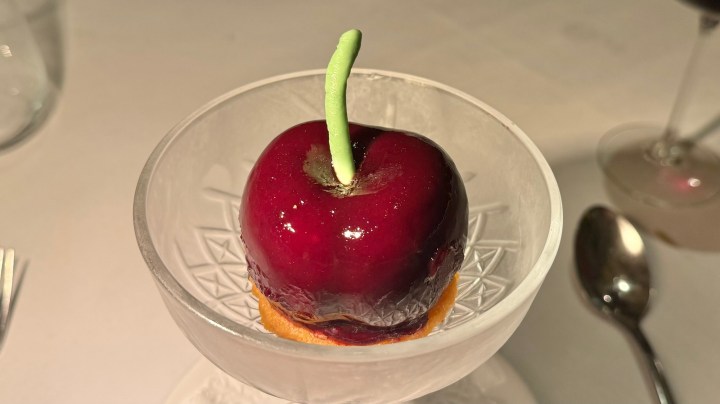
Unsurprisingly, this was a very good pairing for the dessert of panna cotta inside a cherry glaze, served on an almond cookie. We finished with an glass of excellent house-made Limoncello.
We had a wonderful dinner at Restaurant Mario. Chef Sil creates contemporary fine dining dishes mixing classic Italian flavors and ingredients from various regions, such as Emilian gnoccho fritto with cheese from Valtellina. Everything was technically perfect, well balanced, beautifully presented, and delicious. The meal was elevated further by the excellent selection of well-paired wines by sommelier Fabio. I often use the rule of thumb that the price of the wine pairing should be the same as the price of the food to get wines that are at the same level. In this case, the wine pairing was actually half again as expensive as the food, but it was definitely worth it. This was caused in part because the menu price is exceptionally low for what you are getting. I actually saw on the website that from September the menu price will increase from 95 to 105 euros, which is still a bargain. If you are not a wine enthusiast willing to spend a lot on wine like me, I am sure the regular pairing will also be very good, because it is very clear that Fabio knows what he is doing. The service was also excellent, very friendly and attentive, and with a perfect pace of the meal.
I expect a Michelin star to arrive here soon!


That is a very reasonable price for such quality food in the Netherlands. The dishes were lovely and the descriptions were excellent.
LikeLiked by 1 person
What a delight to be able to accompany you to another superb dinner so soon! Absolutely love what you have been able to show and so agree with Eva about the price! The button ravioli and the seafood offering make one want to reach into the screen 🙂 ! Love the way the sea bass tartare was served . . . methinks these people do deserve a star!
LikeLiked by 1 person