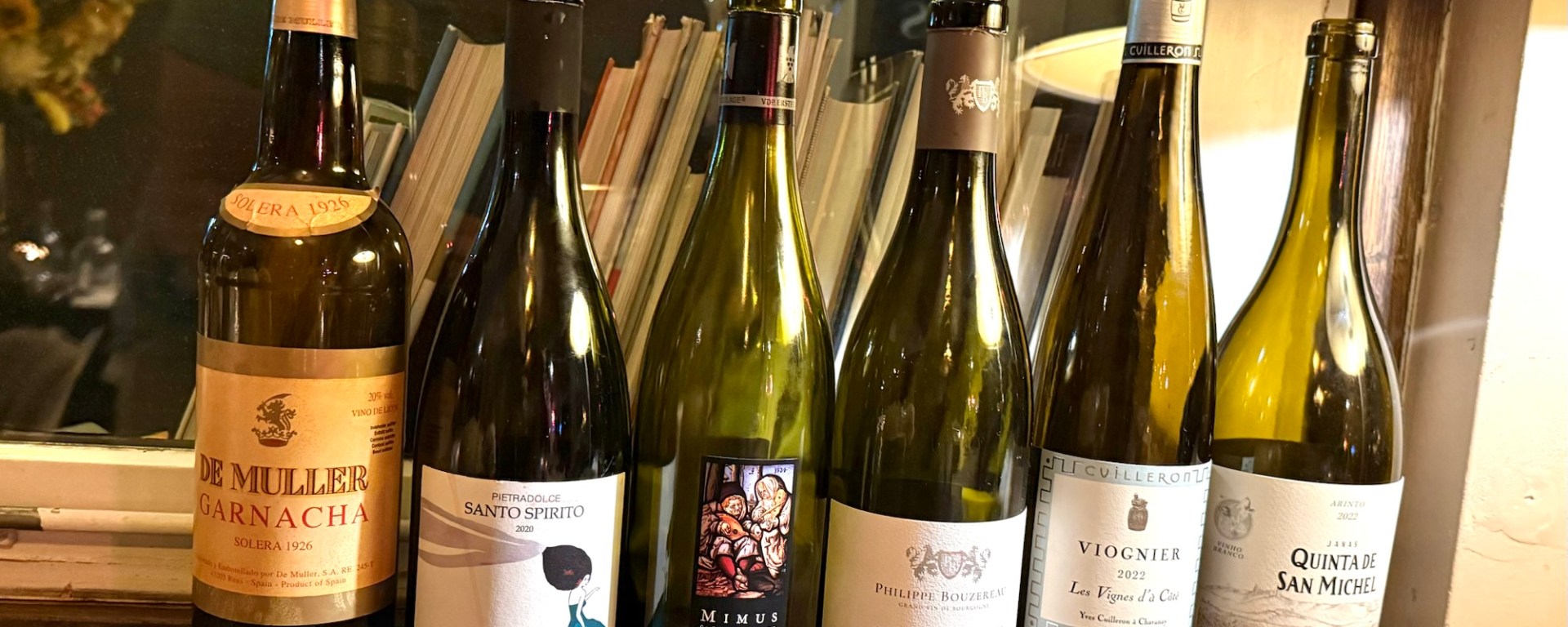
We were invited aboard our friends’ sailing yacht WindBreker for a weekend of sailing in the province of Zeeland. The province is aptly named, as nearly 40% of its surface is water. It used to be mostly sea (zee is Dutch for sea), but after the 1953 flooding disaster, most of it was closed off by dikes (how very Dutch of us) and is now brackish rather than salt water. It sits about two hours southwest of Amsterdam, making it quite remote by Dutch standards.
It has become a tradition that we take them out to dinner, which brought us to Vista in 2024 and Hokkai last year. A nice advantage of dining out with a party of four is that I can pair a different bottle with each course, so I am not limited to what is available by the glass and do not have to compromise by pairing the same wine across multiple dishes.
When picking a restaurant in Zeeland, apart from proximity to a port, I specifically looked for a place with an exceptional wine list. For this, I like to use Star Wine List, an international guide and app that curates a selection of the best wine bars and restaurants around the world, as chosen by top wine professionals. Restaurant Barres in Middelburg immediately stood out. Not only did it feature a great wine list with very reasonable markups (unlike most restaurants in the Netherlands), but it also boasted a 4.9-star rating on Google Maps. Sommelier and host Sjoerd Dooge and chef Edwin Dingemanse had worked together as a team at Michelin-starred restaurants Veerhuis and Katseveer before running De Gespleten Arent together in Middelburg. In 2022, they opened Barres as their own restaurant.
Apart from the reasonable markups and the large selection, the wine list also stands out because it includes more than 20 bottles at 45 euros and because all the wines come with a description. This makes it a lot easier to pick out a wine. A wine pairing is available for 10.50 euros per glass, and there are also some premium wines by the glass via Coravin. The restaurant offers a set menu of 4, 5, 6, or 7 courses (69.50 to 105 euros), with some upgrades as well as a vegetarian version available. There was also a seasonal lobster menu featuring locally caught European lobster. We decided to go with six courses, as six bottles of wine seemed just right for the four of us. I had a very good talk with Sjoerd to decide on the first five bottles, combining his knowledge of the dishes on the menu and the wines on the list with my preferences after perusing the list.
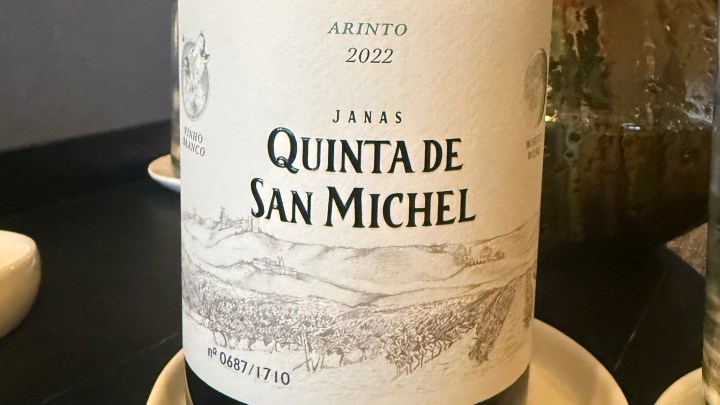
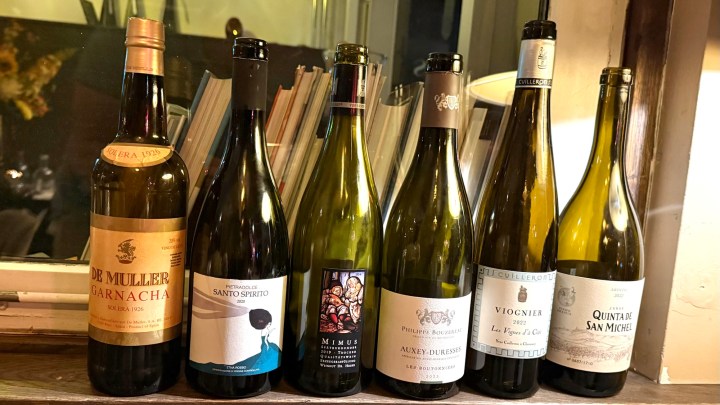
The first wine was excellent: an Arinto from Colares in Portugal. This is a very special wine region, as the vines are trained low to sprawl along the sand. The closeness of the sea gives the wine a saline note. The Arinto provides ample acidity, which is softened by fermentation and aging in oak as well as aging on the lees, resulting in a complex and balanced wine.
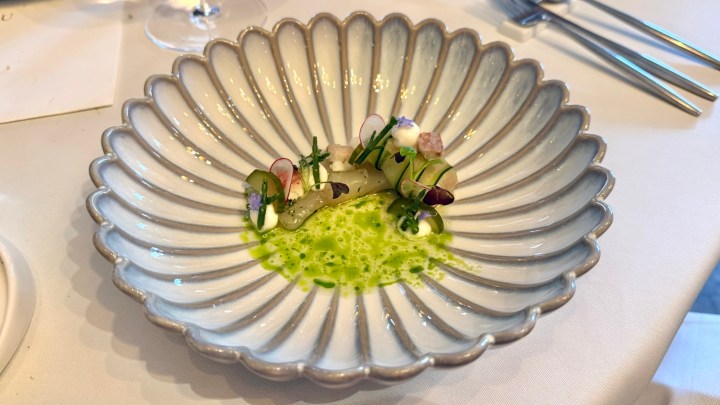
This was a very good pairing for the first course of raw seabream with cucumber, samphire, eel mayonnaise, and small pieces of smoked eel. The minerality of the wine was excellent with the raw fish, its natural brightness mirrored the fresh parsley dressing, and the creaminess from the oak and lees aging complemented the rich eel.
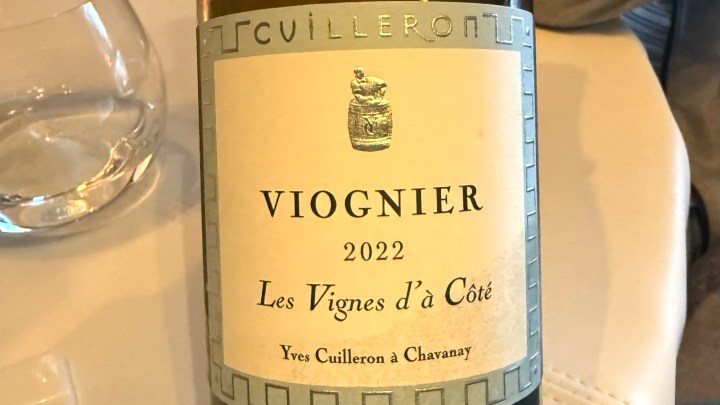
The second course was a light curry, so we decided upon a Viognier from the Rhône Valley that was like a light version of a Condrieu.
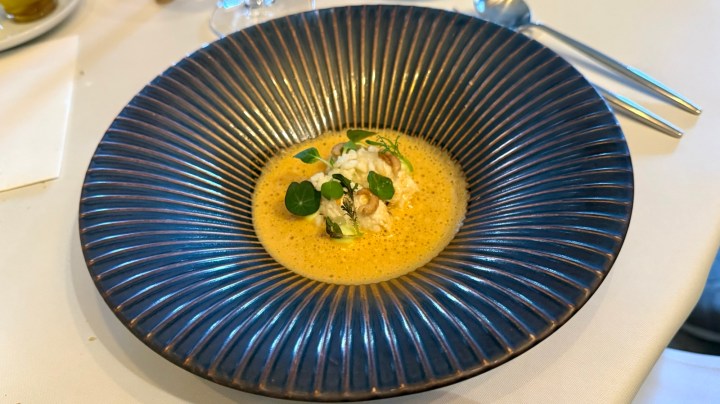
It proved to be a very good pairing for the North Sea crab in a red curry with North Sea grey shrimp. The red curry was exceptionally elegant and complex, with a mild chili heat and no coconut milk. This allowed the delicate crab meat to shine, while the shrimp added another layer of flavor. It was our favorite dish of the evening.
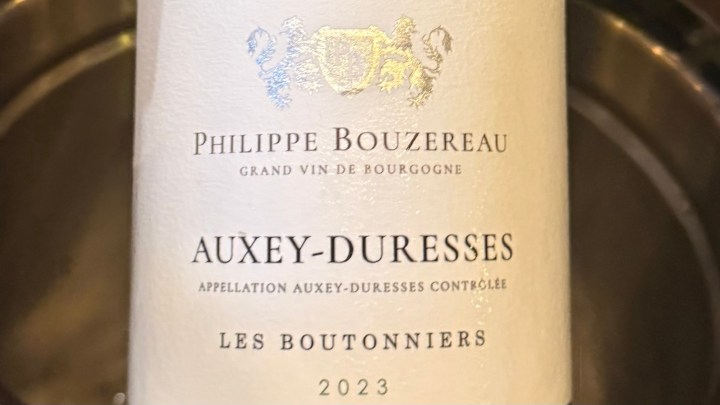
As a lover of white Burgundy, I couldn’t resist picking one. This Auxey-Duresses was excellent—from a plot adjacent to Meursault and indeed quite similar to a Meursault, showing a very nice balance between creaminess and mineral freshness.
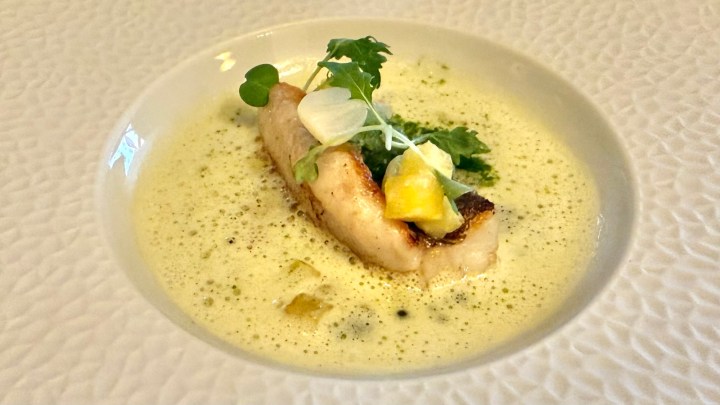
It was a very good pairing for the weeverfish with spinach, gherkins, and a creamy leek sauce. As expected from my earlier discussion with Sjoerd, it was the leek sauce that made the Auxey-Duresses such a great pairing.
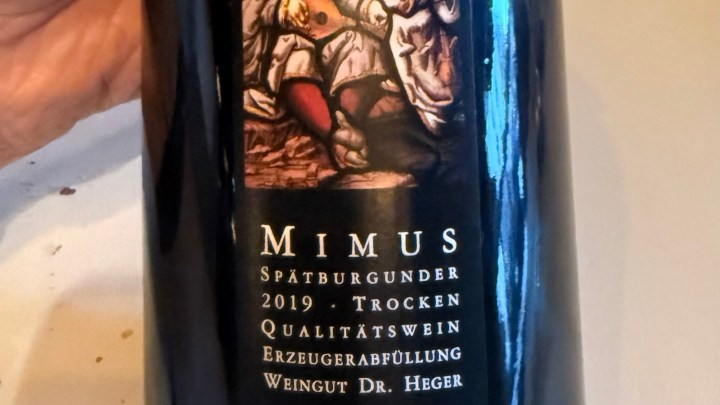
The next wine was a Spätburgunder (Pinot Noir) from a volcanic “Erste Lage” terroir in Baden, Germany, aged in new oak barriques for 12 months. It was a very elegant and earthy wine, making it a good pairing for a modern take on the Greek classic Moussaka, prepared with a brunoise of smoked eggplant, potato, tomato, and basil.
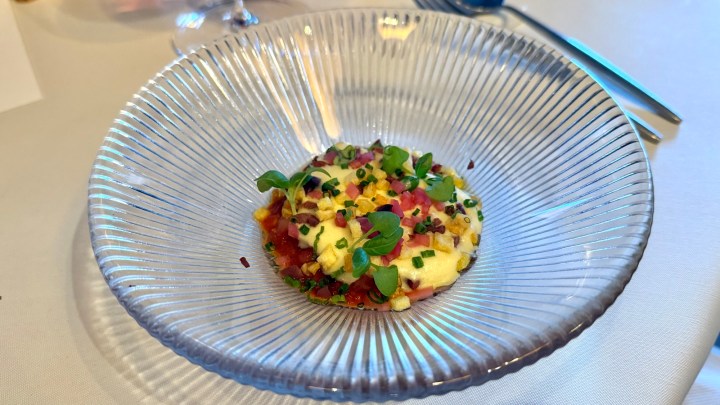
When we decided to extend our meal to six courses rather than five (which added the Moussaka), we were expecting something closer to classic comfort food. While this modern interpretation was tasty, we missed the rich cheese and creaminess associated with the traditional dish. We likely would not have missed those elements had the dish been called something else. A wine with slightly more fruit and less earthiness might have worked even better here.
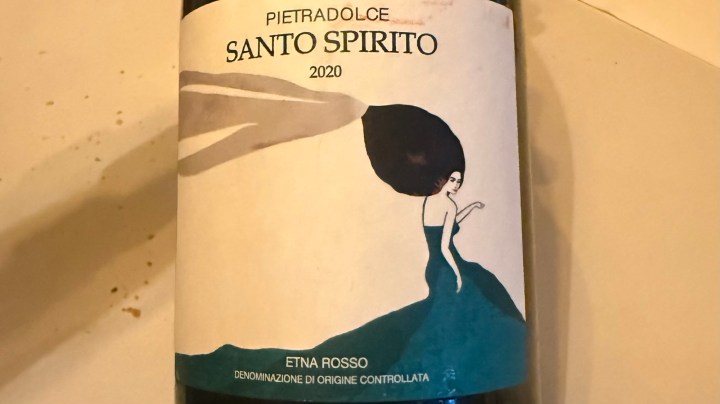
The next wine was an Etna Rosso from Sicily. Like the previous wine, it was very elegant and earthy from a volcanic terroir. With hindsight, a different style of wine would have introduced more variety.
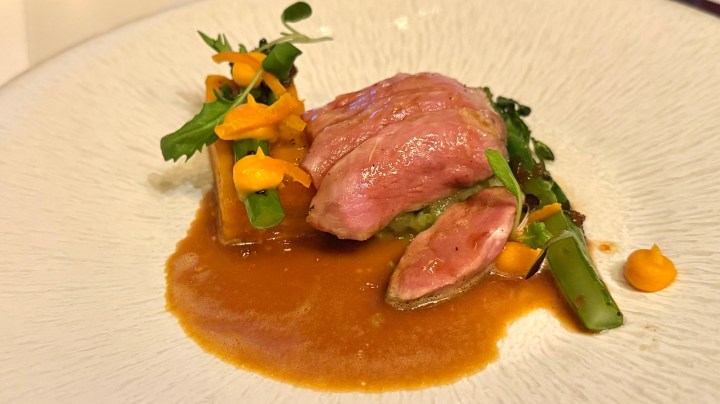
It was, however, a very good pairing for the duck with bok choy, five-spice, salted mandarin, and a very nice duck jus. The duck was cooked sous-vide and was perfectly tender and juicy. The hybrid concept of combining French duck with citrus (using mandarin instead of the traditional orange) and Asian five-spice worked remarkably well.
We decided to have cheese instead of dessert. I had seen the cheese cart and explained to Sjoerd my frustration that most restaurants fail to realize wine and cheese pairing works so much better when you select a limited range of cheeses that complement the wine, rather than a wide array from goat to blue and everything in between, which inevitably means the wine will not pair with at least half of the cheeses on the plate.
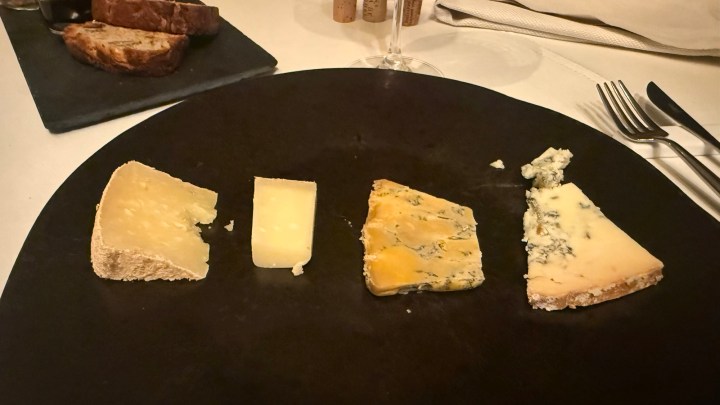
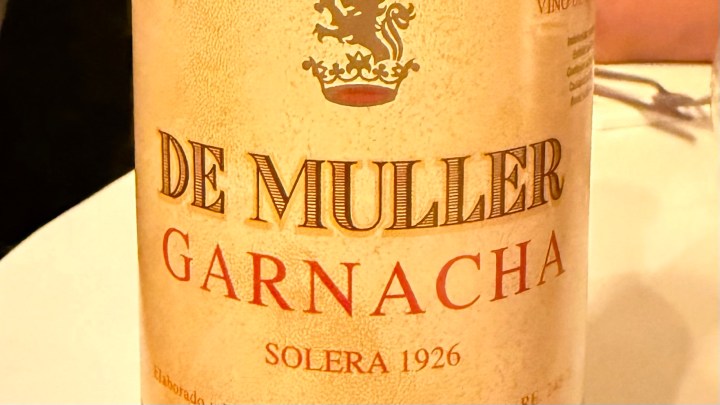
He understood completely and brought out a sweet Garnacha Blanca from Tarragona, Spain, made using a solera system that was started in 1926. Most commonly associated with Sherry, a solera system means that each year a portion of wine is bottled and replaced with fresh wine. As a result, this wine contains a blend of all vintages from 1926 to today, giving it immense complexity. Sjoerd paired this perfectly with two hard cheeses and two blue cheeses.
Sjoerd told us the restaurant does not have the ambition to gain a Michelin star, as that would raise expectations too high, forcing them to use more expensive ingredients, add staff, and raise prices.
With this level of food and service, Barres is certainly worthy of a star. At these prices (which are indeed much lower than at a Michelin starred restaurant) it offers exceptional value. It is very clear from everything that Sjoerd and Edwin have worked together as a chef-and-sommelier team for many years. As I have pointed out many times before on this blog, that collaboration is key to achieving the optimal dining experience where wine and food elevate each other. All the dishes were excellent, the service was top-notch, and the wine list was both outstanding and affordable. I am confident the regular wine pairing will also be outstanding, especially at that price point. It really is a shame that Middelburg is not closer by…


What a wonderful meal besides being ‘sensible’ in many ways to boot. And – great to share with friends . . . and, to be in a different atmosphere from Amsterdam! Prices not just for millionaires . . . one can see the value . . . Would love to reach for the sea bream and the weever fish . . . very much worth the travel time . . .
LikeLiked by 1 person
We spend most of our time when we are in The Netherlands, in Zeeland, so this was an interesting read. Viognier is one of my favourite white wines 🙂
LikeLiked by 1 person
“Sjoerd told us the restaurant does not have the ambition to gain a Michelin star, as that would raise expectations too high, forcing them to use more expensive ingredients, add staff, and raise prices.”
That’s a great attitude for a chef, and one that I really appreciate. More and more chefs are getting tired of the restrictions that come with a Michelin star. More expensive ingredients and a larger staff don’t necessarily lead to a better experience for the guest.
The food seems to be a bargain for the money.
LikeLiked by 1 person
The wines were a bargain too. Just to give an example, they have a full 0.75 litre bottle of Chateau d’Yquem on the list for 425 euros, which retails for about 400.
LikeLike
Awesome! Most of the lousy restaurants here in Germany charge 25 euros for a bottle that’s worth 6 euros at most. Unfortunately, Château d’Yquem isn’t quite my pay grade. 🙂
LikeLike