
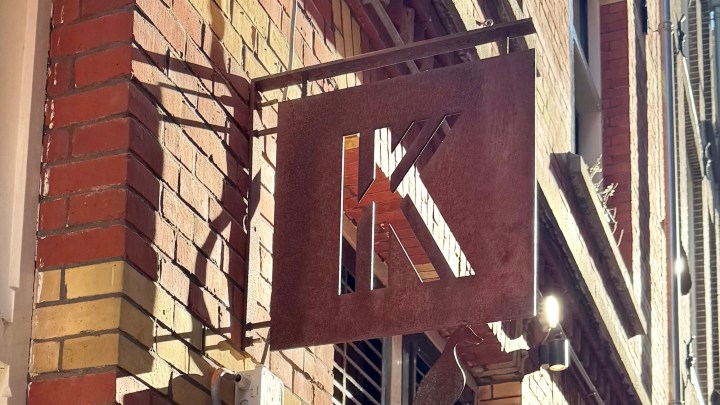
Kaagman & Kortekaas is the restaurant of chef Giel Kaagman and host Bram Kortekaas, tucked away in a narrow street right in the very touristy downtown area of Amsterdam, near Dam Square. The restaurant’s motto is “Courageous cuisine. Natural craftsmanship. Celebrated hospitality.” They serve a set 4, 5, or 6-course chef’s menu for 69.50, 79.50, or 89.50 euros. The menu is inspired by nature, featuring plenty of vegetables along with meat and fish, though vegetarian options are also possible. True to their ethos, they like to use everything “from snout to tail”.
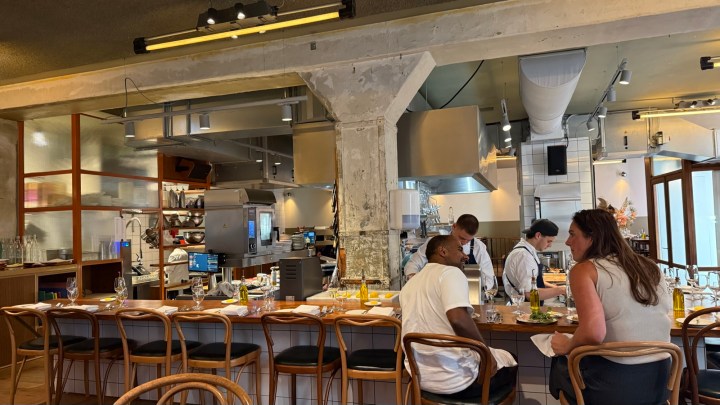
There is an extensive wine list with bottles available, or a wine pairing priced at 11 to 14 euros per glass. Because the “courageous” flavors go all over the place, pairing a single bottle across the entire meal is practically impossible. Having heard good things about the restaurant, I decided to give it a try, ordering five courses with the wine pairing. Tables are placed around the open kitchen at the center of the restaurant, which also features bar seating with an intimate view of the cooking.
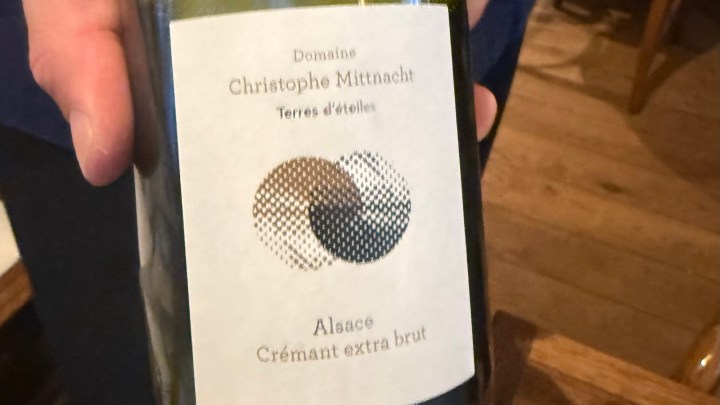
We started with a glass of “bubbles” (no specification was provided when asked if we would like a glass to start with), which turned out to be a nice Crémant from the Alsace from an unusual blend of 44% Auxerrois, 29% Chardonnay, 9,5% Pinot Noir, 13% Riesling, and 4% Pinot Gris, aged 24 months on the lees after the second fermentation in the bottle. Even though the Pinot Gris was only 4% of the blend, the ripe fruit aromas seemed to come from that variety and make it seem less dry than the “extra brut” would indicate. We couldn’t tell this was made as a natural wine as the aromas were very clean and fruity.
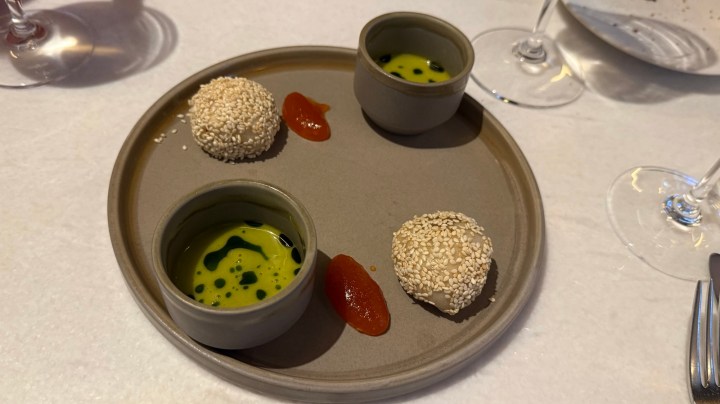
The bites were really nice: a bao bun covered with sesame seeds and filled with braised veal tongue, and a cream of the skin of the watermelon of the first course with with Huacatay oil (black Peruvian mint).

The first wine was a light-bodied, aromatic red from Sardinia, made from a field blend of ten different black and white grape varieties cofermented to produce a remarkably fragrant wine with aromas of violets and strawberries.
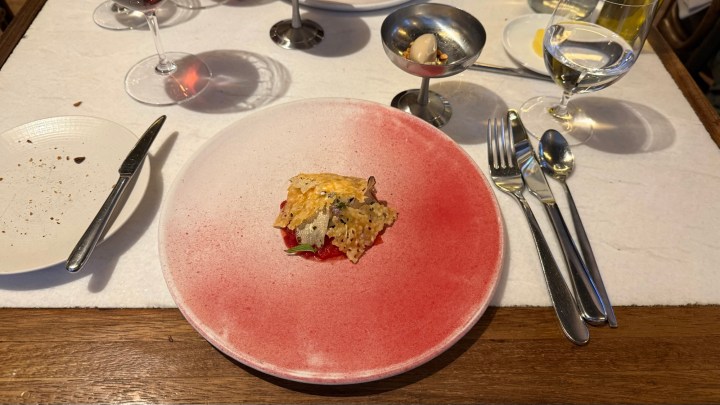
It was an excellent pairing for the first course: watermelon ‘carpaccio’ with black summer truffle, parmesan, and water mint, alongside a pine nut sorbet served on the side. This was certainly a courageous combination of flavors, but it worked deliciously, offering a wonderful contrast between the tender, mildly sweet watermelon and the salty, crunchy parmesan, complemented by the earthy truffle and fresh mint. The wine was a brilliant match, easily handling both the sweetness of the watermelon and the overall complexity of the dish.
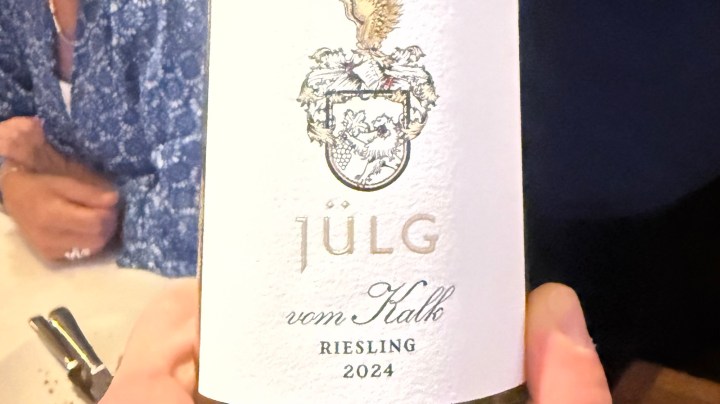
After this great start, the second wine proved a bit disappointing: a crisp Riesling from the border between the Pfalz in Germany and Alsace in France. Its aroma was distinctly herbaceous, leaning more toward a Sauvignon Blanc than what you would typically expect from a Riesling.
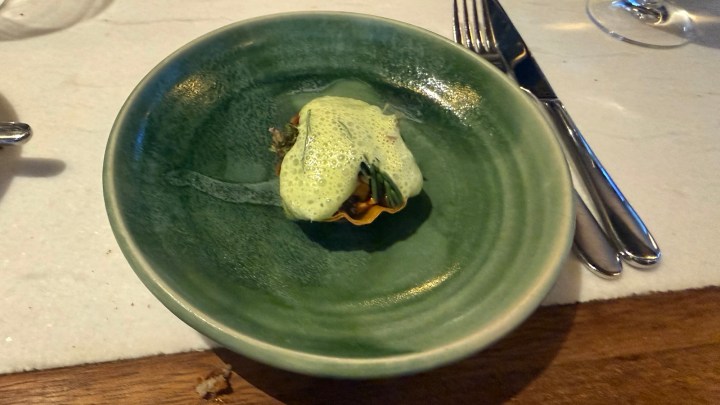
It did not really work as a pairing for the tartlet with chanterelle mushrooms, eggplant, hazelnut, and oyster leaf, topped with a foamy oregano sauce. The dish was simply too creamy for the wine, making it seem overly lean by comparison. The dish however was superb.
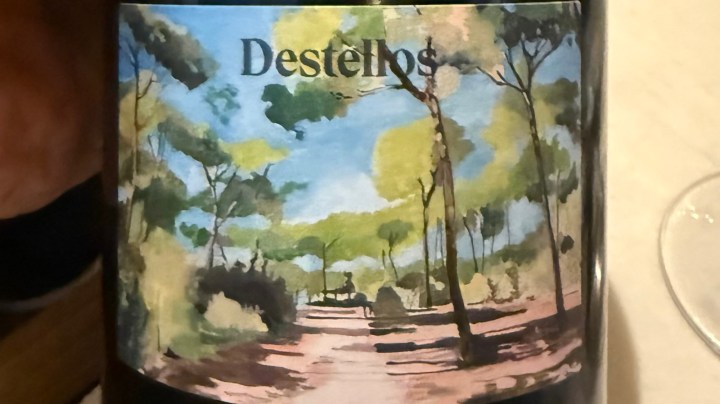
The next wine was a dry white from the Sherry region, made from Palomino (the principal grape of Sherry) and a bit of Arinto (a Portuguese variety). Clearly, it is not just the cuisine here that is courageous, but the wines as well. It was extremely reductive, with a powerful sulfur aroma—an intentional choice by the winemaker, who fermented the unclarified must in what is technically known as a high-solids fermentation. While I appreciate an elegant touch of reduction, in this case, it completely overwhelmed any other aroma.

The restaurant allows guests to taste each pairing before pouring a full glass, giving you the chance to request an alternative if a wine is not to your liking. Because the server insisted it was an excellent pairing, I mentioned I would decide after trying it alongside the food. When the dish arrived, however, it only aggravated the issue, making the wine seem distinctly bitter. I held off on eating while waiting for the waiter to return for our decision, but it took so long that the warm elements of the dish cooled down.
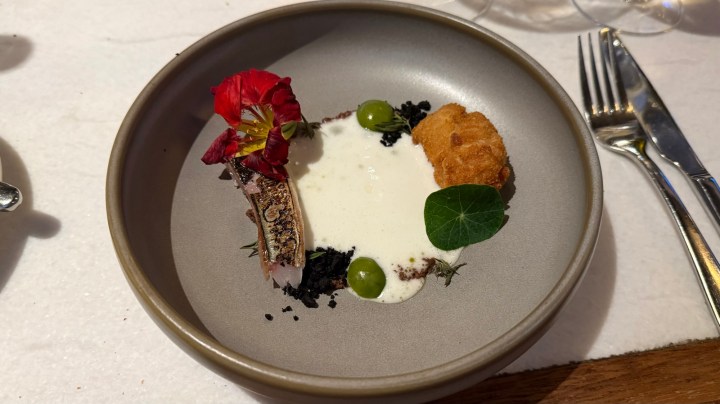
Although I would have been fine finishing the dish with the replacement wine, the waiter insisted on bringing a fresh plate. The new wine—a blend of Chardonnay and Savagnin—was slightly oxidative, representing the polar opposite of the previous bottle. It proved to be a wonderful match for the outstanding dish: a barely scorched sardine paired with a veal brain fritter and ajo blanco, the Spanish cold almond soup, finished with olive oil. It made perfect sense that the nutty aromas and subtle oxidative notes of the wine harmonized so well with the almond milk. My friend doesn’t like veal brain and he had a deep fried zucchini flour that was stuffed with persillade instead.
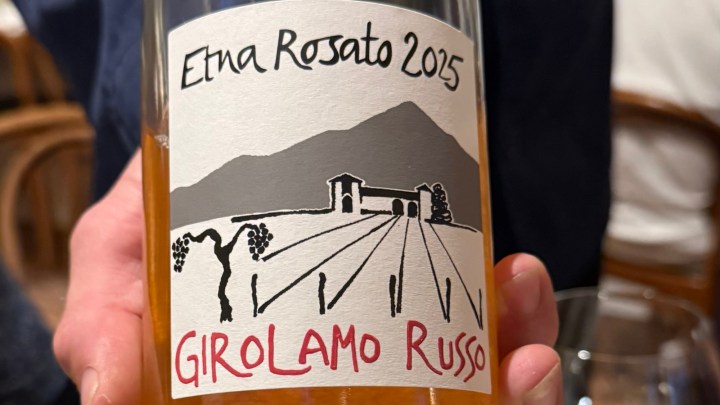
The next wine was an Etna rosé from Sicily, made from Nerello Mascalese with beautiful fruit aromas and a crisp, distinct acidity.

It was a very good pairing for the guinea fowl stuffed with apricots and served with a sea urchin sauce infused with saffron and lovage. Yes, you read that correctly: guinea fowl with apricots and sea urchin. Who would have thought that would be such a delicious combination? To top it off, a delicious corn tortilla tostada was served on the side. By now we were regretting not having ordered all six courses.
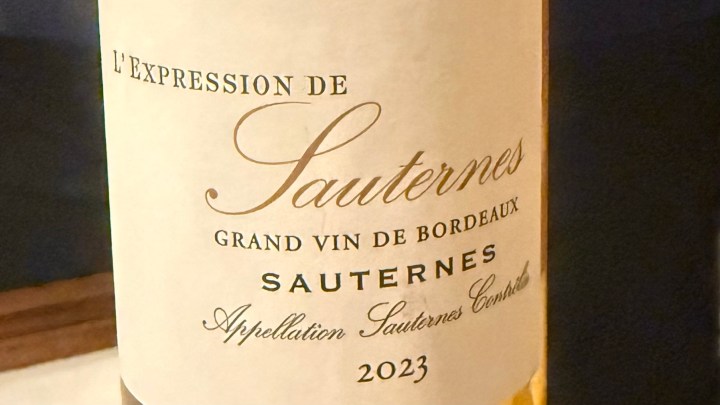
So we opted for cheese from the cart. As usual, I preferred to select cheeses from a single flavor category to ensure a good wine pairing. I therefore passed on the recommendation of Macvin (unfermented must fortified with Marc du Jura before aging in oak) and chose mostly blue cheeses instead, ordering a glass of Sauternes.
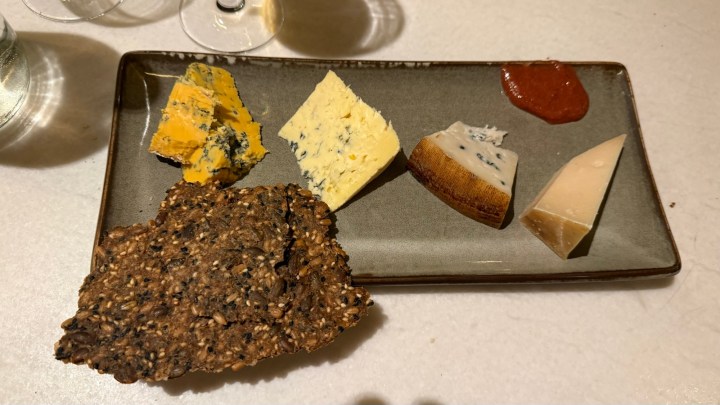
We shared a single portion of cheese, which proved to be plenty as the serving was quite generous.
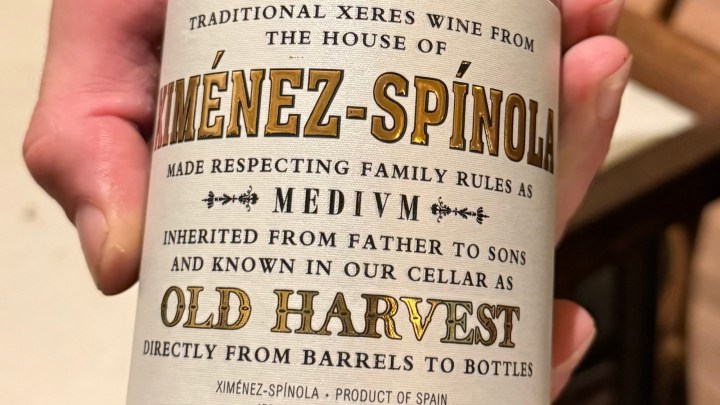
The dessert wine was a PX Sherry that was medium sweet, rather than the dark brown, luscious PX often served with chocolate desserts.

With its nutty aromas, it proved to be a good pairing for the dessert of peach with beurre noisette ice cream, candied lemon, almond, and shokupan, the Japanese milk bread. The dish was elegant and not overly sweet, which is precisely why it worked so well with the wine.
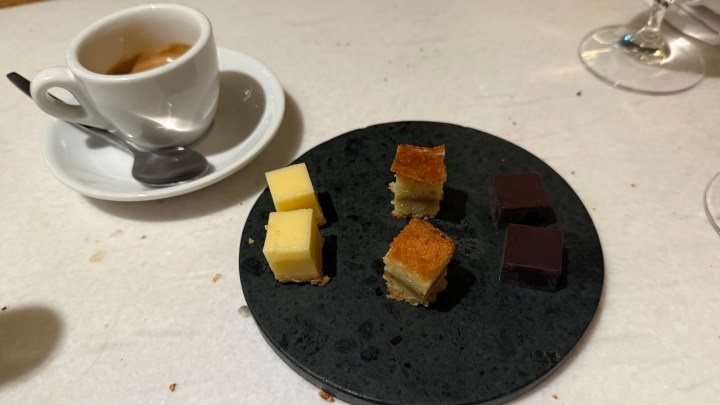
We finished with coffee or tea with some nice petit fours.
We had an excellent dinner at Kaagman & Kortekaas. Their motto is spot on. The adventurous ingredient combinations were certainly courageous, while the natural craftsmanship was evident in the impeccable quality of both the ingredients and preparation. The celebrated hospitality shone through attentive and friendly service, highlighted by the flawless way they handled my dislike of the reductive wine.
It is remarkable to find such an original, high-quality restaurant offering great value for money in an area dominated by tourist traps. Surprisingly, it wasn’t even fully booked—something it certainly deserves, even on a Tuesday night.


The dishes look exquisite. Nice place!
LikeLiked by 1 person
Having difficulties creating contact today, so trying another time 😦 ! Have delightedly followed your degustation meals for many years with my pretty imaginative brain and food knowledge – this menu does make me shake my head in disbelief at some of the combinations 🙂 ! Cannot quite imagine sardines with a veal brain fritter or guinea fowl and apricots with a sea urchin sauce 🙂 ! Believe your palate and am trying to ‘taste’ from the other side of the world! How very interesting – great you have such choices in Amsterdam . . . trust you have had an enjoyable summer and daresay are looking forwards to a cooler autumn . . .
LikeLiked by 1 person
The chanterelle dish is intriguing! One to remember. Overall the combinations are interesting.
LikeLiked by 1 person
A tucked-away tasting-menu spot in the middle of all that Dam Square bustle is exactly the kind of place worth hunting down — the narrow-street ones so often turn out to be the memorable meals. ‘Courageous cuisine’ is a bold motto to live up to, and that chanterelle course everyone keeps mentioning has me curious. Filing this away for our next Amsterdam visit.
LikeLiked by 1 person