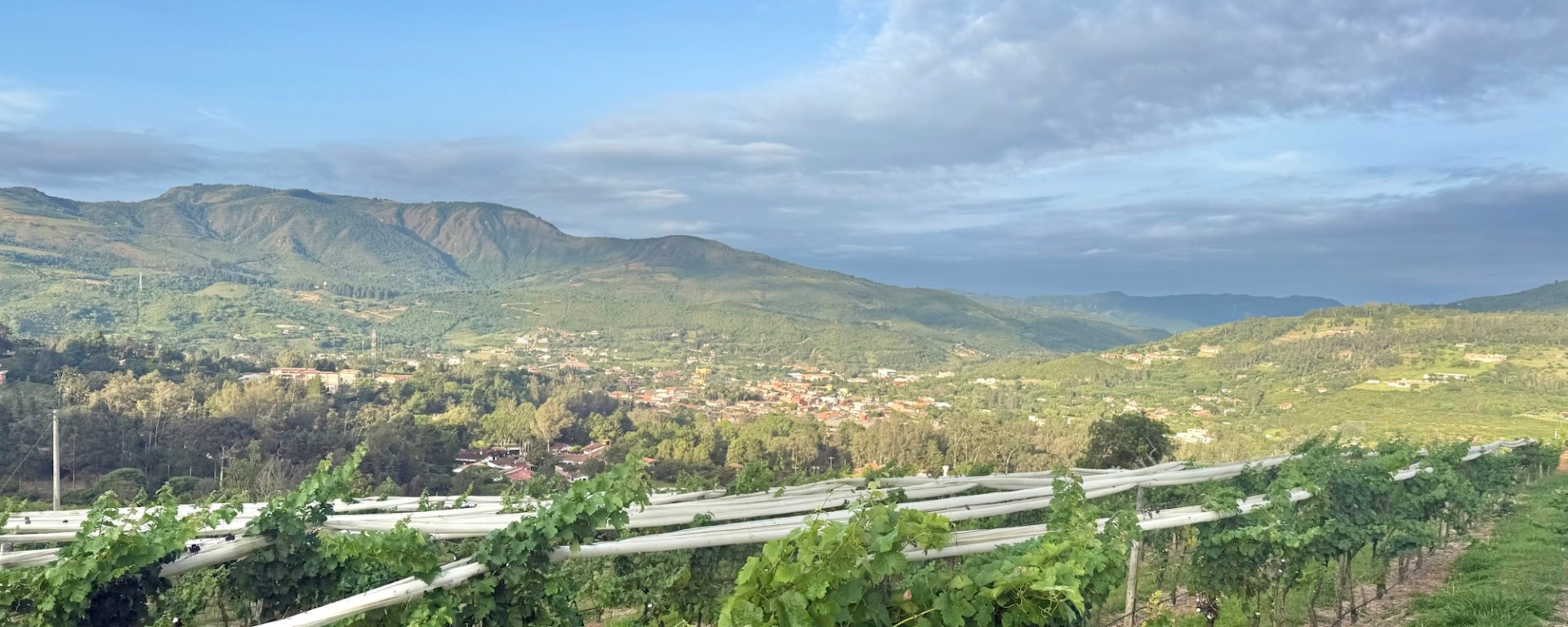
This is the second installment of my chronicles of the 9-day wine tour of Peru and Bolivia 2026 of the Verenigde Vinologen Nederland (Dutch association of wine connoisseurs), with Master of Wine Cees van Casteren as our guide. After visiting the most important wineries of Peru, we have transferred to Santa Cruz in Bolivia and from there to Samaipata.
Wine in Bolivia
Just like Peru, the production zones for wine in Bolivia are between 17 and 22 degrees of latitude south of the equator, which is outside of the usual bandwidth between 30 and 50 degrees latitude. Viticulture is possible in Bolivia anyway because of viticulture at high altitudes. Every 100 meters of altitude provides 0.6 degrees C of cooling influence. Samaipata is at 1750 meters above sea level, so that provides 10.5C (19F) degrees of cooling. The vineyards around Tarija are at even higher altitudes. Viticulture has been practiced in Bolivia since 1548, starting in the Cinti Valley. The main varieties introduced by Spanish conquistadores and monks were Listan Pietro (known as Negra Criolla in Boliva and Peru, País in Chile, Mission in California, and Criolla Chica in Argentina) and Muscat of Alexandria. A natural crossing between these two varieties is a specialty of Bolivia, which is called Vischoqueña.
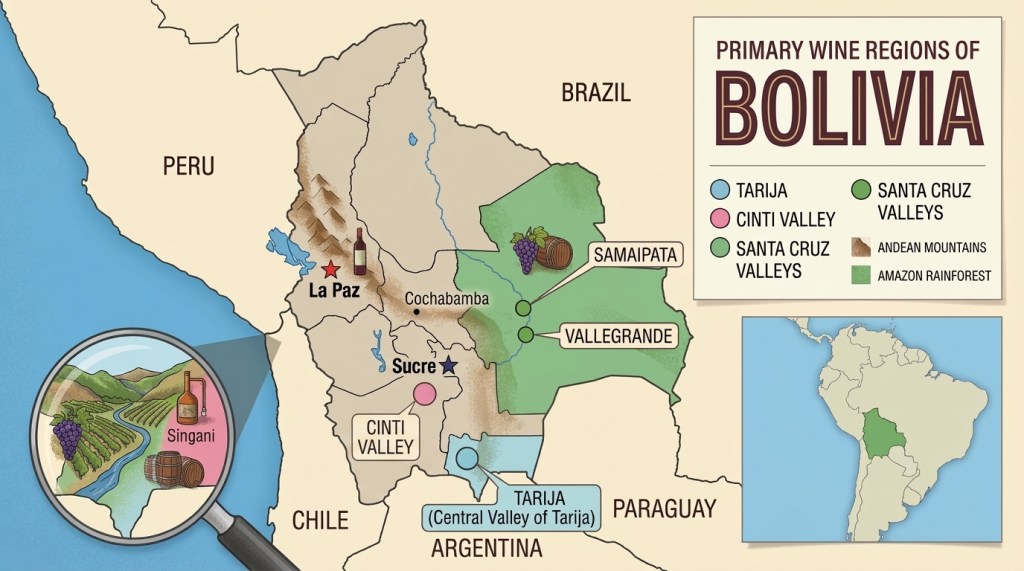
The main wine producing regions of Bolivia are:
- Central Valley of Tarija with 3200 hectares of vineyards at 1600 to 2150m
- Valley of Los Cintis with 300 hectares at 2220-2500m
- Valleys of Santa Cruz with 300 hectares at 1750-2050m (Samaipata and Valle Grande)
- Various valleys in Potosí, La Paz and Cochabamba with around 200 hectares at 1600 to over 3200m
There are only about 65 wineries in total. Our first stop was in Samaipata. There are 6 wineries in the Santa Cruz valleys, 4 of which are in Samaipata. Many vineyards sell their grapes to these wineries.
Uvairenda 1750
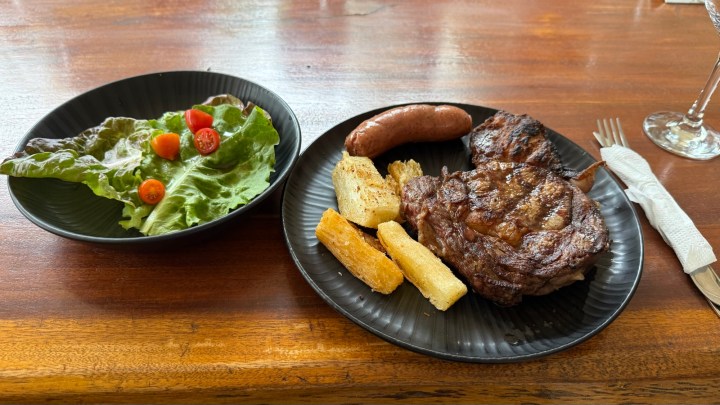
When we arrived at Bodega Uvairenda 1750, located at 1750 meters above sea level, we started with a ribeye steak for lunch. This was accompanied by the Tannat Gran Reserva 2022.
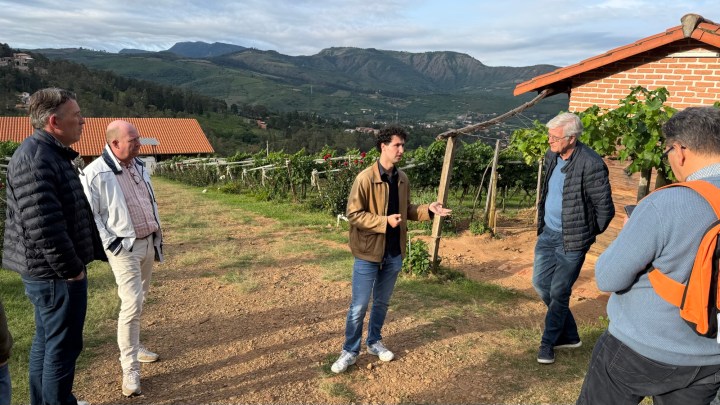
We were received by Mateo, the son of the owner of the bodega. His family was originally from Santa Cruz, but had emigrated to the USA. Mateo’s father married a French woman who introduced him to wine, and then he got a degree in oenology and viticulture in California. He decided to start a vineyard close to his hometown, together with his best friend from highschool. The winery was founded in 2007, with the first production in 2010.
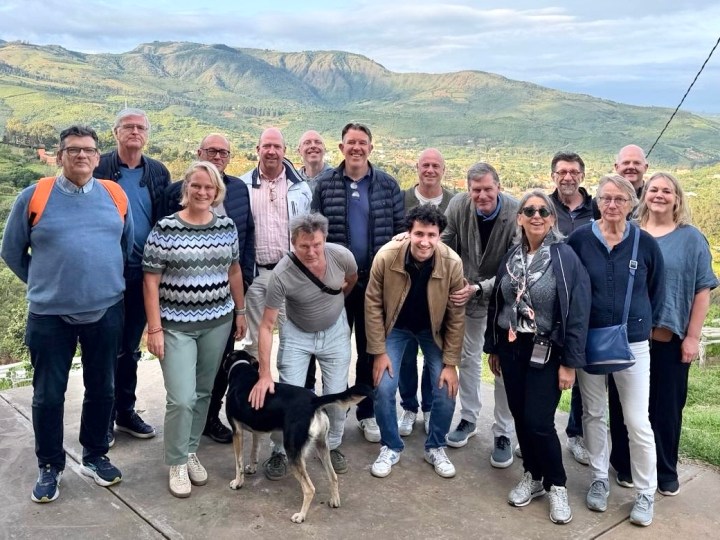
They have 8 hectares (20 acres) of vineyards around the winery, but also buy some grapes from neighbors. The annual production is about 20,000 bottles.
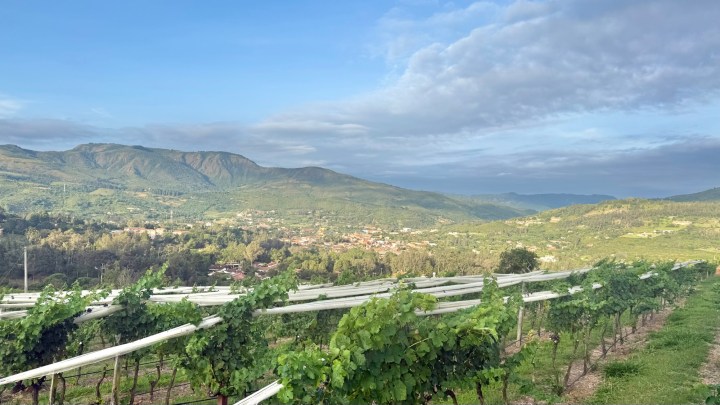
Samaipata is one of the coolest areas in Bolivia. There is even snow in winter and some risk of spring frost. The steepness of the vineyard creates maximum exposure to sunlight to compensate for the cool climate and protection against frost (which slides down the slope), but it also means that most of the work has to be done manually.
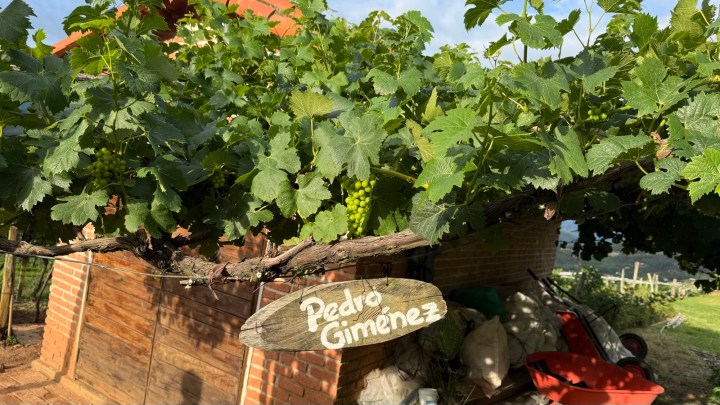
They use mostly French varieties, but also the local variety Pedro Giménez, which is very common in Argentina and not the same as Pedro Ximénez from Xerez.
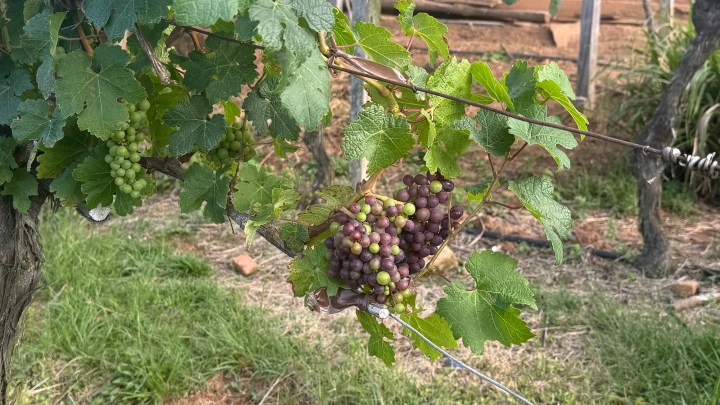
At the time of our visit (November 8th) the Tannat grapes were already at the véraison phase (changing from green to black color).
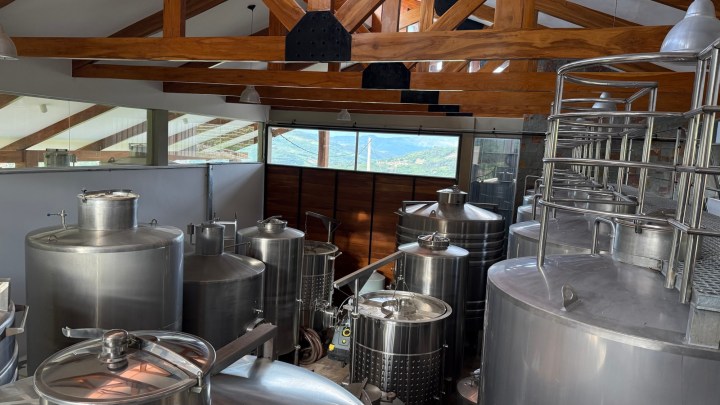
Most of the wines are produced in stainless steel.
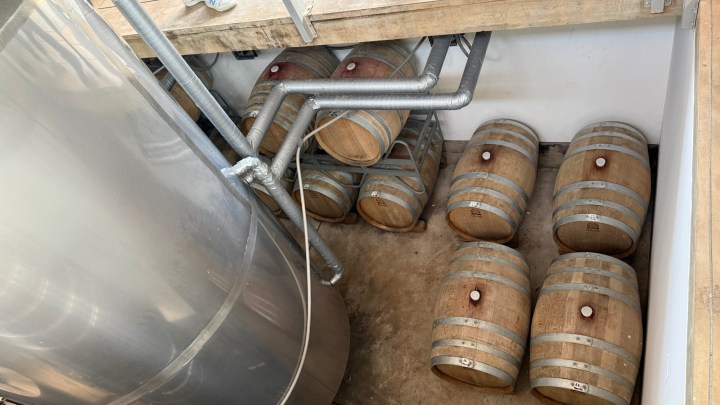
They also produce some “Gran Riserva” wines aged in oak barrels that are mostly French, but also some American.
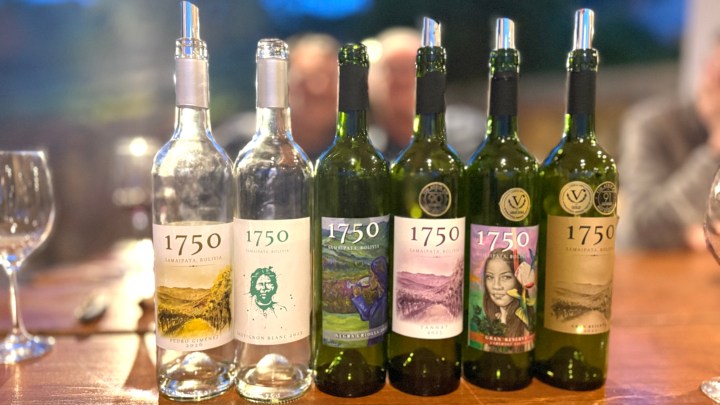
We concluded our visit with tasting the wines:
- 1750 Pedro Giménez 2026 (100% Pedro Giménez in stainless steel). Floral and fresh.
- 1750 Sauvignon Blanc 2025 (100% Sauvignon Blanc in stainless steel). Green bell pepper.
- 1750 Negracriolla 2025 (70% Negra Criolla, 30% Vischoqueña in stainless steel). Red fruit, soft tannins.
- 1750 Tannat 2025 (100% Tannat, unoaked). Herbaceous, dark fruit, stalky tannins.
- 1750 Cabernet Sauvignon Gran Reserva 2022 (100% Cabernet Sauvignon, 2 years in oak barrels of which 80% French and 20% American). Oak not yet fully integrated, ripe tannins, touch of herbaceous typical for Cabernet, dark fruit.
- 1750 Tannat Gran Reserva 2022 (100% Tannat, same oak treatment as the Cab). Balanced with a full body, dark fruit, firm ripe tannins, fresh.
Casa Charo
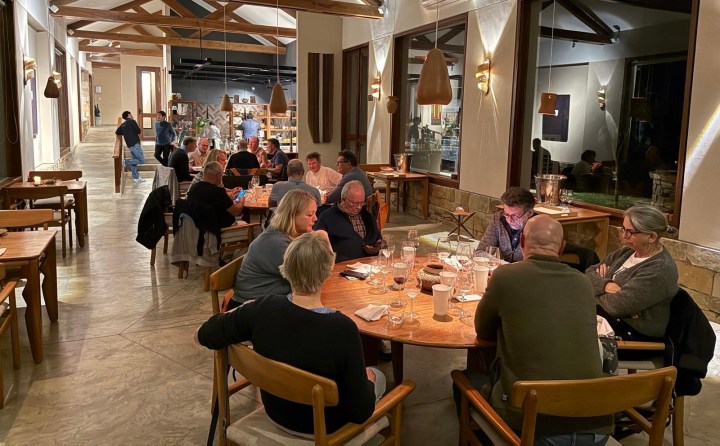
We went to Casa Charo for dinner, which was accompanied by wines from Samaipata.
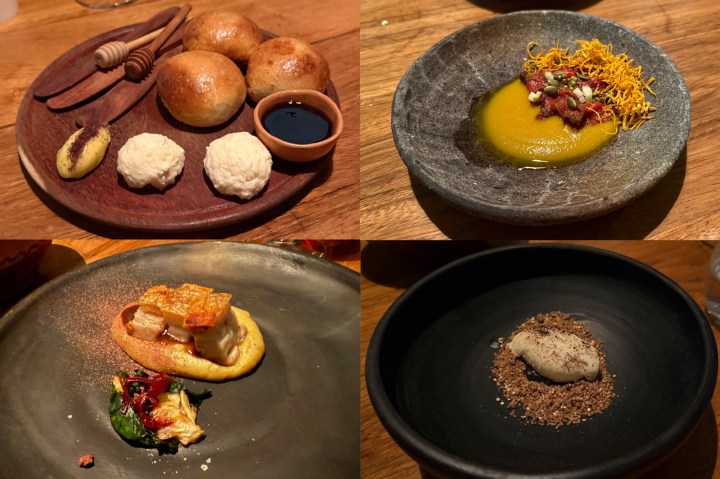
The spring menu started with bread with orange butter, fresh goat cheese, and aged honey. We continued with watermelon pastrami with squash puree and crispy sweet potato. The main course was pork belly on plantain puree with roasted cabbage, lentil miso, and cocoa nibs. We concluded with apple ice cream and puffed quinoa with cinnamon on a black apple coulis.
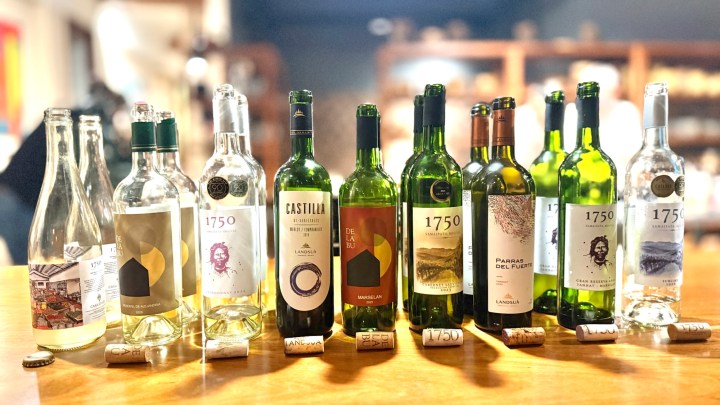
The wines we enjoyed with dinner were:
- Casa Charo & 1750 Espumante 2025 (100% Pedro Giménez, charmat method). Lemon tart, earthy.
- De La Bu Moscatel de Alejandría 2025 (100% Muscat of Alexandria). Floral.
- 1750 Chardonnay 2024 (100% Chardonnay, unoaked). Reductive, balanced.
- Landsuà Castilla Merlot-Tempranillo 2019 (Merlot and Tempranillo, unoaked). Earthy.
- De La Bu Marselan 2025 (100% Marselan, which is a cross between Cabernet Sauvignon and Grenache, unoaked). Blackberries, fresh and fruity with pronounced acidity.
- 1750 Cabernet Sauvignon Seleccion Especial 2023 (100% Cabernet Sauvignon, 10% aged in oak). Dark fruit, high acidity, stalky tannins.
- Landsuà Parras del Fuerte 2020 (100% Tannat). Fresh, slightly astringent.
- 1750 Tannat Marselan Gran Reserva 2022 (50% Tannat, 50% Marselan, 2 years in oak (80% French, 20% American), only 296 bottles produced). Fresh, fruity, tannins.
- 1750 Sublime 2026 (Pédro Gimenez fortified with Singani, which is the Bolivian version of Pisco, always made of 100% Moscatel de Alejandría). Elegant and fresh.
El Pueblito
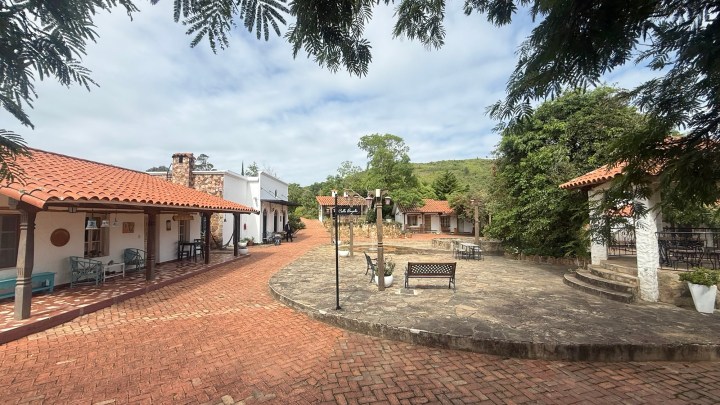
We spent the night al El Pueblito, a resort with rustic cabins very close to the 1750 winery.
El Cafetal

The drive back to Santa Cruz was a bit adventurous, as our luggage had to be loaded on top of the bus.
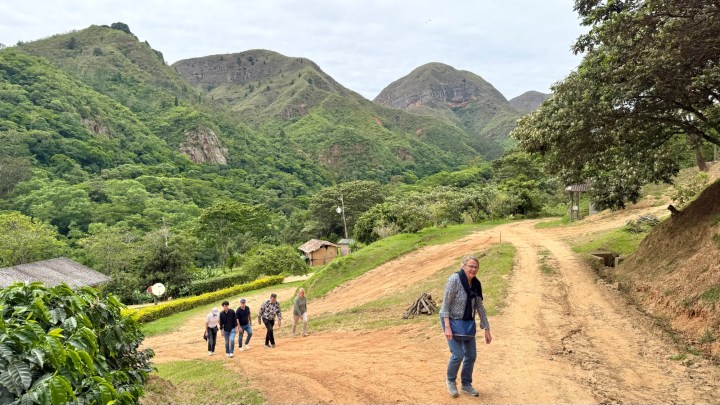
The bus couldn’t make it all the way up to the coffee producer El Cafetal, so we had to walk the last part.
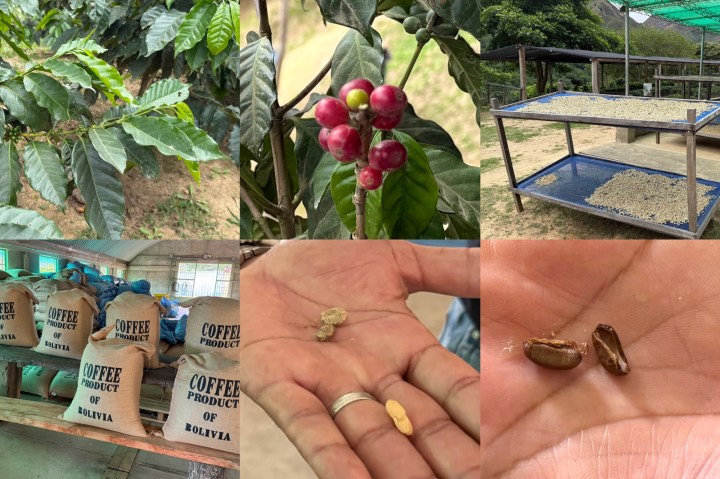
Coffee thrives near the equator, while wine grapes demand higher latitudes, making their production usually mutually exclusive. Samaipata is one of those rare terroir overlaps where these two growing zones meet. During our visit to El Cafetal, a boutique coffee producer in Samaipata with 10 hectares of Arabica under cultivation, we learned how this unique climate shapes their harvest. While coffee cherries typically ripen in five months, the cooler high-altitude temperatures here extend the ripening period to nine months. This slow maturation significantly contributes to quality. Terroir plays another key role: the surrounding vegetation imparts distinct citrus and fruity notes as the coffee cherries mature. The plants are grown under a native tree canopy, which provides essential shade alongside natural green manure from fallen leaves.
Harvest is entirely manual, ensuring only peak-ripe cherries are selected. Once picked, the beans undergo a 24 to 36-hour fermentation before being washed and sun-dried for a week. They are then bagged and aged for two months to stabilize moisture levels, after which the outer hull is removed to yield the “green gold” ready for roasting. Roughly 80% of El Cafetal’s production is exported raw, primarily to Texas, where it is roasted and commands a premium price of $80 per pound.
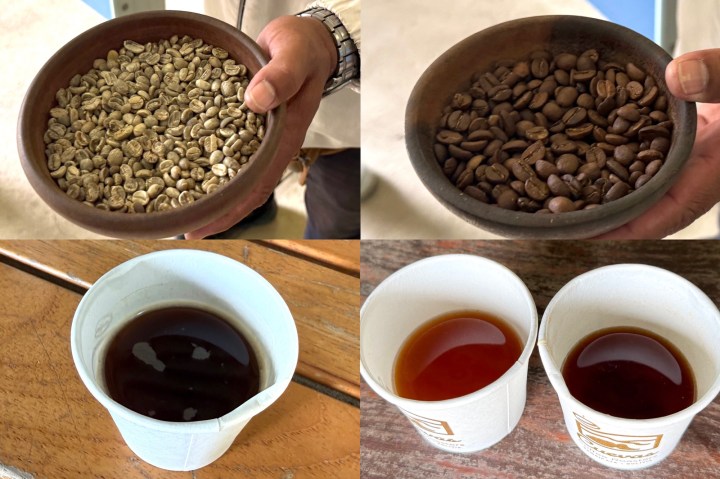
The remaining 20% is roasted on-site, strictly in light and medium profiles to preserve the delicate fruity and citrus character that a dark roast would mask. The resulting cup features vibrant acidity with minimal bitterness. Even the discarded skins find a purpose, brewed into a cascara tea that smells enticingly of pears spiced with cloves and star anise (photo above, on the left). At El Cafetal, the coffee is prepared via French press, steeping 57 grams of ground coffee per liter of water at 90–94°C for 3 to 4 minutes. The photo above shows the color difference between the light and medium roast.
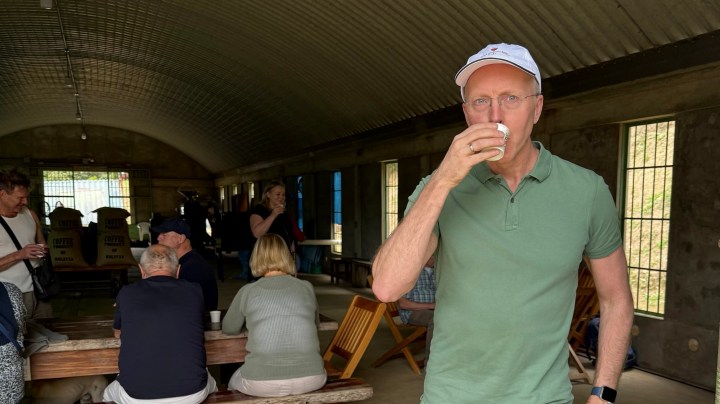
Translucent and aromatic, it yields a cup far removed from an intense espresso, behaving instead much more like fine tea.
El Aljibe
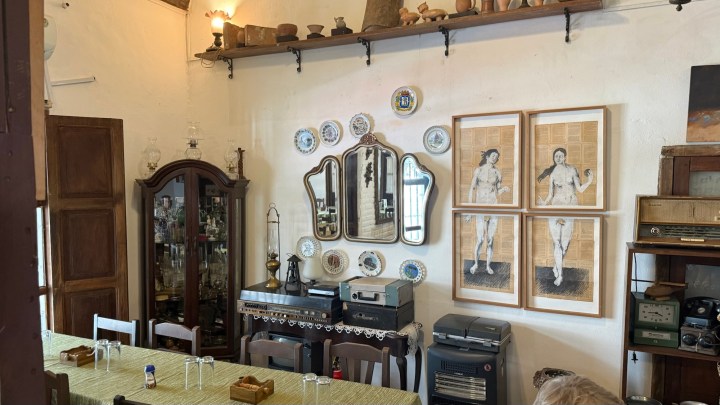
Our final stop in Santa Cruz was for lunch at historical restaurant El Aljibe.
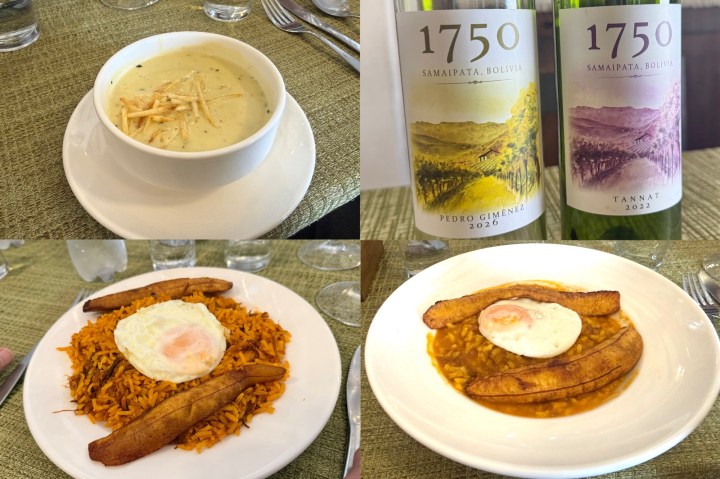
There we enjoyed two typical dishes of the region, accompanied by 1750’s Pedro Giménez and Tannat. We started with Sopa de Maní, peanut soup with thin sticks of fried potato on top. As a main course we had Majadito, which is the signature rice with beef dish of Santa Cruz and the surrounding area. It comes in two versions: Batido (wet), and Tostado (dry). It was served with fried plantain and a fried egg.

This concluded our visit of Samaipata, and we took a flight to Tarija for our next adventure. I already started working on this blog while waiting for our flight.


Just clicked on for post-lunch work and you ‘clicked back’ 🙂 ! Thank you for all the teaching we would not otherwise had a chance to receive! Loved to see and pretend to taste your spring menu at Casa Charo. What a ‘different’ food and wine adventure this is for all of you, what a lesson on the history of wine and development away from the common throng . . . hope for an enjoyable ending to a memorable journey . . .
LikeLiked by 1 person